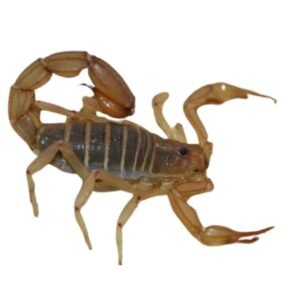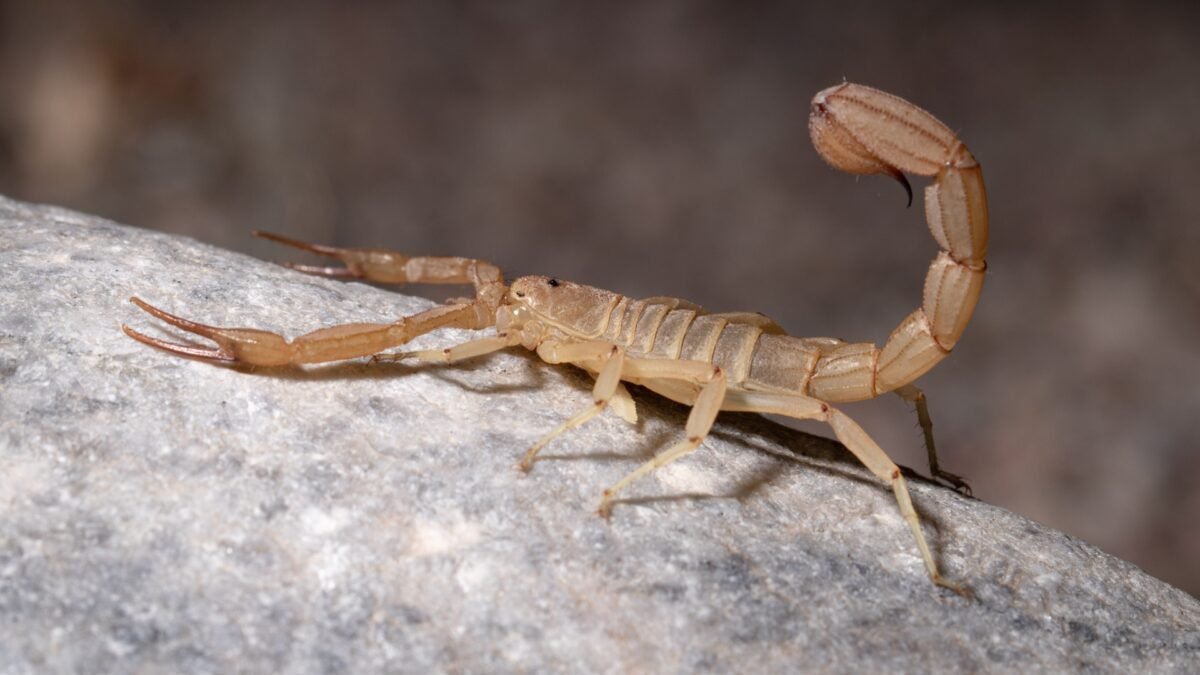
Dune Scorpion — Smeringurus mesaensis
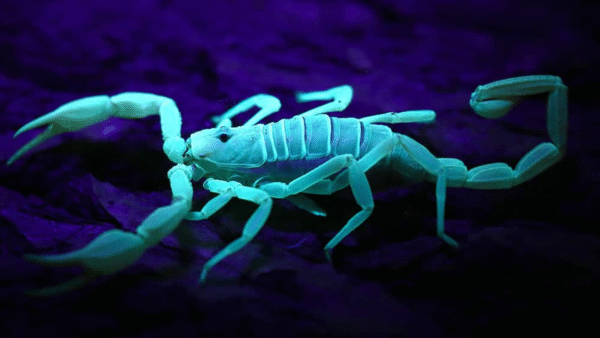
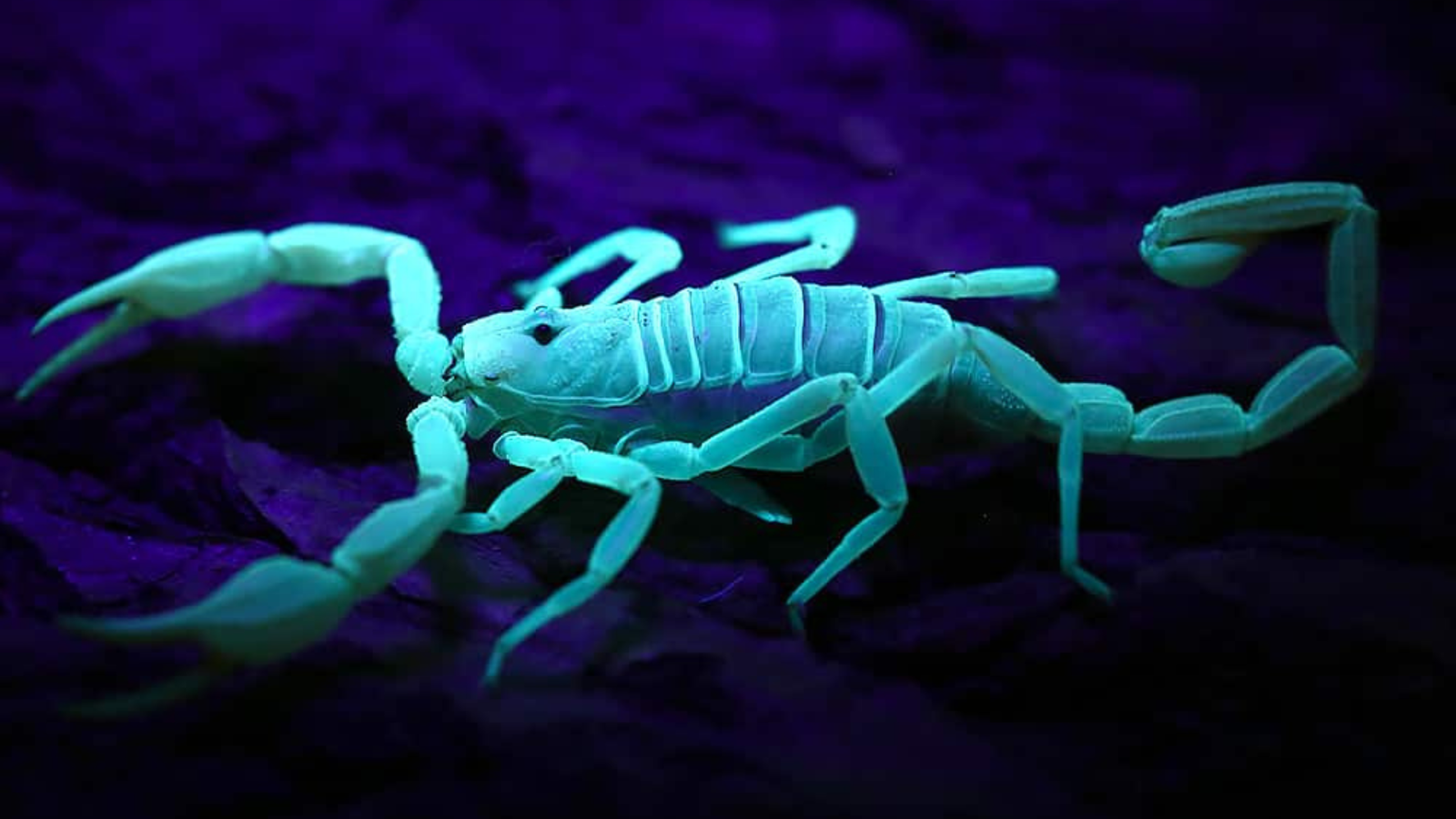
Forged by wind and heat, the Dune Scorpion is a nocturnal sand-swimmer that engineers stable burrows and patrols open ground for prey. Under UV light it glows an eerie blue-green, making a stunning—yet low-maintenance—desert centerpiece. Expect a secretive, primarily burrowing scorpion that rewards patient, night-time observation and thrives when offered deep, dry sand and a safe, escape-proof habitat.
Why Keep This Species
- Iconic UV fluorescence and authentic desert behaviors
- Hardy, arid-tolerant species with simple heating needs
- Educational burrower—track tunnels, surface patrols, and predation
Keeper Profile
- Handling: hands-off; tools/tongs only—view, don’t handle
- Climate: ~75–85 °F (24–29 °C) ambient; warm spot ~90 °F (32 °C); ~20–40% RH
- Habitat: terrestrial burrower; deep, compactable sand; secure lid and excellent ventilation
Keeper’s Summary
House a single S. mesaensis in an escape-proof, arid setup with 3–6″ (7.5–15 cm) of compactable desert substrate (sand ± clay) for stable burrows, plus rocky cover. Provide a gentle heat gradient with a side-mounted heat mat or overhead heat source that warms a portion of the surface, not the whole enclosure. Offer a shallow water cap and keep overall humidity low; lightly moisten a deep corner occasionally to support burrow stability. Feed 1–2 appropriately sized crickets/roaches weekly. Use tongs and catch cups for all service—no cohabitation, no free-handling.
🐾 Dune Scorpion — Smeringurus mesaensis
- Common Name(s): Dune Scorpion
- Scientific Name: Smeringurus mesaensis
- Native To: Southwestern USA & northern Baja deserts (sand dune systems, arid flats)
- Adult Size: ~50–75 mm total length (juveniles smaller)
- Life Span: ~5–8+ years in captivity (females often longer)
- Difficulty: Beginner–Intermediate (arid husbandry; escape-proofing required)
Characteristics & Temperament
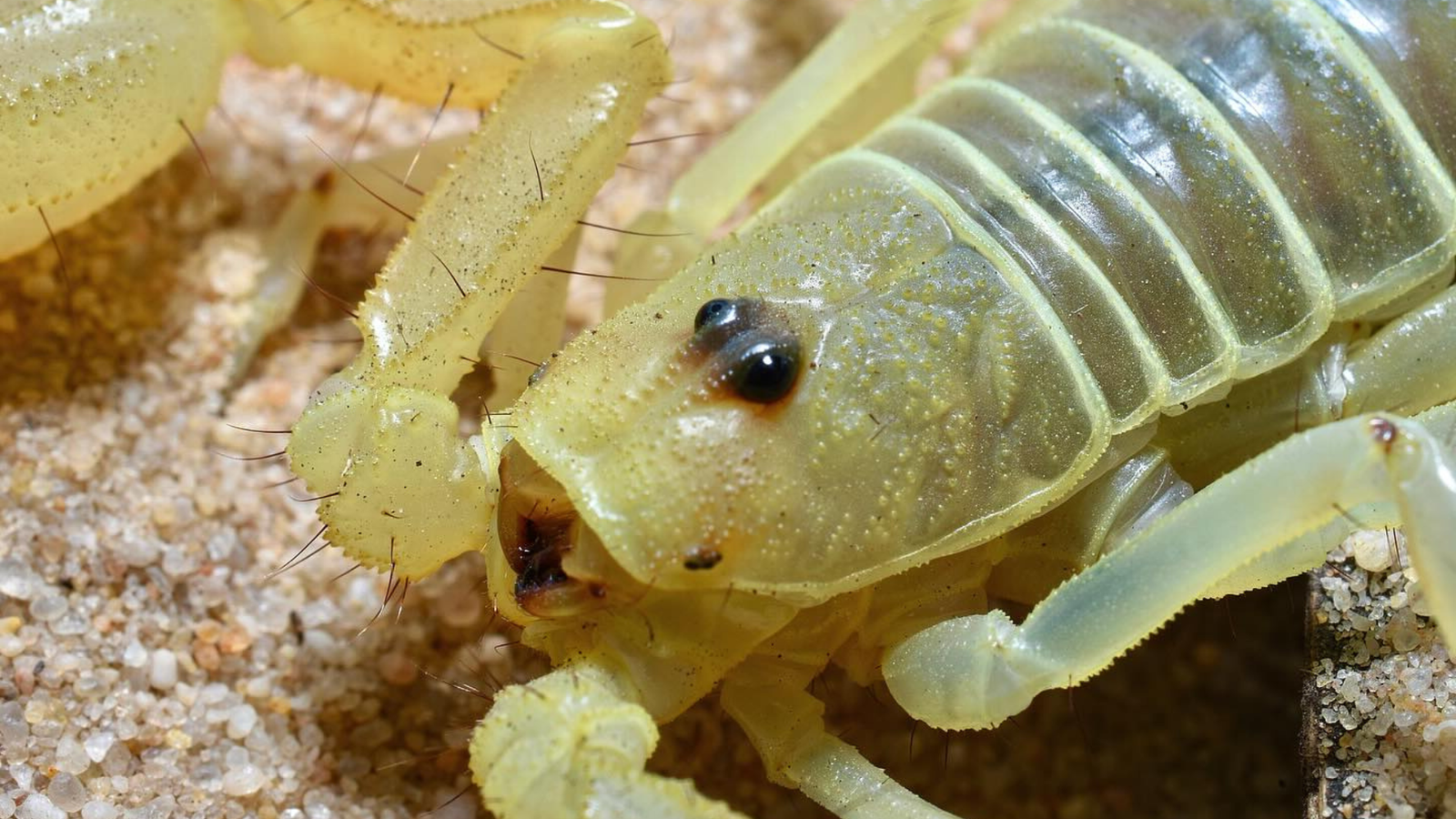
A nocturnal, fossorial predator adapted to shifting sands. S. mesaensis constructs deep, reinforced burrows, surfaces to hunt after dark, and fluoresces brilliantly under UV—an excellent candidate for red-light viewing and educational displays.
Appearance
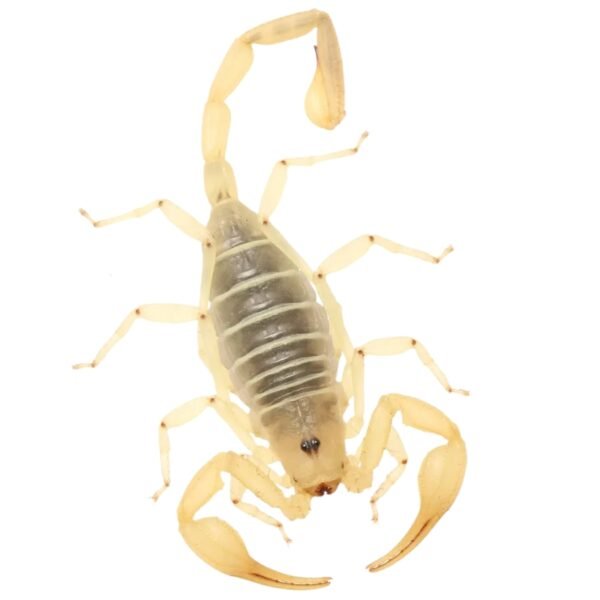
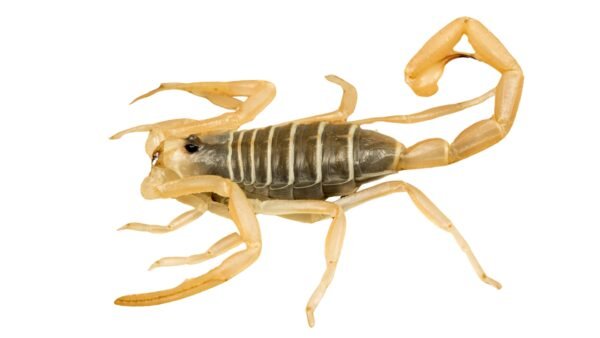
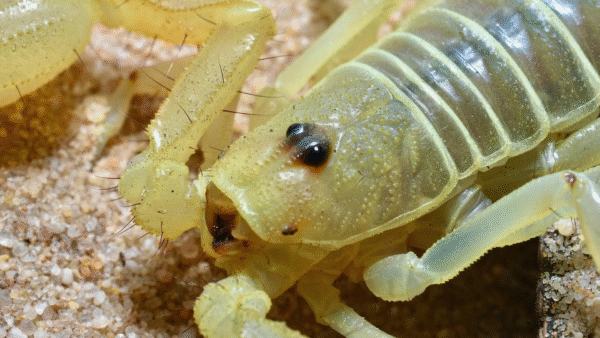
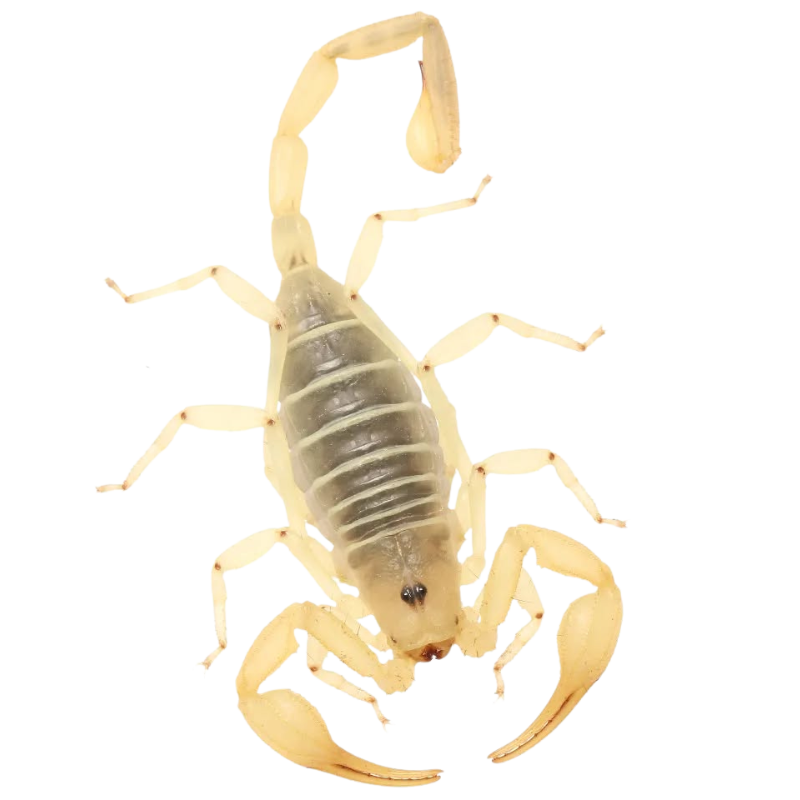
- Coloration / Pattern: Pale sandy to tan body with subtle banding and darker pedipalps; pigments mirror dune habitats.
- Build / Form: Robust metasoma (tail) and powerful, sand-digging legs; elongated chelae suited for gripping prey.
- Light Response: Strong UV fluorescence (blue-green glow) across the exoskeleton; avoid prolonged bright white light.
Temperament
- Baseline: Shy/cryptic; spends much time in burrow during day.
- Response to Disturbance: Retreats rapidly into burrow or adopts defensive posture if cornered.
- Feeding Style: Ambush/short-burst pursuit of roaches/crickets; best responses after lights out.
Social Housing
Solitary. Cohousing leads to injury or cannibalism. House singly; introduce only prey.
Quick Traits
Keeper Notes
- Stress Signs: Repeated surface pacing, refusal to feed, collapsed burrows, persistent defensive postures.
- Confidence Builders: Deep, compactable substrate; secure overhead cover; minimal vibration; consistent night feeding.
- Display Tips: View with red light; brief UV “showcase” is fine, but avoid frequent/long exposure.
Care Requirements
Core setup and environmental targets to keep Smeringurus mesaensis thriving.
Enclosure Setup
- Type: Terrestrial burrower (arid/desert).
- Minimum Size: ~12″×12″×12″ (30×30×30 cm) or ~10 gal for a single adult.
- Safety: Escape-proof lid/locking front; fine metal mesh or tight vents; heat sources secured/cable-managed.
Furnishing
- Size: Footprint that allows a warm/cool side gradient.
- Lid: Tight mesh or locking top with abundant ventilation.
- Hides: Stacked rocks/cork slabs to anchor burrows; provide multiple cover options.
- Enrichment: Mixed sand textures, gentle slopes, and anchor stones to reduce cave-ins.
Substrate
- Blend: 70–90% play sand mixed with 10–30% clay/soil (e.g., excavator clay) for compaction.
- Depth: 3–6″ (7.5–15 cm) minimum; deeper supports stable, natural tunnels.
- Purpose: Burrowing, humidity buffering within tunnels, and secure footing.
Habitat
- Water: Shallow bottle-cap dish refreshed 2–3×/week; keep surfaces dry overall.
- Décor: Arid rocks, cork, and firm sandbanks; avoid sharp edges and unstable stacks.
- Behavior Fit: Primarily burrowing; emerges at night to hunt and patrol.
Environment Targets Set & Monitor
Lighting
Ambient room light is sufficient; no UVB required. Night viewing via red light; use brief UV only for viewing fluorescence.
Food & Water
- Juveniles: Small crickets/roaches 2–3× weekly; remove uneaten prey by morning.
- Adults: Appropriately sized crickets or roaches 1× weekly (1–2 items); adjust to body condition.
- Hydration: Keep a shallow water dish; avoid misting the surface—maintain arid conditions.
- Best Time to Feed: Dusk to night when naturally active.
Cleaning
- Spot-Clean: Remove prey remains and waste after feedings; wipe glass as needed.
- Deep Clean: Replace part or all substrate every 4–6 months or if fouled; rinse décor with hot water only.