
Living Knowledge Across the Collection
Explore the approved biological source profiles behind Living Collection records, Citizen Science observations, breeding histories, care resources, and Transcendent Specimens.
ME-SP-0000K-I
African Fat-Tailed Gecko
Hemitheconyx caudicinctus
Eublepharidae • Reptilia
ME-SP-0000K-IAfrican Fat-Tailed Gecko
Hemitheconyx caudicinctus
Squamata • Eublepharidae • ReptiliaHow to Recognize It
African Fat-Tailed Gecko (Hemitheconyx caudicinctus) should be identified from a combination of body proportions, scalation, head shape, limb or toe structure when present, pattern, coloration, and geographic provenance. Captive-bred color morphs can obscure wild-type appearance, so morphology and documented lineage are more reliable than color alone. Juveniles may differ markedly from adults. Sexing characters are species- and age-dependent and should not be guessed from a photograph without validated criteria. Similar-looking relatives may overlap in the pet trade, making a complete acquisition record and exact scientific name important for husbandry as well as taxonomy.Life Beyond the Enclosure
African Fat-Tailed Gecko is an ectothermic reptile whose activity, digestion, growth, reproduction, and immune function are strongly influenced by environmental temperature and access to an appropriate thermal range. In the wild, reptiles regulate body temperature behaviorally by moving among sun, shade, burrows, vegetation, rock, water, or other microhabitats. Diet and activity pattern vary by species, from insectivory or herbivory to vertebrate prey. Seasonal rainfall, day length, and temperature can influence reproduction and dormancy. Captive care should therefore recreate useful choices rather than one uniform condition, while natural-history observations should not be converted into husbandry numbers without supporting evidence. Practical records should note date, life stage, feeding response, behavior, environmental observations, and any intervention so trends are visible instead of relying on memory. For Hemitheconyx caudicinctus, locality, season, and life stage should stay attached to observations because those variables can change the ecological picture substantially. Keep this Hemitheconyx caudicinctus account under species-specific review as stronger references become available.Keeper Reference
Successful care for African Fat-Tailed Gecko requires a secure enclosure with a species-appropriate thermal gradient, measured temperatures, suitable humidity and ventilation, appropriate light exposure, safe substrate, clean water, and a diet matched to its natural feeding strategy. Reptiles should be able to choose among warmer, cooler, drier, and more humid microclimates rather than being held at one uniform setting. UVB requirements, basking intensity, substrate depth, enclosure orientation, and feeding frequency differ substantially among reptiles, so final numeric targets must follow a validated species-specific husbandry source. Quarantine new animals and track body condition, appetite, feces, sheds, and behavior over time. Practical records should note date, life stage, feeding response, behavior, environmental observations, and any intervention so trends are visible instead of relying on memory. Any final care numbers for Hemitheconyx caudicinctus should be tied to a named species-specific source and reviewed after actual husbandry observations.Collection Knowledge
African Fat-Tailed Gecko (Hemitheconyx caudicinctus) is a reptile shaped by behavioral thermoregulation. Instead of generating a stable internal temperature the way mammals do, it uses the environment as a control panel, moving among warmer and cooler microhabitats as its needs change. That makes habitat structure biologically meaningful rather than decorative. Depending on the species, climbing, burrowing, basking, hiding, or soaking may be central parts of daily behavior. Captive-bred animals can also show colors and patterns unlike wild populations, so identification should use anatomy and provenance, not just appearance. Good husbandry is built around measured gradients and choices, not a single 'room temperature' number. Practical records should note date, life stage, feeding response, behavior, environmental observations, and any intervention so trends are visible instead of relying on memory. Records for Hemitheconyx caudicinctus are most useful when identification, locality, life stage, and source provenance remain linked to the profile. Keep this Hemitheconyx caudicinctus account under species-specific review as stronger references become available.ME-SP-0001E-8
African Spurred Tortoise
Centrochelys sulcata
Testudinidae • Reptilia
ME-SP-0001E-8African Spurred Tortoise
Centrochelys sulcata
Testudines • Testudinidae • ReptiliaHow to Recognize It
African Spurred Tortoise (Centrochelys sulcata) should be identified from a combination of body proportions, scalation, head shape, limb or toe structure when present, pattern, coloration, and geographic provenance. Captive-bred color morphs can obscure wild-type appearance, so morphology and documented lineage are more reliable than color alone. Juveniles may differ markedly from adults. Sexing characters are species- and age-dependent and should not be guessed from a photograph without validated criteria. Similar-looking relatives may overlap in the pet trade, making a complete acquisition record and exact scientific name important for husbandry as well as taxonomy.Life Beyond the Enclosure
African Spurred Tortoise is an ectothermic reptile whose activity, digestion, growth, reproduction, and immune function are strongly influenced by environmental temperature and access to an appropriate thermal range. In the wild, reptiles regulate body temperature behaviorally by moving among sun, shade, burrows, vegetation, rock, water, or other microhabitats. Diet and activity pattern vary by species, from insectivory or herbivory to vertebrate prey. Seasonal rainfall, day length, and temperature can influence reproduction and dormancy. Captive care should therefore recreate useful choices rather than one uniform condition, while natural-history observations should not be converted into husbandry numbers without supporting evidence. Practical records should note date, life stage, feeding response, behavior, environmental observations, and any intervention so trends are visible instead of relying on memory. For Centrochelys sulcata, locality, season, and life stage should stay attached to observations because those variables can change the ecological picture substantially. Keep this Centrochelys sulcata account under species-specific review as stronger references become available.Keeper Reference
Successful care for African Spurred Tortoise requires a secure enclosure with a species-appropriate thermal gradient, measured temperatures, suitable humidity and ventilation, appropriate light exposure, safe substrate, clean water, and a diet matched to its natural feeding strategy. Reptiles should be able to choose among warmer, cooler, drier, and more humid microclimates rather than being held at one uniform setting. UVB requirements, basking intensity, substrate depth, enclosure orientation, and feeding frequency differ substantially among reptiles, so final numeric targets must follow a validated species-specific husbandry source. Quarantine new animals and track body condition, appetite, feces, sheds, and behavior over time. Practical records should note date, life stage, feeding response, behavior, environmental observations, and any intervention so trends are visible instead of relying on memory. Any final care numbers for Centrochelys sulcata should be tied to a named species-specific source and reviewed after actual husbandry observations.Collection Knowledge
African Spurred Tortoise (Centrochelys sulcata) is a reptile shaped by behavioral thermoregulation. Instead of generating a stable internal temperature the way mammals do, it uses the environment as a control panel, moving among warmer and cooler microhabitats as its needs change. That makes habitat structure biologically meaningful rather than decorative. Depending on the species, climbing, burrowing, basking, hiding, or soaking may be central parts of daily behavior. Captive-bred animals can also show colors and patterns unlike wild populations, so identification should use anatomy and provenance, not just appearance. Good husbandry is built around measured gradients and choices, not a single 'room temperature' number. Practical records should note date, life stage, feeding response, behavior, environmental observations, and any intervention so trends are visible instead of relying on memory. Records for Centrochelys sulcata are most useful when identification, locality, life stage, and source provenance remain linked to the profile. Keep this Centrochelys sulcata account under species-specific review as stronger references become available.ME-SP-00066-C
American Bird Grasshopper
Schistocerca americana
Acrididae • Insecta
ME-SP-00066-CAmerican Bird Grasshopper
Schistocerca americana
Orthoptera • Acrididae • InsectaHow to Recognize It
American Bird Grasshopper (Schistocerca americana) should be identified using the anatomical characters appropriate to its taxonomic group, supported by life stage, size, locality, behavior, and reliable provenance. Color by itself is rarely sufficient because age, sex, molt stage, preservation, and lighting can change appearance. Juveniles may lack adult diagnostic structures. Where the taxon includes similar-looking relatives, retain high-resolution dorsal, ventral, and lateral photographs and preserve any molt or developmental evidence that can support later review. Species-level certainty should be downgraded rather than guessed when key characters or locality data are missing.Life Beyond the Enclosure
American Bird Grasshopper is an invertebrate whose ecology is shaped by its particular body plan and life cycle. Growth in arthropods occurs through molts, while other invertebrate groups may use different developmental strategies. Microhabitat, moisture, temperature, food resources, predators, competitors, and season all influence activity. Many species occupy narrow ecological niches even when adults appear mobile or generalist. Feeding strategy can change between juvenile and adult stages, and reproduction may be seasonal. Natural-history information should be separated from captive-care assumptions: a field observation describes what the animal used in one place and time, not automatically the only condition it can tolerate in captivity. Practical records should note date, life stage, feeding response, behavior, environmental observations, and any intervention so trends are visible instead of relying on memory. For Schistocerca americana, locality, season, and life stage should stay attached to observations because those variables can change the ecological picture substantially.Keeper Reference
Care for American Bird Grasshopper should begin with verified taxonomic identity and a species-specific understanding of microhabitat, feeding, hydration, and development. Provide secure ventilation, escape prevention, suitable structural complexity, safe moisture, and food that matches the animal's natural feeding mode. Avoid crowding unless social tolerance is established. Molting or otherwise vulnerable stages require minimal disturbance. When published husbandry data are sparse, favor short-term observation over experimental long-term keeping and record every environmental change. Do not release imported, captive-bred, or uncertain-origin animals. Any numeric temperature or humidity target should come from a reputable species-specific source rather than a generic invertebrate recipe. Keep this Schistocerca americana account under species-specific review as stronger references become available.Collection Knowledge
American Bird Grasshopper (Schistocerca americana) represents the astonishingly varied invertebrate majority of animal life. Its shape, sensory systems, life cycle, and ecological role make more sense when viewed together rather than as a collection of isolated traits. Identification should combine anatomy with locality and life stage because juveniles and adults can look very different, especially in groups that molt or metamorphose. In the wild, microhabitat is often the hidden key: moisture, substrate, food, shelter, and season can determine where the animal appears. Good records preserve that context, turning a specimen or observation into something far more informative than a name on a label. Practical records should note date, life stage, feeding response, behavior, environmental observations, and any intervention so trends are visible instead of relying on memory. Records for Schistocerca americana are most useful when identification, locality, life stage, and source provenance remain linked to the profile. Keep this Schistocerca americana account under species-specific review as stronger references become available.ME-SP-0005W-M
American Carrion Beetle
Necrophila americana
Silphidae • Insecta
ME-SP-0005W-MAmerican Carrion Beetle
Necrophila americana
Coleoptera • Silphidae • InsectaHow to Recognize It
American Carrion Beetle (Necrophila americana) is a beetle and should be identified from body shape, antennae, pronotum, elytra, leg structure, surface sculpture, color pattern, size, and locality. The hardened forewings, or elytra, identify Coleoptera as a group, but species-level work often depends on small structural characters rather than overall color. Larvae may bear little resemblance to adults and may require host, substrate, or rearing information for confident identification. Wear, age, and preservation can alter color or sheen. Keep locality, collection or acquisition data, photographs, and any associated larval substrate information with the specimen record.Life Beyond the Enclosure
American Carrion Beetle is part of Coleoptera, the beetles, a huge radiation united by hardened forewings that protect the flight wings and abdomen. Complete metamorphosis separates egg, larva, pupa, and adult stages, and those stages can occupy different ecological niches. Depending on the species, larvae may develop in soil, wood, dung, carrion, fungi, roots, foliage, or other specialized substrates, while adults may feed, disperse, reproduce, or sometimes eat very little. Moisture, temperature, food quality, microbial decomposition, and substrate structure can all influence development. Ecological role may include predation, decomposition, pollination, herbivory, or nutrient cycling. Practical records should note date, life stage, feeding response, behavior, environmental observations, and any intervention so trends are visible instead of relying on memory. For Necrophila americana, locality, season, and life stage should stay attached to observations because those variables can change the ecological picture substantially. Keep this Necrophila americana account under species-specific review as stronger references become available.Keeper Reference
Care for American Carrion Beetle must be based on its larval ecology and adult feeding strategy. A generic beetle box is not enough: wood borers, carrion beetles, dung beetles, flower beetles, tiger beetles, and scarabs require very different substrates and foods. For temporary adult observation, provide secure ventilation, traction, a species-appropriate food or moisture source, and protection from overheating. For rearing, use only correctly identified substrate or host material and prevent mold, mites, and anaerobic decay through sanitation and airflow. Avoid releasing captive, imported, or uncertain-origin beetles. Confirm species-specific developmental substrate, temperature, and moisture requirements before attempting multigenerational culture. Practical records should note date, life stage, feeding response, behavior, environmental observations, and any intervention so trends are visible instead of relying on memory. Any final care numbers for Necrophila americana should be tied to a named species-specific source and reviewed after actual husbandry observations.Collection Knowledge
American Carrion Beetle (Necrophila americana) is a member of Coleoptera, the beetles, whose signature hardware is a pair of hardened forewings called elytra. Beneath those protective covers sit the functional flight wings. Beetles undergo complete metamorphosis, so a grub-like larva may live in an entirely different world from the adult it becomes. Across the order, beetles work as predators, decomposers, herbivores, pollinators, scavengers, and ecosystem recyclers. That diversity also makes identification challenging: body sculpture, antennae, pronotum, legs, elytra, locality, and sometimes genital anatomy can matter more than color. Larval habitat is often one of the best clues to biology. Practical records should note date, life stage, feeding response, behavior, environmental observations, and any intervention so trends are visible instead of relying on memory. Records for Necrophila americana are most useful when identification, locality, life stage, and source provenance remain linked to the profile. Keep this Necrophila americana account under species-specific review as stronger references become available.ME-SP-0004Y-W
American Dagger Moth
Acronicta americana
Noctuidae • Insecta
ME-SP-0004Y-WAmerican Dagger Moth
Acronicta americana
Lepidoptera • Noctuidae • InsectaHow to Recognize It
American Dagger Moth (Acronicta americana) is a lepidopteran whose identification should combine adult wing shape and pattern, dorsal and ventral markings, body form, antennae, and locality rather than relying on color alone. Sex, wear, season, and lighting can alter appearance, while closely related species may share broad pattern elements. Larvae and pupae can look radically different from adults, so life stage must be recorded. For preserved material, intact diagnostic structures and a reliable specimen label are as important as color. When a determination is uncertain, compare multiple characters against a taxonomic or regional reference before assigning species-level certainty.Life Beyond the Enclosure
American Dagger Moth is part of the butterfly-and-moth lineage and passes through complete metamorphosis: egg, larva, pupa, and adult. Ecological requirements change sharply across those stages. Caterpillars are usually tied to particular host plants or host-plant families, whereas adults commonly focus on dispersal, courtship, reproduction, and species-specific food resources such as nectar, sap, fruit, or other liquids. Seasonal timing and local climate influence generation number, diapause, and adult flight. Predators, parasitoids, weather, host-plant chemistry, and habitat structure all shape survival. Distribution records should be interpreted at the taxon level because related species can occupy very different ranges and habitats. Practical records should note date, life stage, feeding response, behavior, environmental observations, and any intervention so trends are visible instead of relying on memory. For Acronicta americana, locality, season, and life stage should stay attached to observations because those variables can change the ecological picture substantially.Keeper Reference
Care for American Dagger Moth depends first on life stage. Eggs and larvae require correctly identified host material, excellent airflow, sanitation, and enough space to avoid crowding. Pupae need the orientation and moisture pattern appropriate to the species, while adults require safe flight room, appropriate food resources, and surfaces that prevent wing damage. Wild adults are generally poor candidates for long-term display captivity; observation or rearing should use legally obtained material and a verified species-specific protocol. Avoid generic heat or humidity targets when published rearing data are unavailable, because host plant, season, and local climate can matter more than a single thermostat number. Keep this Acronicta americana account under species-specific review as stronger references become available.Collection Knowledge
American Dagger Moth (Acronicta americana) belongs to one of the most transformation-heavy branches of the animal tree. Its life is divided among an egg, a feeding caterpillar, a reorganizing pupa, and a winged adult built largely for dispersal and reproduction. That stage shift means the same species can occupy different microhabitats and use completely different resources across its life. Identification is strongest when wing pattern, shape, locality, season, and life stage are considered together. Ecologically, species in this group connect host plants, flowering plants, predators, and parasitoids, making even a small moth or butterfly part of a surprisingly busy food web. Practical records should note date, life stage, feeding response, behavior, environmental observations, and any intervention so trends are visible instead of relying on memory. Records for Acronicta americana are most useful when identification, locality, life stage, and source provenance remain linked to the profile. Keep this Acronicta americana account under species-specific review as stronger references become available.ME-SP-00062-C
American Giant Millipede
Narceus americanus
Spirobolidae • Diplopoda
ME-SP-00062-CAmerican Giant Millipede
Narceus americanus
Spirobolida • Spirobolidae • DiplopodaHow to Recognize It
American Giant Millipede (Narceus americanus) should be identified using the anatomical characters appropriate to its taxonomic group, supported by life stage, size, locality, behavior, and reliable provenance. Color by itself is rarely sufficient because age, sex, molt stage, preservation, and lighting can change appearance. Juveniles may lack adult diagnostic structures. Where the taxon includes similar-looking relatives, retain high-resolution dorsal, ventral, and lateral photographs and preserve any molt or developmental evidence that can support later review. Species-level certainty should be downgraded rather than guessed when key characters or locality data are missing.Life Beyond the Enclosure
American Giant Millipede is an invertebrate whose ecology is shaped by its particular body plan and life cycle. Growth in arthropods occurs through molts, while other invertebrate groups may use different developmental strategies. Microhabitat, moisture, temperature, food resources, predators, competitors, and season all influence activity. Many species occupy narrow ecological niches even when adults appear mobile or generalist. Feeding strategy can change between juvenile and adult stages, and reproduction may be seasonal. Natural-history information should be separated from captive-care assumptions: a field observation describes what the animal used in one place and time, not automatically the only condition it can tolerate in captivity. Practical records should note date, life stage, feeding response, behavior, environmental observations, and any intervention so trends are visible instead of relying on memory. For Narceus americanus, locality, season, and life stage should stay attached to observations because those variables can change the ecological picture substantially.Keeper Reference
Care for American Giant Millipede should begin with verified taxonomic identity and a species-specific understanding of microhabitat, feeding, hydration, and development. Provide secure ventilation, escape prevention, suitable structural complexity, safe moisture, and food that matches the animal's natural feeding mode. Avoid crowding unless social tolerance is established. Molting or otherwise vulnerable stages require minimal disturbance. When published husbandry data are sparse, favor short-term observation over experimental long-term keeping and record every environmental change. Do not release imported, captive-bred, or uncertain-origin animals. Any numeric temperature or humidity target should come from a reputable species-specific source rather than a generic invertebrate recipe. Keep this Narceus americanus account under species-specific review as stronger references become available.Collection Knowledge
American Giant Millipede (Narceus americanus) represents the astonishingly varied invertebrate majority of animal life. Its shape, sensory systems, life cycle, and ecological role make more sense when viewed together rather than as a collection of isolated traits. Identification should combine anatomy with locality and life stage because juveniles and adults can look very different, especially in groups that molt or metamorphose. In the wild, microhabitat is often the hidden key: moisture, substrate, food, shelter, and season can determine where the animal appears. Good records preserve that context, turning a specimen or observation into something far more informative than a name on a label. Practical records should note date, life stage, feeding response, behavior, environmental observations, and any intervention so trends are visible instead of relying on memory. Records for Narceus americanus are most useful when identification, locality, life stage, and source provenance remain linked to the profile. Keep this Narceus americanus account under species-specific review as stronger references become available.MycoVault Game Counterparts
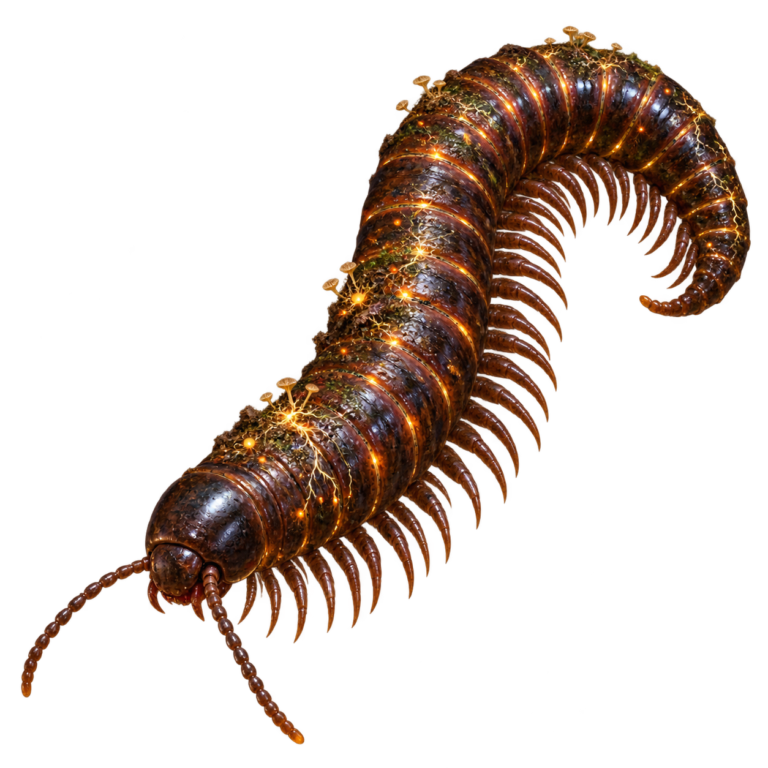
These are digital game specimens and characters inspired by the real-world species above. Their lore, rarity, game traits, and collectible ownership belong to MycoVault.
ME-SP-0001J-H
American Green Treefrog
Hyla cinerea
Hylidae • Amphibia
ME-SP-0001J-HAmerican Green Treefrog
Hyla cinerea
Anura • Hylidae • AmphibiaHow to Recognize It
American Green Treefrog (Hyla cinerea) should be identified using body shape, skin texture, limb and toe structure, eye and tympanum features when present, pattern, coloration, size, call or life-stage traits, and geographic provenance. Amphibian color can shift with temperature, stress, hydration, background, and time of day, so color alone is unreliable. Larvae and recently metamorphosed juveniles may differ greatly from adults. Similar species can require close examination or locality data. Because amphibian skin is highly permeable, handling and environmental history also matter when evaluating condition. Species-level identification should be verified before care parameters are assigned.Life Beyond the Enclosure
American Green Treefrog is an amphibian, a lineage closely tied to water balance and environmental quality because the skin participates in hydration and gas exchange. Life histories vary from fully aquatic forms to terrestrial or arboreal adults, and many species move between aquatic and terrestrial habitats across development. Temperature, rainfall, humidity, water chemistry, seasonal cycles, and breeding sites can influence activity and reproduction. Amphibians often feed on small animal prey, while larvae may have very different diets. Their permeable skin makes them sensitive to contaminants and inappropriate water chemistry, so wild ecological observations and captive husbandry should both be interpreted with unusual attention to moisture and chemical exposure. Practical records should note date, life stage, feeding response, behavior, environmental observations, and any intervention so trends are visible instead of relying on memory. For Hyla cinerea, locality, season, and life stage should stay attached to observations because those variables can change the ecological picture substantially.Keeper Reference
Care for American Green Treefrog must prioritize clean water or appropriately conditioned moisture, stable species-appropriate temperatures, strong ventilation without desiccation, nonabrasive furnishings, and minimal handling. Any water that contacts the animal should be free of chlorine/chloramine and contaminants, and aquatic species require monitored nitrogen cycling and water-quality management. Terrestrial and arboreal species need humidity gradients rather than permanently saturated air. Food items should be appropriately sized and nutritionally managed. Because amphibian husbandry varies enormously, final temperature, humidity, UVB, water-depth, and supplementation targets should be confirmed against a species-specific source before use. Quarantine is especially important because infectious diseases can spread quickly through shared water or tools.Collection Knowledge
American Green Treefrog (Hyla cinerea) belongs to a group whose biology is written partly in water. Amphibian skin is thin and physiologically active, so moisture, water chemistry, pollutants, and temperature can influence the animal more directly than they do many reptiles. Many amphibians also change habitat and diet as they develop, making a juvenile or larval stage almost a different ecological job from the adult. Their sensitivity is one reason amphibians are important indicators of environmental change. Identification should consider anatomy, locality, life stage, and behavior rather than color alone, because hydration and surroundings can noticeably alter appearance. Practical records should note date, life stage, feeding response, behavior, environmental observations, and any intervention so trends are visible instead of relying on memory. Records for Hyla cinerea are most useful when identification, locality, life stage, and source provenance remain linked to the profile. Keep this Hyla cinerea account under species-specific review as stronger references become available.ME-SP-0002M-G
American Lady
Vanessa virginiensis
Nymphalidae • Insecta
ME-SP-0002M-GAmerican Lady
Vanessa virginiensis
Lepidoptera • Nymphalidae • InsectaHow to Recognize It
American Lady (Vanessa virginiensis) is a lepidopteran whose identification should combine adult wing shape and pattern, dorsal and ventral markings, body form, antennae, and locality rather than relying on color alone. Sex, wear, season, and lighting can alter appearance, while closely related species may share broad pattern elements. Larvae and pupae can look radically different from adults, so life stage must be recorded. For preserved material, intact diagnostic structures and a reliable specimen label are as important as color. When a determination is uncertain, compare multiple characters against a taxonomic or regional reference before assigning species-level certainty.Life Beyond the Enclosure
American Lady is part of the butterfly-and-moth lineage and passes through complete metamorphosis: egg, larva, pupa, and adult. Ecological requirements change sharply across those stages. Caterpillars are usually tied to particular host plants or host-plant families, whereas adults commonly focus on dispersal, courtship, reproduction, and species-specific food resources such as nectar, sap, fruit, or other liquids. Seasonal timing and local climate influence generation number, diapause, and adult flight. Predators, parasitoids, weather, host-plant chemistry, and habitat structure all shape survival. Distribution records should be interpreted at the taxon level because related species can occupy very different ranges and habitats. Practical records should note date, life stage, feeding response, behavior, environmental observations, and any intervention so trends are visible instead of relying on memory. For Vanessa virginiensis, locality, season, and life stage should stay attached to observations because those variables can change the ecological picture substantially. Keep this Vanessa virginiensis account under species-specific review as stronger references become available.Keeper Reference
Care for American Lady depends first on life stage. Eggs and larvae require correctly identified host material, excellent airflow, sanitation, and enough space to avoid crowding. Pupae need the orientation and moisture pattern appropriate to the species, while adults require safe flight room, appropriate food resources, and surfaces that prevent wing damage. Wild adults are generally poor candidates for long-term display captivity; observation or rearing should use legally obtained material and a verified species-specific protocol. Avoid generic heat or humidity targets when published rearing data are unavailable, because host plant, season, and local climate can matter more than a single thermostat number. Keep this Vanessa virginiensis account under species-specific review as stronger references become available.Collection Knowledge
American Lady (Vanessa virginiensis) belongs to one of the most transformation-heavy branches of the animal tree. Its life is divided among an egg, a feeding caterpillar, a reorganizing pupa, and a winged adult built largely for dispersal and reproduction. That stage shift means the same species can occupy different microhabitats and use completely different resources across its life. Identification is strongest when wing pattern, shape, locality, season, and life stage are considered together. Ecologically, species in this group connect host plants, flowering plants, predators, and parasitoids, making even a small moth or butterfly part of a surprisingly busy food web. Practical records should note date, life stage, feeding response, behavior, environmental observations, and any intervention so trends are visible instead of relying on memory. Records for Vanessa virginiensis are most useful when identification, locality, life stage, and source provenance remain linked to the profile. Keep this Vanessa virginiensis account under species-specific review as stronger references become available.MycoVault Game Counterparts
These are digital game specimens and characters inspired by the real-world species above. Their lore, rarity, game traits, and collectible ownership belong to MycoVault.

ME-SP-00029-7
Arizona Blonde Tarantula
Aphonopelma chalcodes
Theraphosidae • Arachnida
ME-SP-00029-7Arizona Blonde Tarantula
Aphonopelma chalcodes
Araneae • Theraphosidae • ArachnidaHow to Recognize It
Arizona Blonde Tarantula (Aphonopelma chalcodes) should be identified using the anatomical characters appropriate to its taxonomic group, supported by life stage, size, locality, behavior, and reliable provenance. Color by itself is rarely sufficient because age, sex, molt stage, preservation, and lighting can change appearance. Juveniles may lack adult diagnostic structures. Where the taxon includes similar-looking relatives, retain high-resolution dorsal, ventral, and lateral photographs and preserve any molt or developmental evidence that can support later review. Species-level certainty should be downgraded rather than guessed when key characters or locality data are missing.Life Beyond the Enclosure
Arizona Blonde Tarantula is an invertebrate whose ecology is shaped by its particular body plan and life cycle. Growth in arthropods occurs through molts, while other invertebrate groups may use different developmental strategies. Microhabitat, moisture, temperature, food resources, predators, competitors, and season all influence activity. Many species occupy narrow ecological niches even when adults appear mobile or generalist. Feeding strategy can change between juvenile and adult stages, and reproduction may be seasonal. Natural-history information should be separated from captive-care assumptions: a field observation describes what the animal used in one place and time, not automatically the only condition it can tolerate in captivity. Practical records should note date, life stage, feeding response, behavior, environmental observations, and any intervention so trends are visible instead of relying on memory. For Aphonopelma chalcodes, locality, season, and life stage should stay attached to observations because those variables can change the ecological picture substantially.Keeper Reference
Care for Arizona Blonde Tarantula should begin with verified taxonomic identity and a species-specific understanding of microhabitat, feeding, hydration, and development. Provide secure ventilation, escape prevention, suitable structural complexity, safe moisture, and food that matches the animal's natural feeding mode. Avoid crowding unless social tolerance is established. Molting or otherwise vulnerable stages require minimal disturbance. When published husbandry data are sparse, favor short-term observation over experimental long-term keeping and record every environmental change. Do not release imported, captive-bred, or uncertain-origin animals. Any numeric temperature or humidity target should come from a reputable species-specific source rather than a generic invertebrate recipe. Keep this Aphonopelma chalcodes account under species-specific review as stronger references become available.Collection Knowledge
Arizona Blonde Tarantula (Aphonopelma chalcodes) represents the astonishingly varied invertebrate majority of animal life. Its shape, sensory systems, life cycle, and ecological role make more sense when viewed together rather than as a collection of isolated traits. Identification should combine anatomy with locality and life stage because juveniles and adults can look very different, especially in groups that molt or metamorphose. In the wild, microhabitat is often the hidden key: moisture, substrate, food, shelter, and season can determine where the animal appears. Good records preserve that context, turning a specimen or observation into something far more informative than a name on a label. Practical records should note date, life stage, feeding response, behavior, environmental observations, and any intervention so trends are visible instead of relying on memory. Records for Aphonopelma chalcodes are most useful when identification, locality, life stage, and source provenance remain linked to the profile. Keep this Aphonopelma chalcodes account under species-specific review as stronger references become available.ME-SP-00024-Y
Asian Forest Scorpion
Heterometrus spinifer
Scorpionidae • Arachnida
ME-SP-00024-YAsian Forest Scorpion
Heterometrus spinifer
Scorpiones • Scorpionidae • ArachnidaHow to Recognize It
Asian Forest Scorpion (Heterometrus spinifer) is a scorpion and should be identified from overall proportions, pedipalp shape, metasomal segments, telson, pectines, carination, granulation, coloration, size, and locality. Many scorpions converge on similar dark or sandy appearances, so color alone is not diagnostic. Juveniles can differ from adults, and sexing often depends on species-specific characters such as pectinal tooth counts or genital operculum morphology. Because misidentification can also change venom-risk expectations and husbandry assumptions, keep original locality and vendor data, molt exuviae, and clear dorsal/ventral photographs with the record.Life Beyond the Enclosure
Asian Forest Scorpion is a predatory arachnid that detects vibration and chemical information through specialized sensory structures and captures prey with pedipalps before using the sting when needed. Scorpions grow by molting and may spend long intervals hidden in burrows, crevices, or retreats. Many species are nocturnal and conserve energy efficiently, so missed meals do not automatically indicate illness. Habitat ranges from humid forest floor to arid desert, meaning moisture strategy is strongly species-specific. Females give birth to live young that climb onto the mother's back until the first molt. Courtship includes a promenade during which the male positions a spermatophore for the female. Practical records should note date, life stage, feeding response, behavior, environmental observations, and any intervention so trends are visible instead of relying on memory. For Heterometrus spinifer, locality, season, and life stage should stay attached to observations because those variables can change the ecological picture substantially.Keeper Reference
Care for Asian Forest Scorpion requires an escape-proof enclosure, secure hides or burrowing substrate appropriate to the species, controlled ventilation, safe hydration, and environmental conditions matched to its native habitat rather than to the generic label 'scorpion.' Individual housing is the conservative default because cannibalism can occur. Use long tools and no-hand contact practices; venom effects vary among taxa and individual reactions are unpredictable. Do not disturb animals during premolt or while a female carries young. Prey should be appropriately sized and removed if ignored. Track feeding, molts, body condition, burrow use, and reproductive status, and verify any numeric heat or humidity target against a species-specific source.Collection Knowledge
Asian Forest Scorpion (Heterometrus spinifer) belongs to an ancient arachnid lineage recognizable by its grasping pedipalps, segmented tail-like metasoma, and terminal sting. The dramatic silhouette hides a mostly energy-efficient predator that often spends daylight tucked into a retreat and becomes active after dark. Scorpions sense tiny substrate vibrations, molt as they grow, and reproduce through a courtship sequence involving a deposited spermatophore. Females give birth to live young, which ride on the mother's back through their first molt. Species differ greatly in habitat and venom significance, so accurate identification and locality data are essential parts of both natural-history interpretation and responsible husbandry. Practical records should note date, life stage, feeding response, behavior, environmental observations, and any intervention so trends are visible instead of relying on memory. Records for Heterometrus spinifer are most useful when identification, locality, life stage, and source provenance remain linked to the profile. Keep this Heterometrus spinifer account under species-specific review as stronger references become available.ME-SP-0005Q-4
Asian Lady Beetle
Harmonia axyridis
Coccinellidae • Insecta
ME-SP-0005Q-4Asian Lady Beetle
Harmonia axyridis
Coleoptera • Coccinellidae • InsectaHow to Recognize It
Asian Lady Beetle (Harmonia axyridis) is a beetle and should be identified from body shape, antennae, pronotum, elytra, leg structure, surface sculpture, color pattern, size, and locality. The hardened forewings, or elytra, identify Coleoptera as a group, but species-level work often depends on small structural characters rather than overall color. Larvae may bear little resemblance to adults and may require host, substrate, or rearing information for confident identification. Wear, age, and preservation can alter color or sheen. Keep locality, collection or acquisition data, photographs, and any associated larval substrate information with the specimen record.Life Beyond the Enclosure
Asian Lady Beetle is part of Coleoptera, the beetles, a huge radiation united by hardened forewings that protect the flight wings and abdomen. Complete metamorphosis separates egg, larva, pupa, and adult stages, and those stages can occupy different ecological niches. Depending on the species, larvae may develop in soil, wood, dung, carrion, fungi, roots, foliage, or other specialized substrates, while adults may feed, disperse, reproduce, or sometimes eat very little. Moisture, temperature, food quality, microbial decomposition, and substrate structure can all influence development. Ecological role may include predation, decomposition, pollination, herbivory, or nutrient cycling. Practical records should note date, life stage, feeding response, behavior, environmental observations, and any intervention so trends are visible instead of relying on memory. For Harmonia axyridis, locality, season, and life stage should stay attached to observations because those variables can change the ecological picture substantially. Keep this Harmonia axyridis account under species-specific review as stronger references become available.Keeper Reference
Care for Asian Lady Beetle must be based on its larval ecology and adult feeding strategy. A generic beetle box is not enough: wood borers, carrion beetles, dung beetles, flower beetles, tiger beetles, and scarabs require very different substrates and foods. For temporary adult observation, provide secure ventilation, traction, a species-appropriate food or moisture source, and protection from overheating. For rearing, use only correctly identified substrate or host material and prevent mold, mites, and anaerobic decay through sanitation and airflow. Avoid releasing captive, imported, or uncertain-origin beetles. Confirm species-specific developmental substrate, temperature, and moisture requirements before attempting multigenerational culture. Practical records should note date, life stage, feeding response, behavior, environmental observations, and any intervention so trends are visible instead of relying on memory. Any final care numbers for Harmonia axyridis should be tied to a named species-specific source and reviewed after actual husbandry observations.Collection Knowledge
Asian Lady Beetle (Harmonia axyridis) is a member of Coleoptera, the beetles, whose signature hardware is a pair of hardened forewings called elytra. Beneath those protective covers sit the functional flight wings. Beetles undergo complete metamorphosis, so a grub-like larva may live in an entirely different world from the adult it becomes. Across the order, beetles work as predators, decomposers, herbivores, pollinators, scavengers, and ecosystem recyclers. That diversity also makes identification challenging: body sculpture, antennae, pronotum, legs, elytra, locality, and sometimes genital anatomy can matter more than color. Larval habitat is often one of the best clues to biology. Practical records should note date, life stage, feeding response, behavior, environmental observations, and any intervention so trends are visible instead of relying on memory. Records for Harmonia axyridis are most useful when identification, locality, life stage, and source provenance remain linked to the profile. Keep this Harmonia axyridis account under species-specific review as stronger references become available.ME-SP-0001I-8
Australian Green Tree Frog
Litoria caerulea
Pelodryadidae • Amphibia
ME-SP-0001I-8Australian Green Tree Frog
Litoria caerulea
Anura • Pelodryadidae • AmphibiaHow to Recognize It
Australian Green Tree Frog (Litoria caerulea) should be identified using body shape, skin texture, limb and toe structure, eye and tympanum features when present, pattern, coloration, size, call or life-stage traits, and geographic provenance. Amphibian color can shift with temperature, stress, hydration, background, and time of day, so color alone is unreliable. Larvae and recently metamorphosed juveniles may differ greatly from adults. Similar species can require close examination or locality data. Because amphibian skin is highly permeable, handling and environmental history also matter when evaluating condition. Species-level identification should be verified before care parameters are assigned.Life Beyond the Enclosure
Australian Green Tree Frog is an amphibian, a lineage closely tied to water balance and environmental quality because the skin participates in hydration and gas exchange. Life histories vary from fully aquatic forms to terrestrial or arboreal adults, and many species move between aquatic and terrestrial habitats across development. Temperature, rainfall, humidity, water chemistry, seasonal cycles, and breeding sites can influence activity and reproduction. Amphibians often feed on small animal prey, while larvae may have very different diets. Their permeable skin makes them sensitive to contaminants and inappropriate water chemistry, so wild ecological observations and captive husbandry should both be interpreted with unusual attention to moisture and chemical exposure. Practical records should note date, life stage, feeding response, behavior, environmental observations, and any intervention so trends are visible instead of relying on memory. For Litoria caerulea, locality, season, and life stage should stay attached to observations because those variables can change the ecological picture substantially.Keeper Reference
Care for Australian Green Tree Frog must prioritize clean water or appropriately conditioned moisture, stable species-appropriate temperatures, strong ventilation without desiccation, nonabrasive furnishings, and minimal handling. Any water that contacts the animal should be free of chlorine/chloramine and contaminants, and aquatic species require monitored nitrogen cycling and water-quality management. Terrestrial and arboreal species need humidity gradients rather than permanently saturated air. Food items should be appropriately sized and nutritionally managed. Because amphibian husbandry varies enormously, final temperature, humidity, UVB, water-depth, and supplementation targets should be confirmed against a species-specific source before use. Quarantine is especially important because infectious diseases can spread quickly through shared water or tools.Collection Knowledge
Australian Green Tree Frog (Litoria caerulea) belongs to a group whose biology is written partly in water. Amphibian skin is thin and physiologically active, so moisture, water chemistry, pollutants, and temperature can influence the animal more directly than they do many reptiles. Many amphibians also change habitat and diet as they develop, making a juvenile or larval stage almost a different ecological job from the adult. Their sensitivity is one reason amphibians are important indicators of environmental change. Identification should consider anatomy, locality, life stage, and behavior rather than color alone, because hydration and surroundings can noticeably alter appearance. Practical records should note date, life stage, feeding response, behavior, environmental observations, and any intervention so trends are visible instead of relying on memory. Records for Litoria caerulea are most useful when identification, locality, life stage, and source provenance remain linked to the profile. Keep this Litoria caerulea account under species-specific review as stronger references become available.ME-SP-0001N-H
Axolotl
Ambystoma mexicanum
Ambystomatidae • Amphibia
ME-SP-0001N-HAxolotl
Ambystoma mexicanum
Caudata • Ambystomatidae • AmphibiaHow to Recognize It
Axolotl (Ambystoma mexicanum) should be identified using body shape, skin texture, limb and toe structure, eye and tympanum features when present, pattern, coloration, size, call or life-stage traits, and geographic provenance. Amphibian color can shift with temperature, stress, hydration, background, and time of day, so color alone is unreliable. Larvae and recently metamorphosed juveniles may differ greatly from adults. Similar species can require close examination or locality data. Because amphibian skin is highly permeable, handling and environmental history also matter when evaluating condition. Species-level identification should be verified before care parameters are assigned.Life Beyond the Enclosure
Axolotl is an amphibian, a lineage closely tied to water balance and environmental quality because the skin participates in hydration and gas exchange. Life histories vary from fully aquatic forms to terrestrial or arboreal adults, and many species move between aquatic and terrestrial habitats across development. Temperature, rainfall, humidity, water chemistry, seasonal cycles, and breeding sites can influence activity and reproduction. Amphibians often feed on small animal prey, while larvae may have very different diets. Their permeable skin makes them sensitive to contaminants and inappropriate water chemistry, so wild ecological observations and captive husbandry should both be interpreted with unusual attention to moisture and chemical exposure. Practical records should note date, life stage, feeding response, behavior, environmental observations, and any intervention so trends are visible instead of relying on memory. For Ambystoma mexicanum, locality, season, and life stage should stay attached to observations because those variables can change the ecological picture substantially.Keeper Reference
Care for Axolotl must prioritize clean water or appropriately conditioned moisture, stable species-appropriate temperatures, strong ventilation without desiccation, nonabrasive furnishings, and minimal handling. Any water that contacts the animal should be free of chlorine/chloramine and contaminants, and aquatic species require monitored nitrogen cycling and water-quality management. Terrestrial and arboreal species need humidity gradients rather than permanently saturated air. Food items should be appropriately sized and nutritionally managed. Because amphibian husbandry varies enormously, final temperature, humidity, UVB, water-depth, and supplementation targets should be confirmed against a species-specific source before use. Quarantine is especially important because infectious diseases can spread quickly through shared water or tools. Keep this Ambystoma mexicanum account under species-specific review as stronger references become available.Collection Knowledge
Axolotl (Ambystoma mexicanum) belongs to a group whose biology is written partly in water. Amphibian skin is thin and physiologically active, so moisture, water chemistry, pollutants, and temperature can influence the animal more directly than they do many reptiles. Many amphibians also change habitat and diet as they develop, making a juvenile or larval stage almost a different ecological job from the adult. Their sensitivity is one reason amphibians are important indicators of environmental change. Identification should consider anatomy, locality, life stage, and behavior rather than color alone, because hydration and surroundings can noticeably alter appearance. Practical records should note date, life stage, feeding response, behavior, environmental observations, and any intervention so trends are visible instead of relying on memory. Records for Ambystoma mexicanum are most useful when identification, locality, life stage, and source provenance remain linked to the profile. Keep this Ambystoma mexicanum account under species-specific review as stronger references become available.ME-SP-00019-Z
Ball Python
Python regius
Pythonidae • Reptilia
ME-SP-00019-ZBall Python
Python regius
Squamata • Pythonidae • ReptiliaHow to Recognize It
Ball Python (Python regius) should be identified from a combination of body proportions, scalation, head shape, limb or toe structure when present, pattern, coloration, and geographic provenance. Captive-bred color morphs can obscure wild-type appearance, so morphology and documented lineage are more reliable than color alone. Juveniles may differ markedly from adults. Sexing characters are species- and age-dependent and should not be guessed from a photograph without validated criteria. Similar-looking relatives may overlap in the pet trade, making a complete acquisition record and exact scientific name important for husbandry as well as taxonomy.Life Beyond the Enclosure
Ball Python is an ectothermic reptile whose activity, digestion, growth, reproduction, and immune function are strongly influenced by environmental temperature and access to an appropriate thermal range. In the wild, reptiles regulate body temperature behaviorally by moving among sun, shade, burrows, vegetation, rock, water, or other microhabitats. Diet and activity pattern vary by species, from insectivory or herbivory to vertebrate prey. Seasonal rainfall, day length, and temperature can influence reproduction and dormancy. Captive care should therefore recreate useful choices rather than one uniform condition, while natural-history observations should not be converted into husbandry numbers without supporting evidence. Practical records should note date, life stage, feeding response, behavior, environmental observations, and any intervention so trends are visible instead of relying on memory. For Python regius, locality, season, and life stage should stay attached to observations because those variables can change the ecological picture substantially. Keep this Python regius account under species-specific review as stronger references become available.Keeper Reference
Successful care for Ball Python requires a secure enclosure with a species-appropriate thermal gradient, measured temperatures, suitable humidity and ventilation, appropriate light exposure, safe substrate, clean water, and a diet matched to its natural feeding strategy. Reptiles should be able to choose among warmer, cooler, drier, and more humid microclimates rather than being held at one uniform setting. UVB requirements, basking intensity, substrate depth, enclosure orientation, and feeding frequency differ substantially among reptiles, so final numeric targets must follow a validated species-specific husbandry source. Quarantine new animals and track body condition, appetite, feces, sheds, and behavior over time. Practical records should note date, life stage, feeding response, behavior, environmental observations, and any intervention so trends are visible instead of relying on memory. Any final care numbers for Python regius should be tied to a named species-specific source and reviewed after actual husbandry observations.Collection Knowledge
Ball Python (Python regius) is a reptile shaped by behavioral thermoregulation. Instead of generating a stable internal temperature the way mammals do, it uses the environment as a control panel, moving among warmer and cooler microhabitats as its needs change. That makes habitat structure biologically meaningful rather than decorative. Depending on the species, climbing, burrowing, basking, hiding, or soaking may be central parts of daily behavior. Captive-bred animals can also show colors and patterns unlike wild populations, so identification should use anatomy and provenance, not just appearance. Good husbandry is built around measured gradients and choices, not a single 'room temperature' number. Practical records should note date, life stage, feeding response, behavior, environmental observations, and any intervention so trends are visible instead of relying on memory. Records for Python regius are most useful when identification, locality, life stage, and source provenance remain linked to the profile. Keep this Python regius account under species-specific review as stronger references become available.ME-SP-0004C-E
Banded Sphinx
Eumorpha fasciatus
Sphingidae • Insecta
ME-SP-0004C-EBanded Sphinx
Eumorpha fasciatus
Lepidoptera • Sphingidae • InsectaHow to Recognize It
Banded Sphinx (Eumorpha fasciatus) is a lepidopteran whose identification should combine adult wing shape and pattern, dorsal and ventral markings, body form, antennae, and locality rather than relying on color alone. Sex, wear, season, and lighting can alter appearance, while closely related species may share broad pattern elements. Larvae and pupae can look radically different from adults, so life stage must be recorded. For preserved material, intact diagnostic structures and a reliable specimen label are as important as color. When a determination is uncertain, compare multiple characters against a taxonomic or regional reference before assigning species-level certainty.Life Beyond the Enclosure
Banded Sphinx is part of the butterfly-and-moth lineage and passes through complete metamorphosis: egg, larva, pupa, and adult. Ecological requirements change sharply across those stages. Caterpillars are usually tied to particular host plants or host-plant families, whereas adults commonly focus on dispersal, courtship, reproduction, and species-specific food resources such as nectar, sap, fruit, or other liquids. Seasonal timing and local climate influence generation number, diapause, and adult flight. Predators, parasitoids, weather, host-plant chemistry, and habitat structure all shape survival. Distribution records should be interpreted at the taxon level because related species can occupy very different ranges and habitats. Practical records should note date, life stage, feeding response, behavior, environmental observations, and any intervention so trends are visible instead of relying on memory. For Eumorpha fasciatus, locality, season, and life stage should stay attached to observations because those variables can change the ecological picture substantially. Keep this Eumorpha fasciatus account under species-specific review as stronger references become available.Keeper Reference
Care for Banded Sphinx depends first on life stage. Eggs and larvae require correctly identified host material, excellent airflow, sanitation, and enough space to avoid crowding. Pupae need the orientation and moisture pattern appropriate to the species, while adults require safe flight room, appropriate food resources, and surfaces that prevent wing damage. Wild adults are generally poor candidates for long-term display captivity; observation or rearing should use legally obtained material and a verified species-specific protocol. Avoid generic heat or humidity targets when published rearing data are unavailable, because host plant, season, and local climate can matter more than a single thermostat number. Keep this Eumorpha fasciatus account under species-specific review as stronger references become available.Collection Knowledge
Banded Sphinx (Eumorpha fasciatus) belongs to one of the most transformation-heavy branches of the animal tree. Its life is divided among an egg, a feeding caterpillar, a reorganizing pupa, and a winged adult built largely for dispersal and reproduction. That stage shift means the same species can occupy different microhabitats and use completely different resources across its life. Identification is strongest when wing pattern, shape, locality, season, and life stage are considered together. Ecologically, species in this group connect host plants, flowering plants, predators, and parasitoids, making even a small moth or butterfly part of a surprisingly busy food web. Practical records should note date, life stage, feeding response, behavior, environmental observations, and any intervention so trends are visible instead of relying on memory. Records for Eumorpha fasciatus are most useful when identification, locality, life stage, and source provenance remain linked to the profile. Keep this Eumorpha fasciatus account under species-specific review as stronger references become available.ME-SP-0004Q-W
Banded Tussock Moth
Halysidota tessellaris
Erebidae • Insecta
ME-SP-0004Q-WBanded Tussock Moth
Halysidota tessellaris
Lepidoptera • Erebidae • InsectaHow to Recognize It
Banded Tussock Moth (Halysidota tessellaris) is a lepidopteran whose identification should combine adult wing shape and pattern, dorsal and ventral markings, body form, antennae, and locality rather than relying on color alone. Sex, wear, season, and lighting can alter appearance, while closely related species may share broad pattern elements. Larvae and pupae can look radically different from adults, so life stage must be recorded. For preserved material, intact diagnostic structures and a reliable specimen label are as important as color. When a determination is uncertain, compare multiple characters against a taxonomic or regional reference before assigning species-level certainty.Life Beyond the Enclosure
Banded Tussock Moth is part of the butterfly-and-moth lineage and passes through complete metamorphosis: egg, larva, pupa, and adult. Ecological requirements change sharply across those stages. Caterpillars are usually tied to particular host plants or host-plant families, whereas adults commonly focus on dispersal, courtship, reproduction, and species-specific food resources such as nectar, sap, fruit, or other liquids. Seasonal timing and local climate influence generation number, diapause, and adult flight. Predators, parasitoids, weather, host-plant chemistry, and habitat structure all shape survival. Distribution records should be interpreted at the taxon level because related species can occupy very different ranges and habitats. Practical records should note date, life stage, feeding response, behavior, environmental observations, and any intervention so trends are visible instead of relying on memory. For Halysidota tessellaris, locality, season, and life stage should stay attached to observations because those variables can change the ecological picture substantially.Keeper Reference
Care for Banded Tussock Moth depends first on life stage. Eggs and larvae require correctly identified host material, excellent airflow, sanitation, and enough space to avoid crowding. Pupae need the orientation and moisture pattern appropriate to the species, while adults require safe flight room, appropriate food resources, and surfaces that prevent wing damage. Wild adults are generally poor candidates for long-term display captivity; observation or rearing should use legally obtained material and a verified species-specific protocol. Avoid generic heat or humidity targets when published rearing data are unavailable, because host plant, season, and local climate can matter more than a single thermostat number. Keep this Halysidota tessellaris account under species-specific review as stronger references become available.Collection Knowledge
Banded Tussock Moth (Halysidota tessellaris) belongs to one of the most transformation-heavy branches of the animal tree. Its life is divided among an egg, a feeding caterpillar, a reorganizing pupa, and a winged adult built largely for dispersal and reproduction. That stage shift means the same species can occupy different microhabitats and use completely different resources across its life. Identification is strongest when wing pattern, shape, locality, season, and life stage are considered together. Ecologically, species in this group connect host plants, flowering plants, predators, and parasitoids, making even a small moth or butterfly part of a surprisingly busy food web. Practical records should note date, life stage, feeding response, behavior, environmental observations, and any intervention so trends are visible instead of relying on memory. Records for Halysidota tessellaris are most useful when identification, locality, life stage, and source provenance remain linked to the profile. Keep this Halysidota tessellaris account under species-specific review as stronger references become available.ME-SP-0003C-6
Barred Yellow
Eurema daira
Pieridae • Insecta
ME-SP-0003C-6Barred Yellow
Eurema daira
Lepidoptera • Pieridae • InsectaHow to Recognize It
Barred Yellow (Eurema daira) is a lepidopteran whose identification should combine adult wing shape and pattern, dorsal and ventral markings, body form, antennae, and locality rather than relying on color alone. Sex, wear, season, and lighting can alter appearance, while closely related species may share broad pattern elements. Larvae and pupae can look radically different from adults, so life stage must be recorded. For preserved material, intact diagnostic structures and a reliable specimen label are as important as color. When a determination is uncertain, compare multiple characters against a taxonomic or regional reference before assigning species-level certainty.Life Beyond the Enclosure
Barred Yellow is part of the butterfly-and-moth lineage and passes through complete metamorphosis: egg, larva, pupa, and adult. Ecological requirements change sharply across those stages. Caterpillars are usually tied to particular host plants or host-plant families, whereas adults commonly focus on dispersal, courtship, reproduction, and species-specific food resources such as nectar, sap, fruit, or other liquids. Seasonal timing and local climate influence generation number, diapause, and adult flight. Predators, parasitoids, weather, host-plant chemistry, and habitat structure all shape survival. Distribution records should be interpreted at the taxon level because related species can occupy very different ranges and habitats. Practical records should note date, life stage, feeding response, behavior, environmental observations, and any intervention so trends are visible instead of relying on memory. For Eurema daira, locality, season, and life stage should stay attached to observations because those variables can change the ecological picture substantially. Keep this Eurema daira account under species-specific review as stronger references become available.Keeper Reference
Care for Barred Yellow depends first on life stage. Eggs and larvae require correctly identified host material, excellent airflow, sanitation, and enough space to avoid crowding. Pupae need the orientation and moisture pattern appropriate to the species, while adults require safe flight room, appropriate food resources, and surfaces that prevent wing damage. Wild adults are generally poor candidates for long-term display captivity; observation or rearing should use legally obtained material and a verified species-specific protocol. Avoid generic heat or humidity targets when published rearing data are unavailable, because host plant, season, and local climate can matter more than a single thermostat number. Keep this Eurema daira account under species-specific review as stronger references become available.Collection Knowledge
Barred Yellow (Eurema daira) belongs to one of the most transformation-heavy branches of the animal tree. Its life is divided among an egg, a feeding caterpillar, a reorganizing pupa, and a winged adult built largely for dispersal and reproduction. That stage shift means the same species can occupy different microhabitats and use completely different resources across its life. Identification is strongest when wing pattern, shape, locality, season, and life stage are considered together. Ecologically, species in this group connect host plants, flowering plants, predators, and parasitoids, making even a small moth or butterfly part of a surprisingly busy food web. Practical records should note date, life stage, feeding response, behavior, environmental observations, and any intervention so trends are visible instead of relying on memory. Records for Eurema daira are most useful when identification, locality, life stage, and source provenance remain linked to the profile. Keep this Eurema daira account under species-specific review as stronger references become available.ME-SP-0004T-N
Bella Moth
Utetheisa ornatrix
Erebidae • Insecta
ME-SP-0004T-NBella Moth
Utetheisa ornatrix
Lepidoptera • Erebidae • InsectaHow to Recognize It
Bella Moth (Utetheisa ornatrix) is a lepidopteran whose identification should combine adult wing shape and pattern, dorsal and ventral markings, body form, antennae, and locality rather than relying on color alone. Sex, wear, season, and lighting can alter appearance, while closely related species may share broad pattern elements. Larvae and pupae can look radically different from adults, so life stage must be recorded. For preserved material, intact diagnostic structures and a reliable specimen label are as important as color. When a determination is uncertain, compare multiple characters against a taxonomic or regional reference before assigning species-level certainty.Life Beyond the Enclosure
Bella Moth is part of the butterfly-and-moth lineage and passes through complete metamorphosis: egg, larva, pupa, and adult. Ecological requirements change sharply across those stages. Caterpillars are usually tied to particular host plants or host-plant families, whereas adults commonly focus on dispersal, courtship, reproduction, and species-specific food resources such as nectar, sap, fruit, or other liquids. Seasonal timing and local climate influence generation number, diapause, and adult flight. Predators, parasitoids, weather, host-plant chemistry, and habitat structure all shape survival. Distribution records should be interpreted at the taxon level because related species can occupy very different ranges and habitats. Practical records should note date, life stage, feeding response, behavior, environmental observations, and any intervention so trends are visible instead of relying on memory. For Utetheisa ornatrix, locality, season, and life stage should stay attached to observations because those variables can change the ecological picture substantially. Keep this Utetheisa ornatrix account under species-specific review as stronger references become available.Keeper Reference
Care for Bella Moth depends first on life stage. Eggs and larvae require correctly identified host material, excellent airflow, sanitation, and enough space to avoid crowding. Pupae need the orientation and moisture pattern appropriate to the species, while adults require safe flight room, appropriate food resources, and surfaces that prevent wing damage. Wild adults are generally poor candidates for long-term display captivity; observation or rearing should use legally obtained material and a verified species-specific protocol. Avoid generic heat or humidity targets when published rearing data are unavailable, because host plant, season, and local climate can matter more than a single thermostat number. Keep this Utetheisa ornatrix account under species-specific review as stronger references become available.Collection Knowledge
Bella Moth (Utetheisa ornatrix) belongs to one of the most transformation-heavy branches of the animal tree. Its life is divided among an egg, a feeding caterpillar, a reorganizing pupa, and a winged adult built largely for dispersal and reproduction. That stage shift means the same species can occupy different microhabitats and use completely different resources across its life. Identification is strongest when wing pattern, shape, locality, season, and life stage are considered together. Ecologically, species in this group connect host plants, flowering plants, predators, and parasitoids, making even a small moth or butterfly part of a surprisingly busy food web. Practical records should note date, life stage, feeding response, behavior, environmental observations, and any intervention so trends are visible instead of relying on memory. Records for Utetheisa ornatrix are most useful when identification, locality, life stage, and source provenance remain linked to the profile. Keep this Utetheisa ornatrix account under species-specific review as stronger references become available.ME-SP-00047-5
Bisected Honey Locust Moth
Sphingicampa bisecta
Saturniidae • Insecta
ME-SP-00047-5Bisected Honey Locust Moth
Sphingicampa bisecta
Lepidoptera • Saturniidae • InsectaHow to Recognize It
Bisected Honey Locust Moth (Sphingicampa bisecta) is a lepidopteran whose identification should combine adult wing shape and pattern, dorsal and ventral markings, body form, antennae, and locality rather than relying on color alone. Sex, wear, season, and lighting can alter appearance, while closely related species may share broad pattern elements. Larvae and pupae can look radically different from adults, so life stage must be recorded. For preserved material, intact diagnostic structures and a reliable specimen label are as important as color. When a determination is uncertain, compare multiple characters against a taxonomic or regional reference before assigning species-level certainty.Life Beyond the Enclosure
Bisected Honey Locust Moth is part of the butterfly-and-moth lineage and passes through complete metamorphosis: egg, larva, pupa, and adult. Ecological requirements change sharply across those stages. Caterpillars are usually tied to particular host plants or host-plant families, whereas adults commonly focus on dispersal, courtship, reproduction, and species-specific food resources such as nectar, sap, fruit, or other liquids. Seasonal timing and local climate influence generation number, diapause, and adult flight. Predators, parasitoids, weather, host-plant chemistry, and habitat structure all shape survival. Distribution records should be interpreted at the taxon level because related species can occupy very different ranges and habitats. Practical records should note date, life stage, feeding response, behavior, environmental observations, and any intervention so trends are visible instead of relying on memory. For Sphingicampa bisecta, locality, season, and life stage should stay attached to observations because those variables can change the ecological picture substantially.Keeper Reference
Care for Bisected Honey Locust Moth depends first on life stage. Eggs and larvae require correctly identified host material, excellent airflow, sanitation, and enough space to avoid crowding. Pupae need the orientation and moisture pattern appropriate to the species, while adults require safe flight room, appropriate food resources, and surfaces that prevent wing damage. Wild adults are generally poor candidates for long-term display captivity; observation or rearing should use legally obtained material and a verified species-specific protocol. Avoid generic heat or humidity targets when published rearing data are unavailable, because host plant, season, and local climate can matter more than a single thermostat number. Keep this Sphingicampa bisecta account under species-specific review as stronger references become available.Collection Knowledge
Bisected Honey Locust Moth (Sphingicampa bisecta) belongs to one of the most transformation-heavy branches of the animal tree. Its life is divided among an egg, a feeding caterpillar, a reorganizing pupa, and a winged adult built largely for dispersal and reproduction. That stage shift means the same species can occupy different microhabitats and use completely different resources across its life. Identification is strongest when wing pattern, shape, locality, season, and life stage are considered together. Ecologically, species in this group connect host plants, flowering plants, predators, and parasitoids, making even a small moth or butterfly part of a surprisingly busy food web. Practical records should note date, life stage, feeding response, behavior, environmental observations, and any intervention so trends are visible instead of relying on memory. Records for Sphingicampa bisecta are most useful when identification, locality, life stage, and source provenance remain linked to the profile. Keep this Sphingicampa bisecta account under species-specific review as stronger references become available.ME-SP-00069-3
Black Asian Forest Scorpion
Heterometrus longimanus
Scorpionidae • Arachnida
ME-SP-00069-3Black Asian Forest Scorpion
Heterometrus longimanus
Scorpiones • Scorpionidae • ArachnidaHow to Recognize It
Black Asian Forest Scorpion (Heterometrus longimanus) is a scorpion and should be identified from overall proportions, pedipalp shape, metasomal segments, telson, pectines, carination, granulation, coloration, size, and locality. Many scorpions converge on similar dark or sandy appearances, so color alone is not diagnostic. Juveniles can differ from adults, and sexing often depends on species-specific characters such as pectinal tooth counts or genital operculum morphology. Because misidentification can also change venom-risk expectations and husbandry assumptions, keep original locality and vendor data, molt exuviae, and clear dorsal/ventral photographs with the record.Life Beyond the Enclosure
Black Asian Forest Scorpion is a predatory arachnid that detects vibration and chemical information through specialized sensory structures and captures prey with pedipalps before using the sting when needed. Scorpions grow by molting and may spend long intervals hidden in burrows, crevices, or retreats. Many species are nocturnal and conserve energy efficiently, so missed meals do not automatically indicate illness. Habitat ranges from humid forest floor to arid desert, meaning moisture strategy is strongly species-specific. Females give birth to live young that climb onto the mother's back until the first molt. Courtship includes a promenade during which the male positions a spermatophore for the female. Practical records should note date, life stage, feeding response, behavior, environmental observations, and any intervention so trends are visible instead of relying on memory. For Heterometrus longimanus, locality, season, and life stage should stay attached to observations because those variables can change the ecological picture substantially.Keeper Reference
Care for Black Asian Forest Scorpion requires an escape-proof enclosure, secure hides or burrowing substrate appropriate to the species, controlled ventilation, safe hydration, and environmental conditions matched to its native habitat rather than to the generic label 'scorpion.' Individual housing is the conservative default because cannibalism can occur. Use long tools and no-hand contact practices; venom effects vary among taxa and individual reactions are unpredictable. Do not disturb animals during premolt or while a female carries young. Prey should be appropriately sized and removed if ignored. Track feeding, molts, body condition, burrow use, and reproductive status, and verify any numeric heat or humidity target against a species-specific source.Collection Knowledge
Black Asian Forest Scorpion (Heterometrus longimanus) belongs to an ancient arachnid lineage recognizable by its grasping pedipalps, segmented tail-like metasoma, and terminal sting. The dramatic silhouette hides a mostly energy-efficient predator that often spends daylight tucked into a retreat and becomes active after dark. Scorpions sense tiny substrate vibrations, molt as they grow, and reproduce through a courtship sequence involving a deposited spermatophore. Females give birth to live young, which ride on the mother's back through their first molt. Species differ greatly in habitat and venom significance, so accurate identification and locality data are essential parts of both natural-history interpretation and responsible husbandry. Practical records should note date, life stage, feeding response, behavior, environmental observations, and any intervention so trends are visible instead of relying on memory. Records for Heterometrus longimanus are most useful when identification, locality, life stage, and source provenance remain linked to the profile.ME-SP-00034-6
Black Swallowtail
Papilio polyxenes
Papilionidae • Insecta
ME-SP-00034-6Black Swallowtail
Papilio polyxenes
Lepidoptera • Papilionidae • InsectaHow to Recognize It
Black Swallowtail (Papilio polyxenes) is a lepidopteran whose identification should combine adult wing shape and pattern, dorsal and ventral markings, body form, antennae, and locality rather than relying on color alone. Sex, wear, season, and lighting can alter appearance, while closely related species may share broad pattern elements. Larvae and pupae can look radically different from adults, so life stage must be recorded. For preserved material, intact diagnostic structures and a reliable specimen label are as important as color. When a determination is uncertain, compare multiple characters against a taxonomic or regional reference before assigning species-level certainty.Life Beyond the Enclosure
Black Swallowtail is part of the butterfly-and-moth lineage and passes through complete metamorphosis: egg, larva, pupa, and adult. Ecological requirements change sharply across those stages. Caterpillars are usually tied to particular host plants or host-plant families, whereas adults commonly focus on dispersal, courtship, reproduction, and species-specific food resources such as nectar, sap, fruit, or other liquids. Seasonal timing and local climate influence generation number, diapause, and adult flight. Predators, parasitoids, weather, host-plant chemistry, and habitat structure all shape survival. Distribution records should be interpreted at the taxon level because related species can occupy very different ranges and habitats. Practical records should note date, life stage, feeding response, behavior, environmental observations, and any intervention so trends are visible instead of relying on memory. For Papilio polyxenes, locality, season, and life stage should stay attached to observations because those variables can change the ecological picture substantially. Keep this Papilio polyxenes account under species-specific review as stronger references become available.Keeper Reference
Care for Black Swallowtail depends first on life stage. Eggs and larvae require correctly identified host material, excellent airflow, sanitation, and enough space to avoid crowding. Pupae need the orientation and moisture pattern appropriate to the species, while adults require safe flight room, appropriate food resources, and surfaces that prevent wing damage. Wild adults are generally poor candidates for long-term display captivity; observation or rearing should use legally obtained material and a verified species-specific protocol. Avoid generic heat or humidity targets when published rearing data are unavailable, because host plant, season, and local climate can matter more than a single thermostat number. Keep this Papilio polyxenes account under species-specific review as stronger references become available.Collection Knowledge
Black Swallowtail (Papilio polyxenes) belongs to one of the most transformation-heavy branches of the animal tree. Its life is divided among an egg, a feeding caterpillar, a reorganizing pupa, and a winged adult built largely for dispersal and reproduction. That stage shift means the same species can occupy different microhabitats and use completely different resources across its life. Identification is strongest when wing pattern, shape, locality, season, and life stage are considered together. Ecologically, species in this group connect host plants, flowering plants, predators, and parasitoids, making even a small moth or butterfly part of a surprisingly busy food web. Practical records should note date, life stage, feeding response, behavior, environmental observations, and any intervention so trends are visible instead of relying on memory. Records for Papilio polyxenes are most useful when identification, locality, life stage, and source provenance remain linked to the profile. Keep this Papilio polyxenes account under species-specific review as stronger references become available.ME-SP-0004K-E
Black Witch
Ascalapha odorata
Erebidae • Insecta
ME-SP-0004K-EBlack Witch
Ascalapha odorata
Lepidoptera • Erebidae • InsectaHow to Recognize It
Black Witch (Ascalapha odorata) is a lepidopteran whose identification should combine adult wing shape and pattern, dorsal and ventral markings, body form, antennae, and locality rather than relying on color alone. Sex, wear, season, and lighting can alter appearance, while closely related species may share broad pattern elements. Larvae and pupae can look radically different from adults, so life stage must be recorded. For preserved material, intact diagnostic structures and a reliable specimen label are as important as color. When a determination is uncertain, compare multiple characters against a taxonomic or regional reference before assigning species-level certainty.Life Beyond the Enclosure
Black Witch is part of the butterfly-and-moth lineage and passes through complete metamorphosis: egg, larva, pupa, and adult. Ecological requirements change sharply across those stages. Caterpillars are usually tied to particular host plants or host-plant families, whereas adults commonly focus on dispersal, courtship, reproduction, and species-specific food resources such as nectar, sap, fruit, or other liquids. Seasonal timing and local climate influence generation number, diapause, and adult flight. Predators, parasitoids, weather, host-plant chemistry, and habitat structure all shape survival. Distribution records should be interpreted at the taxon level because related species can occupy very different ranges and habitats. Practical records should note date, life stage, feeding response, behavior, environmental observations, and any intervention so trends are visible instead of relying on memory. For Ascalapha odorata, locality, season, and life stage should stay attached to observations because those variables can change the ecological picture substantially. Keep this Ascalapha odorata account under species-specific review as stronger references become available.Keeper Reference
Care for Black Witch depends first on life stage. Eggs and larvae require correctly identified host material, excellent airflow, sanitation, and enough space to avoid crowding. Pupae need the orientation and moisture pattern appropriate to the species, while adults require safe flight room, appropriate food resources, and surfaces that prevent wing damage. Wild adults are generally poor candidates for long-term display captivity; observation or rearing should use legally obtained material and a verified species-specific protocol. Avoid generic heat or humidity targets when published rearing data are unavailable, because host plant, season, and local climate can matter more than a single thermostat number. Keep this Ascalapha odorata account under species-specific review as stronger references become available.Collection Knowledge
Black Witch (Ascalapha odorata) belongs to one of the most transformation-heavy branches of the animal tree. Its life is divided among an egg, a feeding caterpillar, a reorganizing pupa, and a winged adult built largely for dispersal and reproduction. That stage shift means the same species can occupy different microhabitats and use completely different resources across its life. Identification is strongest when wing pattern, shape, locality, season, and life stage are considered together. Ecologically, species in this group connect host plants, flowering plants, predators, and parasitoids, making even a small moth or butterfly part of a surprisingly busy food web. Practical records should note date, life stage, feeding response, behavior, environmental observations, and any intervention so trends are visible instead of relying on memory. Records for Ascalapha odorata are most useful when identification, locality, life stage, and source provenance remain linked to the profile. Keep this Ascalapha odorata account under species-specific review as stronger references become available.ME-SP-00050-M
Black-Bordered Lemon Moth
Marimatha nigrofimbria
Noctuidae • Insecta
ME-SP-00050-MBlack-Bordered Lemon Moth
Marimatha nigrofimbria
Lepidoptera • Noctuidae • InsectaHow to Recognize It
Black-Bordered Lemon Moth (Marimatha nigrofimbria) is a lepidopteran whose identification should combine adult wing shape and pattern, dorsal and ventral markings, body form, antennae, and locality rather than relying on color alone. Sex, wear, season, and lighting can alter appearance, while closely related species may share broad pattern elements. Larvae and pupae can look radically different from adults, so life stage must be recorded. For preserved material, intact diagnostic structures and a reliable specimen label are as important as color. When a determination is uncertain, compare multiple characters against a taxonomic or regional reference before assigning species-level certainty.Life Beyond the Enclosure
Black-Bordered Lemon Moth is part of the butterfly-and-moth lineage and passes through complete metamorphosis: egg, larva, pupa, and adult. Ecological requirements change sharply across those stages. Caterpillars are usually tied to particular host plants or host-plant families, whereas adults commonly focus on dispersal, courtship, reproduction, and species-specific food resources such as nectar, sap, fruit, or other liquids. Seasonal timing and local climate influence generation number, diapause, and adult flight. Predators, parasitoids, weather, host-plant chemistry, and habitat structure all shape survival. Distribution records should be interpreted at the taxon level because related species can occupy very different ranges and habitats. Practical records should note date, life stage, feeding response, behavior, environmental observations, and any intervention so trends are visible instead of relying on memory. For Marimatha nigrofimbria, locality, season, and life stage should stay attached to observations because those variables can change the ecological picture substantially.Keeper Reference
Care for Black-Bordered Lemon Moth depends first on life stage. Eggs and larvae require correctly identified host material, excellent airflow, sanitation, and enough space to avoid crowding. Pupae need the orientation and moisture pattern appropriate to the species, while adults require safe flight room, appropriate food resources, and surfaces that prevent wing damage. Wild adults are generally poor candidates for long-term display captivity; observation or rearing should use legally obtained material and a verified species-specific protocol. Avoid generic heat or humidity targets when published rearing data are unavailable, because host plant, season, and local climate can matter more than a single thermostat number. Keep this Marimatha nigrofimbria account under species-specific review as stronger references become available.Collection Knowledge
Black-Bordered Lemon Moth (Marimatha nigrofimbria) belongs to one of the most transformation-heavy branches of the animal tree. Its life is divided among an egg, a feeding caterpillar, a reorganizing pupa, and a winged adult built largely for dispersal and reproduction. That stage shift means the same species can occupy different microhabitats and use completely different resources across its life. Identification is strongest when wing pattern, shape, locality, season, and life stage are considered together. Ecologically, species in this group connect host plants, flowering plants, predators, and parasitoids, making even a small moth or butterfly part of a surprisingly busy food web. Practical records should note date, life stage, feeding response, behavior, environmental observations, and any intervention so trends are visible instead of relying on memory. Records for Marimatha nigrofimbria are most useful when identification, locality, life stage, and source provenance remain linked to the profile. Keep this Marimatha nigrofimbria account under species-specific review as stronger references become available.ME-SP-00009-R
Bold Jumping Spider
Phidippus audax
Salticidae • Arachnida
ME-SP-00009-RBold Jumping Spider
Phidippus audax
Araneae • Salticidae • ArachnidaHow to Recognize It
Bold Jumping Spider (Phidippus audax) is a spider whose identification should use eye arrangement, body proportions, carapace and abdominal pattern, leg morphology, setation, chelicerae, mature reproductive structures, and locality as appropriate. Juveniles can be difficult or impossible to identify confidently to species because diagnostic adult characters are not yet developed. Color is useful but variable with molt stage, lighting, sex, and individual condition. For jumping spiders, the large forward-facing principal eyes and alert visual behavior are distinctive at family level, but species determinations often require several characters. Preserve molt skins, locality data, and clear dorsal and ventral photographs when possible.Life Beyond the Enclosure
Bold Jumping Spider is an arachnid predator that relies on silk, sensory information, and rapid prey capture rather than chewing plant material. Spiders grow by molting, and vulnerability rises sharply before, during, and immediately after ecdysis. Visual hunters such as jumping spiders use excellent eyesight, orientation behavior, and small silk retreats, while other spiders may rely more heavily on webs, burrows, or tactile cues. Diet in the wild consists mainly of appropriately sized arthropods. Activity, courtship, maturation, and egg production are influenced by prey availability, temperature, hydration, and season. Cannibalism is a normal risk in many species, especially during pairing or crowded housing. Practical records should note date, life stage, feeding response, behavior, environmental observations, and any intervention so trends are visible instead of relying on memory. For Phidippus audax, locality, season, and life stage should stay attached to observations because those variables can change the ecological picture substantially. Keep this Phidippus audax account under species-specific review as stronger references become available.Keeper Reference
Care for Bold Jumping Spider should provide secure ventilation, species-appropriate vertical or horizontal space, textured anchor points, a retreat location, clean hydration, and live prey sized to the animal. Avoid excessive wetness and stagnant air unless a verified species protocol calls for unusually humid conditions. Molting animals should not be disturbed or offered dangerous prey. Jumping spiders benefit from visual access, climbing surfaces, and an upper retreat zone; terrestrial species need more floor area and stable footing. Individual housing is the safest default unless social tolerance is well documented. Remove uneaten prey and monitor abdomen condition, coordination, attachment ability, and molt timing. Keep this Phidippus audax account under species-specific review as stronger references become available.Collection Knowledge
Bold Jumping Spider (Phidippus audax) is an arachnid predator built around precision rather than brute force. Spiders read the world through vibration, touch, chemical cues, and, in visually oriented groups such as jumping spiders, remarkably capable eyes. Silk may become a safety line, shelter, nursery, hunting tool, or molt retreat depending on the species. Growth happens in jumps because the exoskeleton must be shed before a larger one hardens. That makes molting a major event in both wild biology and captive care. Species identification can be tricky in juveniles, so mature anatomy, locality, and multiple photographs are more trustworthy than color by itself. Practical records should note date, life stage, feeding response, behavior, environmental observations, and any intervention so trends are visible instead of relying on memory. Records for Phidippus audax are most useful when identification, locality, life stage, and source provenance remain linked to the profile. Keep this Phidippus audax account under species-specific review as stronger references become available.MycoVault Game Counterparts
These are digital game specimens and characters inspired by the real-world species above. Their lore, rarity, game traits, and collectible ownership belong to MycoVault.

ME-SP-0003Y-O
Brazilian Skipper
Calpodes ethlius
Hesperiidae • Insecta
ME-SP-0003Y-OBrazilian Skipper
Calpodes ethlius
Lepidoptera • Hesperiidae • InsectaHow to Recognize It
Brazilian Skipper (Calpodes ethlius) is a lepidopteran whose identification should combine adult wing shape and pattern, dorsal and ventral markings, body form, antennae, and locality rather than relying on color alone. Sex, wear, season, and lighting can alter appearance, while closely related species may share broad pattern elements. Larvae and pupae can look radically different from adults, so life stage must be recorded. For preserved material, intact diagnostic structures and a reliable specimen label are as important as color. When a determination is uncertain, compare multiple characters against a taxonomic or regional reference before assigning species-level certainty.Life Beyond the Enclosure
Brazilian Skipper is part of the butterfly-and-moth lineage and passes through complete metamorphosis: egg, larva, pupa, and adult. Ecological requirements change sharply across those stages. Caterpillars are usually tied to particular host plants or host-plant families, whereas adults commonly focus on dispersal, courtship, reproduction, and species-specific food resources such as nectar, sap, fruit, or other liquids. Seasonal timing and local climate influence generation number, diapause, and adult flight. Predators, parasitoids, weather, host-plant chemistry, and habitat structure all shape survival. Distribution records should be interpreted at the taxon level because related species can occupy very different ranges and habitats. Practical records should note date, life stage, feeding response, behavior, environmental observations, and any intervention so trends are visible instead of relying on memory. For Calpodes ethlius, locality, season, and life stage should stay attached to observations because those variables can change the ecological picture substantially. Keep this Calpodes ethlius account under species-specific review as stronger references become available.Keeper Reference
Care for Brazilian Skipper depends first on life stage. Eggs and larvae require correctly identified host material, excellent airflow, sanitation, and enough space to avoid crowding. Pupae need the orientation and moisture pattern appropriate to the species, while adults require safe flight room, appropriate food resources, and surfaces that prevent wing damage. Wild adults are generally poor candidates for long-term display captivity; observation or rearing should use legally obtained material and a verified species-specific protocol. Avoid generic heat or humidity targets when published rearing data are unavailable, because host plant, season, and local climate can matter more than a single thermostat number. Keep this Calpodes ethlius account under species-specific review as stronger references become available.Collection Knowledge
Brazilian Skipper (Calpodes ethlius) belongs to one of the most transformation-heavy branches of the animal tree. Its life is divided among an egg, a feeding caterpillar, a reorganizing pupa, and a winged adult built largely for dispersal and reproduction. That stage shift means the same species can occupy different microhabitats and use completely different resources across its life. Identification is strongest when wing pattern, shape, locality, season, and life stage are considered together. Ecologically, species in this group connect host plants, flowering plants, predators, and parasitoids, making even a small moth or butterfly part of a surprisingly busy food web. Practical records should note date, life stage, feeding response, behavior, environmental observations, and any intervention so trends are visible instead of relying on memory. Records for Calpodes ethlius are most useful when identification, locality, life stage, and source provenance remain linked to the profile. Keep this Calpodes ethlius account under species-specific review as stronger references become available.ME-SP-0001P-Z
Brilliant Jumping Spider
Phidippus clarus
Salticidae • Arachnida
ME-SP-0001P-ZBrilliant Jumping Spider
Phidippus clarus
Araneae • Salticidae • ArachnidaHow to Recognize It
Brilliant Jumping Spider (Phidippus clarus) is a spider whose identification should use eye arrangement, body proportions, carapace and abdominal pattern, leg morphology, setation, chelicerae, mature reproductive structures, and locality as appropriate. Juveniles can be difficult or impossible to identify confidently to species because diagnostic adult characters are not yet developed. Color is useful but variable with molt stage, lighting, sex, and individual condition. For jumping spiders, the large forward-facing principal eyes and alert visual behavior are distinctive at family level, but species determinations often require several characters. Preserve molt skins, locality data, and clear dorsal and ventral photographs when possible.Life Beyond the Enclosure
Brilliant Jumping Spider is an arachnid predator that relies on silk, sensory information, and rapid prey capture rather than chewing plant material. Spiders grow by molting, and vulnerability rises sharply before, during, and immediately after ecdysis. Visual hunters such as jumping spiders use excellent eyesight, orientation behavior, and small silk retreats, while other spiders may rely more heavily on webs, burrows, or tactile cues. Diet in the wild consists mainly of appropriately sized arthropods. Activity, courtship, maturation, and egg production are influenced by prey availability, temperature, hydration, and season. Cannibalism is a normal risk in many species, especially during pairing or crowded housing. Practical records should note date, life stage, feeding response, behavior, environmental observations, and any intervention so trends are visible instead of relying on memory. For Phidippus clarus, locality, season, and life stage should stay attached to observations because those variables can change the ecological picture substantially. Keep this Phidippus clarus account under species-specific review as stronger references become available.Keeper Reference
Care for Brilliant Jumping Spider should provide secure ventilation, species-appropriate vertical or horizontal space, textured anchor points, a retreat location, clean hydration, and live prey sized to the animal. Avoid excessive wetness and stagnant air unless a verified species protocol calls for unusually humid conditions. Molting animals should not be disturbed or offered dangerous prey. Jumping spiders benefit from visual access, climbing surfaces, and an upper retreat zone; terrestrial species need more floor area and stable footing. Individual housing is the safest default unless social tolerance is well documented. Remove uneaten prey and monitor abdomen condition, coordination, attachment ability, and molt timing. Keep this Phidippus clarus account under species-specific review as stronger references become available.Collection Knowledge
Brilliant Jumping Spider (Phidippus clarus) is an arachnid predator built around precision rather than brute force. Spiders read the world through vibration, touch, chemical cues, and, in visually oriented groups such as jumping spiders, remarkably capable eyes. Silk may become a safety line, shelter, nursery, hunting tool, or molt retreat depending on the species. Growth happens in jumps because the exoskeleton must be shed before a larger one hardens. That makes molting a major event in both wild biology and captive care. Species identification can be tricky in juveniles, so mature anatomy, locality, and multiple photographs are more trustworthy than color by itself. Practical records should note date, life stage, feeding response, behavior, environmental observations, and any intervention so trends are visible instead of relying on memory. Records for Phidippus clarus are most useful when identification, locality, life stage, and source provenance remain linked to the profile. Keep this Phidippus clarus account under species-specific review as stronger references become available.ME-SP-00012-8
Broad-Headed Skink
Plestiodon laticeps
Scincidae • Reptilia
ME-SP-00012-8Broad-Headed Skink
Plestiodon laticeps
Squamata • Scincidae • ReptiliaHow to Recognize It
Broad-Headed Skink (Plestiodon laticeps) should be identified from a combination of body proportions, scalation, head shape, limb or toe structure when present, pattern, coloration, and geographic provenance. Captive-bred color morphs can obscure wild-type appearance, so morphology and documented lineage are more reliable than color alone. Juveniles may differ markedly from adults. Sexing characters are species- and age-dependent and should not be guessed from a photograph without validated criteria. Similar-looking relatives may overlap in the pet trade, making a complete acquisition record and exact scientific name important for husbandry as well as taxonomy.Life Beyond the Enclosure
Broad-Headed Skink is an ectothermic reptile whose activity, digestion, growth, reproduction, and immune function are strongly influenced by environmental temperature and access to an appropriate thermal range. In the wild, reptiles regulate body temperature behaviorally by moving among sun, shade, burrows, vegetation, rock, water, or other microhabitats. Diet and activity pattern vary by species, from insectivory or herbivory to vertebrate prey. Seasonal rainfall, day length, and temperature can influence reproduction and dormancy. Captive care should therefore recreate useful choices rather than one uniform condition, while natural-history observations should not be converted into husbandry numbers without supporting evidence. Practical records should note date, life stage, feeding response, behavior, environmental observations, and any intervention so trends are visible instead of relying on memory. For Plestiodon laticeps, locality, season, and life stage should stay attached to observations because those variables can change the ecological picture substantially. Keep this Plestiodon laticeps account under species-specific review as stronger references become available.Keeper Reference
Successful care for Broad-Headed Skink requires a secure enclosure with a species-appropriate thermal gradient, measured temperatures, suitable humidity and ventilation, appropriate light exposure, safe substrate, clean water, and a diet matched to its natural feeding strategy. Reptiles should be able to choose among warmer, cooler, drier, and more humid microclimates rather than being held at one uniform setting. UVB requirements, basking intensity, substrate depth, enclosure orientation, and feeding frequency differ substantially among reptiles, so final numeric targets must follow a validated species-specific husbandry source. Quarantine new animals and track body condition, appetite, feces, sheds, and behavior over time. Practical records should note date, life stage, feeding response, behavior, environmental observations, and any intervention so trends are visible instead of relying on memory. Any final care numbers for Plestiodon laticeps should be tied to a named species-specific source and reviewed after actual husbandry observations.Collection Knowledge
Broad-Headed Skink (Plestiodon laticeps) is a reptile shaped by behavioral thermoregulation. Instead of generating a stable internal temperature the way mammals do, it uses the environment as a control panel, moving among warmer and cooler microhabitats as its needs change. That makes habitat structure biologically meaningful rather than decorative. Depending on the species, climbing, burrowing, basking, hiding, or soaking may be central parts of daily behavior. Captive-bred animals can also show colors and patterns unlike wild populations, so identification should use anatomy and provenance, not just appearance. Good husbandry is built around measured gradients and choices, not a single 'room temperature' number. Practical records should note date, life stage, feeding response, behavior, environmental observations, and any intervention so trends are visible instead of relying on memory. Records for Plestiodon laticeps are most useful when identification, locality, life stage, and source provenance remain linked to the profile. Keep this Plestiodon laticeps account under species-specific review as stronger references become available.ME-SP-00016-8
Brown Anole
Anolis sagrei
Dactyloidae • Reptilia
ME-SP-00016-8Brown Anole
Anolis sagrei
Squamata • Dactyloidae • ReptiliaHow to Recognize It
Brown Anole (Anolis sagrei) should be identified from a combination of body proportions, scalation, head shape, limb or toe structure when present, pattern, coloration, and geographic provenance. Captive-bred color morphs can obscure wild-type appearance, so morphology and documented lineage are more reliable than color alone. Juveniles may differ markedly from adults. Sexing characters are species- and age-dependent and should not be guessed from a photograph without validated criteria. Similar-looking relatives may overlap in the pet trade, making a complete acquisition record and exact scientific name important for husbandry as well as taxonomy.Life Beyond the Enclosure
Brown Anole is an ectothermic reptile whose activity, digestion, growth, reproduction, and immune function are strongly influenced by environmental temperature and access to an appropriate thermal range. In the wild, reptiles regulate body temperature behaviorally by moving among sun, shade, burrows, vegetation, rock, water, or other microhabitats. Diet and activity pattern vary by species, from insectivory or herbivory to vertebrate prey. Seasonal rainfall, day length, and temperature can influence reproduction and dormancy. Captive care should therefore recreate useful choices rather than one uniform condition, while natural-history observations should not be converted into husbandry numbers without supporting evidence. Practical records should note date, life stage, feeding response, behavior, environmental observations, and any intervention so trends are visible instead of relying on memory. For Anolis sagrei, locality, season, and life stage should stay attached to observations because those variables can change the ecological picture substantially. Keep this Anolis sagrei account under species-specific review as stronger references become available.Keeper Reference
Successful care for Brown Anole requires a secure enclosure with a species-appropriate thermal gradient, measured temperatures, suitable humidity and ventilation, appropriate light exposure, safe substrate, clean water, and a diet matched to its natural feeding strategy. Reptiles should be able to choose among warmer, cooler, drier, and more humid microclimates rather than being held at one uniform setting. UVB requirements, basking intensity, substrate depth, enclosure orientation, and feeding frequency differ substantially among reptiles, so final numeric targets must follow a validated species-specific husbandry source. Quarantine new animals and track body condition, appetite, feces, sheds, and behavior over time. Practical records should note date, life stage, feeding response, behavior, environmental observations, and any intervention so trends are visible instead of relying on memory. Any final care numbers for Anolis sagrei should be tied to a named species-specific source and reviewed after actual husbandry observations.Collection Knowledge
Brown Anole (Anolis sagrei) is a reptile shaped by behavioral thermoregulation. Instead of generating a stable internal temperature the way mammals do, it uses the environment as a control panel, moving among warmer and cooler microhabitats as its needs change. That makes habitat structure biologically meaningful rather than decorative. Depending on the species, climbing, burrowing, basking, hiding, or soaking may be central parts of daily behavior. Captive-bred animals can also show colors and patterns unlike wild populations, so identification should use anatomy and provenance, not just appearance. Good husbandry is built around measured gradients and choices, not a single 'room temperature' number. Practical records should note date, life stage, feeding response, behavior, environmental observations, and any intervention so trends are visible instead of relying on memory. Records for Anolis sagrei are most useful when identification, locality, life stage, and source provenance remain linked to the profile. Keep this Anolis sagrei account under species-specific review as stronger references become available.ME-SP-0004X-N
Cabbage Looper Moth
Trichoplusia ni
Noctuidae • Insecta
ME-SP-0004X-NCabbage Looper Moth
Trichoplusia ni
Lepidoptera • Noctuidae • InsectaHow to Recognize It
Cabbage Looper Moth (Trichoplusia ni) is a lepidopteran whose identification should combine adult wing shape and pattern, dorsal and ventral markings, body form, antennae, and locality rather than relying on color alone. Sex, wear, season, and lighting can alter appearance, while closely related species may share broad pattern elements. Larvae and pupae can look radically different from adults, so life stage must be recorded. For preserved material, intact diagnostic structures and a reliable specimen label are as important as color. When a determination is uncertain, compare multiple characters against a taxonomic or regional reference before assigning species-level certainty.Life Beyond the Enclosure
Cabbage Looper Moth is part of the butterfly-and-moth lineage and passes through complete metamorphosis: egg, larva, pupa, and adult. Ecological requirements change sharply across those stages. Caterpillars are usually tied to particular host plants or host-plant families, whereas adults commonly focus on dispersal, courtship, reproduction, and species-specific food resources such as nectar, sap, fruit, or other liquids. Seasonal timing and local climate influence generation number, diapause, and adult flight. Predators, parasitoids, weather, host-plant chemistry, and habitat structure all shape survival. Distribution records should be interpreted at the taxon level because related species can occupy very different ranges and habitats. Practical records should note date, life stage, feeding response, behavior, environmental observations, and any intervention so trends are visible instead of relying on memory. For Trichoplusia ni, locality, season, and life stage should stay attached to observations because those variables can change the ecological picture substantially.Keeper Reference
Care for Cabbage Looper Moth depends first on life stage. Eggs and larvae require correctly identified host material, excellent airflow, sanitation, and enough space to avoid crowding. Pupae need the orientation and moisture pattern appropriate to the species, while adults require safe flight room, appropriate food resources, and surfaces that prevent wing damage. Wild adults are generally poor candidates for long-term display captivity; observation or rearing should use legally obtained material and a verified species-specific protocol. Avoid generic heat or humidity targets when published rearing data are unavailable, because host plant, season, and local climate can matter more than a single thermostat number. Keep this Trichoplusia ni account under species-specific review as stronger references become available.Collection Knowledge
Cabbage Looper Moth (Trichoplusia ni) belongs to one of the most transformation-heavy branches of the animal tree. Its life is divided among an egg, a feeding caterpillar, a reorganizing pupa, and a winged adult built largely for dispersal and reproduction. That stage shift means the same species can occupy different microhabitats and use completely different resources across its life. Identification is strongest when wing pattern, shape, locality, season, and life stage are considered together. Ecologically, species in this group connect host plants, flowering plants, predators, and parasitoids, making even a small moth or butterfly part of a surprisingly busy food web. Practical records should note date, life stage, feeding response, behavior, environmental observations, and any intervention so trends are visible instead of relying on memory. Records for Trichoplusia ni are most useful when identification, locality, life stage, and source provenance remain linked to the profile. Keep this Trichoplusia ni account under species-specific review as stronger references become available.ME-SP-0003E-O
Cabbage White
Pieris rapae
Pieridae • Insecta
ME-SP-0003E-OCabbage White
Pieris rapae
Lepidoptera • Pieridae • InsectaHow to Recognize It
Cabbage White (Pieris rapae) is a lepidopteran whose identification should combine adult wing shape and pattern, dorsal and ventral markings, body form, antennae, and locality rather than relying on color alone. Sex, wear, season, and lighting can alter appearance, while closely related species may share broad pattern elements. Larvae and pupae can look radically different from adults, so life stage must be recorded. For preserved material, intact diagnostic structures and a reliable specimen label are as important as color. When a determination is uncertain, compare multiple characters against a taxonomic or regional reference before assigning species-level certainty.Life Beyond the Enclosure
Cabbage White is part of the butterfly-and-moth lineage and passes through complete metamorphosis: egg, larva, pupa, and adult. Ecological requirements change sharply across those stages. Caterpillars are usually tied to particular host plants or host-plant families, whereas adults commonly focus on dispersal, courtship, reproduction, and species-specific food resources such as nectar, sap, fruit, or other liquids. Seasonal timing and local climate influence generation number, diapause, and adult flight. Predators, parasitoids, weather, host-plant chemistry, and habitat structure all shape survival. Distribution records should be interpreted at the taxon level because related species can occupy very different ranges and habitats. Practical records should note date, life stage, feeding response, behavior, environmental observations, and any intervention so trends are visible instead of relying on memory. For Pieris rapae, locality, season, and life stage should stay attached to observations because those variables can change the ecological picture substantially. Keep this Pieris rapae account under species-specific review as stronger references become available.Keeper Reference
Care for Cabbage White depends first on life stage. Eggs and larvae require correctly identified host material, excellent airflow, sanitation, and enough space to avoid crowding. Pupae need the orientation and moisture pattern appropriate to the species, while adults require safe flight room, appropriate food resources, and surfaces that prevent wing damage. Wild adults are generally poor candidates for long-term display captivity; observation or rearing should use legally obtained material and a verified species-specific protocol. Avoid generic heat or humidity targets when published rearing data are unavailable, because host plant, season, and local climate can matter more than a single thermostat number. Keep this Pieris rapae account under species-specific review as stronger references become available.Collection Knowledge
Cabbage White (Pieris rapae) belongs to one of the most transformation-heavy branches of the animal tree. Its life is divided among an egg, a feeding caterpillar, a reorganizing pupa, and a winged adult built largely for dispersal and reproduction. That stage shift means the same species can occupy different microhabitats and use completely different resources across its life. Identification is strongest when wing pattern, shape, locality, season, and life stage are considered together. Ecologically, species in this group connect host plants, flowering plants, predators, and parasitoids, making even a small moth or butterfly part of a surprisingly busy food web. Practical records should note date, life stage, feeding response, behavior, environmental observations, and any intervention so trends are visible instead of relying on memory. Records for Pieris rapae are most useful when identification, locality, life stage, and source provenance remain linked to the profile. Keep this Pieris rapae account under species-specific review as stronger references become available.ME-SP-0000A-0
Canopy Jumping Spider
Phidippus otiosus
Salticidae • Arachnida
ME-SP-0000A-0Canopy Jumping Spider
Phidippus otiosus
Araneae • Salticidae • ArachnidaHow to Recognize It
Canopy Jumping Spider (Phidippus otiosus) is a spider whose identification should use eye arrangement, body proportions, carapace and abdominal pattern, leg morphology, setation, chelicerae, mature reproductive structures, and locality as appropriate. Juveniles can be difficult or impossible to identify confidently to species because diagnostic adult characters are not yet developed. Color is useful but variable with molt stage, lighting, sex, and individual condition. For jumping spiders, the large forward-facing principal eyes and alert visual behavior are distinctive at family level, but species determinations often require several characters. Preserve molt skins, locality data, and clear dorsal and ventral photographs when possible.Life Beyond the Enclosure
Canopy Jumping Spider is an arachnid predator that relies on silk, sensory information, and rapid prey capture rather than chewing plant material. Spiders grow by molting, and vulnerability rises sharply before, during, and immediately after ecdysis. Visual hunters such as jumping spiders use excellent eyesight, orientation behavior, and small silk retreats, while other spiders may rely more heavily on webs, burrows, or tactile cues. Diet in the wild consists mainly of appropriately sized arthropods. Activity, courtship, maturation, and egg production are influenced by prey availability, temperature, hydration, and season. Cannibalism is a normal risk in many species, especially during pairing or crowded housing. Practical records should note date, life stage, feeding response, behavior, environmental observations, and any intervention so trends are visible instead of relying on memory. For Phidippus otiosus, locality, season, and life stage should stay attached to observations because those variables can change the ecological picture substantially. Keep this Phidippus otiosus account under species-specific review as stronger references become available.Keeper Reference
Care for Canopy Jumping Spider should provide secure ventilation, species-appropriate vertical or horizontal space, textured anchor points, a retreat location, clean hydration, and live prey sized to the animal. Avoid excessive wetness and stagnant air unless a verified species protocol calls for unusually humid conditions. Molting animals should not be disturbed or offered dangerous prey. Jumping spiders benefit from visual access, climbing surfaces, and an upper retreat zone; terrestrial species need more floor area and stable footing. Individual housing is the safest default unless social tolerance is well documented. Remove uneaten prey and monitor abdomen condition, coordination, attachment ability, and molt timing. Keep this Phidippus otiosus account under species-specific review as stronger references become available.Collection Knowledge
Canopy Jumping Spider (Phidippus otiosus) is an arachnid predator built around precision rather than brute force. Spiders read the world through vibration, touch, chemical cues, and, in visually oriented groups such as jumping spiders, remarkably capable eyes. Silk may become a safety line, shelter, nursery, hunting tool, or molt retreat depending on the species. Growth happens in jumps because the exoskeleton must be shed before a larger one hardens. That makes molting a major event in both wild biology and captive care. Species identification can be tricky in juveniles, so mature anatomy, locality, and multiple photographs are more trustworthy than color by itself. Practical records should note date, life stage, feeding response, behavior, environmental observations, and any intervention so trends are visible instead of relying on memory. Records for Phidippus otiosus are most useful when identification, locality, life stage, and source provenance remain linked to the profile. Keep this Phidippus otiosus account under species-specific review as stronger references become available.ME-SP-0001O-Q
Cardinal Jumping Spider
Phidippus cardinalis
Salticidae • Arachnida
ME-SP-0001O-QCardinal Jumping Spider
Phidippus cardinalis
Araneae • Salticidae • ArachnidaHow to Recognize It
Cardinal Jumping Spider (Phidippus cardinalis) is a spider whose identification should use eye arrangement, body proportions, carapace and abdominal pattern, leg morphology, setation, chelicerae, mature reproductive structures, and locality as appropriate. Juveniles can be difficult or impossible to identify confidently to species because diagnostic adult characters are not yet developed. Color is useful but variable with molt stage, lighting, sex, and individual condition. For jumping spiders, the large forward-facing principal eyes and alert visual behavior are distinctive at family level, but species determinations often require several characters. Preserve molt skins, locality data, and clear dorsal and ventral photographs when possible.Life Beyond the Enclosure
Cardinal Jumping Spider is an arachnid predator that relies on silk, sensory information, and rapid prey capture rather than chewing plant material. Spiders grow by molting, and vulnerability rises sharply before, during, and immediately after ecdysis. Visual hunters such as jumping spiders use excellent eyesight, orientation behavior, and small silk retreats, while other spiders may rely more heavily on webs, burrows, or tactile cues. Diet in the wild consists mainly of appropriately sized arthropods. Activity, courtship, maturation, and egg production are influenced by prey availability, temperature, hydration, and season. Cannibalism is a normal risk in many species, especially during pairing or crowded housing. Practical records should note date, life stage, feeding response, behavior, environmental observations, and any intervention so trends are visible instead of relying on memory. For Phidippus cardinalis, locality, season, and life stage should stay attached to observations because those variables can change the ecological picture substantially. Keep this Phidippus cardinalis account under species-specific review as stronger references become available.Keeper Reference
Care for Cardinal Jumping Spider should provide secure ventilation, species-appropriate vertical or horizontal space, textured anchor points, a retreat location, clean hydration, and live prey sized to the animal. Avoid excessive wetness and stagnant air unless a verified species protocol calls for unusually humid conditions. Molting animals should not be disturbed or offered dangerous prey. Jumping spiders benefit from visual access, climbing surfaces, and an upper retreat zone; terrestrial species need more floor area and stable footing. Individual housing is the safest default unless social tolerance is well documented. Remove uneaten prey and monitor abdomen condition, coordination, attachment ability, and molt timing. Keep this Phidippus cardinalis account under species-specific review as stronger references become available.Collection Knowledge
Cardinal Jumping Spider (Phidippus cardinalis) is an arachnid predator built around precision rather than brute force. Spiders read the world through vibration, touch, chemical cues, and, in visually oriented groups such as jumping spiders, remarkably capable eyes. Silk may become a safety line, shelter, nursery, hunting tool, or molt retreat depending on the species. Growth happens in jumps because the exoskeleton must be shed before a larger one hardens. That makes molting a major event in both wild biology and captive care. Species identification can be tricky in juveniles, so mature anatomy, locality, and multiple photographs are more trustworthy than color by itself. Practical records should note date, life stage, feeding response, behavior, environmental observations, and any intervention so trends are visible instead of relying on memory. Records for Phidippus cardinalis are most useful when identification, locality, life stage, and source provenance remain linked to the profile. Keep this Phidippus cardinalis account under species-specific review as stronger references become available.ME-SP-00064-U
Carolina Mantis
Stagmomantis carolina
Mantidae • Insecta
ME-SP-00064-UCarolina Mantis
Stagmomantis carolina
Mantodea • Mantidae • InsectaHow to Recognize It
Carolina Mantis (Stagmomantis carolina) should be identified using the anatomical characters appropriate to its taxonomic group, supported by life stage, size, locality, behavior, and reliable provenance. Color by itself is rarely sufficient because age, sex, molt stage, preservation, and lighting can change appearance. Juveniles may lack adult diagnostic structures. Where the taxon includes similar-looking relatives, retain high-resolution dorsal, ventral, and lateral photographs and preserve any molt or developmental evidence that can support later review. Species-level certainty should be downgraded rather than guessed when key characters or locality data are missing.Life Beyond the Enclosure
Carolina Mantis is an invertebrate whose ecology is shaped by its particular body plan and life cycle. Growth in arthropods occurs through molts, while other invertebrate groups may use different developmental strategies. Microhabitat, moisture, temperature, food resources, predators, competitors, and season all influence activity. Many species occupy narrow ecological niches even when adults appear mobile or generalist. Feeding strategy can change between juvenile and adult stages, and reproduction may be seasonal. Natural-history information should be separated from captive-care assumptions: a field observation describes what the animal used in one place and time, not automatically the only condition it can tolerate in captivity. Practical records should note date, life stage, feeding response, behavior, environmental observations, and any intervention so trends are visible instead of relying on memory. For Stagmomantis carolina, locality, season, and life stage should stay attached to observations because those variables can change the ecological picture substantially.Keeper Reference
Care for Carolina Mantis should begin with verified taxonomic identity and a species-specific understanding of microhabitat, feeding, hydration, and development. Provide secure ventilation, escape prevention, suitable structural complexity, safe moisture, and food that matches the animal's natural feeding mode. Avoid crowding unless social tolerance is established. Molting or otherwise vulnerable stages require minimal disturbance. When published husbandry data are sparse, favor short-term observation over experimental long-term keeping and record every environmental change. Do not release imported, captive-bred, or uncertain-origin animals. Any numeric temperature or humidity target should come from a reputable species-specific source rather than a generic invertebrate recipe. Practical records should note date, life stage, feeding response, behavior, environmental observations, and any intervention so trends are visible instead of relying on memory. Any final care numbers for Stagmomantis carolina should be tied to a named species-specific source and reviewed after actual husbandry observations.Collection Knowledge
Carolina Mantis (Stagmomantis carolina) represents the astonishingly varied invertebrate majority of animal life. Its shape, sensory systems, life cycle, and ecological role make more sense when viewed together rather than as a collection of isolated traits. Identification should combine anatomy with locality and life stage because juveniles and adults can look very different, especially in groups that molt or metamorphose. In the wild, microhabitat is often the hidden key: moisture, substrate, food, shelter, and season can determine where the animal appears. Good records preserve that context, turning a specimen or observation into something far more informative than a name on a label. Practical records should note date, life stage, feeding response, behavior, environmental observations, and any intervention so trends are visible instead of relying on memory. Records for Stagmomantis carolina are most useful when identification, locality, life stage, and source provenance remain linked to the profile. Keep this Stagmomantis carolina account under species-specific review as stronger references become available.ME-SP-0005N-D
Carolina Pine Sawyer
Monochamus titillator
Cerambycidae • Insecta
ME-SP-0005N-DCarolina Pine Sawyer
Monochamus titillator
Coleoptera • Cerambycidae • InsectaHow to Recognize It
Carolina Pine Sawyer (Monochamus titillator) is a beetle and should be identified from body shape, antennae, pronotum, elytra, leg structure, surface sculpture, color pattern, size, and locality. The hardened forewings, or elytra, identify Coleoptera as a group, but species-level work often depends on small structural characters rather than overall color. Larvae may bear little resemblance to adults and may require host, substrate, or rearing information for confident identification. Wear, age, and preservation can alter color or sheen. Keep locality, collection or acquisition data, photographs, and any associated larval substrate information with the specimen record.Life Beyond the Enclosure
Carolina Pine Sawyer is part of Coleoptera, the beetles, a huge radiation united by hardened forewings that protect the flight wings and abdomen. Complete metamorphosis separates egg, larva, pupa, and adult stages, and those stages can occupy different ecological niches. Depending on the species, larvae may develop in soil, wood, dung, carrion, fungi, roots, foliage, or other specialized substrates, while adults may feed, disperse, reproduce, or sometimes eat very little. Moisture, temperature, food quality, microbial decomposition, and substrate structure can all influence development. Ecological role may include predation, decomposition, pollination, herbivory, or nutrient cycling. Practical records should note date, life stage, feeding response, behavior, environmental observations, and any intervention so trends are visible instead of relying on memory. For Monochamus titillator, locality, season, and life stage should stay attached to observations because those variables can change the ecological picture substantially. Keep this Monochamus titillator account under species-specific review as stronger references become available.Keeper Reference
Care for Carolina Pine Sawyer must be based on its larval ecology and adult feeding strategy. A generic beetle box is not enough: wood borers, carrion beetles, dung beetles, flower beetles, tiger beetles, and scarabs require very different substrates and foods. For temporary adult observation, provide secure ventilation, traction, a species-appropriate food or moisture source, and protection from overheating. For rearing, use only correctly identified substrate or host material and prevent mold, mites, and anaerobic decay through sanitation and airflow. Avoid releasing captive, imported, or uncertain-origin beetles. Confirm species-specific developmental substrate, temperature, and moisture requirements before attempting multigenerational culture. Practical records should note date, life stage, feeding response, behavior, environmental observations, and any intervention so trends are visible instead of relying on memory. Any final care numbers for Monochamus titillator should be tied to a named species-specific source and reviewed after actual husbandry observations.Collection Knowledge
Carolina Pine Sawyer (Monochamus titillator) is a member of Coleoptera, the beetles, whose signature hardware is a pair of hardened forewings called elytra. Beneath those protective covers sit the functional flight wings. Beetles undergo complete metamorphosis, so a grub-like larva may live in an entirely different world from the adult it becomes. Across the order, beetles work as predators, decomposers, herbivores, pollinators, scavengers, and ecosystem recyclers. That diversity also makes identification challenging: body sculpture, antennae, pronotum, legs, elytra, locality, and sometimes genital anatomy can matter more than color. Larval habitat is often one of the best clues to biology. Practical records should note date, life stage, feeding response, behavior, environmental observations, and any intervention so trends are visible instead of relying on memory. Records for Monochamus titillator are most useful when identification, locality, life stage, and source provenance remain linked to the profile. Keep this Monochamus titillator account under species-specific review as stronger references become available.ME-SP-0002Y-G
Carolina Satyr
Hermeuptychia sosybius
Nymphalidae • Insecta
ME-SP-0002Y-GCarolina Satyr
Hermeuptychia sosybius
Lepidoptera • Nymphalidae • InsectaHow to Recognize It
Carolina Satyr (Hermeuptychia sosybius) is a lepidopteran whose identification should combine adult wing shape and pattern, dorsal and ventral markings, body form, antennae, and locality rather than relying on color alone. Sex, wear, season, and lighting can alter appearance, while closely related species may share broad pattern elements. Larvae and pupae can look radically different from adults, so life stage must be recorded. For preserved material, intact diagnostic structures and a reliable specimen label are as important as color. When a determination is uncertain, compare multiple characters against a taxonomic or regional reference before assigning species-level certainty.Life Beyond the Enclosure
Carolina Satyr is part of the butterfly-and-moth lineage and passes through complete metamorphosis: egg, larva, pupa, and adult. Ecological requirements change sharply across those stages. Caterpillars are usually tied to particular host plants or host-plant families, whereas adults commonly focus on dispersal, courtship, reproduction, and species-specific food resources such as nectar, sap, fruit, or other liquids. Seasonal timing and local climate influence generation number, diapause, and adult flight. Predators, parasitoids, weather, host-plant chemistry, and habitat structure all shape survival. Distribution records should be interpreted at the taxon level because related species can occupy very different ranges and habitats. Practical records should note date, life stage, feeding response, behavior, environmental observations, and any intervention so trends are visible instead of relying on memory. For Hermeuptychia sosybius, locality, season, and life stage should stay attached to observations because those variables can change the ecological picture substantially. Keep this Hermeuptychia sosybius account under species-specific review as stronger references become available.Keeper Reference
Care for Carolina Satyr depends first on life stage. Eggs and larvae require correctly identified host material, excellent airflow, sanitation, and enough space to avoid crowding. Pupae need the orientation and moisture pattern appropriate to the species, while adults require safe flight room, appropriate food resources, and surfaces that prevent wing damage. Wild adults are generally poor candidates for long-term display captivity; observation or rearing should use legally obtained material and a verified species-specific protocol. Avoid generic heat or humidity targets when published rearing data are unavailable, because host plant, season, and local climate can matter more than a single thermostat number. Keep this Hermeuptychia sosybius account under species-specific review as stronger references become available.Collection Knowledge
Carolina Satyr (Hermeuptychia sosybius) belongs to one of the most transformation-heavy branches of the animal tree. Its life is divided among an egg, a feeding caterpillar, a reorganizing pupa, and a winged adult built largely for dispersal and reproduction. That stage shift means the same species can occupy different microhabitats and use completely different resources across its life. Identification is strongest when wing pattern, shape, locality, season, and life stage are considered together. Ecologically, species in this group connect host plants, flowering plants, predators, and parasitoids, making even a small moth or butterfly part of a surprisingly busy food web. Practical records should note date, life stage, feeding response, behavior, environmental observations, and any intervention so trends are visible instead of relying on memory. Records for Hermeuptychia sosybius are most useful when identification, locality, life stage, and source provenance remain linked to the profile. Keep this Hermeuptychia sosybius account under species-specific review as stronger references become available.ME-SP-00048-E
Carolina Sphinx
Manduca sexta
Sphingidae • Insecta
ME-SP-00048-ECarolina Sphinx
Manduca sexta
Lepidoptera • Sphingidae • InsectaHow to Recognize It
Carolina Sphinx (Manduca sexta) is a lepidopteran whose identification should combine adult wing shape and pattern, dorsal and ventral markings, body form, antennae, and locality rather than relying on color alone. Sex, wear, season, and lighting can alter appearance, while closely related species may share broad pattern elements. Larvae and pupae can look radically different from adults, so life stage must be recorded. For preserved material, intact diagnostic structures and a reliable specimen label are as important as color. When a determination is uncertain, compare multiple characters against a taxonomic or regional reference before assigning species-level certainty.Life Beyond the Enclosure
Carolina Sphinx is part of the butterfly-and-moth lineage and passes through complete metamorphosis: egg, larva, pupa, and adult. Ecological requirements change sharply across those stages. Caterpillars are usually tied to particular host plants or host-plant families, whereas adults commonly focus on dispersal, courtship, reproduction, and species-specific food resources such as nectar, sap, fruit, or other liquids. Seasonal timing and local climate influence generation number, diapause, and adult flight. Predators, parasitoids, weather, host-plant chemistry, and habitat structure all shape survival. Distribution records should be interpreted at the taxon level because related species can occupy very different ranges and habitats. Practical records should note date, life stage, feeding response, behavior, environmental observations, and any intervention so trends are visible instead of relying on memory. For Manduca sexta, locality, season, and life stage should stay attached to observations because those variables can change the ecological picture substantially. Keep this Manduca sexta account under species-specific review as stronger references become available.Keeper Reference
Care for Carolina Sphinx depends first on life stage. Eggs and larvae require correctly identified host material, excellent airflow, sanitation, and enough space to avoid crowding. Pupae need the orientation and moisture pattern appropriate to the species, while adults require safe flight room, appropriate food resources, and surfaces that prevent wing damage. Wild adults are generally poor candidates for long-term display captivity; observation or rearing should use legally obtained material and a verified species-specific protocol. Avoid generic heat or humidity targets when published rearing data are unavailable, because host plant, season, and local climate can matter more than a single thermostat number. Keep this Manduca sexta account under species-specific review as stronger references become available.Collection Knowledge
Carolina Sphinx (Manduca sexta) belongs to one of the most transformation-heavy branches of the animal tree. Its life is divided among an egg, a feeding caterpillar, a reorganizing pupa, and a winged adult built largely for dispersal and reproduction. That stage shift means the same species can occupy different microhabitats and use completely different resources across its life. Identification is strongest when wing pattern, shape, locality, season, and life stage are considered together. Ecologically, species in this group connect host plants, flowering plants, predators, and parasitoids, making even a small moth or butterfly part of a surprisingly busy food web. Practical records should note date, life stage, feeding response, behavior, environmental observations, and any intervention so trends are visible instead of relying on memory. Records for Manduca sexta are most useful when identification, locality, life stage, and source provenance remain linked to the profile. Keep this Manduca sexta account under species-specific review as stronger references become available.ME-SP-0003M-O
Cassius Blue
Leptotes cassius
Lycaenidae • Insecta
ME-SP-0003M-OCassius Blue
Leptotes cassius
Lepidoptera • Lycaenidae • InsectaHow to Recognize It
Cassius Blue (Leptotes cassius) is a lepidopteran whose identification should combine adult wing shape and pattern, dorsal and ventral markings, body form, antennae, and locality rather than relying on color alone. Sex, wear, season, and lighting can alter appearance, while closely related species may share broad pattern elements. Larvae and pupae can look radically different from adults, so life stage must be recorded. For preserved material, intact diagnostic structures and a reliable specimen label are as important as color. When a determination is uncertain, compare multiple characters against a taxonomic or regional reference before assigning species-level certainty.Life Beyond the Enclosure
Cassius Blue is part of the butterfly-and-moth lineage and passes through complete metamorphosis: egg, larva, pupa, and adult. Ecological requirements change sharply across those stages. Caterpillars are usually tied to particular host plants or host-plant families, whereas adults commonly focus on dispersal, courtship, reproduction, and species-specific food resources such as nectar, sap, fruit, or other liquids. Seasonal timing and local climate influence generation number, diapause, and adult flight. Predators, parasitoids, weather, host-plant chemistry, and habitat structure all shape survival. Distribution records should be interpreted at the taxon level because related species can occupy very different ranges and habitats. Practical records should note date, life stage, feeding response, behavior, environmental observations, and any intervention so trends are visible instead of relying on memory. For Leptotes cassius, locality, season, and life stage should stay attached to observations because those variables can change the ecological picture substantially. Keep this Leptotes cassius account under species-specific review as stronger references become available.Keeper Reference
Care for Cassius Blue depends first on life stage. Eggs and larvae require correctly identified host material, excellent airflow, sanitation, and enough space to avoid crowding. Pupae need the orientation and moisture pattern appropriate to the species, while adults require safe flight room, appropriate food resources, and surfaces that prevent wing damage. Wild adults are generally poor candidates for long-term display captivity; observation or rearing should use legally obtained material and a verified species-specific protocol. Avoid generic heat or humidity targets when published rearing data are unavailable, because host plant, season, and local climate can matter more than a single thermostat number. Keep this Leptotes cassius account under species-specific review as stronger references become available.Collection Knowledge
Cassius Blue (Leptotes cassius) belongs to one of the most transformation-heavy branches of the animal tree. Its life is divided among an egg, a feeding caterpillar, a reorganizing pupa, and a winged adult built largely for dispersal and reproduction. That stage shift means the same species can occupy different microhabitats and use completely different resources across its life. Identification is strongest when wing pattern, shape, locality, season, and life stage are considered together. Ecologically, species in this group connect host plants, flowering plants, predators, and parasitoids, making even a small moth or butterfly part of a surprisingly busy food web. Practical records should note date, life stage, feeding response, behavior, environmental observations, and any intervention so trends are visible instead of relying on memory. Records for Leptotes cassius are most useful when identification, locality, life stage, and source provenance remain linked to the profile. Keep this Leptotes cassius account under species-specific review as stronger references become available.ME-SP-0004H-N
Catalpa Sphinx
Ceratomia catalpae
Sphingidae • Insecta
ME-SP-0004H-NCatalpa Sphinx
Ceratomia catalpae
Lepidoptera • Sphingidae • InsectaHow to Recognize It
Catalpa Sphinx (Ceratomia catalpae) is a lepidopteran whose identification should combine adult wing shape and pattern, dorsal and ventral markings, body form, antennae, and locality rather than relying on color alone. Sex, wear, season, and lighting can alter appearance, while closely related species may share broad pattern elements. Larvae and pupae can look radically different from adults, so life stage must be recorded. For preserved material, intact diagnostic structures and a reliable specimen label are as important as color. When a determination is uncertain, compare multiple characters against a taxonomic or regional reference before assigning species-level certainty.Life Beyond the Enclosure
Catalpa Sphinx is part of the butterfly-and-moth lineage and passes through complete metamorphosis: egg, larva, pupa, and adult. Ecological requirements change sharply across those stages. Caterpillars are usually tied to particular host plants or host-plant families, whereas adults commonly focus on dispersal, courtship, reproduction, and species-specific food resources such as nectar, sap, fruit, or other liquids. Seasonal timing and local climate influence generation number, diapause, and adult flight. Predators, parasitoids, weather, host-plant chemistry, and habitat structure all shape survival. Distribution records should be interpreted at the taxon level because related species can occupy very different ranges and habitats. Practical records should note date, life stage, feeding response, behavior, environmental observations, and any intervention so trends are visible instead of relying on memory. For Ceratomia catalpae, locality, season, and life stage should stay attached to observations because those variables can change the ecological picture substantially. Keep this Ceratomia catalpae account under species-specific review as stronger references become available.Keeper Reference
Care for Catalpa Sphinx depends first on life stage. Eggs and larvae require correctly identified host material, excellent airflow, sanitation, and enough space to avoid crowding. Pupae need the orientation and moisture pattern appropriate to the species, while adults require safe flight room, appropriate food resources, and surfaces that prevent wing damage. Wild adults are generally poor candidates for long-term display captivity; observation or rearing should use legally obtained material and a verified species-specific protocol. Avoid generic heat or humidity targets when published rearing data are unavailable, because host plant, season, and local climate can matter more than a single thermostat number. Keep this Ceratomia catalpae account under species-specific review as stronger references become available.Collection Knowledge
Catalpa Sphinx (Ceratomia catalpae) belongs to one of the most transformation-heavy branches of the animal tree. Its life is divided among an egg, a feeding caterpillar, a reorganizing pupa, and a winged adult built largely for dispersal and reproduction. That stage shift means the same species can occupy different microhabitats and use completely different resources across its life. Identification is strongest when wing pattern, shape, locality, season, and life stage are considered together. Ecologically, species in this group connect host plants, flowering plants, predators, and parasitoids, making even a small moth or butterfly part of a surprisingly busy food web. Practical records should note date, life stage, feeding response, behavior, environmental observations, and any intervention so trends are visible instead of relying on memory. Records for Ceratomia catalpae are most useful when identification, locality, life stage, and source provenance remain linked to the profile. Keep this Ceratomia catalpae account under species-specific review as stronger references become available.ME-SP-00042-W
Cecropia Moth
Hyalophora cecropia
Saturniidae • Insecta
ME-SP-00042-WCecropia Moth
Hyalophora cecropia
Lepidoptera • Saturniidae • InsectaHow to Recognize It
Cecropia Moth (Hyalophora cecropia) is a lepidopteran whose identification should combine adult wing shape and pattern, dorsal and ventral markings, body form, antennae, and locality rather than relying on color alone. Sex, wear, season, and lighting can alter appearance, while closely related species may share broad pattern elements. Larvae and pupae can look radically different from adults, so life stage must be recorded. For preserved material, intact diagnostic structures and a reliable specimen label are as important as color. When a determination is uncertain, compare multiple characters against a taxonomic or regional reference before assigning species-level certainty.Life Beyond the Enclosure
Cecropia Moth is part of the butterfly-and-moth lineage and passes through complete metamorphosis: egg, larva, pupa, and adult. Ecological requirements change sharply across those stages. Caterpillars are usually tied to particular host plants or host-plant families, whereas adults commonly focus on dispersal, courtship, reproduction, and species-specific food resources such as nectar, sap, fruit, or other liquids. Seasonal timing and local climate influence generation number, diapause, and adult flight. Predators, parasitoids, weather, host-plant chemistry, and habitat structure all shape survival. Distribution records should be interpreted at the taxon level because related species can occupy very different ranges and habitats. Practical records should note date, life stage, feeding response, behavior, environmental observations, and any intervention so trends are visible instead of relying on memory. For Hyalophora cecropia, locality, season, and life stage should stay attached to observations because those variables can change the ecological picture substantially. Keep this Hyalophora cecropia account under species-specific review as stronger references become available.Keeper Reference
Care for Cecropia Moth depends first on life stage. Eggs and larvae require correctly identified host material, excellent airflow, sanitation, and enough space to avoid crowding. Pupae need the orientation and moisture pattern appropriate to the species, while adults require safe flight room, appropriate food resources, and surfaces that prevent wing damage. Wild adults are generally poor candidates for long-term display captivity; observation or rearing should use legally obtained material and a verified species-specific protocol. Avoid generic heat or humidity targets when published rearing data are unavailable, because host plant, season, and local climate can matter more than a single thermostat number. Keep this Hyalophora cecropia account under species-specific review as stronger references become available.Collection Knowledge
Cecropia Moth (Hyalophora cecropia) belongs to one of the most transformation-heavy branches of the animal tree. Its life is divided among an egg, a feeding caterpillar, a reorganizing pupa, and a winged adult built largely for dispersal and reproduction. That stage shift means the same species can occupy different microhabitats and use completely different resources across its life. Identification is strongest when wing pattern, shape, locality, season, and life stage are considered together. Ecologically, species in this group connect host plants, flowering plants, predators, and parasitoids, making even a small moth or butterfly part of a surprisingly busy food web. Practical records should note date, life stage, feeding response, behavior, environmental observations, and any intervention so trends are visible instead of relying on memory. Records for Hyalophora cecropia are most useful when identification, locality, life stage, and source provenance remain linked to the profile. Keep this Hyalophora cecropia account under species-specific review as stronger references become available.ME-SP-00006-0
Central Bearded Dragon
Pogona vitticeps
Agamidae • Reptilia
ME-SP-00006-0Central Bearded Dragon
Pogona vitticeps
Squamata • Agamidae • ReptiliaHow to Recognize It
Central Bearded Dragon (Pogona vitticeps) should be identified from a combination of body proportions, scalation, head shape, limb or toe structure when present, pattern, coloration, and geographic provenance. Captive-bred color morphs can obscure wild-type appearance, so morphology and documented lineage are more reliable than color alone. Juveniles may differ markedly from adults. Sexing characters are species- and age-dependent and should not be guessed from a photograph without validated criteria. Similar-looking relatives may overlap in the pet trade, making a complete acquisition record and exact scientific name important for husbandry as well as taxonomy.Life Beyond the Enclosure
Central Bearded Dragon is an ectothermic reptile whose activity, digestion, growth, reproduction, and immune function are strongly influenced by environmental temperature and access to an appropriate thermal range. In the wild, reptiles regulate body temperature behaviorally by moving among sun, shade, burrows, vegetation, rock, water, or other microhabitats. Diet and activity pattern vary by species, from insectivory or herbivory to vertebrate prey. Seasonal rainfall, day length, and temperature can influence reproduction and dormancy. Captive care should therefore recreate useful choices rather than one uniform condition, while natural-history observations should not be converted into husbandry numbers without supporting evidence. Practical records should note date, life stage, feeding response, behavior, environmental observations, and any intervention so trends are visible instead of relying on memory. For Pogona vitticeps, locality, season, and life stage should stay attached to observations because those variables can change the ecological picture substantially. Keep this Pogona vitticeps account under species-specific review as stronger references become available.Keeper Reference
Successful care for Central Bearded Dragon requires a secure enclosure with a species-appropriate thermal gradient, measured temperatures, suitable humidity and ventilation, appropriate light exposure, safe substrate, clean water, and a diet matched to its natural feeding strategy. Reptiles should be able to choose among warmer, cooler, drier, and more humid microclimates rather than being held at one uniform setting. UVB requirements, basking intensity, substrate depth, enclosure orientation, and feeding frequency differ substantially among reptiles, so final numeric targets must follow a validated species-specific husbandry source. Quarantine new animals and track body condition, appetite, feces, sheds, and behavior over time. Practical records should note date, life stage, feeding response, behavior, environmental observations, and any intervention so trends are visible instead of relying on memory. Any final care numbers for Pogona vitticeps should be tied to a named species-specific source and reviewed after actual husbandry observations.Collection Knowledge
Central Bearded Dragon (Pogona vitticeps) is a reptile shaped by behavioral thermoregulation. Instead of generating a stable internal temperature the way mammals do, it uses the environment as a control panel, moving among warmer and cooler microhabitats as its needs change. That makes habitat structure biologically meaningful rather than decorative. Depending on the species, climbing, burrowing, basking, hiding, or soaking may be central parts of daily behavior. Captive-bred animals can also show colors and patterns unlike wild populations, so identification should use anatomy and provenance, not just appearance. Good husbandry is built around measured gradients and choices, not a single 'room temperature' number. Practical records should note date, life stage, feeding response, behavior, environmental observations, and any intervention so trends are visible instead of relying on memory. Records for Pogona vitticeps are most useful when identification, locality, life stage, and source provenance remain linked to the profile. Keep this Pogona vitticeps account under species-specific review as stronger references become available.ME-SP-0003N-X
Ceraunus Blue
Hemiargus ceraunus
Lycaenidae • Insecta
ME-SP-0003N-XCeraunus Blue
Hemiargus ceraunus
Lepidoptera • Lycaenidae • InsectaHow to Recognize It
Ceraunus Blue (Hemiargus ceraunus) is a lepidopteran whose identification should combine adult wing shape and pattern, dorsal and ventral markings, body form, antennae, and locality rather than relying on color alone. Sex, wear, season, and lighting can alter appearance, while closely related species may share broad pattern elements. Larvae and pupae can look radically different from adults, so life stage must be recorded. For preserved material, intact diagnostic structures and a reliable specimen label are as important as color. When a determination is uncertain, compare multiple characters against a taxonomic or regional reference before assigning species-level certainty.Life Beyond the Enclosure
Ceraunus Blue is part of the butterfly-and-moth lineage and passes through complete metamorphosis: egg, larva, pupa, and adult. Ecological requirements change sharply across those stages. Caterpillars are usually tied to particular host plants or host-plant families, whereas adults commonly focus on dispersal, courtship, reproduction, and species-specific food resources such as nectar, sap, fruit, or other liquids. Seasonal timing and local climate influence generation number, diapause, and adult flight. Predators, parasitoids, weather, host-plant chemistry, and habitat structure all shape survival. Distribution records should be interpreted at the taxon level because related species can occupy very different ranges and habitats. Practical records should note date, life stage, feeding response, behavior, environmental observations, and any intervention so trends are visible instead of relying on memory. For Hemiargus ceraunus, locality, season, and life stage should stay attached to observations because those variables can change the ecological picture substantially. Keep this Hemiargus ceraunus account under species-specific review as stronger references become available.Keeper Reference
Care for Ceraunus Blue depends first on life stage. Eggs and larvae require correctly identified host material, excellent airflow, sanitation, and enough space to avoid crowding. Pupae need the orientation and moisture pattern appropriate to the species, while adults require safe flight room, appropriate food resources, and surfaces that prevent wing damage. Wild adults are generally poor candidates for long-term display captivity; observation or rearing should use legally obtained material and a verified species-specific protocol. Avoid generic heat or humidity targets when published rearing data are unavailable, because host plant, season, and local climate can matter more than a single thermostat number. Keep this Hemiargus ceraunus account under species-specific review as stronger references become available.Collection Knowledge
Ceraunus Blue (Hemiargus ceraunus) belongs to one of the most transformation-heavy branches of the animal tree. Its life is divided among an egg, a feeding caterpillar, a reorganizing pupa, and a winged adult built largely for dispersal and reproduction. That stage shift means the same species can occupy different microhabitats and use completely different resources across its life. Identification is strongest when wing pattern, shape, locality, season, and life stage are considered together. Ecologically, species in this group connect host plants, flowering plants, predators, and parasitoids, making even a small moth or butterfly part of a surprisingly busy food web. Practical records should note date, life stage, feeding response, behavior, environmental observations, and any intervention so trends are visible instead of relying on memory. Records for Hemiargus ceraunus are most useful when identification, locality, life stage, and source provenance remain linked to the profile. Keep this Hemiargus ceraunus account under species-specific review as stronger references become available.ME-SP-0000M-0
Chahoua Gecko
Mniarogekko chahoua
Diplodactylidae • Reptilia
ME-SP-0000M-0Chahoua Gecko
Mniarogekko chahoua
Squamata • Diplodactylidae • ReptiliaHow to Recognize It
Chahoua Gecko (Mniarogekko chahoua) should be identified from a combination of body proportions, scalation, head shape, limb or toe structure when present, pattern, coloration, and geographic provenance. Captive-bred color morphs can obscure wild-type appearance, so morphology and documented lineage are more reliable than color alone. Juveniles may differ markedly from adults. Sexing characters are species- and age-dependent and should not be guessed from a photograph without validated criteria. Similar-looking relatives may overlap in the pet trade, making a complete acquisition record and exact scientific name important for husbandry as well as taxonomy.Life Beyond the Enclosure
Chahoua Gecko is an ectothermic reptile whose activity, digestion, growth, reproduction, and immune function are strongly influenced by environmental temperature and access to an appropriate thermal range. In the wild, reptiles regulate body temperature behaviorally by moving among sun, shade, burrows, vegetation, rock, water, or other microhabitats. Diet and activity pattern vary by species, from insectivory or herbivory to vertebrate prey. Seasonal rainfall, day length, and temperature can influence reproduction and dormancy. Captive care should therefore recreate useful choices rather than one uniform condition, while natural-history observations should not be converted into husbandry numbers without supporting evidence. Practical records should note date, life stage, feeding response, behavior, environmental observations, and any intervention so trends are visible instead of relying on memory. For Mniarogekko chahoua, locality, season, and life stage should stay attached to observations because those variables can change the ecological picture substantially. Keep this Mniarogekko chahoua account under species-specific review as stronger references become available.Keeper Reference
Successful care for Chahoua Gecko requires a secure enclosure with a species-appropriate thermal gradient, measured temperatures, suitable humidity and ventilation, appropriate light exposure, safe substrate, clean water, and a diet matched to its natural feeding strategy. Reptiles should be able to choose among warmer, cooler, drier, and more humid microclimates rather than being held at one uniform setting. UVB requirements, basking intensity, substrate depth, enclosure orientation, and feeding frequency differ substantially among reptiles, so final numeric targets must follow a validated species-specific husbandry source. Quarantine new animals and track body condition, appetite, feces, sheds, and behavior over time. Practical records should note date, life stage, feeding response, behavior, environmental observations, and any intervention so trends are visible instead of relying on memory. Any final care numbers for Mniarogekko chahoua should be tied to a named species-specific source and reviewed after actual husbandry observations.Collection Knowledge
Chahoua Gecko (Mniarogekko chahoua) is a reptile shaped by behavioral thermoregulation. Instead of generating a stable internal temperature the way mammals do, it uses the environment as a control panel, moving among warmer and cooler microhabitats as its needs change. That makes habitat structure biologically meaningful rather than decorative. Depending on the species, climbing, burrowing, basking, hiding, or soaking may be central parts of daily behavior. Captive-bred animals can also show colors and patterns unlike wild populations, so identification should use anatomy and provenance, not just appearance. Good husbandry is built around measured gradients and choices, not a single 'room temperature' number. Practical records should note date, life stage, feeding response, behavior, environmental observations, and any intervention so trends are visible instead of relying on memory. Records for Mniarogekko chahoua are most useful when identification, locality, life stage, and source provenance remain linked to the profile. Keep this Mniarogekko chahoua account under species-specific review as stronger references become available.ME-SP-0003F-X
Checkered White
Pontia protodice
Pieridae • Insecta
ME-SP-0003F-XCheckered White
Pontia protodice
Lepidoptera • Pieridae • InsectaHow to Recognize It
Checkered White (Pontia protodice) is a lepidopteran whose identification should combine adult wing shape and pattern, dorsal and ventral markings, body form, antennae, and locality rather than relying on color alone. Sex, wear, season, and lighting can alter appearance, while closely related species may share broad pattern elements. Larvae and pupae can look radically different from adults, so life stage must be recorded. For preserved material, intact diagnostic structures and a reliable specimen label are as important as color. When a determination is uncertain, compare multiple characters against a taxonomic or regional reference before assigning species-level certainty.Life Beyond the Enclosure
Checkered White is part of the butterfly-and-moth lineage and passes through complete metamorphosis: egg, larva, pupa, and adult. Ecological requirements change sharply across those stages. Caterpillars are usually tied to particular host plants or host-plant families, whereas adults commonly focus on dispersal, courtship, reproduction, and species-specific food resources such as nectar, sap, fruit, or other liquids. Seasonal timing and local climate influence generation number, diapause, and adult flight. Predators, parasitoids, weather, host-plant chemistry, and habitat structure all shape survival. Distribution records should be interpreted at the taxon level because related species can occupy very different ranges and habitats. Practical records should note date, life stage, feeding response, behavior, environmental observations, and any intervention so trends are visible instead of relying on memory. For Pontia protodice, locality, season, and life stage should stay attached to observations because those variables can change the ecological picture substantially. Keep this Pontia protodice account under species-specific review as stronger references become available.Keeper Reference
Care for Checkered White depends first on life stage. Eggs and larvae require correctly identified host material, excellent airflow, sanitation, and enough space to avoid crowding. Pupae need the orientation and moisture pattern appropriate to the species, while adults require safe flight room, appropriate food resources, and surfaces that prevent wing damage. Wild adults are generally poor candidates for long-term display captivity; observation or rearing should use legally obtained material and a verified species-specific protocol. Avoid generic heat or humidity targets when published rearing data are unavailable, because host plant, season, and local climate can matter more than a single thermostat number. Keep this Pontia protodice account under species-specific review as stronger references become available.Collection Knowledge
Checkered White (Pontia protodice) belongs to one of the most transformation-heavy branches of the animal tree. Its life is divided among an egg, a feeding caterpillar, a reorganizing pupa, and a winged adult built largely for dispersal and reproduction. That stage shift means the same species can occupy different microhabitats and use completely different resources across its life. Identification is strongest when wing pattern, shape, locality, season, and life stage are considered together. Ecologically, species in this group connect host plants, flowering plants, predators, and parasitoids, making even a small moth or butterfly part of a surprisingly busy food web. Practical records should note date, life stage, feeding response, behavior, environmental observations, and any intervention so trends are visible instead of relying on memory. Records for Pontia protodice are most useful when identification, locality, life stage, and source provenance remain linked to the profile. Keep this Pontia protodice account under species-specific review as stronger references become available.MycoVault Game Counterparts
These are digital game specimens and characters inspired by the real-world species above. Their lore, rarity, game traits, and collectible ownership belong to MycoVault.
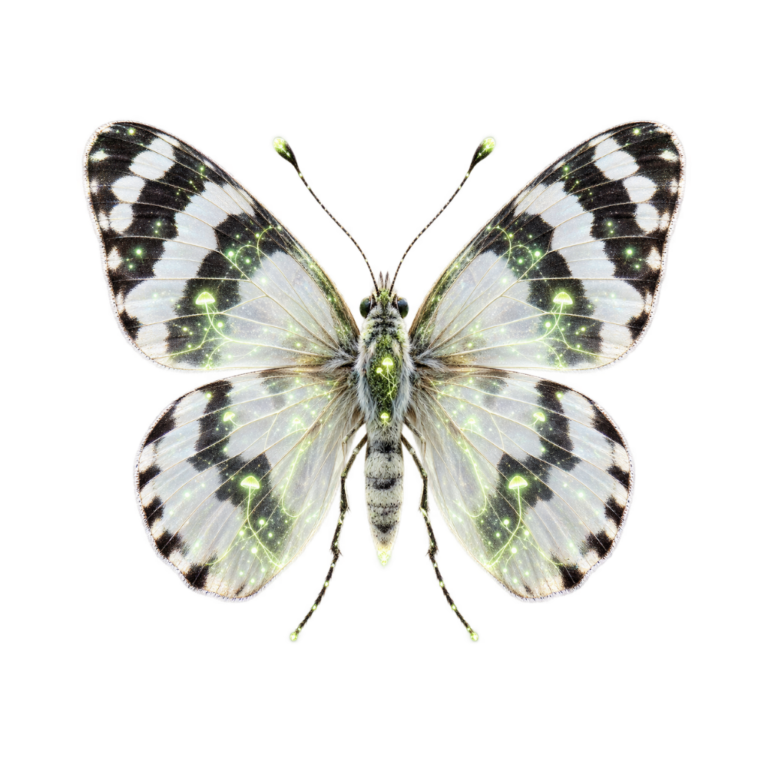
ME-SP-00063-L
Chinese Mantis
Tenodera sinensis
Mantidae • Insecta
ME-SP-00063-LChinese Mantis
Tenodera sinensis
Mantodea • Mantidae • InsectaHow to Recognize It
Chinese Mantis (Tenodera sinensis) should be identified using the anatomical characters appropriate to its taxonomic group, supported by life stage, size, locality, behavior, and reliable provenance. Color by itself is rarely sufficient because age, sex, molt stage, preservation, and lighting can change appearance. Juveniles may lack adult diagnostic structures. Where the taxon includes similar-looking relatives, retain high-resolution dorsal, ventral, and lateral photographs and preserve any molt or developmental evidence that can support later review. Species-level certainty should be downgraded rather than guessed when key characters or locality data are missing.Life Beyond the Enclosure
Chinese Mantis is an invertebrate whose ecology is shaped by its particular body plan and life cycle. Growth in arthropods occurs through molts, while other invertebrate groups may use different developmental strategies. Microhabitat, moisture, temperature, food resources, predators, competitors, and season all influence activity. Many species occupy narrow ecological niches even when adults appear mobile or generalist. Feeding strategy can change between juvenile and adult stages, and reproduction may be seasonal. Natural-history information should be separated from captive-care assumptions: a field observation describes what the animal used in one place and time, not automatically the only condition it can tolerate in captivity. Practical records should note date, life stage, feeding response, behavior, environmental observations, and any intervention so trends are visible instead of relying on memory. For Tenodera sinensis, locality, season, and life stage should stay attached to observations because those variables can change the ecological picture substantially.Keeper Reference
Care for Chinese Mantis should begin with verified taxonomic identity and a species-specific understanding of microhabitat, feeding, hydration, and development. Provide secure ventilation, escape prevention, suitable structural complexity, safe moisture, and food that matches the animal's natural feeding mode. Avoid crowding unless social tolerance is established. Molting or otherwise vulnerable stages require minimal disturbance. When published husbandry data are sparse, favor short-term observation over experimental long-term keeping and record every environmental change. Do not release imported, captive-bred, or uncertain-origin animals. Any numeric temperature or humidity target should come from a reputable species-specific source rather than a generic invertebrate recipe. Practical records should note date, life stage, feeding response, behavior, environmental observations, and any intervention so trends are visible instead of relying on memory. Any final care numbers for Tenodera sinensis should be tied to a named species-specific source and reviewed after actual husbandry observations.Collection Knowledge
Chinese Mantis (Tenodera sinensis) represents the astonishingly varied invertebrate majority of animal life. Its shape, sensory systems, life cycle, and ecological role make more sense when viewed together rather than as a collection of isolated traits. Identification should combine anatomy with locality and life stage because juveniles and adults can look very different, especially in groups that molt or metamorphose. In the wild, microhabitat is often the hidden key: moisture, substrate, food, shelter, and season can determine where the animal appears. Good records preserve that context, turning a specimen or observation into something far more informative than a name on a label. Practical records should note date, life stage, feeding response, behavior, environmental observations, and any intervention so trends are visible instead of relying on memory. Records for Tenodera sinensis are most useful when identification, locality, life stage, and source provenance remain linked to the profile. Keep this Tenodera sinensis account under species-specific review as stronger references become available.ME-SP-0003X-F
Clouded Skipper
Lerema accius
Hesperiidae • Insecta
ME-SP-0003X-FClouded Skipper
Lerema accius
Lepidoptera • Hesperiidae • InsectaHow to Recognize It
Clouded Skipper (Lerema accius) is a lepidopteran whose identification should combine adult wing shape and pattern, dorsal and ventral markings, body form, antennae, and locality rather than relying on color alone. Sex, wear, season, and lighting can alter appearance, while closely related species may share broad pattern elements. Larvae and pupae can look radically different from adults, so life stage must be recorded. For preserved material, intact diagnostic structures and a reliable specimen label are as important as color. When a determination is uncertain, compare multiple characters against a taxonomic or regional reference before assigning species-level certainty.Life Beyond the Enclosure
Clouded Skipper is part of the butterfly-and-moth lineage and passes through complete metamorphosis: egg, larva, pupa, and adult. Ecological requirements change sharply across those stages. Caterpillars are usually tied to particular host plants or host-plant families, whereas adults commonly focus on dispersal, courtship, reproduction, and species-specific food resources such as nectar, sap, fruit, or other liquids. Seasonal timing and local climate influence generation number, diapause, and adult flight. Predators, parasitoids, weather, host-plant chemistry, and habitat structure all shape survival. Distribution records should be interpreted at the taxon level because related species can occupy very different ranges and habitats. Practical records should note date, life stage, feeding response, behavior, environmental observations, and any intervention so trends are visible instead of relying on memory. For Lerema accius, locality, season, and life stage should stay attached to observations because those variables can change the ecological picture substantially. Keep this Lerema accius account under species-specific review as stronger references become available.Keeper Reference
Care for Clouded Skipper depends first on life stage. Eggs and larvae require correctly identified host material, excellent airflow, sanitation, and enough space to avoid crowding. Pupae need the orientation and moisture pattern appropriate to the species, while adults require safe flight room, appropriate food resources, and surfaces that prevent wing damage. Wild adults are generally poor candidates for long-term display captivity; observation or rearing should use legally obtained material and a verified species-specific protocol. Avoid generic heat or humidity targets when published rearing data are unavailable, because host plant, season, and local climate can matter more than a single thermostat number. Keep this Lerema accius account under species-specific review as stronger references become available.Collection Knowledge
Clouded Skipper (Lerema accius) belongs to one of the most transformation-heavy branches of the animal tree. Its life is divided among an egg, a feeding caterpillar, a reorganizing pupa, and a winged adult built largely for dispersal and reproduction. That stage shift means the same species can occupy different microhabitats and use completely different resources across its life. Identification is strongest when wing pattern, shape, locality, season, and life stage are considered together. Ecologically, species in this group connect host plants, flowering plants, predators, and parasitoids, making even a small moth or butterfly part of a surprisingly busy food web. Practical records should note date, life stage, feeding response, behavior, environmental observations, and any intervention so trends are visible instead of relying on memory. Records for Lerema accius are most useful when identification, locality, life stage, and source provenance remain linked to the profile. Keep this Lerema accius account under species-specific review as stronger references become available.ME-SP-00038-6
Cloudless Sulphur
Phoebis sennae
Pieridae • Insecta
ME-SP-00038-6Cloudless Sulphur
Phoebis sennae
Lepidoptera • Pieridae • InsectaHow to Recognize It
Cloudless Sulphur (Phoebis sennae) is a lepidopteran whose identification should combine adult wing shape and pattern, dorsal and ventral markings, body form, antennae, and locality rather than relying on color alone. Sex, wear, season, and lighting can alter appearance, while closely related species may share broad pattern elements. Larvae and pupae can look radically different from adults, so life stage must be recorded. For preserved material, intact diagnostic structures and a reliable specimen label are as important as color. When a determination is uncertain, compare multiple characters against a taxonomic or regional reference before assigning species-level certainty.Life Beyond the Enclosure
Cloudless Sulphur is part of the butterfly-and-moth lineage and passes through complete metamorphosis: egg, larva, pupa, and adult. Ecological requirements change sharply across those stages. Caterpillars are usually tied to particular host plants or host-plant families, whereas adults commonly focus on dispersal, courtship, reproduction, and species-specific food resources such as nectar, sap, fruit, or other liquids. Seasonal timing and local climate influence generation number, diapause, and adult flight. Predators, parasitoids, weather, host-plant chemistry, and habitat structure all shape survival. Distribution records should be interpreted at the taxon level because related species can occupy very different ranges and habitats. Practical records should note date, life stage, feeding response, behavior, environmental observations, and any intervention so trends are visible instead of relying on memory. For Phoebis sennae, locality, season, and life stage should stay attached to observations because those variables can change the ecological picture substantially. Keep this Phoebis sennae account under species-specific review as stronger references become available.Keeper Reference
Care for Cloudless Sulphur depends first on life stage. Eggs and larvae require correctly identified host material, excellent airflow, sanitation, and enough space to avoid crowding. Pupae need the orientation and moisture pattern appropriate to the species, while adults require safe flight room, appropriate food resources, and surfaces that prevent wing damage. Wild adults are generally poor candidates for long-term display captivity; observation or rearing should use legally obtained material and a verified species-specific protocol. Avoid generic heat or humidity targets when published rearing data are unavailable, because host plant, season, and local climate can matter more than a single thermostat number. Keep this Phoebis sennae account under species-specific review as stronger references become available.Collection Knowledge
Cloudless Sulphur (Phoebis sennae) belongs to one of the most transformation-heavy branches of the animal tree. Its life is divided among an egg, a feeding caterpillar, a reorganizing pupa, and a winged adult built largely for dispersal and reproduction. That stage shift means the same species can occupy different microhabitats and use completely different resources across its life. Identification is strongest when wing pattern, shape, locality, season, and life stage are considered together. Ecologically, species in this group connect host plants, flowering plants, predators, and parasitoids, making even a small moth or butterfly part of a surprisingly busy food web. Practical records should note date, life stage, feeding response, behavior, environmental observations, and any intervention so trends are visible instead of relying on memory. Records for Phoebis sennae are most useful when identification, locality, life stage, and source provenance remain linked to the profile. Keep this Phoebis sennae account under species-specific review as stronger references become available.MycoVault Game Counterparts
These are digital game specimens and characters inspired by the real-world species above. Their lore, rarity, game traits, and collectible ownership belong to MycoVault.

ME-SP-0002O-Y
Common Buckeye
Junonia coenia
Nymphalidae • Insecta
ME-SP-0002O-YCommon Buckeye
Junonia coenia
Lepidoptera • Nymphalidae • InsectaHow to Recognize It
Common Buckeye (Junonia coenia) is a lepidopteran whose identification should combine adult wing shape and pattern, dorsal and ventral markings, body form, antennae, and locality rather than relying on color alone. Sex, wear, season, and lighting can alter appearance, while closely related species may share broad pattern elements. Larvae and pupae can look radically different from adults, so life stage must be recorded. For preserved material, intact diagnostic structures and a reliable specimen label are as important as color. When a determination is uncertain, compare multiple characters against a taxonomic or regional reference before assigning species-level certainty.Life Beyond the Enclosure
Common Buckeye is part of the butterfly-and-moth lineage and passes through complete metamorphosis: egg, larva, pupa, and adult. Ecological requirements change sharply across those stages. Caterpillars are usually tied to particular host plants or host-plant families, whereas adults commonly focus on dispersal, courtship, reproduction, and species-specific food resources such as nectar, sap, fruit, or other liquids. Seasonal timing and local climate influence generation number, diapause, and adult flight. Predators, parasitoids, weather, host-plant chemistry, and habitat structure all shape survival. Distribution records should be interpreted at the taxon level because related species can occupy very different ranges and habitats. Practical records should note date, life stage, feeding response, behavior, environmental observations, and any intervention so trends are visible instead of relying on memory. For Junonia coenia, locality, season, and life stage should stay attached to observations because those variables can change the ecological picture substantially. Keep this Junonia coenia account under species-specific review as stronger references become available.Keeper Reference
Care for Common Buckeye depends first on life stage. Eggs and larvae require correctly identified host material, excellent airflow, sanitation, and enough space to avoid crowding. Pupae need the orientation and moisture pattern appropriate to the species, while adults require safe flight room, appropriate food resources, and surfaces that prevent wing damage. Wild adults are generally poor candidates for long-term display captivity; observation or rearing should use legally obtained material and a verified species-specific protocol. Avoid generic heat or humidity targets when published rearing data are unavailable, because host plant, season, and local climate can matter more than a single thermostat number. Keep this Junonia coenia account under species-specific review as stronger references become available.Collection Knowledge
Common Buckeye (Junonia coenia) belongs to one of the most transformation-heavy branches of the animal tree. Its life is divided among an egg, a feeding caterpillar, a reorganizing pupa, and a winged adult built largely for dispersal and reproduction. That stage shift means the same species can occupy different microhabitats and use completely different resources across its life. Identification is strongest when wing pattern, shape, locality, season, and life stage are considered together. Ecologically, species in this group connect host plants, flowering plants, predators, and parasitoids, making even a small moth or butterfly part of a surprisingly busy food web. Practical records should note date, life stage, feeding response, behavior, environmental observations, and any intervention so trends are visible instead of relying on memory. Records for Junonia coenia are most useful when identification, locality, life stage, and source provenance remain linked to the profile. Keep this Junonia coenia account under species-specific review as stronger references become available.MycoVault Game Counterparts
These are digital game specimens and characters inspired by the real-world species above. Their lore, rarity, game traits, and collectible ownership belong to MycoVault.

ME-SP-0003T-F
Common Checkered-Skipper
Pyrgus communis
Hesperiidae • Insecta
ME-SP-0003T-FCommon Checkered-Skipper
Pyrgus communis
Lepidoptera • Hesperiidae • InsectaHow to Recognize It
Common Checkered-Skipper (Pyrgus communis) is a lepidopteran whose identification should combine adult wing shape and pattern, dorsal and ventral markings, body form, antennae, and locality rather than relying on color alone. Sex, wear, season, and lighting can alter appearance, while closely related species may share broad pattern elements. Larvae and pupae can look radically different from adults, so life stage must be recorded. For preserved material, intact diagnostic structures and a reliable specimen label are as important as color. When a determination is uncertain, compare multiple characters against a taxonomic or regional reference before assigning species-level certainty.Life Beyond the Enclosure
Common Checkered-Skipper is part of the butterfly-and-moth lineage and passes through complete metamorphosis: egg, larva, pupa, and adult. Ecological requirements change sharply across those stages. Caterpillars are usually tied to particular host plants or host-plant families, whereas adults commonly focus on dispersal, courtship, reproduction, and species-specific food resources such as nectar, sap, fruit, or other liquids. Seasonal timing and local climate influence generation number, diapause, and adult flight. Predators, parasitoids, weather, host-plant chemistry, and habitat structure all shape survival. Distribution records should be interpreted at the taxon level because related species can occupy very different ranges and habitats. Practical records should note date, life stage, feeding response, behavior, environmental observations, and any intervention so trends are visible instead of relying on memory. For Pyrgus communis, locality, season, and life stage should stay attached to observations because those variables can change the ecological picture substantially.Keeper Reference
Care for Common Checkered-Skipper depends first on life stage. Eggs and larvae require correctly identified host material, excellent airflow, sanitation, and enough space to avoid crowding. Pupae need the orientation and moisture pattern appropriate to the species, while adults require safe flight room, appropriate food resources, and surfaces that prevent wing damage. Wild adults are generally poor candidates for long-term display captivity; observation or rearing should use legally obtained material and a verified species-specific protocol. Avoid generic heat or humidity targets when published rearing data are unavailable, because host plant, season, and local climate can matter more than a single thermostat number. Keep this Pyrgus communis account under species-specific review as stronger references become available.Collection Knowledge
Common Checkered-Skipper (Pyrgus communis) belongs to one of the most transformation-heavy branches of the animal tree. Its life is divided among an egg, a feeding caterpillar, a reorganizing pupa, and a winged adult built largely for dispersal and reproduction. That stage shift means the same species can occupy different microhabitats and use completely different resources across its life. Identification is strongest when wing pattern, shape, locality, season, and life stage are considered together. Ecologically, species in this group connect host plants, flowering plants, predators, and parasitoids, making even a small moth or butterfly part of a surprisingly busy food web. Practical records should note date, life stage, feeding response, behavior, environmental observations, and any intervention so trends are visible instead of relying on memory. Records for Pyrgus communis are most useful when identification, locality, life stage, and source provenance remain linked to the profile. Keep this Pyrgus communis account under species-specific review as stronger references become available.ME-SP-0005G-M
Common Eastern Firefly
Photinus pyralis
Lampyridae • Insecta
ME-SP-0005G-MCommon Eastern Firefly
Photinus pyralis
Coleoptera • Lampyridae • InsectaHow to Recognize It
Common Eastern Firefly (Photinus pyralis) is a beetle and should be identified from body shape, antennae, pronotum, elytra, leg structure, surface sculpture, color pattern, size, and locality. The hardened forewings, or elytra, identify Coleoptera as a group, but species-level work often depends on small structural characters rather than overall color. Larvae may bear little resemblance to adults and may require host, substrate, or rearing information for confident identification. Wear, age, and preservation can alter color or sheen. Keep locality, collection or acquisition data, photographs, and any associated larval substrate information with the specimen record.Life Beyond the Enclosure
Common Eastern Firefly is part of Coleoptera, the beetles, a huge radiation united by hardened forewings that protect the flight wings and abdomen. Complete metamorphosis separates egg, larva, pupa, and adult stages, and those stages can occupy different ecological niches. Depending on the species, larvae may develop in soil, wood, dung, carrion, fungi, roots, foliage, or other specialized substrates, while adults may feed, disperse, reproduce, or sometimes eat very little. Moisture, temperature, food quality, microbial decomposition, and substrate structure can all influence development. Ecological role may include predation, decomposition, pollination, herbivory, or nutrient cycling. Practical records should note date, life stage, feeding response, behavior, environmental observations, and any intervention so trends are visible instead of relying on memory. For Photinus pyralis, locality, season, and life stage should stay attached to observations because those variables can change the ecological picture substantially. Keep this Photinus pyralis account under species-specific review as stronger references become available.Keeper Reference
Care for Common Eastern Firefly must be based on its larval ecology and adult feeding strategy. A generic beetle box is not enough: wood borers, carrion beetles, dung beetles, flower beetles, tiger beetles, and scarabs require very different substrates and foods. For temporary adult observation, provide secure ventilation, traction, a species-appropriate food or moisture source, and protection from overheating. For rearing, use only correctly identified substrate or host material and prevent mold, mites, and anaerobic decay through sanitation and airflow. Avoid releasing captive, imported, or uncertain-origin beetles. Confirm species-specific developmental substrate, temperature, and moisture requirements before attempting multigenerational culture. Practical records should note date, life stage, feeding response, behavior, environmental observations, and any intervention so trends are visible instead of relying on memory. Any final care numbers for Photinus pyralis should be tied to a named species-specific source and reviewed after actual husbandry observations.Collection Knowledge
Common Eastern Firefly (Photinus pyralis) is a member of Coleoptera, the beetles, whose signature hardware is a pair of hardened forewings called elytra. Beneath those protective covers sit the functional flight wings. Beetles undergo complete metamorphosis, so a grub-like larva may live in an entirely different world from the adult it becomes. Across the order, beetles work as predators, decomposers, herbivores, pollinators, scavengers, and ecosystem recyclers. That diversity also makes identification challenging: body sculpture, antennae, pronotum, legs, elytra, locality, and sometimes genital anatomy can matter more than color. Larval habitat is often one of the best clues to biology. Practical records should note date, life stage, feeding response, behavior, environmental observations, and any intervention so trends are visible instead of relying on memory. Records for Photinus pyralis are most useful when identification, locality, life stage, and source provenance remain linked to the profile. Keep this Photinus pyralis account under species-specific review as stronger references become available.ME-SP-0001A-8
Common Garter Snake
Thamnophis sirtalis
Colubridae • Reptilia
ME-SP-0001A-8Common Garter Snake
Thamnophis sirtalis
Squamata • Colubridae • ReptiliaHow to Recognize It
Common Garter Snake (Thamnophis sirtalis) should be identified from a combination of body proportions, scalation, head shape, limb or toe structure when present, pattern, coloration, and geographic provenance. Captive-bred color morphs can obscure wild-type appearance, so morphology and documented lineage are more reliable than color alone. Juveniles may differ markedly from adults. Sexing characters are species- and age-dependent and should not be guessed from a photograph without validated criteria. Similar-looking relatives may overlap in the pet trade, making a complete acquisition record and exact scientific name important for husbandry as well as taxonomy.Life Beyond the Enclosure
Common Garter Snake is an ectothermic reptile whose activity, digestion, growth, reproduction, and immune function are strongly influenced by environmental temperature and access to an appropriate thermal range. In the wild, reptiles regulate body temperature behaviorally by moving among sun, shade, burrows, vegetation, rock, water, or other microhabitats. Diet and activity pattern vary by species, from insectivory or herbivory to vertebrate prey. Seasonal rainfall, day length, and temperature can influence reproduction and dormancy. Captive care should therefore recreate useful choices rather than one uniform condition, while natural-history observations should not be converted into husbandry numbers without supporting evidence. Practical records should note date, life stage, feeding response, behavior, environmental observations, and any intervention so trends are visible instead of relying on memory. For Thamnophis sirtalis, locality, season, and life stage should stay attached to observations because those variables can change the ecological picture substantially. Keep this Thamnophis sirtalis account under species-specific review as stronger references become available.Keeper Reference
Successful care for Common Garter Snake requires a secure enclosure with a species-appropriate thermal gradient, measured temperatures, suitable humidity and ventilation, appropriate light exposure, safe substrate, clean water, and a diet matched to its natural feeding strategy. Reptiles should be able to choose among warmer, cooler, drier, and more humid microclimates rather than being held at one uniform setting. UVB requirements, basking intensity, substrate depth, enclosure orientation, and feeding frequency differ substantially among reptiles, so final numeric targets must follow a validated species-specific husbandry source. Quarantine new animals and track body condition, appetite, feces, sheds, and behavior over time. Practical records should note date, life stage, feeding response, behavior, environmental observations, and any intervention so trends are visible instead of relying on memory. Any final care numbers for Thamnophis sirtalis should be tied to a named species-specific source and reviewed after actual husbandry observations.Collection Knowledge
Common Garter Snake (Thamnophis sirtalis) is a reptile shaped by behavioral thermoregulation. Instead of generating a stable internal temperature the way mammals do, it uses the environment as a control panel, moving among warmer and cooler microhabitats as its needs change. That makes habitat structure biologically meaningful rather than decorative. Depending on the species, climbing, burrowing, basking, hiding, or soaking may be central parts of daily behavior. Captive-bred animals can also show colors and patterns unlike wild populations, so identification should use anatomy and provenance, not just appearance. Good husbandry is built around measured gradients and choices, not a single 'room temperature' number. Practical records should note date, life stage, feeding response, behavior, environmental observations, and any intervention so trends are visible instead of relying on memory. Records for Thamnophis sirtalis are most useful when identification, locality, life stage, and source provenance remain linked to the profile. Keep this Thamnophis sirtalis account under species-specific review as stronger references become available.ME-SP-00067-L
Common Green Darner
Anax junius
Aeshnidae • Insecta
ME-SP-00067-LCommon Green Darner
Anax junius
Odonata • Aeshnidae • InsectaHow to Recognize It
Common Green Darner (Anax junius) should be identified using the anatomical characters appropriate to its taxonomic group, supported by life stage, size, locality, behavior, and reliable provenance. Color by itself is rarely sufficient because age, sex, molt stage, preservation, and lighting can change appearance. Juveniles may lack adult diagnostic structures. Where the taxon includes similar-looking relatives, retain high-resolution dorsal, ventral, and lateral photographs and preserve any molt or developmental evidence that can support later review. Species-level certainty should be downgraded rather than guessed when key characters or locality data are missing.Life Beyond the Enclosure
Common Green Darner is an invertebrate whose ecology is shaped by its particular body plan and life cycle. Growth in arthropods occurs through molts, while other invertebrate groups may use different developmental strategies. Microhabitat, moisture, temperature, food resources, predators, competitors, and season all influence activity. Many species occupy narrow ecological niches even when adults appear mobile or generalist. Feeding strategy can change between juvenile and adult stages, and reproduction may be seasonal. Natural-history information should be separated from captive-care assumptions: a field observation describes what the animal used in one place and time, not automatically the only condition it can tolerate in captivity. Practical records should note date, life stage, feeding response, behavior, environmental observations, and any intervention so trends are visible instead of relying on memory. For Anax junius, locality, season, and life stage should stay attached to observations because those variables can change the ecological picture substantially.Keeper Reference
Care for Common Green Darner should begin with verified taxonomic identity and a species-specific understanding of microhabitat, feeding, hydration, and development. Provide secure ventilation, escape prevention, suitable structural complexity, safe moisture, and food that matches the animal's natural feeding mode. Avoid crowding unless social tolerance is established. Molting or otherwise vulnerable stages require minimal disturbance. When published husbandry data are sparse, favor short-term observation over experimental long-term keeping and record every environmental change. Do not release imported, captive-bred, or uncertain-origin animals. Any numeric temperature or humidity target should come from a reputable species-specific source rather than a generic invertebrate recipe. Keep this Anax junius account under species-specific review as stronger references become available.Collection Knowledge
Common Green Darner (Anax junius) represents the astonishingly varied invertebrate majority of animal life. Its shape, sensory systems, life cycle, and ecological role make more sense when viewed together rather than as a collection of isolated traits. Identification should combine anatomy with locality and life stage because juveniles and adults can look very different, especially in groups that molt or metamorphose. In the wild, microhabitat is often the hidden key: moisture, substrate, food, shelter, and season can determine where the animal appears. Good records preserve that context, turning a specimen or observation into something far more informative than a name on a label. Practical records should note date, life stage, feeding response, behavior, environmental observations, and any intervention so trends are visible instead of relying on memory. Records for Anax junius are most useful when identification, locality, life stage, and source provenance remain linked to the profile. Keep this Anax junius account under species-specific review as stronger references become available.MycoVault Game Counterparts
These are digital game specimens and characters inspired by the real-world species above. Their lore, rarity, game traits, and collectible ownership belong to MycoVault.
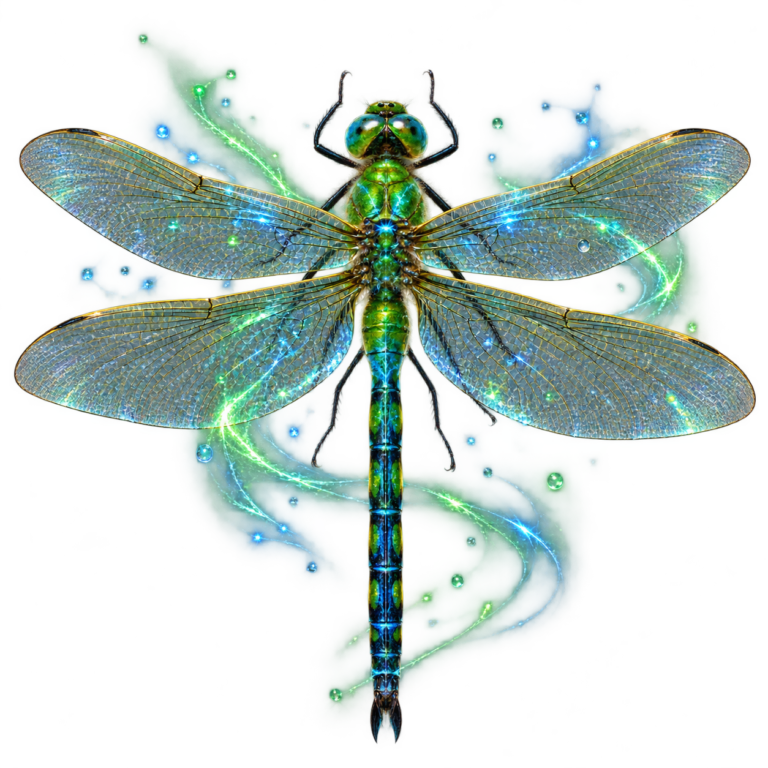
ME-SP-0000T-R
Common House Gecko
Hemidactylus frenatus
Gekkonidae • Reptilia
ME-SP-0000T-RCommon House Gecko
Hemidactylus frenatus
Squamata • Gekkonidae • ReptiliaHow to Recognize It
Common House Gecko (Hemidactylus frenatus) should be identified from a combination of body proportions, scalation, head shape, limb or toe structure when present, pattern, coloration, and geographic provenance. Captive-bred color morphs can obscure wild-type appearance, so morphology and documented lineage are more reliable than color alone. Juveniles may differ markedly from adults. Sexing characters are species- and age-dependent and should not be guessed from a photograph without validated criteria. Similar-looking relatives may overlap in the pet trade, making a complete acquisition record and exact scientific name important for husbandry as well as taxonomy.Life Beyond the Enclosure
Common House Gecko is an ectothermic reptile whose activity, digestion, growth, reproduction, and immune function are strongly influenced by environmental temperature and access to an appropriate thermal range. In the wild, reptiles regulate body temperature behaviorally by moving among sun, shade, burrows, vegetation, rock, water, or other microhabitats. Diet and activity pattern vary by species, from insectivory or herbivory to vertebrate prey. Seasonal rainfall, day length, and temperature can influence reproduction and dormancy. Captive care should therefore recreate useful choices rather than one uniform condition, while natural-history observations should not be converted into husbandry numbers without supporting evidence. Practical records should note date, life stage, feeding response, behavior, environmental observations, and any intervention so trends are visible instead of relying on memory. For Hemidactylus frenatus, locality, season, and life stage should stay attached to observations because those variables can change the ecological picture substantially. Keep this Hemidactylus frenatus account under species-specific review as stronger references become available.Keeper Reference
Successful care for Common House Gecko requires a secure enclosure with a species-appropriate thermal gradient, measured temperatures, suitable humidity and ventilation, appropriate light exposure, safe substrate, clean water, and a diet matched to its natural feeding strategy. Reptiles should be able to choose among warmer, cooler, drier, and more humid microclimates rather than being held at one uniform setting. UVB requirements, basking intensity, substrate depth, enclosure orientation, and feeding frequency differ substantially among reptiles, so final numeric targets must follow a validated species-specific husbandry source. Quarantine new animals and track body condition, appetite, feces, sheds, and behavior over time. Practical records should note date, life stage, feeding response, behavior, environmental observations, and any intervention so trends are visible instead of relying on memory. Any final care numbers for Hemidactylus frenatus should be tied to a named species-specific source and reviewed after actual husbandry observations.Collection Knowledge
Common House Gecko (Hemidactylus frenatus) is a reptile shaped by behavioral thermoregulation. Instead of generating a stable internal temperature the way mammals do, it uses the environment as a control panel, moving among warmer and cooler microhabitats as its needs change. That makes habitat structure biologically meaningful rather than decorative. Depending on the species, climbing, burrowing, basking, hiding, or soaking may be central parts of daily behavior. Captive-bred animals can also show colors and patterns unlike wild populations, so identification should use anatomy and provenance, not just appearance. Good husbandry is built around measured gradients and choices, not a single 'room temperature' number. Practical records should note date, life stage, feeding response, behavior, environmental observations, and any intervention so trends are visible instead of relying on memory. Records for Hemidactylus frenatus are most useful when identification, locality, life stage, and source provenance remain linked to the profile. Keep this Hemidactylus frenatus account under species-specific review as stronger references become available.ME-SP-00061-3
Common Pillbug
Armadillidium vulgare
Armadillidiidae • Malacostraca
ME-SP-00061-3Common Pillbug
Armadillidium vulgare
Isopoda • Armadillidiidae • MalacostracaHow to Recognize It
Common Pillbug (Armadillidium vulgare) should be identified using the anatomical characters appropriate to its taxonomic group, supported by life stage, size, locality, behavior, and reliable provenance. Color by itself is rarely sufficient because age, sex, molt stage, preservation, and lighting can change appearance. Juveniles may lack adult diagnostic structures. Where the taxon includes similar-looking relatives, retain high-resolution dorsal, ventral, and lateral photographs and preserve any molt or developmental evidence that can support later review. Species-level certainty should be downgraded rather than guessed when key characters or locality data are missing.Life Beyond the Enclosure
Common Pillbug is an invertebrate whose ecology is shaped by its particular body plan and life cycle. Growth in arthropods occurs through molts, while other invertebrate groups may use different developmental strategies. Microhabitat, moisture, temperature, food resources, predators, competitors, and season all influence activity. Many species occupy narrow ecological niches even when adults appear mobile or generalist. Feeding strategy can change between juvenile and adult stages, and reproduction may be seasonal. Natural-history information should be separated from captive-care assumptions: a field observation describes what the animal used in one place and time, not automatically the only condition it can tolerate in captivity. Practical records should note date, life stage, feeding response, behavior, environmental observations, and any intervention so trends are visible instead of relying on memory. For Armadillidium vulgare, locality, season, and life stage should stay attached to observations because those variables can change the ecological picture substantially.Keeper Reference
Care for Common Pillbug should begin with verified taxonomic identity and a species-specific understanding of microhabitat, feeding, hydration, and development. Provide secure ventilation, escape prevention, suitable structural complexity, safe moisture, and food that matches the animal's natural feeding mode. Avoid crowding unless social tolerance is established. Molting or otherwise vulnerable stages require minimal disturbance. When published husbandry data are sparse, favor short-term observation over experimental long-term keeping and record every environmental change. Do not release imported, captive-bred, or uncertain-origin animals. Any numeric temperature or humidity target should come from a reputable species-specific source rather than a generic invertebrate recipe. Practical records should note date, life stage, feeding response, behavior, environmental observations, and any intervention so trends are visible instead of relying on memory. Any final care numbers for Armadillidium vulgare should be tied to a named species-specific source and reviewed after actual husbandry observations.Collection Knowledge
Common Pillbug (Armadillidium vulgare) represents the astonishingly varied invertebrate majority of animal life. Its shape, sensory systems, life cycle, and ecological role make more sense when viewed together rather than as a collection of isolated traits. Identification should combine anatomy with locality and life stage because juveniles and adults can look very different, especially in groups that molt or metamorphose. In the wild, microhabitat is often the hidden key: moisture, substrate, food, shelter, and season can determine where the animal appears. Good records preserve that context, turning a specimen or observation into something far more informative than a name on a label. Practical records should note date, life stage, feeding response, behavior, environmental observations, and any intervention so trends are visible instead of relying on memory. Records for Armadillidium vulgare are most useful when identification, locality, life stage, and source provenance remain linked to the profile. Keep this Armadillidium vulgare account under species-specific review as stronger references become available.ME-SP-00030-6
Common Wood-Nymph
Cercyonis pegala
Nymphalidae • Insecta
ME-SP-00030-6Common Wood-Nymph
Cercyonis pegala
Lepidoptera • Nymphalidae • InsectaHow to Recognize It
Common Wood-Nymph (Cercyonis pegala) is a lepidopteran whose identification should combine adult wing shape and pattern, dorsal and ventral markings, body form, antennae, and locality rather than relying on color alone. Sex, wear, season, and lighting can alter appearance, while closely related species may share broad pattern elements. Larvae and pupae can look radically different from adults, so life stage must be recorded. For preserved material, intact diagnostic structures and a reliable specimen label are as important as color. When a determination is uncertain, compare multiple characters against a taxonomic or regional reference before assigning species-level certainty.Life Beyond the Enclosure
Common Wood-Nymph is part of the butterfly-and-moth lineage and passes through complete metamorphosis: egg, larva, pupa, and adult. Ecological requirements change sharply across those stages. Caterpillars are usually tied to particular host plants or host-plant families, whereas adults commonly focus on dispersal, courtship, reproduction, and species-specific food resources such as nectar, sap, fruit, or other liquids. Seasonal timing and local climate influence generation number, diapause, and adult flight. Predators, parasitoids, weather, host-plant chemistry, and habitat structure all shape survival. Distribution records should be interpreted at the taxon level because related species can occupy very different ranges and habitats. Practical records should note date, life stage, feeding response, behavior, environmental observations, and any intervention so trends are visible instead of relying on memory. For Cercyonis pegala, locality, season, and life stage should stay attached to observations because those variables can change the ecological picture substantially.Keeper Reference
Care for Common Wood-Nymph depends first on life stage. Eggs and larvae require correctly identified host material, excellent airflow, sanitation, and enough space to avoid crowding. Pupae need the orientation and moisture pattern appropriate to the species, while adults require safe flight room, appropriate food resources, and surfaces that prevent wing damage. Wild adults are generally poor candidates for long-term display captivity; observation or rearing should use legally obtained material and a verified species-specific protocol. Avoid generic heat or humidity targets when published rearing data are unavailable, because host plant, season, and local climate can matter more than a single thermostat number. Keep this Cercyonis pegala account under species-specific review as stronger references become available.Collection Knowledge
Common Wood-Nymph (Cercyonis pegala) belongs to one of the most transformation-heavy branches of the animal tree. Its life is divided among an egg, a feeding caterpillar, a reorganizing pupa, and a winged adult built largely for dispersal and reproduction. That stage shift means the same species can occupy different microhabitats and use completely different resources across its life. Identification is strongest when wing pattern, shape, locality, season, and life stage are considered together. Ecologically, species in this group connect host plants, flowering plants, predators, and parasitoids, making even a small moth or butterfly part of a surprisingly busy food web. Practical records should note date, life stage, feeding response, behavior, environmental observations, and any intervention so trends are visible instead of relying on memory. Records for Cercyonis pegala are most useful when identification, locality, life stage, and source provenance remain linked to the profile. Keep this Cercyonis pegala account under species-specific review as stronger references become available.ME-SP-00018-Q
Corn Snake
Pantherophis guttatus
Colubridae • Reptilia
ME-SP-00018-QCorn Snake
Pantherophis guttatus
Squamata • Colubridae • ReptiliaHow to Recognize It
Corn Snake (Pantherophis guttatus) should be identified from a combination of body proportions, scalation, head shape, limb or toe structure when present, pattern, coloration, and geographic provenance. Captive-bred color morphs can obscure wild-type appearance, so morphology and documented lineage are more reliable than color alone. Juveniles may differ markedly from adults. Sexing characters are species- and age-dependent and should not be guessed from a photograph without validated criteria. Similar-looking relatives may overlap in the pet trade, making a complete acquisition record and exact scientific name important for husbandry as well as taxonomy.Life Beyond the Enclosure
Corn Snake is an ectothermic reptile whose activity, digestion, growth, reproduction, and immune function are strongly influenced by environmental temperature and access to an appropriate thermal range. In the wild, reptiles regulate body temperature behaviorally by moving among sun, shade, burrows, vegetation, rock, water, or other microhabitats. Diet and activity pattern vary by species, from insectivory or herbivory to vertebrate prey. Seasonal rainfall, day length, and temperature can influence reproduction and dormancy. Captive care should therefore recreate useful choices rather than one uniform condition, while natural-history observations should not be converted into husbandry numbers without supporting evidence. Practical records should note date, life stage, feeding response, behavior, environmental observations, and any intervention so trends are visible instead of relying on memory. For Pantherophis guttatus, locality, season, and life stage should stay attached to observations because those variables can change the ecological picture substantially. Keep this Pantherophis guttatus account under species-specific review as stronger references become available.Keeper Reference
Successful care for Corn Snake requires a secure enclosure with a species-appropriate thermal gradient, measured temperatures, suitable humidity and ventilation, appropriate light exposure, safe substrate, clean water, and a diet matched to its natural feeding strategy. Reptiles should be able to choose among warmer, cooler, drier, and more humid microclimates rather than being held at one uniform setting. UVB requirements, basking intensity, substrate depth, enclosure orientation, and feeding frequency differ substantially among reptiles, so final numeric targets must follow a validated species-specific husbandry source. Quarantine new animals and track body condition, appetite, feces, sheds, and behavior over time. Practical records should note date, life stage, feeding response, behavior, environmental observations, and any intervention so trends are visible instead of relying on memory. Any final care numbers for Pantherophis guttatus should be tied to a named species-specific source and reviewed after actual husbandry observations.Collection Knowledge
Corn Snake (Pantherophis guttatus) is a reptile shaped by behavioral thermoregulation. Instead of generating a stable internal temperature the way mammals do, it uses the environment as a control panel, moving among warmer and cooler microhabitats as its needs change. That makes habitat structure biologically meaningful rather than decorative. Depending on the species, climbing, burrowing, basking, hiding, or soaking may be central parts of daily behavior. Captive-bred animals can also show colors and patterns unlike wild populations, so identification should use anatomy and provenance, not just appearance. Good husbandry is built around measured gradients and choices, not a single 'room temperature' number. Practical records should note date, life stage, feeding response, behavior, environmental observations, and any intervention so trends are visible instead of relying on memory. Records for Pantherophis guttatus are most useful when identification, locality, life stage, and source provenance remain linked to the profile. Keep this Pantherophis guttatus account under species-specific review as stronger references become available.ME-SP-0001F-H
Cranwell’s Horned Frog
Ceratophrys cranwelli
Ceratophryidae • Amphibia
ME-SP-0001F-HCranwell’s Horned Frog
Ceratophrys cranwelli
Anura • Ceratophryidae • AmphibiaHow to Recognize It
Cranwell’s Horned Frog (Ceratophrys cranwelli) should be identified using body shape, skin texture, limb and toe structure, eye and tympanum features when present, pattern, coloration, size, call or life-stage traits, and geographic provenance. Amphibian color can shift with temperature, stress, hydration, background, and time of day, so color alone is unreliable. Larvae and recently metamorphosed juveniles may differ greatly from adults. Similar species can require close examination or locality data. Because amphibian skin is highly permeable, handling and environmental history also matter when evaluating condition. Species-level identification should be verified before care parameters are assigned.Life Beyond the Enclosure
Cranwell’s Horned Frog is an amphibian, a lineage closely tied to water balance and environmental quality because the skin participates in hydration and gas exchange. Life histories vary from fully aquatic forms to terrestrial or arboreal adults, and many species move between aquatic and terrestrial habitats across development. Temperature, rainfall, humidity, water chemistry, seasonal cycles, and breeding sites can influence activity and reproduction. Amphibians often feed on small animal prey, while larvae may have very different diets. Their permeable skin makes them sensitive to contaminants and inappropriate water chemistry, so wild ecological observations and captive husbandry should both be interpreted with unusual attention to moisture and chemical exposure. Practical records should note date, life stage, feeding response, behavior, environmental observations, and any intervention so trends are visible instead of relying on memory. For Ceratophrys cranwelli, locality, season, and life stage should stay attached to observations because those variables can change the ecological picture substantially.Keeper Reference
Care for Cranwell’s Horned Frog must prioritize clean water or appropriately conditioned moisture, stable species-appropriate temperatures, strong ventilation without desiccation, nonabrasive furnishings, and minimal handling. Any water that contacts the animal should be free of chlorine/chloramine and contaminants, and aquatic species require monitored nitrogen cycling and water-quality management. Terrestrial and arboreal species need humidity gradients rather than permanently saturated air. Food items should be appropriately sized and nutritionally managed. Because amphibian husbandry varies enormously, final temperature, humidity, UVB, water-depth, and supplementation targets should be confirmed against a species-specific source before use. Quarantine is especially important because infectious diseases can spread quickly through shared water or tools.Collection Knowledge
Cranwell’s Horned Frog (Ceratophrys cranwelli) belongs to a group whose biology is written partly in water. Amphibian skin is thin and physiologically active, so moisture, water chemistry, pollutants, and temperature can influence the animal more directly than they do many reptiles. Many amphibians also change habitat and diet as they develop, making a juvenile or larval stage almost a different ecological job from the adult. Their sensitivity is one reason amphibians are important indicators of environmental change. Identification should consider anatomy, locality, life stage, and behavior rather than color alone, because hydration and surroundings can noticeably alter appearance. Practical records should note date, life stage, feeding response, behavior, environmental observations, and any intervention so trends are visible instead of relying on memory. Records for Ceratophrys cranwelli are most useful when identification, locality, life stage, and source provenance remain linked to the profile. Keep this Ceratophrys cranwelli account under species-specific review as stronger references become available.MycoVault Game Counterparts
These are digital game specimens and characters inspired by the real-world species above. Their lore, rarity, game traits, and collectible ownership belong to MycoVault.
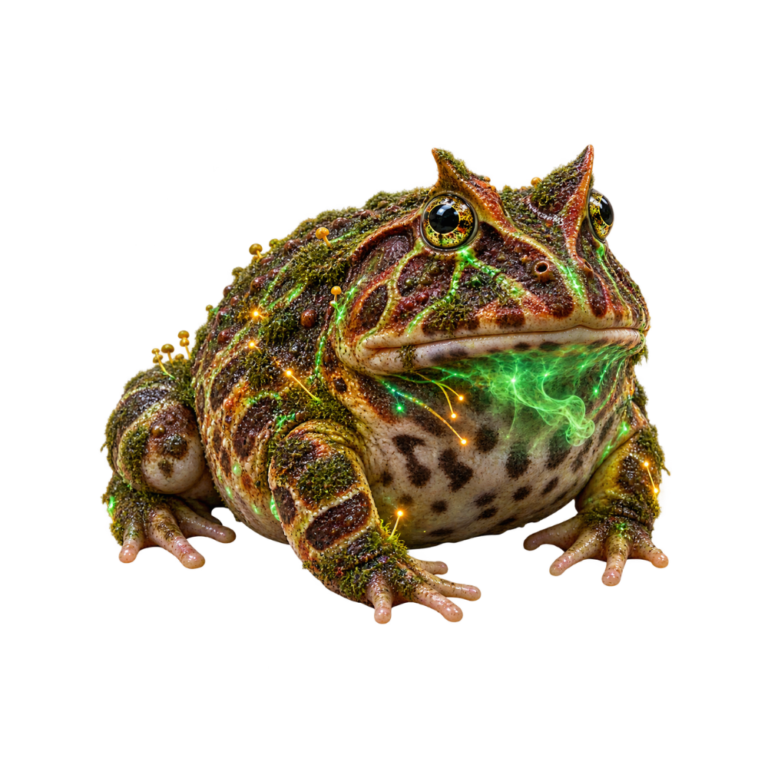
ME-SP-00003-9
Crested Gecko
Correlophus ciliatus
Diplodactylidae • Reptilia
ME-SP-00003-9Crested Gecko
Correlophus ciliatus
Squamata • Diplodactylidae • ReptiliaHow to Recognize It
Crested Gecko (Correlophus ciliatus) should be identified from a combination of body proportions, scalation, head shape, limb or toe structure when present, pattern, coloration, and geographic provenance. Captive-bred color morphs can obscure wild-type appearance, so morphology and documented lineage are more reliable than color alone. Juveniles may differ markedly from adults. Sexing characters are species- and age-dependent and should not be guessed from a photograph without validated criteria. Similar-looking relatives may overlap in the pet trade, making a complete acquisition record and exact scientific name important for husbandry as well as taxonomy.Life Beyond the Enclosure
Crested Gecko is an ectothermic reptile whose activity, digestion, growth, reproduction, and immune function are strongly influenced by environmental temperature and access to an appropriate thermal range. In the wild, reptiles regulate body temperature behaviorally by moving among sun, shade, burrows, vegetation, rock, water, or other microhabitats. Diet and activity pattern vary by species, from insectivory or herbivory to vertebrate prey. Seasonal rainfall, day length, and temperature can influence reproduction and dormancy. Captive care should therefore recreate useful choices rather than one uniform condition, while natural-history observations should not be converted into husbandry numbers without supporting evidence. Practical records should note date, life stage, feeding response, behavior, environmental observations, and any intervention so trends are visible instead of relying on memory. For Correlophus ciliatus, locality, season, and life stage should stay attached to observations because those variables can change the ecological picture substantially. Keep this Correlophus ciliatus account under species-specific review as stronger references become available.Keeper Reference
Successful care for Crested Gecko requires a secure enclosure with a species-appropriate thermal gradient, measured temperatures, suitable humidity and ventilation, appropriate light exposure, safe substrate, clean water, and a diet matched to its natural feeding strategy. Reptiles should be able to choose among warmer, cooler, drier, and more humid microclimates rather than being held at one uniform setting. UVB requirements, basking intensity, substrate depth, enclosure orientation, and feeding frequency differ substantially among reptiles, so final numeric targets must follow a validated species-specific husbandry source. Quarantine new animals and track body condition, appetite, feces, sheds, and behavior over time. Practical records should note date, life stage, feeding response, behavior, environmental observations, and any intervention so trends are visible instead of relying on memory. Any final care numbers for Correlophus ciliatus should be tied to a named species-specific source and reviewed after actual husbandry observations.Collection Knowledge
Crested Gecko (Correlophus ciliatus) is a reptile shaped by behavioral thermoregulation. Instead of generating a stable internal temperature the way mammals do, it uses the environment as a control panel, moving among warmer and cooler microhabitats as its needs change. That makes habitat structure biologically meaningful rather than decorative. Depending on the species, climbing, burrowing, basking, hiding, or soaking may be central parts of daily behavior. Captive-bred animals can also show colors and patterns unlike wild populations, so identification should use anatomy and provenance, not just appearance. Good husbandry is built around measured gradients and choices, not a single 'room temperature' number. Practical records should note date, life stage, feeding response, behavior, environmental observations, and any intervention so trends are visible instead of relying on memory. Records for Correlophus ciliatus are most useful when identification, locality, life stage, and source provenance remain linked to the profile. Keep this Correlophus ciliatus account under species-specific review as stronger references become available.MycoVault Game Counterparts
These are digital game specimens and characters inspired by the real-world species above. Their lore, rarity, game traits, and collectible ownership belong to MycoVault.
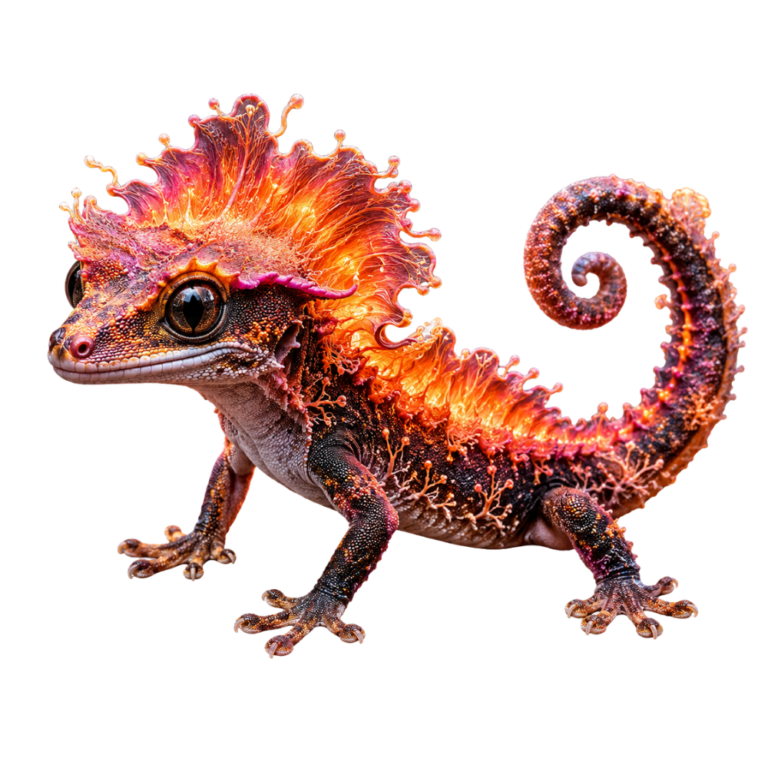
ME-SP-0001K-Q
Cuban Treefrog
Osteopilus septentrionalis
Hylidae • Amphibia
ME-SP-0001K-QCuban Treefrog
Osteopilus septentrionalis
Anura • Hylidae • AmphibiaHow to Recognize It
Cuban Treefrog (Osteopilus septentrionalis) should be identified using body shape, skin texture, limb and toe structure, eye and tympanum features when present, pattern, coloration, size, call or life-stage traits, and geographic provenance. Amphibian color can shift with temperature, stress, hydration, background, and time of day, so color alone is unreliable. Larvae and recently metamorphosed juveniles may differ greatly from adults. Similar species can require close examination or locality data. Because amphibian skin is highly permeable, handling and environmental history also matter when evaluating condition. Species-level identification should be verified before care parameters are assigned.Life Beyond the Enclosure
Cuban Treefrog is an amphibian, a lineage closely tied to water balance and environmental quality because the skin participates in hydration and gas exchange. Life histories vary from fully aquatic forms to terrestrial or arboreal adults, and many species move between aquatic and terrestrial habitats across development. Temperature, rainfall, humidity, water chemistry, seasonal cycles, and breeding sites can influence activity and reproduction. Amphibians often feed on small animal prey, while larvae may have very different diets. Their permeable skin makes them sensitive to contaminants and inappropriate water chemistry, so wild ecological observations and captive husbandry should both be interpreted with unusual attention to moisture and chemical exposure. Practical records should note date, life stage, feeding response, behavior, environmental observations, and any intervention so trends are visible instead of relying on memory. For Osteopilus septentrionalis, locality, season, and life stage should stay attached to observations because those variables can change the ecological picture substantially.Keeper Reference
Care for Cuban Treefrog must prioritize clean water or appropriately conditioned moisture, stable species-appropriate temperatures, strong ventilation without desiccation, nonabrasive furnishings, and minimal handling. Any water that contacts the animal should be free of chlorine/chloramine and contaminants, and aquatic species require monitored nitrogen cycling and water-quality management. Terrestrial and arboreal species need humidity gradients rather than permanently saturated air. Food items should be appropriately sized and nutritionally managed. Because amphibian husbandry varies enormously, final temperature, humidity, UVB, water-depth, and supplementation targets should be confirmed against a species-specific source before use. Quarantine is especially important because infectious diseases can spread quickly through shared water or tools.Collection Knowledge
Cuban Treefrog (Osteopilus septentrionalis) belongs to a group whose biology is written partly in water. Amphibian skin is thin and physiologically active, so moisture, water chemistry, pollutants, and temperature can influence the animal more directly than they do many reptiles. Many amphibians also change habitat and diet as they develop, making a juvenile or larval stage almost a different ecological job from the adult. Their sensitivity is one reason amphibians are important indicators of environmental change. Identification should consider anatomy, locality, life stage, and behavior rather than color alone, because hydration and surroundings can noticeably alter appearance. Practical records should note date, life stage, feeding response, behavior, environmental observations, and any intervention so trends are visible instead of relying on memory. Records for Osteopilus septentrionalis are most useful when identification, locality, life stage, and source provenance remain linked to the profile. Keep this Osteopilus septentrionalis account under species-specific review as stronger references become available.ME-SP-0002A-G
Curly Hair Tarantula
Tliltocatl albopilosus
Theraphosidae • Arachnida
ME-SP-0002A-GCurly Hair Tarantula
Tliltocatl albopilosus
Araneae • Theraphosidae • ArachnidaHow to Recognize It
Curly Hair Tarantula (Tliltocatl albopilosus) should be identified using the anatomical characters appropriate to its taxonomic group, supported by life stage, size, locality, behavior, and reliable provenance. Color by itself is rarely sufficient because age, sex, molt stage, preservation, and lighting can change appearance. Juveniles may lack adult diagnostic structures. Where the taxon includes similar-looking relatives, retain high-resolution dorsal, ventral, and lateral photographs and preserve any molt or developmental evidence that can support later review. Species-level certainty should be downgraded rather than guessed when key characters or locality data are missing.Life Beyond the Enclosure
Curly Hair Tarantula is an invertebrate whose ecology is shaped by its particular body plan and life cycle. Growth in arthropods occurs through molts, while other invertebrate groups may use different developmental strategies. Microhabitat, moisture, temperature, food resources, predators, competitors, and season all influence activity. Many species occupy narrow ecological niches even when adults appear mobile or generalist. Feeding strategy can change between juvenile and adult stages, and reproduction may be seasonal. Natural-history information should be separated from captive-care assumptions: a field observation describes what the animal used in one place and time, not automatically the only condition it can tolerate in captivity. Practical records should note date, life stage, feeding response, behavior, environmental observations, and any intervention so trends are visible instead of relying on memory. For Tliltocatl albopilosus, locality, season, and life stage should stay attached to observations because those variables can change the ecological picture substantially.Keeper Reference
Care for Curly Hair Tarantula should begin with verified taxonomic identity and a species-specific understanding of microhabitat, feeding, hydration, and development. Provide secure ventilation, escape prevention, suitable structural complexity, safe moisture, and food that matches the animal's natural feeding mode. Avoid crowding unless social tolerance is established. Molting or otherwise vulnerable stages require minimal disturbance. When published husbandry data are sparse, favor short-term observation over experimental long-term keeping and record every environmental change. Do not release imported, captive-bred, or uncertain-origin animals. Any numeric temperature or humidity target should come from a reputable species-specific source rather than a generic invertebrate recipe. Keep this Tliltocatl albopilosus account under species-specific review as stronger references become available.Collection Knowledge
Curly Hair Tarantula (Tliltocatl albopilosus) represents the astonishingly varied invertebrate majority of animal life. Its shape, sensory systems, life cycle, and ecological role make more sense when viewed together rather than as a collection of isolated traits. Identification should combine anatomy with locality and life stage because juveniles and adults can look very different, especially in groups that molt or metamorphose. In the wild, microhabitat is often the hidden key: moisture, substrate, food, shelter, and season can determine where the animal appears. Good records preserve that context, turning a specimen or observation into something far more informative than a name on a label. Practical records should note date, life stage, feeding response, behavior, environmental observations, and any intervention so trends are visible instead of relying on memory. Records for Tliltocatl albopilosus are most useful when identification, locality, life stage, and source provenance remain linked to the profile. Keep this Tliltocatl albopilosus account under species-specific review as stronger references become available.ME-SP-0003D-F
Dainty Sulphur
Nathalis iole
Pieridae • Insecta
ME-SP-0003D-FDainty Sulphur
Nathalis iole
Lepidoptera • Pieridae • InsectaHow to Recognize It
Dainty Sulphur (Nathalis iole) is a lepidopteran whose identification should combine adult wing shape and pattern, dorsal and ventral markings, body form, antennae, and locality rather than relying on color alone. Sex, wear, season, and lighting can alter appearance, while closely related species may share broad pattern elements. Larvae and pupae can look radically different from adults, so life stage must be recorded. For preserved material, intact diagnostic structures and a reliable specimen label are as important as color. When a determination is uncertain, compare multiple characters against a taxonomic or regional reference before assigning species-level certainty.Life Beyond the Enclosure
Dainty Sulphur is part of the butterfly-and-moth lineage and passes through complete metamorphosis: egg, larva, pupa, and adult. Ecological requirements change sharply across those stages. Caterpillars are usually tied to particular host plants or host-plant families, whereas adults commonly focus on dispersal, courtship, reproduction, and species-specific food resources such as nectar, sap, fruit, or other liquids. Seasonal timing and local climate influence generation number, diapause, and adult flight. Predators, parasitoids, weather, host-plant chemistry, and habitat structure all shape survival. Distribution records should be interpreted at the taxon level because related species can occupy very different ranges and habitats. Practical records should note date, life stage, feeding response, behavior, environmental observations, and any intervention so trends are visible instead of relying on memory. For Nathalis iole, locality, season, and life stage should stay attached to observations because those variables can change the ecological picture substantially. Keep this Nathalis iole account under species-specific review as stronger references become available.Keeper Reference
Care for Dainty Sulphur depends first on life stage. Eggs and larvae require correctly identified host material, excellent airflow, sanitation, and enough space to avoid crowding. Pupae need the orientation and moisture pattern appropriate to the species, while adults require safe flight room, appropriate food resources, and surfaces that prevent wing damage. Wild adults are generally poor candidates for long-term display captivity; observation or rearing should use legally obtained material and a verified species-specific protocol. Avoid generic heat or humidity targets when published rearing data are unavailable, because host plant, season, and local climate can matter more than a single thermostat number. Keep this Nathalis iole account under species-specific review as stronger references become available.Collection Knowledge
Dainty Sulphur (Nathalis iole) belongs to one of the most transformation-heavy branches of the animal tree. Its life is divided among an egg, a feeding caterpillar, a reorganizing pupa, and a winged adult built largely for dispersal and reproduction. That stage shift means the same species can occupy different microhabitats and use completely different resources across its life. Identification is strongest when wing pattern, shape, locality, season, and life stage are considered together. Ecologically, species in this group connect host plants, flowering plants, predators, and parasitoids, making even a small moth or butterfly part of a surprisingly busy food web. Practical records should note date, life stage, feeding response, behavior, environmental observations, and any intervention so trends are visible instead of relying on memory. Records for Nathalis iole are most useful when identification, locality, life stage, and source provenance remain linked to the profile. Keep this Nathalis iole account under species-specific review as stronger references become available.ME-SP-0005A-4
Dark Flower Scarab
Euphoria sepulcralis
Scarabaeidae • Insecta
ME-SP-0005A-4Dark Flower Scarab
Euphoria sepulcralis
Coleoptera • Scarabaeidae • InsectaHow to Recognize It
Dark Flower Scarab (Euphoria sepulcralis) is a beetle and should be identified from body shape, antennae, pronotum, elytra, leg structure, surface sculpture, color pattern, size, and locality. The hardened forewings, or elytra, identify Coleoptera as a group, but species-level work often depends on small structural characters rather than overall color. Larvae may bear little resemblance to adults and may require host, substrate, or rearing information for confident identification. Wear, age, and preservation can alter color or sheen. Keep locality, collection or acquisition data, photographs, and any associated larval substrate information with the specimen record.Life Beyond the Enclosure
Dark Flower Scarab is part of Coleoptera, the beetles, a huge radiation united by hardened forewings that protect the flight wings and abdomen. Complete metamorphosis separates egg, larva, pupa, and adult stages, and those stages can occupy different ecological niches. Depending on the species, larvae may develop in soil, wood, dung, carrion, fungi, roots, foliage, or other specialized substrates, while adults may feed, disperse, reproduce, or sometimes eat very little. Moisture, temperature, food quality, microbial decomposition, and substrate structure can all influence development. Ecological role may include predation, decomposition, pollination, herbivory, or nutrient cycling. Practical records should note date, life stage, feeding response, behavior, environmental observations, and any intervention so trends are visible instead of relying on memory. For Euphoria sepulcralis, locality, season, and life stage should stay attached to observations because those variables can change the ecological picture substantially. Keep this Euphoria sepulcralis account under species-specific review as stronger references become available.Keeper Reference
Care for Dark Flower Scarab must be based on its larval ecology and adult feeding strategy. A generic beetle box is not enough: wood borers, carrion beetles, dung beetles, flower beetles, tiger beetles, and scarabs require very different substrates and foods. For temporary adult observation, provide secure ventilation, traction, a species-appropriate food or moisture source, and protection from overheating. For rearing, use only correctly identified substrate or host material and prevent mold, mites, and anaerobic decay through sanitation and airflow. Avoid releasing captive, imported, or uncertain-origin beetles. Confirm species-specific developmental substrate, temperature, and moisture requirements before attempting multigenerational culture. Practical records should note date, life stage, feeding response, behavior, environmental observations, and any intervention so trends are visible instead of relying on memory. Any final care numbers for Euphoria sepulcralis should be tied to a named species-specific source and reviewed after actual husbandry observations.Collection Knowledge
Dark Flower Scarab (Euphoria sepulcralis) is a member of Coleoptera, the beetles, whose signature hardware is a pair of hardened forewings called elytra. Beneath those protective covers sit the functional flight wings. Beetles undergo complete metamorphosis, so a grub-like larva may live in an entirely different world from the adult it becomes. Across the order, beetles work as predators, decomposers, herbivores, pollinators, scavengers, and ecosystem recyclers. That diversity also makes identification challenging: body sculpture, antennae, pronotum, legs, elytra, locality, and sometimes genital anatomy can matter more than color. Larval habitat is often one of the best clues to biology. Practical records should note date, life stage, feeding response, behavior, environmental observations, and any intervention so trends are visible instead of relying on memory. Records for Euphoria sepulcralis are most useful when identification, locality, life stage, and source provenance remain linked to the profile. Keep this Euphoria sepulcralis account under species-specific review as stronger references become available.ME-SP-0001X-Z
Dimorphic Jumping Spider
Maevia inclemens
Salticidae • Arachnida
ME-SP-0001X-ZDimorphic Jumping Spider
Maevia inclemens
Araneae • Salticidae • ArachnidaHow to Recognize It
Dimorphic Jumping Spider (Maevia inclemens) is a spider whose identification should use eye arrangement, body proportions, carapace and abdominal pattern, leg morphology, setation, chelicerae, mature reproductive structures, and locality as appropriate. Juveniles can be difficult or impossible to identify confidently to species because diagnostic adult characters are not yet developed. Color is useful but variable with molt stage, lighting, sex, and individual condition. For jumping spiders, the large forward-facing principal eyes and alert visual behavior are distinctive at family level, but species determinations often require several characters. Preserve molt skins, locality data, and clear dorsal and ventral photographs when possible.Life Beyond the Enclosure
Dimorphic Jumping Spider is an arachnid predator that relies on silk, sensory information, and rapid prey capture rather than chewing plant material. Spiders grow by molting, and vulnerability rises sharply before, during, and immediately after ecdysis. Visual hunters such as jumping spiders use excellent eyesight, orientation behavior, and small silk retreats, while other spiders may rely more heavily on webs, burrows, or tactile cues. Diet in the wild consists mainly of appropriately sized arthropods. Activity, courtship, maturation, and egg production are influenced by prey availability, temperature, hydration, and season. Cannibalism is a normal risk in many species, especially during pairing or crowded housing. Practical records should note date, life stage, feeding response, behavior, environmental observations, and any intervention so trends are visible instead of relying on memory. For Maevia inclemens, locality, season, and life stage should stay attached to observations because those variables can change the ecological picture substantially. Keep this Maevia inclemens account under species-specific review as stronger references become available.Keeper Reference
Care for Dimorphic Jumping Spider should provide secure ventilation, species-appropriate vertical or horizontal space, textured anchor points, a retreat location, clean hydration, and live prey sized to the animal. Avoid excessive wetness and stagnant air unless a verified species protocol calls for unusually humid conditions. Molting animals should not be disturbed or offered dangerous prey. Jumping spiders benefit from visual access, climbing surfaces, and an upper retreat zone; terrestrial species need more floor area and stable footing. Individual housing is the safest default unless social tolerance is well documented. Remove uneaten prey and monitor abdomen condition, coordination, attachment ability, and molt timing. Keep this Maevia inclemens account under species-specific review as stronger references become available.Collection Knowledge
Dimorphic Jumping Spider (Maevia inclemens) is an arachnid predator built around precision rather than brute force. Spiders read the world through vibration, touch, chemical cues, and, in visually oriented groups such as jumping spiders, remarkably capable eyes. Silk may become a safety line, shelter, nursery, hunting tool, or molt retreat depending on the species. Growth happens in jumps because the exoskeleton must be shed before a larger one hardens. That makes molting a major event in both wild biology and captive care. Species identification can be tricky in juveniles, so mature anatomy, locality, and multiple photographs are more trustworthy than color by itself. Practical records should note date, life stage, feeding response, behavior, environmental observations, and any intervention so trends are visible instead of relying on memory. Records for Maevia inclemens are most useful when identification, locality, life stage, and source provenance remain linked to the profile. Keep this Maevia inclemens account under species-specific review as stronger references become available.ME-SP-0005T-V
Dogbane Beetle
Chrysochus auratus
Chrysomelidae • Insecta
ME-SP-0005T-VDogbane Beetle
Chrysochus auratus
Coleoptera • Chrysomelidae • InsectaHow to Recognize It
Dogbane Beetle (Chrysochus auratus) is a beetle and should be identified from body shape, antennae, pronotum, elytra, leg structure, surface sculpture, color pattern, size, and locality. The hardened forewings, or elytra, identify Coleoptera as a group, but species-level work often depends on small structural characters rather than overall color. Larvae may bear little resemblance to adults and may require host, substrate, or rearing information for confident identification. Wear, age, and preservation can alter color or sheen. Keep locality, collection or acquisition data, photographs, and any associated larval substrate information with the specimen record.Life Beyond the Enclosure
Dogbane Beetle is part of Coleoptera, the beetles, a huge radiation united by hardened forewings that protect the flight wings and abdomen. Complete metamorphosis separates egg, larva, pupa, and adult stages, and those stages can occupy different ecological niches. Depending on the species, larvae may develop in soil, wood, dung, carrion, fungi, roots, foliage, or other specialized substrates, while adults may feed, disperse, reproduce, or sometimes eat very little. Moisture, temperature, food quality, microbial decomposition, and substrate structure can all influence development. Ecological role may include predation, decomposition, pollination, herbivory, or nutrient cycling. Practical records should note date, life stage, feeding response, behavior, environmental observations, and any intervention so trends are visible instead of relying on memory. For Chrysochus auratus, locality, season, and life stage should stay attached to observations because those variables can change the ecological picture substantially. Practical records should note date, life stage, feeding response, behavior, environmental observations, and any intervention so trends are visible instead of relying on memory. For Chrysochus auratus, locality, season, and life stage should stay attached to observations because those variables can change the ecological picture substantially.Keeper Reference
Care for Dogbane Beetle must be based on its larval ecology and adult feeding strategy. A generic beetle box is not enough: wood borers, carrion beetles, dung beetles, flower beetles, tiger beetles, and scarabs require very different substrates and foods. For temporary adult observation, provide secure ventilation, traction, a species-appropriate food or moisture source, and protection from overheating. For rearing, use only correctly identified substrate or host material and prevent mold, mites, and anaerobic decay through sanitation and airflow. Avoid releasing captive, imported, or uncertain-origin beetles. Confirm species-specific developmental substrate, temperature, and moisture requirements before attempting multigenerational culture. Practical records should note date, life stage, feeding response, behavior, environmental observations, and any intervention so trends are visible instead of relying on memory. Any final care numbers for Chrysochus auratus should be tied to a named species-specific source and reviewed after actual husbandry observations.Collection Knowledge
Dogbane Beetle (Chrysochus auratus) is a member of Coleoptera, the beetles, whose signature hardware is a pair of hardened forewings called elytra. Beneath those protective covers sit the functional flight wings. Beetles undergo complete metamorphosis, so a grub-like larva may live in an entirely different world from the adult it becomes. Across the order, beetles work as predators, decomposers, herbivores, pollinators, scavengers, and ecosystem recyclers. That diversity also makes identification challenging: body sculpture, antennae, pronotum, legs, elytra, locality, and sometimes genital anatomy can matter more than color. Larval habitat is often one of the best clues to biology. Practical records should note date, life stage, feeding response, behavior, environmental observations, and any intervention so trends are visible instead of relying on memory. Records for Chrysochus auratus are most useful when identification, locality, life stage, and source provenance remain linked to the profile. Keep this Chrysochus auratus account under species-specific review as stronger references become available.ME-SP-0001B-H
Eastern Box Turtle
Terrapene carolina
Emydidae • Reptilia
ME-SP-0001B-HEastern Box Turtle
Terrapene carolina
Testudines • Emydidae • ReptiliaHow to Recognize It
Eastern Box Turtle (Terrapene carolina) should be identified from a combination of body proportions, scalation, head shape, limb or toe structure when present, pattern, coloration, and geographic provenance. Captive-bred color morphs can obscure wild-type appearance, so morphology and documented lineage are more reliable than color alone. Juveniles may differ markedly from adults. Sexing characters are species- and age-dependent and should not be guessed from a photograph without validated criteria. Similar-looking relatives may overlap in the pet trade, making a complete acquisition record and exact scientific name important for husbandry as well as taxonomy.Life Beyond the Enclosure
Eastern Box Turtle is an ectothermic reptile whose activity, digestion, growth, reproduction, and immune function are strongly influenced by environmental temperature and access to an appropriate thermal range. In the wild, reptiles regulate body temperature behaviorally by moving among sun, shade, burrows, vegetation, rock, water, or other microhabitats. Diet and activity pattern vary by species, from insectivory or herbivory to vertebrate prey. Seasonal rainfall, day length, and temperature can influence reproduction and dormancy. Captive care should therefore recreate useful choices rather than one uniform condition, while natural-history observations should not be converted into husbandry numbers without supporting evidence. Practical records should note date, life stage, feeding response, behavior, environmental observations, and any intervention so trends are visible instead of relying on memory. For Terrapene carolina, locality, season, and life stage should stay attached to observations because those variables can change the ecological picture substantially. Keep this Terrapene carolina account under species-specific review as stronger references become available.Keeper Reference
Successful care for Eastern Box Turtle requires a secure enclosure with a species-appropriate thermal gradient, measured temperatures, suitable humidity and ventilation, appropriate light exposure, safe substrate, clean water, and a diet matched to its natural feeding strategy. Reptiles should be able to choose among warmer, cooler, drier, and more humid microclimates rather than being held at one uniform setting. UVB requirements, basking intensity, substrate depth, enclosure orientation, and feeding frequency differ substantially among reptiles, so final numeric targets must follow a validated species-specific husbandry source. Quarantine new animals and track body condition, appetite, feces, sheds, and behavior over time. Practical records should note date, life stage, feeding response, behavior, environmental observations, and any intervention so trends are visible instead of relying on memory. Any final care numbers for Terrapene carolina should be tied to a named species-specific source and reviewed after actual husbandry observations.Collection Knowledge
Eastern Box Turtle (Terrapene carolina) is a reptile shaped by behavioral thermoregulation. Instead of generating a stable internal temperature the way mammals do, it uses the environment as a control panel, moving among warmer and cooler microhabitats as its needs change. That makes habitat structure biologically meaningful rather than decorative. Depending on the species, climbing, burrowing, basking, hiding, or soaking may be central parts of daily behavior. Captive-bred animals can also show colors and patterns unlike wild populations, so identification should use anatomy and provenance, not just appearance. Good husbandry is built around measured gradients and choices, not a single 'room temperature' number. Practical records should note date, life stage, feeding response, behavior, environmental observations, and any intervention so trends are visible instead of relying on memory. Records for Terrapene carolina are most useful when identification, locality, life stage, and source provenance remain linked to the profile. Keep this Terrapene carolina account under species-specific review as stronger references become available.ME-SP-0002U-G
Eastern Comma
Polygonia comma
Nymphalidae • Insecta
ME-SP-0002U-GEastern Comma
Polygonia comma
Lepidoptera • Nymphalidae • InsectaHow to Recognize It
Eastern Comma (Polygonia comma) is a lepidopteran whose identification should combine adult wing shape and pattern, dorsal and ventral markings, body form, antennae, and locality rather than relying on color alone. Sex, wear, season, and lighting can alter appearance, while closely related species may share broad pattern elements. Larvae and pupae can look radically different from adults, so life stage must be recorded. For preserved material, intact diagnostic structures and a reliable specimen label are as important as color. When a determination is uncertain, compare multiple characters against a taxonomic or regional reference before assigning species-level certainty.Life Beyond the Enclosure
Eastern Comma is part of the butterfly-and-moth lineage and passes through complete metamorphosis: egg, larva, pupa, and adult. Ecological requirements change sharply across those stages. Caterpillars are usually tied to particular host plants or host-plant families, whereas adults commonly focus on dispersal, courtship, reproduction, and species-specific food resources such as nectar, sap, fruit, or other liquids. Seasonal timing and local climate influence generation number, diapause, and adult flight. Predators, parasitoids, weather, host-plant chemistry, and habitat structure all shape survival. Distribution records should be interpreted at the taxon level because related species can occupy very different ranges and habitats. Practical records should note date, life stage, feeding response, behavior, environmental observations, and any intervention so trends are visible instead of relying on memory. For Polygonia comma, locality, season, and life stage should stay attached to observations because those variables can change the ecological picture substantially. Keep this Polygonia comma account under species-specific review as stronger references become available.Keeper Reference
Care for Eastern Comma depends first on life stage. Eggs and larvae require correctly identified host material, excellent airflow, sanitation, and enough space to avoid crowding. Pupae need the orientation and moisture pattern appropriate to the species, while adults require safe flight room, appropriate food resources, and surfaces that prevent wing damage. Wild adults are generally poor candidates for long-term display captivity; observation or rearing should use legally obtained material and a verified species-specific protocol. Avoid generic heat or humidity targets when published rearing data are unavailable, because host plant, season, and local climate can matter more than a single thermostat number. Keep this Polygonia comma account under species-specific review as stronger references become available.Collection Knowledge
Eastern Comma (Polygonia comma) belongs to one of the most transformation-heavy branches of the animal tree. Its life is divided among an egg, a feeding caterpillar, a reorganizing pupa, and a winged adult built largely for dispersal and reproduction. That stage shift means the same species can occupy different microhabitats and use completely different resources across its life. Identification is strongest when wing pattern, shape, locality, season, and life stage are considered together. Ecologically, species in this group connect host plants, flowering plants, predators, and parasitoids, making even a small moth or butterfly part of a surprisingly busy food web. Practical records should note date, life stage, feeding response, behavior, environmental observations, and any intervention so trends are visible instead of relying on memory. Records for Polygonia comma are most useful when identification, locality, life stage, and source provenance remain linked to the profile. Keep this Polygonia comma account under species-specific review as stronger references become available.ME-SP-0005E-4
Eastern Eyed Click Beetle
Alaus oculatus
Elateridae • Insecta
ME-SP-0005E-4Eastern Eyed Click Beetle
Alaus oculatus
Coleoptera • Elateridae • InsectaHow to Recognize It
Eastern Eyed Click Beetle (Alaus oculatus) is a beetle and should be identified from body shape, antennae, pronotum, elytra, leg structure, surface sculpture, color pattern, size, and locality. The hardened forewings, or elytra, identify Coleoptera as a group, but species-level work often depends on small structural characters rather than overall color. Larvae may bear little resemblance to adults and may require host, substrate, or rearing information for confident identification. Wear, age, and preservation can alter color or sheen. Keep locality, collection or acquisition data, photographs, and any associated larval substrate information with the specimen record.Life Beyond the Enclosure
Eastern Eyed Click Beetle is part of Coleoptera, the beetles, a huge radiation united by hardened forewings that protect the flight wings and abdomen. Complete metamorphosis separates egg, larva, pupa, and adult stages, and those stages can occupy different ecological niches. Depending on the species, larvae may develop in soil, wood, dung, carrion, fungi, roots, foliage, or other specialized substrates, while adults may feed, disperse, reproduce, or sometimes eat very little. Moisture, temperature, food quality, microbial decomposition, and substrate structure can all influence development. Ecological role may include predation, decomposition, pollination, herbivory, or nutrient cycling. Practical records should note date, life stage, feeding response, behavior, environmental observations, and any intervention so trends are visible instead of relying on memory. For Alaus oculatus, locality, season, and life stage should stay attached to observations because those variables can change the ecological picture substantially. Keep this Alaus oculatus account under species-specific review as stronger references become available.Keeper Reference
Care for Eastern Eyed Click Beetle must be based on its larval ecology and adult feeding strategy. A generic beetle box is not enough: wood borers, carrion beetles, dung beetles, flower beetles, tiger beetles, and scarabs require very different substrates and foods. For temporary adult observation, provide secure ventilation, traction, a species-appropriate food or moisture source, and protection from overheating. For rearing, use only correctly identified substrate or host material and prevent mold, mites, and anaerobic decay through sanitation and airflow. Avoid releasing captive, imported, or uncertain-origin beetles. Confirm species-specific developmental substrate, temperature, and moisture requirements before attempting multigenerational culture. Keep this Alaus oculatus account under species-specific review as stronger references become available.Collection Knowledge
Eastern Eyed Click Beetle (Alaus oculatus) is a member of Coleoptera, the beetles, whose signature hardware is a pair of hardened forewings called elytra. Beneath those protective covers sit the functional flight wings. Beetles undergo complete metamorphosis, so a grub-like larva may live in an entirely different world from the adult it becomes. Across the order, beetles work as predators, decomposers, herbivores, pollinators, scavengers, and ecosystem recyclers. That diversity also makes identification challenging: body sculpture, antennae, pronotum, legs, elytra, locality, and sometimes genital anatomy can matter more than color. Larval habitat is often one of the best clues to biology. Practical records should note date, life stage, feeding response, behavior, environmental observations, and any intervention so trends are visible instead of relying on memory. Records for Alaus oculatus are most useful when identification, locality, life stage, and source provenance remain linked to the profile. Keep this Alaus oculatus account under species-specific review as stronger references become available.ME-SP-0000I-0
Eastern Hercules Beetle
Dynastes tityus
Scarabaeidae • Insecta
ME-SP-0000I-0Eastern Hercules Beetle
Dynastes tityus
Coleoptera • Scarabaeidae • InsectaHow to Recognize It
Eastern Hercules Beetle (Dynastes tityus) is a beetle and should be identified from body shape, antennae, pronotum, elytra, leg structure, surface sculpture, color pattern, size, and locality. The hardened forewings, or elytra, identify Coleoptera as a group, but species-level work often depends on small structural characters rather than overall color. Larvae may bear little resemblance to adults and may require host, substrate, or rearing information for confident identification. Wear, age, and preservation can alter color or sheen. Keep locality, collection or acquisition data, photographs, and any associated larval substrate information with the specimen record.Life Beyond the Enclosure
Eastern Hercules Beetle is part of Coleoptera, the beetles, a huge radiation united by hardened forewings that protect the flight wings and abdomen. Complete metamorphosis separates egg, larva, pupa, and adult stages, and those stages can occupy different ecological niches. Depending on the species, larvae may develop in soil, wood, dung, carrion, fungi, roots, foliage, or other specialized substrates, while adults may feed, disperse, reproduce, or sometimes eat very little. Moisture, temperature, food quality, microbial decomposition, and substrate structure can all influence development. Ecological role may include predation, decomposition, pollination, herbivory, or nutrient cycling. Practical records should note date, life stage, feeding response, behavior, environmental observations, and any intervention so trends are visible instead of relying on memory. For Dynastes tityus, locality, season, and life stage should stay attached to observations because those variables can change the ecological picture substantially. Keep this Dynastes tityus account under species-specific review as stronger references become available.Keeper Reference
Care for Eastern Hercules Beetle must be based on its larval ecology and adult feeding strategy. A generic beetle box is not enough: wood borers, carrion beetles, dung beetles, flower beetles, tiger beetles, and scarabs require very different substrates and foods. For temporary adult observation, provide secure ventilation, traction, a species-appropriate food or moisture source, and protection from overheating. For rearing, use only correctly identified substrate or host material and prevent mold, mites, and anaerobic decay through sanitation and airflow. Avoid releasing captive, imported, or uncertain-origin beetles. Confirm species-specific developmental substrate, temperature, and moisture requirements before attempting multigenerational culture. Practical records should note date, life stage, feeding response, behavior, environmental observations, and any intervention so trends are visible instead of relying on memory. Any final care numbers for Dynastes tityus should be tied to a named species-specific source and reviewed after actual husbandry observations.Collection Knowledge
Eastern Hercules Beetle (Dynastes tityus) is a member of Coleoptera, the beetles, whose signature hardware is a pair of hardened forewings called elytra. Beneath those protective covers sit the functional flight wings. Beetles undergo complete metamorphosis, so a grub-like larva may live in an entirely different world from the adult it becomes. Across the order, beetles work as predators, decomposers, herbivores, pollinators, scavengers, and ecosystem recyclers. That diversity also makes identification challenging: body sculpture, antennae, pronotum, legs, elytra, locality, and sometimes genital anatomy can matter more than color. Larval habitat is often one of the best clues to biology. Practical records should note date, life stage, feeding response, behavior, environmental observations, and any intervention so trends are visible instead of relying on memory. Records for Dynastes tityus are most useful when identification, locality, life stage, and source provenance remain linked to the profile. Keep this Dynastes tityus account under species-specific review as stronger references become available.MycoVault Game Counterparts
These are digital game specimens and characters inspired by the real-world species above. Their lore, rarity, game traits, and collectible ownership belong to MycoVault.

ME-SP-00065-3
Eastern Lubber Grasshopper
Romalea microptera
Romaleidae • Insecta
ME-SP-00065-3Eastern Lubber Grasshopper
Romalea microptera
Orthoptera • Romaleidae • InsectaHow to Recognize It
Eastern Lubber Grasshopper (Romalea microptera) should be identified using the anatomical characters appropriate to its taxonomic group, supported by life stage, size, locality, behavior, and reliable provenance. Color by itself is rarely sufficient because age, sex, molt stage, preservation, and lighting can change appearance. Juveniles may lack adult diagnostic structures. Where the taxon includes similar-looking relatives, retain high-resolution dorsal, ventral, and lateral photographs and preserve any molt or developmental evidence that can support later review. Species-level certainty should be downgraded rather than guessed when key characters or locality data are missing.Life Beyond the Enclosure
Eastern Lubber Grasshopper is an invertebrate whose ecology is shaped by its particular body plan and life cycle. Growth in arthropods occurs through molts, while other invertebrate groups may use different developmental strategies. Microhabitat, moisture, temperature, food resources, predators, competitors, and season all influence activity. Many species occupy narrow ecological niches even when adults appear mobile or generalist. Feeding strategy can change between juvenile and adult stages, and reproduction may be seasonal. Natural-history information should be separated from captive-care assumptions: a field observation describes what the animal used in one place and time, not automatically the only condition it can tolerate in captivity. Practical records should note date, life stage, feeding response, behavior, environmental observations, and any intervention so trends are visible instead of relying on memory. For Romalea microptera, locality, season, and life stage should stay attached to observations because those variables can change the ecological picture substantially.Keeper Reference
Care for Eastern Lubber Grasshopper should begin with verified taxonomic identity and a species-specific understanding of microhabitat, feeding, hydration, and development. Provide secure ventilation, escape prevention, suitable structural complexity, safe moisture, and food that matches the animal's natural feeding mode. Avoid crowding unless social tolerance is established. Molting or otherwise vulnerable stages require minimal disturbance. When published husbandry data are sparse, favor short-term observation over experimental long-term keeping and record every environmental change. Do not release imported, captive-bred, or uncertain-origin animals. Any numeric temperature or humidity target should come from a reputable species-specific source rather than a generic invertebrate recipe. Keep this Romalea microptera account under species-specific review as stronger references become available.Collection Knowledge
Eastern Lubber Grasshopper (Romalea microptera) represents the astonishingly varied invertebrate majority of animal life. Its shape, sensory systems, life cycle, and ecological role make more sense when viewed together rather than as a collection of isolated traits. Identification should combine anatomy with locality and life stage because juveniles and adults can look very different, especially in groups that molt or metamorphose. In the wild, microhabitat is often the hidden key: moisture, substrate, food, shelter, and season can determine where the animal appears. Good records preserve that context, turning a specimen or observation into something far more informative than a name on a label. Practical records should note date, life stage, feeding response, behavior, environmental observations, and any intervention so trends are visible instead of relying on memory. Records for Romalea microptera are most useful when identification, locality, life stage, and source provenance remain linked to the profile. Keep this Romalea microptera account under species-specific review as stronger references become available.ME-SP-00068-U
Eastern Pondhawk
Erythemis simplicicollis
Libellulidae • Insecta
ME-SP-00068-UEastern Pondhawk
Erythemis simplicicollis
Odonata • Libellulidae • InsectaHow to Recognize It
Eastern Pondhawk (Erythemis simplicicollis) should be identified using the anatomical characters appropriate to its taxonomic group, supported by life stage, size, locality, behavior, and reliable provenance. Color by itself is rarely sufficient because age, sex, molt stage, preservation, and lighting can change appearance. Juveniles may lack adult diagnostic structures. Where the taxon includes similar-looking relatives, retain high-resolution dorsal, ventral, and lateral photographs and preserve any molt or developmental evidence that can support later review. Species-level certainty should be downgraded rather than guessed when key characters or locality data are missing.Life Beyond the Enclosure
Eastern Pondhawk is an invertebrate whose ecology is shaped by its particular body plan and life cycle. Growth in arthropods occurs through molts, while other invertebrate groups may use different developmental strategies. Microhabitat, moisture, temperature, food resources, predators, competitors, and season all influence activity. Many species occupy narrow ecological niches even when adults appear mobile or generalist. Feeding strategy can change between juvenile and adult stages, and reproduction may be seasonal. Natural-history information should be separated from captive-care assumptions: a field observation describes what the animal used in one place and time, not automatically the only condition it can tolerate in captivity. Practical records should note date, life stage, feeding response, behavior, environmental observations, and any intervention so trends are visible instead of relying on memory. For Erythemis simplicicollis, locality, season, and life stage should stay attached to observations because those variables can change the ecological picture substantially.Keeper Reference
Care for Eastern Pondhawk should begin with verified taxonomic identity and a species-specific understanding of microhabitat, feeding, hydration, and development. Provide secure ventilation, escape prevention, suitable structural complexity, safe moisture, and food that matches the animal's natural feeding mode. Avoid crowding unless social tolerance is established. Molting or otherwise vulnerable stages require minimal disturbance. When published husbandry data are sparse, favor short-term observation over experimental long-term keeping and record every environmental change. Do not release imported, captive-bred, or uncertain-origin animals. Any numeric temperature or humidity target should come from a reputable species-specific source rather than a generic invertebrate recipe. Practical records should note date, life stage, feeding response, behavior, environmental observations, and any intervention so trends are visible instead of relying on memory. Any final care numbers for Erythemis simplicicollis should be tied to a named species-specific source and reviewed after actual husbandry observations.Collection Knowledge
Eastern Pondhawk (Erythemis simplicicollis) represents the astonishingly varied invertebrate majority of animal life. Its shape, sensory systems, life cycle, and ecological role make more sense when viewed together rather than as a collection of isolated traits. Identification should combine anatomy with locality and life stage because juveniles and adults can look very different, especially in groups that molt or metamorphose. In the wild, microhabitat is often the hidden key: moisture, substrate, food, shelter, and season can determine where the animal appears. Good records preserve that context, turning a specimen or observation into something far more informative than a name on a label. Practical records should note date, life stage, feeding response, behavior, environmental observations, and any intervention so trends are visible instead of relying on memory. Records for Erythemis simplicicollis are most useful when identification, locality, life stage, and source provenance remain linked to the profile. Keep this Erythemis simplicicollis account under species-specific review as stronger references become available.ME-SP-00031-F
Eastern Tiger Swallowtail
Papilio glaucus
Papilionidae • Insecta
ME-SP-00031-FEastern Tiger Swallowtail
Papilio glaucus
Lepidoptera • Papilionidae • InsectaHow to Recognize It
Eastern Tiger Swallowtail (Papilio glaucus) is a lepidopteran whose identification should combine adult wing shape and pattern, dorsal and ventral markings, body form, antennae, and locality rather than relying on color alone. Sex, wear, season, and lighting can alter appearance, while closely related species may share broad pattern elements. Larvae and pupae can look radically different from adults, so life stage must be recorded. For preserved material, intact diagnostic structures and a reliable specimen label are as important as color. When a determination is uncertain, compare multiple characters against a taxonomic or regional reference before assigning species-level certainty.Life Beyond the Enclosure
Eastern Tiger Swallowtail is part of the butterfly-and-moth lineage and passes through complete metamorphosis: egg, larva, pupa, and adult. Ecological requirements change sharply across those stages. Caterpillars are usually tied to particular host plants or host-plant families, whereas adults commonly focus on dispersal, courtship, reproduction, and species-specific food resources such as nectar, sap, fruit, or other liquids. Seasonal timing and local climate influence generation number, diapause, and adult flight. Predators, parasitoids, weather, host-plant chemistry, and habitat structure all shape survival. Distribution records should be interpreted at the taxon level because related species can occupy very different ranges and habitats. Practical records should note date, life stage, feeding response, behavior, environmental observations, and any intervention so trends are visible instead of relying on memory. For Papilio glaucus, locality, season, and life stage should stay attached to observations because those variables can change the ecological picture substantially.Keeper Reference
Care for Eastern Tiger Swallowtail depends first on life stage. Eggs and larvae require correctly identified host material, excellent airflow, sanitation, and enough space to avoid crowding. Pupae need the orientation and moisture pattern appropriate to the species, while adults require safe flight room, appropriate food resources, and surfaces that prevent wing damage. Wild adults are generally poor candidates for long-term display captivity; observation or rearing should use legally obtained material and a verified species-specific protocol. Avoid generic heat or humidity targets when published rearing data are unavailable, because host plant, season, and local climate can matter more than a single thermostat number. Keep this Papilio glaucus account under species-specific review as stronger references become available.Collection Knowledge
Eastern Tiger Swallowtail (Papilio glaucus) belongs to one of the most transformation-heavy branches of the animal tree. Its life is divided among an egg, a feeding caterpillar, a reorganizing pupa, and a winged adult built largely for dispersal and reproduction. That stage shift means the same species can occupy different microhabitats and use completely different resources across its life. Identification is strongest when wing pattern, shape, locality, season, and life stage are considered together. Ecologically, species in this group connect host plants, flowering plants, predators, and parasitoids, making even a small moth or butterfly part of a surprisingly busy food web. Practical records should note date, life stage, feeding response, behavior, environmental observations, and any intervention so trends are visible instead of relying on memory. Records for Papilio glaucus are most useful when identification, locality, life stage, and source provenance remain linked to the profile. Keep this Papilio glaucus account under species-specific review as stronger references become available.ME-SP-0000Y-0
Egyptian Uromastyx
Uromastyx aegyptia
Agamidae • Reptilia
ME-SP-0000Y-0Egyptian Uromastyx
Uromastyx aegyptia
Squamata • Agamidae • ReptiliaHow to Recognize It
Egyptian Uromastyx (Uromastyx aegyptia) should be identified from a combination of body proportions, scalation, head shape, limb or toe structure when present, pattern, coloration, and geographic provenance. Captive-bred color morphs can obscure wild-type appearance, so morphology and documented lineage are more reliable than color alone. Juveniles may differ markedly from adults. Sexing characters are species- and age-dependent and should not be guessed from a photograph without validated criteria. Similar-looking relatives may overlap in the pet trade, making a complete acquisition record and exact scientific name important for husbandry as well as taxonomy.Life Beyond the Enclosure
Egyptian Uromastyx is an ectothermic reptile whose activity, digestion, growth, reproduction, and immune function are strongly influenced by environmental temperature and access to an appropriate thermal range. In the wild, reptiles regulate body temperature behaviorally by moving among sun, shade, burrows, vegetation, rock, water, or other microhabitats. Diet and activity pattern vary by species, from insectivory or herbivory to vertebrate prey. Seasonal rainfall, day length, and temperature can influence reproduction and dormancy. Captive care should therefore recreate useful choices rather than one uniform condition, while natural-history observations should not be converted into husbandry numbers without supporting evidence. Practical records should note date, life stage, feeding response, behavior, environmental observations, and any intervention so trends are visible instead of relying on memory. For Uromastyx aegyptia, locality, season, and life stage should stay attached to observations because those variables can change the ecological picture substantially. Keep this Uromastyx aegyptia account under species-specific review as stronger references become available.Keeper Reference
Successful care for Egyptian Uromastyx requires a secure enclosure with a species-appropriate thermal gradient, measured temperatures, suitable humidity and ventilation, appropriate light exposure, safe substrate, clean water, and a diet matched to its natural feeding strategy. Reptiles should be able to choose among warmer, cooler, drier, and more humid microclimates rather than being held at one uniform setting. UVB requirements, basking intensity, substrate depth, enclosure orientation, and feeding frequency differ substantially among reptiles, so final numeric targets must follow a validated species-specific husbandry source. Quarantine new animals and track body condition, appetite, feces, sheds, and behavior over time. Practical records should note date, life stage, feeding response, behavior, environmental observations, and any intervention so trends are visible instead of relying on memory. Any final care numbers for Uromastyx aegyptia should be tied to a named species-specific source and reviewed after actual husbandry observations.Collection Knowledge
Egyptian Uromastyx (Uromastyx aegyptia) is a reptile shaped by behavioral thermoregulation. Instead of generating a stable internal temperature the way mammals do, it uses the environment as a control panel, moving among warmer and cooler microhabitats as its needs change. That makes habitat structure biologically meaningful rather than decorative. Depending on the species, climbing, burrowing, basking, hiding, or soaking may be central parts of daily behavior. Captive-bred animals can also show colors and patterns unlike wild populations, so identification should use anatomy and provenance, not just appearance. Good husbandry is built around measured gradients and choices, not a single 'room temperature' number. Practical records should note date, life stage, feeding response, behavior, environmental observations, and any intervention so trends are visible instead of relying on memory. Records for Uromastyx aegyptia are most useful when identification, locality, life stage, and source provenance remain linked to the profile. Keep this Uromastyx aegyptia account under species-specific review as stronger references become available.ME-SP-0004Z-5
Eight-Spotted Forester
Alypia octomaculata
Noctuidae • Insecta
ME-SP-0004Z-5Eight-Spotted Forester
Alypia octomaculata
Lepidoptera • Noctuidae • InsectaHow to Recognize It
Eight-Spotted Forester (Alypia octomaculata) is a lepidopteran whose identification should combine adult wing shape and pattern, dorsal and ventral markings, body form, antennae, and locality rather than relying on color alone. Sex, wear, season, and lighting can alter appearance, while closely related species may share broad pattern elements. Larvae and pupae can look radically different from adults, so life stage must be recorded. For preserved material, intact diagnostic structures and a reliable specimen label are as important as color. When a determination is uncertain, compare multiple characters against a taxonomic or regional reference before assigning species-level certainty.Life Beyond the Enclosure
Eight-Spotted Forester is part of the butterfly-and-moth lineage and passes through complete metamorphosis: egg, larva, pupa, and adult. Ecological requirements change sharply across those stages. Caterpillars are usually tied to particular host plants or host-plant families, whereas adults commonly focus on dispersal, courtship, reproduction, and species-specific food resources such as nectar, sap, fruit, or other liquids. Seasonal timing and local climate influence generation number, diapause, and adult flight. Predators, parasitoids, weather, host-plant chemistry, and habitat structure all shape survival. Distribution records should be interpreted at the taxon level because related species can occupy very different ranges and habitats. Practical records should note date, life stage, feeding response, behavior, environmental observations, and any intervention so trends are visible instead of relying on memory. For Alypia octomaculata, locality, season, and life stage should stay attached to observations because those variables can change the ecological picture substantially.Keeper Reference
Care for Eight-Spotted Forester depends first on life stage. Eggs and larvae require correctly identified host material, excellent airflow, sanitation, and enough space to avoid crowding. Pupae need the orientation and moisture pattern appropriate to the species, while adults require safe flight room, appropriate food resources, and surfaces that prevent wing damage. Wild adults are generally poor candidates for long-term display captivity; observation or rearing should use legally obtained material and a verified species-specific protocol. Avoid generic heat or humidity targets when published rearing data are unavailable, because host plant, season, and local climate can matter more than a single thermostat number. Keep this Alypia octomaculata account under species-specific review as stronger references become available.Collection Knowledge
Eight-Spotted Forester (Alypia octomaculata) belongs to one of the most transformation-heavy branches of the animal tree. Its life is divided among an egg, a feeding caterpillar, a reorganizing pupa, and a winged adult built largely for dispersal and reproduction. That stage shift means the same species can occupy different microhabitats and use completely different resources across its life. Identification is strongest when wing pattern, shape, locality, season, and life stage are considered together. Ecologically, species in this group connect host plants, flowering plants, predators, and parasitoids, making even a small moth or butterfly part of a surprisingly busy food web. Practical records should note date, life stage, feeding response, behavior, environmental observations, and any intervention so trends are visible instead of relying on memory. Records for Alypia octomaculata are most useful when identification, locality, life stage, and source provenance remain linked to the profile. Keep this Alypia octomaculata account under species-specific review as stronger references become available.ME-SP-0001V-H
Emerald Jumping Spider
Paraphidippus aurantius
Salticidae • Arachnida
ME-SP-0001V-HEmerald Jumping Spider
Paraphidippus aurantius
Araneae • Salticidae • ArachnidaHow to Recognize It
Emerald Jumping Spider (Paraphidippus aurantius) is a spider whose identification should use eye arrangement, body proportions, carapace and abdominal pattern, leg morphology, setation, chelicerae, mature reproductive structures, and locality as appropriate. Juveniles can be difficult or impossible to identify confidently to species because diagnostic adult characters are not yet developed. Color is useful but variable with molt stage, lighting, sex, and individual condition. For jumping spiders, the large forward-facing principal eyes and alert visual behavior are distinctive at family level, but species determinations often require several characters. Preserve molt skins, locality data, and clear dorsal and ventral photographs when possible.Life Beyond the Enclosure
Emerald Jumping Spider is an arachnid predator that relies on silk, sensory information, and rapid prey capture rather than chewing plant material. Spiders grow by molting, and vulnerability rises sharply before, during, and immediately after ecdysis. Visual hunters such as jumping spiders use excellent eyesight, orientation behavior, and small silk retreats, while other spiders may rely more heavily on webs, burrows, or tactile cues. Diet in the wild consists mainly of appropriately sized arthropods. Activity, courtship, maturation, and egg production are influenced by prey availability, temperature, hydration, and season. Cannibalism is a normal risk in many species, especially during pairing or crowded housing. Practical records should note date, life stage, feeding response, behavior, environmental observations, and any intervention so trends are visible instead of relying on memory. For Paraphidippus aurantius, locality, season, and life stage should stay attached to observations because those variables can change the ecological picture substantially. Keep this Paraphidippus aurantius account under species-specific review as stronger references become available.Keeper Reference
Care for Emerald Jumping Spider should provide secure ventilation, species-appropriate vertical or horizontal space, textured anchor points, a retreat location, clean hydration, and live prey sized to the animal. Avoid excessive wetness and stagnant air unless a verified species protocol calls for unusually humid conditions. Molting animals should not be disturbed or offered dangerous prey. Jumping spiders benefit from visual access, climbing surfaces, and an upper retreat zone; terrestrial species need more floor area and stable footing. Individual housing is the safest default unless social tolerance is well documented. Remove uneaten prey and monitor abdomen condition, coordination, attachment ability, and molt timing. Keep this Paraphidippus aurantius account under species-specific review as stronger references become available.Collection Knowledge
Emerald Jumping Spider (Paraphidippus aurantius) is an arachnid predator built around precision rather than brute force. Spiders read the world through vibration, touch, chemical cues, and, in visually oriented groups such as jumping spiders, remarkably capable eyes. Silk may become a safety line, shelter, nursery, hunting tool, or molt retreat depending on the species. Growth happens in jumps because the exoskeleton must be shed before a larger one hardens. That makes molting a major event in both wild biology and captive care. Species identification can be tricky in juveniles, so mature anatomy, locality, and multiple photographs are more trustworthy than color by itself. Practical records should note date, life stage, feeding response, behavior, environmental observations, and any intervention so trends are visible instead of relying on memory. Records for Paraphidippus aurantius are most useful when identification, locality, life stage, and source provenance remain linked to the profile. Keep this Paraphidippus aurantius account under species-specific review as stronger references become available.ME-SP-0000C-I
Emperor Scorpion
Pandinus imperator
Scorpionidae • Arachnida
ME-SP-0000C-IEmperor Scorpion
Pandinus imperator
Scorpiones • Scorpionidae • ArachnidaHow to Recognize It
Emperor Scorpion (Pandinus imperator) is a scorpion and should be identified from overall proportions, pedipalp shape, metasomal segments, telson, pectines, carination, granulation, coloration, size, and locality. Many scorpions converge on similar dark or sandy appearances, so color alone is not diagnostic. Juveniles can differ from adults, and sexing often depends on species-specific characters such as pectinal tooth counts or genital operculum morphology. Because misidentification can also change venom-risk expectations and husbandry assumptions, keep original locality and vendor data, molt exuviae, and clear dorsal/ventral photographs with the record.Life Beyond the Enclosure
Emperor Scorpion is a predatory arachnid that detects vibration and chemical information through specialized sensory structures and captures prey with pedipalps before using the sting when needed. Scorpions grow by molting and may spend long intervals hidden in burrows, crevices, or retreats. Many species are nocturnal and conserve energy efficiently, so missed meals do not automatically indicate illness. Habitat ranges from humid forest floor to arid desert, meaning moisture strategy is strongly species-specific. Females give birth to live young that climb onto the mother's back until the first molt. Courtship includes a promenade during which the male positions a spermatophore for the female. Practical records should note date, life stage, feeding response, behavior, environmental observations, and any intervention so trends are visible instead of relying on memory. For Pandinus imperator, locality, season, and life stage should stay attached to observations because those variables can change the ecological picture substantially.Keeper Reference
Care for Emperor Scorpion requires an escape-proof enclosure, secure hides or burrowing substrate appropriate to the species, controlled ventilation, safe hydration, and environmental conditions matched to its native habitat rather than to the generic label 'scorpion.' Individual housing is the conservative default because cannibalism can occur. Use long tools and no-hand contact practices; venom effects vary among taxa and individual reactions are unpredictable. Do not disturb animals during premolt or while a female carries young. Prey should be appropriately sized and removed if ignored. Track feeding, molts, body condition, burrow use, and reproductive status, and verify any numeric heat or humidity target against a species-specific source. Keep this Pandinus imperator account under species-specific review as stronger references become available.Collection Knowledge
Emperor Scorpion (Pandinus imperator) belongs to an ancient arachnid lineage recognizable by its grasping pedipalps, segmented tail-like metasoma, and terminal sting. The dramatic silhouette hides a mostly energy-efficient predator that often spends daylight tucked into a retreat and becomes active after dark. Scorpions sense tiny substrate vibrations, molt as they grow, and reproduce through a courtship sequence involving a deposited spermatophore. Females give birth to live young, which ride on the mother's back through their first molt. Species differ greatly in habitat and venom significance, so accurate identification and locality data are essential parts of both natural-history interpretation and responsible husbandry. Practical records should note date, life stage, feeding response, behavior, environmental observations, and any intervention so trends are visible instead of relying on memory. Records for Pandinus imperator are most useful when identification, locality, life stage, and source provenance remain linked to the profile. Keep this Pandinus imperator account under species-specific review as stronger references become available.ME-SP-0004W-E
Fall Armyworm Moth
Spodoptera frugiperda
Noctuidae • Insecta
ME-SP-0004W-EFall Armyworm Moth
Spodoptera frugiperda
Lepidoptera • Noctuidae • InsectaHow to Recognize It
Fall Armyworm Moth (Spodoptera frugiperda) is a lepidopteran whose identification should combine adult wing shape and pattern, dorsal and ventral markings, body form, antennae, and locality rather than relying on color alone. Sex, wear, season, and lighting can alter appearance, while closely related species may share broad pattern elements. Larvae and pupae can look radically different from adults, so life stage must be recorded. For preserved material, intact diagnostic structures and a reliable specimen label are as important as color. When a determination is uncertain, compare multiple characters against a taxonomic or regional reference before assigning species-level certainty.Life Beyond the Enclosure
Fall Armyworm Moth is part of the butterfly-and-moth lineage and passes through complete metamorphosis: egg, larva, pupa, and adult. Ecological requirements change sharply across those stages. Caterpillars are usually tied to particular host plants or host-plant families, whereas adults commonly focus on dispersal, courtship, reproduction, and species-specific food resources such as nectar, sap, fruit, or other liquids. Seasonal timing and local climate influence generation number, diapause, and adult flight. Predators, parasitoids, weather, host-plant chemistry, and habitat structure all shape survival. Distribution records should be interpreted at the taxon level because related species can occupy very different ranges and habitats. Practical records should note date, life stage, feeding response, behavior, environmental observations, and any intervention so trends are visible instead of relying on memory. For Spodoptera frugiperda, locality, season, and life stage should stay attached to observations because those variables can change the ecological picture substantially.Keeper Reference
Care for Fall Armyworm Moth depends first on life stage. Eggs and larvae require correctly identified host material, excellent airflow, sanitation, and enough space to avoid crowding. Pupae need the orientation and moisture pattern appropriate to the species, while adults require safe flight room, appropriate food resources, and surfaces that prevent wing damage. Wild adults are generally poor candidates for long-term display captivity; observation or rearing should use legally obtained material and a verified species-specific protocol. Avoid generic heat or humidity targets when published rearing data are unavailable, because host plant, season, and local climate can matter more than a single thermostat number. Keep this Spodoptera frugiperda account under species-specific review as stronger references become available.Collection Knowledge
Fall Armyworm Moth (Spodoptera frugiperda) belongs to one of the most transformation-heavy branches of the animal tree. Its life is divided among an egg, a feeding caterpillar, a reorganizing pupa, and a winged adult built largely for dispersal and reproduction. That stage shift means the same species can occupy different microhabitats and use completely different resources across its life. Identification is strongest when wing pattern, shape, locality, season, and life stage are considered together. Ecologically, species in this group connect host plants, flowering plants, predators, and parasitoids, making even a small moth or butterfly part of a surprisingly busy food web. Practical records should note date, life stage, feeding response, behavior, environmental observations, and any intervention so trends are visible instead of relying on memory. Records for Spodoptera frugiperda are most useful when identification, locality, life stage, and source provenance remain linked to the profile. Keep this Spodoptera frugiperda account under species-specific review as stronger references become available.ME-SP-0004L-N
Fall Webworm Moth
Hyphantria cunea
Erebidae • Insecta
ME-SP-0004L-NFall Webworm Moth
Hyphantria cunea
Lepidoptera • Erebidae • InsectaHow to Recognize It
Fall Webworm Moth (Hyphantria cunea) is a lepidopteran whose identification should combine adult wing shape and pattern, dorsal and ventral markings, body form, antennae, and locality rather than relying on color alone. Sex, wear, season, and lighting can alter appearance, while closely related species may share broad pattern elements. Larvae and pupae can look radically different from adults, so life stage must be recorded. For preserved material, intact diagnostic structures and a reliable specimen label are as important as color. When a determination is uncertain, compare multiple characters against a taxonomic or regional reference before assigning species-level certainty.Life Beyond the Enclosure
Fall Webworm Moth is part of the butterfly-and-moth lineage and passes through complete metamorphosis: egg, larva, pupa, and adult. Ecological requirements change sharply across those stages. Caterpillars are usually tied to particular host plants or host-plant families, whereas adults commonly focus on dispersal, courtship, reproduction, and species-specific food resources such as nectar, sap, fruit, or other liquids. Seasonal timing and local climate influence generation number, diapause, and adult flight. Predators, parasitoids, weather, host-plant chemistry, and habitat structure all shape survival. Distribution records should be interpreted at the taxon level because related species can occupy very different ranges and habitats. Practical records should note date, life stage, feeding response, behavior, environmental observations, and any intervention so trends are visible instead of relying on memory. For Hyphantria cunea, locality, season, and life stage should stay attached to observations because those variables can change the ecological picture substantially.Keeper Reference
Care for Fall Webworm Moth depends first on life stage. Eggs and larvae require correctly identified host material, excellent airflow, sanitation, and enough space to avoid crowding. Pupae need the orientation and moisture pattern appropriate to the species, while adults require safe flight room, appropriate food resources, and surfaces that prevent wing damage. Wild adults are generally poor candidates for long-term display captivity; observation or rearing should use legally obtained material and a verified species-specific protocol. Avoid generic heat or humidity targets when published rearing data are unavailable, because host plant, season, and local climate can matter more than a single thermostat number. Keep this Hyphantria cunea account under species-specific review as stronger references become available.Collection Knowledge
Fall Webworm Moth (Hyphantria cunea) belongs to one of the most transformation-heavy branches of the animal tree. Its life is divided among an egg, a feeding caterpillar, a reorganizing pupa, and a winged adult built largely for dispersal and reproduction. That stage shift means the same species can occupy different microhabitats and use completely different resources across its life. Identification is strongest when wing pattern, shape, locality, season, and life stage are considered together. Ecologically, species in this group connect host plants, flowering plants, predators, and parasitoids, making even a small moth or butterfly part of a surprisingly busy food web. Practical records should note date, life stage, feeding response, behavior, environmental observations, and any intervention so trends are visible instead of relying on memory. Records for Hyphantria cunea are most useful when identification, locality, life stage, and source provenance remain linked to the profile. Keep this Hyphantria cunea account under species-specific review as stronger references become available.ME-SP-0002E-G
Field Wolf Spider
Hogna lenta
Lycosidae • Arachnida
ME-SP-0002E-GField Wolf Spider
Hogna lenta
Araneae • Lycosidae • ArachnidaHow to Recognize It
Field Wolf Spider (Hogna lenta) should be identified using the anatomical characters appropriate to its taxonomic group, supported by life stage, size, locality, behavior, and reliable provenance. Color by itself is rarely sufficient because age, sex, molt stage, preservation, and lighting can change appearance. Juveniles may lack adult diagnostic structures. Where the taxon includes similar-looking relatives, retain high-resolution dorsal, ventral, and lateral photographs and preserve any molt or developmental evidence that can support later review. Species-level certainty should be downgraded rather than guessed when key characters or locality data are missing.Life Beyond the Enclosure
Field Wolf Spider is an invertebrate whose ecology is shaped by its particular body plan and life cycle. Growth in arthropods occurs through molts, while other invertebrate groups may use different developmental strategies. Microhabitat, moisture, temperature, food resources, predators, competitors, and season all influence activity. Many species occupy narrow ecological niches even when adults appear mobile or generalist. Feeding strategy can change between juvenile and adult stages, and reproduction may be seasonal. Natural-history information should be separated from captive-care assumptions: a field observation describes what the animal used in one place and time, not automatically the only condition it can tolerate in captivity. Practical records should note date, life stage, feeding response, behavior, environmental observations, and any intervention so trends are visible instead of relying on memory. For Hogna lenta, locality, season, and life stage should stay attached to observations because those variables can change the ecological picture substantially.Keeper Reference
Care for Field Wolf Spider should begin with verified taxonomic identity and a species-specific understanding of microhabitat, feeding, hydration, and development. Provide secure ventilation, escape prevention, suitable structural complexity, safe moisture, and food that matches the animal's natural feeding mode. Avoid crowding unless social tolerance is established. Molting or otherwise vulnerable stages require minimal disturbance. When published husbandry data are sparse, favor short-term observation over experimental long-term keeping and record every environmental change. Do not release imported, captive-bred, or uncertain-origin animals. Any numeric temperature or humidity target should come from a reputable species-specific source rather than a generic invertebrate recipe. Keep this Hogna lenta account under species-specific review as stronger references become available.Collection Knowledge
Field Wolf Spider (Hogna lenta) represents the astonishingly varied invertebrate majority of animal life. Its shape, sensory systems, life cycle, and ecological role make more sense when viewed together rather than as a collection of isolated traits. Identification should combine anatomy with locality and life stage because juveniles and adults can look very different, especially in groups that molt or metamorphose. In the wild, microhabitat is often the hidden key: moisture, substrate, food, shelter, and season can determine where the animal appears. Good records preserve that context, turning a specimen or observation into something far more informative than a name on a label. Practical records should note date, life stage, feeding response, behavior, environmental observations, and any intervention so trends are visible instead of relying on memory. Records for Hogna lenta are most useful when identification, locality, life stage, and source provenance remain linked to the profile. Keep this Hogna lenta account under species-specific review as stronger references become available.ME-SP-0005I-4
Fiery Searcher
Calosoma scrutator
Carabidae • Insecta
ME-SP-0005I-4Fiery Searcher
Calosoma scrutator
Coleoptera • Carabidae • InsectaHow to Recognize It
Fiery Searcher (Calosoma scrutator) is a beetle and should be identified from body shape, antennae, pronotum, elytra, leg structure, surface sculpture, color pattern, size, and locality. The hardened forewings, or elytra, identify Coleoptera as a group, but species-level work often depends on small structural characters rather than overall color. Larvae may bear little resemblance to adults and may require host, substrate, or rearing information for confident identification. Wear, age, and preservation can alter color or sheen. Keep locality, collection or acquisition data, photographs, and any associated larval substrate information with the specimen record.Life Beyond the Enclosure
Fiery Searcher is part of Coleoptera, the beetles, a huge radiation united by hardened forewings that protect the flight wings and abdomen. Complete metamorphosis separates egg, larva, pupa, and adult stages, and those stages can occupy different ecological niches. Depending on the species, larvae may develop in soil, wood, dung, carrion, fungi, roots, foliage, or other specialized substrates, while adults may feed, disperse, reproduce, or sometimes eat very little. Moisture, temperature, food quality, microbial decomposition, and substrate structure can all influence development. Ecological role may include predation, decomposition, pollination, herbivory, or nutrient cycling. Practical records should note date, life stage, feeding response, behavior, environmental observations, and any intervention so trends are visible instead of relying on memory. For Calosoma scrutator, locality, season, and life stage should stay attached to observations because those variables can change the ecological picture substantially. Practical records should note date, life stage, feeding response, behavior, environmental observations, and any intervention so trends are visible instead of relying on memory. For Calosoma scrutator, locality, season, and life stage should stay attached to observations because those variables can change the ecological picture substantially.Keeper Reference
Care for Fiery Searcher must be based on its larval ecology and adult feeding strategy. A generic beetle box is not enough: wood borers, carrion beetles, dung beetles, flower beetles, tiger beetles, and scarabs require very different substrates and foods. For temporary adult observation, provide secure ventilation, traction, a species-appropriate food or moisture source, and protection from overheating. For rearing, use only correctly identified substrate or host material and prevent mold, mites, and anaerobic decay through sanitation and airflow. Avoid releasing captive, imported, or uncertain-origin beetles. Confirm species-specific developmental substrate, temperature, and moisture requirements before attempting multigenerational culture. Practical records should note date, life stage, feeding response, behavior, environmental observations, and any intervention so trends are visible instead of relying on memory. Any final care numbers for Calosoma scrutator should be tied to a named species-specific source and reviewed after actual husbandry observations.Collection Knowledge
Fiery Searcher (Calosoma scrutator) is a member of Coleoptera, the beetles, whose signature hardware is a pair of hardened forewings called elytra. Beneath those protective covers sit the functional flight wings. Beetles undergo complete metamorphosis, so a grub-like larva may live in an entirely different world from the adult it becomes. Across the order, beetles work as predators, decomposers, herbivores, pollinators, scavengers, and ecosystem recyclers. That diversity also makes identification challenging: body sculpture, antennae, pronotum, legs, elytra, locality, and sometimes genital anatomy can matter more than color. Larval habitat is often one of the best clues to biology. Practical records should note date, life stage, feeding response, behavior, environmental observations, and any intervention so trends are visible instead of relying on memory. Records for Calosoma scrutator are most useful when identification, locality, life stage, and source provenance remain linked to the profile. Keep this Calosoma scrutator account under species-specific review as stronger references become available.ME-SP-0003U-O
Fiery Skipper
Hylephila phyleus
Hesperiidae • Insecta
ME-SP-0003U-OFiery Skipper
Hylephila phyleus
Lepidoptera • Hesperiidae • InsectaHow to Recognize It
Fiery Skipper (Hylephila phyleus) is a lepidopteran whose identification should combine adult wing shape and pattern, dorsal and ventral markings, body form, antennae, and locality rather than relying on color alone. Sex, wear, season, and lighting can alter appearance, while closely related species may share broad pattern elements. Larvae and pupae can look radically different from adults, so life stage must be recorded. For preserved material, intact diagnostic structures and a reliable specimen label are as important as color. When a determination is uncertain, compare multiple characters against a taxonomic or regional reference before assigning species-level certainty.Life Beyond the Enclosure
Fiery Skipper is part of the butterfly-and-moth lineage and passes through complete metamorphosis: egg, larva, pupa, and adult. Ecological requirements change sharply across those stages. Caterpillars are usually tied to particular host plants or host-plant families, whereas adults commonly focus on dispersal, courtship, reproduction, and species-specific food resources such as nectar, sap, fruit, or other liquids. Seasonal timing and local climate influence generation number, diapause, and adult flight. Predators, parasitoids, weather, host-plant chemistry, and habitat structure all shape survival. Distribution records should be interpreted at the taxon level because related species can occupy very different ranges and habitats. Practical records should note date, life stage, feeding response, behavior, environmental observations, and any intervention so trends are visible instead of relying on memory. For Hylephila phyleus, locality, season, and life stage should stay attached to observations because those variables can change the ecological picture substantially. Keep this Hylephila phyleus account under species-specific review as stronger references become available.Keeper Reference
Care for Fiery Skipper depends first on life stage. Eggs and larvae require correctly identified host material, excellent airflow, sanitation, and enough space to avoid crowding. Pupae need the orientation and moisture pattern appropriate to the species, while adults require safe flight room, appropriate food resources, and surfaces that prevent wing damage. Wild adults are generally poor candidates for long-term display captivity; observation or rearing should use legally obtained material and a verified species-specific protocol. Avoid generic heat or humidity targets when published rearing data are unavailable, because host plant, season, and local climate can matter more than a single thermostat number. Keep this Hylephila phyleus account under species-specific review as stronger references become available.Collection Knowledge
Fiery Skipper (Hylephila phyleus) belongs to one of the most transformation-heavy branches of the animal tree. Its life is divided among an egg, a feeding caterpillar, a reorganizing pupa, and a winged adult built largely for dispersal and reproduction. That stage shift means the same species can occupy different microhabitats and use completely different resources across its life. Identification is strongest when wing pattern, shape, locality, season, and life stage are considered together. Ecologically, species in this group connect host plants, flowering plants, predators, and parasitoids, making even a small moth or butterfly part of a surprisingly busy food web. Practical records should note date, life stage, feeding response, behavior, environmental observations, and any intervention so trends are visible instead of relying on memory. Records for Hylephila phyleus are most useful when identification, locality, life stage, and source provenance remain linked to the profile. Keep this Hylephila phyleus account under species-specific review as stronger references become available.ME-SP-00013-H
Five-Lined Skink
Plestiodon fasciatus
Scincidae • Reptilia
ME-SP-00013-HFive-Lined Skink
Plestiodon fasciatus
Squamata • Scincidae • ReptiliaHow to Recognize It
Five-Lined Skink (Plestiodon fasciatus) should be identified from a combination of body proportions, scalation, head shape, limb or toe structure when present, pattern, coloration, and geographic provenance. Captive-bred color morphs can obscure wild-type appearance, so morphology and documented lineage are more reliable than color alone. Juveniles may differ markedly from adults. Sexing characters are species- and age-dependent and should not be guessed from a photograph without validated criteria. Similar-looking relatives may overlap in the pet trade, making a complete acquisition record and exact scientific name important for husbandry as well as taxonomy.Life Beyond the Enclosure
Five-Lined Skink is an ectothermic reptile whose activity, digestion, growth, reproduction, and immune function are strongly influenced by environmental temperature and access to an appropriate thermal range. In the wild, reptiles regulate body temperature behaviorally by moving among sun, shade, burrows, vegetation, rock, water, or other microhabitats. Diet and activity pattern vary by species, from insectivory or herbivory to vertebrate prey. Seasonal rainfall, day length, and temperature can influence reproduction and dormancy. Captive care should therefore recreate useful choices rather than one uniform condition, while natural-history observations should not be converted into husbandry numbers without supporting evidence. Practical records should note date, life stage, feeding response, behavior, environmental observations, and any intervention so trends are visible instead of relying on memory. For Plestiodon fasciatus, locality, season, and life stage should stay attached to observations because those variables can change the ecological picture substantially. Keep this Plestiodon fasciatus account under species-specific review as stronger references become available.Keeper Reference
Successful care for Five-Lined Skink requires a secure enclosure with a species-appropriate thermal gradient, measured temperatures, suitable humidity and ventilation, appropriate light exposure, safe substrate, clean water, and a diet matched to its natural feeding strategy. Reptiles should be able to choose among warmer, cooler, drier, and more humid microclimates rather than being held at one uniform setting. UVB requirements, basking intensity, substrate depth, enclosure orientation, and feeding frequency differ substantially among reptiles, so final numeric targets must follow a validated species-specific husbandry source. Quarantine new animals and track body condition, appetite, feces, sheds, and behavior over time. Practical records should note date, life stage, feeding response, behavior, environmental observations, and any intervention so trends are visible instead of relying on memory. Any final care numbers for Plestiodon fasciatus should be tied to a named species-specific source and reviewed after actual husbandry observations.Collection Knowledge
Five-Lined Skink (Plestiodon fasciatus) is a reptile shaped by behavioral thermoregulation. Instead of generating a stable internal temperature the way mammals do, it uses the environment as a control panel, moving among warmer and cooler microhabitats as its needs change. That makes habitat structure biologically meaningful rather than decorative. Depending on the species, climbing, burrowing, basking, hiding, or soaking may be central parts of daily behavior. Captive-bred animals can also show colors and patterns unlike wild populations, so identification should use anatomy and provenance, not just appearance. Good husbandry is built around measured gradients and choices, not a single 'room temperature' number. Practical records should note date, life stage, feeding response, behavior, environmental observations, and any intervention so trends are visible instead of relying on memory. Records for Plestiodon fasciatus are most useful when identification, locality, life stage, and source provenance remain linked to the profile. Keep this Plestiodon fasciatus account under species-specific review as stronger references become available.ME-SP-00049-N
Five-Spotted Hawkmoth
Manduca quinquemaculata
Sphingidae • Insecta
ME-SP-00049-NFive-Spotted Hawkmoth
Manduca quinquemaculata
Lepidoptera • Sphingidae • InsectaHow to Recognize It
Five-Spotted Hawkmoth (Manduca quinquemaculata) is a lepidopteran whose identification should combine adult wing shape and pattern, dorsal and ventral markings, body form, antennae, and locality rather than relying on color alone. Sex, wear, season, and lighting can alter appearance, while closely related species may share broad pattern elements. Larvae and pupae can look radically different from adults, so life stage must be recorded. For preserved material, intact diagnostic structures and a reliable specimen label are as important as color. When a determination is uncertain, compare multiple characters against a taxonomic or regional reference before assigning species-level certainty.Life Beyond the Enclosure
Five-Spotted Hawkmoth is part of the butterfly-and-moth lineage and passes through complete metamorphosis: egg, larva, pupa, and adult. Ecological requirements change sharply across those stages. Caterpillars are usually tied to particular host plants or host-plant families, whereas adults commonly focus on dispersal, courtship, reproduction, and species-specific food resources such as nectar, sap, fruit, or other liquids. Seasonal timing and local climate influence generation number, diapause, and adult flight. Predators, parasitoids, weather, host-plant chemistry, and habitat structure all shape survival. Distribution records should be interpreted at the taxon level because related species can occupy very different ranges and habitats. Practical records should note date, life stage, feeding response, behavior, environmental observations, and any intervention so trends are visible instead of relying on memory. For Manduca quinquemaculata, locality, season, and life stage should stay attached to observations because those variables can change the ecological picture substantially.Keeper Reference
Care for Five-Spotted Hawkmoth depends first on life stage. Eggs and larvae require correctly identified host material, excellent airflow, sanitation, and enough space to avoid crowding. Pupae need the orientation and moisture pattern appropriate to the species, while adults require safe flight room, appropriate food resources, and surfaces that prevent wing damage. Wild adults are generally poor candidates for long-term display captivity; observation or rearing should use legally obtained material and a verified species-specific protocol. Avoid generic heat or humidity targets when published rearing data are unavailable, because host plant, season, and local climate can matter more than a single thermostat number. Keep this Manduca quinquemaculata account under species-specific review as stronger references become available.Collection Knowledge
Five-Spotted Hawkmoth (Manduca quinquemaculata) belongs to one of the most transformation-heavy branches of the animal tree. Its life is divided among an egg, a feeding caterpillar, a reorganizing pupa, and a winged adult built largely for dispersal and reproduction. That stage shift means the same species can occupy different microhabitats and use completely different resources across its life. Identification is strongest when wing pattern, shape, locality, season, and life stage are considered together. Ecologically, species in this group connect host plants, flowering plants, predators, and parasitoids, making even a small moth or butterfly part of a surprisingly busy food web. Practical records should note date, life stage, feeding response, behavior, environmental observations, and any intervention so trends are visible instead of relying on memory. Records for Manduca quinquemaculata are most useful when identification, locality, life stage, and source provenance remain linked to the profile. Keep this Manduca quinquemaculata account under species-specific review as stronger references become available.ME-SP-0005P-V
Florida Blister Beetle
Epicauta floridensis
Meloidae • Insecta
ME-SP-0005P-VFlorida Blister Beetle
Epicauta floridensis
Coleoptera • Meloidae • InsectaHow to Recognize It
Florida Blister Beetle (Epicauta floridensis) is a beetle and should be identified from body shape, antennae, pronotum, elytra, leg structure, surface sculpture, color pattern, size, and locality. The hardened forewings, or elytra, identify Coleoptera as a group, but species-level work often depends on small structural characters rather than overall color. Larvae may bear little resemblance to adults and may require host, substrate, or rearing information for confident identification. Wear, age, and preservation can alter color or sheen. Keep locality, collection or acquisition data, photographs, and any associated larval substrate information with the specimen record.Life Beyond the Enclosure
Florida Blister Beetle is part of Coleoptera, the beetles, a huge radiation united by hardened forewings that protect the flight wings and abdomen. Complete metamorphosis separates egg, larva, pupa, and adult stages, and those stages can occupy different ecological niches. Depending on the species, larvae may develop in soil, wood, dung, carrion, fungi, roots, foliage, or other specialized substrates, while adults may feed, disperse, reproduce, or sometimes eat very little. Moisture, temperature, food quality, microbial decomposition, and substrate structure can all influence development. Ecological role may include predation, decomposition, pollination, herbivory, or nutrient cycling. Practical records should note date, life stage, feeding response, behavior, environmental observations, and any intervention so trends are visible instead of relying on memory. For Epicauta floridensis, locality, season, and life stage should stay attached to observations because those variables can change the ecological picture substantially. Keep this Epicauta floridensis account under species-specific review as stronger references become available.Keeper Reference
Care for Florida Blister Beetle must be based on its larval ecology and adult feeding strategy. A generic beetle box is not enough: wood borers, carrion beetles, dung beetles, flower beetles, tiger beetles, and scarabs require very different substrates and foods. For temporary adult observation, provide secure ventilation, traction, a species-appropriate food or moisture source, and protection from overheating. For rearing, use only correctly identified substrate or host material and prevent mold, mites, and anaerobic decay through sanitation and airflow. Avoid releasing captive, imported, or uncertain-origin beetles. Confirm species-specific developmental substrate, temperature, and moisture requirements before attempting multigenerational culture. Practical records should note date, life stage, feeding response, behavior, environmental observations, and any intervention so trends are visible instead of relying on memory. Any final care numbers for Epicauta floridensis should be tied to a named species-specific source and reviewed after actual husbandry observations.Collection Knowledge
Florida Blister Beetle (Epicauta floridensis) is a member of Coleoptera, the beetles, whose signature hardware is a pair of hardened forewings called elytra. Beneath those protective covers sit the functional flight wings. Beetles undergo complete metamorphosis, so a grub-like larva may live in an entirely different world from the adult it becomes. Across the order, beetles work as predators, decomposers, herbivores, pollinators, scavengers, and ecosystem recyclers. That diversity also makes identification challenging: body sculpture, antennae, pronotum, legs, elytra, locality, and sometimes genital anatomy can matter more than color. Larval habitat is often one of the best clues to biology. Practical records should note date, life stage, feeding response, behavior, environmental observations, and any intervention so trends are visible instead of relying on memory. Records for Epicauta floridensis are most useful when identification, locality, life stage, and source provenance remain linked to the profile. Keep this Epicauta floridensis account under species-specific review as stronger references become available.ME-SP-0000L-R
Gargoyle Gecko
Rhacodactylus auriculatus
Diplodactylidae • Reptilia
ME-SP-0000L-RGargoyle Gecko
Rhacodactylus auriculatus
Squamata • Diplodactylidae • ReptiliaHow to Recognize It
Gargoyle Gecko (Rhacodactylus auriculatus) should be identified from a combination of body proportions, scalation, head shape, limb or toe structure when present, pattern, coloration, and geographic provenance. Captive-bred color morphs can obscure wild-type appearance, so morphology and documented lineage are more reliable than color alone. Juveniles may differ markedly from adults. Sexing characters are species- and age-dependent and should not be guessed from a photograph without validated criteria. Similar-looking relatives may overlap in the pet trade, making a complete acquisition record and exact scientific name important for husbandry as well as taxonomy.Life Beyond the Enclosure
Gargoyle Gecko is an ectothermic reptile whose activity, digestion, growth, reproduction, and immune function are strongly influenced by environmental temperature and access to an appropriate thermal range. In the wild, reptiles regulate body temperature behaviorally by moving among sun, shade, burrows, vegetation, rock, water, or other microhabitats. Diet and activity pattern vary by species, from insectivory or herbivory to vertebrate prey. Seasonal rainfall, day length, and temperature can influence reproduction and dormancy. Captive care should therefore recreate useful choices rather than one uniform condition, while natural-history observations should not be converted into husbandry numbers without supporting evidence. Practical records should note date, life stage, feeding response, behavior, environmental observations, and any intervention so trends are visible instead of relying on memory. For Rhacodactylus auriculatus, locality, season, and life stage should stay attached to observations because those variables can change the ecological picture substantially. Keep this Rhacodactylus auriculatus account under species-specific review as stronger references become available.Keeper Reference
Successful care for Gargoyle Gecko requires a secure enclosure with a species-appropriate thermal gradient, measured temperatures, suitable humidity and ventilation, appropriate light exposure, safe substrate, clean water, and a diet matched to its natural feeding strategy. Reptiles should be able to choose among warmer, cooler, drier, and more humid microclimates rather than being held at one uniform setting. UVB requirements, basking intensity, substrate depth, enclosure orientation, and feeding frequency differ substantially among reptiles, so final numeric targets must follow a validated species-specific husbandry source. Quarantine new animals and track body condition, appetite, feces, sheds, and behavior over time. Practical records should note date, life stage, feeding response, behavior, environmental observations, and any intervention so trends are visible instead of relying on memory. Any final care numbers for Rhacodactylus auriculatus should be tied to a named species-specific source and reviewed after actual husbandry observations.Collection Knowledge
Gargoyle Gecko (Rhacodactylus auriculatus) is a reptile shaped by behavioral thermoregulation. Instead of generating a stable internal temperature the way mammals do, it uses the environment as a control panel, moving among warmer and cooler microhabitats as its needs change. That makes habitat structure biologically meaningful rather than decorative. Depending on the species, climbing, burrowing, basking, hiding, or soaking may be central parts of daily behavior. Captive-bred animals can also show colors and patterns unlike wild populations, so identification should use anatomy and provenance, not just appearance. Good husbandry is built around measured gradients and choices, not a single 'room temperature' number. Practical records should note date, life stage, feeding response, behavior, environmental observations, and any intervention so trends are visible instead of relying on memory. Records for Rhacodactylus auriculatus are most useful when identification, locality, life stage, and source provenance remain linked to the profile. Keep this Rhacodactylus auriculatus account under species-specific review as stronger references become available.ME-SP-0000P-R
Giant Day Gecko
Phelsuma grandis
Gekkonidae • Reptilia
ME-SP-0000P-RGiant Day Gecko
Phelsuma grandis
Squamata • Gekkonidae • ReptiliaHow to Recognize It
Giant Day Gecko (Phelsuma grandis) should be identified from a combination of body proportions, scalation, head shape, limb or toe structure when present, pattern, coloration, and geographic provenance. Captive-bred color morphs can obscure wild-type appearance, so morphology and documented lineage are more reliable than color alone. Juveniles may differ markedly from adults. Sexing characters are species- and age-dependent and should not be guessed from a photograph without validated criteria. Similar-looking relatives may overlap in the pet trade, making a complete acquisition record and exact scientific name important for husbandry as well as taxonomy.Life Beyond the Enclosure
Giant Day Gecko is an ectothermic reptile whose activity, digestion, growth, reproduction, and immune function are strongly influenced by environmental temperature and access to an appropriate thermal range. In the wild, reptiles regulate body temperature behaviorally by moving among sun, shade, burrows, vegetation, rock, water, or other microhabitats. Diet and activity pattern vary by species, from insectivory or herbivory to vertebrate prey. Seasonal rainfall, day length, and temperature can influence reproduction and dormancy. Captive care should therefore recreate useful choices rather than one uniform condition, while natural-history observations should not be converted into husbandry numbers without supporting evidence. Practical records should note date, life stage, feeding response, behavior, environmental observations, and any intervention so trends are visible instead of relying on memory. For Phelsuma grandis, locality, season, and life stage should stay attached to observations because those variables can change the ecological picture substantially. Keep this Phelsuma grandis account under species-specific review as stronger references become available.Keeper Reference
Successful care for Giant Day Gecko requires a secure enclosure with a species-appropriate thermal gradient, measured temperatures, suitable humidity and ventilation, appropriate light exposure, safe substrate, clean water, and a diet matched to its natural feeding strategy. Reptiles should be able to choose among warmer, cooler, drier, and more humid microclimates rather than being held at one uniform setting. UVB requirements, basking intensity, substrate depth, enclosure orientation, and feeding frequency differ substantially among reptiles, so final numeric targets must follow a validated species-specific husbandry source. Quarantine new animals and track body condition, appetite, feces, sheds, and behavior over time. Practical records should note date, life stage, feeding response, behavior, environmental observations, and any intervention so trends are visible instead of relying on memory. Any final care numbers for Phelsuma grandis should be tied to a named species-specific source and reviewed after actual husbandry observations.Collection Knowledge
Giant Day Gecko (Phelsuma grandis) is a reptile shaped by behavioral thermoregulation. Instead of generating a stable internal temperature the way mammals do, it uses the environment as a control panel, moving among warmer and cooler microhabitats as its needs change. That makes habitat structure biologically meaningful rather than decorative. Depending on the species, climbing, burrowing, basking, hiding, or soaking may be central parts of daily behavior. Captive-bred animals can also show colors and patterns unlike wild populations, so identification should use anatomy and provenance, not just appearance. Good husbandry is built around measured gradients and choices, not a single 'room temperature' number. Practical records should note date, life stage, feeding response, behavior, environmental observations, and any intervention so trends are visible instead of relying on memory. Records for Phelsuma grandis are most useful when identification, locality, life stage, and source provenance remain linked to the profile. Keep this Phelsuma grandis account under species-specific review as stronger references become available.ME-SP-00025-7
Giant Desert Hairy Scorpion
Hadrurus arizonensis
Caraboctonidae • Arachnida
ME-SP-00025-7Giant Desert Hairy Scorpion
Hadrurus arizonensis
Scorpiones • Caraboctonidae • ArachnidaHow to Recognize It
Giant Desert Hairy Scorpion (Hadrurus arizonensis) is a scorpion and should be identified from overall proportions, pedipalp shape, metasomal segments, telson, pectines, carination, granulation, coloration, size, and locality. Many scorpions converge on similar dark or sandy appearances, so color alone is not diagnostic. Juveniles can differ from adults, and sexing often depends on species-specific characters such as pectinal tooth counts or genital operculum morphology. Because misidentification can also change venom-risk expectations and husbandry assumptions, keep original locality and vendor data, molt exuviae, and clear dorsal/ventral photographs with the record.Life Beyond the Enclosure
Giant Desert Hairy Scorpion is a predatory arachnid that detects vibration and chemical information through specialized sensory structures and captures prey with pedipalps before using the sting when needed. Scorpions grow by molting and may spend long intervals hidden in burrows, crevices, or retreats. Many species are nocturnal and conserve energy efficiently, so missed meals do not automatically indicate illness. Habitat ranges from humid forest floor to arid desert, meaning moisture strategy is strongly species-specific. Females give birth to live young that climb onto the mother's back until the first molt. Courtship includes a promenade during which the male positions a spermatophore for the female. Practical records should note date, life stage, feeding response, behavior, environmental observations, and any intervention so trends are visible instead of relying on memory. For Hadrurus arizonensis, locality, season, and life stage should stay attached to observations because those variables can change the ecological picture substantially.Keeper Reference
Care for Giant Desert Hairy Scorpion requires an escape-proof enclosure, secure hides or burrowing substrate appropriate to the species, controlled ventilation, safe hydration, and environmental conditions matched to its native habitat rather than to the generic label 'scorpion.' Individual housing is the conservative default because cannibalism can occur. Use long tools and no-hand contact practices; venom effects vary among taxa and individual reactions are unpredictable. Do not disturb animals during premolt or while a female carries young. Prey should be appropriately sized and removed if ignored. Track feeding, molts, body condition, burrow use, and reproductive status, and verify any numeric heat or humidity target against a species-specific source.Collection Knowledge
Giant Desert Hairy Scorpion (Hadrurus arizonensis) belongs to an ancient arachnid lineage recognizable by its grasping pedipalps, segmented tail-like metasoma, and terminal sting. The dramatic silhouette hides a mostly energy-efficient predator that often spends daylight tucked into a retreat and becomes active after dark. Scorpions sense tiny substrate vibrations, molt as they grow, and reproduce through a courtship sequence involving a deposited spermatophore. Females give birth to live young, which ride on the mother's back through their first molt. Species differ greatly in habitat and venom significance, so accurate identification and locality data are essential parts of both natural-history interpretation and responsible husbandry. Practical records should note date, life stage, feeding response, behavior, environmental observations, and any intervention so trends are visible instead of relying on memory. Records for Hadrurus arizonensis are most useful when identification, locality, life stage, and source provenance remain linked to the profile.ME-SP-0004N-5
Giant Leopard Moth
Hypercompe scribonia
Erebidae • Insecta
ME-SP-0004N-5Giant Leopard Moth
Hypercompe scribonia
Lepidoptera • Erebidae • InsectaHow to Recognize It
Giant Leopard Moth (Hypercompe scribonia) is a lepidopteran whose identification should combine adult wing shape and pattern, dorsal and ventral markings, body form, antennae, and locality rather than relying on color alone. Sex, wear, season, and lighting can alter appearance, while closely related species may share broad pattern elements. Larvae and pupae can look radically different from adults, so life stage must be recorded. For preserved material, intact diagnostic structures and a reliable specimen label are as important as color. When a determination is uncertain, compare multiple characters against a taxonomic or regional reference before assigning species-level certainty.Life Beyond the Enclosure
Giant Leopard Moth is part of the butterfly-and-moth lineage and passes through complete metamorphosis: egg, larva, pupa, and adult. Ecological requirements change sharply across those stages. Caterpillars are usually tied to particular host plants or host-plant families, whereas adults commonly focus on dispersal, courtship, reproduction, and species-specific food resources such as nectar, sap, fruit, or other liquids. Seasonal timing and local climate influence generation number, diapause, and adult flight. Predators, parasitoids, weather, host-plant chemistry, and habitat structure all shape survival. Distribution records should be interpreted at the taxon level because related species can occupy very different ranges and habitats. Practical records should note date, life stage, feeding response, behavior, environmental observations, and any intervention so trends are visible instead of relying on memory. For Hypercompe scribonia, locality, season, and life stage should stay attached to observations because those variables can change the ecological picture substantially.Keeper Reference
Care for Giant Leopard Moth depends first on life stage. Eggs and larvae require correctly identified host material, excellent airflow, sanitation, and enough space to avoid crowding. Pupae need the orientation and moisture pattern appropriate to the species, while adults require safe flight room, appropriate food resources, and surfaces that prevent wing damage. Wild adults are generally poor candidates for long-term display captivity; observation or rearing should use legally obtained material and a verified species-specific protocol. Avoid generic heat or humidity targets when published rearing data are unavailable, because host plant, season, and local climate can matter more than a single thermostat number. Keep this Hypercompe scribonia account under species-specific review as stronger references become available.Collection Knowledge
Giant Leopard Moth (Hypercompe scribonia) belongs to one of the most transformation-heavy branches of the animal tree. Its life is divided among an egg, a feeding caterpillar, a reorganizing pupa, and a winged adult built largely for dispersal and reproduction. That stage shift means the same species can occupy different microhabitats and use completely different resources across its life. Identification is strongest when wing pattern, shape, locality, season, and life stage are considered together. Ecologically, species in this group connect host plants, flowering plants, predators, and parasitoids, making even a small moth or butterfly part of a surprisingly busy food web. Practical records should note date, life stage, feeding response, behavior, environmental observations, and any intervention so trends are visible instead of relying on memory. Records for Hypercompe scribonia are most useful when identification, locality, life stage, and source provenance remain linked to the profile. Keep this Hypercompe scribonia account under species-specific review as stronger references become available.ME-SP-0005C-M
Giant Stag Beetle
Lucanus elaphus
Lucanidae • Insecta
ME-SP-0005C-MGiant Stag Beetle
Lucanus elaphus
Coleoptera • Lucanidae • InsectaHow to Recognize It
Giant Stag Beetle (Lucanus elaphus) is a beetle and should be identified from body shape, antennae, pronotum, elytra, leg structure, surface sculpture, color pattern, size, and locality. The hardened forewings, or elytra, identify Coleoptera as a group, but species-level work often depends on small structural characters rather than overall color. Larvae may bear little resemblance to adults and may require host, substrate, or rearing information for confident identification. Wear, age, and preservation can alter color or sheen. Keep locality, collection or acquisition data, photographs, and any associated larval substrate information with the specimen record.Life Beyond the Enclosure
Giant Stag Beetle is part of Coleoptera, the beetles, a huge radiation united by hardened forewings that protect the flight wings and abdomen. Complete metamorphosis separates egg, larva, pupa, and adult stages, and those stages can occupy different ecological niches. Depending on the species, larvae may develop in soil, wood, dung, carrion, fungi, roots, foliage, or other specialized substrates, while adults may feed, disperse, reproduce, or sometimes eat very little. Moisture, temperature, food quality, microbial decomposition, and substrate structure can all influence development. Ecological role may include predation, decomposition, pollination, herbivory, or nutrient cycling. Practical records should note date, life stage, feeding response, behavior, environmental observations, and any intervention so trends are visible instead of relying on memory. For Lucanus elaphus, locality, season, and life stage should stay attached to observations because those variables can change the ecological picture substantially. Keep this Lucanus elaphus account under species-specific review as stronger references become available.Keeper Reference
Care for Giant Stag Beetle must be based on its larval ecology and adult feeding strategy. A generic beetle box is not enough: wood borers, carrion beetles, dung beetles, flower beetles, tiger beetles, and scarabs require very different substrates and foods. For temporary adult observation, provide secure ventilation, traction, a species-appropriate food or moisture source, and protection from overheating. For rearing, use only correctly identified substrate or host material and prevent mold, mites, and anaerobic decay through sanitation and airflow. Avoid releasing captive, imported, or uncertain-origin beetles. Confirm species-specific developmental substrate, temperature, and moisture requirements before attempting multigenerational culture. Practical records should note date, life stage, feeding response, behavior, environmental observations, and any intervention so trends are visible instead of relying on memory. Any final care numbers for Lucanus elaphus should be tied to a named species-specific source and reviewed after actual husbandry observations.Collection Knowledge
Giant Stag Beetle (Lucanus elaphus) is a member of Coleoptera, the beetles, whose signature hardware is a pair of hardened forewings called elytra. Beneath those protective covers sit the functional flight wings. Beetles undergo complete metamorphosis, so a grub-like larva may live in an entirely different world from the adult it becomes. Across the order, beetles work as predators, decomposers, herbivores, pollinators, scavengers, and ecosystem recyclers. That diversity also makes identification challenging: body sculpture, antennae, pronotum, legs, elytra, locality, and sometimes genital anatomy can matter more than color. Larval habitat is often one of the best clues to biology. Practical records should note date, life stage, feeding response, behavior, environmental observations, and any intervention so trends are visible instead of relying on memory. Records for Lucanus elaphus are most useful when identification, locality, life stage, and source provenance remain linked to the profile. Keep this Lucanus elaphus account under species-specific review as stronger references become available.ME-SP-00035-F
Giant Swallowtail
Papilio cresphontes
Papilionidae • Insecta
ME-SP-00035-FGiant Swallowtail
Papilio cresphontes
Lepidoptera • Papilionidae • InsectaHow to Recognize It
Giant Swallowtail (Papilio cresphontes) is a lepidopteran whose identification should combine adult wing shape and pattern, dorsal and ventral markings, body form, antennae, and locality rather than relying on color alone. Sex, wear, season, and lighting can alter appearance, while closely related species may share broad pattern elements. Larvae and pupae can look radically different from adults, so life stage must be recorded. For preserved material, intact diagnostic structures and a reliable specimen label are as important as color. When a determination is uncertain, compare multiple characters against a taxonomic or regional reference before assigning species-level certainty.Life Beyond the Enclosure
Giant Swallowtail is part of the butterfly-and-moth lineage and passes through complete metamorphosis: egg, larva, pupa, and adult. Ecological requirements change sharply across those stages. Caterpillars are usually tied to particular host plants or host-plant families, whereas adults commonly focus on dispersal, courtship, reproduction, and species-specific food resources such as nectar, sap, fruit, or other liquids. Seasonal timing and local climate influence generation number, diapause, and adult flight. Predators, parasitoids, weather, host-plant chemistry, and habitat structure all shape survival. Distribution records should be interpreted at the taxon level because related species can occupy very different ranges and habitats. Practical records should note date, life stage, feeding response, behavior, environmental observations, and any intervention so trends are visible instead of relying on memory. For Papilio cresphontes, locality, season, and life stage should stay attached to observations because those variables can change the ecological picture substantially. Keep this Papilio cresphontes account under species-specific review as stronger references become available.Keeper Reference
Care for Giant Swallowtail depends first on life stage. Eggs and larvae require correctly identified host material, excellent airflow, sanitation, and enough space to avoid crowding. Pupae need the orientation and moisture pattern appropriate to the species, while adults require safe flight room, appropriate food resources, and surfaces that prevent wing damage. Wild adults are generally poor candidates for long-term display captivity; observation or rearing should use legally obtained material and a verified species-specific protocol. Avoid generic heat or humidity targets when published rearing data are unavailable, because host plant, season, and local climate can matter more than a single thermostat number. Keep this Papilio cresphontes account under species-specific review as stronger references become available.Collection Knowledge
Giant Swallowtail (Papilio cresphontes) belongs to one of the most transformation-heavy branches of the animal tree. Its life is divided among an egg, a feeding caterpillar, a reorganizing pupa, and a winged adult built largely for dispersal and reproduction. That stage shift means the same species can occupy different microhabitats and use completely different resources across its life. Identification is strongest when wing pattern, shape, locality, season, and life stage are considered together. Ecologically, species in this group connect host plants, flowering plants, predators, and parasitoids, making even a small moth or butterfly part of a surprisingly busy food web. Practical records should note date, life stage, feeding response, behavior, environmental observations, and any intervention so trends are visible instead of relying on memory. Records for Papilio cresphontes are most useful when identification, locality, life stage, and source provenance remain linked to the profile. Keep this Papilio cresphontes account under species-specific review as stronger references become available.ME-SP-0000Q-0
Gold Dust Day Gecko
Phelsuma laticauda
Gekkonidae • Reptilia
ME-SP-0000Q-0Gold Dust Day Gecko
Phelsuma laticauda
Squamata • Gekkonidae • ReptiliaHow to Recognize It
Gold Dust Day Gecko (Phelsuma laticauda) should be identified from a combination of body proportions, scalation, head shape, limb or toe structure when present, pattern, coloration, and geographic provenance. Captive-bred color morphs can obscure wild-type appearance, so morphology and documented lineage are more reliable than color alone. Juveniles may differ markedly from adults. Sexing characters are species- and age-dependent and should not be guessed from a photograph without validated criteria. Similar-looking relatives may overlap in the pet trade, making a complete acquisition record and exact scientific name important for husbandry as well as taxonomy.Life Beyond the Enclosure
Gold Dust Day Gecko is an ectothermic reptile whose activity, digestion, growth, reproduction, and immune function are strongly influenced by environmental temperature and access to an appropriate thermal range. In the wild, reptiles regulate body temperature behaviorally by moving among sun, shade, burrows, vegetation, rock, water, or other microhabitats. Diet and activity pattern vary by species, from insectivory or herbivory to vertebrate prey. Seasonal rainfall, day length, and temperature can influence reproduction and dormancy. Captive care should therefore recreate useful choices rather than one uniform condition, while natural-history observations should not be converted into husbandry numbers without supporting evidence. Practical records should note date, life stage, feeding response, behavior, environmental observations, and any intervention so trends are visible instead of relying on memory. For Phelsuma laticauda, locality, season, and life stage should stay attached to observations because those variables can change the ecological picture substantially. Keep this Phelsuma laticauda account under species-specific review as stronger references become available.Keeper Reference
Successful care for Gold Dust Day Gecko requires a secure enclosure with a species-appropriate thermal gradient, measured temperatures, suitable humidity and ventilation, appropriate light exposure, safe substrate, clean water, and a diet matched to its natural feeding strategy. Reptiles should be able to choose among warmer, cooler, drier, and more humid microclimates rather than being held at one uniform setting. UVB requirements, basking intensity, substrate depth, enclosure orientation, and feeding frequency differ substantially among reptiles, so final numeric targets must follow a validated species-specific husbandry source. Quarantine new animals and track body condition, appetite, feces, sheds, and behavior over time. Keep this Phelsuma laticauda account under species-specific review as stronger references become available.Collection Knowledge
Gold Dust Day Gecko (Phelsuma laticauda) is a reptile shaped by behavioral thermoregulation. Instead of generating a stable internal temperature the way mammals do, it uses the environment as a control panel, moving among warmer and cooler microhabitats as its needs change. That makes habitat structure biologically meaningful rather than decorative. Depending on the species, climbing, burrowing, basking, hiding, or soaking may be central parts of daily behavior. Captive-bred animals can also show colors and patterns unlike wild populations, so identification should use anatomy and provenance, not just appearance. Good husbandry is built around measured gradients and choices, not a single 'room temperature' number. Practical records should note date, life stage, feeding response, behavior, environmental observations, and any intervention so trends are visible instead of relying on memory. Records for Phelsuma laticauda are most useful when identification, locality, life stage, and source provenance remain linked to the profile. Keep this Phelsuma laticauda account under species-specific review as stronger references become available.ME-SP-00002-0
Golden Gecko
Gekko badenii
Gekkonidae • Reptilia
ME-SP-00002-0Golden Gecko
Gekko badenii
Squamata • Gekkonidae • ReptiliaHow to Recognize It
Golden Gecko (Gekko badenii) should be identified from a combination of body proportions, scalation, head shape, limb or toe structure when present, pattern, coloration, and geographic provenance. Captive-bred color morphs can obscure wild-type appearance, so morphology and documented lineage are more reliable than color alone. Juveniles may differ markedly from adults. Sexing characters are species- and age-dependent and should not be guessed from a photograph without validated criteria. Similar-looking relatives may overlap in the pet trade, making a complete acquisition record and exact scientific name important for husbandry as well as taxonomy.Life Beyond the Enclosure
Golden Gecko is an ectothermic reptile whose activity, digestion, growth, reproduction, and immune function are strongly influenced by environmental temperature and access to an appropriate thermal range. In the wild, reptiles regulate body temperature behaviorally by moving among sun, shade, burrows, vegetation, rock, water, or other microhabitats. Diet and activity pattern vary by species, from insectivory or herbivory to vertebrate prey. Seasonal rainfall, day length, and temperature can influence reproduction and dormancy. Captive care should therefore recreate useful choices rather than one uniform condition, while natural-history observations should not be converted into husbandry numbers without supporting evidence. Practical records should note date, life stage, feeding response, behavior, environmental observations, and any intervention so trends are visible instead of relying on memory. For Gekko badenii, locality, season, and life stage should stay attached to observations because those variables can change the ecological picture substantially. Keep this Gekko badenii account under species-specific review as stronger references become available.Keeper Reference
Successful care for Golden Gecko requires a secure enclosure with a species-appropriate thermal gradient, measured temperatures, suitable humidity and ventilation, appropriate light exposure, safe substrate, clean water, and a diet matched to its natural feeding strategy. Reptiles should be able to choose among warmer, cooler, drier, and more humid microclimates rather than being held at one uniform setting. UVB requirements, basking intensity, substrate depth, enclosure orientation, and feeding frequency differ substantially among reptiles, so final numeric targets must follow a validated species-specific husbandry source. Quarantine new animals and track body condition, appetite, feces, sheds, and behavior over time. Practical records should note date, life stage, feeding response, behavior, environmental observations, and any intervention so trends are visible instead of relying on memory. Any final care numbers for Gekko badenii should be tied to a named species-specific source and reviewed after actual husbandry observations.Collection Knowledge
Golden Gecko (Gekko badenii) is a reptile shaped by behavioral thermoregulation. Instead of generating a stable internal temperature the way mammals do, it uses the environment as a control panel, moving among warmer and cooler microhabitats as its needs change. That makes habitat structure biologically meaningful rather than decorative. Depending on the species, climbing, burrowing, basking, hiding, or soaking may be central parts of daily behavior. Captive-bred animals can also show colors and patterns unlike wild populations, so identification should use anatomy and provenance, not just appearance. Good husbandry is built around measured gradients and choices, not a single 'room temperature' number. Practical records should note date, life stage, feeding response, behavior, environmental observations, and any intervention so trends are visible instead of relying on memory. Records for Gekko badenii are most useful when identification, locality, life stage, and source provenance remain linked to the profile. Keep this Gekko badenii account under species-specific review as stronger references become available.MycoVault Game Counterparts
These are digital game specimens and characters inspired by the real-world species above. Their lore, rarity, game traits, and collectible ownership belong to MycoVault.
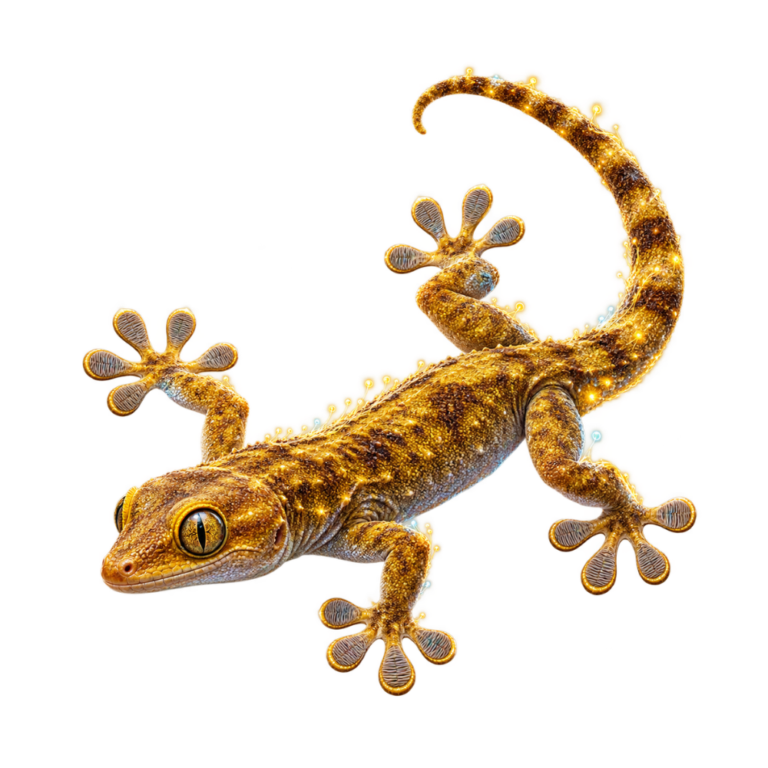
ME-SP-0002B-P
Golden Silk Orb-Weaver
Trichonephila clavipes
Araneidae • Arachnida
ME-SP-0002B-PGolden Silk Orb-Weaver
Trichonephila clavipes
Araneae • Araneidae • ArachnidaHow to Recognize It
Golden Silk Orb-Weaver (Trichonephila clavipes) should be identified using the anatomical characters appropriate to its taxonomic group, supported by life stage, size, locality, behavior, and reliable provenance. Color by itself is rarely sufficient because age, sex, molt stage, preservation, and lighting can change appearance. Juveniles may lack adult diagnostic structures. Where the taxon includes similar-looking relatives, retain high-resolution dorsal, ventral, and lateral photographs and preserve any molt or developmental evidence that can support later review. Species-level certainty should be downgraded rather than guessed when key characters or locality data are missing.Life Beyond the Enclosure
Golden Silk Orb-Weaver is an invertebrate whose ecology is shaped by its particular body plan and life cycle. Growth in arthropods occurs through molts, while other invertebrate groups may use different developmental strategies. Microhabitat, moisture, temperature, food resources, predators, competitors, and season all influence activity. Many species occupy narrow ecological niches even when adults appear mobile or generalist. Feeding strategy can change between juvenile and adult stages, and reproduction may be seasonal. Natural-history information should be separated from captive-care assumptions: a field observation describes what the animal used in one place and time, not automatically the only condition it can tolerate in captivity. Practical records should note date, life stage, feeding response, behavior, environmental observations, and any intervention so trends are visible instead of relying on memory. For Trichonephila clavipes, locality, season, and life stage should stay attached to observations because those variables can change the ecological picture substantially.Keeper Reference
Care for Golden Silk Orb-Weaver should begin with verified taxonomic identity and a species-specific understanding of microhabitat, feeding, hydration, and development. Provide secure ventilation, escape prevention, suitable structural complexity, safe moisture, and food that matches the animal's natural feeding mode. Avoid crowding unless social tolerance is established. Molting or otherwise vulnerable stages require minimal disturbance. When published husbandry data are sparse, favor short-term observation over experimental long-term keeping and record every environmental change. Do not release imported, captive-bred, or uncertain-origin animals. Any numeric temperature or humidity target should come from a reputable species-specific source rather than a generic invertebrate recipe. Keep this Trichonephila clavipes account under species-specific review as stronger references become available.Collection Knowledge
Golden Silk Orb-Weaver (Trichonephila clavipes) represents the astonishingly varied invertebrate majority of animal life. Its shape, sensory systems, life cycle, and ecological role make more sense when viewed together rather than as a collection of isolated traits. Identification should combine anatomy with locality and life stage because juveniles and adults can look very different, especially in groups that molt or metamorphose. In the wild, microhabitat is often the hidden key: moisture, substrate, food, shelter, and season can determine where the animal appears. Good records preserve that context, turning a specimen or observation into something far more informative than a name on a label. Practical records should note date, life stage, feeding response, behavior, environmental observations, and any intervention so trends are visible instead of relying on memory. Records for Trichonephila clavipes are most useful when identification, locality, life stage, and source provenance remain linked to the profile. Keep this Trichonephila clavipes account under species-specific review as stronger references become available.ME-SP-0003I-O
Gray Hairstreak
Strymon melinus
Lycaenidae • Insecta
ME-SP-0003I-OGray Hairstreak
Strymon melinus
Lepidoptera • Lycaenidae • InsectaHow to Recognize It
Gray Hairstreak (Strymon melinus) is a lepidopteran whose identification should combine adult wing shape and pattern, dorsal and ventral markings, body form, antennae, and locality rather than relying on color alone. Sex, wear, season, and lighting can alter appearance, while closely related species may share broad pattern elements. Larvae and pupae can look radically different from adults, so life stage must be recorded. For preserved material, intact diagnostic structures and a reliable specimen label are as important as color. When a determination is uncertain, compare multiple characters against a taxonomic or regional reference before assigning species-level certainty.Life Beyond the Enclosure
Gray Hairstreak is part of the butterfly-and-moth lineage and passes through complete metamorphosis: egg, larva, pupa, and adult. Ecological requirements change sharply across those stages. Caterpillars are usually tied to particular host plants or host-plant families, whereas adults commonly focus on dispersal, courtship, reproduction, and species-specific food resources such as nectar, sap, fruit, or other liquids. Seasonal timing and local climate influence generation number, diapause, and adult flight. Predators, parasitoids, weather, host-plant chemistry, and habitat structure all shape survival. Distribution records should be interpreted at the taxon level because related species can occupy very different ranges and habitats. Practical records should note date, life stage, feeding response, behavior, environmental observations, and any intervention so trends are visible instead of relying on memory. For Strymon melinus, locality, season, and life stage should stay attached to observations because those variables can change the ecological picture substantially. Keep this Strymon melinus account under species-specific review as stronger references become available.Keeper Reference
Care for Gray Hairstreak depends first on life stage. Eggs and larvae require correctly identified host material, excellent airflow, sanitation, and enough space to avoid crowding. Pupae need the orientation and moisture pattern appropriate to the species, while adults require safe flight room, appropriate food resources, and surfaces that prevent wing damage. Wild adults are generally poor candidates for long-term display captivity; observation or rearing should use legally obtained material and a verified species-specific protocol. Avoid generic heat or humidity targets when published rearing data are unavailable, because host plant, season, and local climate can matter more than a single thermostat number. Keep this Strymon melinus account under species-specific review as stronger references become available.Collection Knowledge
Gray Hairstreak (Strymon melinus) belongs to one of the most transformation-heavy branches of the animal tree. Its life is divided among an egg, a feeding caterpillar, a reorganizing pupa, and a winged adult built largely for dispersal and reproduction. That stage shift means the same species can occupy different microhabitats and use completely different resources across its life. Identification is strongest when wing pattern, shape, locality, season, and life stage are considered together. Ecologically, species in this group connect host plants, flowering plants, predators, and parasitoids, making even a small moth or butterfly part of a surprisingly busy food web. Practical records should note date, life stage, feeding response, behavior, environmental observations, and any intervention so trends are visible instead of relying on memory. Records for Strymon melinus are most useful when identification, locality, life stage, and source provenance remain linked to the profile. Keep this Strymon melinus account under species-specific review as stronger references become available.ME-SP-0003L-F
Gray Ministreak
Ministrymon azia
Lycaenidae • Insecta
ME-SP-0003L-FGray Ministreak
Ministrymon azia
Lepidoptera • Lycaenidae • InsectaHow to Recognize It
Gray Ministreak (Ministrymon azia) is a lepidopteran whose identification should combine adult wing shape and pattern, dorsal and ventral markings, body form, antennae, and locality rather than relying on color alone. Sex, wear, season, and lighting can alter appearance, while closely related species may share broad pattern elements. Larvae and pupae can look radically different from adults, so life stage must be recorded. For preserved material, intact diagnostic structures and a reliable specimen label are as important as color. When a determination is uncertain, compare multiple characters against a taxonomic or regional reference before assigning species-level certainty.Life Beyond the Enclosure
Gray Ministreak is part of the butterfly-and-moth lineage and passes through complete metamorphosis: egg, larva, pupa, and adult. Ecological requirements change sharply across those stages. Caterpillars are usually tied to particular host plants or host-plant families, whereas adults commonly focus on dispersal, courtship, reproduction, and species-specific food resources such as nectar, sap, fruit, or other liquids. Seasonal timing and local climate influence generation number, diapause, and adult flight. Predators, parasitoids, weather, host-plant chemistry, and habitat structure all shape survival. Distribution records should be interpreted at the taxon level because related species can occupy very different ranges and habitats. Practical records should note date, life stage, feeding response, behavior, environmental observations, and any intervention so trends are visible instead of relying on memory. For Ministrymon azia, locality, season, and life stage should stay attached to observations because those variables can change the ecological picture substantially. Keep this Ministrymon azia account under species-specific review as stronger references become available.Keeper Reference
Care for Gray Ministreak depends first on life stage. Eggs and larvae require correctly identified host material, excellent airflow, sanitation, and enough space to avoid crowding. Pupae need the orientation and moisture pattern appropriate to the species, while adults require safe flight room, appropriate food resources, and surfaces that prevent wing damage. Wild adults are generally poor candidates for long-term display captivity; observation or rearing should use legally obtained material and a verified species-specific protocol. Avoid generic heat or humidity targets when published rearing data are unavailable, because host plant, season, and local climate can matter more than a single thermostat number. Keep this Ministrymon azia account under species-specific review as stronger references become available.Collection Knowledge
Gray Ministreak (Ministrymon azia) belongs to one of the most transformation-heavy branches of the animal tree. Its life is divided among an egg, a feeding caterpillar, a reorganizing pupa, and a winged adult built largely for dispersal and reproduction. That stage shift means the same species can occupy different microhabitats and use completely different resources across its life. Identification is strongest when wing pattern, shape, locality, season, and life stage are considered together. Ecologically, species in this group connect host plants, flowering plants, predators, and parasitoids, making even a small moth or butterfly part of a surprisingly busy food web. Practical records should note date, life stage, feeding response, behavior, environmental observations, and any intervention so trends are visible instead of relying on memory. Records for Ministrymon azia are most useful when identification, locality, life stage, and source provenance remain linked to the profile. Keep this Ministrymon azia account under species-specific review as stronger references become available.ME-SP-00020-Y
Gray Wall Jumper
Menemerus bivittatus
Salticidae • Arachnida
ME-SP-00020-YGray Wall Jumper
Menemerus bivittatus
Araneae • Salticidae • ArachnidaHow to Recognize It
Gray Wall Jumper (Menemerus bivittatus) is a spider whose identification should use eye arrangement, body proportions, carapace and abdominal pattern, leg morphology, setation, chelicerae, mature reproductive structures, and locality as appropriate. Juveniles can be difficult or impossible to identify confidently to species because diagnostic adult characters are not yet developed. Color is useful but variable with molt stage, lighting, sex, and individual condition. For jumping spiders, the large forward-facing principal eyes and alert visual behavior are distinctive at family level, but species determinations often require several characters. Preserve molt skins, locality data, and clear dorsal and ventral photographs when possible.Life Beyond the Enclosure
Gray Wall Jumper is an arachnid predator that relies on silk, sensory information, and rapid prey capture rather than chewing plant material. Spiders grow by molting, and vulnerability rises sharply before, during, and immediately after ecdysis. Visual hunters such as jumping spiders use excellent eyesight, orientation behavior, and small silk retreats, while other spiders may rely more heavily on webs, burrows, or tactile cues. Diet in the wild consists mainly of appropriately sized arthropods. Activity, courtship, maturation, and egg production are influenced by prey availability, temperature, hydration, and season. Cannibalism is a normal risk in many species, especially during pairing or crowded housing. Practical records should note date, life stage, feeding response, behavior, environmental observations, and any intervention so trends are visible instead of relying on memory. For Menemerus bivittatus, locality, season, and life stage should stay attached to observations because those variables can change the ecological picture substantially. Keep this Menemerus bivittatus account under species-specific review as stronger references become available.Keeper Reference
Care for Gray Wall Jumper should provide secure ventilation, species-appropriate vertical or horizontal space, textured anchor points, a retreat location, clean hydration, and live prey sized to the animal. Avoid excessive wetness and stagnant air unless a verified species protocol calls for unusually humid conditions. Molting animals should not be disturbed or offered dangerous prey. Jumping spiders benefit from visual access, climbing surfaces, and an upper retreat zone; terrestrial species need more floor area and stable footing. Individual housing is the safest default unless social tolerance is well documented. Remove uneaten prey and monitor abdomen condition, coordination, attachment ability, and molt timing. Keep this Menemerus bivittatus account under species-specific review as stronger references become available.Collection Knowledge
Gray Wall Jumper (Menemerus bivittatus) is an arachnid predator built around precision rather than brute force. Spiders read the world through vibration, touch, chemical cues, and, in visually oriented groups such as jumping spiders, remarkably capable eyes. Silk may become a safety line, shelter, nursery, hunting tool, or molt retreat depending on the species. Growth happens in jumps because the exoskeleton must be shed before a larger one hardens. That makes molting a major event in both wild biology and captive care. Species identification can be tricky in juveniles, so mature anatomy, locality, and multiple photographs are more trustworthy than color by itself. Practical records should note date, life stage, feeding response, behavior, environmental observations, and any intervention so trends are visible instead of relying on memory. Records for Menemerus bivittatus are most useful when identification, locality, life stage, and source provenance remain linked to the profile. Keep this Menemerus bivittatus account under species-specific review as stronger references become available.ME-SP-0003H-F
Great Purple Hairstreak
Atlides halesus
Lycaenidae • Insecta
ME-SP-0003H-FGreat Purple Hairstreak
Atlides halesus
Lepidoptera • Lycaenidae • InsectaHow to Recognize It
Great Purple Hairstreak (Atlides halesus) is a lepidopteran whose identification should combine adult wing shape and pattern, dorsal and ventral markings, body form, antennae, and locality rather than relying on color alone. Sex, wear, season, and lighting can alter appearance, while closely related species may share broad pattern elements. Larvae and pupae can look radically different from adults, so life stage must be recorded. For preserved material, intact diagnostic structures and a reliable specimen label are as important as color. When a determination is uncertain, compare multiple characters against a taxonomic or regional reference before assigning species-level certainty.Life Beyond the Enclosure
Great Purple Hairstreak is part of the butterfly-and-moth lineage and passes through complete metamorphosis: egg, larva, pupa, and adult. Ecological requirements change sharply across those stages. Caterpillars are usually tied to particular host plants or host-plant families, whereas adults commonly focus on dispersal, courtship, reproduction, and species-specific food resources such as nectar, sap, fruit, or other liquids. Seasonal timing and local climate influence generation number, diapause, and adult flight. Predators, parasitoids, weather, host-plant chemistry, and habitat structure all shape survival. Distribution records should be interpreted at the taxon level because related species can occupy very different ranges and habitats. Practical records should note date, life stage, feeding response, behavior, environmental observations, and any intervention so trends are visible instead of relying on memory. For Atlides halesus, locality, season, and life stage should stay attached to observations because those variables can change the ecological picture substantially.Keeper Reference
Care for Great Purple Hairstreak depends first on life stage. Eggs and larvae require correctly identified host material, excellent airflow, sanitation, and enough space to avoid crowding. Pupae need the orientation and moisture pattern appropriate to the species, while adults require safe flight room, appropriate food resources, and surfaces that prevent wing damage. Wild adults are generally poor candidates for long-term display captivity; observation or rearing should use legally obtained material and a verified species-specific protocol. Avoid generic heat or humidity targets when published rearing data are unavailable, because host plant, season, and local climate can matter more than a single thermostat number. Keep this Atlides halesus account under species-specific review as stronger references become available.Collection Knowledge
Great Purple Hairstreak (Atlides halesus) belongs to one of the most transformation-heavy branches of the animal tree. Its life is divided among an egg, a feeding caterpillar, a reorganizing pupa, and a winged adult built largely for dispersal and reproduction. That stage shift means the same species can occupy different microhabitats and use completely different resources across its life. Identification is strongest when wing pattern, shape, locality, season, and life stage are considered together. Ecologically, species in this group connect host plants, flowering plants, predators, and parasitoids, making even a small moth or butterfly part of a surprisingly busy food web. Practical records should note date, life stage, feeding response, behavior, environmental observations, and any intervention so trends are visible instead of relying on memory. Records for Atlides halesus are most useful when identification, locality, life stage, and source provenance remain linked to the profile. Keep this Atlides halesus account under species-specific review as stronger references become available.ME-SP-0002K-Y
Great Spangled Fritillary
Speyeria cybele
Nymphalidae • Insecta
ME-SP-0002K-YGreat Spangled Fritillary
Speyeria cybele
Lepidoptera • Nymphalidae • InsectaHow to Recognize It
Great Spangled Fritillary (Speyeria cybele) is a lepidopteran whose identification should combine adult wing shape and pattern, dorsal and ventral markings, body form, antennae, and locality rather than relying on color alone. Sex, wear, season, and lighting can alter appearance, while closely related species may share broad pattern elements. Larvae and pupae can look radically different from adults, so life stage must be recorded. For preserved material, intact diagnostic structures and a reliable specimen label are as important as color. When a determination is uncertain, compare multiple characters against a taxonomic or regional reference before assigning species-level certainty.Life Beyond the Enclosure
Great Spangled Fritillary is part of the butterfly-and-moth lineage and passes through complete metamorphosis: egg, larva, pupa, and adult. Ecological requirements change sharply across those stages. Caterpillars are usually tied to particular host plants or host-plant families, whereas adults commonly focus on dispersal, courtship, reproduction, and species-specific food resources such as nectar, sap, fruit, or other liquids. Seasonal timing and local climate influence generation number, diapause, and adult flight. Predators, parasitoids, weather, host-plant chemistry, and habitat structure all shape survival. Distribution records should be interpreted at the taxon level because related species can occupy very different ranges and habitats. Practical records should note date, life stage, feeding response, behavior, environmental observations, and any intervention so trends are visible instead of relying on memory. For Speyeria cybele, locality, season, and life stage should stay attached to observations because those variables can change the ecological picture substantially.Keeper Reference
Care for Great Spangled Fritillary depends first on life stage. Eggs and larvae require correctly identified host material, excellent airflow, sanitation, and enough space to avoid crowding. Pupae need the orientation and moisture pattern appropriate to the species, while adults require safe flight room, appropriate food resources, and surfaces that prevent wing damage. Wild adults are generally poor candidates for long-term display captivity; observation or rearing should use legally obtained material and a verified species-specific protocol. Avoid generic heat or humidity targets when published rearing data are unavailable, because host plant, season, and local climate can matter more than a single thermostat number. Keep this Speyeria cybele account under species-specific review as stronger references become available.Collection Knowledge
Great Spangled Fritillary (Speyeria cybele) belongs to one of the most transformation-heavy branches of the animal tree. Its life is divided among an egg, a feeding caterpillar, a reorganizing pupa, and a winged adult built largely for dispersal and reproduction. That stage shift means the same species can occupy different microhabitats and use completely different resources across its life. Identification is strongest when wing pattern, shape, locality, season, and life stage are considered together. Ecologically, species in this group connect host plants, flowering plants, predators, and parasitoids, making even a small moth or butterfly part of a surprisingly busy food web. Practical records should note date, life stage, feeding response, behavior, environmental observations, and any intervention so trends are visible instead of relying on memory. Records for Speyeria cybele are most useful when identification, locality, life stage, and source provenance remain linked to the profile. Keep this Speyeria cybele account under species-specific review as stronger references become available.ME-SP-0001D-Z
Greek Tortoise
Testudo graeca
Testudinidae • Reptilia
ME-SP-0001D-ZGreek Tortoise
Testudo graeca
Testudines • Testudinidae • ReptiliaHow to Recognize It
Greek Tortoise (Testudo graeca) should be identified from a combination of body proportions, scalation, head shape, limb or toe structure when present, pattern, coloration, and geographic provenance. Captive-bred color morphs can obscure wild-type appearance, so morphology and documented lineage are more reliable than color alone. Juveniles may differ markedly from adults. Sexing characters are species- and age-dependent and should not be guessed from a photograph without validated criteria. Similar-looking relatives may overlap in the pet trade, making a complete acquisition record and exact scientific name important for husbandry as well as taxonomy.Life Beyond the Enclosure
Greek Tortoise is an ectothermic reptile whose activity, digestion, growth, reproduction, and immune function are strongly influenced by environmental temperature and access to an appropriate thermal range. In the wild, reptiles regulate body temperature behaviorally by moving among sun, shade, burrows, vegetation, rock, water, or other microhabitats. Diet and activity pattern vary by species, from insectivory or herbivory to vertebrate prey. Seasonal rainfall, day length, and temperature can influence reproduction and dormancy. Captive care should therefore recreate useful choices rather than one uniform condition, while natural-history observations should not be converted into husbandry numbers without supporting evidence. Practical records should note date, life stage, feeding response, behavior, environmental observations, and any intervention so trends are visible instead of relying on memory. For Testudo graeca, locality, season, and life stage should stay attached to observations because those variables can change the ecological picture substantially. Keep this Testudo graeca account under species-specific review as stronger references become available.Keeper Reference
Successful care for Greek Tortoise requires a secure enclosure with a species-appropriate thermal gradient, measured temperatures, suitable humidity and ventilation, appropriate light exposure, safe substrate, clean water, and a diet matched to its natural feeding strategy. Reptiles should be able to choose among warmer, cooler, drier, and more humid microclimates rather than being held at one uniform setting. UVB requirements, basking intensity, substrate depth, enclosure orientation, and feeding frequency differ substantially among reptiles, so final numeric targets must follow a validated species-specific husbandry source. Quarantine new animals and track body condition, appetite, feces, sheds, and behavior over time. Practical records should note date, life stage, feeding response, behavior, environmental observations, and any intervention so trends are visible instead of relying on memory. Any final care numbers for Testudo graeca should be tied to a named species-specific source and reviewed after actual husbandry observations.Collection Knowledge
Greek Tortoise (Testudo graeca) is a reptile shaped by behavioral thermoregulation. Instead of generating a stable internal temperature the way mammals do, it uses the environment as a control panel, moving among warmer and cooler microhabitats as its needs change. That makes habitat structure biologically meaningful rather than decorative. Depending on the species, climbing, burrowing, basking, hiding, or soaking may be central parts of daily behavior. Captive-bred animals can also show colors and patterns unlike wild populations, so identification should use anatomy and provenance, not just appearance. Good husbandry is built around measured gradients and choices, not a single 'room temperature' number. Practical records should note date, life stage, feeding response, behavior, environmental observations, and any intervention so trends are visible instead of relying on memory. Records for Testudo graeca are most useful when identification, locality, life stage, and source provenance remain linked to the profile. Keep this Testudo graeca account under species-specific review as stronger references become available.ME-SP-00015-Z
Green Anole
Anolis carolinensis
Dactyloidae • Reptilia
ME-SP-00015-ZGreen Anole
Anolis carolinensis
Squamata • Dactyloidae • ReptiliaHow to Recognize It
Green Anole (Anolis carolinensis) should be identified from a combination of body proportions, scalation, head shape, limb or toe structure when present, pattern, coloration, and geographic provenance. Captive-bred color morphs can obscure wild-type appearance, so morphology and documented lineage are more reliable than color alone. Juveniles may differ markedly from adults. Sexing characters are species- and age-dependent and should not be guessed from a photograph without validated criteria. Similar-looking relatives may overlap in the pet trade, making a complete acquisition record and exact scientific name important for husbandry as well as taxonomy.Life Beyond the Enclosure
Green Anole is an ectothermic reptile whose activity, digestion, growth, reproduction, and immune function are strongly influenced by environmental temperature and access to an appropriate thermal range. In the wild, reptiles regulate body temperature behaviorally by moving among sun, shade, burrows, vegetation, rock, water, or other microhabitats. Diet and activity pattern vary by species, from insectivory or herbivory to vertebrate prey. Seasonal rainfall, day length, and temperature can influence reproduction and dormancy. Captive care should therefore recreate useful choices rather than one uniform condition, while natural-history observations should not be converted into husbandry numbers without supporting evidence. Practical records should note date, life stage, feeding response, behavior, environmental observations, and any intervention so trends are visible instead of relying on memory. For Anolis carolinensis, locality, season, and life stage should stay attached to observations because those variables can change the ecological picture substantially. Keep this Anolis carolinensis account under species-specific review as stronger references become available.Keeper Reference
Successful care for Green Anole requires a secure enclosure with a species-appropriate thermal gradient, measured temperatures, suitable humidity and ventilation, appropriate light exposure, safe substrate, clean water, and a diet matched to its natural feeding strategy. Reptiles should be able to choose among warmer, cooler, drier, and more humid microclimates rather than being held at one uniform setting. UVB requirements, basking intensity, substrate depth, enclosure orientation, and feeding frequency differ substantially among reptiles, so final numeric targets must follow a validated species-specific husbandry source. Quarantine new animals and track body condition, appetite, feces, sheds, and behavior over time. Practical records should note date, life stage, feeding response, behavior, environmental observations, and any intervention so trends are visible instead of relying on memory. Any final care numbers for Anolis carolinensis should be tied to a named species-specific source and reviewed after actual husbandry observations.Collection Knowledge
Green Anole (Anolis carolinensis) is a reptile shaped by behavioral thermoregulation. Instead of generating a stable internal temperature the way mammals do, it uses the environment as a control panel, moving among warmer and cooler microhabitats as its needs change. That makes habitat structure biologically meaningful rather than decorative. Depending on the species, climbing, burrowing, basking, hiding, or soaking may be central parts of daily behavior. Captive-bred animals can also show colors and patterns unlike wild populations, so identification should use anatomy and provenance, not just appearance. Good husbandry is built around measured gradients and choices, not a single 'room temperature' number. Practical records should note date, life stage, feeding response, behavior, environmental observations, and any intervention so trends are visible instead of relying on memory. Records for Anolis carolinensis are most useful when identification, locality, life stage, and source provenance remain linked to the profile. Keep this Anolis carolinensis account under species-specific review as stronger references become available.MycoVault Game Counterparts
These are digital game specimens and characters inspired by the real-world species above. Their lore, rarity, game traits, and collectible ownership belong to MycoVault.
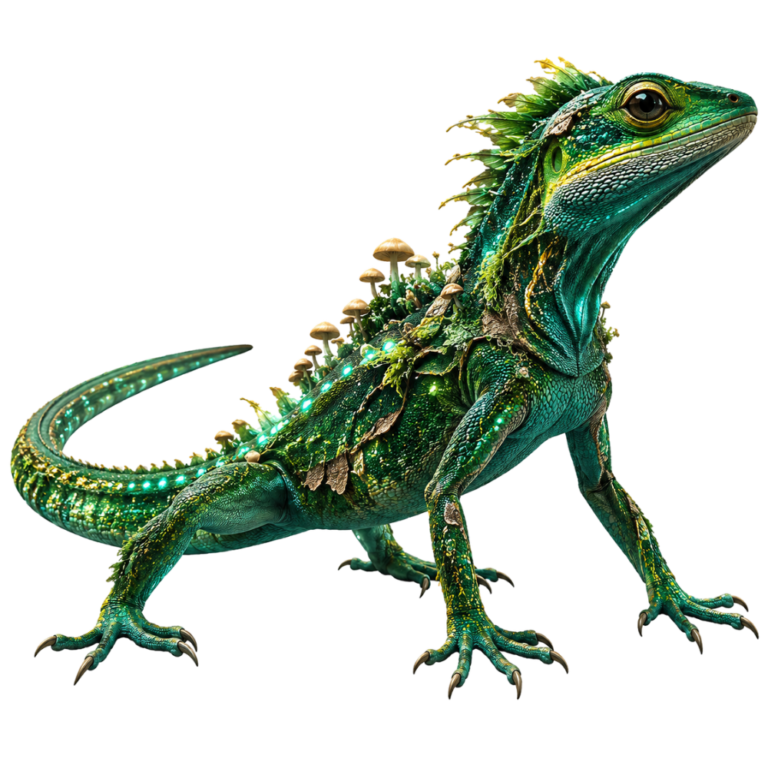
ME-SP-00017-H
Green Iguana
Iguana iguana
Iguanidae • Reptilia
ME-SP-00017-HGreen Iguana
Iguana iguana
Squamata • Iguanidae • ReptiliaHow to Recognize It
Green Iguana (Iguana iguana) should be identified from a combination of body proportions, scalation, head shape, limb or toe structure when present, pattern, coloration, and geographic provenance. Captive-bred color morphs can obscure wild-type appearance, so morphology and documented lineage are more reliable than color alone. Juveniles may differ markedly from adults. Sexing characters are species- and age-dependent and should not be guessed from a photograph without validated criteria. Similar-looking relatives may overlap in the pet trade, making a complete acquisition record and exact scientific name important for husbandry as well as taxonomy.Life Beyond the Enclosure
Green Iguana is an ectothermic reptile whose activity, digestion, growth, reproduction, and immune function are strongly influenced by environmental temperature and access to an appropriate thermal range. In the wild, reptiles regulate body temperature behaviorally by moving among sun, shade, burrows, vegetation, rock, water, or other microhabitats. Diet and activity pattern vary by species, from insectivory or herbivory to vertebrate prey. Seasonal rainfall, day length, and temperature can influence reproduction and dormancy. Captive care should therefore recreate useful choices rather than one uniform condition, while natural-history observations should not be converted into husbandry numbers without supporting evidence. Practical records should note date, life stage, feeding response, behavior, environmental observations, and any intervention so trends are visible instead of relying on memory. For Iguana iguana, locality, season, and life stage should stay attached to observations because those variables can change the ecological picture substantially. Keep this Iguana iguana account under species-specific review as stronger references become available.Keeper Reference
Successful care for Green Iguana requires a secure enclosure with a species-appropriate thermal gradient, measured temperatures, suitable humidity and ventilation, appropriate light exposure, safe substrate, clean water, and a diet matched to its natural feeding strategy. Reptiles should be able to choose among warmer, cooler, drier, and more humid microclimates rather than being held at one uniform setting. UVB requirements, basking intensity, substrate depth, enclosure orientation, and feeding frequency differ substantially among reptiles, so final numeric targets must follow a validated species-specific husbandry source. Quarantine new animals and track body condition, appetite, feces, sheds, and behavior over time. Practical records should note date, life stage, feeding response, behavior, environmental observations, and any intervention so trends are visible instead of relying on memory. Any final care numbers for Iguana iguana should be tied to a named species-specific source and reviewed after actual husbandry observations.Collection Knowledge
Green Iguana (Iguana iguana) is a reptile shaped by behavioral thermoregulation. Instead of generating a stable internal temperature the way mammals do, it uses the environment as a control panel, moving among warmer and cooler microhabitats as its needs change. That makes habitat structure biologically meaningful rather than decorative. Depending on the species, climbing, burrowing, basking, hiding, or soaking may be central parts of daily behavior. Captive-bred animals can also show colors and patterns unlike wild populations, so identification should use anatomy and provenance, not just appearance. Good husbandry is built around measured gradients and choices, not a single 'room temperature' number. Practical records should note date, life stage, feeding response, behavior, environmental observations, and any intervention so trends are visible instead of relying on memory. Records for Iguana iguana are most useful when identification, locality, life stage, and source provenance remain linked to the profile. Keep this Iguana iguana account under species-specific review as stronger references become available.ME-SP-00059-V
Green June Beetle
Cotinis nitida
Scarabaeidae • Insecta
ME-SP-00059-VGreen June Beetle
Cotinis nitida
Coleoptera • Scarabaeidae • InsectaHow to Recognize It
Green June Beetle (Cotinis nitida) is a beetle and should be identified from body shape, antennae, pronotum, elytra, leg structure, surface sculpture, color pattern, size, and locality. The hardened forewings, or elytra, identify Coleoptera as a group, but species-level work often depends on small structural characters rather than overall color. Larvae may bear little resemblance to adults and may require host, substrate, or rearing information for confident identification. Wear, age, and preservation can alter color or sheen. Keep locality, collection or acquisition data, photographs, and any associated larval substrate information with the specimen record.Life Beyond the Enclosure
Green June Beetle is part of Coleoptera, the beetles, a huge radiation united by hardened forewings that protect the flight wings and abdomen. Complete metamorphosis separates egg, larva, pupa, and adult stages, and those stages can occupy different ecological niches. Depending on the species, larvae may develop in soil, wood, dung, carrion, fungi, roots, foliage, or other specialized substrates, while adults may feed, disperse, reproduce, or sometimes eat very little. Moisture, temperature, food quality, microbial decomposition, and substrate structure can all influence development. Ecological role may include predation, decomposition, pollination, herbivory, or nutrient cycling. Practical records should note date, life stage, feeding response, behavior, environmental observations, and any intervention so trends are visible instead of relying on memory. For Cotinis nitida, locality, season, and life stage should stay attached to observations because those variables can change the ecological picture substantially. Keep this Cotinis nitida account under species-specific review as stronger references become available.Keeper Reference
Care for Green June Beetle must be based on its larval ecology and adult feeding strategy. A generic beetle box is not enough: wood borers, carrion beetles, dung beetles, flower beetles, tiger beetles, and scarabs require very different substrates and foods. For temporary adult observation, provide secure ventilation, traction, a species-appropriate food or moisture source, and protection from overheating. For rearing, use only correctly identified substrate or host material and prevent mold, mites, and anaerobic decay through sanitation and airflow. Avoid releasing captive, imported, or uncertain-origin beetles. Confirm species-specific developmental substrate, temperature, and moisture requirements before attempting multigenerational culture. Practical records should note date, life stage, feeding response, behavior, environmental observations, and any intervention so trends are visible instead of relying on memory. Any final care numbers for Cotinis nitida should be tied to a named species-specific source and reviewed after actual husbandry observations.Collection Knowledge
Green June Beetle (Cotinis nitida) is a member of Coleoptera, the beetles, whose signature hardware is a pair of hardened forewings called elytra. Beneath those protective covers sit the functional flight wings. Beetles undergo complete metamorphosis, so a grub-like larva may live in an entirely different world from the adult it becomes. Across the order, beetles work as predators, decomposers, herbivores, pollinators, scavengers, and ecosystem recyclers. That diversity also makes identification challenging: body sculpture, antennae, pronotum, legs, elytra, locality, and sometimes genital anatomy can matter more than color. Larval habitat is often one of the best clues to biology. Practical records should note date, life stage, feeding response, behavior, environmental observations, and any intervention so trends are visible instead of relying on memory. Records for Cotinis nitida are most useful when identification, locality, life stage, and source provenance remain linked to the profile. Keep this Cotinis nitida account under species-specific review as stronger references become available.ME-SP-0000E-0
Gulf Fritillary
Dione vanillae
Nymphalidae • Insecta
ME-SP-0000E-0Gulf Fritillary
Dione vanillae
Lepidoptera • Nymphalidae • InsectaHow to Recognize It
Gulf Fritillary (Dione vanillae) is a lepidopteran whose identification should combine adult wing shape and pattern, dorsal and ventral markings, body form, antennae, and locality rather than relying on color alone. Sex, wear, season, and lighting can alter appearance, while closely related species may share broad pattern elements. Larvae and pupae can look radically different from adults, so life stage must be recorded. For preserved material, intact diagnostic structures and a reliable specimen label are as important as color. When a determination is uncertain, compare multiple characters against a taxonomic or regional reference before assigning species-level certainty.Life Beyond the Enclosure
Gulf Fritillary is part of the butterfly-and-moth lineage and passes through complete metamorphosis: egg, larva, pupa, and adult. Ecological requirements change sharply across those stages. Caterpillars are usually tied to particular host plants or host-plant families, whereas adults commonly focus on dispersal, courtship, reproduction, and species-specific food resources such as nectar, sap, fruit, or other liquids. Seasonal timing and local climate influence generation number, diapause, and adult flight. Predators, parasitoids, weather, host-plant chemistry, and habitat structure all shape survival. Distribution records should be interpreted at the taxon level because related species can occupy very different ranges and habitats. Practical records should note date, life stage, feeding response, behavior, environmental observations, and any intervention so trends are visible instead of relying on memory. For Dione vanillae, locality, season, and life stage should stay attached to observations because those variables can change the ecological picture substantially. Keep this Dione vanillae account under species-specific review as stronger references become available.Keeper Reference
Care for Gulf Fritillary depends first on life stage. Eggs and larvae require correctly identified host material, excellent airflow, sanitation, and enough space to avoid crowding. Pupae need the orientation and moisture pattern appropriate to the species, while adults require safe flight room, appropriate food resources, and surfaces that prevent wing damage. Wild adults are generally poor candidates for long-term display captivity; observation or rearing should use legally obtained material and a verified species-specific protocol. Avoid generic heat or humidity targets when published rearing data are unavailable, because host plant, season, and local climate can matter more than a single thermostat number. Keep this Dione vanillae account under species-specific review as stronger references become available.Collection Knowledge
Gulf Fritillary (Dione vanillae) belongs to one of the most transformation-heavy branches of the animal tree. Its life is divided among an egg, a feeding caterpillar, a reorganizing pupa, and a winged adult built largely for dispersal and reproduction. That stage shift means the same species can occupy different microhabitats and use completely different resources across its life. Identification is strongest when wing pattern, shape, locality, season, and life stage are considered together. Ecologically, species in this group connect host plants, flowering plants, predators, and parasitoids, making even a small moth or butterfly part of a surprisingly busy food web. Practical records should note date, life stage, feeding response, behavior, environmental observations, and any intervention so trends are visible instead of relying on memory. Records for Dione vanillae are most useful when identification, locality, life stage, and source provenance remain linked to the profile. Keep this Dione vanillae account under species-specific review as stronger references become available.ME-SP-0002S-Y
Hackberry Emperor
Asterocampa celtis
Nymphalidae • Insecta
ME-SP-0002S-YHackberry Emperor
Asterocampa celtis
Lepidoptera • Nymphalidae • InsectaHow to Recognize It
Hackberry Emperor (Asterocampa celtis) is a lepidopteran whose identification should combine adult wing shape and pattern, dorsal and ventral markings, body form, antennae, and locality rather than relying on color alone. Sex, wear, season, and lighting can alter appearance, while closely related species may share broad pattern elements. Larvae and pupae can look radically different from adults, so life stage must be recorded. For preserved material, intact diagnostic structures and a reliable specimen label are as important as color. When a determination is uncertain, compare multiple characters against a taxonomic or regional reference before assigning species-level certainty.Life Beyond the Enclosure
Hackberry Emperor is part of the butterfly-and-moth lineage and passes through complete metamorphosis: egg, larva, pupa, and adult. Ecological requirements change sharply across those stages. Caterpillars are usually tied to particular host plants or host-plant families, whereas adults commonly focus on dispersal, courtship, reproduction, and species-specific food resources such as nectar, sap, fruit, or other liquids. Seasonal timing and local climate influence generation number, diapause, and adult flight. Predators, parasitoids, weather, host-plant chemistry, and habitat structure all shape survival. Distribution records should be interpreted at the taxon level because related species can occupy very different ranges and habitats. Practical records should note date, life stage, feeding response, behavior, environmental observations, and any intervention so trends are visible instead of relying on memory. For Asterocampa celtis, locality, season, and life stage should stay attached to observations because those variables can change the ecological picture substantially. Keep this Asterocampa celtis account under species-specific review as stronger references become available.Keeper Reference
Care for Hackberry Emperor depends first on life stage. Eggs and larvae require correctly identified host material, excellent airflow, sanitation, and enough space to avoid crowding. Pupae need the orientation and moisture pattern appropriate to the species, while adults require safe flight room, appropriate food resources, and surfaces that prevent wing damage. Wild adults are generally poor candidates for long-term display captivity; observation or rearing should use legally obtained material and a verified species-specific protocol. Avoid generic heat or humidity targets when published rearing data are unavailable, because host plant, season, and local climate can matter more than a single thermostat number. Keep this Asterocampa celtis account under species-specific review as stronger references become available.Collection Knowledge
Hackberry Emperor (Asterocampa celtis) belongs to one of the most transformation-heavy branches of the animal tree. Its life is divided among an egg, a feeding caterpillar, a reorganizing pupa, and a winged adult built largely for dispersal and reproduction. That stage shift means the same species can occupy different microhabitats and use completely different resources across its life. Identification is strongest when wing pattern, shape, locality, season, and life stage are considered together. Ecologically, species in this group connect host plants, flowering plants, predators, and parasitoids, making even a small moth or butterfly part of a surprisingly busy food web. Practical records should note date, life stage, feeding response, behavior, environmental observations, and any intervention so trends are visible instead of relying on memory. Records for Asterocampa celtis are most useful when identification, locality, life stage, and source provenance remain linked to the profile. Keep this Asterocampa celtis account under species-specific review as stronger references become available.ME-SP-00052-4
Hag Moth
Phobetron pithecium
Limacodidae • Insecta
ME-SP-00052-4Hag Moth
Phobetron pithecium
Lepidoptera • Limacodidae • InsectaHow to Recognize It
Hag Moth (Phobetron pithecium) is a lepidopteran whose identification should combine adult wing shape and pattern, dorsal and ventral markings, body form, antennae, and locality rather than relying on color alone. Sex, wear, season, and lighting can alter appearance, while closely related species may share broad pattern elements. Larvae and pupae can look radically different from adults, so life stage must be recorded. For preserved material, intact diagnostic structures and a reliable specimen label are as important as color. When a determination is uncertain, compare multiple characters against a taxonomic or regional reference before assigning species-level certainty.Life Beyond the Enclosure
Hag Moth is part of the butterfly-and-moth lineage and passes through complete metamorphosis: egg, larva, pupa, and adult. Ecological requirements change sharply across those stages. Caterpillars are usually tied to particular host plants or host-plant families, whereas adults commonly focus on dispersal, courtship, reproduction, and species-specific food resources such as nectar, sap, fruit, or other liquids. Seasonal timing and local climate influence generation number, diapause, and adult flight. Predators, parasitoids, weather, host-plant chemistry, and habitat structure all shape survival. Distribution records should be interpreted at the taxon level because related species can occupy very different ranges and habitats. Practical records should note date, life stage, feeding response, behavior, environmental observations, and any intervention so trends are visible instead of relying on memory. For Phobetron pithecium, locality, season, and life stage should stay attached to observations because those variables can change the ecological picture substantially. Keep this Phobetron pithecium account under species-specific review as stronger references become available.Keeper Reference
Care for Hag Moth depends first on life stage. Eggs and larvae require correctly identified host material, excellent airflow, sanitation, and enough space to avoid crowding. Pupae need the orientation and moisture pattern appropriate to the species, while adults require safe flight room, appropriate food resources, and surfaces that prevent wing damage. Wild adults are generally poor candidates for long-term display captivity; observation or rearing should use legally obtained material and a verified species-specific protocol. Avoid generic heat or humidity targets when published rearing data are unavailable, because host plant, season, and local climate can matter more than a single thermostat number. Keep this Phobetron pithecium account under species-specific review as stronger references become available.Collection Knowledge
Hag Moth (Phobetron pithecium) belongs to one of the most transformation-heavy branches of the animal tree. Its life is divided among an egg, a feeding caterpillar, a reorganizing pupa, and a winged adult built largely for dispersal and reproduction. That stage shift means the same species can occupy different microhabitats and use completely different resources across its life. Identification is strongest when wing pattern, shape, locality, season, and life stage are considered together. Ecologically, species in this group connect host plants, flowering plants, predators, and parasitoids, making even a small moth or butterfly part of a surprisingly busy food web. Practical records should note date, life stage, feeding response, behavior, environmental observations, and any intervention so trends are visible instead of relying on memory. Records for Phobetron pithecium are most useful when identification, locality, life stage, and source provenance remain linked to the profile. Keep this Phobetron pithecium account under species-specific review as stronger references become available.ME-SP-0004P-N
Harnessed Tiger Moth
Apantesis phalerata
Erebidae • Insecta
ME-SP-0004P-NHarnessed Tiger Moth
Apantesis phalerata
Lepidoptera • Erebidae • InsectaHow to Recognize It
Harnessed Tiger Moth (Apantesis phalerata) is a lepidopteran whose identification should combine adult wing shape and pattern, dorsal and ventral markings, body form, antennae, and locality rather than relying on color alone. Sex, wear, season, and lighting can alter appearance, while closely related species may share broad pattern elements. Larvae and pupae can look radically different from adults, so life stage must be recorded. For preserved material, intact diagnostic structures and a reliable specimen label are as important as color. When a determination is uncertain, compare multiple characters against a taxonomic or regional reference before assigning species-level certainty.Life Beyond the Enclosure
Harnessed Tiger Moth is part of the butterfly-and-moth lineage and passes through complete metamorphosis: egg, larva, pupa, and adult. Ecological requirements change sharply across those stages. Caterpillars are usually tied to particular host plants or host-plant families, whereas adults commonly focus on dispersal, courtship, reproduction, and species-specific food resources such as nectar, sap, fruit, or other liquids. Seasonal timing and local climate influence generation number, diapause, and adult flight. Predators, parasitoids, weather, host-plant chemistry, and habitat structure all shape survival. Distribution records should be interpreted at the taxon level because related species can occupy very different ranges and habitats. Practical records should note date, life stage, feeding response, behavior, environmental observations, and any intervention so trends are visible instead of relying on memory. For Apantesis phalerata, locality, season, and life stage should stay attached to observations because those variables can change the ecological picture substantially.Keeper Reference
Care for Harnessed Tiger Moth depends first on life stage. Eggs and larvae require correctly identified host material, excellent airflow, sanitation, and enough space to avoid crowding. Pupae need the orientation and moisture pattern appropriate to the species, while adults require safe flight room, appropriate food resources, and surfaces that prevent wing damage. Wild adults are generally poor candidates for long-term display captivity; observation or rearing should use legally obtained material and a verified species-specific protocol. Avoid generic heat or humidity targets when published rearing data are unavailable, because host plant, season, and local climate can matter more than a single thermostat number. Keep this Apantesis phalerata account under species-specific review as stronger references become available.Collection Knowledge
Harnessed Tiger Moth (Apantesis phalerata) belongs to one of the most transformation-heavy branches of the animal tree. Its life is divided among an egg, a feeding caterpillar, a reorganizing pupa, and a winged adult built largely for dispersal and reproduction. That stage shift means the same species can occupy different microhabitats and use completely different resources across its life. Identification is strongest when wing pattern, shape, locality, season, and life stage are considered together. Ecologically, species in this group connect host plants, flowering plants, predators, and parasitoids, making even a small moth or butterfly part of a surprisingly busy food web. Practical records should note date, life stage, feeding response, behavior, environmental observations, and any intervention so trends are visible instead of relying on memory. Records for Apantesis phalerata are most useful when identification, locality, life stage, and source provenance remain linked to the profile. Keep this Apantesis phalerata account under species-specific review as stronger references become available.ME-SP-0005F-D
Headlight Elater
Pyrophorus noctilucus
Elateridae • Insecta
ME-SP-0005F-DHeadlight Elater
Pyrophorus noctilucus
Coleoptera • Elateridae • InsectaHow to Recognize It
Headlight Elater (Pyrophorus noctilucus) is a beetle and should be identified from body shape, antennae, pronotum, elytra, leg structure, surface sculpture, color pattern, size, and locality. The hardened forewings, or elytra, identify Coleoptera as a group, but species-level work often depends on small structural characters rather than overall color. Larvae may bear little resemblance to adults and may require host, substrate, or rearing information for confident identification. Wear, age, and preservation can alter color or sheen. Keep locality, collection or acquisition data, photographs, and any associated larval substrate information with the specimen record.Life Beyond the Enclosure
Headlight Elater is part of Coleoptera, the beetles, a huge radiation united by hardened forewings that protect the flight wings and abdomen. Complete metamorphosis separates egg, larva, pupa, and adult stages, and those stages can occupy different ecological niches. Depending on the species, larvae may develop in soil, wood, dung, carrion, fungi, roots, foliage, or other specialized substrates, while adults may feed, disperse, reproduce, or sometimes eat very little. Moisture, temperature, food quality, microbial decomposition, and substrate structure can all influence development. Ecological role may include predation, decomposition, pollination, herbivory, or nutrient cycling. Practical records should note date, life stage, feeding response, behavior, environmental observations, and any intervention so trends are visible instead of relying on memory. For Pyrophorus noctilucus, locality, season, and life stage should stay attached to observations because those variables can change the ecological picture substantially. Practical records should note date, life stage, feeding response, behavior, environmental observations, and any intervention so trends are visible instead of relying on memory. For Pyrophorus noctilucus, locality, season, and life stage should stay attached to observations because those variables can change the ecological picture substantially.Keeper Reference
Care for Headlight Elater must be based on its larval ecology and adult feeding strategy. A generic beetle box is not enough: wood borers, carrion beetles, dung beetles, flower beetles, tiger beetles, and scarabs require very different substrates and foods. For temporary adult observation, provide secure ventilation, traction, a species-appropriate food or moisture source, and protection from overheating. For rearing, use only correctly identified substrate or host material and prevent mold, mites, and anaerobic decay through sanitation and airflow. Avoid releasing captive, imported, or uncertain-origin beetles. Confirm species-specific developmental substrate, temperature, and moisture requirements before attempting multigenerational culture. Practical records should note date, life stage, feeding response, behavior, environmental observations, and any intervention so trends are visible instead of relying on memory. Any final care numbers for Pyrophorus noctilucus should be tied to a named species-specific source and reviewed after actual husbandry observations.Collection Knowledge
Headlight Elater (Pyrophorus noctilucus) is a member of Coleoptera, the beetles, whose signature hardware is a pair of hardened forewings called elytra. Beneath those protective covers sit the functional flight wings. Beetles undergo complete metamorphosis, so a grub-like larva may live in an entirely different world from the adult it becomes. Across the order, beetles work as predators, decomposers, herbivores, pollinators, scavengers, and ecosystem recyclers. That diversity also makes identification challenging: body sculpture, antennae, pronotum, legs, elytra, locality, and sometimes genital anatomy can matter more than color. Larval habitat is often one of the best clues to biology. Practical records should note date, life stage, feeding response, behavior, environmental observations, and any intervention so trends are visible instead of relying on memory. Records for Pyrophorus noctilucus are most useful when identification, locality, life stage, and source provenance remain linked to the profile. Keep this Pyrophorus noctilucus account under species-specific review as stronger references become available.ME-SP-0000B-9
Hentz Jumping Spider
Hentzia palmarum
Salticidae • Arachnida
ME-SP-0000B-9Hentz Jumping Spider
Hentzia palmarum
Araneae • Salticidae • ArachnidaHow to Recognize It
Hentz Jumping Spider (Hentzia palmarum) is a spider whose identification should use eye arrangement, body proportions, carapace and abdominal pattern, leg morphology, setation, chelicerae, mature reproductive structures, and locality as appropriate. Juveniles can be difficult or impossible to identify confidently to species because diagnostic adult characters are not yet developed. Color is useful but variable with molt stage, lighting, sex, and individual condition. For jumping spiders, the large forward-facing principal eyes and alert visual behavior are distinctive at family level, but species determinations often require several characters. Preserve molt skins, locality data, and clear dorsal and ventral photographs when possible.Life Beyond the Enclosure
Hentz Jumping Spider is an arachnid predator that relies on silk, sensory information, and rapid prey capture rather than chewing plant material. Spiders grow by molting, and vulnerability rises sharply before, during, and immediately after ecdysis. Visual hunters such as jumping spiders use excellent eyesight, orientation behavior, and small silk retreats, while other spiders may rely more heavily on webs, burrows, or tactile cues. Diet in the wild consists mainly of appropriately sized arthropods. Activity, courtship, maturation, and egg production are influenced by prey availability, temperature, hydration, and season. Cannibalism is a normal risk in many species, especially during pairing or crowded housing. Practical records should note date, life stage, feeding response, behavior, environmental observations, and any intervention so trends are visible instead of relying on memory. For Hentzia palmarum, locality, season, and life stage should stay attached to observations because those variables can change the ecological picture substantially. Keep this Hentzia palmarum account under species-specific review as stronger references become available.Keeper Reference
Care for Hentz Jumping Spider should provide secure ventilation, species-appropriate vertical or horizontal space, textured anchor points, a retreat location, clean hydration, and live prey sized to the animal. Avoid excessive wetness and stagnant air unless a verified species protocol calls for unusually humid conditions. Molting animals should not be disturbed or offered dangerous prey. Jumping spiders benefit from visual access, climbing surfaces, and an upper retreat zone; terrestrial species need more floor area and stable footing. Individual housing is the safest default unless social tolerance is well documented. Remove uneaten prey and monitor abdomen condition, coordination, attachment ability, and molt timing. Keep this Hentzia palmarum account under species-specific review as stronger references become available.Collection Knowledge
Hentz Jumping Spider (Hentzia palmarum) is an arachnid predator built around precision rather than brute force. Spiders read the world through vibration, touch, chemical cues, and, in visually oriented groups such as jumping spiders, remarkably capable eyes. Silk may become a safety line, shelter, nursery, hunting tool, or molt retreat depending on the species. Growth happens in jumps because the exoskeleton must be shed before a larger one hardens. That makes molting a major event in both wild biology and captive care. Species identification can be tricky in juveniles, so mature anatomy, locality, and multiple photographs are more trustworthy than color by itself. Practical records should note date, life stage, feeding response, behavior, environmental observations, and any intervention so trends are visible instead of relying on memory. Records for Hentzia palmarum are most useful when identification, locality, life stage, and source provenance remain linked to the profile. Keep this Hentzia palmarum account under species-specific review as stronger references become available.ME-SP-00027-P
Hentz Striped Scorpion
Centruroides hentzi
Buthidae • Arachnida
ME-SP-00027-PHentz Striped Scorpion
Centruroides hentzi
Scorpiones • Buthidae • ArachnidaHow to Recognize It
Hentz Striped Scorpion (Centruroides hentzi) is a scorpion and should be identified from overall proportions, pedipalp shape, metasomal segments, telson, pectines, carination, granulation, coloration, size, and locality. Many scorpions converge on similar dark or sandy appearances, so color alone is not diagnostic. Juveniles can differ from adults, and sexing often depends on species-specific characters such as pectinal tooth counts or genital operculum morphology. Because misidentification can also change venom-risk expectations and husbandry assumptions, keep original locality and vendor data, molt exuviae, and clear dorsal/ventral photographs with the record.Life Beyond the Enclosure
Hentz Striped Scorpion is a predatory arachnid that detects vibration and chemical information through specialized sensory structures and captures prey with pedipalps before using the sting when needed. Scorpions grow by molting and may spend long intervals hidden in burrows, crevices, or retreats. Many species are nocturnal and conserve energy efficiently, so missed meals do not automatically indicate illness. Habitat ranges from humid forest floor to arid desert, meaning moisture strategy is strongly species-specific. Females give birth to live young that climb onto the mother's back until the first molt. Courtship includes a promenade during which the male positions a spermatophore for the female. Practical records should note date, life stage, feeding response, behavior, environmental observations, and any intervention so trends are visible instead of relying on memory. For Centruroides hentzi, locality, season, and life stage should stay attached to observations because those variables can change the ecological picture substantially.Keeper Reference
Care for Hentz Striped Scorpion requires an escape-proof enclosure, secure hides or burrowing substrate appropriate to the species, controlled ventilation, safe hydration, and environmental conditions matched to its native habitat rather than to the generic label 'scorpion.' Individual housing is the conservative default because cannibalism can occur. Use long tools and no-hand contact practices; venom effects vary among taxa and individual reactions are unpredictable. Do not disturb animals during premolt or while a female carries young. Prey should be appropriately sized and removed if ignored. Track feeding, molts, body condition, burrow use, and reproductive status, and verify any numeric heat or humidity target against a species-specific source.Collection Knowledge
Hentz Striped Scorpion (Centruroides hentzi) belongs to an ancient arachnid lineage recognizable by its grasping pedipalps, segmented tail-like metasoma, and terminal sting. The dramatic silhouette hides a mostly energy-efficient predator that often spends daylight tucked into a retreat and becomes active after dark. Scorpions sense tiny substrate vibrations, molt as they grow, and reproduce through a courtship sequence involving a deposited spermatophore. Females give birth to live young, which ride on the mother's back through their first molt. Species differ greatly in habitat and venom significance, so accurate identification and locality data are essential parts of both natural-history interpretation and responsible husbandry. Practical records should note date, life stage, feeding response, behavior, environmental observations, and any intervention so trends are visible instead of relying on memory. Records for Centruroides hentzi are most useful when identification, locality, life stage, and source provenance remain linked to the profile. Keep this Centruroides hentzi account under species-specific review as stronger references become available.ME-SP-0008P-J
Hentzia chekika Jumping Spider
Hentzia chekika
Salticidae • Arachnida
ME-SP-0008P-JHentzia chekika Jumping Spider
Hentzia chekika
Araneae • Salticidae • ArachnidaHow to Recognize It
Hentzia chekika Jumping Spider (Hentzia chekika) is a spider whose identification should use eye arrangement, body proportions, carapace and abdominal pattern, leg morphology, setation, chelicerae, mature reproductive structures, and locality as appropriate. Juveniles can be difficult or impossible to identify confidently to species because diagnostic adult characters are not yet developed. Color is useful but variable with molt stage, lighting, sex, and individual condition. For jumping spiders, the large forward-facing principal eyes and alert visual behavior are distinctive at family level, but species determinations often require several characters. Preserve molt skins, locality data, and clear dorsal and ventral photographs when possible.Life Beyond the Enclosure
Hentzia chekika Jumping Spider is an arachnid predator that relies on silk, sensory information, and rapid prey capture rather than chewing plant material. Spiders grow by molting, and vulnerability rises sharply before, during, and immediately after ecdysis. Visual hunters such as jumping spiders use excellent eyesight, orientation behavior, and small silk retreats, while other spiders may rely more heavily on webs, burrows, or tactile cues. Diet in the wild consists mainly of appropriately sized arthropods. Activity, courtship, maturation, and egg production are influenced by prey availability, temperature, hydration, and season. Cannibalism is a normal risk in many species, especially during pairing or crowded housing. Practical records should note date, life stage, feeding response, behavior, environmental observations, and any intervention so trends are visible instead of relying on memory. For Hentzia chekika, locality, season, and life stage should stay attached to observations because those variables can change the ecological picture substantially.Keeper Reference
Care for Hentzia chekika Jumping Spider should provide secure ventilation, species-appropriate vertical or horizontal space, textured anchor points, a retreat location, clean hydration, and live prey sized to the animal. Avoid excessive wetness and stagnant air unless a verified species protocol calls for unusually humid conditions. Molting animals should not be disturbed or offered dangerous prey. Jumping spiders benefit from visual access, climbing surfaces, and an upper retreat zone; terrestrial species need more floor area and stable footing. Individual housing is the safest default unless social tolerance is well documented. Remove uneaten prey and monitor abdomen condition, coordination, attachment ability, and molt timing. Keep this Hentzia chekika account under species-specific review as stronger references become available.Collection Knowledge
Hentzia chekika Jumping Spider (Hentzia chekika) is an arachnid predator built around precision rather than brute force. Spiders read the world through vibration, touch, chemical cues, and, in visually oriented groups such as jumping spiders, remarkably capable eyes. Silk may become a safety line, shelter, nursery, hunting tool, or molt retreat depending on the species. Growth happens in jumps because the exoskeleton must be shed before a larger one hardens. That makes molting a major event in both wild biology and captive care. Species identification can be tricky in juveniles, so mature anatomy, locality, and multiple photographs are more trustworthy than color by itself. Practical records should note date, life stage, feeding response, behavior, environmental observations, and any intervention so trends are visible instead of relying on memory. Records for Hentzia chekika are most useful when identification, locality, life stage, and source provenance remain linked to the profile. Keep this Hentzia chekika account under species-specific review as stronger references become available.ME-SP-0008O-A
Hentzia grenada Jumping Spider
Hentzia grenada
Salticidae • Arachnida
ME-SP-0008O-AHentzia grenada Jumping Spider
Hentzia grenada
Araneae • Salticidae • ArachnidaHow to Recognize It
Hentzia grenada Jumping Spider (Hentzia grenada) is a spider whose identification should use eye arrangement, body proportions, carapace and abdominal pattern, leg morphology, setation, chelicerae, mature reproductive structures, and locality as appropriate. Juveniles can be difficult or impossible to identify confidently to species because diagnostic adult characters are not yet developed. Color is useful but variable with molt stage, lighting, sex, and individual condition. For jumping spiders, the large forward-facing principal eyes and alert visual behavior are distinctive at family level, but species determinations often require several characters. Preserve molt skins, locality data, and clear dorsal and ventral photographs when possible.Life Beyond the Enclosure
Hentzia grenada Jumping Spider is an arachnid predator that relies on silk, sensory information, and rapid prey capture rather than chewing plant material. Spiders grow by molting, and vulnerability rises sharply before, during, and immediately after ecdysis. Visual hunters such as jumping spiders use excellent eyesight, orientation behavior, and small silk retreats, while other spiders may rely more heavily on webs, burrows, or tactile cues. Diet in the wild consists mainly of appropriately sized arthropods. Activity, courtship, maturation, and egg production are influenced by prey availability, temperature, hydration, and season. Cannibalism is a normal risk in many species, especially during pairing or crowded housing. Practical records should note date, life stage, feeding response, behavior, environmental observations, and any intervention so trends are visible instead of relying on memory. For Hentzia grenada, locality, season, and life stage should stay attached to observations because those variables can change the ecological picture substantially.Keeper Reference
Care for Hentzia grenada Jumping Spider should provide secure ventilation, species-appropriate vertical or horizontal space, textured anchor points, a retreat location, clean hydration, and live prey sized to the animal. Avoid excessive wetness and stagnant air unless a verified species protocol calls for unusually humid conditions. Molting animals should not be disturbed or offered dangerous prey. Jumping spiders benefit from visual access, climbing surfaces, and an upper retreat zone; terrestrial species need more floor area and stable footing. Individual housing is the safest default unless social tolerance is well documented. Remove uneaten prey and monitor abdomen condition, coordination, attachment ability, and molt timing. Keep this Hentzia grenada account under species-specific review as stronger references become available.Collection Knowledge
Hentzia grenada Jumping Spider (Hentzia grenada) is an arachnid predator built around precision rather than brute force. Spiders read the world through vibration, touch, chemical cues, and, in visually oriented groups such as jumping spiders, remarkably capable eyes. Silk may become a safety line, shelter, nursery, hunting tool, or molt retreat depending on the species. Growth happens in jumps because the exoskeleton must be shed before a larger one hardens. That makes molting a major event in both wild biology and captive care. Species identification can be tricky in juveniles, so mature anatomy, locality, and multiple photographs are more trustworthy than color by itself. Practical records should note date, life stage, feeding response, behavior, environmental observations, and any intervention so trends are visible instead of relying on memory. Records for Hentzia grenada are most useful when identification, locality, life stage, and source provenance remain linked to the profile. Keep this Hentzia grenada account under species-specific review as stronger references become available.ME-SP-0008M-S
Hentzia Jumping Spider Group
Hentzia spp.
Salticidae • Arachnida
ME-SP-0008M-SHentzia Jumping Spider Group
Hentzia spp.
Araneae • Salticidae • ArachnidaHow to Recognize It
Hentzia Jumping Spider Group (Hentzia spp.) is a spider whose identification should use eye arrangement, body proportions, carapace and abdominal pattern, leg morphology, setation, chelicerae, mature reproductive structures, and locality as appropriate. Juveniles can be difficult or impossible to identify confidently to species because diagnostic adult characters are not yet developed. Color is useful but variable with molt stage, lighting, sex, and individual condition. For jumping spiders, the large forward-facing principal eyes and alert visual behavior are distinctive at family level, but species determinations often require several characters. Preserve molt skins, locality data, and clear dorsal and ventral photographs when possible.Life Beyond the Enclosure
Hentzia Jumping Spider Group is an arachnid predator that relies on silk, sensory information, and rapid prey capture rather than chewing plant material. Spiders grow by molting, and vulnerability rises sharply before, during, and immediately after ecdysis. Visual hunters such as jumping spiders use excellent eyesight, orientation behavior, and small silk retreats, while other spiders may rely more heavily on webs, burrows, or tactile cues. Diet in the wild consists mainly of appropriately sized arthropods. Activity, courtship, maturation, and egg production are influenced by prey availability, temperature, hydration, and season. Cannibalism is a normal risk in many species, especially during pairing or crowded housing. Practical records should note date, life stage, feeding response, behavior, environmental observations, and any intervention so trends are visible instead of relying on memory. For Hentzia spp., locality, season, and life stage should stay attached to observations because those variables can change the ecological picture substantially.Keeper Reference
Care for Hentzia Jumping Spider Group should provide secure ventilation, species-appropriate vertical or horizontal space, textured anchor points, a retreat location, clean hydration, and live prey sized to the animal. Avoid excessive wetness and stagnant air unless a verified species protocol calls for unusually humid conditions. Molting animals should not be disturbed or offered dangerous prey. Jumping spiders benefit from visual access, climbing surfaces, and an upper retreat zone; terrestrial species need more floor area and stable footing. Individual housing is the safest default unless social tolerance is well documented. Remove uneaten prey and monitor abdomen condition, coordination, attachment ability, and molt timing. Keep this Hentzia spp. account under species-specific review as stronger references become available.Collection Knowledge
Hentzia Jumping Spider Group (Hentzia spp.) is an arachnid predator built around precision rather than brute force. Spiders read the world through vibration, touch, chemical cues, and, in visually oriented groups such as jumping spiders, remarkably capable eyes. Silk may become a safety line, shelter, nursery, hunting tool, or molt retreat depending on the species. Growth happens in jumps because the exoskeleton must be shed before a larger one hardens. That makes molting a major event in both wild biology and captive care. Species identification can be tricky in juveniles, so mature anatomy, locality, and multiple photographs are more trustworthy than color by itself. Practical records should note date, life stage, feeding response, behavior, environmental observations, and any intervention so trends are visible instead of relying on memory. Records for Hentzia spp. are most useful when identification, locality, life stage, and source provenance remain linked to the profile. Keep this Hentzia spp. account under species-specific review as stronger references become available.ME-SP-0003R-X
Horace’s Duskywing
Erynnis horatius
Hesperiidae • Insecta
ME-SP-0003R-XHorace’s Duskywing
Erynnis horatius
Lepidoptera • Hesperiidae • InsectaHow to Recognize It
Horace’s Duskywing (Erynnis horatius) is a lepidopteran whose identification should combine adult wing shape and pattern, dorsal and ventral markings, body form, antennae, and locality rather than relying on color alone. Sex, wear, season, and lighting can alter appearance, while closely related species may share broad pattern elements. Larvae and pupae can look radically different from adults, so life stage must be recorded. For preserved material, intact diagnostic structures and a reliable specimen label are as important as color. When a determination is uncertain, compare multiple characters against a taxonomic or regional reference before assigning species-level certainty.Life Beyond the Enclosure
Horace’s Duskywing is part of the butterfly-and-moth lineage and passes through complete metamorphosis: egg, larva, pupa, and adult. Ecological requirements change sharply across those stages. Caterpillars are usually tied to particular host plants or host-plant families, whereas adults commonly focus on dispersal, courtship, reproduction, and species-specific food resources such as nectar, sap, fruit, or other liquids. Seasonal timing and local climate influence generation number, diapause, and adult flight. Predators, parasitoids, weather, host-plant chemistry, and habitat structure all shape survival. Distribution records should be interpreted at the taxon level because related species can occupy very different ranges and habitats. Practical records should note date, life stage, feeding response, behavior, environmental observations, and any intervention so trends are visible instead of relying on memory. For Erynnis horatius, locality, season, and life stage should stay attached to observations because those variables can change the ecological picture substantially. Keep this Erynnis horatius account under species-specific review as stronger references become available.Keeper Reference
Care for Horace’s Duskywing depends first on life stage. Eggs and larvae require correctly identified host material, excellent airflow, sanitation, and enough space to avoid crowding. Pupae need the orientation and moisture pattern appropriate to the species, while adults require safe flight room, appropriate food resources, and surfaces that prevent wing damage. Wild adults are generally poor candidates for long-term display captivity; observation or rearing should use legally obtained material and a verified species-specific protocol. Avoid generic heat or humidity targets when published rearing data are unavailable, because host plant, season, and local climate can matter more than a single thermostat number. Keep this Erynnis horatius account under species-specific review as stronger references become available.Collection Knowledge
Horace’s Duskywing (Erynnis horatius) belongs to one of the most transformation-heavy branches of the animal tree. Its life is divided among an egg, a feeding caterpillar, a reorganizing pupa, and a winged adult built largely for dispersal and reproduction. That stage shift means the same species can occupy different microhabitats and use completely different resources across its life. Identification is strongest when wing pattern, shape, locality, season, and life stage are considered together. Ecologically, species in this group connect host plants, flowering plants, predators, and parasitoids, making even a small moth or butterfly part of a surprisingly busy food web. Practical records should note date, life stage, feeding response, behavior, environmental observations, and any intervention so trends are visible instead of relying on memory. Records for Erynnis horatius are most useful when identification, locality, life stage, and source provenance remain linked to the profile. Keep this Erynnis horatius account under species-specific review as stronger references become available.MycoVault Game Counterparts
These are digital game specimens and characters inspired by the real-world species above. Their lore, rarity, game traits, and collectible ownership belong to MycoVault.

ME-SP-0005D-V
Horned Passalus
Odontotaenius disjunctus
Passalidae • Insecta
ME-SP-0005D-VHorned Passalus
Odontotaenius disjunctus
Coleoptera • Passalidae • InsectaHow to Recognize It
Horned Passalus (Odontotaenius disjunctus) is a beetle and should be identified from body shape, antennae, pronotum, elytra, leg structure, surface sculpture, color pattern, size, and locality. The hardened forewings, or elytra, identify Coleoptera as a group, but species-level work often depends on small structural characters rather than overall color. Larvae may bear little resemblance to adults and may require host, substrate, or rearing information for confident identification. Wear, age, and preservation can alter color or sheen. Keep locality, collection or acquisition data, photographs, and any associated larval substrate information with the specimen record.Life Beyond the Enclosure
Horned Passalus is part of Coleoptera, the beetles, a huge radiation united by hardened forewings that protect the flight wings and abdomen. Complete metamorphosis separates egg, larva, pupa, and adult stages, and those stages can occupy different ecological niches. Depending on the species, larvae may develop in soil, wood, dung, carrion, fungi, roots, foliage, or other specialized substrates, while adults may feed, disperse, reproduce, or sometimes eat very little. Moisture, temperature, food quality, microbial decomposition, and substrate structure can all influence development. Ecological role may include predation, decomposition, pollination, herbivory, or nutrient cycling. Practical records should note date, life stage, feeding response, behavior, environmental observations, and any intervention so trends are visible instead of relying on memory. For Odontotaenius disjunctus, locality, season, and life stage should stay attached to observations because those variables can change the ecological picture substantially. Practical records should note date, life stage, feeding response, behavior, environmental observations, and any intervention so trends are visible instead of relying on memory. For Odontotaenius disjunctus, locality, season, and life stage should stay attached to observations because those variables can change the ecological picture substantially.Keeper Reference
Care for Horned Passalus must be based on its larval ecology and adult feeding strategy. A generic beetle box is not enough: wood borers, carrion beetles, dung beetles, flower beetles, tiger beetles, and scarabs require very different substrates and foods. For temporary adult observation, provide secure ventilation, traction, a species-appropriate food or moisture source, and protection from overheating. For rearing, use only correctly identified substrate or host material and prevent mold, mites, and anaerobic decay through sanitation and airflow. Avoid releasing captive, imported, or uncertain-origin beetles. Confirm species-specific developmental substrate, temperature, and moisture requirements before attempting multigenerational culture. Practical records should note date, life stage, feeding response, behavior, environmental observations, and any intervention so trends are visible instead of relying on memory. Any final care numbers for Odontotaenius disjunctus should be tied to a named species-specific source and reviewed after actual husbandry observations.Collection Knowledge
Horned Passalus (Odontotaenius disjunctus) is a member of Coleoptera, the beetles, whose signature hardware is a pair of hardened forewings called elytra. Beneath those protective covers sit the functional flight wings. Beetles undergo complete metamorphosis, so a grub-like larva may live in an entirely different world from the adult it becomes. Across the order, beetles work as predators, decomposers, herbivores, pollinators, scavengers, and ecosystem recyclers. That diversity also makes identification challenging: body sculpture, antennae, pronotum, legs, elytra, locality, and sometimes genital anatomy can matter more than color. Larval habitat is often one of the best clues to biology. Practical records should note date, life stage, feeding response, behavior, environmental observations, and any intervention so trends are visible instead of relying on memory. Records for Odontotaenius disjunctus are most useful when identification, locality, life stage, and source provenance remain linked to the profile. Keep this Odontotaenius disjunctus account under species-specific review as stronger references become available.ME-SP-0004F-5
Hummingbird Clearwing
Hemaris thysbe
Sphingidae • Insecta
ME-SP-0004F-5Hummingbird Clearwing
Hemaris thysbe
Lepidoptera • Sphingidae • InsectaHow to Recognize It
Hummingbird Clearwing (Hemaris thysbe) is a lepidopteran whose identification should combine adult wing shape and pattern, dorsal and ventral markings, body form, antennae, and locality rather than relying on color alone. Sex, wear, season, and lighting can alter appearance, while closely related species may share broad pattern elements. Larvae and pupae can look radically different from adults, so life stage must be recorded. For preserved material, intact diagnostic structures and a reliable specimen label are as important as color. When a determination is uncertain, compare multiple characters against a taxonomic or regional reference before assigning species-level certainty.Life Beyond the Enclosure
Hummingbird Clearwing is part of the butterfly-and-moth lineage and passes through complete metamorphosis: egg, larva, pupa, and adult. Ecological requirements change sharply across those stages. Caterpillars are usually tied to particular host plants or host-plant families, whereas adults commonly focus on dispersal, courtship, reproduction, and species-specific food resources such as nectar, sap, fruit, or other liquids. Seasonal timing and local climate influence generation number, diapause, and adult flight. Predators, parasitoids, weather, host-plant chemistry, and habitat structure all shape survival. Distribution records should be interpreted at the taxon level because related species can occupy very different ranges and habitats. Practical records should note date, life stage, feeding response, behavior, environmental observations, and any intervention so trends are visible instead of relying on memory. For Hemaris thysbe, locality, season, and life stage should stay attached to observations because those variables can change the ecological picture substantially. Keep this Hemaris thysbe account under species-specific review as stronger references become available.Keeper Reference
Care for Hummingbird Clearwing depends first on life stage. Eggs and larvae require correctly identified host material, excellent airflow, sanitation, and enough space to avoid crowding. Pupae need the orientation and moisture pattern appropriate to the species, while adults require safe flight room, appropriate food resources, and surfaces that prevent wing damage. Wild adults are generally poor candidates for long-term display captivity; observation or rearing should use legally obtained material and a verified species-specific protocol. Avoid generic heat or humidity targets when published rearing data are unavailable, because host plant, season, and local climate can matter more than a single thermostat number. Keep this Hemaris thysbe account under species-specific review as stronger references become available.Collection Knowledge
Hummingbird Clearwing (Hemaris thysbe) belongs to one of the most transformation-heavy branches of the animal tree. Its life is divided among an egg, a feeding caterpillar, a reorganizing pupa, and a winged adult built largely for dispersal and reproduction. That stage shift means the same species can occupy different microhabitats and use completely different resources across its life. Identification is strongest when wing pattern, shape, locality, season, and life stage are considered together. Ecologically, species in this group connect host plants, flowering plants, predators, and parasitoids, making even a small moth or butterfly part of a surprisingly busy food web. Practical records should note date, life stage, feeding response, behavior, environmental observations, and any intervention so trends are visible instead of relying on memory. Records for Hemaris thysbe are most useful when identification, locality, life stage, and source provenance remain linked to the profile. Keep this Hemaris thysbe account under species-specific review as stronger references become available.ME-SP-00045-N
Imperial Moth
Eacles imperialis
Saturniidae • Insecta
ME-SP-00045-NImperial Moth
Eacles imperialis
Lepidoptera • Saturniidae • InsectaHow to Recognize It
Imperial Moth (Eacles imperialis) is a lepidopteran whose identification should combine adult wing shape and pattern, dorsal and ventral markings, body form, antennae, and locality rather than relying on color alone. Sex, wear, season, and lighting can alter appearance, while closely related species may share broad pattern elements. Larvae and pupae can look radically different from adults, so life stage must be recorded. For preserved material, intact diagnostic structures and a reliable specimen label are as important as color. When a determination is uncertain, compare multiple characters against a taxonomic or regional reference before assigning species-level certainty.Life Beyond the Enclosure
Imperial Moth is part of the butterfly-and-moth lineage and passes through complete metamorphosis: egg, larva, pupa, and adult. Ecological requirements change sharply across those stages. Caterpillars are usually tied to particular host plants or host-plant families, whereas adults commonly focus on dispersal, courtship, reproduction, and species-specific food resources such as nectar, sap, fruit, or other liquids. Seasonal timing and local climate influence generation number, diapause, and adult flight. Predators, parasitoids, weather, host-plant chemistry, and habitat structure all shape survival. Distribution records should be interpreted at the taxon level because related species can occupy very different ranges and habitats. Practical records should note date, life stage, feeding response, behavior, environmental observations, and any intervention so trends are visible instead of relying on memory. For Eacles imperialis, locality, season, and life stage should stay attached to observations because those variables can change the ecological picture substantially. Keep this Eacles imperialis account under species-specific review as stronger references become available.Keeper Reference
Care for Imperial Moth depends first on life stage. Eggs and larvae require correctly identified host material, excellent airflow, sanitation, and enough space to avoid crowding. Pupae need the orientation and moisture pattern appropriate to the species, while adults require safe flight room, appropriate food resources, and surfaces that prevent wing damage. Wild adults are generally poor candidates for long-term display captivity; observation or rearing should use legally obtained material and a verified species-specific protocol. Avoid generic heat or humidity targets when published rearing data are unavailable, because host plant, season, and local climate can matter more than a single thermostat number. Keep this Eacles imperialis account under species-specific review as stronger references become available.Collection Knowledge
Imperial Moth (Eacles imperialis) belongs to one of the most transformation-heavy branches of the animal tree. Its life is divided among an egg, a feeding caterpillar, a reorganizing pupa, and a winged adult built largely for dispersal and reproduction. That stage shift means the same species can occupy different microhabitats and use completely different resources across its life. Identification is strongest when wing pattern, shape, locality, season, and life stage are considered together. Ecologically, species in this group connect host plants, flowering plants, predators, and parasitoids, making even a small moth or butterfly part of a surprisingly busy food web. Practical records should note date, life stage, feeding response, behavior, environmental observations, and any intervention so trends are visible instead of relying on memory. Records for Eacles imperialis are most useful when identification, locality, life stage, and source provenance remain linked to the profile. Keep this Eacles imperialis account under species-specific review as stronger references become available.ME-SP-00010-Q
Indonesian Blue-Tongued Skink
Tiliqua gigas
Scincidae • Reptilia
ME-SP-00010-QIndonesian Blue-Tongued Skink
Tiliqua gigas
Squamata • Scincidae • ReptiliaHow to Recognize It
Indonesian Blue-Tongued Skink (Tiliqua gigas) should be identified from a combination of body proportions, scalation, head shape, limb or toe structure when present, pattern, coloration, and geographic provenance. Captive-bred color morphs can obscure wild-type appearance, so morphology and documented lineage are more reliable than color alone. Juveniles may differ markedly from adults. Sexing characters are species- and age-dependent and should not be guessed from a photograph without validated criteria. Similar-looking relatives may overlap in the pet trade, making a complete acquisition record and exact scientific name important for husbandry as well as taxonomy.Life Beyond the Enclosure
Indonesian Blue-Tongued Skink is an ectothermic reptile whose activity, digestion, growth, reproduction, and immune function are strongly influenced by environmental temperature and access to an appropriate thermal range. In the wild, reptiles regulate body temperature behaviorally by moving among sun, shade, burrows, vegetation, rock, water, or other microhabitats. Diet and activity pattern vary by species, from insectivory or herbivory to vertebrate prey. Seasonal rainfall, day length, and temperature can influence reproduction and dormancy. Captive care should therefore recreate useful choices rather than one uniform condition, while natural-history observations should not be converted into husbandry numbers without supporting evidence. Practical records should note date, life stage, feeding response, behavior, environmental observations, and any intervention so trends are visible instead of relying on memory. For Tiliqua gigas, locality, season, and life stage should stay attached to observations because those variables can change the ecological picture substantially. Keep this Tiliqua gigas account under species-specific review as stronger references become available.Keeper Reference
Successful care for Indonesian Blue-Tongued Skink requires a secure enclosure with a species-appropriate thermal gradient, measured temperatures, suitable humidity and ventilation, appropriate light exposure, safe substrate, clean water, and a diet matched to its natural feeding strategy. Reptiles should be able to choose among warmer, cooler, drier, and more humid microclimates rather than being held at one uniform setting. UVB requirements, basking intensity, substrate depth, enclosure orientation, and feeding frequency differ substantially among reptiles, so final numeric targets must follow a validated species-specific husbandry source. Quarantine new animals and track body condition, appetite, feces, sheds, and behavior over time. Practical records should note date, life stage, feeding response, behavior, environmental observations, and any intervention so trends are visible instead of relying on memory. Any final care numbers for Tiliqua gigas should be tied to a named species-specific source and reviewed after actual husbandry observations.Collection Knowledge
Indonesian Blue-Tongued Skink (Tiliqua gigas) is a reptile shaped by behavioral thermoregulation. Instead of generating a stable internal temperature the way mammals do, it uses the environment as a control panel, moving among warmer and cooler microhabitats as its needs change. That makes habitat structure biologically meaningful rather than decorative. Depending on the species, climbing, burrowing, basking, hiding, or soaking may be central parts of daily behavior. Captive-bred animals can also show colors and patterns unlike wild populations, so identification should use anatomy and provenance, not just appearance. Good husbandry is built around measured gradients and choices, not a single 'room temperature' number. Practical records should note date, life stage, feeding response, behavior, environmental observations, and any intervention so trends are visible instead of relying on memory. Records for Tiliqua gigas are most useful when identification, locality, life stage, and source provenance remain linked to the profile. Keep this Tiliqua gigas account under species-specific review as stronger references become available.ME-SP-00041-N
Io Moth
Automeris io
Saturniidae • Insecta
ME-SP-00041-NIo Moth
Automeris io
Lepidoptera • Saturniidae • InsectaHow to Recognize It
Io Moth (Automeris io) is a lepidopteran whose identification should combine adult wing shape and pattern, dorsal and ventral markings, body form, antennae, and locality rather than relying on color alone. Sex, wear, season, and lighting can alter appearance, while closely related species may share broad pattern elements. Larvae and pupae can look radically different from adults, so life stage must be recorded. For preserved material, intact diagnostic structures and a reliable specimen label are as important as color. When a determination is uncertain, compare multiple characters against a taxonomic or regional reference before assigning species-level certainty.Life Beyond the Enclosure
Io Moth is part of the butterfly-and-moth lineage and passes through complete metamorphosis: egg, larva, pupa, and adult. Ecological requirements change sharply across those stages. Caterpillars are usually tied to particular host plants or host-plant families, whereas adults commonly focus on dispersal, courtship, reproduction, and species-specific food resources such as nectar, sap, fruit, or other liquids. Seasonal timing and local climate influence generation number, diapause, and adult flight. Predators, parasitoids, weather, host-plant chemistry, and habitat structure all shape survival. Distribution records should be interpreted at the taxon level because related species can occupy very different ranges and habitats. Practical records should note date, life stage, feeding response, behavior, environmental observations, and any intervention so trends are visible instead of relying on memory. For Automeris io, locality, season, and life stage should stay attached to observations because those variables can change the ecological picture substantially. Keep this Automeris io account under species-specific review as stronger references become available.Keeper Reference
Care for Io Moth depends first on life stage. Eggs and larvae require correctly identified host material, excellent airflow, sanitation, and enough space to avoid crowding. Pupae need the orientation and moisture pattern appropriate to the species, while adults require safe flight room, appropriate food resources, and surfaces that prevent wing damage. Wild adults are generally poor candidates for long-term display captivity; observation or rearing should use legally obtained material and a verified species-specific protocol. Avoid generic heat or humidity targets when published rearing data are unavailable, because host plant, season, and local climate can matter more than a single thermostat number. Keep this Automeris io account under species-specific review as stronger references become available.Collection Knowledge
Io Moth (Automeris io) belongs to one of the most transformation-heavy branches of the animal tree. Its life is divided among an egg, a feeding caterpillar, a reorganizing pupa, and a winged adult built largely for dispersal and reproduction. That stage shift means the same species can occupy different microhabitats and use completely different resources across its life. Identification is strongest when wing pattern, shape, locality, season, and life stage are considered together. Ecologically, species in this group connect host plants, flowering plants, predators, and parasitoids, making even a small moth or butterfly part of a surprisingly busy food web. Practical records should note date, life stage, feeding response, behavior, environmental observations, and any intervention so trends are visible instead of relying on memory. Records for Automeris io are most useful when identification, locality, life stage, and source provenance remain linked to the profile. Keep this Automeris io account under species-specific review as stronger references become available.ME-SP-0004O-E
Isabella Tiger Moth
Pyrrharctia isabella
Erebidae • Insecta
ME-SP-0004O-EIsabella Tiger Moth
Pyrrharctia isabella
Lepidoptera • Erebidae • InsectaHow to Recognize It
Isabella Tiger Moth (Pyrrharctia isabella) is a lepidopteran whose identification should combine adult wing shape and pattern, dorsal and ventral markings, body form, antennae, and locality rather than relying on color alone. Sex, wear, season, and lighting can alter appearance, while closely related species may share broad pattern elements. Larvae and pupae can look radically different from adults, so life stage must be recorded. For preserved material, intact diagnostic structures and a reliable specimen label are as important as color. When a determination is uncertain, compare multiple characters against a taxonomic or regional reference before assigning species-level certainty.Life Beyond the Enclosure
Isabella Tiger Moth is part of the butterfly-and-moth lineage and passes through complete metamorphosis: egg, larva, pupa, and adult. Ecological requirements change sharply across those stages. Caterpillars are usually tied to particular host plants or host-plant families, whereas adults commonly focus on dispersal, courtship, reproduction, and species-specific food resources such as nectar, sap, fruit, or other liquids. Seasonal timing and local climate influence generation number, diapause, and adult flight. Predators, parasitoids, weather, host-plant chemistry, and habitat structure all shape survival. Distribution records should be interpreted at the taxon level because related species can occupy very different ranges and habitats. Practical records should note date, life stage, feeding response, behavior, environmental observations, and any intervention so trends are visible instead of relying on memory. For Pyrrharctia isabella, locality, season, and life stage should stay attached to observations because those variables can change the ecological picture substantially.Keeper Reference
Care for Isabella Tiger Moth depends first on life stage. Eggs and larvae require correctly identified host material, excellent airflow, sanitation, and enough space to avoid crowding. Pupae need the orientation and moisture pattern appropriate to the species, while adults require safe flight room, appropriate food resources, and surfaces that prevent wing damage. Wild adults are generally poor candidates for long-term display captivity; observation or rearing should use legally obtained material and a verified species-specific protocol. Avoid generic heat or humidity targets when published rearing data are unavailable, because host plant, season, and local climate can matter more than a single thermostat number. Keep this Pyrrharctia isabella account under species-specific review as stronger references become available.Collection Knowledge
Isabella Tiger Moth (Pyrrharctia isabella) belongs to one of the most transformation-heavy branches of the animal tree. Its life is divided among an egg, a feeding caterpillar, a reorganizing pupa, and a winged adult built largely for dispersal and reproduction. That stage shift means the same species can occupy different microhabitats and use completely different resources across its life. Identification is strongest when wing pattern, shape, locality, season, and life stage are considered together. Ecologically, species in this group connect host plants, flowering plants, predators, and parasitoids, making even a small moth or butterfly part of a surprisingly busy food web. Practical records should note date, life stage, feeding response, behavior, environmental observations, and any intervention so trends are visible instead of relying on memory. Records for Pyrrharctia isabella are most useful when identification, locality, life stage, and source provenance remain linked to the profile. Keep this Pyrrharctia isabella account under species-specific review as stronger references become available.ME-SP-0005U-4
Japanese Beetle
Popillia japonica
Scarabaeidae • Insecta
ME-SP-0005U-4Japanese Beetle
Popillia japonica
Coleoptera • Scarabaeidae • InsectaHow to Recognize It
Japanese Beetle (Popillia japonica) is a beetle and should be identified from body shape, antennae, pronotum, elytra, leg structure, surface sculpture, color pattern, size, and locality. The hardened forewings, or elytra, identify Coleoptera as a group, but species-level work often depends on small structural characters rather than overall color. Larvae may bear little resemblance to adults and may require host, substrate, or rearing information for confident identification. Wear, age, and preservation can alter color or sheen. Keep locality, collection or acquisition data, photographs, and any associated larval substrate information with the specimen record.Life Beyond the Enclosure
Japanese Beetle is part of Coleoptera, the beetles, a huge radiation united by hardened forewings that protect the flight wings and abdomen. Complete metamorphosis separates egg, larva, pupa, and adult stages, and those stages can occupy different ecological niches. Depending on the species, larvae may develop in soil, wood, dung, carrion, fungi, roots, foliage, or other specialized substrates, while adults may feed, disperse, reproduce, or sometimes eat very little. Moisture, temperature, food quality, microbial decomposition, and substrate structure can all influence development. Ecological role may include predation, decomposition, pollination, herbivory, or nutrient cycling. Practical records should note date, life stage, feeding response, behavior, environmental observations, and any intervention so trends are visible instead of relying on memory. For Popillia japonica, locality, season, and life stage should stay attached to observations because those variables can change the ecological picture substantially. Practical records should note date, life stage, feeding response, behavior, environmental observations, and any intervention so trends are visible instead of relying on memory. For Popillia japonica, locality, season, and life stage should stay attached to observations because those variables can change the ecological picture substantially.Keeper Reference
Care for Japanese Beetle must be based on its larval ecology and adult feeding strategy. A generic beetle box is not enough: wood borers, carrion beetles, dung beetles, flower beetles, tiger beetles, and scarabs require very different substrates and foods. For temporary adult observation, provide secure ventilation, traction, a species-appropriate food or moisture source, and protection from overheating. For rearing, use only correctly identified substrate or host material and prevent mold, mites, and anaerobic decay through sanitation and airflow. Avoid releasing captive, imported, or uncertain-origin beetles. Confirm species-specific developmental substrate, temperature, and moisture requirements before attempting multigenerational culture. Practical records should note date, life stage, feeding response, behavior, environmental observations, and any intervention so trends are visible instead of relying on memory. Any final care numbers for Popillia japonica should be tied to a named species-specific source and reviewed after actual husbandry observations.Collection Knowledge
Japanese Beetle (Popillia japonica) is a member of Coleoptera, the beetles, whose signature hardware is a pair of hardened forewings called elytra. Beneath those protective covers sit the functional flight wings. Beetles undergo complete metamorphosis, so a grub-like larva may live in an entirely different world from the adult it becomes. Across the order, beetles work as predators, decomposers, herbivores, pollinators, scavengers, and ecosystem recyclers. That diversity also makes identification challenging: body sculpture, antennae, pronotum, legs, elytra, locality, and sometimes genital anatomy can matter more than color. Larval habitat is often one of the best clues to biology. Practical records should note date, life stage, feeding response, behavior, environmental observations, and any intervention so trends are visible instead of relying on memory. Records for Popillia japonica are most useful when identification, locality, life stage, and source provenance remain linked to the profile. Keep this Popillia japonica account under species-specific review as stronger references become available.ME-SP-0002I-G
Julia Heliconian
Dryas iulia
Nymphalidae • Insecta
ME-SP-0002I-GJulia Heliconian
Dryas iulia
Lepidoptera • Nymphalidae • InsectaHow to Recognize It
Julia Heliconian (Dryas iulia) is a lepidopteran whose identification should combine adult wing shape and pattern, dorsal and ventral markings, body form, antennae, and locality rather than relying on color alone. Sex, wear, season, and lighting can alter appearance, while closely related species may share broad pattern elements. Larvae and pupae can look radically different from adults, so life stage must be recorded. For preserved material, intact diagnostic structures and a reliable specimen label are as important as color. When a determination is uncertain, compare multiple characters against a taxonomic or regional reference before assigning species-level certainty.Life Beyond the Enclosure
Julia Heliconian is part of the butterfly-and-moth lineage and passes through complete metamorphosis: egg, larva, pupa, and adult. Ecological requirements change sharply across those stages. Caterpillars are usually tied to particular host plants or host-plant families, whereas adults commonly focus on dispersal, courtship, reproduction, and species-specific food resources such as nectar, sap, fruit, or other liquids. Seasonal timing and local climate influence generation number, diapause, and adult flight. Predators, parasitoids, weather, host-plant chemistry, and habitat structure all shape survival. Distribution records should be interpreted at the taxon level because related species can occupy very different ranges and habitats. Practical records should note date, life stage, feeding response, behavior, environmental observations, and any intervention so trends are visible instead of relying on memory. For Dryas iulia, locality, season, and life stage should stay attached to observations because those variables can change the ecological picture substantially. Keep this Dryas iulia account under species-specific review as stronger references become available.Keeper Reference
Care for Julia Heliconian depends first on life stage. Eggs and larvae require correctly identified host material, excellent airflow, sanitation, and enough space to avoid crowding. Pupae need the orientation and moisture pattern appropriate to the species, while adults require safe flight room, appropriate food resources, and surfaces that prevent wing damage. Wild adults are generally poor candidates for long-term display captivity; observation or rearing should use legally obtained material and a verified species-specific protocol. Avoid generic heat or humidity targets when published rearing data are unavailable, because host plant, season, and local climate can matter more than a single thermostat number. Keep this Dryas iulia account under species-specific review as stronger references become available.Collection Knowledge
Julia Heliconian (Dryas iulia) belongs to one of the most transformation-heavy branches of the animal tree. Its life is divided among an egg, a feeding caterpillar, a reorganizing pupa, and a winged adult built largely for dispersal and reproduction. That stage shift means the same species can occupy different microhabitats and use completely different resources across its life. Identification is strongest when wing pattern, shape, locality, season, and life stage are considered together. Ecologically, species in this group connect host plants, flowering plants, predators, and parasitoids, making even a small moth or butterfly part of a surprisingly busy food web. Practical records should note date, life stage, feeding response, behavior, environmental observations, and any intervention so trends are visible instead of relying on memory. Records for Dryas iulia are most useful when identification, locality, life stage, and source provenance remain linked to the profile. Keep this Dryas iulia account under species-specific review as stronger references become available.ME-SP-0003S-6
Juvenal’s Duskywing
Erynnis juvenalis
Hesperiidae • Insecta
ME-SP-0003S-6Juvenal’s Duskywing
Erynnis juvenalis
Lepidoptera • Hesperiidae • InsectaHow to Recognize It
Juvenal’s Duskywing (Erynnis juvenalis) is a lepidopteran whose identification should combine adult wing shape and pattern, dorsal and ventral markings, body form, antennae, and locality rather than relying on color alone. Sex, wear, season, and lighting can alter appearance, while closely related species may share broad pattern elements. Larvae and pupae can look radically different from adults, so life stage must be recorded. For preserved material, intact diagnostic structures and a reliable specimen label are as important as color. When a determination is uncertain, compare multiple characters against a taxonomic or regional reference before assigning species-level certainty.Life Beyond the Enclosure
Juvenal’s Duskywing is part of the butterfly-and-moth lineage and passes through complete metamorphosis: egg, larva, pupa, and adult. Ecological requirements change sharply across those stages. Caterpillars are usually tied to particular host plants or host-plant families, whereas adults commonly focus on dispersal, courtship, reproduction, and species-specific food resources such as nectar, sap, fruit, or other liquids. Seasonal timing and local climate influence generation number, diapause, and adult flight. Predators, parasitoids, weather, host-plant chemistry, and habitat structure all shape survival. Distribution records should be interpreted at the taxon level because related species can occupy very different ranges and habitats. Practical records should note date, life stage, feeding response, behavior, environmental observations, and any intervention so trends are visible instead of relying on memory. For Erynnis juvenalis, locality, season, and life stage should stay attached to observations because those variables can change the ecological picture substantially. Keep this Erynnis juvenalis account under species-specific review as stronger references become available.Keeper Reference
Care for Juvenal’s Duskywing depends first on life stage. Eggs and larvae require correctly identified host material, excellent airflow, sanitation, and enough space to avoid crowding. Pupae need the orientation and moisture pattern appropriate to the species, while adults require safe flight room, appropriate food resources, and surfaces that prevent wing damage. Wild adults are generally poor candidates for long-term display captivity; observation or rearing should use legally obtained material and a verified species-specific protocol. Avoid generic heat or humidity targets when published rearing data are unavailable, because host plant, season, and local climate can matter more than a single thermostat number. Keep this Erynnis juvenalis account under species-specific review as stronger references become available.Collection Knowledge
Juvenal’s Duskywing (Erynnis juvenalis) belongs to one of the most transformation-heavy branches of the animal tree. Its life is divided among an egg, a feeding caterpillar, a reorganizing pupa, and a winged adult built largely for dispersal and reproduction. That stage shift means the same species can occupy different microhabitats and use completely different resources across its life. Identification is strongest when wing pattern, shape, locality, season, and life stage are considered together. Ecologically, species in this group connect host plants, flowering plants, predators, and parasitoids, making even a small moth or butterfly part of a surprisingly busy food web. Practical records should note date, life stage, feeding response, behavior, environmental observations, and any intervention so trends are visible instead of relying on memory. Records for Erynnis juvenalis are most useful when identification, locality, life stage, and source provenance remain linked to the profile. Keep this Erynnis juvenalis account under species-specific review as stronger references become available.ME-SP-0000O-I
Kuhl’s Flying Gecko
Gekko kuhli
Gekkonidae • Reptilia
ME-SP-0000O-IKuhl’s Flying Gecko
Gekko kuhli
Squamata • Gekkonidae • ReptiliaHow to Recognize It
Kuhl’s Flying Gecko (Gekko kuhli) should be identified from a combination of body proportions, scalation, head shape, limb or toe structure when present, pattern, coloration, and geographic provenance. Captive-bred color morphs can obscure wild-type appearance, so morphology and documented lineage are more reliable than color alone. Juveniles may differ markedly from adults. Sexing characters are species- and age-dependent and should not be guessed from a photograph without validated criteria. Similar-looking relatives may overlap in the pet trade, making a complete acquisition record and exact scientific name important for husbandry as well as taxonomy.Life Beyond the Enclosure
Kuhl’s Flying Gecko is an ectothermic reptile whose activity, digestion, growth, reproduction, and immune function are strongly influenced by environmental temperature and access to an appropriate thermal range. In the wild, reptiles regulate body temperature behaviorally by moving among sun, shade, burrows, vegetation, rock, water, or other microhabitats. Diet and activity pattern vary by species, from insectivory or herbivory to vertebrate prey. Seasonal rainfall, day length, and temperature can influence reproduction and dormancy. Captive care should therefore recreate useful choices rather than one uniform condition, while natural-history observations should not be converted into husbandry numbers without supporting evidence. Practical records should note date, life stage, feeding response, behavior, environmental observations, and any intervention so trends are visible instead of relying on memory. For Gekko kuhli, locality, season, and life stage should stay attached to observations because those variables can change the ecological picture substantially. Keep this Gekko kuhli account under species-specific review as stronger references become available.Keeper Reference
Successful care for Kuhl’s Flying Gecko requires a secure enclosure with a species-appropriate thermal gradient, measured temperatures, suitable humidity and ventilation, appropriate light exposure, safe substrate, clean water, and a diet matched to its natural feeding strategy. Reptiles should be able to choose among warmer, cooler, drier, and more humid microclimates rather than being held at one uniform setting. UVB requirements, basking intensity, substrate depth, enclosure orientation, and feeding frequency differ substantially among reptiles, so final numeric targets must follow a validated species-specific husbandry source. Quarantine new animals and track body condition, appetite, feces, sheds, and behavior over time. Keep this Gekko kuhli account under species-specific review as stronger references become available.Collection Knowledge
Kuhl’s Flying Gecko (Gekko kuhli) is a reptile shaped by behavioral thermoregulation. Instead of generating a stable internal temperature the way mammals do, it uses the environment as a control panel, moving among warmer and cooler microhabitats as its needs change. That makes habitat structure biologically meaningful rather than decorative. Depending on the species, climbing, burrowing, basking, hiding, or soaking may be central parts of daily behavior. Captive-bred animals can also show colors and patterns unlike wild populations, so identification should use anatomy and provenance, not just appearance. Good husbandry is built around measured gradients and choices, not a single 'room temperature' number. Practical records should note date, life stage, feeding response, behavior, environmental observations, and any intervention so trends are visible instead of relying on memory. Records for Gekko kuhli are most useful when identification, locality, life stage, and source provenance remain linked to the profile. Keep this Gekko kuhli account under species-specific review as stronger references become available.ME-SP-00001-R
Leopard Gecko
Eublepharis macularius
Eublepharidae • Reptilia
ME-SP-00001-RLeopard Gecko
Eublepharis macularius
Squamata • Eublepharidae • ReptiliaHow to Recognize It
Leopard Gecko (Eublepharis macularius) should be identified from a combination of body proportions, scalation, head shape, limb or toe structure when present, pattern, coloration, and geographic provenance. Captive-bred color morphs can obscure wild-type appearance, so morphology and documented lineage are more reliable than color alone. Juveniles may differ markedly from adults. Sexing characters are species- and age-dependent and should not be guessed from a photograph without validated criteria. Similar-looking relatives may overlap in the pet trade, making a complete acquisition record and exact scientific name important for husbandry as well as taxonomy.Life Beyond the Enclosure
Leopard Gecko is an ectothermic reptile whose activity, digestion, growth, reproduction, and immune function are strongly influenced by environmental temperature and access to an appropriate thermal range. In the wild, reptiles regulate body temperature behaviorally by moving among sun, shade, burrows, vegetation, rock, water, or other microhabitats. Diet and activity pattern vary by species, from insectivory or herbivory to vertebrate prey. Seasonal rainfall, day length, and temperature can influence reproduction and dormancy. Captive care should therefore recreate useful choices rather than one uniform condition, while natural-history observations should not be converted into husbandry numbers without supporting evidence. Practical records should note date, life stage, feeding response, behavior, environmental observations, and any intervention so trends are visible instead of relying on memory. For Eublepharis macularius, locality, season, and life stage should stay attached to observations because those variables can change the ecological picture substantially. Keep this Eublepharis macularius account under species-specific review as stronger references become available.Keeper Reference
Successful care for Leopard Gecko requires a secure enclosure with a species-appropriate thermal gradient, measured temperatures, suitable humidity and ventilation, appropriate light exposure, safe substrate, clean water, and a diet matched to its natural feeding strategy. Reptiles should be able to choose among warmer, cooler, drier, and more humid microclimates rather than being held at one uniform setting. UVB requirements, basking intensity, substrate depth, enclosure orientation, and feeding frequency differ substantially among reptiles, so final numeric targets must follow a validated species-specific husbandry source. Quarantine new animals and track body condition, appetite, feces, sheds, and behavior over time. Practical records should note date, life stage, feeding response, behavior, environmental observations, and any intervention so trends are visible instead of relying on memory. Any final care numbers for Eublepharis macularius should be tied to a named species-specific source and reviewed after actual husbandry observations.Collection Knowledge
Leopard Gecko (Eublepharis macularius) is a reptile shaped by behavioral thermoregulation. Instead of generating a stable internal temperature the way mammals do, it uses the environment as a control panel, moving among warmer and cooler microhabitats as its needs change. That makes habitat structure biologically meaningful rather than decorative. Depending on the species, climbing, burrowing, basking, hiding, or soaking may be central parts of daily behavior. Captive-bred animals can also show colors and patterns unlike wild populations, so identification should use anatomy and provenance, not just appearance. Good husbandry is built around measured gradients and choices, not a single 'room temperature' number. Practical records should note date, life stage, feeding response, behavior, environmental observations, and any intervention so trends are visible instead of relying on memory. Records for Eublepharis macularius are most useful when identification, locality, life stage, and source provenance remain linked to the profile. Keep this Eublepharis macularius account under species-specific review as stronger references become available.ME-SP-00014-Q
Little Brown Skink
Scincella lateralis
Scincidae • Reptilia
ME-SP-00014-QLittle Brown Skink
Scincella lateralis
Squamata • Scincidae • ReptiliaHow to Recognize It
Little Brown Skink (Scincella lateralis) should be identified from a combination of body proportions, scalation, head shape, limb or toe structure when present, pattern, coloration, and geographic provenance. Captive-bred color morphs can obscure wild-type appearance, so morphology and documented lineage are more reliable than color alone. Juveniles may differ markedly from adults. Sexing characters are species- and age-dependent and should not be guessed from a photograph without validated criteria. Similar-looking relatives may overlap in the pet trade, making a complete acquisition record and exact scientific name important for husbandry as well as taxonomy.Life Beyond the Enclosure
Little Brown Skink is an ectothermic reptile whose activity, digestion, growth, reproduction, and immune function are strongly influenced by environmental temperature and access to an appropriate thermal range. In the wild, reptiles regulate body temperature behaviorally by moving among sun, shade, burrows, vegetation, rock, water, or other microhabitats. Diet and activity pattern vary by species, from insectivory or herbivory to vertebrate prey. Seasonal rainfall, day length, and temperature can influence reproduction and dormancy. Captive care should therefore recreate useful choices rather than one uniform condition, while natural-history observations should not be converted into husbandry numbers without supporting evidence. Practical records should note date, life stage, feeding response, behavior, environmental observations, and any intervention so trends are visible instead of relying on memory. For Scincella lateralis, locality, season, and life stage should stay attached to observations because those variables can change the ecological picture substantially. Keep this Scincella lateralis account under species-specific review as stronger references become available.Keeper Reference
Successful care for Little Brown Skink requires a secure enclosure with a species-appropriate thermal gradient, measured temperatures, suitable humidity and ventilation, appropriate light exposure, safe substrate, clean water, and a diet matched to its natural feeding strategy. Reptiles should be able to choose among warmer, cooler, drier, and more humid microclimates rather than being held at one uniform setting. UVB requirements, basking intensity, substrate depth, enclosure orientation, and feeding frequency differ substantially among reptiles, so final numeric targets must follow a validated species-specific husbandry source. Quarantine new animals and track body condition, appetite, feces, sheds, and behavior over time. Practical records should note date, life stage, feeding response, behavior, environmental observations, and any intervention so trends are visible instead of relying on memory. Any final care numbers for Scincella lateralis should be tied to a named species-specific source and reviewed after actual husbandry observations.Collection Knowledge
Little Brown Skink (Scincella lateralis) is a reptile shaped by behavioral thermoregulation. Instead of generating a stable internal temperature the way mammals do, it uses the environment as a control panel, moving among warmer and cooler microhabitats as its needs change. That makes habitat structure biologically meaningful rather than decorative. Depending on the species, climbing, burrowing, basking, hiding, or soaking may be central parts of daily behavior. Captive-bred animals can also show colors and patterns unlike wild populations, so identification should use anatomy and provenance, not just appearance. Good husbandry is built around measured gradients and choices, not a single 'room temperature' number. Practical records should note date, life stage, feeding response, behavior, environmental observations, and any intervention so trends are visible instead of relying on memory. Records for Scincella lateralis are most useful when identification, locality, life stage, and source provenance remain linked to the profile. Keep this Scincella lateralis account under species-specific review as stronger references become available.ME-SP-0005X-V
Little Dung Beetle
Copris minutus
Scarabaeidae • Insecta
ME-SP-0005X-VLittle Dung Beetle
Copris minutus
Coleoptera • Scarabaeidae • InsectaHow to Recognize It
Little Dung Beetle (Copris minutus) is a beetle and should be identified from body shape, antennae, pronotum, elytra, leg structure, surface sculpture, color pattern, size, and locality. The hardened forewings, or elytra, identify Coleoptera as a group, but species-level work often depends on small structural characters rather than overall color. Larvae may bear little resemblance to adults and may require host, substrate, or rearing information for confident identification. Wear, age, and preservation can alter color or sheen. Keep locality, collection or acquisition data, photographs, and any associated larval substrate information with the specimen record.Life Beyond the Enclosure
Little Dung Beetle is part of Coleoptera, the beetles, a huge radiation united by hardened forewings that protect the flight wings and abdomen. Complete metamorphosis separates egg, larva, pupa, and adult stages, and those stages can occupy different ecological niches. Depending on the species, larvae may develop in soil, wood, dung, carrion, fungi, roots, foliage, or other specialized substrates, while adults may feed, disperse, reproduce, or sometimes eat very little. Moisture, temperature, food quality, microbial decomposition, and substrate structure can all influence development. Ecological role may include predation, decomposition, pollination, herbivory, or nutrient cycling. Practical records should note date, life stage, feeding response, behavior, environmental observations, and any intervention so trends are visible instead of relying on memory. For Copris minutus, locality, season, and life stage should stay attached to observations because those variables can change the ecological picture substantially. Keep this Copris minutus account under species-specific review as stronger references become available.Keeper Reference
Care for Little Dung Beetle must be based on its larval ecology and adult feeding strategy. A generic beetle box is not enough: wood borers, carrion beetles, dung beetles, flower beetles, tiger beetles, and scarabs require very different substrates and foods. For temporary adult observation, provide secure ventilation, traction, a species-appropriate food or moisture source, and protection from overheating. For rearing, use only correctly identified substrate or host material and prevent mold, mites, and anaerobic decay through sanitation and airflow. Avoid releasing captive, imported, or uncertain-origin beetles. Confirm species-specific developmental substrate, temperature, and moisture requirements before attempting multigenerational culture. Practical records should note date, life stage, feeding response, behavior, environmental observations, and any intervention so trends are visible instead of relying on memory. Any final care numbers for Copris minutus should be tied to a named species-specific source and reviewed after actual husbandry observations.Collection Knowledge
Little Dung Beetle (Copris minutus) is a member of Coleoptera, the beetles, whose signature hardware is a pair of hardened forewings called elytra. Beneath those protective covers sit the functional flight wings. Beetles undergo complete metamorphosis, so a grub-like larva may live in an entirely different world from the adult it becomes. Across the order, beetles work as predators, decomposers, herbivores, pollinators, scavengers, and ecosystem recyclers. That diversity also makes identification challenging: body sculpture, antennae, pronotum, legs, elytra, locality, and sometimes genital anatomy can matter more than color. Larval habitat is often one of the best clues to biology. Practical records should note date, life stage, feeding response, behavior, environmental observations, and any intervention so trends are visible instead of relying on memory. Records for Copris minutus are most useful when identification, locality, life stage, and source provenance remain linked to the profile. Keep this Copris minutus account under species-specific review as stronger references become available.ME-SP-0002Z-P
Little Wood-Satyr
Megisto cymela
Nymphalidae • Insecta
ME-SP-0002Z-PLittle Wood-Satyr
Megisto cymela
Lepidoptera • Nymphalidae • InsectaHow to Recognize It
Little Wood-Satyr (Megisto cymela) is a lepidopteran whose identification should combine adult wing shape and pattern, dorsal and ventral markings, body form, antennae, and locality rather than relying on color alone. Sex, wear, season, and lighting can alter appearance, while closely related species may share broad pattern elements. Larvae and pupae can look radically different from adults, so life stage must be recorded. For preserved material, intact diagnostic structures and a reliable specimen label are as important as color. When a determination is uncertain, compare multiple characters against a taxonomic or regional reference before assigning species-level certainty.Life Beyond the Enclosure
Little Wood-Satyr is part of the butterfly-and-moth lineage and passes through complete metamorphosis: egg, larva, pupa, and adult. Ecological requirements change sharply across those stages. Caterpillars are usually tied to particular host plants or host-plant families, whereas adults commonly focus on dispersal, courtship, reproduction, and species-specific food resources such as nectar, sap, fruit, or other liquids. Seasonal timing and local climate influence generation number, diapause, and adult flight. Predators, parasitoids, weather, host-plant chemistry, and habitat structure all shape survival. Distribution records should be interpreted at the taxon level because related species can occupy very different ranges and habitats. Practical records should note date, life stage, feeding response, behavior, environmental observations, and any intervention so trends are visible instead of relying on memory. For Megisto cymela, locality, season, and life stage should stay attached to observations because those variables can change the ecological picture substantially.Keeper Reference
Care for Little Wood-Satyr depends first on life stage. Eggs and larvae require correctly identified host material, excellent airflow, sanitation, and enough space to avoid crowding. Pupae need the orientation and moisture pattern appropriate to the species, while adults require safe flight room, appropriate food resources, and surfaces that prevent wing damage. Wild adults are generally poor candidates for long-term display captivity; observation or rearing should use legally obtained material and a verified species-specific protocol. Avoid generic heat or humidity targets when published rearing data are unavailable, because host plant, season, and local climate can matter more than a single thermostat number. Keep this Megisto cymela account under species-specific review as stronger references become available.Collection Knowledge
Little Wood-Satyr (Megisto cymela) belongs to one of the most transformation-heavy branches of the animal tree. Its life is divided among an egg, a feeding caterpillar, a reorganizing pupa, and a winged adult built largely for dispersal and reproduction. That stage shift means the same species can occupy different microhabitats and use completely different resources across its life. Identification is strongest when wing pattern, shape, locality, season, and life stage are considered together. Ecologically, species in this group connect host plants, flowering plants, predators, and parasitoids, making even a small moth or butterfly part of a surprisingly busy food web. Practical records should note date, life stage, feeding response, behavior, environmental observations, and any intervention so trends are visible instead of relying on memory. Records for Megisto cymela are most useful when identification, locality, life stage, and source provenance remain linked to the profile. Keep this Megisto cymela account under species-specific review as stronger references become available.ME-SP-0003B-X
Little Yellow
Pyrisitia lisa
Pieridae • Insecta
ME-SP-0003B-XLittle Yellow
Pyrisitia lisa
Lepidoptera • Pieridae • InsectaHow to Recognize It
Little Yellow (Pyrisitia lisa) is a lepidopteran whose identification should combine adult wing shape and pattern, dorsal and ventral markings, body form, antennae, and locality rather than relying on color alone. Sex, wear, season, and lighting can alter appearance, while closely related species may share broad pattern elements. Larvae and pupae can look radically different from adults, so life stage must be recorded. For preserved material, intact diagnostic structures and a reliable specimen label are as important as color. When a determination is uncertain, compare multiple characters against a taxonomic or regional reference before assigning species-level certainty.Life Beyond the Enclosure
Little Yellow is part of the butterfly-and-moth lineage and passes through complete metamorphosis: egg, larva, pupa, and adult. Ecological requirements change sharply across those stages. Caterpillars are usually tied to particular host plants or host-plant families, whereas adults commonly focus on dispersal, courtship, reproduction, and species-specific food resources such as nectar, sap, fruit, or other liquids. Seasonal timing and local climate influence generation number, diapause, and adult flight. Predators, parasitoids, weather, host-plant chemistry, and habitat structure all shape survival. Distribution records should be interpreted at the taxon level because related species can occupy very different ranges and habitats. Practical records should note date, life stage, feeding response, behavior, environmental observations, and any intervention so trends are visible instead of relying on memory. For Pyrisitia lisa, locality, season, and life stage should stay attached to observations because those variables can change the ecological picture substantially. Keep this Pyrisitia lisa account under species-specific review as stronger references become available.Keeper Reference
Care for Little Yellow depends first on life stage. Eggs and larvae require correctly identified host material, excellent airflow, sanitation, and enough space to avoid crowding. Pupae need the orientation and moisture pattern appropriate to the species, while adults require safe flight room, appropriate food resources, and surfaces that prevent wing damage. Wild adults are generally poor candidates for long-term display captivity; observation or rearing should use legally obtained material and a verified species-specific protocol. Avoid generic heat or humidity targets when published rearing data are unavailable, because host plant, season, and local climate can matter more than a single thermostat number. Keep this Pyrisitia lisa account under species-specific review as stronger references become available.Collection Knowledge
Little Yellow (Pyrisitia lisa) belongs to one of the most transformation-heavy branches of the animal tree. Its life is divided among an egg, a feeding caterpillar, a reorganizing pupa, and a winged adult built largely for dispersal and reproduction. That stage shift means the same species can occupy different microhabitats and use completely different resources across its life. Identification is strongest when wing pattern, shape, locality, season, and life stage are considered together. Ecologically, species in this group connect host plants, flowering plants, predators, and parasitoids, making even a small moth or butterfly part of a surprisingly busy food web. Practical records should note date, life stage, feeding response, behavior, environmental observations, and any intervention so trends are visible instead of relying on memory. Records for Pyrisitia lisa are most useful when identification, locality, life stage, and source provenance remain linked to the profile. Keep this Pyrisitia lisa account under species-specific review as stronger references become available.ME-SP-0005L-V
Locust Borer
Megacyllene robiniae
Cerambycidae • Insecta
ME-SP-0005L-VLocust Borer
Megacyllene robiniae
Coleoptera • Cerambycidae • InsectaHow to Recognize It
Locust Borer (Megacyllene robiniae) is a beetle and should be identified from body shape, antennae, pronotum, elytra, leg structure, surface sculpture, color pattern, size, and locality. The hardened forewings, or elytra, identify Coleoptera as a group, but species-level work often depends on small structural characters rather than overall color. Larvae may bear little resemblance to adults and may require host, substrate, or rearing information for confident identification. Wear, age, and preservation can alter color or sheen. Keep locality, collection or acquisition data, photographs, and any associated larval substrate information with the specimen record.Life Beyond the Enclosure
Locust Borer is part of Coleoptera, the beetles, a huge radiation united by hardened forewings that protect the flight wings and abdomen. Complete metamorphosis separates egg, larva, pupa, and adult stages, and those stages can occupy different ecological niches. Depending on the species, larvae may develop in soil, wood, dung, carrion, fungi, roots, foliage, or other specialized substrates, while adults may feed, disperse, reproduce, or sometimes eat very little. Moisture, temperature, food quality, microbial decomposition, and substrate structure can all influence development. Ecological role may include predation, decomposition, pollination, herbivory, or nutrient cycling. Practical records should note date, life stage, feeding response, behavior, environmental observations, and any intervention so trends are visible instead of relying on memory. For Megacyllene robiniae, locality, season, and life stage should stay attached to observations because those variables can change the ecological picture substantially. Practical records should note date, life stage, feeding response, behavior, environmental observations, and any intervention so trends are visible instead of relying on memory. For Megacyllene robiniae, locality, season, and life stage should stay attached to observations because those variables can change the ecological picture substantially.Keeper Reference
Care for Locust Borer must be based on its larval ecology and adult feeding strategy. A generic beetle box is not enough: wood borers, carrion beetles, dung beetles, flower beetles, tiger beetles, and scarabs require very different substrates and foods. For temporary adult observation, provide secure ventilation, traction, a species-appropriate food or moisture source, and protection from overheating. For rearing, use only correctly identified substrate or host material and prevent mold, mites, and anaerobic decay through sanitation and airflow. Avoid releasing captive, imported, or uncertain-origin beetles. Confirm species-specific developmental substrate, temperature, and moisture requirements before attempting multigenerational culture. Practical records should note date, life stage, feeding response, behavior, environmental observations, and any intervention so trends are visible instead of relying on memory. Any final care numbers for Megacyllene robiniae should be tied to a named species-specific source and reviewed after actual husbandry observations.Collection Knowledge
Locust Borer (Megacyllene robiniae) is a member of Coleoptera, the beetles, whose signature hardware is a pair of hardened forewings called elytra. Beneath those protective covers sit the functional flight wings. Beetles undergo complete metamorphosis, so a grub-like larva may live in an entirely different world from the adult it becomes. Across the order, beetles work as predators, decomposers, herbivores, pollinators, scavengers, and ecosystem recyclers. That diversity also makes identification challenging: body sculpture, antennae, pronotum, legs, elytra, locality, and sometimes genital anatomy can matter more than color. Larval habitat is often one of the best clues to biology. Practical records should note date, life stage, feeding response, behavior, environmental observations, and any intervention so trends are visible instead of relying on memory. Records for Megacyllene robiniae are most useful when identification, locality, life stage, and source provenance remain linked to the profile. Keep this Megacyllene robiniae account under species-specific review as stronger references become available.ME-SP-0003Q-O
Long-Tailed Skipper
Urbanus proteus
Hesperiidae • Insecta
ME-SP-0003Q-OLong-Tailed Skipper
Urbanus proteus
Lepidoptera • Hesperiidae • InsectaHow to Recognize It
Long-Tailed Skipper (Urbanus proteus) is a lepidopteran whose identification should combine adult wing shape and pattern, dorsal and ventral markings, body form, antennae, and locality rather than relying on color alone. Sex, wear, season, and lighting can alter appearance, while closely related species may share broad pattern elements. Larvae and pupae can look radically different from adults, so life stage must be recorded. For preserved material, intact diagnostic structures and a reliable specimen label are as important as color. When a determination is uncertain, compare multiple characters against a taxonomic or regional reference before assigning species-level certainty.Life Beyond the Enclosure
Long-Tailed Skipper is part of the butterfly-and-moth lineage and passes through complete metamorphosis: egg, larva, pupa, and adult. Ecological requirements change sharply across those stages. Caterpillars are usually tied to particular host plants or host-plant families, whereas adults commonly focus on dispersal, courtship, reproduction, and species-specific food resources such as nectar, sap, fruit, or other liquids. Seasonal timing and local climate influence generation number, diapause, and adult flight. Predators, parasitoids, weather, host-plant chemistry, and habitat structure all shape survival. Distribution records should be interpreted at the taxon level because related species can occupy very different ranges and habitats. Practical records should note date, life stage, feeding response, behavior, environmental observations, and any intervention so trends are visible instead of relying on memory. For Urbanus proteus, locality, season, and life stage should stay attached to observations because those variables can change the ecological picture substantially.Keeper Reference
Care for Long-Tailed Skipper depends first on life stage. Eggs and larvae require correctly identified host material, excellent airflow, sanitation, and enough space to avoid crowding. Pupae need the orientation and moisture pattern appropriate to the species, while adults require safe flight room, appropriate food resources, and surfaces that prevent wing damage. Wild adults are generally poor candidates for long-term display captivity; observation or rearing should use legally obtained material and a verified species-specific protocol. Avoid generic heat or humidity targets when published rearing data are unavailable, because host plant, season, and local climate can matter more than a single thermostat number. Keep this Urbanus proteus account under species-specific review as stronger references become available.Collection Knowledge
Long-Tailed Skipper (Urbanus proteus) belongs to one of the most transformation-heavy branches of the animal tree. Its life is divided among an egg, a feeding caterpillar, a reorganizing pupa, and a winged adult built largely for dispersal and reproduction. That stage shift means the same species can occupy different microhabitats and use completely different resources across its life. Identification is strongest when wing pattern, shape, locality, season, and life stage are considered together. Ecologically, species in this group connect host plants, flowering plants, predators, and parasitoids, making even a small moth or butterfly part of a surprisingly busy food web. Practical records should note date, life stage, feeding response, behavior, environmental observations, and any intervention so trends are visible instead of relying on memory. Records for Urbanus proteus are most useful when identification, locality, life stage, and source provenance remain linked to the profile. Keep this Urbanus proteus account under species-specific review as stronger references become available.MycoVault Game Counterparts
These are digital game specimens and characters inspired by the real-world species above. Their lore, rarity, game traits, and collectible ownership belong to MycoVault.
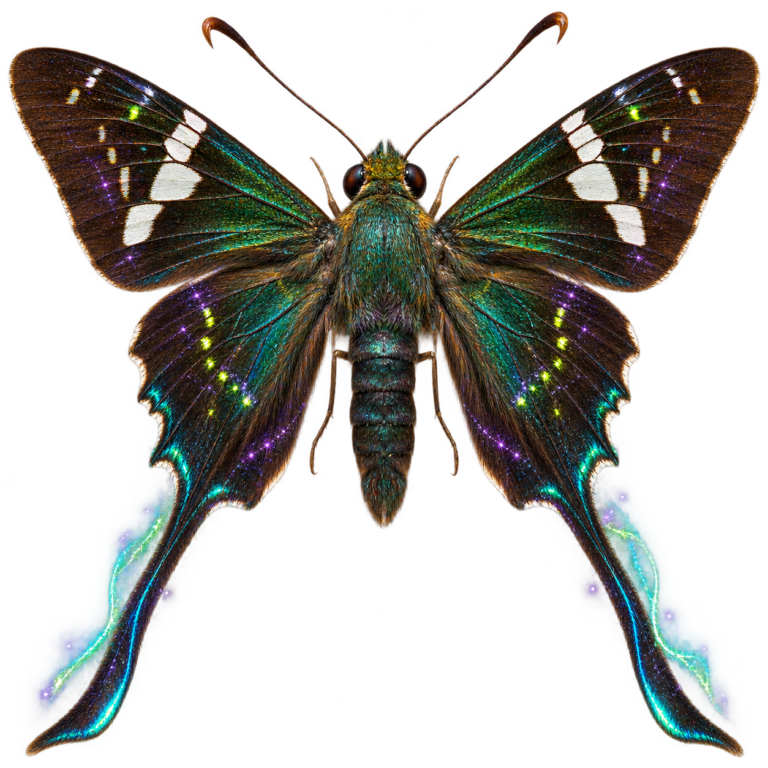
ME-SP-0000H-R
Luna Moth
Actias luna
Saturniidae • Insecta
ME-SP-0000H-RLuna Moth
Actias luna
Lepidoptera • Saturniidae • InsectaHow to Recognize It
Luna Moth (Actias luna) is a lepidopteran whose identification should combine adult wing shape and pattern, dorsal and ventral markings, body form, antennae, and locality rather than relying on color alone. Sex, wear, season, and lighting can alter appearance, while closely related species may share broad pattern elements. Larvae and pupae can look radically different from adults, so life stage must be recorded. For preserved material, intact diagnostic structures and a reliable specimen label are as important as color. When a determination is uncertain, compare multiple characters against a taxonomic or regional reference before assigning species-level certainty.Life Beyond the Enclosure
Luna Moth is part of the butterfly-and-moth lineage and passes through complete metamorphosis: egg, larva, pupa, and adult. Ecological requirements change sharply across those stages. Caterpillars are usually tied to particular host plants or host-plant families, whereas adults commonly focus on dispersal, courtship, reproduction, and species-specific food resources such as nectar, sap, fruit, or other liquids. Seasonal timing and local climate influence generation number, diapause, and adult flight. Predators, parasitoids, weather, host-plant chemistry, and habitat structure all shape survival. Distribution records should be interpreted at the taxon level because related species can occupy very different ranges and habitats. Practical records should note date, life stage, feeding response, behavior, environmental observations, and any intervention so trends are visible instead of relying on memory. For Actias luna, locality, season, and life stage should stay attached to observations because those variables can change the ecological picture substantially. Keep this Actias luna account under species-specific review as stronger references become available.Keeper Reference
Care for Luna Moth depends first on life stage. Eggs and larvae require correctly identified host material, excellent airflow, sanitation, and enough space to avoid crowding. Pupae need the orientation and moisture pattern appropriate to the species, while adults require safe flight room, appropriate food resources, and surfaces that prevent wing damage. Wild adults are generally poor candidates for long-term display captivity; observation or rearing should use legally obtained material and a verified species-specific protocol. Avoid generic heat or humidity targets when published rearing data are unavailable, because host plant, season, and local climate can matter more than a single thermostat number. Keep this Actias luna account under species-specific review as stronger references become available.Collection Knowledge
Luna Moth (Actias luna) belongs to one of the most transformation-heavy branches of the animal tree. Its life is divided among an egg, a feeding caterpillar, a reorganizing pupa, and a winged adult built largely for dispersal and reproduction. That stage shift means the same species can occupy different microhabitats and use completely different resources across its life. Identification is strongest when wing pattern, shape, locality, season, and life stage are considered together. Ecologically, species in this group connect host plants, flowering plants, predators, and parasitoids, making even a small moth or butterfly part of a surprisingly busy food web. Practical records should note date, life stage, feeding response, behavior, environmental observations, and any intervention so trends are visible instead of relying on memory. Records for Actias luna are most useful when identification, locality, life stage, and source provenance remain linked to the profile. Keep this Actias luna account under species-specific review as stronger references become available.ME-SP-00023-P
Magnolia Green Jumping Spider
Lyssomanes viridis
Salticidae • Arachnida
ME-SP-00023-PMagnolia Green Jumping Spider
Lyssomanes viridis
Araneae • Salticidae • ArachnidaHow to Recognize It
Magnolia Green Jumping Spider (Lyssomanes viridis) is a spider whose identification should use eye arrangement, body proportions, carapace and abdominal pattern, leg morphology, setation, chelicerae, mature reproductive structures, and locality as appropriate. Juveniles can be difficult or impossible to identify confidently to species because diagnostic adult characters are not yet developed. Color is useful but variable with molt stage, lighting, sex, and individual condition. For jumping spiders, the large forward-facing principal eyes and alert visual behavior are distinctive at family level, but species determinations often require several characters. Preserve molt skins, locality data, and clear dorsal and ventral photographs when possible.Life Beyond the Enclosure
Magnolia Green Jumping Spider is an arachnid predator that relies on silk, sensory information, and rapid prey capture rather than chewing plant material. Spiders grow by molting, and vulnerability rises sharply before, during, and immediately after ecdysis. Visual hunters such as jumping spiders use excellent eyesight, orientation behavior, and small silk retreats, while other spiders may rely more heavily on webs, burrows, or tactile cues. Diet in the wild consists mainly of appropriately sized arthropods. Activity, courtship, maturation, and egg production are influenced by prey availability, temperature, hydration, and season. Cannibalism is a normal risk in many species, especially during pairing or crowded housing. Practical records should note date, life stage, feeding response, behavior, environmental observations, and any intervention so trends are visible instead of relying on memory. For Lyssomanes viridis, locality, season, and life stage should stay attached to observations because those variables can change the ecological picture substantially.Keeper Reference
Care for Magnolia Green Jumping Spider should provide secure ventilation, species-appropriate vertical or horizontal space, textured anchor points, a retreat location, clean hydration, and live prey sized to the animal. Avoid excessive wetness and stagnant air unless a verified species protocol calls for unusually humid conditions. Molting animals should not be disturbed or offered dangerous prey. Jumping spiders benefit from visual access, climbing surfaces, and an upper retreat zone; terrestrial species need more floor area and stable footing. Individual housing is the safest default unless social tolerance is well documented. Remove uneaten prey and monitor abdomen condition, coordination, attachment ability, and molt timing. Keep this Lyssomanes viridis account under species-specific review as stronger references become available.Collection Knowledge
Magnolia Green Jumping Spider (Lyssomanes viridis) is an arachnid predator built around precision rather than brute force. Spiders read the world through vibration, touch, chemical cues, and, in visually oriented groups such as jumping spiders, remarkably capable eyes. Silk may become a safety line, shelter, nursery, hunting tool, or molt retreat depending on the species. Growth happens in jumps because the exoskeleton must be shed before a larger one hardens. That makes molting a major event in both wild biology and captive care. Species identification can be tricky in juveniles, so mature anatomy, locality, and multiple photographs are more trustworthy than color by itself. Practical records should note date, life stage, feeding response, behavior, environmental observations, and any intervention so trends are visible instead of relying on memory. Records for Lyssomanes viridis are most useful when identification, locality, life stage, and source provenance remain linked to the profile. Keep this Lyssomanes viridis account under species-specific review as stronger references become available.ME-SP-0002Q-G
Malachite
Siproeta stelenes
Nymphalidae • Insecta
ME-SP-0002Q-GMalachite
Siproeta stelenes
Lepidoptera • Nymphalidae • InsectaHow to Recognize It
Malachite (Siproeta stelenes) is a lepidopteran whose identification should combine adult wing shape and pattern, dorsal and ventral markings, body form, antennae, and locality rather than relying on color alone. Sex, wear, season, and lighting can alter appearance, while closely related species may share broad pattern elements. Larvae and pupae can look radically different from adults, so life stage must be recorded. For preserved material, intact diagnostic structures and a reliable specimen label are as important as color. When a determination is uncertain, compare multiple characters against a taxonomic or regional reference before assigning species-level certainty.Life Beyond the Enclosure
Malachite is part of the butterfly-and-moth lineage and passes through complete metamorphosis: egg, larva, pupa, and adult. Ecological requirements change sharply across those stages. Caterpillars are usually tied to particular host plants or host-plant families, whereas adults commonly focus on dispersal, courtship, reproduction, and species-specific food resources such as nectar, sap, fruit, or other liquids. Seasonal timing and local climate influence generation number, diapause, and adult flight. Predators, parasitoids, weather, host-plant chemistry, and habitat structure all shape survival. Distribution records should be interpreted at the taxon level because related species can occupy very different ranges and habitats. Practical records should note date, life stage, feeding response, behavior, environmental observations, and any intervention so trends are visible instead of relying on memory. For Siproeta stelenes, locality, season, and life stage should stay attached to observations because those variables can change the ecological picture substantially. Keep this Siproeta stelenes account under species-specific review as stronger references become available.Keeper Reference
Care for Malachite depends first on life stage. Eggs and larvae require correctly identified host material, excellent airflow, sanitation, and enough space to avoid crowding. Pupae need the orientation and moisture pattern appropriate to the species, while adults require safe flight room, appropriate food resources, and surfaces that prevent wing damage. Wild adults are generally poor candidates for long-term display captivity; observation or rearing should use legally obtained material and a verified species-specific protocol. Avoid generic heat or humidity targets when published rearing data are unavailable, because host plant, season, and local climate can matter more than a single thermostat number. Keep this Siproeta stelenes account under species-specific review as stronger references become available.Collection Knowledge
Malachite (Siproeta stelenes) belongs to one of the most transformation-heavy branches of the animal tree. Its life is divided among an egg, a feeding caterpillar, a reorganizing pupa, and a winged adult built largely for dispersal and reproduction. That stage shift means the same species can occupy different microhabitats and use completely different resources across its life. Identification is strongest when wing pattern, shape, locality, season, and life stage are considered together. Ecologically, species in this group connect host plants, flowering plants, predators, and parasitoids, making even a small moth or butterfly part of a surprisingly busy food web. Practical records should note date, life stage, feeding response, behavior, environmental observations, and any intervention so trends are visible instead of relying on memory. Records for Siproeta stelenes are most useful when identification, locality, life stage, and source provenance remain linked to the profile. Keep this Siproeta stelenes account under species-specific review as stronger references become available.ME-SP-0005O-M
Margined Blister Beetle
Clytus marginicollis
Meloidae • Insecta
ME-SP-0005O-MMargined Blister Beetle
Clytus marginicollis
Coleoptera • Meloidae • InsectaHow to Recognize It
Margined Blister Beetle (Clytus marginicollis) is a beetle and should be identified from body shape, antennae, pronotum, elytra, leg structure, surface sculpture, color pattern, size, and locality. The hardened forewings, or elytra, identify Coleoptera as a group, but species-level work often depends on small structural characters rather than overall color. Larvae may bear little resemblance to adults and may require host, substrate, or rearing information for confident identification. Wear, age, and preservation can alter color or sheen. Keep locality, collection or acquisition data, photographs, and any associated larval substrate information with the specimen record.Life Beyond the Enclosure
Margined Blister Beetle is part of Coleoptera, the beetles, a huge radiation united by hardened forewings that protect the flight wings and abdomen. Complete metamorphosis separates egg, larva, pupa, and adult stages, and those stages can occupy different ecological niches. Depending on the species, larvae may develop in soil, wood, dung, carrion, fungi, roots, foliage, or other specialized substrates, while adults may feed, disperse, reproduce, or sometimes eat very little. Moisture, temperature, food quality, microbial decomposition, and substrate structure can all influence development. Ecological role may include predation, decomposition, pollination, herbivory, or nutrient cycling. Practical records should note date, life stage, feeding response, behavior, environmental observations, and any intervention so trends are visible instead of relying on memory. For Clytus marginicollis, locality, season, and life stage should stay attached to observations because those variables can change the ecological picture substantially. Keep this Clytus marginicollis account under species-specific review as stronger references become available.Keeper Reference
Care for Margined Blister Beetle must be based on its larval ecology and adult feeding strategy. A generic beetle box is not enough: wood borers, carrion beetles, dung beetles, flower beetles, tiger beetles, and scarabs require very different substrates and foods. For temporary adult observation, provide secure ventilation, traction, a species-appropriate food or moisture source, and protection from overheating. For rearing, use only correctly identified substrate or host material and prevent mold, mites, and anaerobic decay through sanitation and airflow. Avoid releasing captive, imported, or uncertain-origin beetles. Confirm species-specific developmental substrate, temperature, and moisture requirements before attempting multigenerational culture. Practical records should note date, life stage, feeding response, behavior, environmental observations, and any intervention so trends are visible instead of relying on memory. Any final care numbers for Clytus marginicollis should be tied to a named species-specific source and reviewed after actual husbandry observations.Collection Knowledge
Margined Blister Beetle (Clytus marginicollis) is a member of Coleoptera, the beetles, whose signature hardware is a pair of hardened forewings called elytra. Beneath those protective covers sit the functional flight wings. Beetles undergo complete metamorphosis, so a grub-like larva may live in an entirely different world from the adult it becomes. Across the order, beetles work as predators, decomposers, herbivores, pollinators, scavengers, and ecosystem recyclers. That diversity also makes identification challenging: body sculpture, antennae, pronotum, legs, elytra, locality, and sometimes genital anatomy can matter more than color. Larval habitat is often one of the best clues to biology. Practical records should note date, life stage, feeding response, behavior, environmental observations, and any intervention so trends are visible instead of relying on memory. Records for Clytus marginicollis are most useful when identification, locality, life stage, and source provenance remain linked to the profile. Keep this Clytus marginicollis account under species-specific review as stronger references become available.ME-SP-00005-R
Mediterranean House Gecko
Hemidactylus turcicus
Gekkonidae • Reptilia
ME-SP-00005-RMediterranean House Gecko
Hemidactylus turcicus
Squamata • Gekkonidae • ReptiliaHow to Recognize It
Mediterranean House Gecko (Hemidactylus turcicus) should be identified from a combination of body proportions, scalation, head shape, limb or toe structure when present, pattern, coloration, and geographic provenance. Captive-bred color morphs can obscure wild-type appearance, so morphology and documented lineage are more reliable than color alone. Juveniles may differ markedly from adults. Sexing characters are species- and age-dependent and should not be guessed from a photograph without validated criteria. Similar-looking relatives may overlap in the pet trade, making a complete acquisition record and exact scientific name important for husbandry as well as taxonomy.Life Beyond the Enclosure
Mediterranean House Gecko is an ectothermic reptile whose activity, digestion, growth, reproduction, and immune function are strongly influenced by environmental temperature and access to an appropriate thermal range. In the wild, reptiles regulate body temperature behaviorally by moving among sun, shade, burrows, vegetation, rock, water, or other microhabitats. Diet and activity pattern vary by species, from insectivory or herbivory to vertebrate prey. Seasonal rainfall, day length, and temperature can influence reproduction and dormancy. Captive care should therefore recreate useful choices rather than one uniform condition, while natural-history observations should not be converted into husbandry numbers without supporting evidence. Practical records should note date, life stage, feeding response, behavior, environmental observations, and any intervention so trends are visible instead of relying on memory. For Hemidactylus turcicus, locality, season, and life stage should stay attached to observations because those variables can change the ecological picture substantially. Keep this Hemidactylus turcicus account under species-specific review as stronger references become available.Keeper Reference
Successful care for Mediterranean House Gecko requires a secure enclosure with a species-appropriate thermal gradient, measured temperatures, suitable humidity and ventilation, appropriate light exposure, safe substrate, clean water, and a diet matched to its natural feeding strategy. Reptiles should be able to choose among warmer, cooler, drier, and more humid microclimates rather than being held at one uniform setting. UVB requirements, basking intensity, substrate depth, enclosure orientation, and feeding frequency differ substantially among reptiles, so final numeric targets must follow a validated species-specific husbandry source. Quarantine new animals and track body condition, appetite, feces, sheds, and behavior over time. Practical records should note date, life stage, feeding response, behavior, environmental observations, and any intervention so trends are visible instead of relying on memory. Any final care numbers for Hemidactylus turcicus should be tied to a named species-specific source and reviewed after actual husbandry observations.Collection Knowledge
Mediterranean House Gecko (Hemidactylus turcicus) is a reptile shaped by behavioral thermoregulation. Instead of generating a stable internal temperature the way mammals do, it uses the environment as a control panel, moving among warmer and cooler microhabitats as its needs change. That makes habitat structure biologically meaningful rather than decorative. Depending on the species, climbing, burrowing, basking, hiding, or soaking may be central parts of daily behavior. Captive-bred animals can also show colors and patterns unlike wild populations, so identification should use anatomy and provenance, not just appearance. Good husbandry is built around measured gradients and choices, not a single 'room temperature' number. Practical records should note date, life stage, feeding response, behavior, environmental observations, and any intervention so trends are visible instead of relying on memory. Records for Hemidactylus turcicus are most useful when identification, locality, life stage, and source provenance remain linked to the profile. Keep this Hemidactylus turcicus account under species-specific review as stronger references become available.ME-SP-0000G-I
Monarch
Danaus plexippus
Nymphalidae • Insecta
ME-SP-0000G-IMonarch
Danaus plexippus
Lepidoptera • Nymphalidae • InsectaHow to Recognize It
Monarch (Danaus plexippus) is a lepidopteran whose identification should combine adult wing shape and pattern, dorsal and ventral markings, body form, antennae, and locality rather than relying on color alone. Sex, wear, season, and lighting can alter appearance, while closely related species may share broad pattern elements. Larvae and pupae can look radically different from adults, so life stage must be recorded. For preserved material, intact diagnostic structures and a reliable specimen label are as important as color. When a determination is uncertain, compare multiple characters against a taxonomic or regional reference before assigning species-level certainty.Life Beyond the Enclosure
Monarch is part of the butterfly-and-moth lineage and passes through complete metamorphosis: egg, larva, pupa, and adult. Ecological requirements change sharply across those stages. Caterpillars are usually tied to particular host plants or host-plant families, whereas adults commonly focus on dispersal, courtship, reproduction, and species-specific food resources such as nectar, sap, fruit, or other liquids. Seasonal timing and local climate influence generation number, diapause, and adult flight. Predators, parasitoids, weather, host-plant chemistry, and habitat structure all shape survival. Distribution records should be interpreted at the taxon level because related species can occupy very different ranges and habitats. Practical records should note date, life stage, feeding response, behavior, environmental observations, and any intervention so trends are visible instead of relying on memory. For Danaus plexippus, locality, season, and life stage should stay attached to observations because those variables can change the ecological picture substantially. Keep this Danaus plexippus account under species-specific review as stronger references become available.Keeper Reference
Care for Monarch depends first on life stage. Eggs and larvae require correctly identified host material, excellent airflow, sanitation, and enough space to avoid crowding. Pupae need the orientation and moisture pattern appropriate to the species, while adults require safe flight room, appropriate food resources, and surfaces that prevent wing damage. Wild adults are generally poor candidates for long-term display captivity; observation or rearing should use legally obtained material and a verified species-specific protocol. Avoid generic heat or humidity targets when published rearing data are unavailable, because host plant, season, and local climate can matter more than a single thermostat number. Keep this Danaus plexippus account under species-specific review as stronger references become available.Collection Knowledge
Monarch (Danaus plexippus) belongs to one of the most transformation-heavy branches of the animal tree. Its life is divided among an egg, a feeding caterpillar, a reorganizing pupa, and a winged adult built largely for dispersal and reproduction. That stage shift means the same species can occupy different microhabitats and use completely different resources across its life. Identification is strongest when wing pattern, shape, locality, season, and life stage are considered together. Ecologically, species in this group connect host plants, flowering plants, predators, and parasitoids, making even a small moth or butterfly part of a surprisingly busy food web. Practical records should note date, life stage, feeding response, behavior, environmental observations, and any intervention so trends are visible instead of relying on memory. Records for Danaus plexippus are most useful when identification, locality, life stage, and source provenance remain linked to the profile. Keep this Danaus plexippus account under species-specific review as stronger references become available.MycoVault Game Counterparts
These are digital game specimens and characters inspired by the real-world species above. Their lore, rarity, game traits, and collectible ownership belong to MycoVault.
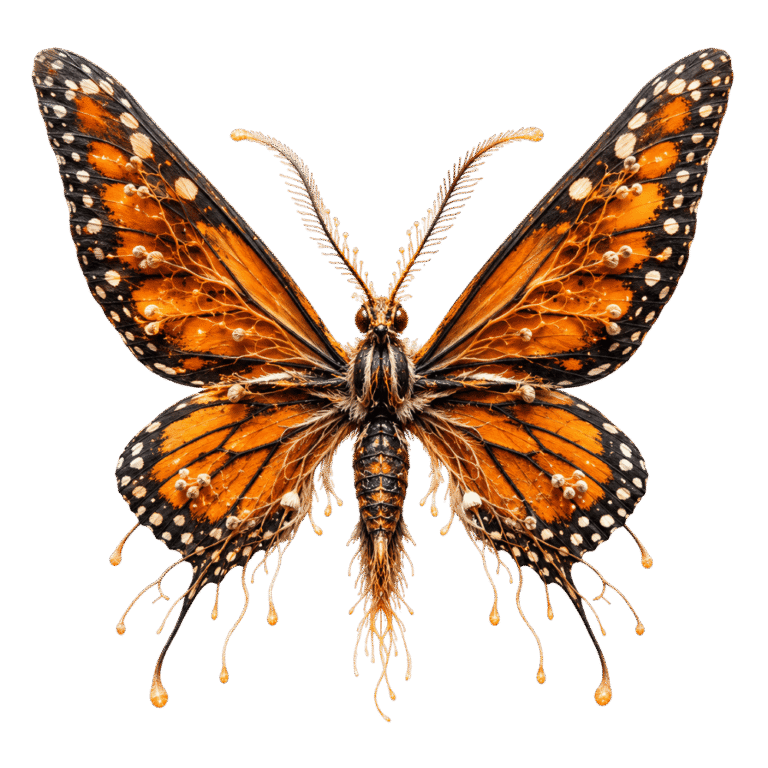
ME-SP-0002V-P
Mourning Cloak
Nymphalis antiopa
Nymphalidae • Insecta
ME-SP-0002V-PMourning Cloak
Nymphalis antiopa
Lepidoptera • Nymphalidae • InsectaHow to Recognize It
Mourning Cloak (Nymphalis antiopa) is a lepidopteran whose identification should combine adult wing shape and pattern, dorsal and ventral markings, body form, antennae, and locality rather than relying on color alone. Sex, wear, season, and lighting can alter appearance, while closely related species may share broad pattern elements. Larvae and pupae can look radically different from adults, so life stage must be recorded. For preserved material, intact diagnostic structures and a reliable specimen label are as important as color. When a determination is uncertain, compare multiple characters against a taxonomic or regional reference before assigning species-level certainty.Life Beyond the Enclosure
Mourning Cloak is part of the butterfly-and-moth lineage and passes through complete metamorphosis: egg, larva, pupa, and adult. Ecological requirements change sharply across those stages. Caterpillars are usually tied to particular host plants or host-plant families, whereas adults commonly focus on dispersal, courtship, reproduction, and species-specific food resources such as nectar, sap, fruit, or other liquids. Seasonal timing and local climate influence generation number, diapause, and adult flight. Predators, parasitoids, weather, host-plant chemistry, and habitat structure all shape survival. Distribution records should be interpreted at the taxon level because related species can occupy very different ranges and habitats. Practical records should note date, life stage, feeding response, behavior, environmental observations, and any intervention so trends are visible instead of relying on memory. For Nymphalis antiopa, locality, season, and life stage should stay attached to observations because those variables can change the ecological picture substantially. Keep this Nymphalis antiopa account under species-specific review as stronger references become available.Keeper Reference
Care for Mourning Cloak depends first on life stage. Eggs and larvae require correctly identified host material, excellent airflow, sanitation, and enough space to avoid crowding. Pupae need the orientation and moisture pattern appropriate to the species, while adults require safe flight room, appropriate food resources, and surfaces that prevent wing damage. Wild adults are generally poor candidates for long-term display captivity; observation or rearing should use legally obtained material and a verified species-specific protocol. Avoid generic heat or humidity targets when published rearing data are unavailable, because host plant, season, and local climate can matter more than a single thermostat number. Keep this Nymphalis antiopa account under species-specific review as stronger references become available.Collection Knowledge
Mourning Cloak (Nymphalis antiopa) belongs to one of the most transformation-heavy branches of the animal tree. Its life is divided among an egg, a feeding caterpillar, a reorganizing pupa, and a winged adult built largely for dispersal and reproduction. That stage shift means the same species can occupy different microhabitats and use completely different resources across its life. Identification is strongest when wing pattern, shape, locality, season, and life stage are considered together. Ecologically, species in this group connect host plants, flowering plants, predators, and parasitoids, making even a small moth or butterfly part of a surprisingly busy food web. Practical records should note date, life stage, feeding response, behavior, environmental observations, and any intervention so trends are visible instead of relying on memory. Records for Nymphalis antiopa are most useful when identification, locality, life stage, and source provenance remain linked to the profile. Keep this Nymphalis antiopa account under species-specific review as stronger references become available.ME-SP-0000R-9
Mourning Gecko
Lepidodactylus lugubris
Gekkonidae • Reptilia
ME-SP-0000R-9Mourning Gecko
Lepidodactylus lugubris
Squamata • Gekkonidae • ReptiliaHow to Recognize It
Mourning Gecko (Lepidodactylus lugubris) should be identified from a combination of body proportions, scalation, head shape, limb or toe structure when present, pattern, coloration, and geographic provenance. Captive-bred color morphs can obscure wild-type appearance, so morphology and documented lineage are more reliable than color alone. Juveniles may differ markedly from adults. Sexing characters are species- and age-dependent and should not be guessed from a photograph without validated criteria. Similar-looking relatives may overlap in the pet trade, making a complete acquisition record and exact scientific name important for husbandry as well as taxonomy.Life Beyond the Enclosure
Mourning Gecko is an ectothermic reptile whose activity, digestion, growth, reproduction, and immune function are strongly influenced by environmental temperature and access to an appropriate thermal range. In the wild, reptiles regulate body temperature behaviorally by moving among sun, shade, burrows, vegetation, rock, water, or other microhabitats. Diet and activity pattern vary by species, from insectivory or herbivory to vertebrate prey. Seasonal rainfall, day length, and temperature can influence reproduction and dormancy. Captive care should therefore recreate useful choices rather than one uniform condition, while natural-history observations should not be converted into husbandry numbers without supporting evidence. Practical records should note date, life stage, feeding response, behavior, environmental observations, and any intervention so trends are visible instead of relying on memory. For Lepidodactylus lugubris, locality, season, and life stage should stay attached to observations because those variables can change the ecological picture substantially. Keep this Lepidodactylus lugubris account under species-specific review as stronger references become available.Keeper Reference
Successful care for Mourning Gecko requires a secure enclosure with a species-appropriate thermal gradient, measured temperatures, suitable humidity and ventilation, appropriate light exposure, safe substrate, clean water, and a diet matched to its natural feeding strategy. Reptiles should be able to choose among warmer, cooler, drier, and more humid microclimates rather than being held at one uniform setting. UVB requirements, basking intensity, substrate depth, enclosure orientation, and feeding frequency differ substantially among reptiles, so final numeric targets must follow a validated species-specific husbandry source. Quarantine new animals and track body condition, appetite, feces, sheds, and behavior over time. Practical records should note date, life stage, feeding response, behavior, environmental observations, and any intervention so trends are visible instead of relying on memory. Any final care numbers for Lepidodactylus lugubris should be tied to a named species-specific source and reviewed after actual husbandry observations.Collection Knowledge
Mourning Gecko (Lepidodactylus lugubris) is a reptile shaped by behavioral thermoregulation. Instead of generating a stable internal temperature the way mammals do, it uses the environment as a control panel, moving among warmer and cooler microhabitats as its needs change. That makes habitat structure biologically meaningful rather than decorative. Depending on the species, climbing, burrowing, basking, hiding, or soaking may be central parts of daily behavior. Captive-bred animals can also show colors and patterns unlike wild populations, so identification should use anatomy and provenance, not just appearance. Good husbandry is built around measured gradients and choices, not a single 'room temperature' number. Practical records should note date, life stage, feeding response, behavior, environmental observations, and any intervention so trends are visible instead of relying on memory. Records for Lepidodactylus lugubris are most useful when identification, locality, life stage, and source provenance remain linked to the profile. Keep this Lepidodactylus lugubris account under species-specific review as stronger references become available.ME-SP-0001Q-8
Moustached Jumping Spider
Phidippus mystaceus
Salticidae • Arachnida
ME-SP-0001Q-8Moustached Jumping Spider
Phidippus mystaceus
Araneae • Salticidae • ArachnidaHow to Recognize It
Moustached Jumping Spider (Phidippus mystaceus) is a spider whose identification should use eye arrangement, body proportions, carapace and abdominal pattern, leg morphology, setation, chelicerae, mature reproductive structures, and locality as appropriate. Juveniles can be difficult or impossible to identify confidently to species because diagnostic adult characters are not yet developed. Color is useful but variable with molt stage, lighting, sex, and individual condition. For jumping spiders, the large forward-facing principal eyes and alert visual behavior are distinctive at family level, but species determinations often require several characters. Preserve molt skins, locality data, and clear dorsal and ventral photographs when possible.Life Beyond the Enclosure
Moustached Jumping Spider is an arachnid predator that relies on silk, sensory information, and rapid prey capture rather than chewing plant material. Spiders grow by molting, and vulnerability rises sharply before, during, and immediately after ecdysis. Visual hunters such as jumping spiders use excellent eyesight, orientation behavior, and small silk retreats, while other spiders may rely more heavily on webs, burrows, or tactile cues. Diet in the wild consists mainly of appropriately sized arthropods. Activity, courtship, maturation, and egg production are influenced by prey availability, temperature, hydration, and season. Cannibalism is a normal risk in many species, especially during pairing or crowded housing. Practical records should note date, life stage, feeding response, behavior, environmental observations, and any intervention so trends are visible instead of relying on memory. For Phidippus mystaceus, locality, season, and life stage should stay attached to observations because those variables can change the ecological picture substantially. Keep this Phidippus mystaceus account under species-specific review as stronger references become available.Keeper Reference
Care for Moustached Jumping Spider should provide secure ventilation, species-appropriate vertical or horizontal space, textured anchor points, a retreat location, clean hydration, and live prey sized to the animal. Avoid excessive wetness and stagnant air unless a verified species protocol calls for unusually humid conditions. Molting animals should not be disturbed or offered dangerous prey. Jumping spiders benefit from visual access, climbing surfaces, and an upper retreat zone; terrestrial species need more floor area and stable footing. Individual housing is the safest default unless social tolerance is well documented. Remove uneaten prey and monitor abdomen condition, coordination, attachment ability, and molt timing. Keep this Phidippus mystaceus account under species-specific review as stronger references become available.Collection Knowledge
Moustached Jumping Spider (Phidippus mystaceus) is an arachnid predator built around precision rather than brute force. Spiders read the world through vibration, touch, chemical cues, and, in visually oriented groups such as jumping spiders, remarkably capable eyes. Silk may become a safety line, shelter, nursery, hunting tool, or molt retreat depending on the species. Growth happens in jumps because the exoskeleton must be shed before a larger one hardens. That makes molting a major event in both wild biology and captive care. Species identification can be tricky in juveniles, so mature anatomy, locality, and multiple photographs are more trustworthy than color by itself. Practical records should note date, life stage, feeding response, behavior, environmental observations, and any intervention so trends are visible instead of relying on memory. Records for Phidippus mystaceus are most useful when identification, locality, life stage, and source provenance remain linked to the profile. Keep this Phidippus mystaceus account under species-specific review as stronger references become available.ME-SP-0000N-9
New Caledonian Giant Gecko
Rhacodactylus leachianus
Diplodactylidae • Reptilia
ME-SP-0000N-9New Caledonian Giant Gecko
Rhacodactylus leachianus
Squamata • Diplodactylidae • ReptiliaHow to Recognize It
New Caledonian Giant Gecko (Rhacodactylus leachianus) should be identified from a combination of body proportions, scalation, head shape, limb or toe structure when present, pattern, coloration, and geographic provenance. Captive-bred color morphs can obscure wild-type appearance, so morphology and documented lineage are more reliable than color alone. Juveniles may differ markedly from adults. Sexing characters are species- and age-dependent and should not be guessed from a photograph without validated criteria. Similar-looking relatives may overlap in the pet trade, making a complete acquisition record and exact scientific name important for husbandry as well as taxonomy.Life Beyond the Enclosure
New Caledonian Giant Gecko is an ectothermic reptile whose activity, digestion, growth, reproduction, and immune function are strongly influenced by environmental temperature and access to an appropriate thermal range. In the wild, reptiles regulate body temperature behaviorally by moving among sun, shade, burrows, vegetation, rock, water, or other microhabitats. Diet and activity pattern vary by species, from insectivory or herbivory to vertebrate prey. Seasonal rainfall, day length, and temperature can influence reproduction and dormancy. Captive care should therefore recreate useful choices rather than one uniform condition, while natural-history observations should not be converted into husbandry numbers without supporting evidence. Practical records should note date, life stage, feeding response, behavior, environmental observations, and any intervention so trends are visible instead of relying on memory. For Rhacodactylus leachianus, locality, season, and life stage should stay attached to observations because those variables can change the ecological picture substantially. Keep this Rhacodactylus leachianus account under species-specific review as stronger references become available.Keeper Reference
Successful care for New Caledonian Giant Gecko requires a secure enclosure with a species-appropriate thermal gradient, measured temperatures, suitable humidity and ventilation, appropriate light exposure, safe substrate, clean water, and a diet matched to its natural feeding strategy. Reptiles should be able to choose among warmer, cooler, drier, and more humid microclimates rather than being held at one uniform setting. UVB requirements, basking intensity, substrate depth, enclosure orientation, and feeding frequency differ substantially among reptiles, so final numeric targets must follow a validated species-specific husbandry source. Quarantine new animals and track body condition, appetite, feces, sheds, and behavior over time. Keep this Rhacodactylus leachianus account under species-specific review as stronger references become available.Collection Knowledge
New Caledonian Giant Gecko (Rhacodactylus leachianus) is a reptile shaped by behavioral thermoregulation. Instead of generating a stable internal temperature the way mammals do, it uses the environment as a control panel, moving among warmer and cooler microhabitats as its needs change. That makes habitat structure biologically meaningful rather than decorative. Depending on the species, climbing, burrowing, basking, hiding, or soaking may be central parts of daily behavior. Captive-bred animals can also show colors and patterns unlike wild populations, so identification should use anatomy and provenance, not just appearance. Good husbandry is built around measured gradients and choices, not a single 'room temperature' number. Practical records should note date, life stage, feeding response, behavior, environmental observations, and any intervention so trends are visible instead of relying on memory. Records for Rhacodactylus leachianus are most useful when identification, locality, life stage, and source provenance remain linked to the profile. Keep this Rhacodactylus leachianus account under species-specific review as stronger references become available.ME-SP-0000Z-9
Northern Blue-Tongued Skink
Tiliqua scincoides
Scincidae • Reptilia
ME-SP-0000Z-9Northern Blue-Tongued Skink
Tiliqua scincoides
Squamata • Scincidae • ReptiliaHow to Recognize It
Northern Blue-Tongued Skink (Tiliqua scincoides) should be identified from a combination of body proportions, scalation, head shape, limb or toe structure when present, pattern, coloration, and geographic provenance. Captive-bred color morphs can obscure wild-type appearance, so morphology and documented lineage are more reliable than color alone. Juveniles may differ markedly from adults. Sexing characters are species- and age-dependent and should not be guessed from a photograph without validated criteria. Similar-looking relatives may overlap in the pet trade, making a complete acquisition record and exact scientific name important for husbandry as well as taxonomy.Life Beyond the Enclosure
Northern Blue-Tongued Skink is an ectothermic reptile whose activity, digestion, growth, reproduction, and immune function are strongly influenced by environmental temperature and access to an appropriate thermal range. In the wild, reptiles regulate body temperature behaviorally by moving among sun, shade, burrows, vegetation, rock, water, or other microhabitats. Diet and activity pattern vary by species, from insectivory or herbivory to vertebrate prey. Seasonal rainfall, day length, and temperature can influence reproduction and dormancy. Captive care should therefore recreate useful choices rather than one uniform condition, while natural-history observations should not be converted into husbandry numbers without supporting evidence. Practical records should note date, life stage, feeding response, behavior, environmental observations, and any intervention so trends are visible instead of relying on memory. For Tiliqua scincoides, locality, season, and life stage should stay attached to observations because those variables can change the ecological picture substantially. Keep this Tiliqua scincoides account under species-specific review as stronger references become available.Keeper Reference
Successful care for Northern Blue-Tongued Skink requires a secure enclosure with a species-appropriate thermal gradient, measured temperatures, suitable humidity and ventilation, appropriate light exposure, safe substrate, clean water, and a diet matched to its natural feeding strategy. Reptiles should be able to choose among warmer, cooler, drier, and more humid microclimates rather than being held at one uniform setting. UVB requirements, basking intensity, substrate depth, enclosure orientation, and feeding frequency differ substantially among reptiles, so final numeric targets must follow a validated species-specific husbandry source. Quarantine new animals and track body condition, appetite, feces, sheds, and behavior over time. Practical records should note date, life stage, feeding response, behavior, environmental observations, and any intervention so trends are visible instead of relying on memory. Any final care numbers for Tiliqua scincoides should be tied to a named species-specific source and reviewed after actual husbandry observations.Collection Knowledge
Northern Blue-Tongued Skink (Tiliqua scincoides) is a reptile shaped by behavioral thermoregulation. Instead of generating a stable internal temperature the way mammals do, it uses the environment as a control panel, moving among warmer and cooler microhabitats as its needs change. That makes habitat structure biologically meaningful rather than decorative. Depending on the species, climbing, burrowing, basking, hiding, or soaking may be central parts of daily behavior. Captive-bred animals can also show colors and patterns unlike wild populations, so identification should use anatomy and provenance, not just appearance. Good husbandry is built around measured gradients and choices, not a single 'room temperature' number. Practical records should note date, life stage, feeding response, behavior, environmental observations, and any intervention so trends are visible instead of relying on memory. Records for Tiliqua scincoides are most useful when identification, locality, life stage, and source provenance remain linked to the profile. Keep this Tiliqua scincoides account under species-specific review as stronger references become available.ME-SP-0003Z-X
Ocola Skipper
Panoquina ocola
Hesperiidae • Insecta
ME-SP-0003Z-XOcola Skipper
Panoquina ocola
Lepidoptera • Hesperiidae • InsectaHow to Recognize It
Ocola Skipper (Panoquina ocola) is a lepidopteran whose identification should combine adult wing shape and pattern, dorsal and ventral markings, body form, antennae, and locality rather than relying on color alone. Sex, wear, season, and lighting can alter appearance, while closely related species may share broad pattern elements. Larvae and pupae can look radically different from adults, so life stage must be recorded. For preserved material, intact diagnostic structures and a reliable specimen label are as important as color. When a determination is uncertain, compare multiple characters against a taxonomic or regional reference before assigning species-level certainty.Life Beyond the Enclosure
Ocola Skipper is part of the butterfly-and-moth lineage and passes through complete metamorphosis: egg, larva, pupa, and adult. Ecological requirements change sharply across those stages. Caterpillars are usually tied to particular host plants or host-plant families, whereas adults commonly focus on dispersal, courtship, reproduction, and species-specific food resources such as nectar, sap, fruit, or other liquids. Seasonal timing and local climate influence generation number, diapause, and adult flight. Predators, parasitoids, weather, host-plant chemistry, and habitat structure all shape survival. Distribution records should be interpreted at the taxon level because related species can occupy very different ranges and habitats. Practical records should note date, life stage, feeding response, behavior, environmental observations, and any intervention so trends are visible instead of relying on memory. For Panoquina ocola, locality, season, and life stage should stay attached to observations because those variables can change the ecological picture substantially. Keep this Panoquina ocola account under species-specific review as stronger references become available.Keeper Reference
Care for Ocola Skipper depends first on life stage. Eggs and larvae require correctly identified host material, excellent airflow, sanitation, and enough space to avoid crowding. Pupae need the orientation and moisture pattern appropriate to the species, while adults require safe flight room, appropriate food resources, and surfaces that prevent wing damage. Wild adults are generally poor candidates for long-term display captivity; observation or rearing should use legally obtained material and a verified species-specific protocol. Avoid generic heat or humidity targets when published rearing data are unavailable, because host plant, season, and local climate can matter more than a single thermostat number. Keep this Panoquina ocola account under species-specific review as stronger references become available.Collection Knowledge
Ocola Skipper (Panoquina ocola) belongs to one of the most transformation-heavy branches of the animal tree. Its life is divided among an egg, a feeding caterpillar, a reorganizing pupa, and a winged adult built largely for dispersal and reproduction. That stage shift means the same species can occupy different microhabitats and use completely different resources across its life. Identification is strongest when wing pattern, shape, locality, season, and life stage are considered together. Ecologically, species in this group connect host plants, flowering plants, predators, and parasitoids, making even a small moth or butterfly part of a surprisingly busy food web. Practical records should note date, life stage, feeding response, behavior, environmental observations, and any intervention so trends are visible instead of relying on memory. Records for Panoquina ocola are most useful when identification, locality, life stage, and source provenance remain linked to the profile. Keep this Panoquina ocola account under species-specific review as stronger references become available.ME-SP-0003A-O
Orange Sulphur
Colias eurytheme
Pieridae • Insecta
ME-SP-0003A-OOrange Sulphur
Colias eurytheme
Lepidoptera • Pieridae • InsectaHow to Recognize It
Orange Sulphur (Colias eurytheme) is a lepidopteran whose identification should combine adult wing shape and pattern, dorsal and ventral markings, body form, antennae, and locality rather than relying on color alone. Sex, wear, season, and lighting can alter appearance, while closely related species may share broad pattern elements. Larvae and pupae can look radically different from adults, so life stage must be recorded. For preserved material, intact diagnostic structures and a reliable specimen label are as important as color. When a determination is uncertain, compare multiple characters against a taxonomic or regional reference before assigning species-level certainty.Life Beyond the Enclosure
Orange Sulphur is part of the butterfly-and-moth lineage and passes through complete metamorphosis: egg, larva, pupa, and adult. Ecological requirements change sharply across those stages. Caterpillars are usually tied to particular host plants or host-plant families, whereas adults commonly focus on dispersal, courtship, reproduction, and species-specific food resources such as nectar, sap, fruit, or other liquids. Seasonal timing and local climate influence generation number, diapause, and adult flight. Predators, parasitoids, weather, host-plant chemistry, and habitat structure all shape survival. Distribution records should be interpreted at the taxon level because related species can occupy very different ranges and habitats. Practical records should note date, life stage, feeding response, behavior, environmental observations, and any intervention so trends are visible instead of relying on memory. For Colias eurytheme, locality, season, and life stage should stay attached to observations because those variables can change the ecological picture substantially. Keep this Colias eurytheme account under species-specific review as stronger references become available.Keeper Reference
Care for Orange Sulphur depends first on life stage. Eggs and larvae require correctly identified host material, excellent airflow, sanitation, and enough space to avoid crowding. Pupae need the orientation and moisture pattern appropriate to the species, while adults require safe flight room, appropriate food resources, and surfaces that prevent wing damage. Wild adults are generally poor candidates for long-term display captivity; observation or rearing should use legally obtained material and a verified species-specific protocol. Avoid generic heat or humidity targets when published rearing data are unavailable, because host plant, season, and local climate can matter more than a single thermostat number. Keep this Colias eurytheme account under species-specific review as stronger references become available.Collection Knowledge
Orange Sulphur (Colias eurytheme) belongs to one of the most transformation-heavy branches of the animal tree. Its life is divided among an egg, a feeding caterpillar, a reorganizing pupa, and a winged adult built largely for dispersal and reproduction. That stage shift means the same species can occupy different microhabitats and use completely different resources across its life. Identification is strongest when wing pattern, shape, locality, season, and life stage are considered together. Ecologically, species in this group connect host plants, flowering plants, predators, and parasitoids, making even a small moth or butterfly part of a surprisingly busy food web. Practical records should note date, life stage, feeding response, behavior, environmental observations, and any intervention so trends are visible instead of relying on memory. Records for Colias eurytheme are most useful when identification, locality, life stage, and source provenance remain linked to the profile. Keep this Colias eurytheme account under species-specific review as stronger references become available.ME-SP-0001G-Q
Ornate Horned Frog
Ceratophrys ornata
Ceratophryidae • Amphibia
ME-SP-0001G-QOrnate Horned Frog
Ceratophrys ornata
Anura • Ceratophryidae • AmphibiaHow to Recognize It
Ornate Horned Frog (Ceratophrys ornata) should be identified using body shape, skin texture, limb and toe structure, eye and tympanum features when present, pattern, coloration, size, call or life-stage traits, and geographic provenance. Amphibian color can shift with temperature, stress, hydration, background, and time of day, so color alone is unreliable. Larvae and recently metamorphosed juveniles may differ greatly from adults. Similar species can require close examination or locality data. Because amphibian skin is highly permeable, handling and environmental history also matter when evaluating condition. Species-level identification should be verified before care parameters are assigned.Life Beyond the Enclosure
Ornate Horned Frog is an amphibian, a lineage closely tied to water balance and environmental quality because the skin participates in hydration and gas exchange. Life histories vary from fully aquatic forms to terrestrial or arboreal adults, and many species move between aquatic and terrestrial habitats across development. Temperature, rainfall, humidity, water chemistry, seasonal cycles, and breeding sites can influence activity and reproduction. Amphibians often feed on small animal prey, while larvae may have very different diets. Their permeable skin makes them sensitive to contaminants and inappropriate water chemistry, so wild ecological observations and captive husbandry should both be interpreted with unusual attention to moisture and chemical exposure. Practical records should note date, life stage, feeding response, behavior, environmental observations, and any intervention so trends are visible instead of relying on memory. For Ceratophrys ornata, locality, season, and life stage should stay attached to observations because those variables can change the ecological picture substantially.Keeper Reference
Care for Ornate Horned Frog must prioritize clean water or appropriately conditioned moisture, stable species-appropriate temperatures, strong ventilation without desiccation, nonabrasive furnishings, and minimal handling. Any water that contacts the animal should be free of chlorine/chloramine and contaminants, and aquatic species require monitored nitrogen cycling and water-quality management. Terrestrial and arboreal species need humidity gradients rather than permanently saturated air. Food items should be appropriately sized and nutritionally managed. Because amphibian husbandry varies enormously, final temperature, humidity, UVB, water-depth, and supplementation targets should be confirmed against a species-specific source before use. Quarantine is especially important because infectious diseases can spread quickly through shared water or tools.Collection Knowledge
Ornate Horned Frog (Ceratophrys ornata) belongs to a group whose biology is written partly in water. Amphibian skin is thin and physiologically active, so moisture, water chemistry, pollutants, and temperature can influence the animal more directly than they do many reptiles. Many amphibians also change habitat and diet as they develop, making a juvenile or larval stage almost a different ecological job from the adult. Their sensitivity is one reason amphibians are important indicators of environmental change. Identification should consider anatomy, locality, life stage, and behavior rather than color alone, because hydration and surroundings can noticeably alter appearance. Practical records should note date, life stage, feeding response, behavior, environmental observations, and any intervention so trends are visible instead of relying on memory. Records for Ceratophrys ornata are most useful when identification, locality, life stage, and source provenance remain linked to the profile. Keep this Ceratophrys ornata account under species-specific review as stronger references become available.ME-SP-0000W-I
Ornate Uromastyx
Uromastyx ornata
Agamidae • Reptilia
ME-SP-0000W-IOrnate Uromastyx
Uromastyx ornata
Squamata • Agamidae • ReptiliaHow to Recognize It
Ornate Uromastyx (Uromastyx ornata) should be identified from a combination of body proportions, scalation, head shape, limb or toe structure when present, pattern, coloration, and geographic provenance. Captive-bred color morphs can obscure wild-type appearance, so morphology and documented lineage are more reliable than color alone. Juveniles may differ markedly from adults. Sexing characters are species- and age-dependent and should not be guessed from a photograph without validated criteria. Similar-looking relatives may overlap in the pet trade, making a complete acquisition record and exact scientific name important for husbandry as well as taxonomy.Life Beyond the Enclosure
Ornate Uromastyx is an ectothermic reptile whose activity, digestion, growth, reproduction, and immune function are strongly influenced by environmental temperature and access to an appropriate thermal range. In the wild, reptiles regulate body temperature behaviorally by moving among sun, shade, burrows, vegetation, rock, water, or other microhabitats. Diet and activity pattern vary by species, from insectivory or herbivory to vertebrate prey. Seasonal rainfall, day length, and temperature can influence reproduction and dormancy. Captive care should therefore recreate useful choices rather than one uniform condition, while natural-history observations should not be converted into husbandry numbers without supporting evidence. Practical records should note date, life stage, feeding response, behavior, environmental observations, and any intervention so trends are visible instead of relying on memory. For Uromastyx ornata, locality, season, and life stage should stay attached to observations because those variables can change the ecological picture substantially. Keep this Uromastyx ornata account under species-specific review as stronger references become available.Keeper Reference
Successful care for Ornate Uromastyx requires a secure enclosure with a species-appropriate thermal gradient, measured temperatures, suitable humidity and ventilation, appropriate light exposure, safe substrate, clean water, and a diet matched to its natural feeding strategy. Reptiles should be able to choose among warmer, cooler, drier, and more humid microclimates rather than being held at one uniform setting. UVB requirements, basking intensity, substrate depth, enclosure orientation, and feeding frequency differ substantially among reptiles, so final numeric targets must follow a validated species-specific husbandry source. Quarantine new animals and track body condition, appetite, feces, sheds, and behavior over time. Practical records should note date, life stage, feeding response, behavior, environmental observations, and any intervention so trends are visible instead of relying on memory. Any final care numbers for Uromastyx ornata should be tied to a named species-specific source and reviewed after actual husbandry observations.Collection Knowledge
Ornate Uromastyx (Uromastyx ornata) is a reptile shaped by behavioral thermoregulation. Instead of generating a stable internal temperature the way mammals do, it uses the environment as a control panel, moving among warmer and cooler microhabitats as its needs change. That makes habitat structure biologically meaningful rather than decorative. Depending on the species, climbing, burrowing, basking, hiding, or soaking may be central parts of daily behavior. Captive-bred animals can also show colors and patterns unlike wild populations, so identification should use anatomy and provenance, not just appearance. Good husbandry is built around measured gradients and choices, not a single 'room temperature' number. Practical records should note date, life stage, feeding response, behavior, environmental observations, and any intervention so trends are visible instead of relying on memory. Records for Uromastyx ornata are most useful when identification, locality, life stage, and source provenance remain linked to the profile. Keep this Uromastyx ornata account under species-specific review as stronger references become available.ME-SP-00058-M
Ox Beetle
Strategus antaeus
Scarabaeidae • Insecta
ME-SP-00058-MOx Beetle
Strategus antaeus
Coleoptera • Scarabaeidae • InsectaHow to Recognize It
Ox Beetle (Strategus antaeus) is a beetle and should be identified from body shape, antennae, pronotum, elytra, leg structure, surface sculpture, color pattern, size, and locality. The hardened forewings, or elytra, identify Coleoptera as a group, but species-level work often depends on small structural characters rather than overall color. Larvae may bear little resemblance to adults and may require host, substrate, or rearing information for confident identification. Wear, age, and preservation can alter color or sheen. Keep locality, collection or acquisition data, photographs, and any associated larval substrate information with the specimen record.Life Beyond the Enclosure
Ox Beetle is part of Coleoptera, the beetles, a huge radiation united by hardened forewings that protect the flight wings and abdomen. Complete metamorphosis separates egg, larva, pupa, and adult stages, and those stages can occupy different ecological niches. Depending on the species, larvae may develop in soil, wood, dung, carrion, fungi, roots, foliage, or other specialized substrates, while adults may feed, disperse, reproduce, or sometimes eat very little. Moisture, temperature, food quality, microbial decomposition, and substrate structure can all influence development. Ecological role may include predation, decomposition, pollination, herbivory, or nutrient cycling. Practical records should note date, life stage, feeding response, behavior, environmental observations, and any intervention so trends are visible instead of relying on memory. For Strategus antaeus, locality, season, and life stage should stay attached to observations because those variables can change the ecological picture substantially. Practical records should note date, life stage, feeding response, behavior, environmental observations, and any intervention so trends are visible instead of relying on memory. For Strategus antaeus, locality, season, and life stage should stay attached to observations because those variables can change the ecological picture substantially.Keeper Reference
Care for Ox Beetle must be based on its larval ecology and adult feeding strategy. A generic beetle box is not enough: wood borers, carrion beetles, dung beetles, flower beetles, tiger beetles, and scarabs require very different substrates and foods. For temporary adult observation, provide secure ventilation, traction, a species-appropriate food or moisture source, and protection from overheating. For rearing, use only correctly identified substrate or host material and prevent mold, mites, and anaerobic decay through sanitation and airflow. Avoid releasing captive, imported, or uncertain-origin beetles. Confirm species-specific developmental substrate, temperature, and moisture requirements before attempting multigenerational culture. Practical records should note date, life stage, feeding response, behavior, environmental observations, and any intervention so trends are visible instead of relying on memory. Any final care numbers for Strategus antaeus should be tied to a named species-specific source and reviewed after actual husbandry observations.Collection Knowledge
Ox Beetle (Strategus antaeus) is a member of Coleoptera, the beetles, whose signature hardware is a pair of hardened forewings called elytra. Beneath those protective covers sit the functional flight wings. Beetles undergo complete metamorphosis, so a grub-like larva may live in an entirely different world from the adult it becomes. Across the order, beetles work as predators, decomposers, herbivores, pollinators, scavengers, and ecosystem recyclers. That diversity also makes identification challenging: body sculpture, antennae, pronotum, legs, elytra, locality, and sometimes genital anatomy can matter more than color. Larval habitat is often one of the best clues to biology. Practical records should note date, life stage, feeding response, behavior, environmental observations, and any intervention so trends are visible instead of relying on memory. Records for Strategus antaeus are most useful when identification, locality, life stage, and source provenance remain linked to the profile. Keep this Strategus antaeus account under species-specific review as stronger references become available.MycoVault Game Counterparts
These are digital game specimens and characters inspired by the real-world species above. Their lore, rarity, game traits, and collectible ownership belong to MycoVault.
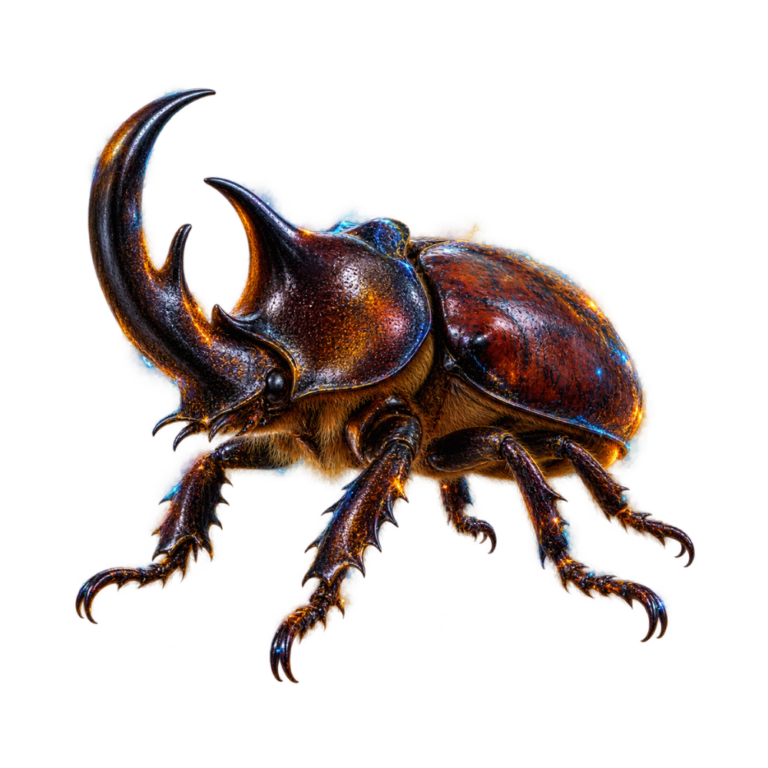
ME-SP-0002N-P
Painted Lady
Vanessa cardui
Nymphalidae • Insecta
ME-SP-0002N-PPainted Lady
Vanessa cardui
Lepidoptera • Nymphalidae • InsectaHow to Recognize It
Painted Lady (Vanessa cardui) is a lepidopteran whose identification should combine adult wing shape and pattern, dorsal and ventral markings, body form, antennae, and locality rather than relying on color alone. Sex, wear, season, and lighting can alter appearance, while closely related species may share broad pattern elements. Larvae and pupae can look radically different from adults, so life stage must be recorded. For preserved material, intact diagnostic structures and a reliable specimen label are as important as color. When a determination is uncertain, compare multiple characters against a taxonomic or regional reference before assigning species-level certainty.Life Beyond the Enclosure
Painted Lady is part of the butterfly-and-moth lineage and passes through complete metamorphosis: egg, larva, pupa, and adult. Ecological requirements change sharply across those stages. Caterpillars are usually tied to particular host plants or host-plant families, whereas adults commonly focus on dispersal, courtship, reproduction, and species-specific food resources such as nectar, sap, fruit, or other liquids. Seasonal timing and local climate influence generation number, diapause, and adult flight. Predators, parasitoids, weather, host-plant chemistry, and habitat structure all shape survival. Distribution records should be interpreted at the taxon level because related species can occupy very different ranges and habitats. Practical records should note date, life stage, feeding response, behavior, environmental observations, and any intervention so trends are visible instead of relying on memory. For Vanessa cardui, locality, season, and life stage should stay attached to observations because those variables can change the ecological picture substantially. Keep this Vanessa cardui account under species-specific review as stronger references become available.Keeper Reference
Care for Painted Lady depends first on life stage. Eggs and larvae require correctly identified host material, excellent airflow, sanitation, and enough space to avoid crowding. Pupae need the orientation and moisture pattern appropriate to the species, while adults require safe flight room, appropriate food resources, and surfaces that prevent wing damage. Wild adults are generally poor candidates for long-term display captivity; observation or rearing should use legally obtained material and a verified species-specific protocol. Avoid generic heat or humidity targets when published rearing data are unavailable, because host plant, season, and local climate can matter more than a single thermostat number. Keep this Vanessa cardui account under species-specific review as stronger references become available.Collection Knowledge
Painted Lady (Vanessa cardui) belongs to one of the most transformation-heavy branches of the animal tree. Its life is divided among an egg, a feeding caterpillar, a reorganizing pupa, and a winged adult built largely for dispersal and reproduction. That stage shift means the same species can occupy different microhabitats and use completely different resources across its life. Identification is strongest when wing pattern, shape, locality, season, and life stage are considered together. Ecologically, species in this group connect host plants, flowering plants, predators, and parasitoids, making even a small moth or butterfly part of a surprisingly busy food web. Practical records should note date, life stage, feeding response, behavior, environmental observations, and any intervention so trends are visible instead of relying on memory. Records for Vanessa cardui are most useful when identification, locality, life stage, and source provenance remain linked to the profile. Keep this Vanessa cardui account under species-specific review as stronger references become available.ME-SP-00032-O
Palamedes Swallowtail
Papilio palamedes
Papilionidae • Insecta
ME-SP-00032-OPalamedes Swallowtail
Papilio palamedes
Lepidoptera • Papilionidae • InsectaHow to Recognize It
Palamedes Swallowtail (Papilio palamedes) is a lepidopteran whose identification should combine adult wing shape and pattern, dorsal and ventral markings, body form, antennae, and locality rather than relying on color alone. Sex, wear, season, and lighting can alter appearance, while closely related species may share broad pattern elements. Larvae and pupae can look radically different from adults, so life stage must be recorded. For preserved material, intact diagnostic structures and a reliable specimen label are as important as color. When a determination is uncertain, compare multiple characters against a taxonomic or regional reference before assigning species-level certainty.Life Beyond the Enclosure
Palamedes Swallowtail is part of the butterfly-and-moth lineage and passes through complete metamorphosis: egg, larva, pupa, and adult. Ecological requirements change sharply across those stages. Caterpillars are usually tied to particular host plants or host-plant families, whereas adults commonly focus on dispersal, courtship, reproduction, and species-specific food resources such as nectar, sap, fruit, or other liquids. Seasonal timing and local climate influence generation number, diapause, and adult flight. Predators, parasitoids, weather, host-plant chemistry, and habitat structure all shape survival. Distribution records should be interpreted at the taxon level because related species can occupy very different ranges and habitats. Practical records should note date, life stage, feeding response, behavior, environmental observations, and any intervention so trends are visible instead of relying on memory. For Papilio palamedes, locality, season, and life stage should stay attached to observations because those variables can change the ecological picture substantially. Keep this Papilio palamedes account under species-specific review as stronger references become available.Keeper Reference
Care for Palamedes Swallowtail depends first on life stage. Eggs and larvae require correctly identified host material, excellent airflow, sanitation, and enough space to avoid crowding. Pupae need the orientation and moisture pattern appropriate to the species, while adults require safe flight room, appropriate food resources, and surfaces that prevent wing damage. Wild adults are generally poor candidates for long-term display captivity; observation or rearing should use legally obtained material and a verified species-specific protocol. Avoid generic heat or humidity targets when published rearing data are unavailable, because host plant, season, and local climate can matter more than a single thermostat number. Keep this Papilio palamedes account under species-specific review as stronger references become available.Collection Knowledge
Palamedes Swallowtail (Papilio palamedes) belongs to one of the most transformation-heavy branches of the animal tree. Its life is divided among an egg, a feeding caterpillar, a reorganizing pupa, and a winged adult built largely for dispersal and reproduction. That stage shift means the same species can occupy different microhabitats and use completely different resources across its life. Identification is strongest when wing pattern, shape, locality, season, and life stage are considered together. Ecologically, species in this group connect host plants, flowering plants, predators, and parasitoids, making even a small moth or butterfly part of a surprisingly busy food web. Practical records should note date, life stage, feeding response, behavior, environmental observations, and any intervention so trends are visible instead of relying on memory. Records for Papilio palamedes are most useful when identification, locality, life stage, and source provenance remain linked to the profile. Keep this Papilio palamedes account under species-specific review as stronger references become available.MycoVault Game Counterparts
These are digital game specimens and characters inspired by the real-world species above. Their lore, rarity, game traits, and collectible ownership belong to MycoVault.

ME-SP-0004B-5
Pandorus Sphinx
Eumorpha pandorus
Sphingidae • Insecta
ME-SP-0004B-5Pandorus Sphinx
Eumorpha pandorus
Lepidoptera • Sphingidae • InsectaHow to Recognize It
Pandorus Sphinx (Eumorpha pandorus) is a lepidopteran whose identification should combine adult wing shape and pattern, dorsal and ventral markings, body form, antennae, and locality rather than relying on color alone. Sex, wear, season, and lighting can alter appearance, while closely related species may share broad pattern elements. Larvae and pupae can look radically different from adults, so life stage must be recorded. For preserved material, intact diagnostic structures and a reliable specimen label are as important as color. When a determination is uncertain, compare multiple characters against a taxonomic or regional reference before assigning species-level certainty.Life Beyond the Enclosure
Pandorus Sphinx is part of the butterfly-and-moth lineage and passes through complete metamorphosis: egg, larva, pupa, and adult. Ecological requirements change sharply across those stages. Caterpillars are usually tied to particular host plants or host-plant families, whereas adults commonly focus on dispersal, courtship, reproduction, and species-specific food resources such as nectar, sap, fruit, or other liquids. Seasonal timing and local climate influence generation number, diapause, and adult flight. Predators, parasitoids, weather, host-plant chemistry, and habitat structure all shape survival. Distribution records should be interpreted at the taxon level because related species can occupy very different ranges and habitats. Practical records should note date, life stage, feeding response, behavior, environmental observations, and any intervention so trends are visible instead of relying on memory. For Eumorpha pandorus, locality, season, and life stage should stay attached to observations because those variables can change the ecological picture substantially. Keep this Eumorpha pandorus account under species-specific review as stronger references become available.Keeper Reference
Care for Pandorus Sphinx depends first on life stage. Eggs and larvae require correctly identified host material, excellent airflow, sanitation, and enough space to avoid crowding. Pupae need the orientation and moisture pattern appropriate to the species, while adults require safe flight room, appropriate food resources, and surfaces that prevent wing damage. Wild adults are generally poor candidates for long-term display captivity; observation or rearing should use legally obtained material and a verified species-specific protocol. Avoid generic heat or humidity targets when published rearing data are unavailable, because host plant, season, and local climate can matter more than a single thermostat number. Keep this Eumorpha pandorus account under species-specific review as stronger references become available.Collection Knowledge
Pandorus Sphinx (Eumorpha pandorus) belongs to one of the most transformation-heavy branches of the animal tree. Its life is divided among an egg, a feeding caterpillar, a reorganizing pupa, and a winged adult built largely for dispersal and reproduction. That stage shift means the same species can occupy different microhabitats and use completely different resources across its life. Identification is strongest when wing pattern, shape, locality, season, and life stage are considered together. Ecologically, species in this group connect host plants, flowering plants, predators, and parasitoids, making even a small moth or butterfly part of a surprisingly busy food web. Practical records should note date, life stage, feeding response, behavior, environmental observations, and any intervention so trends are visible instead of relying on memory. Records for Eumorpha pandorus are most useful when identification, locality, life stage, and source provenance remain linked to the profile. Keep this Eumorpha pandorus account under species-specific review as stronger references become available.ME-SP-00021-7
Pantropical Jumping Spider
Plexippus paykulli
Salticidae • Arachnida
ME-SP-00021-7Pantropical Jumping Spider
Plexippus paykulli
Araneae • Salticidae • ArachnidaHow to Recognize It
Pantropical Jumping Spider (Plexippus paykulli) is a spider whose identification should use eye arrangement, body proportions, carapace and abdominal pattern, leg morphology, setation, chelicerae, mature reproductive structures, and locality as appropriate. Juveniles can be difficult or impossible to identify confidently to species because diagnostic adult characters are not yet developed. Color is useful but variable with molt stage, lighting, sex, and individual condition. For jumping spiders, the large forward-facing principal eyes and alert visual behavior are distinctive at family level, but species determinations often require several characters. Preserve molt skins, locality data, and clear dorsal and ventral photographs when possible.Life Beyond the Enclosure
Pantropical Jumping Spider is an arachnid predator that relies on silk, sensory information, and rapid prey capture rather than chewing plant material. Spiders grow by molting, and vulnerability rises sharply before, during, and immediately after ecdysis. Visual hunters such as jumping spiders use excellent eyesight, orientation behavior, and small silk retreats, while other spiders may rely more heavily on webs, burrows, or tactile cues. Diet in the wild consists mainly of appropriately sized arthropods. Activity, courtship, maturation, and egg production are influenced by prey availability, temperature, hydration, and season. Cannibalism is a normal risk in many species, especially during pairing or crowded housing. Practical records should note date, life stage, feeding response, behavior, environmental observations, and any intervention so trends are visible instead of relying on memory. For Plexippus paykulli, locality, season, and life stage should stay attached to observations because those variables can change the ecological picture substantially. Keep this Plexippus paykulli account under species-specific review as stronger references become available.Keeper Reference
Care for Pantropical Jumping Spider should provide secure ventilation, species-appropriate vertical or horizontal space, textured anchor points, a retreat location, clean hydration, and live prey sized to the animal. Avoid excessive wetness and stagnant air unless a verified species protocol calls for unusually humid conditions. Molting animals should not be disturbed or offered dangerous prey. Jumping spiders benefit from visual access, climbing surfaces, and an upper retreat zone; terrestrial species need more floor area and stable footing. Individual housing is the safest default unless social tolerance is well documented. Remove uneaten prey and monitor abdomen condition, coordination, attachment ability, and molt timing. Keep this Plexippus paykulli account under species-specific review as stronger references become available.Collection Knowledge
Pantropical Jumping Spider (Plexippus paykulli) is an arachnid predator built around precision rather than brute force. Spiders read the world through vibration, touch, chemical cues, and, in visually oriented groups such as jumping spiders, remarkably capable eyes. Silk may become a safety line, shelter, nursery, hunting tool, or molt retreat depending on the species. Growth happens in jumps because the exoskeleton must be shed before a larger one hardens. That makes molting a major event in both wild biology and captive care. Species identification can be tricky in juveniles, so mature anatomy, locality, and multiple photographs are more trustworthy than color by itself. Practical records should note date, life stage, feeding response, behavior, environmental observations, and any intervention so trends are visible instead of relying on memory. Records for Plexippus paykulli are most useful when identification, locality, life stage, and source provenance remain linked to the profile. Keep this Plexippus paykulli account under species-specific review as stronger references become available.ME-SP-0002W-Y
Pearl Crescent
Phyciodes tharos
Nymphalidae • Insecta
ME-SP-0002W-YPearl Crescent
Phyciodes tharos
Lepidoptera • Nymphalidae • InsectaHow to Recognize It
Pearl Crescent (Phyciodes tharos) is a lepidopteran whose identification should combine adult wing shape and pattern, dorsal and ventral markings, body form, antennae, and locality rather than relying on color alone. Sex, wear, season, and lighting can alter appearance, while closely related species may share broad pattern elements. Larvae and pupae can look radically different from adults, so life stage must be recorded. For preserved material, intact diagnostic structures and a reliable specimen label are as important as color. When a determination is uncertain, compare multiple characters against a taxonomic or regional reference before assigning species-level certainty.Life Beyond the Enclosure
Pearl Crescent is part of the butterfly-and-moth lineage and passes through complete metamorphosis: egg, larva, pupa, and adult. Ecological requirements change sharply across those stages. Caterpillars are usually tied to particular host plants or host-plant families, whereas adults commonly focus on dispersal, courtship, reproduction, and species-specific food resources such as nectar, sap, fruit, or other liquids. Seasonal timing and local climate influence generation number, diapause, and adult flight. Predators, parasitoids, weather, host-plant chemistry, and habitat structure all shape survival. Distribution records should be interpreted at the taxon level because related species can occupy very different ranges and habitats. Practical records should note date, life stage, feeding response, behavior, environmental observations, and any intervention so trends are visible instead of relying on memory. For Phyciodes tharos, locality, season, and life stage should stay attached to observations because those variables can change the ecological picture substantially. Keep this Phyciodes tharos account under species-specific review as stronger references become available.Keeper Reference
Care for Pearl Crescent depends first on life stage. Eggs and larvae require correctly identified host material, excellent airflow, sanitation, and enough space to avoid crowding. Pupae need the orientation and moisture pattern appropriate to the species, while adults require safe flight room, appropriate food resources, and surfaces that prevent wing damage. Wild adults are generally poor candidates for long-term display captivity; observation or rearing should use legally obtained material and a verified species-specific protocol. Avoid generic heat or humidity targets when published rearing data are unavailable, because host plant, season, and local climate can matter more than a single thermostat number. Keep this Phyciodes tharos account under species-specific review as stronger references become available.Collection Knowledge
Pearl Crescent (Phyciodes tharos) belongs to one of the most transformation-heavy branches of the animal tree. Its life is divided among an egg, a feeding caterpillar, a reorganizing pupa, and a winged adult built largely for dispersal and reproduction. That stage shift means the same species can occupy different microhabitats and use completely different resources across its life. Identification is strongest when wing pattern, shape, locality, season, and life stage are considered together. Ecologically, species in this group connect host plants, flowering plants, predators, and parasitoids, making even a small moth or butterfly part of a surprisingly busy food web. Practical records should note date, life stage, feeding response, behavior, environmental observations, and any intervention so trends are visible instead of relying on memory. Records for Phyciodes tharos are most useful when identification, locality, life stage, and source provenance remain linked to the profile. Keep this Phyciodes tharos account under species-specific review as stronger references become available.ME-SP-0005H-V
Pennsylvania Firefly
Photuris pennsylvanica
Lampyridae • Insecta
ME-SP-0005H-VPennsylvania Firefly
Photuris pennsylvanica
Coleoptera • Lampyridae • InsectaHow to Recognize It
Pennsylvania Firefly (Photuris pennsylvanica) is a beetle and should be identified from body shape, antennae, pronotum, elytra, leg structure, surface sculpture, color pattern, size, and locality. The hardened forewings, or elytra, identify Coleoptera as a group, but species-level work often depends on small structural characters rather than overall color. Larvae may bear little resemblance to adults and may require host, substrate, or rearing information for confident identification. Wear, age, and preservation can alter color or sheen. Keep locality, collection or acquisition data, photographs, and any associated larval substrate information with the specimen record.Life Beyond the Enclosure
Pennsylvania Firefly is part of Coleoptera, the beetles, a huge radiation united by hardened forewings that protect the flight wings and abdomen. Complete metamorphosis separates egg, larva, pupa, and adult stages, and those stages can occupy different ecological niches. Depending on the species, larvae may develop in soil, wood, dung, carrion, fungi, roots, foliage, or other specialized substrates, while adults may feed, disperse, reproduce, or sometimes eat very little. Moisture, temperature, food quality, microbial decomposition, and substrate structure can all influence development. Ecological role may include predation, decomposition, pollination, herbivory, or nutrient cycling. Practical records should note date, life stage, feeding response, behavior, environmental observations, and any intervention so trends are visible instead of relying on memory. For Photuris pennsylvanica, locality, season, and life stage should stay attached to observations because those variables can change the ecological picture substantially. Practical records should note date, life stage, feeding response, behavior, environmental observations, and any intervention so trends are visible instead of relying on memory. For Photuris pennsylvanica, locality, season, and life stage should stay attached to observations because those variables can change the ecological picture substantially.Keeper Reference
Care for Pennsylvania Firefly must be based on its larval ecology and adult feeding strategy. A generic beetle box is not enough: wood borers, carrion beetles, dung beetles, flower beetles, tiger beetles, and scarabs require very different substrates and foods. For temporary adult observation, provide secure ventilation, traction, a species-appropriate food or moisture source, and protection from overheating. For rearing, use only correctly identified substrate or host material and prevent mold, mites, and anaerobic decay through sanitation and airflow. Avoid releasing captive, imported, or uncertain-origin beetles. Confirm species-specific developmental substrate, temperature, and moisture requirements before attempting multigenerational culture. Practical records should note date, life stage, feeding response, behavior, environmental observations, and any intervention so trends are visible instead of relying on memory. Any final care numbers for Photuris pennsylvanica should be tied to a named species-specific source and reviewed after actual husbandry observations.Collection Knowledge
Pennsylvania Firefly (Photuris pennsylvanica) is a member of Coleoptera, the beetles, whose signature hardware is a pair of hardened forewings called elytra. Beneath those protective covers sit the functional flight wings. Beetles undergo complete metamorphosis, so a grub-like larva may live in an entirely different world from the adult it becomes. Across the order, beetles work as predators, decomposers, herbivores, pollinators, scavengers, and ecosystem recyclers. That diversity also makes identification challenging: body sculpture, antennae, pronotum, legs, elytra, locality, and sometimes genital anatomy can matter more than color. Larval habitat is often one of the best clues to biology. Practical records should note date, life stage, feeding response, behavior, environmental observations, and any intervention so trends are visible instead of relying on memory. Records for Photuris pennsylvanica are most useful when identification, locality, life stage, and source provenance remain linked to the profile. Keep this Photuris pennsylvanica account under species-specific review as stronger references become available.ME-SP-0005K-M
Pennsylvania Ground Beetle
Harpalus pensylvanicus
Carabidae • Insecta
ME-SP-0005K-MPennsylvania Ground Beetle
Harpalus pensylvanicus
Coleoptera • Carabidae • InsectaHow to Recognize It
Pennsylvania Ground Beetle (Harpalus pensylvanicus) is a beetle and should be identified from body shape, antennae, pronotum, elytra, leg structure, surface sculpture, color pattern, size, and locality. The hardened forewings, or elytra, identify Coleoptera as a group, but species-level work often depends on small structural characters rather than overall color. Larvae may bear little resemblance to adults and may require host, substrate, or rearing information for confident identification. Wear, age, and preservation can alter color or sheen. Keep locality, collection or acquisition data, photographs, and any associated larval substrate information with the specimen record.Life Beyond the Enclosure
Pennsylvania Ground Beetle is part of Coleoptera, the beetles, a huge radiation united by hardened forewings that protect the flight wings and abdomen. Complete metamorphosis separates egg, larva, pupa, and adult stages, and those stages can occupy different ecological niches. Depending on the species, larvae may develop in soil, wood, dung, carrion, fungi, roots, foliage, or other specialized substrates, while adults may feed, disperse, reproduce, or sometimes eat very little. Moisture, temperature, food quality, microbial decomposition, and substrate structure can all influence development. Ecological role may include predation, decomposition, pollination, herbivory, or nutrient cycling. Practical records should note date, life stage, feeding response, behavior, environmental observations, and any intervention so trends are visible instead of relying on memory. For Harpalus pensylvanicus, locality, season, and life stage should stay attached to observations because those variables can change the ecological picture substantially. Keep this Harpalus pensylvanicus account under species-specific review as stronger references become available.Keeper Reference
Care for Pennsylvania Ground Beetle must be based on its larval ecology and adult feeding strategy. A generic beetle box is not enough: wood borers, carrion beetles, dung beetles, flower beetles, tiger beetles, and scarabs require very different substrates and foods. For temporary adult observation, provide secure ventilation, traction, a species-appropriate food or moisture source, and protection from overheating. For rearing, use only correctly identified substrate or host material and prevent mold, mites, and anaerobic decay through sanitation and airflow. Avoid releasing captive, imported, or uncertain-origin beetles. Confirm species-specific developmental substrate, temperature, and moisture requirements before attempting multigenerational culture. Practical records should note date, life stage, feeding response, behavior, environmental observations, and any intervention so trends are visible instead of relying on memory. Any final care numbers for Harpalus pensylvanicus should be tied to a named species-specific source and reviewed after actual husbandry observations.Collection Knowledge
Pennsylvania Ground Beetle (Harpalus pensylvanicus) is a member of Coleoptera, the beetles, whose signature hardware is a pair of hardened forewings called elytra. Beneath those protective covers sit the functional flight wings. Beetles undergo complete metamorphosis, so a grub-like larva may live in an entirely different world from the adult it becomes. Across the order, beetles work as predators, decomposers, herbivores, pollinators, scavengers, and ecosystem recyclers. That diversity also makes identification challenging: body sculpture, antennae, pronotum, legs, elytra, locality, and sometimes genital anatomy can matter more than color. Larval habitat is often one of the best clues to biology. Practical records should note date, life stage, feeding response, behavior, environmental observations, and any intervention so trends are visible instead of relying on memory. Records for Harpalus pensylvanicus are most useful when identification, locality, life stage, and source provenance remain linked to the profile. Keep this Harpalus pensylvanicus account under species-specific review as stronger references become available.ME-SP-0001U-8
Peppered Jumping Spider
Pelegrina galathea
Salticidae • Arachnida
ME-SP-0001U-8Peppered Jumping Spider
Pelegrina galathea
Araneae • Salticidae • ArachnidaHow to Recognize It
Peppered Jumping Spider (Pelegrina galathea) is a spider whose identification should use eye arrangement, body proportions, carapace and abdominal pattern, leg morphology, setation, chelicerae, mature reproductive structures, and locality as appropriate. Juveniles can be difficult or impossible to identify confidently to species because diagnostic adult characters are not yet developed. Color is useful but variable with molt stage, lighting, sex, and individual condition. For jumping spiders, the large forward-facing principal eyes and alert visual behavior are distinctive at family level, but species determinations often require several characters. Preserve molt skins, locality data, and clear dorsal and ventral photographs when possible.Life Beyond the Enclosure
Peppered Jumping Spider is an arachnid predator that relies on silk, sensory information, and rapid prey capture rather than chewing plant material. Spiders grow by molting, and vulnerability rises sharply before, during, and immediately after ecdysis. Visual hunters such as jumping spiders use excellent eyesight, orientation behavior, and small silk retreats, while other spiders may rely more heavily on webs, burrows, or tactile cues. Diet in the wild consists mainly of appropriately sized arthropods. Activity, courtship, maturation, and egg production are influenced by prey availability, temperature, hydration, and season. Cannibalism is a normal risk in many species, especially during pairing or crowded housing. Practical records should note date, life stage, feeding response, behavior, environmental observations, and any intervention so trends are visible instead of relying on memory. For Pelegrina galathea, locality, season, and life stage should stay attached to observations because those variables can change the ecological picture substantially. Keep this Pelegrina galathea account under species-specific review as stronger references become available.Keeper Reference
Care for Peppered Jumping Spider should provide secure ventilation, species-appropriate vertical or horizontal space, textured anchor points, a retreat location, clean hydration, and live prey sized to the animal. Avoid excessive wetness and stagnant air unless a verified species protocol calls for unusually humid conditions. Molting animals should not be disturbed or offered dangerous prey. Jumping spiders benefit from visual access, climbing surfaces, and an upper retreat zone; terrestrial species need more floor area and stable footing. Individual housing is the safest default unless social tolerance is well documented. Remove uneaten prey and monitor abdomen condition, coordination, attachment ability, and molt timing. Keep this Pelegrina galathea account under species-specific review as stronger references become available.Collection Knowledge
Peppered Jumping Spider (Pelegrina galathea) is an arachnid predator built around precision rather than brute force. Spiders read the world through vibration, touch, chemical cues, and, in visually oriented groups such as jumping spiders, remarkably capable eyes. Silk may become a safety line, shelter, nursery, hunting tool, or molt retreat depending on the species. Growth happens in jumps because the exoskeleton must be shed before a larger one hardens. That makes molting a major event in both wild biology and captive care. Species identification can be tricky in juveniles, so mature anatomy, locality, and multiple photographs are more trustworthy than color by itself. Practical records should note date, life stage, feeding response, behavior, environmental observations, and any intervention so trends are visible instead of relying on memory. Records for Pelegrina galathea are most useful when identification, locality, life stage, and source provenance remain linked to the profile. Keep this Pelegrina galathea account under species-specific review as stronger references become available.ME-SP-0008L-J
Phidippus Jumping Spider Group
Phidippus spp.
Salticidae • Arachnida
ME-SP-0008L-JPhidippus Jumping Spider Group
Phidippus spp.
Araneae • Salticidae • ArachnidaHow to Recognize It
Phidippus Jumping Spider Group (Phidippus spp.) is a spider whose identification should use eye arrangement, body proportions, carapace and abdominal pattern, leg morphology, setation, chelicerae, mature reproductive structures, and locality as appropriate. Juveniles can be difficult or impossible to identify confidently to species because diagnostic adult characters are not yet developed. Color is useful but variable with molt stage, lighting, sex, and individual condition. For jumping spiders, the large forward-facing principal eyes and alert visual behavior are distinctive at family level, but species determinations often require several characters. Preserve molt skins, locality data, and clear dorsal and ventral photographs when possible.Life Beyond the Enclosure
Phidippus Jumping Spider Group is an arachnid predator that relies on silk, sensory information, and rapid prey capture rather than chewing plant material. Spiders grow by molting, and vulnerability rises sharply before, during, and immediately after ecdysis. Visual hunters such as jumping spiders use excellent eyesight, orientation behavior, and small silk retreats, while other spiders may rely more heavily on webs, burrows, or tactile cues. Diet in the wild consists mainly of appropriately sized arthropods. Activity, courtship, maturation, and egg production are influenced by prey availability, temperature, hydration, and season. Cannibalism is a normal risk in many species, especially during pairing or crowded housing. Practical records should note date, life stage, feeding response, behavior, environmental observations, and any intervention so trends are visible instead of relying on memory. For Phidippus spp., locality, season, and life stage should stay attached to observations because those variables can change the ecological picture substantially.Keeper Reference
Care for Phidippus Jumping Spider Group should provide secure ventilation, species-appropriate vertical or horizontal space, textured anchor points, a retreat location, clean hydration, and live prey sized to the animal. Avoid excessive wetness and stagnant air unless a verified species protocol calls for unusually humid conditions. Molting animals should not be disturbed or offered dangerous prey. Jumping spiders benefit from visual access, climbing surfaces, and an upper retreat zone; terrestrial species need more floor area and stable footing. Individual housing is the safest default unless social tolerance is well documented. Remove uneaten prey and monitor abdomen condition, coordination, attachment ability, and molt timing. Keep this Phidippus spp. account under species-specific review as stronger references become available.Collection Knowledge
Phidippus Jumping Spider Group (Phidippus spp.) is an arachnid predator built around precision rather than brute force. Spiders read the world through vibration, touch, chemical cues, and, in visually oriented groups such as jumping spiders, remarkably capable eyes. Silk may become a safety line, shelter, nursery, hunting tool, or molt retreat depending on the species. Growth happens in jumps because the exoskeleton must be shed before a larger one hardens. That makes molting a major event in both wild biology and captive care. Species identification can be tricky in juveniles, so mature anatomy, locality, and multiple photographs are more trustworthy than color by itself. Practical records should note date, life stage, feeding response, behavior, environmental observations, and any intervention so trends are visible instead of relying on memory. Records for Phidippus spp. are most useful when identification, locality, life stage, and source provenance remain linked to the profile. Keep this Phidippus spp. account under species-specific review as stronger references become available.MycoVault Game Counterparts
These are digital game specimens and characters inspired by the real-world species above. Their lore, rarity, game traits, and collectible ownership belong to MycoVault.
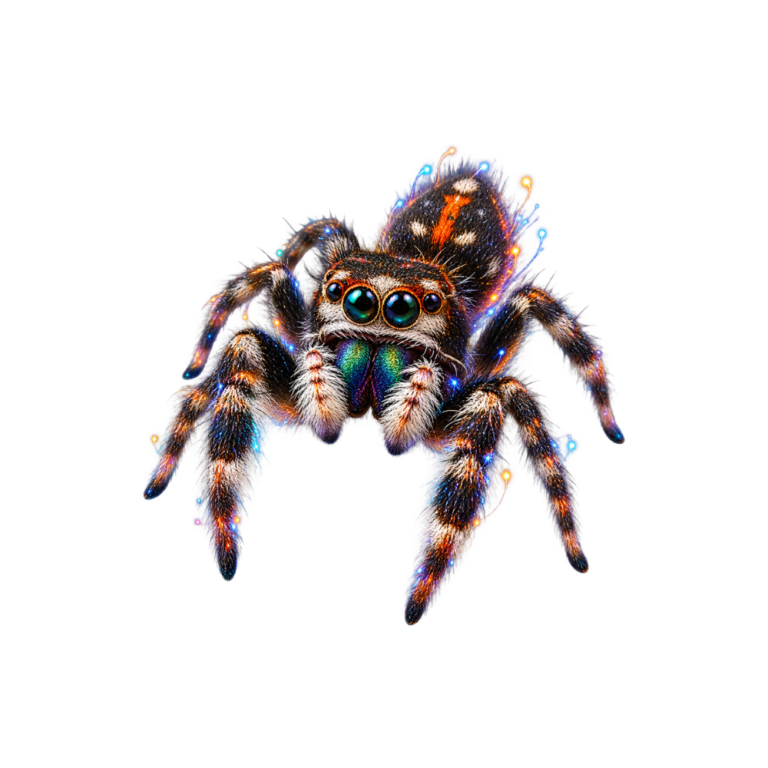
ME-SP-0008N-1
Phidippus richmani Jumping Spider
Phidippus richmani
Salticidae • Arachnida
ME-SP-0008N-1Phidippus richmani Jumping Spider
Phidippus richmani
Araneae • Salticidae • ArachnidaHow to Recognize It
Phidippus richmani Jumping Spider (Phidippus richmani) is a spider whose identification should use eye arrangement, body proportions, carapace and abdominal pattern, leg morphology, setation, chelicerae, mature reproductive structures, and locality as appropriate. Juveniles can be difficult or impossible to identify confidently to species because diagnostic adult characters are not yet developed. Color is useful but variable with molt stage, lighting, sex, and individual condition. For jumping spiders, the large forward-facing principal eyes and alert visual behavior are distinctive at family level, but species determinations often require several characters. Preserve molt skins, locality data, and clear dorsal and ventral photographs when possible.Life Beyond the Enclosure
Phidippus richmani Jumping Spider is an arachnid predator that relies on silk, sensory information, and rapid prey capture rather than chewing plant material. Spiders grow by molting, and vulnerability rises sharply before, during, and immediately after ecdysis. Visual hunters such as jumping spiders use excellent eyesight, orientation behavior, and small silk retreats, while other spiders may rely more heavily on webs, burrows, or tactile cues. Diet in the wild consists mainly of appropriately sized arthropods. Activity, courtship, maturation, and egg production are influenced by prey availability, temperature, hydration, and season. Cannibalism is a normal risk in many species, especially during pairing or crowded housing. Practical records should note date, life stage, feeding response, behavior, environmental observations, and any intervention so trends are visible instead of relying on memory. For Phidippus richmani, locality, season, and life stage should stay attached to observations because those variables can change the ecological picture substantially.Keeper Reference
Care for Phidippus richmani Jumping Spider should provide secure ventilation, species-appropriate vertical or horizontal space, textured anchor points, a retreat location, clean hydration, and live prey sized to the animal. Avoid excessive wetness and stagnant air unless a verified species protocol calls for unusually humid conditions. Molting animals should not be disturbed or offered dangerous prey. Jumping spiders benefit from visual access, climbing surfaces, and an upper retreat zone; terrestrial species need more floor area and stable footing. Individual housing is the safest default unless social tolerance is well documented. Remove uneaten prey and monitor abdomen condition, coordination, attachment ability, and molt timing. Keep this Phidippus richmani account under species-specific review as stronger references become available.Collection Knowledge
Phidippus richmani Jumping Spider (Phidippus richmani) is an arachnid predator built around precision rather than brute force. Spiders read the world through vibration, touch, chemical cues, and, in visually oriented groups such as jumping spiders, remarkably capable eyes. Silk may become a safety line, shelter, nursery, hunting tool, or molt retreat depending on the species. Growth happens in jumps because the exoskeleton must be shed before a larger one hardens. That makes molting a major event in both wild biology and captive care. Species identification can be tricky in juveniles, so mature anatomy, locality, and multiple photographs are more trustworthy than color by itself. Practical records should note date, life stage, feeding response, behavior, environmental observations, and any intervention so trends are visible instead of relying on memory. Records for Phidippus richmani are most useful when identification, locality, life stage, and source provenance remain linked to the profile. Keep this Phidippus richmani account under species-specific review as stronger references become available.ME-SP-0001M-8
Pig Frog
Lithobates grylio
Ranidae • Amphibia
ME-SP-0001M-8Pig Frog
Lithobates grylio
Anura • Ranidae • AmphibiaHow to Recognize It
Pig Frog (Lithobates grylio) should be identified using body shape, skin texture, limb and toe structure, eye and tympanum features when present, pattern, coloration, size, call or life-stage traits, and geographic provenance. Amphibian color can shift with temperature, stress, hydration, background, and time of day, so color alone is unreliable. Larvae and recently metamorphosed juveniles may differ greatly from adults. Similar species can require close examination or locality data. Because amphibian skin is highly permeable, handling and environmental history also matter when evaluating condition. Species-level identification should be verified before care parameters are assigned.Life Beyond the Enclosure
Pig Frog is an amphibian, a lineage closely tied to water balance and environmental quality because the skin participates in hydration and gas exchange. Life histories vary from fully aquatic forms to terrestrial or arboreal adults, and many species move between aquatic and terrestrial habitats across development. Temperature, rainfall, humidity, water chemistry, seasonal cycles, and breeding sites can influence activity and reproduction. Amphibians often feed on small animal prey, while larvae may have very different diets. Their permeable skin makes them sensitive to contaminants and inappropriate water chemistry, so wild ecological observations and captive husbandry should both be interpreted with unusual attention to moisture and chemical exposure. Practical records should note date, life stage, feeding response, behavior, environmental observations, and any intervention so trends are visible instead of relying on memory. For Lithobates grylio, locality, season, and life stage should stay attached to observations because those variables can change the ecological picture substantially.Keeper Reference
Care for Pig Frog must prioritize clean water or appropriately conditioned moisture, stable species-appropriate temperatures, strong ventilation without desiccation, nonabrasive furnishings, and minimal handling. Any water that contacts the animal should be free of chlorine/chloramine and contaminants, and aquatic species require monitored nitrogen cycling and water-quality management. Terrestrial and arboreal species need humidity gradients rather than permanently saturated air. Food items should be appropriately sized and nutritionally managed. Because amphibian husbandry varies enormously, final temperature, humidity, UVB, water-depth, and supplementation targets should be confirmed against a species-specific source before use. Quarantine is especially important because infectious diseases can spread quickly through shared water or tools.Collection Knowledge
Pig Frog (Lithobates grylio) belongs to a group whose biology is written partly in water. Amphibian skin is thin and physiologically active, so moisture, water chemistry, pollutants, and temperature can influence the animal more directly than they do many reptiles. Many amphibians also change habitat and diet as they develop, making a juvenile or larval stage almost a different ecological job from the adult. Their sensitivity is one reason amphibians are important indicators of environmental change. Identification should consider anatomy, locality, life stage, and behavior rather than color alone, because hydration and surroundings can noticeably alter appearance. Practical records should note date, life stage, feeding response, behavior, environmental observations, and any intervention so trends are visible instead of relying on memory. Records for Lithobates grylio are most useful when identification, locality, life stage, and source provenance remain linked to the profile. Keep this Lithobates grylio account under species-specific review as stronger references become available.ME-SP-00036-O
Pipevine Swallowtail
Battus philenor
Papilionidae • Insecta
ME-SP-00036-OPipevine Swallowtail
Battus philenor
Lepidoptera • Papilionidae • InsectaHow to Recognize It
Pipevine Swallowtail (Battus philenor) is a lepidopteran whose identification should combine adult wing shape and pattern, dorsal and ventral markings, body form, antennae, and locality rather than relying on color alone. Sex, wear, season, and lighting can alter appearance, while closely related species may share broad pattern elements. Larvae and pupae can look radically different from adults, so life stage must be recorded. For preserved material, intact diagnostic structures and a reliable specimen label are as important as color. When a determination is uncertain, compare multiple characters against a taxonomic or regional reference before assigning species-level certainty.Life Beyond the Enclosure
Pipevine Swallowtail is part of the butterfly-and-moth lineage and passes through complete metamorphosis: egg, larva, pupa, and adult. Ecological requirements change sharply across those stages. Caterpillars are usually tied to particular host plants or host-plant families, whereas adults commonly focus on dispersal, courtship, reproduction, and species-specific food resources such as nectar, sap, fruit, or other liquids. Seasonal timing and local climate influence generation number, diapause, and adult flight. Predators, parasitoids, weather, host-plant chemistry, and habitat structure all shape survival. Distribution records should be interpreted at the taxon level because related species can occupy very different ranges and habitats. Practical records should note date, life stage, feeding response, behavior, environmental observations, and any intervention so trends are visible instead of relying on memory. For Battus philenor, locality, season, and life stage should stay attached to observations because those variables can change the ecological picture substantially. Keep this Battus philenor account under species-specific review as stronger references become available.Keeper Reference
Care for Pipevine Swallowtail depends first on life stage. Eggs and larvae require correctly identified host material, excellent airflow, sanitation, and enough space to avoid crowding. Pupae need the orientation and moisture pattern appropriate to the species, while adults require safe flight room, appropriate food resources, and surfaces that prevent wing damage. Wild adults are generally poor candidates for long-term display captivity; observation or rearing should use legally obtained material and a verified species-specific protocol. Avoid generic heat or humidity targets when published rearing data are unavailable, because host plant, season, and local climate can matter more than a single thermostat number. Keep this Battus philenor account under species-specific review as stronger references become available.Collection Knowledge
Pipevine Swallowtail (Battus philenor) belongs to one of the most transformation-heavy branches of the animal tree. Its life is divided among an egg, a feeding caterpillar, a reorganizing pupa, and a winged adult built largely for dispersal and reproduction. That stage shift means the same species can occupy different microhabitats and use completely different resources across its life. Identification is strongest when wing pattern, shape, locality, season, and life stage are considered together. Ecologically, species in this group connect host plants, flowering plants, predators, and parasitoids, making even a small moth or butterfly part of a surprisingly busy food web. Practical records should note date, life stage, feeding response, behavior, environmental observations, and any intervention so trends are visible instead of relying on memory. Records for Battus philenor are most useful when identification, locality, life stage, and source provenance remain linked to the profile. Keep this Battus philenor account under species-specific review as stronger references become available.ME-SP-0004V-5
Polka-Dot Wasp Moth
Syntomeida epilais
Erebidae • Insecta
ME-SP-0004V-5Polka-Dot Wasp Moth
Syntomeida epilais
Lepidoptera • Erebidae • InsectaHow to Recognize It
Polka-Dot Wasp Moth (Syntomeida epilais) is a lepidopteran whose identification should combine adult wing shape and pattern, dorsal and ventral markings, body form, antennae, and locality rather than relying on color alone. Sex, wear, season, and lighting can alter appearance, while closely related species may share broad pattern elements. Larvae and pupae can look radically different from adults, so life stage must be recorded. For preserved material, intact diagnostic structures and a reliable specimen label are as important as color. When a determination is uncertain, compare multiple characters against a taxonomic or regional reference before assigning species-level certainty.Life Beyond the Enclosure
Polka-Dot Wasp Moth is part of the butterfly-and-moth lineage and passes through complete metamorphosis: egg, larva, pupa, and adult. Ecological requirements change sharply across those stages. Caterpillars are usually tied to particular host plants or host-plant families, whereas adults commonly focus on dispersal, courtship, reproduction, and species-specific food resources such as nectar, sap, fruit, or other liquids. Seasonal timing and local climate influence generation number, diapause, and adult flight. Predators, parasitoids, weather, host-plant chemistry, and habitat structure all shape survival. Distribution records should be interpreted at the taxon level because related species can occupy very different ranges and habitats. Practical records should note date, life stage, feeding response, behavior, environmental observations, and any intervention so trends are visible instead of relying on memory. For Syntomeida epilais, locality, season, and life stage should stay attached to observations because those variables can change the ecological picture substantially.Keeper Reference
Care for Polka-Dot Wasp Moth depends first on life stage. Eggs and larvae require correctly identified host material, excellent airflow, sanitation, and enough space to avoid crowding. Pupae need the orientation and moisture pattern appropriate to the species, while adults require safe flight room, appropriate food resources, and surfaces that prevent wing damage. Wild adults are generally poor candidates for long-term display captivity; observation or rearing should use legally obtained material and a verified species-specific protocol. Avoid generic heat or humidity targets when published rearing data are unavailable, because host plant, season, and local climate can matter more than a single thermostat number. Keep this Syntomeida epilais account under species-specific review as stronger references become available.Collection Knowledge
Polka-Dot Wasp Moth (Syntomeida epilais) belongs to one of the most transformation-heavy branches of the animal tree. Its life is divided among an egg, a feeding caterpillar, a reorganizing pupa, and a winged adult built largely for dispersal and reproduction. That stage shift means the same species can occupy different microhabitats and use completely different resources across its life. Identification is strongest when wing pattern, shape, locality, season, and life stage are considered together. Ecologically, species in this group connect host plants, flowering plants, predators, and parasitoids, making even a small moth or butterfly part of a surprisingly busy food web. Practical records should note date, life stage, feeding response, behavior, environmental observations, and any intervention so trends are visible instead of relying on memory. Records for Syntomeida epilais are most useful when identification, locality, life stage, and source provenance remain linked to the profile. Keep this Syntomeida epilais account under species-specific review as stronger references become available.ME-SP-00040-E
Polyphemus Moth
Antheraea polyphemus
Saturniidae • Insecta
ME-SP-00040-EPolyphemus Moth
Antheraea polyphemus
Lepidoptera • Saturniidae • InsectaHow to Recognize It
Polyphemus Moth (Antheraea polyphemus) is a lepidopteran whose identification should combine adult wing shape and pattern, dorsal and ventral markings, body form, antennae, and locality rather than relying on color alone. Sex, wear, season, and lighting can alter appearance, while closely related species may share broad pattern elements. Larvae and pupae can look radically different from adults, so life stage must be recorded. For preserved material, intact diagnostic structures and a reliable specimen label are as important as color. When a determination is uncertain, compare multiple characters against a taxonomic or regional reference before assigning species-level certainty.Life Beyond the Enclosure
Polyphemus Moth is part of the butterfly-and-moth lineage and passes through complete metamorphosis: egg, larva, pupa, and adult. Ecological requirements change sharply across those stages. Caterpillars are usually tied to particular host plants or host-plant families, whereas adults commonly focus on dispersal, courtship, reproduction, and species-specific food resources such as nectar, sap, fruit, or other liquids. Seasonal timing and local climate influence generation number, diapause, and adult flight. Predators, parasitoids, weather, host-plant chemistry, and habitat structure all shape survival. Distribution records should be interpreted at the taxon level because related species can occupy very different ranges and habitats. Practical records should note date, life stage, feeding response, behavior, environmental observations, and any intervention so trends are visible instead of relying on memory. For Antheraea polyphemus, locality, season, and life stage should stay attached to observations because those variables can change the ecological picture substantially. Keep this Antheraea polyphemus account under species-specific review as stronger references become available.Keeper Reference
Care for Polyphemus Moth depends first on life stage. Eggs and larvae require correctly identified host material, excellent airflow, sanitation, and enough space to avoid crowding. Pupae need the orientation and moisture pattern appropriate to the species, while adults require safe flight room, appropriate food resources, and surfaces that prevent wing damage. Wild adults are generally poor candidates for long-term display captivity; observation or rearing should use legally obtained material and a verified species-specific protocol. Avoid generic heat or humidity targets when published rearing data are unavailable, because host plant, season, and local climate can matter more than a single thermostat number. Keep this Antheraea polyphemus account under species-specific review as stronger references become available.Collection Knowledge
Polyphemus Moth (Antheraea polyphemus) belongs to one of the most transformation-heavy branches of the animal tree. Its life is divided among an egg, a feeding caterpillar, a reorganizing pupa, and a winged adult built largely for dispersal and reproduction. That stage shift means the same species can occupy different microhabitats and use completely different resources across its life. Identification is strongest when wing pattern, shape, locality, season, and life stage are considered together. Ecologically, species in this group connect host plants, flowering plants, predators, and parasitoids, making even a small moth or butterfly part of a surprisingly busy food web. Practical records should note date, life stage, feeding response, behavior, environmental observations, and any intervention so trends are visible instead of relying on memory. Records for Antheraea polyphemus are most useful when identification, locality, life stage, and source provenance remain linked to the profile. Keep this Antheraea polyphemus account under species-specific review as stronger references become available.ME-SP-00060-U
Powder Blue Isopod
Porcellionides pruinosus
Porcellionidae • Malacostraca
ME-SP-00060-UPowder Blue Isopod
Porcellionides pruinosus
Isopoda • Porcellionidae • MalacostracaHow to Recognize It
Powder Blue Isopod (Porcellionides pruinosus) should be identified using the anatomical characters appropriate to its taxonomic group, supported by life stage, size, locality, behavior, and reliable provenance. Color by itself is rarely sufficient because age, sex, molt stage, preservation, and lighting can change appearance. Juveniles may lack adult diagnostic structures. Where the taxon includes similar-looking relatives, retain high-resolution dorsal, ventral, and lateral photographs and preserve any molt or developmental evidence that can support later review. Species-level certainty should be downgraded rather than guessed when key characters or locality data are missing.Life Beyond the Enclosure
Powder Blue Isopod is an invertebrate whose ecology is shaped by its particular body plan and life cycle. Growth in arthropods occurs through molts, while other invertebrate groups may use different developmental strategies. Microhabitat, moisture, temperature, food resources, predators, competitors, and season all influence activity. Many species occupy narrow ecological niches even when adults appear mobile or generalist. Feeding strategy can change between juvenile and adult stages, and reproduction may be seasonal. Natural-history information should be separated from captive-care assumptions: a field observation describes what the animal used in one place and time, not automatically the only condition it can tolerate in captivity. Practical records should note date, life stage, feeding response, behavior, environmental observations, and any intervention so trends are visible instead of relying on memory. For Porcellionides pruinosus, locality, season, and life stage should stay attached to observations because those variables can change the ecological picture substantially.Keeper Reference
Care for Powder Blue Isopod should begin with verified taxonomic identity and a species-specific understanding of microhabitat, feeding, hydration, and development. Provide secure ventilation, escape prevention, suitable structural complexity, safe moisture, and food that matches the animal's natural feeding mode. Avoid crowding unless social tolerance is established. Molting or otherwise vulnerable stages require minimal disturbance. When published husbandry data are sparse, favor short-term observation over experimental long-term keeping and record every environmental change. Do not release imported, captive-bred, or uncertain-origin animals. Any numeric temperature or humidity target should come from a reputable species-specific source rather than a generic invertebrate recipe. Keep this Porcellionides pruinosus account under species-specific review as stronger references become available.Collection Knowledge
Powder Blue Isopod (Porcellionides pruinosus) represents the astonishingly varied invertebrate majority of animal life. Its shape, sensory systems, life cycle, and ecological role make more sense when viewed together rather than as a collection of isolated traits. Identification should combine anatomy with locality and life stage because juveniles and adults can look very different, especially in groups that molt or metamorphose. In the wild, microhabitat is often the hidden key: moisture, substrate, food, shelter, and season can determine where the animal appears. Good records preserve that context, turning a specimen or observation into something far more informative than a name on a label. Practical records should note date, life stage, feeding response, behavior, environmental observations, and any intervention so trends are visible instead of relying on memory. Records for Porcellionides pruinosus are most useful when identification, locality, life stage, and source provenance remain linked to the profile. Keep this Porcellionides pruinosus account under species-specific review as stronger references become available.ME-SP-00043-5
Promethea Silkmoth
Callosamia promethea
Saturniidae • Insecta
ME-SP-00043-5Promethea Silkmoth
Callosamia promethea
Lepidoptera • Saturniidae • InsectaHow to Recognize It
Promethea Silkmoth (Callosamia promethea) is a lepidopteran whose identification should combine adult wing shape and pattern, dorsal and ventral markings, body form, antennae, and locality rather than relying on color alone. Sex, wear, season, and lighting can alter appearance, while closely related species may share broad pattern elements. Larvae and pupae can look radically different from adults, so life stage must be recorded. For preserved material, intact diagnostic structures and a reliable specimen label are as important as color. When a determination is uncertain, compare multiple characters against a taxonomic or regional reference before assigning species-level certainty.Life Beyond the Enclosure
Promethea Silkmoth is part of the butterfly-and-moth lineage and passes through complete metamorphosis: egg, larva, pupa, and adult. Ecological requirements change sharply across those stages. Caterpillars are usually tied to particular host plants or host-plant families, whereas adults commonly focus on dispersal, courtship, reproduction, and species-specific food resources such as nectar, sap, fruit, or other liquids. Seasonal timing and local climate influence generation number, diapause, and adult flight. Predators, parasitoids, weather, host-plant chemistry, and habitat structure all shape survival. Distribution records should be interpreted at the taxon level because related species can occupy very different ranges and habitats. Practical records should note date, life stage, feeding response, behavior, environmental observations, and any intervention so trends are visible instead of relying on memory. For Callosamia promethea, locality, season, and life stage should stay attached to observations because those variables can change the ecological picture substantially. Keep this Callosamia promethea account under species-specific review as stronger references become available.Keeper Reference
Care for Promethea Silkmoth depends first on life stage. Eggs and larvae require correctly identified host material, excellent airflow, sanitation, and enough space to avoid crowding. Pupae need the orientation and moisture pattern appropriate to the species, while adults require safe flight room, appropriate food resources, and surfaces that prevent wing damage. Wild adults are generally poor candidates for long-term display captivity; observation or rearing should use legally obtained material and a verified species-specific protocol. Avoid generic heat or humidity targets when published rearing data are unavailable, because host plant, season, and local climate can matter more than a single thermostat number. Keep this Callosamia promethea account under species-specific review as stronger references become available.Collection Knowledge
Promethea Silkmoth (Callosamia promethea) belongs to one of the most transformation-heavy branches of the animal tree. Its life is divided among an egg, a feeding caterpillar, a reorganizing pupa, and a winged adult built largely for dispersal and reproduction. That stage shift means the same species can occupy different microhabitats and use completely different resources across its life. Identification is strongest when wing pattern, shape, locality, season, and life stage are considered together. Ecologically, species in this group connect host plants, flowering plants, predators, and parasitoids, making even a small moth or butterfly part of a surprisingly busy food web. Practical records should note date, life stage, feeding response, behavior, environmental observations, and any intervention so trends are visible instead of relying on memory. Records for Callosamia promethea are most useful when identification, locality, life stage, and source provenance remain linked to the profile. Keep this Callosamia promethea account under species-specific review as stronger references become available.ME-SP-0001R-H
Putnam’s Jumping Spider
Phidippus putnami
Salticidae • Arachnida
ME-SP-0001R-HPutnam’s Jumping Spider
Phidippus putnami
Araneae • Salticidae • ArachnidaHow to Recognize It
Putnam’s Jumping Spider (Phidippus putnami) is a spider whose identification should use eye arrangement, body proportions, carapace and abdominal pattern, leg morphology, setation, chelicerae, mature reproductive structures, and locality as appropriate. Juveniles can be difficult or impossible to identify confidently to species because diagnostic adult characters are not yet developed. Color is useful but variable with molt stage, lighting, sex, and individual condition. For jumping spiders, the large forward-facing principal eyes and alert visual behavior are distinctive at family level, but species determinations often require several characters. Preserve molt skins, locality data, and clear dorsal and ventral photographs when possible.Life Beyond the Enclosure
Putnam’s Jumping Spider is an arachnid predator that relies on silk, sensory information, and rapid prey capture rather than chewing plant material. Spiders grow by molting, and vulnerability rises sharply before, during, and immediately after ecdysis. Visual hunters such as jumping spiders use excellent eyesight, orientation behavior, and small silk retreats, while other spiders may rely more heavily on webs, burrows, or tactile cues. Diet in the wild consists mainly of appropriately sized arthropods. Activity, courtship, maturation, and egg production are influenced by prey availability, temperature, hydration, and season. Cannibalism is a normal risk in many species, especially during pairing or crowded housing. Practical records should note date, life stage, feeding response, behavior, environmental observations, and any intervention so trends are visible instead of relying on memory. For Phidippus putnami, locality, season, and life stage should stay attached to observations because those variables can change the ecological picture substantially. Keep this Phidippus putnami account under species-specific review as stronger references become available.Keeper Reference
Care for Putnam’s Jumping Spider should provide secure ventilation, species-appropriate vertical or horizontal space, textured anchor points, a retreat location, clean hydration, and live prey sized to the animal. Avoid excessive wetness and stagnant air unless a verified species protocol calls for unusually humid conditions. Molting animals should not be disturbed or offered dangerous prey. Jumping spiders benefit from visual access, climbing surfaces, and an upper retreat zone; terrestrial species need more floor area and stable footing. Individual housing is the safest default unless social tolerance is well documented. Remove uneaten prey and monitor abdomen condition, coordination, attachment ability, and molt timing. Keep this Phidippus putnami account under species-specific review as stronger references become available.Collection Knowledge
Putnam’s Jumping Spider (Phidippus putnami) is an arachnid predator built around precision rather than brute force. Spiders read the world through vibration, touch, chemical cues, and, in visually oriented groups such as jumping spiders, remarkably capable eyes. Silk may become a safety line, shelter, nursery, hunting tool, or molt retreat depending on the species. Growth happens in jumps because the exoskeleton must be shed before a larger one hardens. That makes molting a major event in both wild biology and captive care. Species identification can be tricky in juveniles, so mature anatomy, locality, and multiple photographs are more trustworthy than color by itself. Practical records should note date, life stage, feeding response, behavior, environmental observations, and any intervention so trends are visible instead of relying on memory. Records for Phidippus putnami are most useful when identification, locality, life stage, and source provenance remain linked to the profile. Keep this Phidippus putnami account under species-specific review as stronger references become available.ME-SP-0002F-P
Queen
Danaus gilippus
Nymphalidae • Insecta
ME-SP-0002F-PQueen
Danaus gilippus
Lepidoptera • Nymphalidae • InsectaHow to Recognize It
Queen (Danaus gilippus) is a lepidopteran whose identification should combine adult wing shape and pattern, dorsal and ventral markings, body form, antennae, and locality rather than relying on color alone. Sex, wear, season, and lighting can alter appearance, while closely related species may share broad pattern elements. Larvae and pupae can look radically different from adults, so life stage must be recorded. For preserved material, intact diagnostic structures and a reliable specimen label are as important as color. When a determination is uncertain, compare multiple characters against a taxonomic or regional reference before assigning species-level certainty.Life Beyond the Enclosure
Queen is part of the butterfly-and-moth lineage and passes through complete metamorphosis: egg, larva, pupa, and adult. Ecological requirements change sharply across those stages. Caterpillars are usually tied to particular host plants or host-plant families, whereas adults commonly focus on dispersal, courtship, reproduction, and species-specific food resources such as nectar, sap, fruit, or other liquids. Seasonal timing and local climate influence generation number, diapause, and adult flight. Predators, parasitoids, weather, host-plant chemistry, and habitat structure all shape survival. Distribution records should be interpreted at the taxon level because related species can occupy very different ranges and habitats. Practical records should note date, life stage, feeding response, behavior, environmental observations, and any intervention so trends are visible instead of relying on memory. For Danaus gilippus, locality, season, and life stage should stay attached to observations because those variables can change the ecological picture substantially. Keep this Danaus gilippus account under species-specific review as stronger references become available.Keeper Reference
Care for Queen depends first on life stage. Eggs and larvae require correctly identified host material, excellent airflow, sanitation, and enough space to avoid crowding. Pupae need the orientation and moisture pattern appropriate to the species, while adults require safe flight room, appropriate food resources, and surfaces that prevent wing damage. Wild adults are generally poor candidates for long-term display captivity; observation or rearing should use legally obtained material and a verified species-specific protocol. Avoid generic heat or humidity targets when published rearing data are unavailable, because host plant, season, and local climate can matter more than a single thermostat number. Keep this Danaus gilippus account under species-specific review as stronger references become available.Collection Knowledge
Queen (Danaus gilippus) belongs to one of the most transformation-heavy branches of the animal tree. Its life is divided among an egg, a feeding caterpillar, a reorganizing pupa, and a winged adult built largely for dispersal and reproduction. That stage shift means the same species can occupy different microhabitats and use completely different resources across its life. Identification is strongest when wing pattern, shape, locality, season, and life stage are considered together. Ecologically, species in this group connect host plants, flowering plants, predators, and parasitoids, making even a small moth or butterfly part of a surprisingly busy food web. Practical records should note date, life stage, feeding response, behavior, environmental observations, and any intervention so trends are visible instead of relying on memory. Records for Danaus gilippus are most useful when identification, locality, life stage, and source provenance remain linked to the profile. Keep this Danaus gilippus account under species-specific review as stronger references become available.ME-SP-0002T-7
Question Mark
Polygonia interrogationis
Nymphalidae • Insecta
ME-SP-0002T-7Question Mark
Polygonia interrogationis
Lepidoptera • Nymphalidae • InsectaHow to Recognize It
Question Mark (Polygonia interrogationis) is a lepidopteran whose identification should combine adult wing shape and pattern, dorsal and ventral markings, body form, antennae, and locality rather than relying on color alone. Sex, wear, season, and lighting can alter appearance, while closely related species may share broad pattern elements. Larvae and pupae can look radically different from adults, so life stage must be recorded. For preserved material, intact diagnostic structures and a reliable specimen label are as important as color. When a determination is uncertain, compare multiple characters against a taxonomic or regional reference before assigning species-level certainty.Life Beyond the Enclosure
Question Mark is part of the butterfly-and-moth lineage and passes through complete metamorphosis: egg, larva, pupa, and adult. Ecological requirements change sharply across those stages. Caterpillars are usually tied to particular host plants or host-plant families, whereas adults commonly focus on dispersal, courtship, reproduction, and species-specific food resources such as nectar, sap, fruit, or other liquids. Seasonal timing and local climate influence generation number, diapause, and adult flight. Predators, parasitoids, weather, host-plant chemistry, and habitat structure all shape survival. Distribution records should be interpreted at the taxon level because related species can occupy very different ranges and habitats. Practical records should note date, life stage, feeding response, behavior, environmental observations, and any intervention so trends are visible instead of relying on memory. For Polygonia interrogationis, locality, season, and life stage should stay attached to observations because those variables can change the ecological picture substantially. Keep this Polygonia interrogationis account under species-specific review as stronger references become available.Keeper Reference
Care for Question Mark depends first on life stage. Eggs and larvae require correctly identified host material, excellent airflow, sanitation, and enough space to avoid crowding. Pupae need the orientation and moisture pattern appropriate to the species, while adults require safe flight room, appropriate food resources, and surfaces that prevent wing damage. Wild adults are generally poor candidates for long-term display captivity; observation or rearing should use legally obtained material and a verified species-specific protocol. Avoid generic heat or humidity targets when published rearing data are unavailable, because host plant, season, and local climate can matter more than a single thermostat number. Keep this Polygonia interrogationis account under species-specific review as stronger references become available.Collection Knowledge
Question Mark (Polygonia interrogationis) belongs to one of the most transformation-heavy branches of the animal tree. Its life is divided among an egg, a feeding caterpillar, a reorganizing pupa, and a winged adult built largely for dispersal and reproduction. That stage shift means the same species can occupy different microhabitats and use completely different resources across its life. Identification is strongest when wing pattern, shape, locality, season, and life stage are considered together. Ecologically, species in this group connect host plants, flowering plants, predators, and parasitoids, making even a small moth or butterfly part of a surprisingly busy food web. Practical records should note date, life stage, feeding response, behavior, environmental observations, and any intervention so trends are visible instead of relying on memory. Records for Polygonia interrogationis are most useful when identification, locality, life stage, and source provenance remain linked to the profile. Keep this Polygonia interrogationis account under species-specific review as stronger references become available.ME-SP-0002L-7
Red Admiral
Vanessa atalanta
Nymphalidae • Insecta
ME-SP-0002L-7Red Admiral
Vanessa atalanta
Lepidoptera • Nymphalidae • InsectaHow to Recognize It
Red Admiral (Vanessa atalanta) is a lepidopteran whose identification should combine adult wing shape and pattern, dorsal and ventral markings, body form, antennae, and locality rather than relying on color alone. Sex, wear, season, and lighting can alter appearance, while closely related species may share broad pattern elements. Larvae and pupae can look radically different from adults, so life stage must be recorded. For preserved material, intact diagnostic structures and a reliable specimen label are as important as color. When a determination is uncertain, compare multiple characters against a taxonomic or regional reference before assigning species-level certainty.Life Beyond the Enclosure
Red Admiral is part of the butterfly-and-moth lineage and passes through complete metamorphosis: egg, larva, pupa, and adult. Ecological requirements change sharply across those stages. Caterpillars are usually tied to particular host plants or host-plant families, whereas adults commonly focus on dispersal, courtship, reproduction, and species-specific food resources such as nectar, sap, fruit, or other liquids. Seasonal timing and local climate influence generation number, diapause, and adult flight. Predators, parasitoids, weather, host-plant chemistry, and habitat structure all shape survival. Distribution records should be interpreted at the taxon level because related species can occupy very different ranges and habitats. Practical records should note date, life stage, feeding response, behavior, environmental observations, and any intervention so trends are visible instead of relying on memory. For Vanessa atalanta, locality, season, and life stage should stay attached to observations because those variables can change the ecological picture substantially. Keep this Vanessa atalanta account under species-specific review as stronger references become available.Keeper Reference
Care for Red Admiral depends first on life stage. Eggs and larvae require correctly identified host material, excellent airflow, sanitation, and enough space to avoid crowding. Pupae need the orientation and moisture pattern appropriate to the species, while adults require safe flight room, appropriate food resources, and surfaces that prevent wing damage. Wild adults are generally poor candidates for long-term display captivity; observation or rearing should use legally obtained material and a verified species-specific protocol. Avoid generic heat or humidity targets when published rearing data are unavailable, because host plant, season, and local climate can matter more than a single thermostat number. Keep this Vanessa atalanta account under species-specific review as stronger references become available.Collection Knowledge
Red Admiral (Vanessa atalanta) belongs to one of the most transformation-heavy branches of the animal tree. Its life is divided among an egg, a feeding caterpillar, a reorganizing pupa, and a winged adult built largely for dispersal and reproduction. That stage shift means the same species can occupy different microhabitats and use completely different resources across its life. Identification is strongest when wing pattern, shape, locality, season, and life stage are considered together. Ecologically, species in this group connect host plants, flowering plants, predators, and parasitoids, making even a small moth or butterfly part of a surprisingly busy food web. Practical records should note date, life stage, feeding response, behavior, environmental observations, and any intervention so trends are visible instead of relying on memory. Records for Vanessa atalanta are most useful when identification, locality, life stage, and source provenance remain linked to the profile. Keep this Vanessa atalanta account under species-specific review as stronger references become available.ME-SP-0003K-6
Red-Banded Hairstreak
Calycopis cecrops
Lycaenidae • Insecta
ME-SP-0003K-6Red-Banded Hairstreak
Calycopis cecrops
Lepidoptera • Lycaenidae • InsectaHow to Recognize It
Red-Banded Hairstreak (Calycopis cecrops) is a lepidopteran whose identification should combine adult wing shape and pattern, dorsal and ventral markings, body form, antennae, and locality rather than relying on color alone. Sex, wear, season, and lighting can alter appearance, while closely related species may share broad pattern elements. Larvae and pupae can look radically different from adults, so life stage must be recorded. For preserved material, intact diagnostic structures and a reliable specimen label are as important as color. When a determination is uncertain, compare multiple characters against a taxonomic or regional reference before assigning species-level certainty.Life Beyond the Enclosure
Red-Banded Hairstreak is part of the butterfly-and-moth lineage and passes through complete metamorphosis: egg, larva, pupa, and adult. Ecological requirements change sharply across those stages. Caterpillars are usually tied to particular host plants or host-plant families, whereas adults commonly focus on dispersal, courtship, reproduction, and species-specific food resources such as nectar, sap, fruit, or other liquids. Seasonal timing and local climate influence generation number, diapause, and adult flight. Predators, parasitoids, weather, host-plant chemistry, and habitat structure all shape survival. Distribution records should be interpreted at the taxon level because related species can occupy very different ranges and habitats. Practical records should note date, life stage, feeding response, behavior, environmental observations, and any intervention so trends are visible instead of relying on memory. For Calycopis cecrops, locality, season, and life stage should stay attached to observations because those variables can change the ecological picture substantially.Keeper Reference
Care for Red-Banded Hairstreak depends first on life stage. Eggs and larvae require correctly identified host material, excellent airflow, sanitation, and enough space to avoid crowding. Pupae need the orientation and moisture pattern appropriate to the species, while adults require safe flight room, appropriate food resources, and surfaces that prevent wing damage. Wild adults are generally poor candidates for long-term display captivity; observation or rearing should use legally obtained material and a verified species-specific protocol. Avoid generic heat or humidity targets when published rearing data are unavailable, because host plant, season, and local climate can matter more than a single thermostat number. Keep this Calycopis cecrops account under species-specific review as stronger references become available.Collection Knowledge
Red-Banded Hairstreak (Calycopis cecrops) belongs to one of the most transformation-heavy branches of the animal tree. Its life is divided among an egg, a feeding caterpillar, a reorganizing pupa, and a winged adult built largely for dispersal and reproduction. That stage shift means the same species can occupy different microhabitats and use completely different resources across its life. Identification is strongest when wing pattern, shape, locality, season, and life stage are considered together. Ecologically, species in this group connect host plants, flowering plants, predators, and parasitoids, making even a small moth or butterfly part of a surprisingly busy food web. Practical records should note date, life stage, feeding response, behavior, environmental observations, and any intervention so trends are visible instead of relying on memory. Records for Calycopis cecrops are most useful when identification, locality, life stage, and source provenance remain linked to the profile. Keep this Calycopis cecrops account under species-specific review as stronger references become available.ME-SP-0001C-Q
Red-Eared Slider
Trachemys scripta elegans
Emydidae • Reptilia
ME-SP-0001C-QRed-Eared Slider
Trachemys scripta elegans
Testudines • Emydidae • ReptiliaHow to Recognize It
Red-Eared Slider (Trachemys scripta elegans) should be identified from a combination of body proportions, scalation, head shape, limb or toe structure when present, pattern, coloration, and geographic provenance. Captive-bred color morphs can obscure wild-type appearance, so morphology and documented lineage are more reliable than color alone. Juveniles may differ markedly from adults. Sexing characters are species- and age-dependent and should not be guessed from a photograph without validated criteria. Similar-looking relatives may overlap in the pet trade, making a complete acquisition record and exact scientific name important for husbandry as well as taxonomy.Life Beyond the Enclosure
Red-Eared Slider is an ectothermic reptile whose activity, digestion, growth, reproduction, and immune function are strongly influenced by environmental temperature and access to an appropriate thermal range. In the wild, reptiles regulate body temperature behaviorally by moving among sun, shade, burrows, vegetation, rock, water, or other microhabitats. Diet and activity pattern vary by species, from insectivory or herbivory to vertebrate prey. Seasonal rainfall, day length, and temperature can influence reproduction and dormancy. Captive care should therefore recreate useful choices rather than one uniform condition, while natural-history observations should not be converted into husbandry numbers without supporting evidence. Practical records should note date, life stage, feeding response, behavior, environmental observations, and any intervention so trends are visible instead of relying on memory. For Trachemys scripta elegans, locality, season, and life stage should stay attached to observations because those variables can change the ecological picture substantially. Keep this Trachemys scripta elegans account under species-specific review as stronger references become available.Keeper Reference
Successful care for Red-Eared Slider requires a secure enclosure with a species-appropriate thermal gradient, measured temperatures, suitable humidity and ventilation, appropriate light exposure, safe substrate, clean water, and a diet matched to its natural feeding strategy. Reptiles should be able to choose among warmer, cooler, drier, and more humid microclimates rather than being held at one uniform setting. UVB requirements, basking intensity, substrate depth, enclosure orientation, and feeding frequency differ substantially among reptiles, so final numeric targets must follow a validated species-specific husbandry source. Quarantine new animals and track body condition, appetite, feces, sheds, and behavior over time. Practical records should note date, life stage, feeding response, behavior, environmental observations, and any intervention so trends are visible instead of relying on memory. Any final care numbers for Trachemys scripta elegans should be tied to a named species-specific source and reviewed after actual husbandry observations.Collection Knowledge
Red-Eared Slider (Trachemys scripta elegans) is a reptile shaped by behavioral thermoregulation. Instead of generating a stable internal temperature the way mammals do, it uses the environment as a control panel, moving among warmer and cooler microhabitats as its needs change. That makes habitat structure biologically meaningful rather than decorative. Depending on the species, climbing, burrowing, basking, hiding, or soaking may be central parts of daily behavior. Captive-bred animals can also show colors and patterns unlike wild populations, so identification should use anatomy and provenance, not just appearance. Good husbandry is built around measured gradients and choices, not a single 'room temperature' number. Practical records should note date, life stage, feeding response, behavior, environmental observations, and any intervention so trends are visible instead of relying on memory. Records for Trachemys scripta elegans are most useful when identification, locality, life stage, and source provenance remain linked to the profile.ME-SP-0001Z-H
Red-Faced Jumping Spider
Habronattus coecatus
Salticidae • Arachnida
ME-SP-0001Z-HRed-Faced Jumping Spider
Habronattus coecatus
Araneae • Salticidae • ArachnidaHow to Recognize It
Red-Faced Jumping Spider (Habronattus coecatus) is a spider whose identification should use eye arrangement, body proportions, carapace and abdominal pattern, leg morphology, setation, chelicerae, mature reproductive structures, and locality as appropriate. Juveniles can be difficult or impossible to identify confidently to species because diagnostic adult characters are not yet developed. Color is useful but variable with molt stage, lighting, sex, and individual condition. For jumping spiders, the large forward-facing principal eyes and alert visual behavior are distinctive at family level, but species determinations often require several characters. Preserve molt skins, locality data, and clear dorsal and ventral photographs when possible.Life Beyond the Enclosure
Red-Faced Jumping Spider is an arachnid predator that relies on silk, sensory information, and rapid prey capture rather than chewing plant material. Spiders grow by molting, and vulnerability rises sharply before, during, and immediately after ecdysis. Visual hunters such as jumping spiders use excellent eyesight, orientation behavior, and small silk retreats, while other spiders may rely more heavily on webs, burrows, or tactile cues. Diet in the wild consists mainly of appropriately sized arthropods. Activity, courtship, maturation, and egg production are influenced by prey availability, temperature, hydration, and season. Cannibalism is a normal risk in many species, especially during pairing or crowded housing. Practical records should note date, life stage, feeding response, behavior, environmental observations, and any intervention so trends are visible instead of relying on memory. For Habronattus coecatus, locality, season, and life stage should stay attached to observations because those variables can change the ecological picture substantially.Keeper Reference
Care for Red-Faced Jumping Spider should provide secure ventilation, species-appropriate vertical or horizontal space, textured anchor points, a retreat location, clean hydration, and live prey sized to the animal. Avoid excessive wetness and stagnant air unless a verified species protocol calls for unusually humid conditions. Molting animals should not be disturbed or offered dangerous prey. Jumping spiders benefit from visual access, climbing surfaces, and an upper retreat zone; terrestrial species need more floor area and stable footing. Individual housing is the safest default unless social tolerance is well documented. Remove uneaten prey and monitor abdomen condition, coordination, attachment ability, and molt timing. Keep this Habronattus coecatus account under species-specific review as stronger references become available.Collection Knowledge
Red-Faced Jumping Spider (Habronattus coecatus) is an arachnid predator built around precision rather than brute force. Spiders read the world through vibration, touch, chemical cues, and, in visually oriented groups such as jumping spiders, remarkably capable eyes. Silk may become a safety line, shelter, nursery, hunting tool, or molt retreat depending on the species. Growth happens in jumps because the exoskeleton must be shed before a larger one hardens. That makes molting a major event in both wild biology and captive care. Species identification can be tricky in juveniles, so mature anatomy, locality, and multiple photographs are more trustworthy than color by itself. Practical records should note date, life stage, feeding response, behavior, environmental observations, and any intervention so trends are visible instead of relying on memory. Records for Habronattus coecatus are most useful when identification, locality, life stage, and source provenance remain linked to the profile. Keep this Habronattus coecatus account under species-specific review as stronger references become available.ME-SP-0005M-4
Red-Headed Ash Borer
Neoclytus acuminatus
Cerambycidae • Insecta
ME-SP-0005M-4Red-Headed Ash Borer
Neoclytus acuminatus
Coleoptera • Cerambycidae • InsectaHow to Recognize It
Red-Headed Ash Borer (Neoclytus acuminatus) is a beetle and should be identified from body shape, antennae, pronotum, elytra, leg structure, surface sculpture, color pattern, size, and locality. The hardened forewings, or elytra, identify Coleoptera as a group, but species-level work often depends on small structural characters rather than overall color. Larvae may bear little resemblance to adults and may require host, substrate, or rearing information for confident identification. Wear, age, and preservation can alter color or sheen. Keep locality, collection or acquisition data, photographs, and any associated larval substrate information with the specimen record.Life Beyond the Enclosure
Red-Headed Ash Borer is part of Coleoptera, the beetles, a huge radiation united by hardened forewings that protect the flight wings and abdomen. Complete metamorphosis separates egg, larva, pupa, and adult stages, and those stages can occupy different ecological niches. Depending on the species, larvae may develop in soil, wood, dung, carrion, fungi, roots, foliage, or other specialized substrates, while adults may feed, disperse, reproduce, or sometimes eat very little. Moisture, temperature, food quality, microbial decomposition, and substrate structure can all influence development. Ecological role may include predation, decomposition, pollination, herbivory, or nutrient cycling. Practical records should note date, life stage, feeding response, behavior, environmental observations, and any intervention so trends are visible instead of relying on memory. For Neoclytus acuminatus, locality, season, and life stage should stay attached to observations because those variables can change the ecological picture substantially. Keep this Neoclytus acuminatus account under species-specific review as stronger references become available.Keeper Reference
Care for Red-Headed Ash Borer must be based on its larval ecology and adult feeding strategy. A generic beetle box is not enough: wood borers, carrion beetles, dung beetles, flower beetles, tiger beetles, and scarabs require very different substrates and foods. For temporary adult observation, provide secure ventilation, traction, a species-appropriate food or moisture source, and protection from overheating. For rearing, use only correctly identified substrate or host material and prevent mold, mites, and anaerobic decay through sanitation and airflow. Avoid releasing captive, imported, or uncertain-origin beetles. Confirm species-specific developmental substrate, temperature, and moisture requirements before attempting multigenerational culture. Practical records should note date, life stage, feeding response, behavior, environmental observations, and any intervention so trends are visible instead of relying on memory. Any final care numbers for Neoclytus acuminatus should be tied to a named species-specific source and reviewed after actual husbandry observations.Collection Knowledge
Red-Headed Ash Borer (Neoclytus acuminatus) is a member of Coleoptera, the beetles, whose signature hardware is a pair of hardened forewings called elytra. Beneath those protective covers sit the functional flight wings. Beetles undergo complete metamorphosis, so a grub-like larva may live in an entirely different world from the adult it becomes. Across the order, beetles work as predators, decomposers, herbivores, pollinators, scavengers, and ecosystem recyclers. That diversity also makes identification challenging: body sculpture, antennae, pronotum, legs, elytra, locality, and sometimes genital anatomy can matter more than color. Larval habitat is often one of the best clues to biology. Practical records should note date, life stage, feeding response, behavior, environmental observations, and any intervention so trends are visible instead of relying on memory. Records for Neoclytus acuminatus are most useful when identification, locality, life stage, and source provenance remain linked to the profile. Keep this Neoclytus acuminatus account under species-specific review as stronger references become available.ME-SP-00008-I
Regal Jumping Spider
Phidippus regius
Salticidae • Arachnida
ME-SP-00008-IRegal Jumping Spider
Phidippus regius
Araneae • Salticidae • ArachnidaHow to Recognize It
Regal Jumping Spider (Phidippus regius) is a spider whose identification should use eye arrangement, body proportions, carapace and abdominal pattern, leg morphology, setation, chelicerae, mature reproductive structures, and locality as appropriate. Juveniles can be difficult or impossible to identify confidently to species because diagnostic adult characters are not yet developed. Color is useful but variable with molt stage, lighting, sex, and individual condition. For jumping spiders, the large forward-facing principal eyes and alert visual behavior are distinctive at family level, but species determinations often require several characters. Preserve molt skins, locality data, and clear dorsal and ventral photographs when possible.Life Beyond the Enclosure
Regal Jumping Spider is an arachnid predator that relies on silk, sensory information, and rapid prey capture rather than chewing plant material. Spiders grow by molting, and vulnerability rises sharply before, during, and immediately after ecdysis. Visual hunters such as jumping spiders use excellent eyesight, orientation behavior, and small silk retreats, while other spiders may rely more heavily on webs, burrows, or tactile cues. Diet in the wild consists mainly of appropriately sized arthropods. Activity, courtship, maturation, and egg production are influenced by prey availability, temperature, hydration, and season. Cannibalism is a normal risk in many species, especially during pairing or crowded housing. Practical records should note date, life stage, feeding response, behavior, environmental observations, and any intervention so trends are visible instead of relying on memory. For Phidippus regius, locality, season, and life stage should stay attached to observations because those variables can change the ecological picture substantially. Keep this Phidippus regius account under species-specific review as stronger references become available.Keeper Reference
Care for Regal Jumping Spider should provide secure ventilation, species-appropriate vertical or horizontal space, textured anchor points, a retreat location, clean hydration, and live prey sized to the animal. Avoid excessive wetness and stagnant air unless a verified species protocol calls for unusually humid conditions. Molting animals should not be disturbed or offered dangerous prey. Jumping spiders benefit from visual access, climbing surfaces, and an upper retreat zone; terrestrial species need more floor area and stable footing. Individual housing is the safest default unless social tolerance is well documented. Remove uneaten prey and monitor abdomen condition, coordination, attachment ability, and molt timing. Keep this Phidippus regius account under species-specific review as stronger references become available.Collection Knowledge
Regal Jumping Spider (Phidippus regius) is an arachnid predator built around precision rather than brute force. Spiders read the world through vibration, touch, chemical cues, and, in visually oriented groups such as jumping spiders, remarkably capable eyes. Silk may become a safety line, shelter, nursery, hunting tool, or molt retreat depending on the species. Growth happens in jumps because the exoskeleton must be shed before a larger one hardens. That makes molting a major event in both wild biology and captive care. Species identification can be tricky in juveniles, so mature anatomy, locality, and multiple photographs are more trustworthy than color by itself. Practical records should note date, life stage, feeding response, behavior, environmental observations, and any intervention so trends are visible instead of relying on memory. Records for Phidippus regius are most useful when identification, locality, life stage, and source provenance remain linked to the profile. Keep this Phidippus regius account under species-specific review as stronger references become available.ME-SP-00046-W
Regal Moth
Citheronia regalis
Saturniidae • Insecta
ME-SP-00046-WRegal Moth
Citheronia regalis
Lepidoptera • Saturniidae • InsectaHow to Recognize It
Regal Moth (Citheronia regalis) is a lepidopteran whose identification should combine adult wing shape and pattern, dorsal and ventral markings, body form, antennae, and locality rather than relying on color alone. Sex, wear, season, and lighting can alter appearance, while closely related species may share broad pattern elements. Larvae and pupae can look radically different from adults, so life stage must be recorded. For preserved material, intact diagnostic structures and a reliable specimen label are as important as color. When a determination is uncertain, compare multiple characters against a taxonomic or regional reference before assigning species-level certainty.Life Beyond the Enclosure
Regal Moth is part of the butterfly-and-moth lineage and passes through complete metamorphosis: egg, larva, pupa, and adult. Ecological requirements change sharply across those stages. Caterpillars are usually tied to particular host plants or host-plant families, whereas adults commonly focus on dispersal, courtship, reproduction, and species-specific food resources such as nectar, sap, fruit, or other liquids. Seasonal timing and local climate influence generation number, diapause, and adult flight. Predators, parasitoids, weather, host-plant chemistry, and habitat structure all shape survival. Distribution records should be interpreted at the taxon level because related species can occupy very different ranges and habitats. Practical records should note date, life stage, feeding response, behavior, environmental observations, and any intervention so trends are visible instead of relying on memory. For Citheronia regalis, locality, season, and life stage should stay attached to observations because those variables can change the ecological picture substantially. Keep this Citheronia regalis account under species-specific review as stronger references become available.Keeper Reference
Care for Regal Moth depends first on life stage. Eggs and larvae require correctly identified host material, excellent airflow, sanitation, and enough space to avoid crowding. Pupae need the orientation and moisture pattern appropriate to the species, while adults require safe flight room, appropriate food resources, and surfaces that prevent wing damage. Wild adults are generally poor candidates for long-term display captivity; observation or rearing should use legally obtained material and a verified species-specific protocol. Avoid generic heat or humidity targets when published rearing data are unavailable, because host plant, season, and local climate can matter more than a single thermostat number. Keep this Citheronia regalis account under species-specific review as stronger references become available.Collection Knowledge
Regal Moth (Citheronia regalis) belongs to one of the most transformation-heavy branches of the animal tree. Its life is divided among an egg, a feeding caterpillar, a reorganizing pupa, and a winged adult built largely for dispersal and reproduction. That stage shift means the same species can occupy different microhabitats and use completely different resources across its life. Identification is strongest when wing pattern, shape, locality, season, and life stage are considered together. Ecologically, species in this group connect host plants, flowering plants, predators, and parasitoids, making even a small moth or butterfly part of a surprisingly busy food web. Practical records should note date, life stage, feeding response, behavior, environmental observations, and any intervention so trends are visible instead of relying on memory. Records for Citheronia regalis are most useful when identification, locality, life stage, and source provenance remain linked to the profile. Keep this Citheronia regalis account under species-specific review as stronger references become available.ME-SP-0001Y-8
Ribbon Jumping Spider
Metacyrba taeniola
Salticidae • Arachnida
ME-SP-0001Y-8Ribbon Jumping Spider
Metacyrba taeniola
Araneae • Salticidae • ArachnidaHow to Recognize It
Ribbon Jumping Spider (Metacyrba taeniola) is a spider whose identification should use eye arrangement, body proportions, carapace and abdominal pattern, leg morphology, setation, chelicerae, mature reproductive structures, and locality as appropriate. Juveniles can be difficult or impossible to identify confidently to species because diagnostic adult characters are not yet developed. Color is useful but variable with molt stage, lighting, sex, and individual condition. For jumping spiders, the large forward-facing principal eyes and alert visual behavior are distinctive at family level, but species determinations often require several characters. Preserve molt skins, locality data, and clear dorsal and ventral photographs when possible.Life Beyond the Enclosure
Ribbon Jumping Spider is an arachnid predator that relies on silk, sensory information, and rapid prey capture rather than chewing plant material. Spiders grow by molting, and vulnerability rises sharply before, during, and immediately after ecdysis. Visual hunters such as jumping spiders use excellent eyesight, orientation behavior, and small silk retreats, while other spiders may rely more heavily on webs, burrows, or tactile cues. Diet in the wild consists mainly of appropriately sized arthropods. Activity, courtship, maturation, and egg production are influenced by prey availability, temperature, hydration, and season. Cannibalism is a normal risk in many species, especially during pairing or crowded housing. Practical records should note date, life stage, feeding response, behavior, environmental observations, and any intervention so trends are visible instead of relying on memory. For Metacyrba taeniola, locality, season, and life stage should stay attached to observations because those variables can change the ecological picture substantially. Keep this Metacyrba taeniola account under species-specific review as stronger references become available.Keeper Reference
Care for Ribbon Jumping Spider should provide secure ventilation, species-appropriate vertical or horizontal space, textured anchor points, a retreat location, clean hydration, and live prey sized to the animal. Avoid excessive wetness and stagnant air unless a verified species protocol calls for unusually humid conditions. Molting animals should not be disturbed or offered dangerous prey. Jumping spiders benefit from visual access, climbing surfaces, and an upper retreat zone; terrestrial species need more floor area and stable footing. Individual housing is the safest default unless social tolerance is well documented. Remove uneaten prey and monitor abdomen condition, coordination, attachment ability, and molt timing. Keep this Metacyrba taeniola account under species-specific review as stronger references become available.Collection Knowledge
Ribbon Jumping Spider (Metacyrba taeniola) is an arachnid predator built around precision rather than brute force. Spiders read the world through vibration, touch, chemical cues, and, in visually oriented groups such as jumping spiders, remarkably capable eyes. Silk may become a safety line, shelter, nursery, hunting tool, or molt retreat depending on the species. Growth happens in jumps because the exoskeleton must be shed before a larger one hardens. That makes molting a major event in both wild biology and captive care. Species identification can be tricky in juveniles, so mature anatomy, locality, and multiple photographs are more trustworthy than color by itself. Practical records should note date, life stage, feeding response, behavior, environmental observations, and any intervention so trends are visible instead of relying on memory. Records for Metacyrba taeniola are most useful when identification, locality, life stage, and source provenance remain linked to the profile. Keep this Metacyrba taeniola account under species-specific review as stronger references become available.ME-SP-00055-V
Rosy Maple Moth
Dryocampa rubicunda
Saturniidae • Insecta
ME-SP-00055-VRosy Maple Moth
Dryocampa rubicunda
Lepidoptera • Saturniidae • InsectaHow to Recognize It
Rosy Maple Moth (Dryocampa rubicunda) is a lepidopteran whose identification should combine adult wing shape and pattern, dorsal and ventral markings, body form, antennae, and locality rather than relying on color alone. Sex, wear, season, and lighting can alter appearance, while closely related species may share broad pattern elements. Larvae and pupae can look radically different from adults, so life stage must be recorded. For preserved material, intact diagnostic structures and a reliable specimen label are as important as color. When a determination is uncertain, compare multiple characters against a taxonomic or regional reference before assigning species-level certainty.Life Beyond the Enclosure
Rosy Maple Moth is part of the butterfly-and-moth lineage and passes through complete metamorphosis: egg, larva, pupa, and adult. Ecological requirements change sharply across those stages. Caterpillars are usually tied to particular host plants or host-plant families, whereas adults commonly focus on dispersal, courtship, reproduction, and species-specific food resources such as nectar, sap, fruit, or other liquids. Seasonal timing and local climate influence generation number, diapause, and adult flight. Predators, parasitoids, weather, host-plant chemistry, and habitat structure all shape survival. Distribution records should be interpreted at the taxon level because related species can occupy very different ranges and habitats. Practical records should note date, life stage, feeding response, behavior, environmental observations, and any intervention so trends are visible instead of relying on memory. For Dryocampa rubicunda, locality, season, and life stage should stay attached to observations because those variables can change the ecological picture substantially.Keeper Reference
Care for Rosy Maple Moth depends first on life stage. Eggs and larvae require correctly identified host material, excellent airflow, sanitation, and enough space to avoid crowding. Pupae need the orientation and moisture pattern appropriate to the species, while adults require safe flight room, appropriate food resources, and surfaces that prevent wing damage. Wild adults are generally poor candidates for long-term display captivity; observation or rearing should use legally obtained material and a verified species-specific protocol. Avoid generic heat or humidity targets when published rearing data are unavailable, because host plant, season, and local climate can matter more than a single thermostat number. Keep this Dryocampa rubicunda account under species-specific review as stronger references become available.Collection Knowledge
Rosy Maple Moth (Dryocampa rubicunda) belongs to one of the most transformation-heavy branches of the animal tree. Its life is divided among an egg, a feeding caterpillar, a reorganizing pupa, and a winged adult built largely for dispersal and reproduction. That stage shift means the same species can occupy different microhabitats and use completely different resources across its life. Identification is strongest when wing pattern, shape, locality, season, and life stage are considered together. Ecologically, species in this group connect host plants, flowering plants, predators, and parasitoids, making even a small moth or butterfly part of a surprisingly busy food web. Practical records should note date, life stage, feeding response, behavior, environmental observations, and any intervention so trends are visible instead of relying on memory. Records for Dryocampa rubicunda are most useful when identification, locality, life stage, and source provenance remain linked to the profile. Keep this Dryocampa rubicunda account under species-specific review as stronger references become available.ME-SP-0003W-6
Sachem
Atalopedes campestris
Hesperiidae • Insecta
ME-SP-0003W-6Sachem
Atalopedes campestris
Lepidoptera • Hesperiidae • InsectaHow to Recognize It
Sachem (Atalopedes campestris) is a lepidopteran whose identification should combine adult wing shape and pattern, dorsal and ventral markings, body form, antennae, and locality rather than relying on color alone. Sex, wear, season, and lighting can alter appearance, while closely related species may share broad pattern elements. Larvae and pupae can look radically different from adults, so life stage must be recorded. For preserved material, intact diagnostic structures and a reliable specimen label are as important as color. When a determination is uncertain, compare multiple characters against a taxonomic or regional reference before assigning species-level certainty.Life Beyond the Enclosure
Sachem is part of the butterfly-and-moth lineage and passes through complete metamorphosis: egg, larva, pupa, and adult. Ecological requirements change sharply across those stages. Caterpillars are usually tied to particular host plants or host-plant families, whereas adults commonly focus on dispersal, courtship, reproduction, and species-specific food resources such as nectar, sap, fruit, or other liquids. Seasonal timing and local climate influence generation number, diapause, and adult flight. Predators, parasitoids, weather, host-plant chemistry, and habitat structure all shape survival. Distribution records should be interpreted at the taxon level because related species can occupy very different ranges and habitats. Practical records should note date, life stage, feeding response, behavior, environmental observations, and any intervention so trends are visible instead of relying on memory. For Atalopedes campestris, locality, season, and life stage should stay attached to observations because those variables can change the ecological picture substantially. Keep this Atalopedes campestris account under species-specific review as stronger references become available.Keeper Reference
Care for Sachem depends first on life stage. Eggs and larvae require correctly identified host material, excellent airflow, sanitation, and enough space to avoid crowding. Pupae need the orientation and moisture pattern appropriate to the species, while adults require safe flight room, appropriate food resources, and surfaces that prevent wing damage. Wild adults are generally poor candidates for long-term display captivity; observation or rearing should use legally obtained material and a verified species-specific protocol. Avoid generic heat or humidity targets when published rearing data are unavailable, because host plant, season, and local climate can matter more than a single thermostat number. Keep this Atalopedes campestris account under species-specific review as stronger references become available.Collection Knowledge
Sachem (Atalopedes campestris) belongs to one of the most transformation-heavy branches of the animal tree. Its life is divided among an egg, a feeding caterpillar, a reorganizing pupa, and a winged adult built largely for dispersal and reproduction. That stage shift means the same species can occupy different microhabitats and use completely different resources across its life. Identification is strongest when wing pattern, shape, locality, season, and life stage are considered together. Ecologically, species in this group connect host plants, flowering plants, predators, and parasitoids, making even a small moth or butterfly part of a surprisingly busy food web. Practical records should note date, life stage, feeding response, behavior, environmental observations, and any intervention so trends are visible instead of relying on memory. Records for Atalopedes campestris are most useful when identification, locality, life stage, and source provenance remain linked to the profile. Keep this Atalopedes campestris account under species-specific review as stronger references become available.ME-SP-00053-D
Saddleback Caterpillar Moth
Acharia stimulea
Limacodidae • Insecta
ME-SP-00053-DSaddleback Caterpillar Moth
Acharia stimulea
Lepidoptera • Limacodidae • InsectaHow to Recognize It
Saddleback Caterpillar Moth (Acharia stimulea) is a lepidopteran whose identification should combine adult wing shape and pattern, dorsal and ventral markings, body form, antennae, and locality rather than relying on color alone. Sex, wear, season, and lighting can alter appearance, while closely related species may share broad pattern elements. Larvae and pupae can look radically different from adults, so life stage must be recorded. For preserved material, intact diagnostic structures and a reliable specimen label are as important as color. When a determination is uncertain, compare multiple characters against a taxonomic or regional reference before assigning species-level certainty.Life Beyond the Enclosure
Saddleback Caterpillar Moth is part of the butterfly-and-moth lineage and passes through complete metamorphosis: egg, larva, pupa, and adult. Ecological requirements change sharply across those stages. Caterpillars are usually tied to particular host plants or host-plant families, whereas adults commonly focus on dispersal, courtship, reproduction, and species-specific food resources such as nectar, sap, fruit, or other liquids. Seasonal timing and local climate influence generation number, diapause, and adult flight. Predators, parasitoids, weather, host-plant chemistry, and habitat structure all shape survival. Distribution records should be interpreted at the taxon level because related species can occupy very different ranges and habitats. Practical records should note date, life stage, feeding response, behavior, environmental observations, and any intervention so trends are visible instead of relying on memory. For Acharia stimulea, locality, season, and life stage should stay attached to observations because those variables can change the ecological picture substantially.Keeper Reference
Care for Saddleback Caterpillar Moth depends first on life stage. Eggs and larvae require correctly identified host material, excellent airflow, sanitation, and enough space to avoid crowding. Pupae need the orientation and moisture pattern appropriate to the species, while adults require safe flight room, appropriate food resources, and surfaces that prevent wing damage. Wild adults are generally poor candidates for long-term display captivity; observation or rearing should use legally obtained material and a verified species-specific protocol. Avoid generic heat or humidity targets when published rearing data are unavailable, because host plant, season, and local climate can matter more than a single thermostat number. Keep this Acharia stimulea account under species-specific review as stronger references become available.Collection Knowledge
Saddleback Caterpillar Moth (Acharia stimulea) belongs to one of the most transformation-heavy branches of the animal tree. Its life is divided among an egg, a feeding caterpillar, a reorganizing pupa, and a winged adult built largely for dispersal and reproduction. That stage shift means the same species can occupy different microhabitats and use completely different resources across its life. Identification is strongest when wing pattern, shape, locality, season, and life stage are considered together. Ecologically, species in this group connect host plants, flowering plants, predators, and parasitoids, making even a small moth or butterfly part of a surprisingly busy food web. Practical records should note date, life stage, feeding response, behavior, environmental observations, and any intervention so trends are visible instead of relying on memory. Records for Acharia stimulea are most useful when identification, locality, life stage, and source provenance remain linked to the profile. Keep this Acharia stimulea account under species-specific review as stronger references become available.ME-SP-0000X-R
Saharan Uromastyx
Uromastyx geyri
Agamidae • Reptilia
ME-SP-0000X-RSaharan Uromastyx
Uromastyx geyri
Squamata • Agamidae • ReptiliaHow to Recognize It
Saharan Uromastyx (Uromastyx geyri) should be identified from a combination of body proportions, scalation, head shape, limb or toe structure when present, pattern, coloration, and geographic provenance. Captive-bred color morphs can obscure wild-type appearance, so morphology and documented lineage are more reliable than color alone. Juveniles may differ markedly from adults. Sexing characters are species- and age-dependent and should not be guessed from a photograph without validated criteria. Similar-looking relatives may overlap in the pet trade, making a complete acquisition record and exact scientific name important for husbandry as well as taxonomy.Life Beyond the Enclosure
Saharan Uromastyx is an ectothermic reptile whose activity, digestion, growth, reproduction, and immune function are strongly influenced by environmental temperature and access to an appropriate thermal range. In the wild, reptiles regulate body temperature behaviorally by moving among sun, shade, burrows, vegetation, rock, water, or other microhabitats. Diet and activity pattern vary by species, from insectivory or herbivory to vertebrate prey. Seasonal rainfall, day length, and temperature can influence reproduction and dormancy. Captive care should therefore recreate useful choices rather than one uniform condition, while natural-history observations should not be converted into husbandry numbers without supporting evidence. Practical records should note date, life stage, feeding response, behavior, environmental observations, and any intervention so trends are visible instead of relying on memory. For Uromastyx geyri, locality, season, and life stage should stay attached to observations because those variables can change the ecological picture substantially. Keep this Uromastyx geyri account under species-specific review as stronger references become available.Keeper Reference
Successful care for Saharan Uromastyx requires a secure enclosure with a species-appropriate thermal gradient, measured temperatures, suitable humidity and ventilation, appropriate light exposure, safe substrate, clean water, and a diet matched to its natural feeding strategy. Reptiles should be able to choose among warmer, cooler, drier, and more humid microclimates rather than being held at one uniform setting. UVB requirements, basking intensity, substrate depth, enclosure orientation, and feeding frequency differ substantially among reptiles, so final numeric targets must follow a validated species-specific husbandry source. Quarantine new animals and track body condition, appetite, feces, sheds, and behavior over time. Practical records should note date, life stage, feeding response, behavior, environmental observations, and any intervention so trends are visible instead of relying on memory. Any final care numbers for Uromastyx geyri should be tied to a named species-specific source and reviewed after actual husbandry observations.Collection Knowledge
Saharan Uromastyx (Uromastyx geyri) is a reptile shaped by behavioral thermoregulation. Instead of generating a stable internal temperature the way mammals do, it uses the environment as a control panel, moving among warmer and cooler microhabitats as its needs change. That makes habitat structure biologically meaningful rather than decorative. Depending on the species, climbing, burrowing, basking, hiding, or soaking may be central parts of daily behavior. Captive-bred animals can also show colors and patterns unlike wild populations, so identification should use anatomy and provenance, not just appearance. Good husbandry is built around measured gradients and choices, not a single 'room temperature' number. Practical records should note date, life stage, feeding response, behavior, environmental observations, and any intervention so trends are visible instead of relying on memory. Records for Uromastyx geyri are most useful when identification, locality, life stage, and source provenance remain linked to the profile. Keep this Uromastyx geyri account under species-specific review as stronger references become available.ME-SP-0004M-W
Salt Marsh Moth
Estigmene acrea
Erebidae • Insecta
ME-SP-0004M-WSalt Marsh Moth
Estigmene acrea
Lepidoptera • Erebidae • InsectaHow to Recognize It
Salt Marsh Moth (Estigmene acrea) is a lepidopteran whose identification should combine adult wing shape and pattern, dorsal and ventral markings, body form, antennae, and locality rather than relying on color alone. Sex, wear, season, and lighting can alter appearance, while closely related species may share broad pattern elements. Larvae and pupae can look radically different from adults, so life stage must be recorded. For preserved material, intact diagnostic structures and a reliable specimen label are as important as color. When a determination is uncertain, compare multiple characters against a taxonomic or regional reference before assigning species-level certainty.Life Beyond the Enclosure
Salt Marsh Moth is part of the butterfly-and-moth lineage and passes through complete metamorphosis: egg, larva, pupa, and adult. Ecological requirements change sharply across those stages. Caterpillars are usually tied to particular host plants or host-plant families, whereas adults commonly focus on dispersal, courtship, reproduction, and species-specific food resources such as nectar, sap, fruit, or other liquids. Seasonal timing and local climate influence generation number, diapause, and adult flight. Predators, parasitoids, weather, host-plant chemistry, and habitat structure all shape survival. Distribution records should be interpreted at the taxon level because related species can occupy very different ranges and habitats. Practical records should note date, life stage, feeding response, behavior, environmental observations, and any intervention so trends are visible instead of relying on memory. For Estigmene acrea, locality, season, and life stage should stay attached to observations because those variables can change the ecological picture substantially.Keeper Reference
Care for Salt Marsh Moth depends first on life stage. Eggs and larvae require correctly identified host material, excellent airflow, sanitation, and enough space to avoid crowding. Pupae need the orientation and moisture pattern appropriate to the species, while adults require safe flight room, appropriate food resources, and surfaces that prevent wing damage. Wild adults are generally poor candidates for long-term display captivity; observation or rearing should use legally obtained material and a verified species-specific protocol. Avoid generic heat or humidity targets when published rearing data are unavailable, because host plant, season, and local climate can matter more than a single thermostat number. Keep this Estigmene acrea account under species-specific review as stronger references become available.Collection Knowledge
Salt Marsh Moth (Estigmene acrea) belongs to one of the most transformation-heavy branches of the animal tree. Its life is divided among an egg, a feeding caterpillar, a reorganizing pupa, and a winged adult built largely for dispersal and reproduction. That stage shift means the same species can occupy different microhabitats and use completely different resources across its life. Identification is strongest when wing pattern, shape, locality, season, and life stage are considered together. Ecologically, species in this group connect host plants, flowering plants, predators, and parasitoids, making even a small moth or butterfly part of a surprisingly busy food web. Practical records should note date, life stage, feeding response, behavior, environmental observations, and any intervention so trends are visible instead of relying on memory. Records for Estigmene acrea are most useful when identification, locality, life stage, and source provenance remain linked to the profile. Keep this Estigmene acrea account under species-specific review as stronger references become available.ME-SP-00011-Z
Schneider’s Skink
Eumeces schneideri
Scincidae • Reptilia
ME-SP-00011-ZSchneider’s Skink
Eumeces schneideri
Squamata • Scincidae • ReptiliaHow to Recognize It
Schneider’s Skink (Eumeces schneideri) should be identified from a combination of body proportions, scalation, head shape, limb or toe structure when present, pattern, coloration, and geographic provenance. Captive-bred color morphs can obscure wild-type appearance, so morphology and documented lineage are more reliable than color alone. Juveniles may differ markedly from adults. Sexing characters are species- and age-dependent and should not be guessed from a photograph without validated criteria. Similar-looking relatives may overlap in the pet trade, making a complete acquisition record and exact scientific name important for husbandry as well as taxonomy.Life Beyond the Enclosure
Schneider’s Skink is an ectothermic reptile whose activity, digestion, growth, reproduction, and immune function are strongly influenced by environmental temperature and access to an appropriate thermal range. In the wild, reptiles regulate body temperature behaviorally by moving among sun, shade, burrows, vegetation, rock, water, or other microhabitats. Diet and activity pattern vary by species, from insectivory or herbivory to vertebrate prey. Seasonal rainfall, day length, and temperature can influence reproduction and dormancy. Captive care should therefore recreate useful choices rather than one uniform condition, while natural-history observations should not be converted into husbandry numbers without supporting evidence. Practical records should note date, life stage, feeding response, behavior, environmental observations, and any intervention so trends are visible instead of relying on memory. For Eumeces schneideri, locality, season, and life stage should stay attached to observations because those variables can change the ecological picture substantially. Keep this Eumeces schneideri account under species-specific review as stronger references become available.Keeper Reference
Successful care for Schneider’s Skink requires a secure enclosure with a species-appropriate thermal gradient, measured temperatures, suitable humidity and ventilation, appropriate light exposure, safe substrate, clean water, and a diet matched to its natural feeding strategy. Reptiles should be able to choose among warmer, cooler, drier, and more humid microclimates rather than being held at one uniform setting. UVB requirements, basking intensity, substrate depth, enclosure orientation, and feeding frequency differ substantially among reptiles, so final numeric targets must follow a validated species-specific husbandry source. Quarantine new animals and track body condition, appetite, feces, sheds, and behavior over time. Practical records should note date, life stage, feeding response, behavior, environmental observations, and any intervention so trends are visible instead of relying on memory. Any final care numbers for Eumeces schneideri should be tied to a named species-specific source and reviewed after actual husbandry observations.Collection Knowledge
Schneider’s Skink (Eumeces schneideri) is a reptile shaped by behavioral thermoregulation. Instead of generating a stable internal temperature the way mammals do, it uses the environment as a control panel, moving among warmer and cooler microhabitats as its needs change. That makes habitat structure biologically meaningful rather than decorative. Depending on the species, climbing, burrowing, basking, hiding, or soaking may be central parts of daily behavior. Captive-bred animals can also show colors and patterns unlike wild populations, so identification should use anatomy and provenance, not just appearance. Good husbandry is built around measured gradients and choices, not a single 'room temperature' number. Practical records should note date, life stage, feeding response, behavior, environmental observations, and any intervention so trends are visible instead of relying on memory. Records for Eumeces schneideri are most useful when identification, locality, life stage, and source provenance remain linked to the profile. Keep this Eumeces schneideri account under species-specific review as stronger references become available.ME-SP-0003P-F
Silver-Spotted Skipper
Epargyreus clarus
Hesperiidae • Insecta
ME-SP-0003P-FSilver-Spotted Skipper
Epargyreus clarus
Lepidoptera • Hesperiidae • InsectaHow to Recognize It
Silver-Spotted Skipper (Epargyreus clarus) is a lepidopteran whose identification should combine adult wing shape and pattern, dorsal and ventral markings, body form, antennae, and locality rather than relying on color alone. Sex, wear, season, and lighting can alter appearance, while closely related species may share broad pattern elements. Larvae and pupae can look radically different from adults, so life stage must be recorded. For preserved material, intact diagnostic structures and a reliable specimen label are as important as color. When a determination is uncertain, compare multiple characters against a taxonomic or regional reference before assigning species-level certainty.Life Beyond the Enclosure
Silver-Spotted Skipper is part of the butterfly-and-moth lineage and passes through complete metamorphosis: egg, larva, pupa, and adult. Ecological requirements change sharply across those stages. Caterpillars are usually tied to particular host plants or host-plant families, whereas adults commonly focus on dispersal, courtship, reproduction, and species-specific food resources such as nectar, sap, fruit, or other liquids. Seasonal timing and local climate influence generation number, diapause, and adult flight. Predators, parasitoids, weather, host-plant chemistry, and habitat structure all shape survival. Distribution records should be interpreted at the taxon level because related species can occupy very different ranges and habitats. Practical records should note date, life stage, feeding response, behavior, environmental observations, and any intervention so trends are visible instead of relying on memory. For Epargyreus clarus, locality, season, and life stage should stay attached to observations because those variables can change the ecological picture substantially.Keeper Reference
Care for Silver-Spotted Skipper depends first on life stage. Eggs and larvae require correctly identified host material, excellent airflow, sanitation, and enough space to avoid crowding. Pupae need the orientation and moisture pattern appropriate to the species, while adults require safe flight room, appropriate food resources, and surfaces that prevent wing damage. Wild adults are generally poor candidates for long-term display captivity; observation or rearing should use legally obtained material and a verified species-specific protocol. Avoid generic heat or humidity targets when published rearing data are unavailable, because host plant, season, and local climate can matter more than a single thermostat number. Keep this Epargyreus clarus account under species-specific review as stronger references become available.Collection Knowledge
Silver-Spotted Skipper (Epargyreus clarus) belongs to one of the most transformation-heavy branches of the animal tree. Its life is divided among an egg, a feeding caterpillar, a reorganizing pupa, and a winged adult built largely for dispersal and reproduction. That stage shift means the same species can occupy different microhabitats and use completely different resources across its life. Identification is strongest when wing pattern, shape, locality, season, and life stage are considered together. Ecologically, species in this group connect host plants, flowering plants, predators, and parasitoids, making even a small moth or butterfly part of a surprisingly busy food web. Practical records should note date, life stage, feeding response, behavior, environmental observations, and any intervention so trends are visible instead of relying on memory. Records for Epargyreus clarus are most useful when identification, locality, life stage, and source provenance remain linked to the profile. Keep this Epargyreus clarus account under species-specific review as stronger references become available.ME-SP-0002X-7
Silvery Checkerspot
Chlosyne nycteis
Nymphalidae • Insecta
ME-SP-0002X-7Silvery Checkerspot
Chlosyne nycteis
Lepidoptera • Nymphalidae • InsectaHow to Recognize It
Silvery Checkerspot (Chlosyne nycteis) is a lepidopteran whose identification should combine adult wing shape and pattern, dorsal and ventral markings, body form, antennae, and locality rather than relying on color alone. Sex, wear, season, and lighting can alter appearance, while closely related species may share broad pattern elements. Larvae and pupae can look radically different from adults, so life stage must be recorded. For preserved material, intact diagnostic structures and a reliable specimen label are as important as color. When a determination is uncertain, compare multiple characters against a taxonomic or regional reference before assigning species-level certainty.Life Beyond the Enclosure
Silvery Checkerspot is part of the butterfly-and-moth lineage and passes through complete metamorphosis: egg, larva, pupa, and adult. Ecological requirements change sharply across those stages. Caterpillars are usually tied to particular host plants or host-plant families, whereas adults commonly focus on dispersal, courtship, reproduction, and species-specific food resources such as nectar, sap, fruit, or other liquids. Seasonal timing and local climate influence generation number, diapause, and adult flight. Predators, parasitoids, weather, host-plant chemistry, and habitat structure all shape survival. Distribution records should be interpreted at the taxon level because related species can occupy very different ranges and habitats. Practical records should note date, life stage, feeding response, behavior, environmental observations, and any intervention so trends are visible instead of relying on memory. For Chlosyne nycteis, locality, season, and life stage should stay attached to observations because those variables can change the ecological picture substantially. Keep this Chlosyne nycteis account under species-specific review as stronger references become available.Keeper Reference
Care for Silvery Checkerspot depends first on life stage. Eggs and larvae require correctly identified host material, excellent airflow, sanitation, and enough space to avoid crowding. Pupae need the orientation and moisture pattern appropriate to the species, while adults require safe flight room, appropriate food resources, and surfaces that prevent wing damage. Wild adults are generally poor candidates for long-term display captivity; observation or rearing should use legally obtained material and a verified species-specific protocol. Avoid generic heat or humidity targets when published rearing data are unavailable, because host plant, season, and local climate can matter more than a single thermostat number. Keep this Chlosyne nycteis account under species-specific review as stronger references become available.Collection Knowledge
Silvery Checkerspot (Chlosyne nycteis) belongs to one of the most transformation-heavy branches of the animal tree. Its life is divided among an egg, a feeding caterpillar, a reorganizing pupa, and a winged adult built largely for dispersal and reproduction. That stage shift means the same species can occupy different microhabitats and use completely different resources across its life. Identification is strongest when wing pattern, shape, locality, season, and life stage are considered together. Ecologically, species in this group connect host plants, flowering plants, predators, and parasitoids, making even a small moth or butterfly part of a surprisingly busy food web. Practical records should note date, life stage, feeding response, behavior, environmental observations, and any intervention so trends are visible instead of relying on memory. Records for Chlosyne nycteis are most useful when identification, locality, life stage, and source provenance remain linked to the profile. Keep this Chlosyne nycteis account under species-specific review as stronger references become available.ME-SP-0002D-7
Six-Spotted Fishing Spider
Dolomedes triton
Pisauridae • Arachnida
ME-SP-0002D-7Six-Spotted Fishing Spider
Dolomedes triton
Araneae • Pisauridae • ArachnidaHow to Recognize It
Six-Spotted Fishing Spider (Dolomedes triton) should be identified using the anatomical characters appropriate to its taxonomic group, supported by life stage, size, locality, behavior, and reliable provenance. Color by itself is rarely sufficient because age, sex, molt stage, preservation, and lighting can change appearance. Juveniles may lack adult diagnostic structures. Where the taxon includes similar-looking relatives, retain high-resolution dorsal, ventral, and lateral photographs and preserve any molt or developmental evidence that can support later review. Species-level certainty should be downgraded rather than guessed when key characters or locality data are missing.Life Beyond the Enclosure
Six-Spotted Fishing Spider is an invertebrate whose ecology is shaped by its particular body plan and life cycle. Growth in arthropods occurs through molts, while other invertebrate groups may use different developmental strategies. Microhabitat, moisture, temperature, food resources, predators, competitors, and season all influence activity. Many species occupy narrow ecological niches even when adults appear mobile or generalist. Feeding strategy can change between juvenile and adult stages, and reproduction may be seasonal. Natural-history information should be separated from captive-care assumptions: a field observation describes what the animal used in one place and time, not automatically the only condition it can tolerate in captivity. Practical records should note date, life stage, feeding response, behavior, environmental observations, and any intervention so trends are visible instead of relying on memory. For Dolomedes triton, locality, season, and life stage should stay attached to observations because those variables can change the ecological picture substantially.Keeper Reference
Care for Six-Spotted Fishing Spider should begin with verified taxonomic identity and a species-specific understanding of microhabitat, feeding, hydration, and development. Provide secure ventilation, escape prevention, suitable structural complexity, safe moisture, and food that matches the animal's natural feeding mode. Avoid crowding unless social tolerance is established. Molting or otherwise vulnerable stages require minimal disturbance. When published husbandry data are sparse, favor short-term observation over experimental long-term keeping and record every environmental change. Do not release imported, captive-bred, or uncertain-origin animals. Any numeric temperature or humidity target should come from a reputable species-specific source rather than a generic invertebrate recipe. Keep this Dolomedes triton account under species-specific review as stronger references become available.Collection Knowledge
Six-Spotted Fishing Spider (Dolomedes triton) represents the astonishingly varied invertebrate majority of animal life. Its shape, sensory systems, life cycle, and ecological role make more sense when viewed together rather than as a collection of isolated traits. Identification should combine anatomy with locality and life stage because juveniles and adults can look very different, especially in groups that molt or metamorphose. In the wild, microhabitat is often the hidden key: moisture, substrate, food, shelter, and season can determine where the animal appears. Good records preserve that context, turning a specimen or observation into something far more informative than a name on a label. Practical records should note date, life stage, feeding response, behavior, environmental observations, and any intervention so trends are visible instead of relying on memory. Records for Dolomedes triton are most useful when identification, locality, life stage, and source provenance remain linked to the profile. Keep this Dolomedes triton account under species-specific review as stronger references become available.ME-SP-0005J-D
Six-Spotted Tiger Beetle
Cicindela sexguttata
Carabidae • Insecta
ME-SP-0005J-DSix-Spotted Tiger Beetle
Cicindela sexguttata
Coleoptera • Carabidae • InsectaHow to Recognize It
Six-Spotted Tiger Beetle (Cicindela sexguttata) is a beetle and should be identified from body shape, antennae, pronotum, elytra, leg structure, surface sculpture, color pattern, size, and locality. The hardened forewings, or elytra, identify Coleoptera as a group, but species-level work often depends on small structural characters rather than overall color. Larvae may bear little resemblance to adults and may require host, substrate, or rearing information for confident identification. Wear, age, and preservation can alter color or sheen. Keep locality, collection or acquisition data, photographs, and any associated larval substrate information with the specimen record.Life Beyond the Enclosure
Six-Spotted Tiger Beetle is part of Coleoptera, the beetles, a huge radiation united by hardened forewings that protect the flight wings and abdomen. Complete metamorphosis separates egg, larva, pupa, and adult stages, and those stages can occupy different ecological niches. Depending on the species, larvae may develop in soil, wood, dung, carrion, fungi, roots, foliage, or other specialized substrates, while adults may feed, disperse, reproduce, or sometimes eat very little. Moisture, temperature, food quality, microbial decomposition, and substrate structure can all influence development. Ecological role may include predation, decomposition, pollination, herbivory, or nutrient cycling. Practical records should note date, life stage, feeding response, behavior, environmental observations, and any intervention so trends are visible instead of relying on memory. For Cicindela sexguttata, locality, season, and life stage should stay attached to observations because those variables can change the ecological picture substantially. Keep this Cicindela sexguttata account under species-specific review as stronger references become available.Keeper Reference
Care for Six-Spotted Tiger Beetle must be based on its larval ecology and adult feeding strategy. A generic beetle box is not enough: wood borers, carrion beetles, dung beetles, flower beetles, tiger beetles, and scarabs require very different substrates and foods. For temporary adult observation, provide secure ventilation, traction, a species-appropriate food or moisture source, and protection from overheating. For rearing, use only correctly identified substrate or host material and prevent mold, mites, and anaerobic decay through sanitation and airflow. Avoid releasing captive, imported, or uncertain-origin beetles. Confirm species-specific developmental substrate, temperature, and moisture requirements before attempting multigenerational culture. Practical records should note date, life stage, feeding response, behavior, environmental observations, and any intervention so trends are visible instead of relying on memory. Any final care numbers for Cicindela sexguttata should be tied to a named species-specific source and reviewed after actual husbandry observations.Collection Knowledge
Six-Spotted Tiger Beetle (Cicindela sexguttata) is a member of Coleoptera, the beetles, whose signature hardware is a pair of hardened forewings called elytra. Beneath those protective covers sit the functional flight wings. Beetles undergo complete metamorphosis, so a grub-like larva may live in an entirely different world from the adult it becomes. Across the order, beetles work as predators, decomposers, herbivores, pollinators, scavengers, and ecosystem recyclers. That diversity also makes identification challenging: body sculpture, antennae, pronotum, legs, elytra, locality, and sometimes genital anatomy can matter more than color. Larval habitat is often one of the best clues to biology. Practical records should note date, life stage, feeding response, behavior, environmental observations, and any intervention so trends are visible instead of relying on memory. Records for Cicindela sexguttata are most useful when identification, locality, life stage, and source provenance remain linked to the profile. Keep this Cicindela sexguttata account under species-specific review as stronger references become available.ME-SP-00039-F
Sleepy Orange
Abaeis nicippe
Pieridae • Insecta
ME-SP-00039-FSleepy Orange
Abaeis nicippe
Lepidoptera • Pieridae • InsectaHow to Recognize It
Sleepy Orange (Abaeis nicippe) is a lepidopteran whose identification should combine adult wing shape and pattern, dorsal and ventral markings, body form, antennae, and locality rather than relying on color alone. Sex, wear, season, and lighting can alter appearance, while closely related species may share broad pattern elements. Larvae and pupae can look radically different from adults, so life stage must be recorded. For preserved material, intact diagnostic structures and a reliable specimen label are as important as color. When a determination is uncertain, compare multiple characters against a taxonomic or regional reference before assigning species-level certainty.Life Beyond the Enclosure
Sleepy Orange is part of the butterfly-and-moth lineage and passes through complete metamorphosis: egg, larva, pupa, and adult. Ecological requirements change sharply across those stages. Caterpillars are usually tied to particular host plants or host-plant families, whereas adults commonly focus on dispersal, courtship, reproduction, and species-specific food resources such as nectar, sap, fruit, or other liquids. Seasonal timing and local climate influence generation number, diapause, and adult flight. Predators, parasitoids, weather, host-plant chemistry, and habitat structure all shape survival. Distribution records should be interpreted at the taxon level because related species can occupy very different ranges and habitats. Practical records should note date, life stage, feeding response, behavior, environmental observations, and any intervention so trends are visible instead of relying on memory. For Abaeis nicippe, locality, season, and life stage should stay attached to observations because those variables can change the ecological picture substantially. Keep this Abaeis nicippe account under species-specific review as stronger references become available.Keeper Reference
Care for Sleepy Orange depends first on life stage. Eggs and larvae require correctly identified host material, excellent airflow, sanitation, and enough space to avoid crowding. Pupae need the orientation and moisture pattern appropriate to the species, while adults require safe flight room, appropriate food resources, and surfaces that prevent wing damage. Wild adults are generally poor candidates for long-term display captivity; observation or rearing should use legally obtained material and a verified species-specific protocol. Avoid generic heat or humidity targets when published rearing data are unavailable, because host plant, season, and local climate can matter more than a single thermostat number. Keep this Abaeis nicippe account under species-specific review as stronger references become available.Collection Knowledge
Sleepy Orange (Abaeis nicippe) belongs to one of the most transformation-heavy branches of the animal tree. Its life is divided among an egg, a feeding caterpillar, a reorganizing pupa, and a winged adult built largely for dispersal and reproduction. That stage shift means the same species can occupy different microhabitats and use completely different resources across its life. Identification is strongest when wing pattern, shape, locality, season, and life stage are considered together. Ecologically, species in this group connect host plants, flowering plants, predators, and parasitoids, making even a small moth or butterfly part of a surprisingly busy food web. Practical records should note date, life stage, feeding response, behavior, environmental observations, and any intervention so trends are visible instead of relying on memory. Records for Abaeis nicippe are most useful when identification, locality, life stage, and source provenance remain linked to the profile. Keep this Abaeis nicippe account under species-specific review as stronger references become available.ME-SP-00028-Y
Slender Brown Scorpion
Centruroides gracilis
Buthidae • Arachnida
ME-SP-00028-YSlender Brown Scorpion
Centruroides gracilis
Scorpiones • Buthidae • ArachnidaHow to Recognize It
Slender Brown Scorpion (Centruroides gracilis) is a scorpion and should be identified from overall proportions, pedipalp shape, metasomal segments, telson, pectines, carination, granulation, coloration, size, and locality. Many scorpions converge on similar dark or sandy appearances, so color alone is not diagnostic. Juveniles can differ from adults, and sexing often depends on species-specific characters such as pectinal tooth counts or genital operculum morphology. Because misidentification can also change venom-risk expectations and husbandry assumptions, keep original locality and vendor data, molt exuviae, and clear dorsal/ventral photographs with the record.Life Beyond the Enclosure
Slender Brown Scorpion is a predatory arachnid that detects vibration and chemical information through specialized sensory structures and captures prey with pedipalps before using the sting when needed. Scorpions grow by molting and may spend long intervals hidden in burrows, crevices, or retreats. Many species are nocturnal and conserve energy efficiently, so missed meals do not automatically indicate illness. Habitat ranges from humid forest floor to arid desert, meaning moisture strategy is strongly species-specific. Females give birth to live young that climb onto the mother's back until the first molt. Courtship includes a promenade during which the male positions a spermatophore for the female. Practical records should note date, life stage, feeding response, behavior, environmental observations, and any intervention so trends are visible instead of relying on memory. For Centruroides gracilis, locality, season, and life stage should stay attached to observations because those variables can change the ecological picture substantially.Keeper Reference
Care for Slender Brown Scorpion requires an escape-proof enclosure, secure hides or burrowing substrate appropriate to the species, controlled ventilation, safe hydration, and environmental conditions matched to its native habitat rather than to the generic label 'scorpion.' Individual housing is the conservative default because cannibalism can occur. Use long tools and no-hand contact practices; venom effects vary among taxa and individual reactions are unpredictable. Do not disturb animals during premolt or while a female carries young. Prey should be appropriately sized and removed if ignored. Track feeding, molts, body condition, burrow use, and reproductive status, and verify any numeric heat or humidity target against a species-specific source.Collection Knowledge
Slender Brown Scorpion (Centruroides gracilis) belongs to an ancient arachnid lineage recognizable by its grasping pedipalps, segmented tail-like metasoma, and terminal sting. The dramatic silhouette hides a mostly energy-efficient predator that often spends daylight tucked into a retreat and becomes active after dark. Scorpions sense tiny substrate vibrations, molt as they grow, and reproduce through a courtship sequence involving a deposited spermatophore. Females give birth to live young, which ride on the mother's back through their first molt. Species differ greatly in habitat and venom significance, so accurate identification and locality data are essential parts of both natural-history interpretation and responsible husbandry. Practical records should note date, life stage, feeding response, behavior, environmental observations, and any intervention so trends are visible instead of relying on memory. Records for Centruroides gracilis are most useful when identification, locality, life stage, and source provenance remain linked to the profile. Keep this Centruroides gracilis account under species-specific review as stronger references become available.ME-SP-0004G-E
Small-Eyed Sphinx
Paonias myops
Sphingidae • Insecta
ME-SP-0004G-ESmall-Eyed Sphinx
Paonias myops
Lepidoptera • Sphingidae • InsectaHow to Recognize It
Small-Eyed Sphinx (Paonias myops) is a lepidopteran whose identification should combine adult wing shape and pattern, dorsal and ventral markings, body form, antennae, and locality rather than relying on color alone. Sex, wear, season, and lighting can alter appearance, while closely related species may share broad pattern elements. Larvae and pupae can look radically different from adults, so life stage must be recorded. For preserved material, intact diagnostic structures and a reliable specimen label are as important as color. When a determination is uncertain, compare multiple characters against a taxonomic or regional reference before assigning species-level certainty.Life Beyond the Enclosure
Small-Eyed Sphinx is part of the butterfly-and-moth lineage and passes through complete metamorphosis: egg, larva, pupa, and adult. Ecological requirements change sharply across those stages. Caterpillars are usually tied to particular host plants or host-plant families, whereas adults commonly focus on dispersal, courtship, reproduction, and species-specific food resources such as nectar, sap, fruit, or other liquids. Seasonal timing and local climate influence generation number, diapause, and adult flight. Predators, parasitoids, weather, host-plant chemistry, and habitat structure all shape survival. Distribution records should be interpreted at the taxon level because related species can occupy very different ranges and habitats. Practical records should note date, life stage, feeding response, behavior, environmental observations, and any intervention so trends are visible instead of relying on memory. For Paonias myops, locality, season, and life stage should stay attached to observations because those variables can change the ecological picture substantially.Keeper Reference
Care for Small-Eyed Sphinx depends first on life stage. Eggs and larvae require correctly identified host material, excellent airflow, sanitation, and enough space to avoid crowding. Pupae need the orientation and moisture pattern appropriate to the species, while adults require safe flight room, appropriate food resources, and surfaces that prevent wing damage. Wild adults are generally poor candidates for long-term display captivity; observation or rearing should use legally obtained material and a verified species-specific protocol. Avoid generic heat or humidity targets when published rearing data are unavailable, because host plant, season, and local climate can matter more than a single thermostat number. Keep this Paonias myops account under species-specific review as stronger references become available.Collection Knowledge
Small-Eyed Sphinx (Paonias myops) belongs to one of the most transformation-heavy branches of the animal tree. Its life is divided among an egg, a feeding caterpillar, a reorganizing pupa, and a winged adult built largely for dispersal and reproduction. That stage shift means the same species can occupy different microhabitats and use completely different resources across its life. Identification is strongest when wing pattern, shape, locality, season, and life stage are considered together. Ecologically, species in this group connect host plants, flowering plants, predators, and parasitoids, making even a small moth or butterfly part of a surprisingly busy food web. Practical records should note date, life stage, feeding response, behavior, environmental observations, and any intervention so trends are visible instead of relying on memory. Records for Paonias myops are most useful when identification, locality, life stage, and source provenance remain linked to the profile. Keep this Paonias myops account under species-specific review as stronger references become available.ME-SP-0000V-9
Smooth Knob-Tailed Gecko
Nephrurus levis
Carphodactylidae • Reptilia
ME-SP-0000V-9Smooth Knob-Tailed Gecko
Nephrurus levis
Squamata • Carphodactylidae • ReptiliaHow to Recognize It
Smooth Knob-Tailed Gecko (Nephrurus levis) should be identified from a combination of body proportions, scalation, head shape, limb or toe structure when present, pattern, coloration, and geographic provenance. Captive-bred color morphs can obscure wild-type appearance, so morphology and documented lineage are more reliable than color alone. Juveniles may differ markedly from adults. Sexing characters are species- and age-dependent and should not be guessed from a photograph without validated criteria. Similar-looking relatives may overlap in the pet trade, making a complete acquisition record and exact scientific name important for husbandry as well as taxonomy.Life Beyond the Enclosure
Smooth Knob-Tailed Gecko is an ectothermic reptile whose activity, digestion, growth, reproduction, and immune function are strongly influenced by environmental temperature and access to an appropriate thermal range. In the wild, reptiles regulate body temperature behaviorally by moving among sun, shade, burrows, vegetation, rock, water, or other microhabitats. Diet and activity pattern vary by species, from insectivory or herbivory to vertebrate prey. Seasonal rainfall, day length, and temperature can influence reproduction and dormancy. Captive care should therefore recreate useful choices rather than one uniform condition, while natural-history observations should not be converted into husbandry numbers without supporting evidence. Practical records should note date, life stage, feeding response, behavior, environmental observations, and any intervention so trends are visible instead of relying on memory. For Nephrurus levis, locality, season, and life stage should stay attached to observations because those variables can change the ecological picture substantially. Keep this Nephrurus levis account under species-specific review as stronger references become available.Keeper Reference
Successful care for Smooth Knob-Tailed Gecko requires a secure enclosure with a species-appropriate thermal gradient, measured temperatures, suitable humidity and ventilation, appropriate light exposure, safe substrate, clean water, and a diet matched to its natural feeding strategy. Reptiles should be able to choose among warmer, cooler, drier, and more humid microclimates rather than being held at one uniform setting. UVB requirements, basking intensity, substrate depth, enclosure orientation, and feeding frequency differ substantially among reptiles, so final numeric targets must follow a validated species-specific husbandry source. Quarantine new animals and track body condition, appetite, feces, sheds, and behavior over time. Practical records should note date, life stage, feeding response, behavior, environmental observations, and any intervention so trends are visible instead of relying on memory. Any final care numbers for Nephrurus levis should be tied to a named species-specific source and reviewed after actual husbandry observations.Collection Knowledge
Smooth Knob-Tailed Gecko (Nephrurus levis) is a reptile shaped by behavioral thermoregulation. Instead of generating a stable internal temperature the way mammals do, it uses the environment as a control panel, moving among warmer and cooler microhabitats as its needs change. That makes habitat structure biologically meaningful rather than decorative. Depending on the species, climbing, burrowing, basking, hiding, or soaking may be central parts of daily behavior. Captive-bred animals can also show colors and patterns unlike wild populations, so identification should use anatomy and provenance, not just appearance. Good husbandry is built around measured gradients and choices, not a single 'room temperature' number. Practical records should note date, life stage, feeding response, behavior, environmental observations, and any intervention so trends are visible instead of relying on memory. Records for Nephrurus levis are most useful when identification, locality, life stage, and source provenance remain linked to the profile. Keep this Nephrurus levis account under species-specific review as stronger references become available.ME-SP-0004E-W
Snowberry Clearwing
Hemaris diffinis
Sphingidae • Insecta
ME-SP-0004E-WSnowberry Clearwing
Hemaris diffinis
Lepidoptera • Sphingidae • InsectaHow to Recognize It
Snowberry Clearwing (Hemaris diffinis) is a lepidopteran whose identification should combine adult wing shape and pattern, dorsal and ventral markings, body form, antennae, and locality rather than relying on color alone. Sex, wear, season, and lighting can alter appearance, while closely related species may share broad pattern elements. Larvae and pupae can look radically different from adults, so life stage must be recorded. For preserved material, intact diagnostic structures and a reliable specimen label are as important as color. When a determination is uncertain, compare multiple characters against a taxonomic or regional reference before assigning species-level certainty.Life Beyond the Enclosure
Snowberry Clearwing is part of the butterfly-and-moth lineage and passes through complete metamorphosis: egg, larva, pupa, and adult. Ecological requirements change sharply across those stages. Caterpillars are usually tied to particular host plants or host-plant families, whereas adults commonly focus on dispersal, courtship, reproduction, and species-specific food resources such as nectar, sap, fruit, or other liquids. Seasonal timing and local climate influence generation number, diapause, and adult flight. Predators, parasitoids, weather, host-plant chemistry, and habitat structure all shape survival. Distribution records should be interpreted at the taxon level because related species can occupy very different ranges and habitats. Practical records should note date, life stage, feeding response, behavior, environmental observations, and any intervention so trends are visible instead of relying on memory. For Hemaris diffinis, locality, season, and life stage should stay attached to observations because those variables can change the ecological picture substantially. Keep this Hemaris diffinis account under species-specific review as stronger references become available.Keeper Reference
Care for Snowberry Clearwing depends first on life stage. Eggs and larvae require correctly identified host material, excellent airflow, sanitation, and enough space to avoid crowding. Pupae need the orientation and moisture pattern appropriate to the species, while adults require safe flight room, appropriate food resources, and surfaces that prevent wing damage. Wild adults are generally poor candidates for long-term display captivity; observation or rearing should use legally obtained material and a verified species-specific protocol. Avoid generic heat or humidity targets when published rearing data are unavailable, because host plant, season, and local climate can matter more than a single thermostat number. Keep this Hemaris diffinis account under species-specific review as stronger references become available.Collection Knowledge
Snowberry Clearwing (Hemaris diffinis) belongs to one of the most transformation-heavy branches of the animal tree. Its life is divided among an egg, a feeding caterpillar, a reorganizing pupa, and a winged adult built largely for dispersal and reproduction. That stage shift means the same species can occupy different microhabitats and use completely different resources across its life. Identification is strongest when wing pattern, shape, locality, season, and life stage are considered together. Ecologically, species in this group connect host plants, flowering plants, predators, and parasitoids, making even a small moth or butterfly part of a surprisingly busy food web. Practical records should note date, life stage, feeding response, behavior, environmental observations, and any intervention so trends are visible instead of relying on memory. Records for Hemaris diffinis are most useful when identification, locality, life stage, and source provenance remain linked to the profile. Keep this Hemaris diffinis account under species-specific review as stronger references become available.ME-SP-00026-G
Southern Devil Scorpion
Vaejovis carolinianus
Vaejovidae • Arachnida
ME-SP-00026-GSouthern Devil Scorpion
Vaejovis carolinianus
Scorpiones • Vaejovidae • ArachnidaHow to Recognize It
Southern Devil Scorpion (Vaejovis carolinianus) is a scorpion and should be identified from overall proportions, pedipalp shape, metasomal segments, telson, pectines, carination, granulation, coloration, size, and locality. Many scorpions converge on similar dark or sandy appearances, so color alone is not diagnostic. Juveniles can differ from adults, and sexing often depends on species-specific characters such as pectinal tooth counts or genital operculum morphology. Because misidentification can also change venom-risk expectations and husbandry assumptions, keep original locality and vendor data, molt exuviae, and clear dorsal/ventral photographs with the record.Life Beyond the Enclosure
Southern Devil Scorpion is a predatory arachnid that detects vibration and chemical information through specialized sensory structures and captures prey with pedipalps before using the sting when needed. Scorpions grow by molting and may spend long intervals hidden in burrows, crevices, or retreats. Many species are nocturnal and conserve energy efficiently, so missed meals do not automatically indicate illness. Habitat ranges from humid forest floor to arid desert, meaning moisture strategy is strongly species-specific. Females give birth to live young that climb onto the mother's back until the first molt. Courtship includes a promenade during which the male positions a spermatophore for the female. Practical records should note date, life stage, feeding response, behavior, environmental observations, and any intervention so trends are visible instead of relying on memory. For Vaejovis carolinianus, locality, season, and life stage should stay attached to observations because those variables can change the ecological picture substantially.Keeper Reference
Care for Southern Devil Scorpion requires an escape-proof enclosure, secure hides or burrowing substrate appropriate to the species, controlled ventilation, safe hydration, and environmental conditions matched to its native habitat rather than to the generic label 'scorpion.' Individual housing is the conservative default because cannibalism can occur. Use long tools and no-hand contact practices; venom effects vary among taxa and individual reactions are unpredictable. Do not disturb animals during premolt or while a female carries young. Prey should be appropriately sized and removed if ignored. Track feeding, molts, body condition, burrow use, and reproductive status, and verify any numeric heat or humidity target against a species-specific source.Collection Knowledge
Southern Devil Scorpion (Vaejovis carolinianus) belongs to an ancient arachnid lineage recognizable by its grasping pedipalps, segmented tail-like metasoma, and terminal sting. The dramatic silhouette hides a mostly energy-efficient predator that often spends daylight tucked into a retreat and becomes active after dark. Scorpions sense tiny substrate vibrations, molt as they grow, and reproduce through a courtship sequence involving a deposited spermatophore. Females give birth to live young, which ride on the mother's back through their first molt. Species differ greatly in habitat and venom significance, so accurate identification and locality data are essential parts of both natural-history interpretation and responsible husbandry. Practical records should note date, life stage, feeding response, behavior, environmental observations, and any intervention so trends are visible instead of relying on memory. Records for Vaejovis carolinianus are most useful when identification, locality, life stage, and source provenance remain linked to the profile. Keep this Vaejovis carolinianus account under species-specific review as stronger references become available.ME-SP-0003G-6
Southern Dogface
Zerene cesonia
Pieridae • Insecta
ME-SP-0003G-6Southern Dogface
Zerene cesonia
Lepidoptera • Pieridae • InsectaHow to Recognize It
Southern Dogface (Zerene cesonia) is a lepidopteran whose identification should combine adult wing shape and pattern, dorsal and ventral markings, body form, antennae, and locality rather than relying on color alone. Sex, wear, season, and lighting can alter appearance, while closely related species may share broad pattern elements. Larvae and pupae can look radically different from adults, so life stage must be recorded. For preserved material, intact diagnostic structures and a reliable specimen label are as important as color. When a determination is uncertain, compare multiple characters against a taxonomic or regional reference before assigning species-level certainty.Life Beyond the Enclosure
Southern Dogface is part of the butterfly-and-moth lineage and passes through complete metamorphosis: egg, larva, pupa, and adult. Ecological requirements change sharply across those stages. Caterpillars are usually tied to particular host plants or host-plant families, whereas adults commonly focus on dispersal, courtship, reproduction, and species-specific food resources such as nectar, sap, fruit, or other liquids. Seasonal timing and local climate influence generation number, diapause, and adult flight. Predators, parasitoids, weather, host-plant chemistry, and habitat structure all shape survival. Distribution records should be interpreted at the taxon level because related species can occupy very different ranges and habitats. Practical records should note date, life stage, feeding response, behavior, environmental observations, and any intervention so trends are visible instead of relying on memory. For Zerene cesonia, locality, season, and life stage should stay attached to observations because those variables can change the ecological picture substantially. Keep this Zerene cesonia account under species-specific review as stronger references become available.Keeper Reference
Care for Southern Dogface depends first on life stage. Eggs and larvae require correctly identified host material, excellent airflow, sanitation, and enough space to avoid crowding. Pupae need the orientation and moisture pattern appropriate to the species, while adults require safe flight room, appropriate food resources, and surfaces that prevent wing damage. Wild adults are generally poor candidates for long-term display captivity; observation or rearing should use legally obtained material and a verified species-specific protocol. Avoid generic heat or humidity targets when published rearing data are unavailable, because host plant, season, and local climate can matter more than a single thermostat number. Keep this Zerene cesonia account under species-specific review as stronger references become available.Collection Knowledge
Southern Dogface (Zerene cesonia) belongs to one of the most transformation-heavy branches of the animal tree. Its life is divided among an egg, a feeding caterpillar, a reorganizing pupa, and a winged adult built largely for dispersal and reproduction. That stage shift means the same species can occupy different microhabitats and use completely different resources across its life. Identification is strongest when wing pattern, shape, locality, season, and life stage are considered together. Ecologically, species in this group connect host plants, flowering plants, predators, and parasitoids, making even a small moth or butterfly part of a surprisingly busy food web. Practical records should note date, life stage, feeding response, behavior, environmental observations, and any intervention so trends are visible instead of relying on memory. Records for Zerene cesonia are most useful when identification, locality, life stage, and source provenance remain linked to the profile. Keep this Zerene cesonia account under species-specific review as stronger references become available.ME-SP-00051-V
Southern Flannel Moth
Megalopyge opercularis
Megalopygidae • Insecta
ME-SP-00051-VSouthern Flannel Moth
Megalopyge opercularis
Lepidoptera • Megalopygidae • InsectaHow to Recognize It
Southern Flannel Moth (Megalopyge opercularis) is a lepidopteran whose identification should combine adult wing shape and pattern, dorsal and ventral markings, body form, antennae, and locality rather than relying on color alone. Sex, wear, season, and lighting can alter appearance, while closely related species may share broad pattern elements. Larvae and pupae can look radically different from adults, so life stage must be recorded. For preserved material, intact diagnostic structures and a reliable specimen label are as important as color. When a determination is uncertain, compare multiple characters against a taxonomic or regional reference before assigning species-level certainty.Life Beyond the Enclosure
Southern Flannel Moth is part of the butterfly-and-moth lineage and passes through complete metamorphosis: egg, larva, pupa, and adult. Ecological requirements change sharply across those stages. Caterpillars are usually tied to particular host plants or host-plant families, whereas adults commonly focus on dispersal, courtship, reproduction, and species-specific food resources such as nectar, sap, fruit, or other liquids. Seasonal timing and local climate influence generation number, diapause, and adult flight. Predators, parasitoids, weather, host-plant chemistry, and habitat structure all shape survival. Distribution records should be interpreted at the taxon level because related species can occupy very different ranges and habitats. Practical records should note date, life stage, feeding response, behavior, environmental observations, and any intervention so trends are visible instead of relying on memory. For Megalopyge opercularis, locality, season, and life stage should stay attached to observations because those variables can change the ecological picture substantially.Keeper Reference
Care for Southern Flannel Moth depends first on life stage. Eggs and larvae require correctly identified host material, excellent airflow, sanitation, and enough space to avoid crowding. Pupae need the orientation and moisture pattern appropriate to the species, while adults require safe flight room, appropriate food resources, and surfaces that prevent wing damage. Wild adults are generally poor candidates for long-term display captivity; observation or rearing should use legally obtained material and a verified species-specific protocol. Avoid generic heat or humidity targets when published rearing data are unavailable, because host plant, season, and local climate can matter more than a single thermostat number. Keep this Megalopyge opercularis account under species-specific review as stronger references become available.Collection Knowledge
Southern Flannel Moth (Megalopyge opercularis) belongs to one of the most transformation-heavy branches of the animal tree. Its life is divided among an egg, a feeding caterpillar, a reorganizing pupa, and a winged adult built largely for dispersal and reproduction. That stage shift means the same species can occupy different microhabitats and use completely different resources across its life. Identification is strongest when wing pattern, shape, locality, season, and life stage are considered together. Ecologically, species in this group connect host plants, flowering plants, predators, and parasitoids, making even a small moth or butterfly part of a surprisingly busy food web. Practical records should note date, life stage, feeding response, behavior, environmental observations, and any intervention so trends are visible instead of relying on memory. Records for Megalopyge opercularis are most useful when identification, locality, life stage, and source provenance remain linked to the profile. Keep this Megalopyge opercularis account under species-specific review as stronger references become available.ME-SP-0001L-Z
Southern Toad
Anaxyrus terrestris
Bufonidae • Amphibia
ME-SP-0001L-ZSouthern Toad
Anaxyrus terrestris
Anura • Bufonidae • AmphibiaHow to Recognize It
Southern Toad (Anaxyrus terrestris) should be identified using body shape, skin texture, limb and toe structure, eye and tympanum features when present, pattern, coloration, size, call or life-stage traits, and geographic provenance. Amphibian color can shift with temperature, stress, hydration, background, and time of day, so color alone is unreliable. Larvae and recently metamorphosed juveniles may differ greatly from adults. Similar species can require close examination or locality data. Because amphibian skin is highly permeable, handling and environmental history also matter when evaluating condition. Species-level identification should be verified before care parameters are assigned.Life Beyond the Enclosure
Southern Toad is an amphibian, a lineage closely tied to water balance and environmental quality because the skin participates in hydration and gas exchange. Life histories vary from fully aquatic forms to terrestrial or arboreal adults, and many species move between aquatic and terrestrial habitats across development. Temperature, rainfall, humidity, water chemistry, seasonal cycles, and breeding sites can influence activity and reproduction. Amphibians often feed on small animal prey, while larvae may have very different diets. Their permeable skin makes them sensitive to contaminants and inappropriate water chemistry, so wild ecological observations and captive husbandry should both be interpreted with unusual attention to moisture and chemical exposure. Practical records should note date, life stage, feeding response, behavior, environmental observations, and any intervention so trends are visible instead of relying on memory. For Anaxyrus terrestris, locality, season, and life stage should stay attached to observations because those variables can change the ecological picture substantially.Keeper Reference
Care for Southern Toad must prioritize clean water or appropriately conditioned moisture, stable species-appropriate temperatures, strong ventilation without desiccation, nonabrasive furnishings, and minimal handling. Any water that contacts the animal should be free of chlorine/chloramine and contaminants, and aquatic species require monitored nitrogen cycling and water-quality management. Terrestrial and arboreal species need humidity gradients rather than permanently saturated air. Food items should be appropriately sized and nutritionally managed. Because amphibian husbandry varies enormously, final temperature, humidity, UVB, water-depth, and supplementation targets should be confirmed against a species-specific source before use. Quarantine is especially important because infectious diseases can spread quickly through shared water or tools.Collection Knowledge
Southern Toad (Anaxyrus terrestris) belongs to a group whose biology is written partly in water. Amphibian skin is thin and physiologically active, so moisture, water chemistry, pollutants, and temperature can influence the animal more directly than they do many reptiles. Many amphibians also change habitat and diet as they develop, making a juvenile or larval stage almost a different ecological job from the adult. Their sensitivity is one reason amphibians are important indicators of environmental change. Identification should consider anatomy, locality, life stage, and behavior rather than color alone, because hydration and surroundings can noticeably alter appearance. Practical records should note date, life stage, feeding response, behavior, environmental observations, and any intervention so trends are visible instead of relying on memory. Records for Anaxyrus terrestris are most useful when identification, locality, life stage, and source provenance remain linked to the profile. Keep this Anaxyrus terrestris account under species-specific review as stronger references become available.ME-SP-0004S-E
Southern Tussock Moth
Dasychira meridionalis
Erebidae • Insecta
ME-SP-0004S-ESouthern Tussock Moth
Dasychira meridionalis
Lepidoptera • Erebidae • InsectaHow to Recognize It
Southern Tussock Moth (Dasychira meridionalis) is a lepidopteran whose identification should combine adult wing shape and pattern, dorsal and ventral markings, body form, antennae, and locality rather than relying on color alone. Sex, wear, season, and lighting can alter appearance, while closely related species may share broad pattern elements. Larvae and pupae can look radically different from adults, so life stage must be recorded. For preserved material, intact diagnostic structures and a reliable specimen label are as important as color. When a determination is uncertain, compare multiple characters against a taxonomic or regional reference before assigning species-level certainty.Life Beyond the Enclosure
Southern Tussock Moth is part of the butterfly-and-moth lineage and passes through complete metamorphosis: egg, larva, pupa, and adult. Ecological requirements change sharply across those stages. Caterpillars are usually tied to particular host plants or host-plant families, whereas adults commonly focus on dispersal, courtship, reproduction, and species-specific food resources such as nectar, sap, fruit, or other liquids. Seasonal timing and local climate influence generation number, diapause, and adult flight. Predators, parasitoids, weather, host-plant chemistry, and habitat structure all shape survival. Distribution records should be interpreted at the taxon level because related species can occupy very different ranges and habitats. Practical records should note date, life stage, feeding response, behavior, environmental observations, and any intervention so trends are visible instead of relying on memory. For Dasychira meridionalis, locality, season, and life stage should stay attached to observations because those variables can change the ecological picture substantially.Keeper Reference
Care for Southern Tussock Moth depends first on life stage. Eggs and larvae require correctly identified host material, excellent airflow, sanitation, and enough space to avoid crowding. Pupae need the orientation and moisture pattern appropriate to the species, while adults require safe flight room, appropriate food resources, and surfaces that prevent wing damage. Wild adults are generally poor candidates for long-term display captivity; observation or rearing should use legally obtained material and a verified species-specific protocol. Avoid generic heat or humidity targets when published rearing data are unavailable, because host plant, season, and local climate can matter more than a single thermostat number. Keep this Dasychira meridionalis account under species-specific review as stronger references become available.Collection Knowledge
Southern Tussock Moth (Dasychira meridionalis) belongs to one of the most transformation-heavy branches of the animal tree. Its life is divided among an egg, a feeding caterpillar, a reorganizing pupa, and a winged adult built largely for dispersal and reproduction. That stage shift means the same species can occupy different microhabitats and use completely different resources across its life. Identification is strongest when wing pattern, shape, locality, season, and life stage are considered together. Ecologically, species in this group connect host plants, flowering plants, predators, and parasitoids, making even a small moth or butterfly part of a surprisingly busy food web. Practical records should note date, life stage, feeding response, behavior, environmental observations, and any intervention so trends are visible instead of relying on memory. Records for Dasychira meridionalis are most useful when identification, locality, life stage, and source provenance remain linked to the profile. Keep this Dasychira meridionalis account under species-specific review as stronger references become available.ME-SP-00033-X
Spicebush Swallowtail
Papilio troilus
Papilionidae • Insecta
ME-SP-00033-XSpicebush Swallowtail
Papilio troilus
Lepidoptera • Papilionidae • InsectaHow to Recognize It
Spicebush Swallowtail (Papilio troilus) is a lepidopteran whose identification should combine adult wing shape and pattern, dorsal and ventral markings, body form, antennae, and locality rather than relying on color alone. Sex, wear, season, and lighting can alter appearance, while closely related species may share broad pattern elements. Larvae and pupae can look radically different from adults, so life stage must be recorded. For preserved material, intact diagnostic structures and a reliable specimen label are as important as color. When a determination is uncertain, compare multiple characters against a taxonomic or regional reference before assigning species-level certainty.Life Beyond the Enclosure
Spicebush Swallowtail is part of the butterfly-and-moth lineage and passes through complete metamorphosis: egg, larva, pupa, and adult. Ecological requirements change sharply across those stages. Caterpillars are usually tied to particular host plants or host-plant families, whereas adults commonly focus on dispersal, courtship, reproduction, and species-specific food resources such as nectar, sap, fruit, or other liquids. Seasonal timing and local climate influence generation number, diapause, and adult flight. Predators, parasitoids, weather, host-plant chemistry, and habitat structure all shape survival. Distribution records should be interpreted at the taxon level because related species can occupy very different ranges and habitats. Practical records should note date, life stage, feeding response, behavior, environmental observations, and any intervention so trends are visible instead of relying on memory. For Papilio troilus, locality, season, and life stage should stay attached to observations because those variables can change the ecological picture substantially. Keep this Papilio troilus account under species-specific review as stronger references become available.Keeper Reference
Care for Spicebush Swallowtail depends first on life stage. Eggs and larvae require correctly identified host material, excellent airflow, sanitation, and enough space to avoid crowding. Pupae need the orientation and moisture pattern appropriate to the species, while adults require safe flight room, appropriate food resources, and surfaces that prevent wing damage. Wild adults are generally poor candidates for long-term display captivity; observation or rearing should use legally obtained material and a verified species-specific protocol. Avoid generic heat or humidity targets when published rearing data are unavailable, because host plant, season, and local climate can matter more than a single thermostat number. Keep this Papilio troilus account under species-specific review as stronger references become available.Collection Knowledge
Spicebush Swallowtail (Papilio troilus) belongs to one of the most transformation-heavy branches of the animal tree. Its life is divided among an egg, a feeding caterpillar, a reorganizing pupa, and a winged adult built largely for dispersal and reproduction. That stage shift means the same species can occupy different microhabitats and use completely different resources across its life. Identification is strongest when wing pattern, shape, locality, season, and life stage are considered together. Ecologically, species in this group connect host plants, flowering plants, predators, and parasitoids, making even a small moth or butterfly part of a surprisingly busy food web. Practical records should note date, life stage, feeding response, behavior, environmental observations, and any intervention so trends are visible instead of relying on memory. Records for Papilio troilus are most useful when identification, locality, life stage, and source provenance remain linked to the profile. Keep this Papilio troilus account under species-specific review as stronger references become available.ME-SP-00054-M
Spiny Oak-Slug Moth
Euclea delphinii
Limacodidae • Insecta
ME-SP-00054-MSpiny Oak-Slug Moth
Euclea delphinii
Lepidoptera • Limacodidae • InsectaHow to Recognize It
Spiny Oak-Slug Moth (Euclea delphinii) is a lepidopteran whose identification should combine adult wing shape and pattern, dorsal and ventral markings, body form, antennae, and locality rather than relying on color alone. Sex, wear, season, and lighting can alter appearance, while closely related species may share broad pattern elements. Larvae and pupae can look radically different from adults, so life stage must be recorded. For preserved material, intact diagnostic structures and a reliable specimen label are as important as color. When a determination is uncertain, compare multiple characters against a taxonomic or regional reference before assigning species-level certainty.Life Beyond the Enclosure
Spiny Oak-Slug Moth is part of the butterfly-and-moth lineage and passes through complete metamorphosis: egg, larva, pupa, and adult. Ecological requirements change sharply across those stages. Caterpillars are usually tied to particular host plants or host-plant families, whereas adults commonly focus on dispersal, courtship, reproduction, and species-specific food resources such as nectar, sap, fruit, or other liquids. Seasonal timing and local climate influence generation number, diapause, and adult flight. Predators, parasitoids, weather, host-plant chemistry, and habitat structure all shape survival. Distribution records should be interpreted at the taxon level because related species can occupy very different ranges and habitats. Practical records should note date, life stage, feeding response, behavior, environmental observations, and any intervention so trends are visible instead of relying on memory. For Euclea delphinii, locality, season, and life stage should stay attached to observations because those variables can change the ecological picture substantially.Keeper Reference
Care for Spiny Oak-Slug Moth depends first on life stage. Eggs and larvae require correctly identified host material, excellent airflow, sanitation, and enough space to avoid crowding. Pupae need the orientation and moisture pattern appropriate to the species, while adults require safe flight room, appropriate food resources, and surfaces that prevent wing damage. Wild adults are generally poor candidates for long-term display captivity; observation or rearing should use legally obtained material and a verified species-specific protocol. Avoid generic heat or humidity targets when published rearing data are unavailable, because host plant, season, and local climate can matter more than a single thermostat number. Keep this Euclea delphinii account under species-specific review as stronger references become available.Collection Knowledge
Spiny Oak-Slug Moth (Euclea delphinii) belongs to one of the most transformation-heavy branches of the animal tree. Its life is divided among an egg, a feeding caterpillar, a reorganizing pupa, and a winged adult built largely for dispersal and reproduction. That stage shift means the same species can occupy different microhabitats and use completely different resources across its life. Identification is strongest when wing pattern, shape, locality, season, and life stage are considered together. Ecologically, species in this group connect host plants, flowering plants, predators, and parasitoids, making even a small moth or butterfly part of a surprisingly busy food web. Practical records should note date, life stage, feeding response, behavior, environmental observations, and any intervention so trends are visible instead of relying on memory. Records for Euclea delphinii are most useful when identification, locality, life stage, and source provenance remain linked to the profile. Keep this Euclea delphinii account under species-specific review as stronger references become available.ME-SP-0005R-D
Spotless Lady Beetle
Cycloneda sanguinea
Coccinellidae • Insecta
ME-SP-0005R-DSpotless Lady Beetle
Cycloneda sanguinea
Coleoptera • Coccinellidae • InsectaHow to Recognize It
Spotless Lady Beetle (Cycloneda sanguinea) is a beetle and should be identified from body shape, antennae, pronotum, elytra, leg structure, surface sculpture, color pattern, size, and locality. The hardened forewings, or elytra, identify Coleoptera as a group, but species-level work often depends on small structural characters rather than overall color. Larvae may bear little resemblance to adults and may require host, substrate, or rearing information for confident identification. Wear, age, and preservation can alter color or sheen. Keep locality, collection or acquisition data, photographs, and any associated larval substrate information with the specimen record.Life Beyond the Enclosure
Spotless Lady Beetle is part of Coleoptera, the beetles, a huge radiation united by hardened forewings that protect the flight wings and abdomen. Complete metamorphosis separates egg, larva, pupa, and adult stages, and those stages can occupy different ecological niches. Depending on the species, larvae may develop in soil, wood, dung, carrion, fungi, roots, foliage, or other specialized substrates, while adults may feed, disperse, reproduce, or sometimes eat very little. Moisture, temperature, food quality, microbial decomposition, and substrate structure can all influence development. Ecological role may include predation, decomposition, pollination, herbivory, or nutrient cycling. Practical records should note date, life stage, feeding response, behavior, environmental observations, and any intervention so trends are visible instead of relying on memory. For Cycloneda sanguinea, locality, season, and life stage should stay attached to observations because those variables can change the ecological picture substantially. Keep this Cycloneda sanguinea account under species-specific review as stronger references become available.Keeper Reference
Care for Spotless Lady Beetle must be based on its larval ecology and adult feeding strategy. A generic beetle box is not enough: wood borers, carrion beetles, dung beetles, flower beetles, tiger beetles, and scarabs require very different substrates and foods. For temporary adult observation, provide secure ventilation, traction, a species-appropriate food or moisture source, and protection from overheating. For rearing, use only correctly identified substrate or host material and prevent mold, mites, and anaerobic decay through sanitation and airflow. Avoid releasing captive, imported, or uncertain-origin beetles. Confirm species-specific developmental substrate, temperature, and moisture requirements before attempting multigenerational culture. Practical records should note date, life stage, feeding response, behavior, environmental observations, and any intervention so trends are visible instead of relying on memory. Any final care numbers for Cycloneda sanguinea should be tied to a named species-specific source and reviewed after actual husbandry observations.Collection Knowledge
Spotless Lady Beetle (Cycloneda sanguinea) is a member of Coleoptera, the beetles, whose signature hardware is a pair of hardened forewings called elytra. Beneath those protective covers sit the functional flight wings. Beetles undergo complete metamorphosis, so a grub-like larva may live in an entirely different world from the adult it becomes. Across the order, beetles work as predators, decomposers, herbivores, pollinators, scavengers, and ecosystem recyclers. That diversity also makes identification challenging: body sculpture, antennae, pronotum, legs, elytra, locality, and sometimes genital anatomy can matter more than color. Larval habitat is often one of the best clues to biology. Practical records should note date, life stage, feeding response, behavior, environmental observations, and any intervention so trends are visible instead of relying on memory. Records for Cycloneda sanguinea are most useful when identification, locality, life stage, and source provenance remain linked to the profile. Keep this Cycloneda sanguinea account under species-specific review as stronger references become available.ME-SP-0005S-M
Spotted Cucumber Beetle
Diabrotica undecimpunctata
Chrysomelidae • Insecta
ME-SP-0005S-MSpotted Cucumber Beetle
Diabrotica undecimpunctata
Coleoptera • Chrysomelidae • InsectaHow to Recognize It
Spotted Cucumber Beetle (Diabrotica undecimpunctata) is a beetle and should be identified from body shape, antennae, pronotum, elytra, leg structure, surface sculpture, color pattern, size, and locality. The hardened forewings, or elytra, identify Coleoptera as a group, but species-level work often depends on small structural characters rather than overall color. Larvae may bear little resemblance to adults and may require host, substrate, or rearing information for confident identification. Wear, age, and preservation can alter color or sheen. Keep locality, collection or acquisition data, photographs, and any associated larval substrate information with the specimen record.Life Beyond the Enclosure
Spotted Cucumber Beetle is part of Coleoptera, the beetles, a huge radiation united by hardened forewings that protect the flight wings and abdomen. Complete metamorphosis separates egg, larva, pupa, and adult stages, and those stages can occupy different ecological niches. Depending on the species, larvae may develop in soil, wood, dung, carrion, fungi, roots, foliage, or other specialized substrates, while adults may feed, disperse, reproduce, or sometimes eat very little. Moisture, temperature, food quality, microbial decomposition, and substrate structure can all influence development. Ecological role may include predation, decomposition, pollination, herbivory, or nutrient cycling. Practical records should note date, life stage, feeding response, behavior, environmental observations, and any intervention so trends are visible instead of relying on memory. For Diabrotica undecimpunctata, locality, season, and life stage should stay attached to observations because those variables can change the ecological picture substantially. Keep this Diabrotica undecimpunctata account under species-specific review as stronger references become available.Keeper Reference
Care for Spotted Cucumber Beetle must be based on its larval ecology and adult feeding strategy. A generic beetle box is not enough: wood borers, carrion beetles, dung beetles, flower beetles, tiger beetles, and scarabs require very different substrates and foods. For temporary adult observation, provide secure ventilation, traction, a species-appropriate food or moisture source, and protection from overheating. For rearing, use only correctly identified substrate or host material and prevent mold, mites, and anaerobic decay through sanitation and airflow. Avoid releasing captive, imported, or uncertain-origin beetles. Confirm species-specific developmental substrate, temperature, and moisture requirements before attempting multigenerational culture. Practical records should note date, life stage, feeding response, behavior, environmental observations, and any intervention so trends are visible instead of relying on memory. Any final care numbers for Diabrotica undecimpunctata should be tied to a named species-specific source and reviewed after actual husbandry observations.Collection Knowledge
Spotted Cucumber Beetle (Diabrotica undecimpunctata) is a member of Coleoptera, the beetles, whose signature hardware is a pair of hardened forewings called elytra. Beneath those protective covers sit the functional flight wings. Beetles undergo complete metamorphosis, so a grub-like larva may live in an entirely different world from the adult it becomes. Across the order, beetles work as predators, decomposers, herbivores, pollinators, scavengers, and ecosystem recyclers. That diversity also makes identification challenging: body sculpture, antennae, pronotum, legs, elytra, locality, and sometimes genital anatomy can matter more than color. Larval habitat is often one of the best clues to biology. Practical records should note date, life stage, feeding response, behavior, environmental observations, and any intervention so trends are visible instead of relying on memory. Records for Diabrotica undecimpunctata are most useful when identification, locality, life stage, and source provenance remain linked to the profile. Keep this Diabrotica undecimpunctata account under species-specific review as stronger references become available.ME-SP-0003O-6
Spring Azure
Celastrina ladon
Lycaenidae • Insecta
ME-SP-0003O-6Spring Azure
Celastrina ladon
Lepidoptera • Lycaenidae • InsectaHow to Recognize It
Spring Azure (Celastrina ladon) is a lepidopteran whose identification should combine adult wing shape and pattern, dorsal and ventral markings, body form, antennae, and locality rather than relying on color alone. Sex, wear, season, and lighting can alter appearance, while closely related species may share broad pattern elements. Larvae and pupae can look radically different from adults, so life stage must be recorded. For preserved material, intact diagnostic structures and a reliable specimen label are as important as color. When a determination is uncertain, compare multiple characters against a taxonomic or regional reference before assigning species-level certainty.Life Beyond the Enclosure
Spring Azure is part of the butterfly-and-moth lineage and passes through complete metamorphosis: egg, larva, pupa, and adult. Ecological requirements change sharply across those stages. Caterpillars are usually tied to particular host plants or host-plant families, whereas adults commonly focus on dispersal, courtship, reproduction, and species-specific food resources such as nectar, sap, fruit, or other liquids. Seasonal timing and local climate influence generation number, diapause, and adult flight. Predators, parasitoids, weather, host-plant chemistry, and habitat structure all shape survival. Distribution records should be interpreted at the taxon level because related species can occupy very different ranges and habitats. Practical records should note date, life stage, feeding response, behavior, environmental observations, and any intervention so trends are visible instead of relying on memory. For Celastrina ladon, locality, season, and life stage should stay attached to observations because those variables can change the ecological picture substantially. Keep this Celastrina ladon account under species-specific review as stronger references become available.Keeper Reference
Care for Spring Azure depends first on life stage. Eggs and larvae require correctly identified host material, excellent airflow, sanitation, and enough space to avoid crowding. Pupae need the orientation and moisture pattern appropriate to the species, while adults require safe flight room, appropriate food resources, and surfaces that prevent wing damage. Wild adults are generally poor candidates for long-term display captivity; observation or rearing should use legally obtained material and a verified species-specific protocol. Avoid generic heat or humidity targets when published rearing data are unavailable, because host plant, season, and local climate can matter more than a single thermostat number. Keep this Celastrina ladon account under species-specific review as stronger references become available.Collection Knowledge
Spring Azure (Celastrina ladon) belongs to one of the most transformation-heavy branches of the animal tree. Its life is divided among an egg, a feeding caterpillar, a reorganizing pupa, and a winged adult built largely for dispersal and reproduction. That stage shift means the same species can occupy different microhabitats and use completely different resources across its life. Identification is strongest when wing pattern, shape, locality, season, and life stage are considered together. Ecologically, species in this group connect host plants, flowering plants, predators, and parasitoids, making even a small moth or butterfly part of a surprisingly busy food web. Practical records should note date, life stage, feeding response, behavior, environmental observations, and any intervention so trends are visible instead of relying on memory. Records for Celastrina ladon are most useful when identification, locality, life stage, and source provenance remain linked to the profile. Keep this Celastrina ladon account under species-specific review as stronger references become available.ME-SP-0001W-Q
Tan Jumping Spider
Platycryptus undatus
Salticidae • Arachnida
ME-SP-0001W-QTan Jumping Spider
Platycryptus undatus
Araneae • Salticidae • ArachnidaHow to Recognize It
Tan Jumping Spider (Platycryptus undatus) is a spider whose identification should use eye arrangement, body proportions, carapace and abdominal pattern, leg morphology, setation, chelicerae, mature reproductive structures, and locality as appropriate. Juveniles can be difficult or impossible to identify confidently to species because diagnostic adult characters are not yet developed. Color is useful but variable with molt stage, lighting, sex, and individual condition. For jumping spiders, the large forward-facing principal eyes and alert visual behavior are distinctive at family level, but species determinations often require several characters. Preserve molt skins, locality data, and clear dorsal and ventral photographs when possible.Life Beyond the Enclosure
Tan Jumping Spider is an arachnid predator that relies on silk, sensory information, and rapid prey capture rather than chewing plant material. Spiders grow by molting, and vulnerability rises sharply before, during, and immediately after ecdysis. Visual hunters such as jumping spiders use excellent eyesight, orientation behavior, and small silk retreats, while other spiders may rely more heavily on webs, burrows, or tactile cues. Diet in the wild consists mainly of appropriately sized arthropods. Activity, courtship, maturation, and egg production are influenced by prey availability, temperature, hydration, and season. Cannibalism is a normal risk in many species, especially during pairing or crowded housing. Practical records should note date, life stage, feeding response, behavior, environmental observations, and any intervention so trends are visible instead of relying on memory. For Platycryptus undatus, locality, season, and life stage should stay attached to observations because those variables can change the ecological picture substantially. Keep this Platycryptus undatus account under species-specific review as stronger references become available.Keeper Reference
Care for Tan Jumping Spider should provide secure ventilation, species-appropriate vertical or horizontal space, textured anchor points, a retreat location, clean hydration, and live prey sized to the animal. Avoid excessive wetness and stagnant air unless a verified species protocol calls for unusually humid conditions. Molting animals should not be disturbed or offered dangerous prey. Jumping spiders benefit from visual access, climbing surfaces, and an upper retreat zone; terrestrial species need more floor area and stable footing. Individual housing is the safest default unless social tolerance is well documented. Remove uneaten prey and monitor abdomen condition, coordination, attachment ability, and molt timing. Keep this Platycryptus undatus account under species-specific review as stronger references become available.Collection Knowledge
Tan Jumping Spider (Platycryptus undatus) is an arachnid predator built around precision rather than brute force. Spiders read the world through vibration, touch, chemical cues, and, in visually oriented groups such as jumping spiders, remarkably capable eyes. Silk may become a safety line, shelter, nursery, hunting tool, or molt retreat depending on the species. Growth happens in jumps because the exoskeleton must be shed before a larger one hardens. That makes molting a major event in both wild biology and captive care. Species identification can be tricky in juveniles, so mature anatomy, locality, and multiple photographs are more trustworthy than color by itself. Practical records should note date, life stage, feeding response, behavior, environmental observations, and any intervention so trends are visible instead of relying on memory. Records for Platycryptus undatus are most useful when identification, locality, life stage, and source provenance remain linked to the profile. Keep this Platycryptus undatus account under species-specific review as stronger references become available.ME-SP-0002R-P
Tawny Emperor
Asterocampa clyton
Nymphalidae • Insecta
ME-SP-0002R-PTawny Emperor
Asterocampa clyton
Lepidoptera • Nymphalidae • InsectaHow to Recognize It
Tawny Emperor (Asterocampa clyton) is a lepidopteran whose identification should combine adult wing shape and pattern, dorsal and ventral markings, body form, antennae, and locality rather than relying on color alone. Sex, wear, season, and lighting can alter appearance, while closely related species may share broad pattern elements. Larvae and pupae can look radically different from adults, so life stage must be recorded. For preserved material, intact diagnostic structures and a reliable specimen label are as important as color. When a determination is uncertain, compare multiple characters against a taxonomic or regional reference before assigning species-level certainty.Life Beyond the Enclosure
Tawny Emperor is part of the butterfly-and-moth lineage and passes through complete metamorphosis: egg, larva, pupa, and adult. Ecological requirements change sharply across those stages. Caterpillars are usually tied to particular host plants or host-plant families, whereas adults commonly focus on dispersal, courtship, reproduction, and species-specific food resources such as nectar, sap, fruit, or other liquids. Seasonal timing and local climate influence generation number, diapause, and adult flight. Predators, parasitoids, weather, host-plant chemistry, and habitat structure all shape survival. Distribution records should be interpreted at the taxon level because related species can occupy very different ranges and habitats. Practical records should note date, life stage, feeding response, behavior, environmental observations, and any intervention so trends are visible instead of relying on memory. For Asterocampa clyton, locality, season, and life stage should stay attached to observations because those variables can change the ecological picture substantially. Keep this Asterocampa clyton account under species-specific review as stronger references become available.Keeper Reference
Care for Tawny Emperor depends first on life stage. Eggs and larvae require correctly identified host material, excellent airflow, sanitation, and enough space to avoid crowding. Pupae need the orientation and moisture pattern appropriate to the species, while adults require safe flight room, appropriate food resources, and surfaces that prevent wing damage. Wild adults are generally poor candidates for long-term display captivity; observation or rearing should use legally obtained material and a verified species-specific protocol. Avoid generic heat or humidity targets when published rearing data are unavailable, because host plant, season, and local climate can matter more than a single thermostat number. Keep this Asterocampa clyton account under species-specific review as stronger references become available.Collection Knowledge
Tawny Emperor (Asterocampa clyton) belongs to one of the most transformation-heavy branches of the animal tree. Its life is divided among an egg, a feeding caterpillar, a reorganizing pupa, and a winged adult built largely for dispersal and reproduction. That stage shift means the same species can occupy different microhabitats and use completely different resources across its life. Identification is strongest when wing pattern, shape, locality, season, and life stage are considered together. Ecologically, species in this group connect host plants, flowering plants, predators, and parasitoids, making even a small moth or butterfly part of a surprisingly busy food web. Practical records should note date, life stage, feeding response, behavior, environmental observations, and any intervention so trends are visible instead of relying on memory. Records for Asterocampa clyton are most useful when identification, locality, life stage, and source provenance remain linked to the profile. Keep this Asterocampa clyton account under species-specific review as stronger references become available.ME-SP-0004A-W
Tersa Sphinx
Xylophanes tersa
Sphingidae • Insecta
ME-SP-0004A-WTersa Sphinx
Xylophanes tersa
Lepidoptera • Sphingidae • InsectaHow to Recognize It
Tersa Sphinx (Xylophanes tersa) is a lepidopteran whose identification should combine adult wing shape and pattern, dorsal and ventral markings, body form, antennae, and locality rather than relying on color alone. Sex, wear, season, and lighting can alter appearance, while closely related species may share broad pattern elements. Larvae and pupae can look radically different from adults, so life stage must be recorded. For preserved material, intact diagnostic structures and a reliable specimen label are as important as color. When a determination is uncertain, compare multiple characters against a taxonomic or regional reference before assigning species-level certainty.Life Beyond the Enclosure
Tersa Sphinx is part of the butterfly-and-moth lineage and passes through complete metamorphosis: egg, larva, pupa, and adult. Ecological requirements change sharply across those stages. Caterpillars are usually tied to particular host plants or host-plant families, whereas adults commonly focus on dispersal, courtship, reproduction, and species-specific food resources such as nectar, sap, fruit, or other liquids. Seasonal timing and local climate influence generation number, diapause, and adult flight. Predators, parasitoids, weather, host-plant chemistry, and habitat structure all shape survival. Distribution records should be interpreted at the taxon level because related species can occupy very different ranges and habitats. Practical records should note date, life stage, feeding response, behavior, environmental observations, and any intervention so trends are visible instead of relying on memory. For Xylophanes tersa, locality, season, and life stage should stay attached to observations because those variables can change the ecological picture substantially. Keep this Xylophanes tersa account under species-specific review as stronger references become available.Keeper Reference
Care for Tersa Sphinx depends first on life stage. Eggs and larvae require correctly identified host material, excellent airflow, sanitation, and enough space to avoid crowding. Pupae need the orientation and moisture pattern appropriate to the species, while adults require safe flight room, appropriate food resources, and surfaces that prevent wing damage. Wild adults are generally poor candidates for long-term display captivity; observation or rearing should use legally obtained material and a verified species-specific protocol. Avoid generic heat or humidity targets when published rearing data are unavailable, because host plant, season, and local climate can matter more than a single thermostat number. Keep this Xylophanes tersa account under species-specific review as stronger references become available.Collection Knowledge
Tersa Sphinx (Xylophanes tersa) belongs to one of the most transformation-heavy branches of the animal tree. Its life is divided among an egg, a feeding caterpillar, a reorganizing pupa, and a winged adult built largely for dispersal and reproduction. That stage shift means the same species can occupy different microhabitats and use completely different resources across its life. Identification is strongest when wing pattern, shape, locality, season, and life stage are considered together. Ecologically, species in this group connect host plants, flowering plants, predators, and parasitoids, making even a small moth or butterfly part of a surprisingly busy food web. Practical records should note date, life stage, feeding response, behavior, environmental observations, and any intervention so trends are visible instead of relying on memory. Records for Xylophanes tersa are most useful when identification, locality, life stage, and source provenance remain linked to the profile. Keep this Xylophanes tersa account under species-specific review as stronger references become available.ME-SP-0004J-5
Titan Sphinx
Aellopos titan
Sphingidae • Insecta
ME-SP-0004J-5Titan Sphinx
Aellopos titan
Lepidoptera • Sphingidae • InsectaHow to Recognize It
Titan Sphinx (Aellopos titan) is a lepidopteran whose identification should combine adult wing shape and pattern, dorsal and ventral markings, body form, antennae, and locality rather than relying on color alone. Sex, wear, season, and lighting can alter appearance, while closely related species may share broad pattern elements. Larvae and pupae can look radically different from adults, so life stage must be recorded. For preserved material, intact diagnostic structures and a reliable specimen label are as important as color. When a determination is uncertain, compare multiple characters against a taxonomic or regional reference before assigning species-level certainty.Life Beyond the Enclosure
Titan Sphinx is part of the butterfly-and-moth lineage and passes through complete metamorphosis: egg, larva, pupa, and adult. Ecological requirements change sharply across those stages. Caterpillars are usually tied to particular host plants or host-plant families, whereas adults commonly focus on dispersal, courtship, reproduction, and species-specific food resources such as nectar, sap, fruit, or other liquids. Seasonal timing and local climate influence generation number, diapause, and adult flight. Predators, parasitoids, weather, host-plant chemistry, and habitat structure all shape survival. Distribution records should be interpreted at the taxon level because related species can occupy very different ranges and habitats. Practical records should note date, life stage, feeding response, behavior, environmental observations, and any intervention so trends are visible instead of relying on memory. For Aellopos titan, locality, season, and life stage should stay attached to observations because those variables can change the ecological picture substantially. Keep this Aellopos titan account under species-specific review as stronger references become available.Keeper Reference
Care for Titan Sphinx depends first on life stage. Eggs and larvae require correctly identified host material, excellent airflow, sanitation, and enough space to avoid crowding. Pupae need the orientation and moisture pattern appropriate to the species, while adults require safe flight room, appropriate food resources, and surfaces that prevent wing damage. Wild adults are generally poor candidates for long-term display captivity; observation or rearing should use legally obtained material and a verified species-specific protocol. Avoid generic heat or humidity targets when published rearing data are unavailable, because host plant, season, and local climate can matter more than a single thermostat number. Keep this Aellopos titan account under species-specific review as stronger references become available.Collection Knowledge
Titan Sphinx (Aellopos titan) belongs to one of the most transformation-heavy branches of the animal tree. Its life is divided among an egg, a feeding caterpillar, a reorganizing pupa, and a winged adult built largely for dispersal and reproduction. That stage shift means the same species can occupy different microhabitats and use completely different resources across its life. Identification is strongest when wing pattern, shape, locality, season, and life stage are considered together. Ecologically, species in this group connect host plants, flowering plants, predators, and parasitoids, making even a small moth or butterfly part of a surprisingly busy food web. Practical records should note date, life stage, feeding response, behavior, environmental observations, and any intervention so trends are visible instead of relying on memory. Records for Aellopos titan are most useful when identification, locality, life stage, and source provenance remain linked to the profile. Keep this Aellopos titan account under species-specific review as stronger references become available.ME-SP-00004-I
Tokay Gecko
Gekko gecko
Gekkonidae • Reptilia
ME-SP-00004-ITokay Gecko
Gekko gecko
Squamata • Gekkonidae • ReptiliaHow to Recognize It
Tokay Gecko (Gekko gecko) should be identified from a combination of body proportions, scalation, head shape, limb or toe structure when present, pattern, coloration, and geographic provenance. Captive-bred color morphs can obscure wild-type appearance, so morphology and documented lineage are more reliable than color alone. Juveniles may differ markedly from adults. Sexing characters are species- and age-dependent and should not be guessed from a photograph without validated criteria. Similar-looking relatives may overlap in the pet trade, making a complete acquisition record and exact scientific name important for husbandry as well as taxonomy.Life Beyond the Enclosure
Tokay Gecko is an ectothermic reptile whose activity, digestion, growth, reproduction, and immune function are strongly influenced by environmental temperature and access to an appropriate thermal range. In the wild, reptiles regulate body temperature behaviorally by moving among sun, shade, burrows, vegetation, rock, water, or other microhabitats. Diet and activity pattern vary by species, from insectivory or herbivory to vertebrate prey. Seasonal rainfall, day length, and temperature can influence reproduction and dormancy. Captive care should therefore recreate useful choices rather than one uniform condition, while natural-history observations should not be converted into husbandry numbers without supporting evidence. Practical records should note date, life stage, feeding response, behavior, environmental observations, and any intervention so trends are visible instead of relying on memory. For Gekko gecko, locality, season, and life stage should stay attached to observations because those variables can change the ecological picture substantially. Keep this Gekko gecko account under species-specific review as stronger references become available.Keeper Reference
Successful care for Tokay Gecko requires a secure enclosure with a species-appropriate thermal gradient, measured temperatures, suitable humidity and ventilation, appropriate light exposure, safe substrate, clean water, and a diet matched to its natural feeding strategy. Reptiles should be able to choose among warmer, cooler, drier, and more humid microclimates rather than being held at one uniform setting. UVB requirements, basking intensity, substrate depth, enclosure orientation, and feeding frequency differ substantially among reptiles, so final numeric targets must follow a validated species-specific husbandry source. Quarantine new animals and track body condition, appetite, feces, sheds, and behavior over time. Practical records should note date, life stage, feeding response, behavior, environmental observations, and any intervention so trends are visible instead of relying on memory. Any final care numbers for Gekko gecko should be tied to a named species-specific source and reviewed after actual husbandry observations.Collection Knowledge
Tokay Gecko (Gekko gecko) is a reptile shaped by behavioral thermoregulation. Instead of generating a stable internal temperature the way mammals do, it uses the environment as a control panel, moving among warmer and cooler microhabitats as its needs change. That makes habitat structure biologically meaningful rather than decorative. Depending on the species, climbing, burrowing, basking, hiding, or soaking may be central parts of daily behavior. Captive-bred animals can also show colors and patterns unlike wild populations, so identification should use anatomy and provenance, not just appearance. Good husbandry is built around measured gradients and choices, not a single 'room temperature' number. Practical records should note date, life stage, feeding response, behavior, environmental observations, and any intervention so trends are visible instead of relying on memory. Records for Gekko gecko are most useful when identification, locality, life stage, and source provenance remain linked to the profile. Keep this Gekko gecko account under species-specific review as stronger references become available.ME-SP-0001H-Z
Tomato Frog
Dyscophus antongilii
Microhylidae • Amphibia
ME-SP-0001H-ZTomato Frog
Dyscophus antongilii
Anura • Microhylidae • AmphibiaHow to Recognize It
Tomato Frog (Dyscophus antongilii) should be identified using body shape, skin texture, limb and toe structure, eye and tympanum features when present, pattern, coloration, size, call or life-stage traits, and geographic provenance. Amphibian color can shift with temperature, stress, hydration, background, and time of day, so color alone is unreliable. Larvae and recently metamorphosed juveniles may differ greatly from adults. Similar species can require close examination or locality data. Because amphibian skin is highly permeable, handling and environmental history also matter when evaluating condition. Species-level identification should be verified before care parameters are assigned.Life Beyond the Enclosure
Tomato Frog is an amphibian, a lineage closely tied to water balance and environmental quality because the skin participates in hydration and gas exchange. Life histories vary from fully aquatic forms to terrestrial or arboreal adults, and many species move between aquatic and terrestrial habitats across development. Temperature, rainfall, humidity, water chemistry, seasonal cycles, and breeding sites can influence activity and reproduction. Amphibians often feed on small animal prey, while larvae may have very different diets. Their permeable skin makes them sensitive to contaminants and inappropriate water chemistry, so wild ecological observations and captive husbandry should both be interpreted with unusual attention to moisture and chemical exposure. Practical records should note date, life stage, feeding response, behavior, environmental observations, and any intervention so trends are visible instead of relying on memory. For Dyscophus antongilii, locality, season, and life stage should stay attached to observations because those variables can change the ecological picture substantially.Keeper Reference
Care for Tomato Frog must prioritize clean water or appropriately conditioned moisture, stable species-appropriate temperatures, strong ventilation without desiccation, nonabrasive furnishings, and minimal handling. Any water that contacts the animal should be free of chlorine/chloramine and contaminants, and aquatic species require monitored nitrogen cycling and water-quality management. Terrestrial and arboreal species need humidity gradients rather than permanently saturated air. Food items should be appropriately sized and nutritionally managed. Because amphibian husbandry varies enormously, final temperature, humidity, UVB, water-depth, and supplementation targets should be confirmed against a species-specific source before use. Quarantine is especially important because infectious diseases can spread quickly through shared water or tools.Collection Knowledge
Tomato Frog (Dyscophus antongilii) belongs to a group whose biology is written partly in water. Amphibian skin is thin and physiologically active, so moisture, water chemistry, pollutants, and temperature can influence the animal more directly than they do many reptiles. Many amphibians also change habitat and diet as they develop, making a juvenile or larval stage almost a different ecological job from the adult. Their sensitivity is one reason amphibians are important indicators of environmental change. Identification should consider anatomy, locality, life stage, and behavior rather than color alone, because hydration and surroundings can noticeably alter appearance. Practical records should note date, life stage, feeding response, behavior, environmental observations, and any intervention so trends are visible instead of relying on memory. Records for Dyscophus antongilii are most useful when identification, locality, life stage, and source provenance remain linked to the profile. Keep this Dyscophus antongilii account under species-specific review as stronger references become available.ME-SP-0005V-D
Tomentose Burying Beetle
Nicrophorus tomentosus
Silphidae • Insecta
ME-SP-0005V-DTomentose Burying Beetle
Nicrophorus tomentosus
Coleoptera • Silphidae • InsectaHow to Recognize It
Tomentose Burying Beetle (Nicrophorus tomentosus) is a beetle and should be identified from body shape, antennae, pronotum, elytra, leg structure, surface sculpture, color pattern, size, and locality. The hardened forewings, or elytra, identify Coleoptera as a group, but species-level work often depends on small structural characters rather than overall color. Larvae may bear little resemblance to adults and may require host, substrate, or rearing information for confident identification. Wear, age, and preservation can alter color or sheen. Keep locality, collection or acquisition data, photographs, and any associated larval substrate information with the specimen record.Life Beyond the Enclosure
Tomentose Burying Beetle is part of Coleoptera, the beetles, a huge radiation united by hardened forewings that protect the flight wings and abdomen. Complete metamorphosis separates egg, larva, pupa, and adult stages, and those stages can occupy different ecological niches. Depending on the species, larvae may develop in soil, wood, dung, carrion, fungi, roots, foliage, or other specialized substrates, while adults may feed, disperse, reproduce, or sometimes eat very little. Moisture, temperature, food quality, microbial decomposition, and substrate structure can all influence development. Ecological role may include predation, decomposition, pollination, herbivory, or nutrient cycling. Practical records should note date, life stage, feeding response, behavior, environmental observations, and any intervention so trends are visible instead of relying on memory. For Nicrophorus tomentosus, locality, season, and life stage should stay attached to observations because those variables can change the ecological picture substantially. Keep this Nicrophorus tomentosus account under species-specific review as stronger references become available.Keeper Reference
Care for Tomentose Burying Beetle must be based on its larval ecology and adult feeding strategy. A generic beetle box is not enough: wood borers, carrion beetles, dung beetles, flower beetles, tiger beetles, and scarabs require very different substrates and foods. For temporary adult observation, provide secure ventilation, traction, a species-appropriate food or moisture source, and protection from overheating. For rearing, use only correctly identified substrate or host material and prevent mold, mites, and anaerobic decay through sanitation and airflow. Avoid releasing captive, imported, or uncertain-origin beetles. Confirm species-specific developmental substrate, temperature, and moisture requirements before attempting multigenerational culture. Practical records should note date, life stage, feeding response, behavior, environmental observations, and any intervention so trends are visible instead of relying on memory. Any final care numbers for Nicrophorus tomentosus should be tied to a named species-specific source and reviewed after actual husbandry observations.Collection Knowledge
Tomentose Burying Beetle (Nicrophorus tomentosus) is a member of Coleoptera, the beetles, whose signature hardware is a pair of hardened forewings called elytra. Beneath those protective covers sit the functional flight wings. Beetles undergo complete metamorphosis, so a grub-like larva may live in an entirely different world from the adult it becomes. Across the order, beetles work as predators, decomposers, herbivores, pollinators, scavengers, and ecosystem recyclers. That diversity also makes identification challenging: body sculpture, antennae, pronotum, legs, elytra, locality, and sometimes genital anatomy can matter more than color. Larval habitat is often one of the best clues to biology. Practical records should note date, life stage, feeding response, behavior, environmental observations, and any intervention so trends are visible instead of relying on memory. Records for Nicrophorus tomentosus are most useful when identification, locality, life stage, and source provenance remain linked to the profile. Keep this Nicrophorus tomentosus account under species-specific review as stronger references become available.ME-SP-0005B-D
Triceratops Beetle
Phileurus truncatus
Scarabaeidae • Insecta
ME-SP-0005B-DTriceratops Beetle
Phileurus truncatus
Coleoptera • Scarabaeidae • InsectaHow to Recognize It
Triceratops Beetle (Phileurus truncatus) is a beetle and should be identified from body shape, antennae, pronotum, elytra, leg structure, surface sculpture, color pattern, size, and locality. The hardened forewings, or elytra, identify Coleoptera as a group, but species-level work often depends on small structural characters rather than overall color. Larvae may bear little resemblance to adults and may require host, substrate, or rearing information for confident identification. Wear, age, and preservation can alter color or sheen. Keep locality, collection or acquisition data, photographs, and any associated larval substrate information with the specimen record.Life Beyond the Enclosure
Triceratops Beetle is part of Coleoptera, the beetles, a huge radiation united by hardened forewings that protect the flight wings and abdomen. Complete metamorphosis separates egg, larva, pupa, and adult stages, and those stages can occupy different ecological niches. Depending on the species, larvae may develop in soil, wood, dung, carrion, fungi, roots, foliage, or other specialized substrates, while adults may feed, disperse, reproduce, or sometimes eat very little. Moisture, temperature, food quality, microbial decomposition, and substrate structure can all influence development. Ecological role may include predation, decomposition, pollination, herbivory, or nutrient cycling. Practical records should note date, life stage, feeding response, behavior, environmental observations, and any intervention so trends are visible instead of relying on memory. For Phileurus truncatus, locality, season, and life stage should stay attached to observations because those variables can change the ecological picture substantially. Practical records should note date, life stage, feeding response, behavior, environmental observations, and any intervention so trends are visible instead of relying on memory. For Phileurus truncatus, locality, season, and life stage should stay attached to observations because those variables can change the ecological picture substantially.Keeper Reference
Care for Triceratops Beetle must be based on its larval ecology and adult feeding strategy. A generic beetle box is not enough: wood borers, carrion beetles, dung beetles, flower beetles, tiger beetles, and scarabs require very different substrates and foods. For temporary adult observation, provide secure ventilation, traction, a species-appropriate food or moisture source, and protection from overheating. For rearing, use only correctly identified substrate or host material and prevent mold, mites, and anaerobic decay through sanitation and airflow. Avoid releasing captive, imported, or uncertain-origin beetles. Confirm species-specific developmental substrate, temperature, and moisture requirements before attempting multigenerational culture. Practical records should note date, life stage, feeding response, behavior, environmental observations, and any intervention so trends are visible instead of relying on memory. Any final care numbers for Phileurus truncatus should be tied to a named species-specific source and reviewed after actual husbandry observations.Collection Knowledge
Triceratops Beetle (Phileurus truncatus) is a member of Coleoptera, the beetles, whose signature hardware is a pair of hardened forewings called elytra. Beneath those protective covers sit the functional flight wings. Beetles undergo complete metamorphosis, so a grub-like larva may live in an entirely different world from the adult it becomes. Across the order, beetles work as predators, decomposers, herbivores, pollinators, scavengers, and ecosystem recyclers. That diversity also makes identification challenging: body sculpture, antennae, pronotum, legs, elytra, locality, and sometimes genital anatomy can matter more than color. Larval habitat is often one of the best clues to biology. Practical records should note date, life stage, feeding response, behavior, environmental observations, and any intervention so trends are visible instead of relying on memory. Records for Phileurus truncatus are most useful when identification, locality, life stage, and source provenance remain linked to the profile. Keep this Phileurus truncatus account under species-specific review as stronger references become available.ME-SP-0000S-I
Tropical House Gecko
Hemidactylus mabouia
Gekkonidae • Reptilia
ME-SP-0000S-ITropical House Gecko
Hemidactylus mabouia
Squamata • Gekkonidae • ReptiliaHow to Recognize It
Tropical House Gecko (Hemidactylus mabouia) should be identified from a combination of body proportions, scalation, head shape, limb or toe structure when present, pattern, coloration, and geographic provenance. Captive-bred color morphs can obscure wild-type appearance, so morphology and documented lineage are more reliable than color alone. Juveniles may differ markedly from adults. Sexing characters are species- and age-dependent and should not be guessed from a photograph without validated criteria. Similar-looking relatives may overlap in the pet trade, making a complete acquisition record and exact scientific name important for husbandry as well as taxonomy.Life Beyond the Enclosure
Tropical House Gecko is an ectothermic reptile whose activity, digestion, growth, reproduction, and immune function are strongly influenced by environmental temperature and access to an appropriate thermal range. In the wild, reptiles regulate body temperature behaviorally by moving among sun, shade, burrows, vegetation, rock, water, or other microhabitats. Diet and activity pattern vary by species, from insectivory or herbivory to vertebrate prey. Seasonal rainfall, day length, and temperature can influence reproduction and dormancy. Captive care should therefore recreate useful choices rather than one uniform condition, while natural-history observations should not be converted into husbandry numbers without supporting evidence. Practical records should note date, life stage, feeding response, behavior, environmental observations, and any intervention so trends are visible instead of relying on memory. For Hemidactylus mabouia, locality, season, and life stage should stay attached to observations because those variables can change the ecological picture substantially. Keep this Hemidactylus mabouia account under species-specific review as stronger references become available.Keeper Reference
Successful care for Tropical House Gecko requires a secure enclosure with a species-appropriate thermal gradient, measured temperatures, suitable humidity and ventilation, appropriate light exposure, safe substrate, clean water, and a diet matched to its natural feeding strategy. Reptiles should be able to choose among warmer, cooler, drier, and more humid microclimates rather than being held at one uniform setting. UVB requirements, basking intensity, substrate depth, enclosure orientation, and feeding frequency differ substantially among reptiles, so final numeric targets must follow a validated species-specific husbandry source. Quarantine new animals and track body condition, appetite, feces, sheds, and behavior over time. Practical records should note date, life stage, feeding response, behavior, environmental observations, and any intervention so trends are visible instead of relying on memory. Any final care numbers for Hemidactylus mabouia should be tied to a named species-specific source and reviewed after actual husbandry observations.Collection Knowledge
Tropical House Gecko (Hemidactylus mabouia) is a reptile shaped by behavioral thermoregulation. Instead of generating a stable internal temperature the way mammals do, it uses the environment as a control panel, moving among warmer and cooler microhabitats as its needs change. That makes habitat structure biologically meaningful rather than decorative. Depending on the species, climbing, burrowing, basking, hiding, or soaking may be central parts of daily behavior. Captive-bred animals can also show colors and patterns unlike wild populations, so identification should use anatomy and provenance, not just appearance. Good husbandry is built around measured gradients and choices, not a single 'room temperature' number. Practical records should note date, life stage, feeding response, behavior, environmental observations, and any intervention so trends are visible instead of relying on memory. Records for Hemidactylus mabouia are most useful when identification, locality, life stage, and source provenance remain linked to the profile. Keep this Hemidactylus mabouia account under species-specific review as stronger references become available.ME-SP-00056-4
Tulip-Tree Beauty
Epimecis hortaria
Geometridae • Insecta
ME-SP-00056-4Tulip-Tree Beauty
Epimecis hortaria
Lepidoptera • Geometridae • InsectaHow to Recognize It
Tulip-Tree Beauty (Epimecis hortaria) is a lepidopteran whose identification should combine adult wing shape and pattern, dorsal and ventral markings, body form, antennae, and locality rather than relying on color alone. Sex, wear, season, and lighting can alter appearance, while closely related species may share broad pattern elements. Larvae and pupae can look radically different from adults, so life stage must be recorded. For preserved material, intact diagnostic structures and a reliable specimen label are as important as color. When a determination is uncertain, compare multiple characters against a taxonomic or regional reference before assigning species-level certainty.Life Beyond the Enclosure
Tulip-Tree Beauty is part of the butterfly-and-moth lineage and passes through complete metamorphosis: egg, larva, pupa, and adult. Ecological requirements change sharply across those stages. Caterpillars are usually tied to particular host plants or host-plant families, whereas adults commonly focus on dispersal, courtship, reproduction, and species-specific food resources such as nectar, sap, fruit, or other liquids. Seasonal timing and local climate influence generation number, diapause, and adult flight. Predators, parasitoids, weather, host-plant chemistry, and habitat structure all shape survival. Distribution records should be interpreted at the taxon level because related species can occupy very different ranges and habitats. Practical records should note date, life stage, feeding response, behavior, environmental observations, and any intervention so trends are visible instead of relying on memory. For Epimecis hortaria, locality, season, and life stage should stay attached to observations because those variables can change the ecological picture substantially.Keeper Reference
Care for Tulip-Tree Beauty depends first on life stage. Eggs and larvae require correctly identified host material, excellent airflow, sanitation, and enough space to avoid crowding. Pupae need the orientation and moisture pattern appropriate to the species, while adults require safe flight room, appropriate food resources, and surfaces that prevent wing damage. Wild adults are generally poor candidates for long-term display captivity; observation or rearing should use legally obtained material and a verified species-specific protocol. Avoid generic heat or humidity targets when published rearing data are unavailable, because host plant, season, and local climate can matter more than a single thermostat number. Keep this Epimecis hortaria account under species-specific review as stronger references become available.Collection Knowledge
Tulip-Tree Beauty (Epimecis hortaria) belongs to one of the most transformation-heavy branches of the animal tree. Its life is divided among an egg, a feeding caterpillar, a reorganizing pupa, and a winged adult built largely for dispersal and reproduction. That stage shift means the same species can occupy different microhabitats and use completely different resources across its life. Identification is strongest when wing pattern, shape, locality, season, and life stage are considered together. Ecologically, species in this group connect host plants, flowering plants, predators, and parasitoids, making even a small moth or butterfly part of a surprisingly busy food web. Practical records should note date, life stage, feeding response, behavior, environmental observations, and any intervention so trends are visible instead of relying on memory. Records for Epimecis hortaria are most useful when identification, locality, life stage, and source provenance remain linked to the profile. Keep this Epimecis hortaria account under species-specific review as stronger references become available.ME-SP-00044-E
Tuliptree Silkmoth
Callosamia angulifera
Saturniidae • Insecta
ME-SP-00044-ETuliptree Silkmoth
Callosamia angulifera
Lepidoptera • Saturniidae • InsectaHow to Recognize It
Tuliptree Silkmoth (Callosamia angulifera) is a lepidopteran whose identification should combine adult wing shape and pattern, dorsal and ventral markings, body form, antennae, and locality rather than relying on color alone. Sex, wear, season, and lighting can alter appearance, while closely related species may share broad pattern elements. Larvae and pupae can look radically different from adults, so life stage must be recorded. For preserved material, intact diagnostic structures and a reliable specimen label are as important as color. When a determination is uncertain, compare multiple characters against a taxonomic or regional reference before assigning species-level certainty.Life Beyond the Enclosure
Tuliptree Silkmoth is part of the butterfly-and-moth lineage and passes through complete metamorphosis: egg, larva, pupa, and adult. Ecological requirements change sharply across those stages. Caterpillars are usually tied to particular host plants or host-plant families, whereas adults commonly focus on dispersal, courtship, reproduction, and species-specific food resources such as nectar, sap, fruit, or other liquids. Seasonal timing and local climate influence generation number, diapause, and adult flight. Predators, parasitoids, weather, host-plant chemistry, and habitat structure all shape survival. Distribution records should be interpreted at the taxon level because related species can occupy very different ranges and habitats. Practical records should note date, life stage, feeding response, behavior, environmental observations, and any intervention so trends are visible instead of relying on memory. For Callosamia angulifera, locality, season, and life stage should stay attached to observations because those variables can change the ecological picture substantially. Keep this Callosamia angulifera account under species-specific review as stronger references become available.Keeper Reference
Care for Tuliptree Silkmoth depends first on life stage. Eggs and larvae require correctly identified host material, excellent airflow, sanitation, and enough space to avoid crowding. Pupae need the orientation and moisture pattern appropriate to the species, while adults require safe flight room, appropriate food resources, and surfaces that prevent wing damage. Wild adults are generally poor candidates for long-term display captivity; observation or rearing should use legally obtained material and a verified species-specific protocol. Avoid generic heat or humidity targets when published rearing data are unavailable, because host plant, season, and local climate can matter more than a single thermostat number. Keep this Callosamia angulifera account under species-specific review as stronger references become available.Collection Knowledge
Tuliptree Silkmoth (Callosamia angulifera) belongs to one of the most transformation-heavy branches of the animal tree. Its life is divided among an egg, a feeding caterpillar, a reorganizing pupa, and a winged adult built largely for dispersal and reproduction. That stage shift means the same species can occupy different microhabitats and use completely different resources across its life. Identification is strongest when wing pattern, shape, locality, season, and life stage are considered together. Ecologically, species in this group connect host plants, flowering plants, predators, and parasitoids, making even a small moth or butterfly part of a surprisingly busy food web. Practical records should note date, life stage, feeding response, behavior, environmental observations, and any intervention so trends are visible instead of relying on memory. Records for Callosamia angulifera are most useful when identification, locality, life stage, and source provenance remain linked to the profile. Keep this Callosamia angulifera account under species-specific review as stronger references become available.ME-SP-00022-G
Twin-Flagged Jumping Spider
Anasaitis canosa
Salticidae • Arachnida
ME-SP-00022-GTwin-Flagged Jumping Spider
Anasaitis canosa
Araneae • Salticidae • ArachnidaHow to Recognize It
Twin-Flagged Jumping Spider (Anasaitis canosa) is a spider whose identification should use eye arrangement, body proportions, carapace and abdominal pattern, leg morphology, setation, chelicerae, mature reproductive structures, and locality as appropriate. Juveniles can be difficult or impossible to identify confidently to species because diagnostic adult characters are not yet developed. Color is useful but variable with molt stage, lighting, sex, and individual condition. For jumping spiders, the large forward-facing principal eyes and alert visual behavior are distinctive at family level, but species determinations often require several characters. Preserve molt skins, locality data, and clear dorsal and ventral photographs when possible.Life Beyond the Enclosure
Twin-Flagged Jumping Spider is an arachnid predator that relies on silk, sensory information, and rapid prey capture rather than chewing plant material. Spiders grow by molting, and vulnerability rises sharply before, during, and immediately after ecdysis. Visual hunters such as jumping spiders use excellent eyesight, orientation behavior, and small silk retreats, while other spiders may rely more heavily on webs, burrows, or tactile cues. Diet in the wild consists mainly of appropriately sized arthropods. Activity, courtship, maturation, and egg production are influenced by prey availability, temperature, hydration, and season. Cannibalism is a normal risk in many species, especially during pairing or crowded housing. Practical records should note date, life stage, feeding response, behavior, environmental observations, and any intervention so trends are visible instead of relying on memory. For Anasaitis canosa, locality, season, and life stage should stay attached to observations because those variables can change the ecological picture substantially.Keeper Reference
Care for Twin-Flagged Jumping Spider should provide secure ventilation, species-appropriate vertical or horizontal space, textured anchor points, a retreat location, clean hydration, and live prey sized to the animal. Avoid excessive wetness and stagnant air unless a verified species protocol calls for unusually humid conditions. Molting animals should not be disturbed or offered dangerous prey. Jumping spiders benefit from visual access, climbing surfaces, and an upper retreat zone; terrestrial species need more floor area and stable footing. Individual housing is the safest default unless social tolerance is well documented. Remove uneaten prey and monitor abdomen condition, coordination, attachment ability, and molt timing. Keep this Anasaitis canosa account under species-specific review as stronger references become available.Collection Knowledge
Twin-Flagged Jumping Spider (Anasaitis canosa) is an arachnid predator built around precision rather than brute force. Spiders read the world through vibration, touch, chemical cues, and, in visually oriented groups such as jumping spiders, remarkably capable eyes. Silk may become a safety line, shelter, nursery, hunting tool, or molt retreat depending on the species. Growth happens in jumps because the exoskeleton must be shed before a larger one hardens. That makes molting a major event in both wild biology and captive care. Species identification can be tricky in juveniles, so mature anatomy, locality, and multiple photographs are more trustworthy than color by itself. Practical records should note date, life stage, feeding response, behavior, environmental observations, and any intervention so trends are visible instead of relying on memory. Records for Anasaitis canosa are most useful when identification, locality, life stage, and source provenance remain linked to the profile. Keep this Anasaitis canosa account under species-specific review as stronger references become available.ME-SP-0002J-P
Variegated Fritillary
Euptoieta claudia
Nymphalidae • Insecta
ME-SP-0002J-PVariegated Fritillary
Euptoieta claudia
Lepidoptera • Nymphalidae • InsectaHow to Recognize It
Variegated Fritillary (Euptoieta claudia) is a lepidopteran whose identification should combine adult wing shape and pattern, dorsal and ventral markings, body form, antennae, and locality rather than relying on color alone. Sex, wear, season, and lighting can alter appearance, while closely related species may share broad pattern elements. Larvae and pupae can look radically different from adults, so life stage must be recorded. For preserved material, intact diagnostic structures and a reliable specimen label are as important as color. When a determination is uncertain, compare multiple characters against a taxonomic or regional reference before assigning species-level certainty.Life Beyond the Enclosure
Variegated Fritillary is part of the butterfly-and-moth lineage and passes through complete metamorphosis: egg, larva, pupa, and adult. Ecological requirements change sharply across those stages. Caterpillars are usually tied to particular host plants or host-plant families, whereas adults commonly focus on dispersal, courtship, reproduction, and species-specific food resources such as nectar, sap, fruit, or other liquids. Seasonal timing and local climate influence generation number, diapause, and adult flight. Predators, parasitoids, weather, host-plant chemistry, and habitat structure all shape survival. Distribution records should be interpreted at the taxon level because related species can occupy very different ranges and habitats. Practical records should note date, life stage, feeding response, behavior, environmental observations, and any intervention so trends are visible instead of relying on memory. For Euptoieta claudia, locality, season, and life stage should stay attached to observations because those variables can change the ecological picture substantially. Keep this Euptoieta claudia account under species-specific review as stronger references become available.Keeper Reference
Care for Variegated Fritillary depends first on life stage. Eggs and larvae require correctly identified host material, excellent airflow, sanitation, and enough space to avoid crowding. Pupae need the orientation and moisture pattern appropriate to the species, while adults require safe flight room, appropriate food resources, and surfaces that prevent wing damage. Wild adults are generally poor candidates for long-term display captivity; observation or rearing should use legally obtained material and a verified species-specific protocol. Avoid generic heat or humidity targets when published rearing data are unavailable, because host plant, season, and local climate can matter more than a single thermostat number. Keep this Euptoieta claudia account under species-specific review as stronger references become available.Collection Knowledge
Variegated Fritillary (Euptoieta claudia) belongs to one of the most transformation-heavy branches of the animal tree. Its life is divided among an egg, a feeding caterpillar, a reorganizing pupa, and a winged adult built largely for dispersal and reproduction. That stage shift means the same species can occupy different microhabitats and use completely different resources across its life. Identification is strongest when wing pattern, shape, locality, season, and life stage are considered together. Ecologically, species in this group connect host plants, flowering plants, predators, and parasitoids, making even a small moth or butterfly part of a surprisingly busy food web. Practical records should note date, life stage, feeding response, behavior, environmental observations, and any intervention so trends are visible instead of relying on memory. Records for Euptoieta claudia are most useful when identification, locality, life stage, and source provenance remain linked to the profile. Keep this Euptoieta claudia account under species-specific review as stronger references become available.MycoVault Game Counterparts
These are digital game specimens and characters inspired by the real-world species above. Their lore, rarity, game traits, and collectible ownership belong to MycoVault.

ME-SP-0002G-Y
Viceroy
Limenitis archippus
Nymphalidae • Insecta
ME-SP-0002G-YViceroy
Limenitis archippus
Lepidoptera • Nymphalidae • InsectaHow to Recognize It
Viceroy (Limenitis archippus) is a lepidopteran whose identification should combine adult wing shape and pattern, dorsal and ventral markings, body form, antennae, and locality rather than relying on color alone. Sex, wear, season, and lighting can alter appearance, while closely related species may share broad pattern elements. Larvae and pupae can look radically different from adults, so life stage must be recorded. For preserved material, intact diagnostic structures and a reliable specimen label are as important as color. When a determination is uncertain, compare multiple characters against a taxonomic or regional reference before assigning species-level certainty.Life Beyond the Enclosure
Viceroy is part of the butterfly-and-moth lineage and passes through complete metamorphosis: egg, larva, pupa, and adult. Ecological requirements change sharply across those stages. Caterpillars are usually tied to particular host plants or host-plant families, whereas adults commonly focus on dispersal, courtship, reproduction, and species-specific food resources such as nectar, sap, fruit, or other liquids. Seasonal timing and local climate influence generation number, diapause, and adult flight. Predators, parasitoids, weather, host-plant chemistry, and habitat structure all shape survival. Distribution records should be interpreted at the taxon level because related species can occupy very different ranges and habitats. Practical records should note date, life stage, feeding response, behavior, environmental observations, and any intervention so trends are visible instead of relying on memory. For Limenitis archippus, locality, season, and life stage should stay attached to observations because those variables can change the ecological picture substantially. Keep this Limenitis archippus account under species-specific review as stronger references become available.Keeper Reference
Care for Viceroy depends first on life stage. Eggs and larvae require correctly identified host material, excellent airflow, sanitation, and enough space to avoid crowding. Pupae need the orientation and moisture pattern appropriate to the species, while adults require safe flight room, appropriate food resources, and surfaces that prevent wing damage. Wild adults are generally poor candidates for long-term display captivity; observation or rearing should use legally obtained material and a verified species-specific protocol. Avoid generic heat or humidity targets when published rearing data are unavailable, because host plant, season, and local climate can matter more than a single thermostat number. Keep this Limenitis archippus account under species-specific review as stronger references become available.Collection Knowledge
Viceroy (Limenitis archippus) belongs to one of the most transformation-heavy branches of the animal tree. Its life is divided among an egg, a feeding caterpillar, a reorganizing pupa, and a winged adult built largely for dispersal and reproduction. That stage shift means the same species can occupy different microhabitats and use completely different resources across its life. Identification is strongest when wing pattern, shape, locality, season, and life stage are considered together. Ecologically, species in this group connect host plants, flowering plants, predators, and parasitoids, making even a small moth or butterfly part of a surprisingly busy food web. Practical records should note date, life stage, feeding response, behavior, environmental observations, and any intervention so trends are visible instead of relying on memory. Records for Limenitis archippus are most useful when identification, locality, life stage, and source provenance remain linked to the profile. Keep this Limenitis archippus account under species-specific review as stronger references become available.ME-SP-0004D-N
Virginia Creeper Sphinx
Darapsa myron
Sphingidae • Insecta
ME-SP-0004D-NVirginia Creeper Sphinx
Darapsa myron
Lepidoptera • Sphingidae • InsectaHow to Recognize It
Virginia Creeper Sphinx (Darapsa myron) is a lepidopteran whose identification should combine adult wing shape and pattern, dorsal and ventral markings, body form, antennae, and locality rather than relying on color alone. Sex, wear, season, and lighting can alter appearance, while closely related species may share broad pattern elements. Larvae and pupae can look radically different from adults, so life stage must be recorded. For preserved material, intact diagnostic structures and a reliable specimen label are as important as color. When a determination is uncertain, compare multiple characters against a taxonomic or regional reference before assigning species-level certainty.Life Beyond the Enclosure
Virginia Creeper Sphinx is part of the butterfly-and-moth lineage and passes through complete metamorphosis: egg, larva, pupa, and adult. Ecological requirements change sharply across those stages. Caterpillars are usually tied to particular host plants or host-plant families, whereas adults commonly focus on dispersal, courtship, reproduction, and species-specific food resources such as nectar, sap, fruit, or other liquids. Seasonal timing and local climate influence generation number, diapause, and adult flight. Predators, parasitoids, weather, host-plant chemistry, and habitat structure all shape survival. Distribution records should be interpreted at the taxon level because related species can occupy very different ranges and habitats. Practical records should note date, life stage, feeding response, behavior, environmental observations, and any intervention so trends are visible instead of relying on memory. For Darapsa myron, locality, season, and life stage should stay attached to observations because those variables can change the ecological picture substantially.Keeper Reference
Care for Virginia Creeper Sphinx depends first on life stage. Eggs and larvae require correctly identified host material, excellent airflow, sanitation, and enough space to avoid crowding. Pupae need the orientation and moisture pattern appropriate to the species, while adults require safe flight room, appropriate food resources, and surfaces that prevent wing damage. Wild adults are generally poor candidates for long-term display captivity; observation or rearing should use legally obtained material and a verified species-specific protocol. Avoid generic heat or humidity targets when published rearing data are unavailable, because host plant, season, and local climate can matter more than a single thermostat number. Keep this Darapsa myron account under species-specific review as stronger references become available.Collection Knowledge
Virginia Creeper Sphinx (Darapsa myron) belongs to one of the most transformation-heavy branches of the animal tree. Its life is divided among an egg, a feeding caterpillar, a reorganizing pupa, and a winged adult built largely for dispersal and reproduction. That stage shift means the same species can occupy different microhabitats and use completely different resources across its life. Identification is strongest when wing pattern, shape, locality, season, and life stage are considered together. Ecologically, species in this group connect host plants, flowering plants, predators, and parasitoids, making even a small moth or butterfly part of a surprisingly busy food web. Practical records should note date, life stage, feeding response, behavior, environmental observations, and any intervention so trends are visible instead of relying on memory. Records for Darapsa myron are most useful when identification, locality, life stage, and source provenance remain linked to the profile. Keep this Darapsa myron account under species-specific review as stronger references become available.ME-SP-0000U-0
Western Banded Gecko
Coleonyx variegatus
Eublepharidae • Reptilia
ME-SP-0000U-0Western Banded Gecko
Coleonyx variegatus
Squamata • Eublepharidae • ReptiliaHow to Recognize It
Western Banded Gecko (Coleonyx variegatus) should be identified from a combination of body proportions, scalation, head shape, limb or toe structure when present, pattern, coloration, and geographic provenance. Captive-bred color morphs can obscure wild-type appearance, so morphology and documented lineage are more reliable than color alone. Juveniles may differ markedly from adults. Sexing characters are species- and age-dependent and should not be guessed from a photograph without validated criteria. Similar-looking relatives may overlap in the pet trade, making a complete acquisition record and exact scientific name important for husbandry as well as taxonomy.Life Beyond the Enclosure
Western Banded Gecko is an ectothermic reptile whose activity, digestion, growth, reproduction, and immune function are strongly influenced by environmental temperature and access to an appropriate thermal range. In the wild, reptiles regulate body temperature behaviorally by moving among sun, shade, burrows, vegetation, rock, water, or other microhabitats. Diet and activity pattern vary by species, from insectivory or herbivory to vertebrate prey. Seasonal rainfall, day length, and temperature can influence reproduction and dormancy. Captive care should therefore recreate useful choices rather than one uniform condition, while natural-history observations should not be converted into husbandry numbers without supporting evidence. Practical records should note date, life stage, feeding response, behavior, environmental observations, and any intervention so trends are visible instead of relying on memory. For Coleonyx variegatus, locality, season, and life stage should stay attached to observations because those variables can change the ecological picture substantially. Keep this Coleonyx variegatus account under species-specific review as stronger references become available.Keeper Reference
Successful care for Western Banded Gecko requires a secure enclosure with a species-appropriate thermal gradient, measured temperatures, suitable humidity and ventilation, appropriate light exposure, safe substrate, clean water, and a diet matched to its natural feeding strategy. Reptiles should be able to choose among warmer, cooler, drier, and more humid microclimates rather than being held at one uniform setting. UVB requirements, basking intensity, substrate depth, enclosure orientation, and feeding frequency differ substantially among reptiles, so final numeric targets must follow a validated species-specific husbandry source. Quarantine new animals and track body condition, appetite, feces, sheds, and behavior over time. Practical records should note date, life stage, feeding response, behavior, environmental observations, and any intervention so trends are visible instead of relying on memory. Any final care numbers for Coleonyx variegatus should be tied to a named species-specific source and reviewed after actual husbandry observations.Collection Knowledge
Western Banded Gecko (Coleonyx variegatus) is a reptile shaped by behavioral thermoregulation. Instead of generating a stable internal temperature the way mammals do, it uses the environment as a control panel, moving among warmer and cooler microhabitats as its needs change. That makes habitat structure biologically meaningful rather than decorative. Depending on the species, climbing, burrowing, basking, hiding, or soaking may be central parts of daily behavior. Captive-bred animals can also show colors and patterns unlike wild populations, so identification should use anatomy and provenance, not just appearance. Good husbandry is built around measured gradients and choices, not a single 'room temperature' number. Practical records should note date, life stage, feeding response, behavior, environmental observations, and any intervention so trends are visible instead of relying on memory. Records for Coleonyx variegatus are most useful when identification, locality, life stage, and source provenance remain linked to the profile. Keep this Coleonyx variegatus account under species-specific review as stronger references become available.ME-SP-0003V-X
Whirlabout
Polites vibex
Hesperiidae • Insecta
ME-SP-0003V-XWhirlabout
Polites vibex
Lepidoptera • Hesperiidae • InsectaHow to Recognize It
Whirlabout (Polites vibex) is a lepidopteran whose identification should combine adult wing shape and pattern, dorsal and ventral markings, body form, antennae, and locality rather than relying on color alone. Sex, wear, season, and lighting can alter appearance, while closely related species may share broad pattern elements. Larvae and pupae can look radically different from adults, so life stage must be recorded. For preserved material, intact diagnostic structures and a reliable specimen label are as important as color. When a determination is uncertain, compare multiple characters against a taxonomic or regional reference before assigning species-level certainty.Life Beyond the Enclosure
Whirlabout is part of the butterfly-and-moth lineage and passes through complete metamorphosis: egg, larva, pupa, and adult. Ecological requirements change sharply across those stages. Caterpillars are usually tied to particular host plants or host-plant families, whereas adults commonly focus on dispersal, courtship, reproduction, and species-specific food resources such as nectar, sap, fruit, or other liquids. Seasonal timing and local climate influence generation number, diapause, and adult flight. Predators, parasitoids, weather, host-plant chemistry, and habitat structure all shape survival. Distribution records should be interpreted at the taxon level because related species can occupy very different ranges and habitats. Practical records should note date, life stage, feeding response, behavior, environmental observations, and any intervention so trends are visible instead of relying on memory. For Polites vibex, locality, season, and life stage should stay attached to observations because those variables can change the ecological picture substantially. Keep this Polites vibex account under species-specific review as stronger references become available.Keeper Reference
Care for Whirlabout depends first on life stage. Eggs and larvae require correctly identified host material, excellent airflow, sanitation, and enough space to avoid crowding. Pupae need the orientation and moisture pattern appropriate to the species, while adults require safe flight room, appropriate food resources, and surfaces that prevent wing damage. Wild adults are generally poor candidates for long-term display captivity; observation or rearing should use legally obtained material and a verified species-specific protocol. Avoid generic heat or humidity targets when published rearing data are unavailable, because host plant, season, and local climate can matter more than a single thermostat number. Keep this Polites vibex account under species-specific review as stronger references become available.Collection Knowledge
Whirlabout (Polites vibex) belongs to one of the most transformation-heavy branches of the animal tree. Its life is divided among an egg, a feeding caterpillar, a reorganizing pupa, and a winged adult built largely for dispersal and reproduction. That stage shift means the same species can occupy different microhabitats and use completely different resources across its life. Identification is strongest when wing pattern, shape, locality, season, and life stage are considered together. Ecologically, species in this group connect host plants, flowering plants, predators, and parasitoids, making even a small moth or butterfly part of a surprisingly busy food web. Practical records should note date, life stage, feeding response, behavior, environmental observations, and any intervention so trends are visible instead of relying on memory. Records for Polites vibex are most useful when identification, locality, life stage, and source provenance remain linked to the profile. Keep this Polites vibex account under species-specific review as stronger references become available.ME-SP-0003J-X
White M Hairstreak
Parrhasius m-album
Lycaenidae • Insecta
ME-SP-0003J-XWhite M Hairstreak
Parrhasius m-album
Lepidoptera • Lycaenidae • InsectaHow to Recognize It
White M Hairstreak (Parrhasius m-album) is a lepidopteran whose identification should combine adult wing shape and pattern, dorsal and ventral markings, body form, antennae, and locality rather than relying on color alone. Sex, wear, season, and lighting can alter appearance, while closely related species may share broad pattern elements. Larvae and pupae can look radically different from adults, so life stage must be recorded. For preserved material, intact diagnostic structures and a reliable specimen label are as important as color. When a determination is uncertain, compare multiple characters against a taxonomic or regional reference before assigning species-level certainty.Life Beyond the Enclosure
White M Hairstreak is part of the butterfly-and-moth lineage and passes through complete metamorphosis: egg, larva, pupa, and adult. Ecological requirements change sharply across those stages. Caterpillars are usually tied to particular host plants or host-plant families, whereas adults commonly focus on dispersal, courtship, reproduction, and species-specific food resources such as nectar, sap, fruit, or other liquids. Seasonal timing and local climate influence generation number, diapause, and adult flight. Predators, parasitoids, weather, host-plant chemistry, and habitat structure all shape survival. Distribution records should be interpreted at the taxon level because related species can occupy very different ranges and habitats. Practical records should note date, life stage, feeding response, behavior, environmental observations, and any intervention so trends are visible instead of relying on memory. For Parrhasius m-album, locality, season, and life stage should stay attached to observations because those variables can change the ecological picture substantially.Keeper Reference
Care for White M Hairstreak depends first on life stage. Eggs and larvae require correctly identified host material, excellent airflow, sanitation, and enough space to avoid crowding. Pupae need the orientation and moisture pattern appropriate to the species, while adults require safe flight room, appropriate food resources, and surfaces that prevent wing damage. Wild adults are generally poor candidates for long-term display captivity; observation or rearing should use legally obtained material and a verified species-specific protocol. Avoid generic heat or humidity targets when published rearing data are unavailable, because host plant, season, and local climate can matter more than a single thermostat number. Keep this Parrhasius m-album account under species-specific review as stronger references become available.Collection Knowledge
White M Hairstreak (Parrhasius m-album) belongs to one of the most transformation-heavy branches of the animal tree. Its life is divided among an egg, a feeding caterpillar, a reorganizing pupa, and a winged adult built largely for dispersal and reproduction. That stage shift means the same species can occupy different microhabitats and use completely different resources across its life. Identification is strongest when wing pattern, shape, locality, season, and life stage are considered together. Ecologically, species in this group connect host plants, flowering plants, predators, and parasitoids, making even a small moth or butterfly part of a surprisingly busy food web. Practical records should note date, life stage, feeding response, behavior, environmental observations, and any intervention so trends are visible instead of relying on memory. Records for Parrhasius m-album are most useful when identification, locality, life stage, and source provenance remain linked to the profile. Keep this Parrhasius m-album account under species-specific review as stronger references become available.ME-SP-0002P-7
White Peacock
Anartia jatrophae
Nymphalidae • Insecta
ME-SP-0002P-7White Peacock
Anartia jatrophae
Lepidoptera • Nymphalidae • InsectaHow to Recognize It
White Peacock (Anartia jatrophae) is a lepidopteran whose identification should combine adult wing shape and pattern, dorsal and ventral markings, body form, antennae, and locality rather than relying on color alone. Sex, wear, season, and lighting can alter appearance, while closely related species may share broad pattern elements. Larvae and pupae can look radically different from adults, so life stage must be recorded. For preserved material, intact diagnostic structures and a reliable specimen label are as important as color. When a determination is uncertain, compare multiple characters against a taxonomic or regional reference before assigning species-level certainty.Life Beyond the Enclosure
White Peacock is part of the butterfly-and-moth lineage and passes through complete metamorphosis: egg, larva, pupa, and adult. Ecological requirements change sharply across those stages. Caterpillars are usually tied to particular host plants or host-plant families, whereas adults commonly focus on dispersal, courtship, reproduction, and species-specific food resources such as nectar, sap, fruit, or other liquids. Seasonal timing and local climate influence generation number, diapause, and adult flight. Predators, parasitoids, weather, host-plant chemistry, and habitat structure all shape survival. Distribution records should be interpreted at the taxon level because related species can occupy very different ranges and habitats. Practical records should note date, life stage, feeding response, behavior, environmental observations, and any intervention so trends are visible instead of relying on memory. For Anartia jatrophae, locality, season, and life stage should stay attached to observations because those variables can change the ecological picture substantially. Keep this Anartia jatrophae account under species-specific review as stronger references become available.Keeper Reference
Care for White Peacock depends first on life stage. Eggs and larvae require correctly identified host material, excellent airflow, sanitation, and enough space to avoid crowding. Pupae need the orientation and moisture pattern appropriate to the species, while adults require safe flight room, appropriate food resources, and surfaces that prevent wing damage. Wild adults are generally poor candidates for long-term display captivity; observation or rearing should use legally obtained material and a verified species-specific protocol. Avoid generic heat or humidity targets when published rearing data are unavailable, because host plant, season, and local climate can matter more than a single thermostat number. Keep this Anartia jatrophae account under species-specific review as stronger references become available.Collection Knowledge
White Peacock (Anartia jatrophae) belongs to one of the most transformation-heavy branches of the animal tree. Its life is divided among an egg, a feeding caterpillar, a reorganizing pupa, and a winged adult built largely for dispersal and reproduction. That stage shift means the same species can occupy different microhabitats and use completely different resources across its life. Identification is strongest when wing pattern, shape, locality, season, and life stage are considered together. Ecologically, species in this group connect host plants, flowering plants, predators, and parasitoids, making even a small moth or butterfly part of a surprisingly busy food web. Practical records should note date, life stage, feeding response, behavior, environmental observations, and any intervention so trends are visible instead of relying on memory. Records for Anartia jatrophae are most useful when identification, locality, life stage, and source provenance remain linked to the profile. Keep this Anartia jatrophae account under species-specific review as stronger references become available.MycoVault Game Counterparts
These are digital game specimens and characters inspired by the real-world species above. Their lore, rarity, game traits, and collectible ownership belong to MycoVault.

ME-SP-0005Z-D
White Springtail
Folsomia candida
Isotomidae • Insecta
ME-SP-0005Z-DWhite Springtail
Folsomia candida
Entomobryomorpha • Isotomidae • InsectaHow to Recognize It
White Springtail (Folsomia candida) should be identified using the anatomical characters appropriate to its taxonomic group, supported by life stage, size, locality, behavior, and reliable provenance. Color by itself is rarely sufficient because age, sex, molt stage, preservation, and lighting can change appearance. Juveniles may lack adult diagnostic structures. Where the taxon includes similar-looking relatives, retain high-resolution dorsal, ventral, and lateral photographs and preserve any molt or developmental evidence that can support later review. Species-level certainty should be downgraded rather than guessed when key characters or locality data are missing.Life Beyond the Enclosure
White Springtail is an invertebrate whose ecology is shaped by its particular body plan and life cycle. Growth in arthropods occurs through molts, while other invertebrate groups may use different developmental strategies. Microhabitat, moisture, temperature, food resources, predators, competitors, and season all influence activity. Many species occupy narrow ecological niches even when adults appear mobile or generalist. Feeding strategy can change between juvenile and adult stages, and reproduction may be seasonal. Natural-history information should be separated from captive-care assumptions: a field observation describes what the animal used in one place and time, not automatically the only condition it can tolerate in captivity. Practical records should note date, life stage, feeding response, behavior, environmental observations, and any intervention so trends are visible instead of relying on memory. For Folsomia candida, locality, season, and life stage should stay attached to observations because those variables can change the ecological picture substantially.Keeper Reference
Care for White Springtail should begin with verified taxonomic identity and a species-specific understanding of microhabitat, feeding, hydration, and development. Provide secure ventilation, escape prevention, suitable structural complexity, safe moisture, and food that matches the animal's natural feeding mode. Avoid crowding unless social tolerance is established. Molting or otherwise vulnerable stages require minimal disturbance. When published husbandry data are sparse, favor short-term observation over experimental long-term keeping and record every environmental change. Do not release imported, captive-bred, or uncertain-origin animals. Any numeric temperature or humidity target should come from a reputable species-specific source rather than a generic invertebrate recipe. Practical records should note date, life stage, feeding response, behavior, environmental observations, and any intervention so trends are visible instead of relying on memory. Any final care numbers for Folsomia candida should be tied to a named species-specific source and reviewed after actual husbandry observations.Collection Knowledge
White Springtail (Folsomia candida) represents the astonishingly varied invertebrate majority of animal life. Its shape, sensory systems, life cycle, and ecological role make more sense when viewed together rather than as a collection of isolated traits. Identification should combine anatomy with locality and life stage because juveniles and adults can look very different, especially in groups that molt or metamorphose. In the wild, microhabitat is often the hidden key: moisture, substrate, food, shelter, and season can determine where the animal appears. Good records preserve that context, turning a specimen or observation into something far more informative than a name on a label. Practical records should note date, life stage, feeding response, behavior, environmental observations, and any intervention so trends are visible instead of relying on memory. Records for Folsomia candida are most useful when identification, locality, life stage, and source provenance remain linked to the profile. Keep this Folsomia candida account under species-specific review as stronger references become available.ME-SP-0001T-Z
White-Jawed Jumping Spider
Hentzia mitrata
Salticidae • Arachnida
ME-SP-0001T-ZWhite-Jawed Jumping Spider
Hentzia mitrata
Araneae • Salticidae • ArachnidaHow to Recognize It
White-Jawed Jumping Spider (Hentzia mitrata) is a spider whose identification should use eye arrangement, body proportions, carapace and abdominal pattern, leg morphology, setation, chelicerae, mature reproductive structures, and locality as appropriate. Juveniles can be difficult or impossible to identify confidently to species because diagnostic adult characters are not yet developed. Color is useful but variable with molt stage, lighting, sex, and individual condition. For jumping spiders, the large forward-facing principal eyes and alert visual behavior are distinctive at family level, but species determinations often require several characters. Preserve molt skins, locality data, and clear dorsal and ventral photographs when possible.Life Beyond the Enclosure
White-Jawed Jumping Spider is an arachnid predator that relies on silk, sensory information, and rapid prey capture rather than chewing plant material. Spiders grow by molting, and vulnerability rises sharply before, during, and immediately after ecdysis. Visual hunters such as jumping spiders use excellent eyesight, orientation behavior, and small silk retreats, while other spiders may rely more heavily on webs, burrows, or tactile cues. Diet in the wild consists mainly of appropriately sized arthropods. Activity, courtship, maturation, and egg production are influenced by prey availability, temperature, hydration, and season. Cannibalism is a normal risk in many species, especially during pairing or crowded housing. Practical records should note date, life stage, feeding response, behavior, environmental observations, and any intervention so trends are visible instead of relying on memory. For Hentzia mitrata, locality, season, and life stage should stay attached to observations because those variables can change the ecological picture substantially.Keeper Reference
Care for White-Jawed Jumping Spider should provide secure ventilation, species-appropriate vertical or horizontal space, textured anchor points, a retreat location, clean hydration, and live prey sized to the animal. Avoid excessive wetness and stagnant air unless a verified species protocol calls for unusually humid conditions. Molting animals should not be disturbed or offered dangerous prey. Jumping spiders benefit from visual access, climbing surfaces, and an upper retreat zone; terrestrial species need more floor area and stable footing. Individual housing is the safest default unless social tolerance is well documented. Remove uneaten prey and monitor abdomen condition, coordination, attachment ability, and molt timing. Keep this Hentzia mitrata account under species-specific review as stronger references become available.Collection Knowledge
White-Jawed Jumping Spider (Hentzia mitrata) is an arachnid predator built around precision rather than brute force. Spiders read the world through vibration, touch, chemical cues, and, in visually oriented groups such as jumping spiders, remarkably capable eyes. Silk may become a safety line, shelter, nursery, hunting tool, or molt retreat depending on the species. Growth happens in jumps because the exoskeleton must be shed before a larger one hardens. That makes molting a major event in both wild biology and captive care. Species identification can be tricky in juveniles, so mature anatomy, locality, and multiple photographs are more trustworthy than color by itself. Practical records should note date, life stage, feeding response, behavior, environmental observations, and any intervention so trends are visible instead of relying on memory. Records for Hentzia mitrata are most useful when identification, locality, life stage, and source provenance remain linked to the profile. Keep this Hentzia mitrata account under species-specific review as stronger references become available.ME-SP-0004I-W
White-Lined Sphinx
Hyles lineata
Sphingidae • Insecta
ME-SP-0004I-WWhite-Lined Sphinx
Hyles lineata
Lepidoptera • Sphingidae • InsectaHow to Recognize It
White-Lined Sphinx (Hyles lineata) is a lepidopteran whose identification should combine adult wing shape and pattern, dorsal and ventral markings, body form, antennae, and locality rather than relying on color alone. Sex, wear, season, and lighting can alter appearance, while closely related species may share broad pattern elements. Larvae and pupae can look radically different from adults, so life stage must be recorded. For preserved material, intact diagnostic structures and a reliable specimen label are as important as color. When a determination is uncertain, compare multiple characters against a taxonomic or regional reference before assigning species-level certainty.Life Beyond the Enclosure
White-Lined Sphinx is part of the butterfly-and-moth lineage and passes through complete metamorphosis: egg, larva, pupa, and adult. Ecological requirements change sharply across those stages. Caterpillars are usually tied to particular host plants or host-plant families, whereas adults commonly focus on dispersal, courtship, reproduction, and species-specific food resources such as nectar, sap, fruit, or other liquids. Seasonal timing and local climate influence generation number, diapause, and adult flight. Predators, parasitoids, weather, host-plant chemistry, and habitat structure all shape survival. Distribution records should be interpreted at the taxon level because related species can occupy very different ranges and habitats. Practical records should note date, life stage, feeding response, behavior, environmental observations, and any intervention so trends are visible instead of relying on memory. For Hyles lineata, locality, season, and life stage should stay attached to observations because those variables can change the ecological picture substantially.Keeper Reference
Care for White-Lined Sphinx depends first on life stage. Eggs and larvae require correctly identified host material, excellent airflow, sanitation, and enough space to avoid crowding. Pupae need the orientation and moisture pattern appropriate to the species, while adults require safe flight room, appropriate food resources, and surfaces that prevent wing damage. Wild adults are generally poor candidates for long-term display captivity; observation or rearing should use legally obtained material and a verified species-specific protocol. Avoid generic heat or humidity targets when published rearing data are unavailable, because host plant, season, and local climate can matter more than a single thermostat number. Keep this Hyles lineata account under species-specific review as stronger references become available.Collection Knowledge
White-Lined Sphinx (Hyles lineata) belongs to one of the most transformation-heavy branches of the animal tree. Its life is divided among an egg, a feeding caterpillar, a reorganizing pupa, and a winged adult built largely for dispersal and reproduction. That stage shift means the same species can occupy different microhabitats and use completely different resources across its life. Identification is strongest when wing pattern, shape, locality, season, and life stage are considered together. Ecologically, species in this group connect host plants, flowering plants, predators, and parasitoids, making even a small moth or butterfly part of a surprisingly busy food web. Practical records should note date, life stage, feeding response, behavior, environmental observations, and any intervention so trends are visible instead of relying on memory. Records for Hyles lineata are most useful when identification, locality, life stage, and source provenance remain linked to the profile. Keep this Hyles lineata account under species-specific review as stronger references become available.ME-SP-0004R-5
White-Marked Tussock Moth
Orgyia leucostigma
Erebidae • Insecta
ME-SP-0004R-5White-Marked Tussock Moth
Orgyia leucostigma
Lepidoptera • Erebidae • InsectaHow to Recognize It
White-Marked Tussock Moth (Orgyia leucostigma) is a lepidopteran whose identification should combine adult wing shape and pattern, dorsal and ventral markings, body form, antennae, and locality rather than relying on color alone. Sex, wear, season, and lighting can alter appearance, while closely related species may share broad pattern elements. Larvae and pupae can look radically different from adults, so life stage must be recorded. For preserved material, intact diagnostic structures and a reliable specimen label are as important as color. When a determination is uncertain, compare multiple characters against a taxonomic or regional reference before assigning species-level certainty.Life Beyond the Enclosure
White-Marked Tussock Moth is part of the butterfly-and-moth lineage and passes through complete metamorphosis: egg, larva, pupa, and adult. Ecological requirements change sharply across those stages. Caterpillars are usually tied to particular host plants or host-plant families, whereas adults commonly focus on dispersal, courtship, reproduction, and species-specific food resources such as nectar, sap, fruit, or other liquids. Seasonal timing and local climate influence generation number, diapause, and adult flight. Predators, parasitoids, weather, host-plant chemistry, and habitat structure all shape survival. Distribution records should be interpreted at the taxon level because related species can occupy very different ranges and habitats. Practical records should note date, life stage, feeding response, behavior, environmental observations, and any intervention so trends are visible instead of relying on memory. For Orgyia leucostigma, locality, season, and life stage should stay attached to observations because those variables can change the ecological picture substantially.Keeper Reference
Care for White-Marked Tussock Moth depends first on life stage. Eggs and larvae require correctly identified host material, excellent airflow, sanitation, and enough space to avoid crowding. Pupae need the orientation and moisture pattern appropriate to the species, while adults require safe flight room, appropriate food resources, and surfaces that prevent wing damage. Wild adults are generally poor candidates for long-term display captivity; observation or rearing should use legally obtained material and a verified species-specific protocol. Avoid generic heat or humidity targets when published rearing data are unavailable, because host plant, season, and local climate can matter more than a single thermostat number. Keep this Orgyia leucostigma account under species-specific review as stronger references become available.Collection Knowledge
White-Marked Tussock Moth (Orgyia leucostigma) belongs to one of the most transformation-heavy branches of the animal tree. Its life is divided among an egg, a feeding caterpillar, a reorganizing pupa, and a winged adult built largely for dispersal and reproduction. That stage shift means the same species can occupy different microhabitats and use completely different resources across its life. Identification is strongest when wing pattern, shape, locality, season, and life stage are considered together. Ecologically, species in this group connect host plants, flowering plants, predators, and parasitoids, making even a small moth or butterfly part of a surprisingly busy food web. Practical records should note date, life stage, feeding response, behavior, environmental observations, and any intervention so trends are visible instead of relying on memory. Records for Orgyia leucostigma are most useful when identification, locality, life stage, and source provenance remain linked to the profile. Keep this Orgyia leucostigma account under species-specific review as stronger references become available.ME-SP-00057-D
White-Tipped Black Moth
Melanchroia chephise
Geometridae • Insecta
ME-SP-00057-DWhite-Tipped Black Moth
Melanchroia chephise
Lepidoptera • Geometridae • InsectaHow to Recognize It
White-Tipped Black Moth (Melanchroia chephise) is a lepidopteran whose identification should combine adult wing shape and pattern, dorsal and ventral markings, body form, antennae, and locality rather than relying on color alone. Sex, wear, season, and lighting can alter appearance, while closely related species may share broad pattern elements. Larvae and pupae can look radically different from adults, so life stage must be recorded. For preserved material, intact diagnostic structures and a reliable specimen label are as important as color. When a determination is uncertain, compare multiple characters against a taxonomic or regional reference before assigning species-level certainty.Life Beyond the Enclosure
White-Tipped Black Moth is part of the butterfly-and-moth lineage and passes through complete metamorphosis: egg, larva, pupa, and adult. Ecological requirements change sharply across those stages. Caterpillars are usually tied to particular host plants or host-plant families, whereas adults commonly focus on dispersal, courtship, reproduction, and species-specific food resources such as nectar, sap, fruit, or other liquids. Seasonal timing and local climate influence generation number, diapause, and adult flight. Predators, parasitoids, weather, host-plant chemistry, and habitat structure all shape survival. Distribution records should be interpreted at the taxon level because related species can occupy very different ranges and habitats. Practical records should note date, life stage, feeding response, behavior, environmental observations, and any intervention so trends are visible instead of relying on memory. For Melanchroia chephise, locality, season, and life stage should stay attached to observations because those variables can change the ecological picture substantially.Keeper Reference
Care for White-Tipped Black Moth depends first on life stage. Eggs and larvae require correctly identified host material, excellent airflow, sanitation, and enough space to avoid crowding. Pupae need the orientation and moisture pattern appropriate to the species, while adults require safe flight room, appropriate food resources, and surfaces that prevent wing damage. Wild adults are generally poor candidates for long-term display captivity; observation or rearing should use legally obtained material and a verified species-specific protocol. Avoid generic heat or humidity targets when published rearing data are unavailable, because host plant, season, and local climate can matter more than a single thermostat number. Keep this Melanchroia chephise account under species-specific review as stronger references become available.Collection Knowledge
White-Tipped Black Moth (Melanchroia chephise) belongs to one of the most transformation-heavy branches of the animal tree. Its life is divided among an egg, a feeding caterpillar, a reorganizing pupa, and a winged adult built largely for dispersal and reproduction. That stage shift means the same species can occupy different microhabitats and use completely different resources across its life. Identification is strongest when wing pattern, shape, locality, season, and life stage are considered together. Ecologically, species in this group connect host plants, flowering plants, predators, and parasitoids, making even a small moth or butterfly part of a surprisingly busy food web. Practical records should note date, life stage, feeding response, behavior, environmental observations, and any intervention so trends are visible instead of relying on memory. Records for Melanchroia chephise are most useful when identification, locality, life stage, and source provenance remain linked to the profile. Keep this Melanchroia chephise account under species-specific review as stronger references become available.ME-SP-0001S-Q
Whitman’s Jumping Spider
Phidippus whitmani
Salticidae • Arachnida
ME-SP-0001S-QWhitman’s Jumping Spider
Phidippus whitmani
Araneae • Salticidae • ArachnidaHow to Recognize It
Whitman’s Jumping Spider (Phidippus whitmani) is a spider whose identification should use eye arrangement, body proportions, carapace and abdominal pattern, leg morphology, setation, chelicerae, mature reproductive structures, and locality as appropriate. Juveniles can be difficult or impossible to identify confidently to species because diagnostic adult characters are not yet developed. Color is useful but variable with molt stage, lighting, sex, and individual condition. For jumping spiders, the large forward-facing principal eyes and alert visual behavior are distinctive at family level, but species determinations often require several characters. Preserve molt skins, locality data, and clear dorsal and ventral photographs when possible.Life Beyond the Enclosure
Whitman’s Jumping Spider is an arachnid predator that relies on silk, sensory information, and rapid prey capture rather than chewing plant material. Spiders grow by molting, and vulnerability rises sharply before, during, and immediately after ecdysis. Visual hunters such as jumping spiders use excellent eyesight, orientation behavior, and small silk retreats, while other spiders may rely more heavily on webs, burrows, or tactile cues. Diet in the wild consists mainly of appropriately sized arthropods. Activity, courtship, maturation, and egg production are influenced by prey availability, temperature, hydration, and season. Cannibalism is a normal risk in many species, especially during pairing or crowded housing. Practical records should note date, life stage, feeding response, behavior, environmental observations, and any intervention so trends are visible instead of relying on memory. For Phidippus whitmani, locality, season, and life stage should stay attached to observations because those variables can change the ecological picture substantially. Keep this Phidippus whitmani account under species-specific review as stronger references become available.Keeper Reference
Care for Whitman’s Jumping Spider should provide secure ventilation, species-appropriate vertical or horizontal space, textured anchor points, a retreat location, clean hydration, and live prey sized to the animal. Avoid excessive wetness and stagnant air unless a verified species protocol calls for unusually humid conditions. Molting animals should not be disturbed or offered dangerous prey. Jumping spiders benefit from visual access, climbing surfaces, and an upper retreat zone; terrestrial species need more floor area and stable footing. Individual housing is the safest default unless social tolerance is well documented. Remove uneaten prey and monitor abdomen condition, coordination, attachment ability, and molt timing. Keep this Phidippus whitmani account under species-specific review as stronger references become available.Collection Knowledge
Whitman’s Jumping Spider (Phidippus whitmani) is an arachnid predator built around precision rather than brute force. Spiders read the world through vibration, touch, chemical cues, and, in visually oriented groups such as jumping spiders, remarkably capable eyes. Silk may become a safety line, shelter, nursery, hunting tool, or molt retreat depending on the species. Growth happens in jumps because the exoskeleton must be shed before a larger one hardens. That makes molting a major event in both wild biology and captive care. Species identification can be tricky in juveniles, so mature anatomy, locality, and multiple photographs are more trustworthy than color by itself. Practical records should note date, life stage, feeding response, behavior, environmental observations, and any intervention so trends are visible instead of relying on memory. Records for Phidippus whitmani are most useful when identification, locality, life stage, and source provenance remain linked to the profile. Keep this Phidippus whitmani account under species-specific review as stronger references become available.ME-SP-0002C-Y
Yellow Garden Spider
Argiope aurantia
Araneidae • Arachnida
ME-SP-0002C-YYellow Garden Spider
Argiope aurantia
Araneae • Araneidae • ArachnidaHow to Recognize It
Yellow Garden Spider (Argiope aurantia) should be identified using the anatomical characters appropriate to its taxonomic group, supported by life stage, size, locality, behavior, and reliable provenance. Color by itself is rarely sufficient because age, sex, molt stage, preservation, and lighting can change appearance. Juveniles may lack adult diagnostic structures. Where the taxon includes similar-looking relatives, retain high-resolution dorsal, ventral, and lateral photographs and preserve any molt or developmental evidence that can support later review. Species-level certainty should be downgraded rather than guessed when key characters or locality data are missing.Life Beyond the Enclosure
Yellow Garden Spider is an invertebrate whose ecology is shaped by its particular body plan and life cycle. Growth in arthropods occurs through molts, while other invertebrate groups may use different developmental strategies. Microhabitat, moisture, temperature, food resources, predators, competitors, and season all influence activity. Many species occupy narrow ecological niches even when adults appear mobile or generalist. Feeding strategy can change between juvenile and adult stages, and reproduction may be seasonal. Natural-history information should be separated from captive-care assumptions: a field observation describes what the animal used in one place and time, not automatically the only condition it can tolerate in captivity. Practical records should note date, life stage, feeding response, behavior, environmental observations, and any intervention so trends are visible instead of relying on memory. For Argiope aurantia, locality, season, and life stage should stay attached to observations because those variables can change the ecological picture substantially.Keeper Reference
Care for Yellow Garden Spider should begin with verified taxonomic identity and a species-specific understanding of microhabitat, feeding, hydration, and development. Provide secure ventilation, escape prevention, suitable structural complexity, safe moisture, and food that matches the animal's natural feeding mode. Avoid crowding unless social tolerance is established. Molting or otherwise vulnerable stages require minimal disturbance. When published husbandry data are sparse, favor short-term observation over experimental long-term keeping and record every environmental change. Do not release imported, captive-bred, or uncertain-origin animals. Any numeric temperature or humidity target should come from a reputable species-specific source rather than a generic invertebrate recipe. Keep this Argiope aurantia account under species-specific review as stronger references become available.Collection Knowledge
Yellow Garden Spider (Argiope aurantia) represents the astonishingly varied invertebrate majority of animal life. Its shape, sensory systems, life cycle, and ecological role make more sense when viewed together rather than as a collection of isolated traits. Identification should combine anatomy with locality and life stage because juveniles and adults can look very different, especially in groups that molt or metamorphose. In the wild, microhabitat is often the hidden key: moisture, substrate, food, shelter, and season can determine where the animal appears. Good records preserve that context, turning a specimen or observation into something far more informative than a name on a label. Practical records should note date, life stage, feeding response, behavior, environmental observations, and any intervention so trends are visible instead of relying on memory. Records for Argiope aurantia are most useful when identification, locality, life stage, and source provenance remain linked to the profile. Keep this Argiope aurantia account under species-specific review as stronger references become available.ME-SP-0004U-W
Yellow-Collared Scape Moth
Cisseps fulvicollis
Erebidae • Insecta
ME-SP-0004U-WYellow-Collared Scape Moth
Cisseps fulvicollis
Lepidoptera • Erebidae • InsectaHow to Recognize It
Yellow-Collared Scape Moth (Cisseps fulvicollis) is a lepidopteran whose identification should combine adult wing shape and pattern, dorsal and ventral markings, body form, antennae, and locality rather than relying on color alone. Sex, wear, season, and lighting can alter appearance, while closely related species may share broad pattern elements. Larvae and pupae can look radically different from adults, so life stage must be recorded. For preserved material, intact diagnostic structures and a reliable specimen label are as important as color. When a determination is uncertain, compare multiple characters against a taxonomic or regional reference before assigning species-level certainty.Life Beyond the Enclosure
Yellow-Collared Scape Moth is part of the butterfly-and-moth lineage and passes through complete metamorphosis: egg, larva, pupa, and adult. Ecological requirements change sharply across those stages. Caterpillars are usually tied to particular host plants or host-plant families, whereas adults commonly focus on dispersal, courtship, reproduction, and species-specific food resources such as nectar, sap, fruit, or other liquids. Seasonal timing and local climate influence generation number, diapause, and adult flight. Predators, parasitoids, weather, host-plant chemistry, and habitat structure all shape survival. Distribution records should be interpreted at the taxon level because related species can occupy very different ranges and habitats. Practical records should note date, life stage, feeding response, behavior, environmental observations, and any intervention so trends are visible instead of relying on memory. For Cisseps fulvicollis, locality, season, and life stage should stay attached to observations because those variables can change the ecological picture substantially.Keeper Reference
Care for Yellow-Collared Scape Moth depends first on life stage. Eggs and larvae require correctly identified host material, excellent airflow, sanitation, and enough space to avoid crowding. Pupae need the orientation and moisture pattern appropriate to the species, while adults require safe flight room, appropriate food resources, and surfaces that prevent wing damage. Wild adults are generally poor candidates for long-term display captivity; observation or rearing should use legally obtained material and a verified species-specific protocol. Avoid generic heat or humidity targets when published rearing data are unavailable, because host plant, season, and local climate can matter more than a single thermostat number. Keep this Cisseps fulvicollis account under species-specific review as stronger references become available.Collection Knowledge
Yellow-Collared Scape Moth (Cisseps fulvicollis) belongs to one of the most transformation-heavy branches of the animal tree. Its life is divided among an egg, a feeding caterpillar, a reorganizing pupa, and a winged adult built largely for dispersal and reproduction. That stage shift means the same species can occupy different microhabitats and use completely different resources across its life. Identification is strongest when wing pattern, shape, locality, season, and life stage are considered together. Ecologically, species in this group connect host plants, flowering plants, predators, and parasitoids, making even a small moth or butterfly part of a surprisingly busy food web. Practical records should note date, life stage, feeding response, behavior, environmental observations, and any intervention so trends are visible instead of relying on memory. Records for Cisseps fulvicollis are most useful when identification, locality, life stage, and source provenance remain linked to the profile. Keep this Cisseps fulvicollis account under species-specific review as stronger references become available.ME-SP-0000F-9
Zebra Longwing
Heliconius charithonia
Nymphalidae • Insecta
ME-SP-0000F-9Zebra Longwing
Heliconius charithonia
Lepidoptera • Nymphalidae • InsectaHow to Recognize It
Zebra Longwing (Heliconius charithonia) is a lepidopteran whose identification should combine adult wing shape and pattern, dorsal and ventral markings, body form, antennae, and locality rather than relying on color alone. Sex, wear, season, and lighting can alter appearance, while closely related species may share broad pattern elements. Larvae and pupae can look radically different from adults, so life stage must be recorded. For preserved material, intact diagnostic structures and a reliable specimen label are as important as color. When a determination is uncertain, compare multiple characters against a taxonomic or regional reference before assigning species-level certainty.Life Beyond the Enclosure
Zebra Longwing is part of the butterfly-and-moth lineage and passes through complete metamorphosis: egg, larva, pupa, and adult. Ecological requirements change sharply across those stages. Caterpillars are usually tied to particular host plants or host-plant families, whereas adults commonly focus on dispersal, courtship, reproduction, and species-specific food resources such as nectar, sap, fruit, or other liquids. Seasonal timing and local climate influence generation number, diapause, and adult flight. Predators, parasitoids, weather, host-plant chemistry, and habitat structure all shape survival. Distribution records should be interpreted at the taxon level because related species can occupy very different ranges and habitats. Practical records should note date, life stage, feeding response, behavior, environmental observations, and any intervention so trends are visible instead of relying on memory. For Heliconius charithonia, locality, season, and life stage should stay attached to observations because those variables can change the ecological picture substantially. Keep this Heliconius charithonia account under species-specific review as stronger references become available.Keeper Reference
Care for Zebra Longwing depends first on life stage. Eggs and larvae require correctly identified host material, excellent airflow, sanitation, and enough space to avoid crowding. Pupae need the orientation and moisture pattern appropriate to the species, while adults require safe flight room, appropriate food resources, and surfaces that prevent wing damage. Wild adults are generally poor candidates for long-term display captivity; observation or rearing should use legally obtained material and a verified species-specific protocol. Avoid generic heat or humidity targets when published rearing data are unavailable, because host plant, season, and local climate can matter more than a single thermostat number. Keep this Heliconius charithonia account under species-specific review as stronger references become available.Collection Knowledge
Zebra Longwing (Heliconius charithonia) belongs to one of the most transformation-heavy branches of the animal tree. Its life is divided among an egg, a feeding caterpillar, a reorganizing pupa, and a winged adult built largely for dispersal and reproduction. That stage shift means the same species can occupy different microhabitats and use completely different resources across its life. Identification is strongest when wing pattern, shape, locality, season, and life stage are considered together. Ecologically, species in this group connect host plants, flowering plants, predators, and parasitoids, making even a small moth or butterfly part of a surprisingly busy food web. Practical records should note date, life stage, feeding response, behavior, environmental observations, and any intervention so trends are visible instead of relying on memory. Records for Heliconius charithonia are most useful when identification, locality, life stage, and source provenance remain linked to the profile. Keep this Heliconius charithonia account under species-specific review as stronger references become available.MycoVault Game Counterparts
These are digital game specimens and characters inspired by the real-world species above. Their lore, rarity, game traits, and collectible ownership belong to MycoVault.

ME-SP-00037-X
Zebra Swallowtail
Eurytides marcellus
Papilionidae • Insecta
ME-SP-00037-XZebra Swallowtail
Eurytides marcellus
Lepidoptera • Papilionidae • InsectaHow to Recognize It
Zebra Swallowtail (Eurytides marcellus) is a lepidopteran whose identification should combine adult wing shape and pattern, dorsal and ventral markings, body form, antennae, and locality rather than relying on color alone. Sex, wear, season, and lighting can alter appearance, while closely related species may share broad pattern elements. Larvae and pupae can look radically different from adults, so life stage must be recorded. For preserved material, intact diagnostic structures and a reliable specimen label are as important as color. When a determination is uncertain, compare multiple characters against a taxonomic or regional reference before assigning species-level certainty.Life Beyond the Enclosure
Zebra Swallowtail is part of the butterfly-and-moth lineage and passes through complete metamorphosis: egg, larva, pupa, and adult. Ecological requirements change sharply across those stages. Caterpillars are usually tied to particular host plants or host-plant families, whereas adults commonly focus on dispersal, courtship, reproduction, and species-specific food resources such as nectar, sap, fruit, or other liquids. Seasonal timing and local climate influence generation number, diapause, and adult flight. Predators, parasitoids, weather, host-plant chemistry, and habitat structure all shape survival. Distribution records should be interpreted at the taxon level because related species can occupy very different ranges and habitats. Practical records should note date, life stage, feeding response, behavior, environmental observations, and any intervention so trends are visible instead of relying on memory. For Eurytides marcellus, locality, season, and life stage should stay attached to observations because those variables can change the ecological picture substantially. Keep this Eurytides marcellus account under species-specific review as stronger references become available.Keeper Reference
Care for Zebra Swallowtail depends first on life stage. Eggs and larvae require correctly identified host material, excellent airflow, sanitation, and enough space to avoid crowding. Pupae need the orientation and moisture pattern appropriate to the species, while adults require safe flight room, appropriate food resources, and surfaces that prevent wing damage. Wild adults are generally poor candidates for long-term display captivity; observation or rearing should use legally obtained material and a verified species-specific protocol. Avoid generic heat or humidity targets when published rearing data are unavailable, because host plant, season, and local climate can matter more than a single thermostat number. Keep this Eurytides marcellus account under species-specific review as stronger references become available.Collection Knowledge
Zebra Swallowtail (Eurytides marcellus) belongs to one of the most transformation-heavy branches of the animal tree. Its life is divided among an egg, a feeding caterpillar, a reorganizing pupa, and a winged adult built largely for dispersal and reproduction. That stage shift means the same species can occupy different microhabitats and use completely different resources across its life. Identification is strongest when wing pattern, shape, locality, season, and life stage are considered together. Ecologically, species in this group connect host plants, flowering plants, predators, and parasitoids, making even a small moth or butterfly part of a surprisingly busy food web. Practical records should note date, life stage, feeding response, behavior, environmental observations, and any intervention so trends are visible instead of relying on memory. Records for Eurytides marcellus are most useful when identification, locality, life stage, and source provenance remain linked to the profile. Keep this Eurytides marcellus account under species-specific review as stronger references become available.MycoVault Game Counterparts
These are digital game specimens and characters inspired by the real-world species above. Their lore, rarity, game traits, and collectible ownership belong to MycoVault.
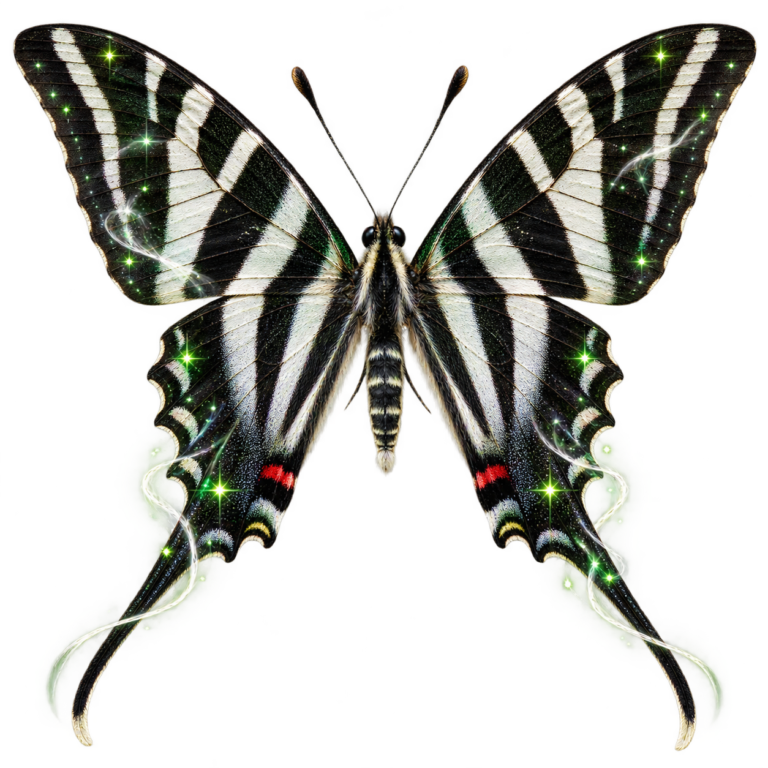
No Public Species Profiles match those filters.