Pumpkin Patch Tarantula (Hapalopus formosus) — Introduction & Overview
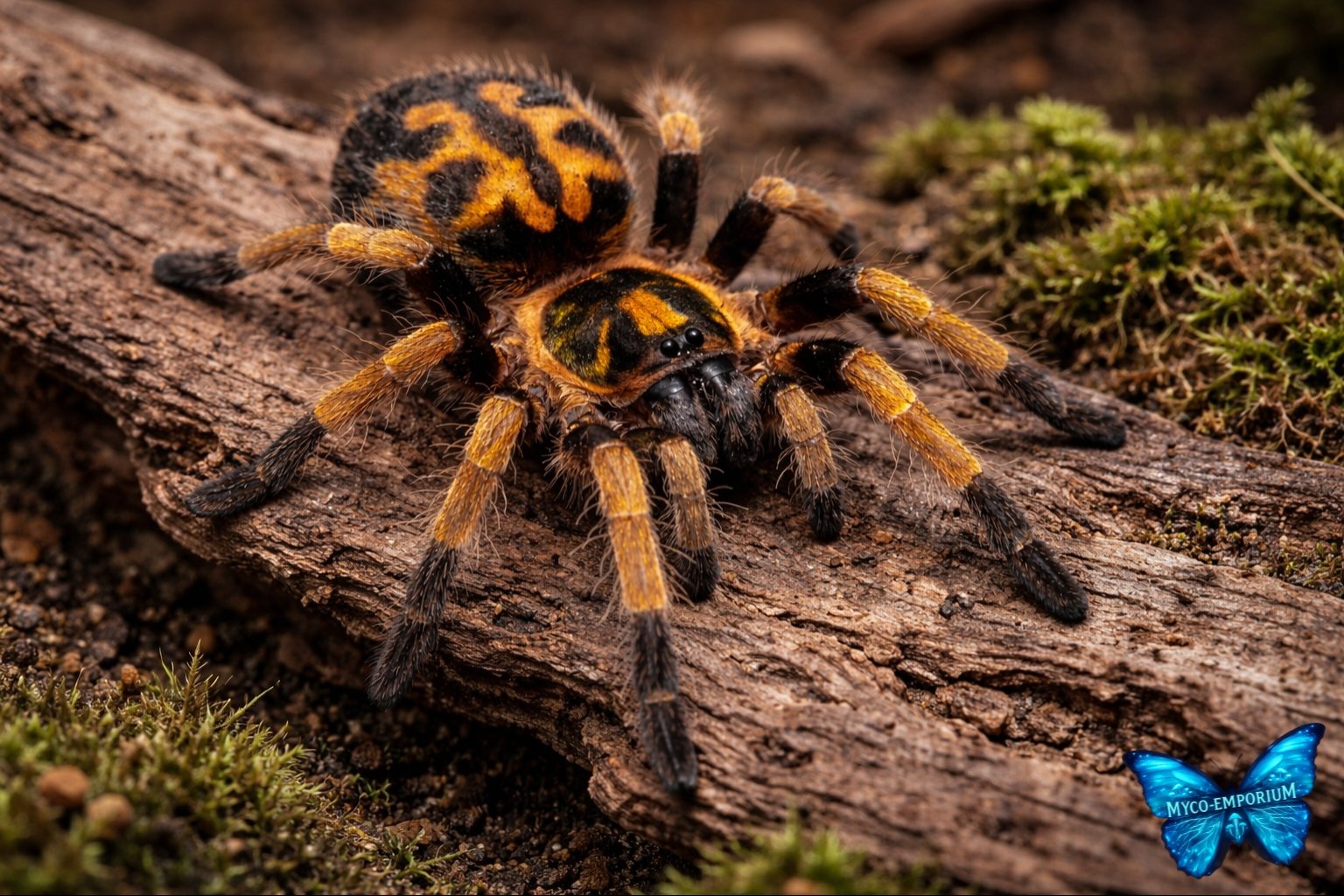
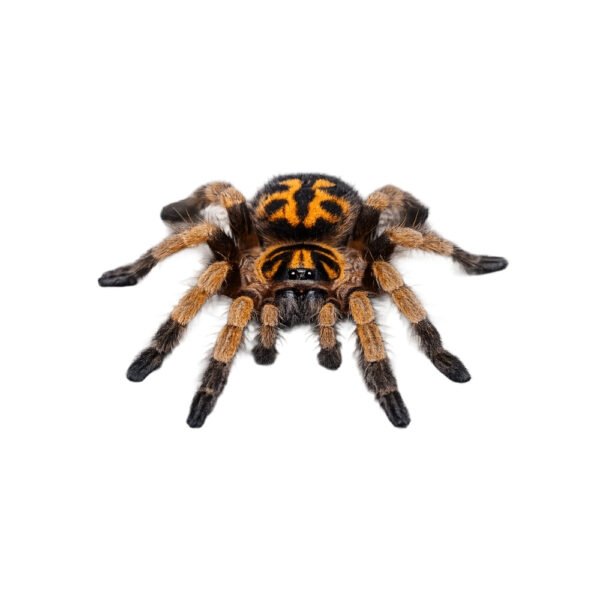
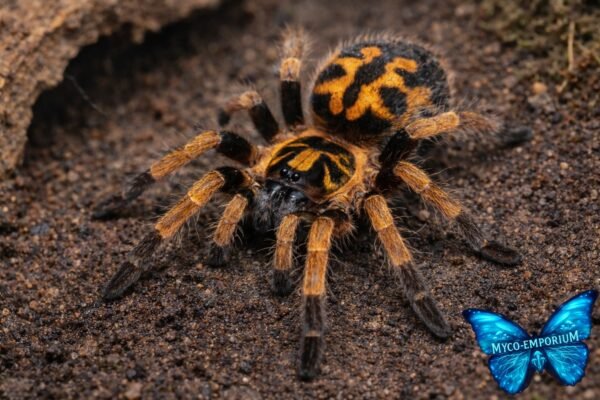
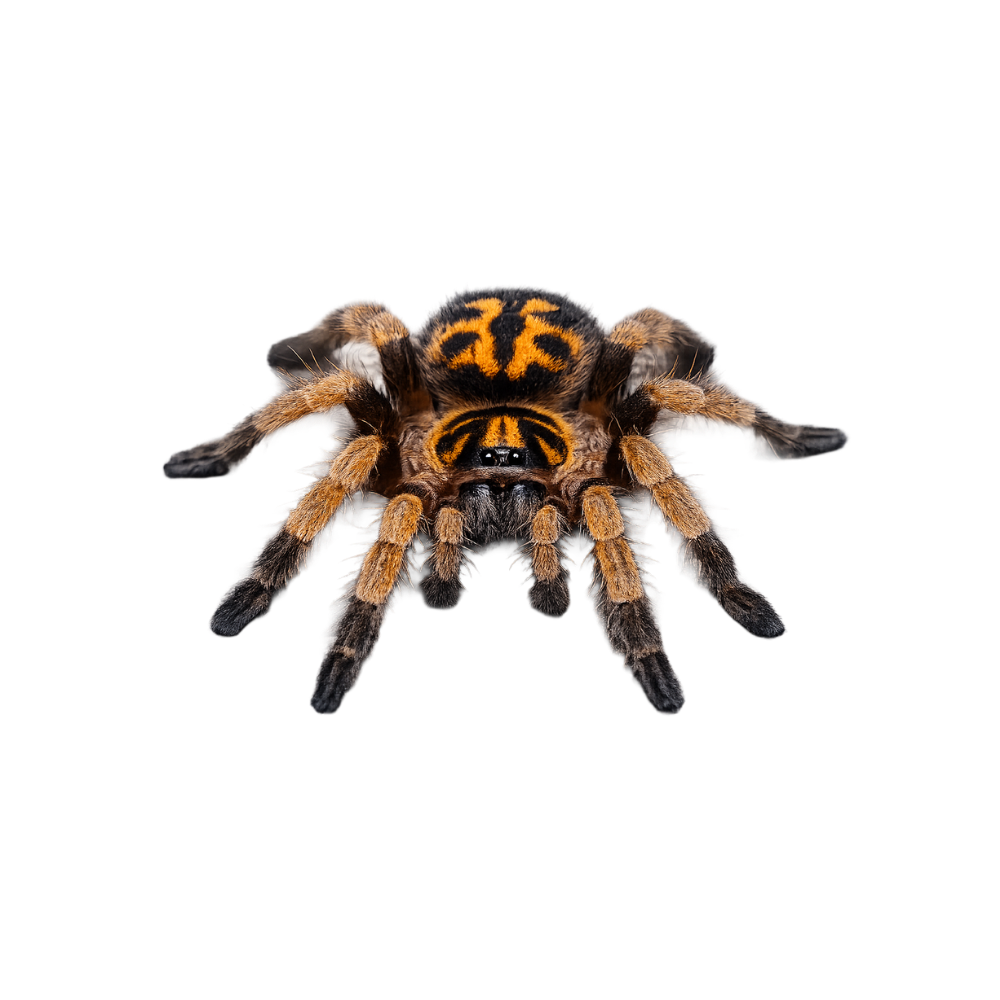
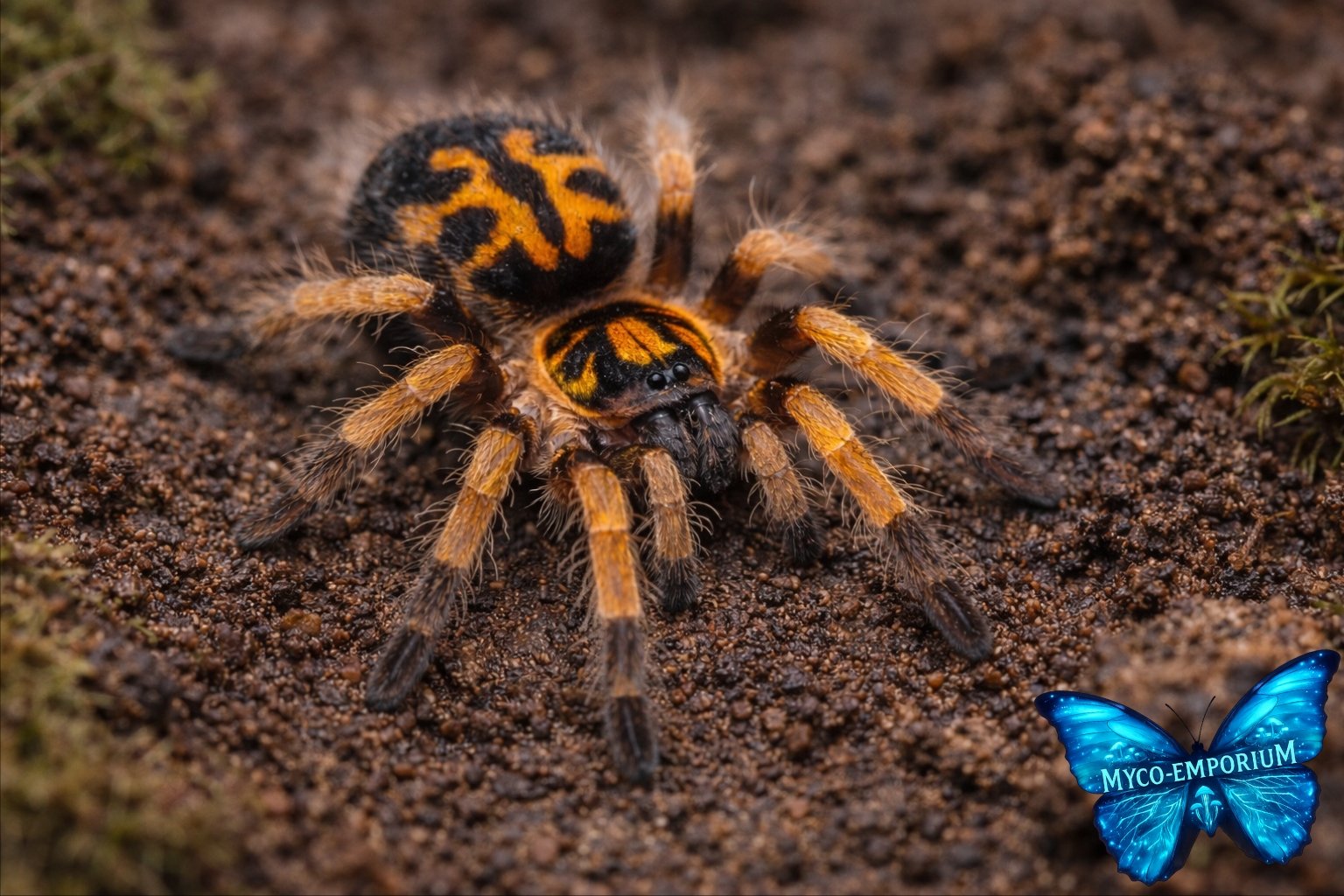
Behold the Pumpkin Patch Tarantula: a compact Colombian powerhouse rocking bold orange-on-black patterning like it raided a cosmic Halloween vault and decided to stay. Hapalopus formosus is a dwarf terrestrial that builds dense webbed bunkers, waits like a velvet ninja at the burrow mouth, and then teleports (okay, sprints) when prey taps the silk. It’s not flashy under UV—it’s flashy under existence. Small body, big attitude, and an architectural obsession with turning substrate into a silk metropolis.
Why Keep This Species
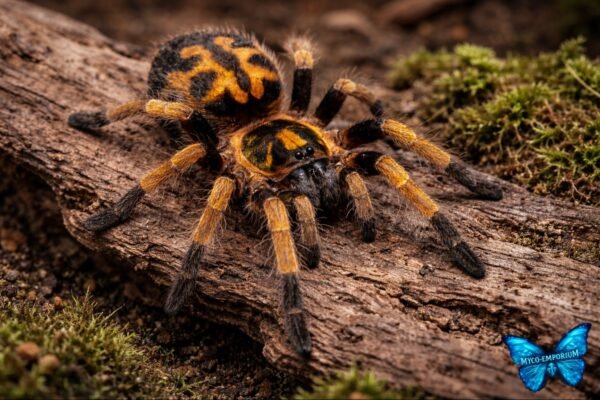
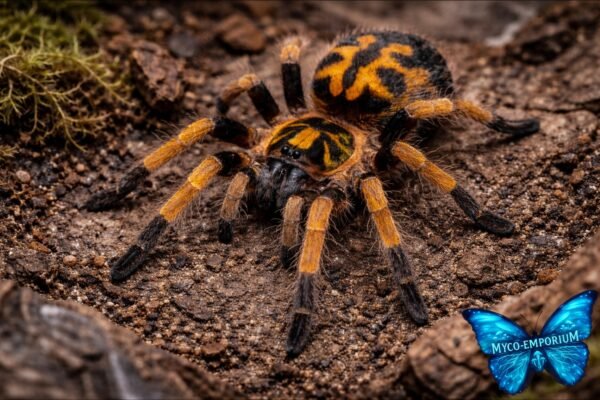
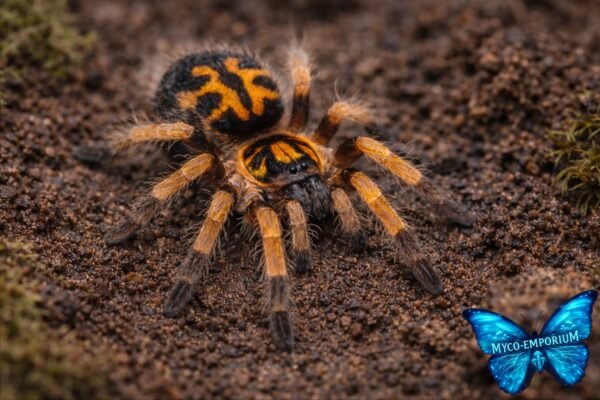
- Iconic orange “pumpkin” pattern against deep brown/black tones
- Hardy dwarf tarantula with heavy webbing behavior
- Excellent display species for observing fossorial ambush hunting
Keeper Profile
- Hands-off keeper comfortable with fast terrestrial species
- 72–82°F (22–28°C) with ~65–80% RH and strong ventilation
- Deep substrate, snug hide, clutter for web anchors
Keeper’s Summary
House adults in a secure terrestrial enclosure (~8″×8″×8″ or larger) with 3–4 inches (7–10 cm) of slightly moist substrate and a tight cork hide to initiate burrowing. Maintain ~72–82°F (22–28°C) with moderate humidity and good airflow—avoid waterlogged conditions. Provide a small water dish and lightly moisten one side of the substrate for a stable humidity gradient. Feed appropriately sized insects weekly and remove uneaten prey, especially during pre-molt. Expect heavy webbing, quick retreats, and defensive posture if pressured—observe, don’t handle.
Pumpkin Patch Tarantula - (Hapalopus formosus)
Characteristics & Temperament
Picture a velvet-black dwarf tarantula splashed with molten pumpkin constellations, quietly running an underground silk empire. Hapalopus formosus doesn’t stomp around demanding attention — it engineers it. By day, it’s a hidden architect beneath cork and substrate. By night, it’s a precision ambush predator perched at the burrow mouth like a tiny Halloween gargoyle waiting for vibrations to betray dinner. Subtle? Yes. Boring? Absolutely not.
Appearance
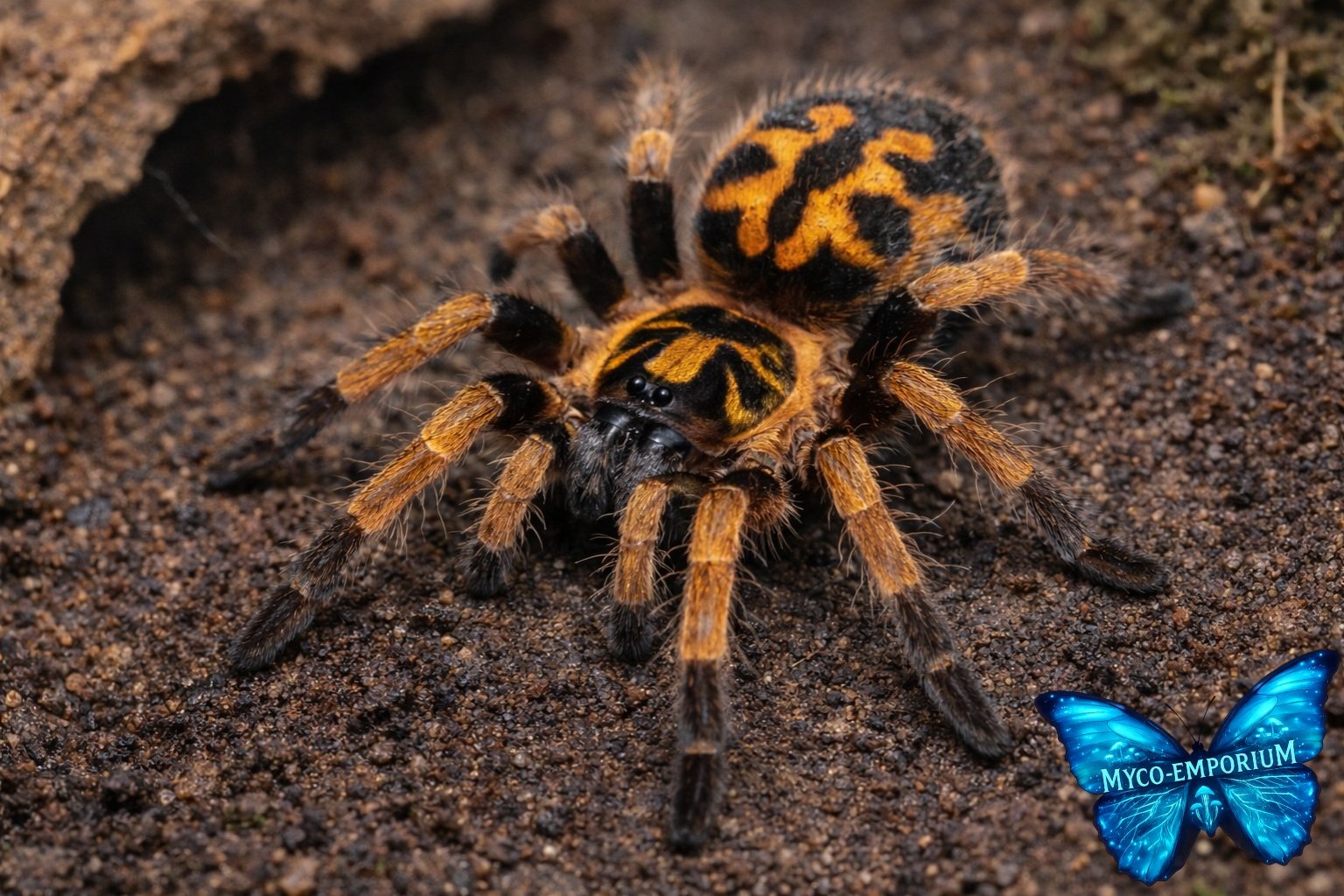
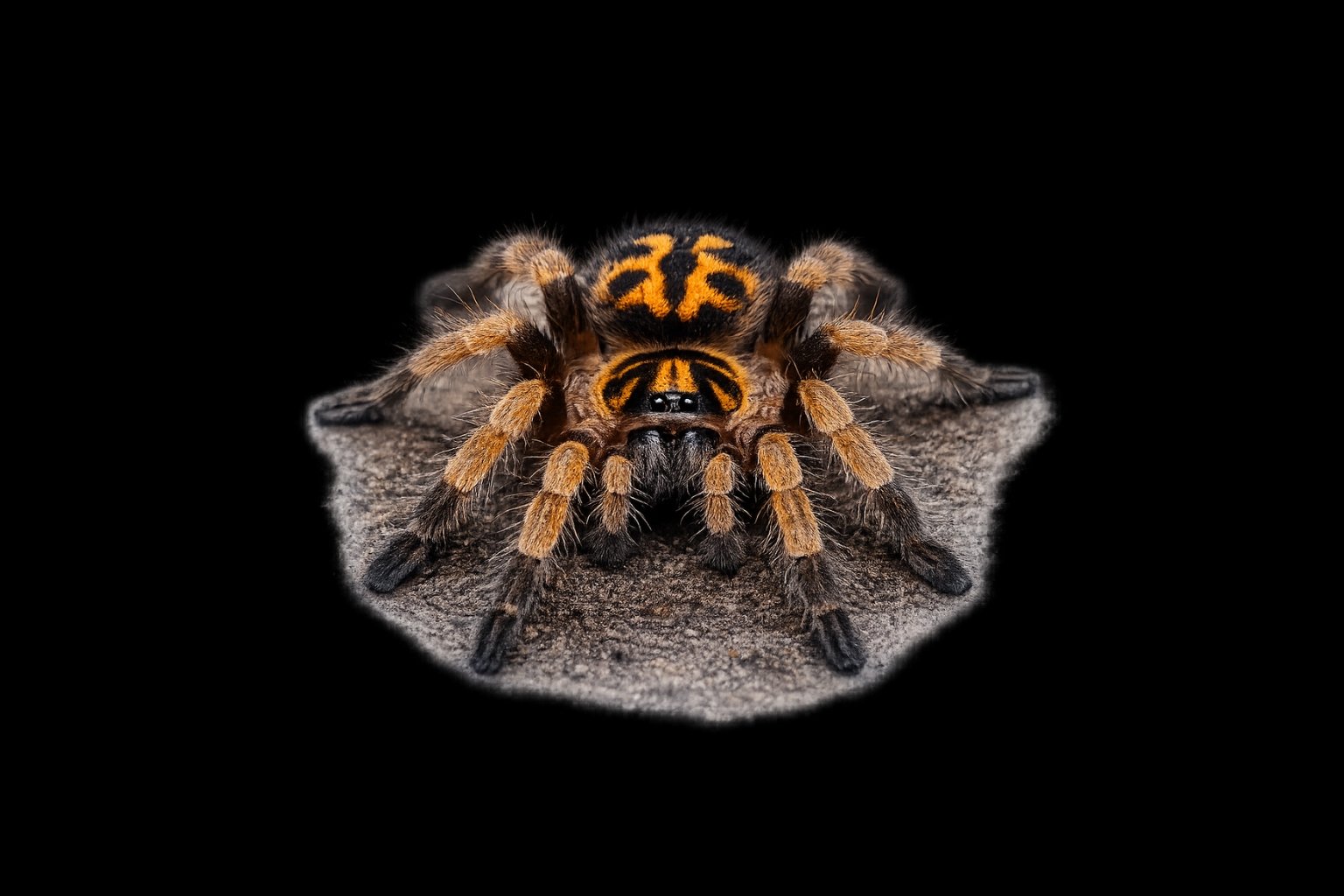
Coloration / Pattern: Deep brown to near-black base coloration contrasted with vivid orange abdominal patterning reminiscent of pumpkin patches or glowing embers. Pattern intensity can vary slightly between individuals.
Build / Form: Compact dwarf terrestrial with sturdy legs and a proportionate abdomen built for low-profile burrow living rather than vertical climbing.
Sexual Dimorphism: Females are stockier and longer-lived; mature males become leggier and slimmer with shorter lifespan.
Temperament Profile
Baseline: Skittish with rapid retreat reflexes.
Disturbance Response: Typically bolts into webbed burrow; may threat-posture if repeatedly cornered.
Defensive Behavior: New World species capable of kicking urticating hairs if stressed.
Feeding Behavior: Ambush predator; waits within webbed retreat and reacts quickly to prey vibrations.
Activity Cycle
Primarily nocturnal to crepuscular. Most visible during evening hours when webbing and feeding activity increase.
Social Housing
Solitary species. Communal setups are not recommended due to cannibalism risk and territorial competition. Best practice: single housing for long-term stability.
Quick Traits
Keeper Interpretation
- Stress Indicators: Excessive pacing, refusal to feed, remaining fully exposed without retreat, repeated defensive posturing.
- Confidence Boosters: Deep substrate, tight cork hide, consistent feeding schedule, minimal enclosure disturbance.
- Display Value: Dense webbing, striking coloration, and dramatic ambush feeding make this species an exceptional visual display tarantula.
Care Requirements
Core setup and environmental targets to keep Hapalopus formosus thriving. This dwarf web-builder prefers a secure, cluttered terrestrial setup with a moisture gradient—think “humid corner,” not “bog of doom.”
Enclosure Setup
Type: Terrestrial / Burrowing (fossorial web-builder).
Minimum Size: Adults: ~8″×8″×8″ (20×20×20 cm) or similar footprint; juveniles smaller and snug is fine.
Safety: Secure lid/locking front; cross-ventilation; cable-managed heat sources.
- Size: 8″×8″×8″ to 12″×12″×12″ (security & clutter matter more than volume)
- Lid: Secure mesh/locking front; escape-proof gaps (this species is fast when startled)
- Hides: Cork rounds/half-log + snug cork slab starter burrow; leaf litter cover
- Enrichment: Web anchors: cork, twigs, faux plants, bark, cluttered corners for silk tunnels
Substrate
Blend: Coconut fiber + organic topsoil (optional leaf litter + a little sphagnum for texture).
Depth: 3–4 in (7–10 cm) for adults; deeper is welcome if the enclosure allows.
Purpose: Burrowing support, humidity buffering, and stable footing for web-tunnel construction.
Habitat
- Water: Shallow dish; overflow/spot-moisten one corner to maintain a gradient (avoid soaking the whole enclosure)
- Décor: Cork, leaf litter, anchor sticks, hardy live/faux plants, and clutter to reduce stress
- Behavior Fit: Burrower + heavy web-builder; expect dense silk sheets and tunnel entrances
Environment Targets Set & forget (monitor)
Lighting
Ambient only with a 12L:12D photoperiod. Night viewing via dim red/low-glare light if desired.
Food & Water
- Juveniles: Small prey (pinhead/small crickets, roach nymphs) 2× weekly
- Adults: Appropriately sized roaches/crickets/locusts 1× weekly (adjust to body condition)
- Hydration: Keep a water dish available; refresh often and overflow/spot-moisten a corner as needed
- Best Time to Feed: Dusk/Night
Cleaning
- Spot-Clean: Remove uneaten prey, waste, mold after feedings.
- Deep Clean: Replace substrate every 6–12 months; rinse décor with hot water (no chemicals).