Trinidad Olive Tarantula (Neoholothele incei) — Introduction & Overview
Meet the Trinidad Olive Tarantula—an olive-toned, web-slinging micro-tank menace that turns “a simple hide” into a full-blown silk apartment complex overnight. Neoholothele incei is small but unreasonably productive: it carpet-bombs the enclosure with webbing, sets ambush points like a tiny eight-legged tactical engineer, and vanishes the second you blink too loudly. Don’t expect cuddles—expect speed, attitude, and a display that looks like a sci-fi set built by a spider with a caffeine problem.
Why Keep This Species
- Heavy webbing “terraforming” that creates a living, evolving display
- Hardy, adaptable dwarf tarantula that thrives with stable basics
- Fantastic for learning fossorial/web-builder behavior without needing a huge setup
Keeper Profile
- Hands-off species; best for calm, tool-using keepers
- 75–82°F (24–28°C) and ~60–75% RH with good ventilation
- Terrestrial/fossorial setup with depth, hides, and anchor points for web tunnels
Keeper’s Summary
Set up a secure, well-ventilated terrestrial enclosure with 3–5 inches (7–13 cm) of slightly moist substrate, a snug cork hide, leaf litter, and plenty of web anchors. Keep temps in the mid-to-upper 70s°F with a small water dish and occasional overflow/spot-moistening for humidity buffering—never swampy. Feed appropriately sized roaches/crickets and remove uneaten prey, especially around molts. Expect fast retreats, defensive postures if cornered, and a silk-heavy display; do all maintenance with tools and a catch cup, not bare hands.
Trinidad Olive Tarantula - (Neoholothele incei)
Characteristics & Temperament
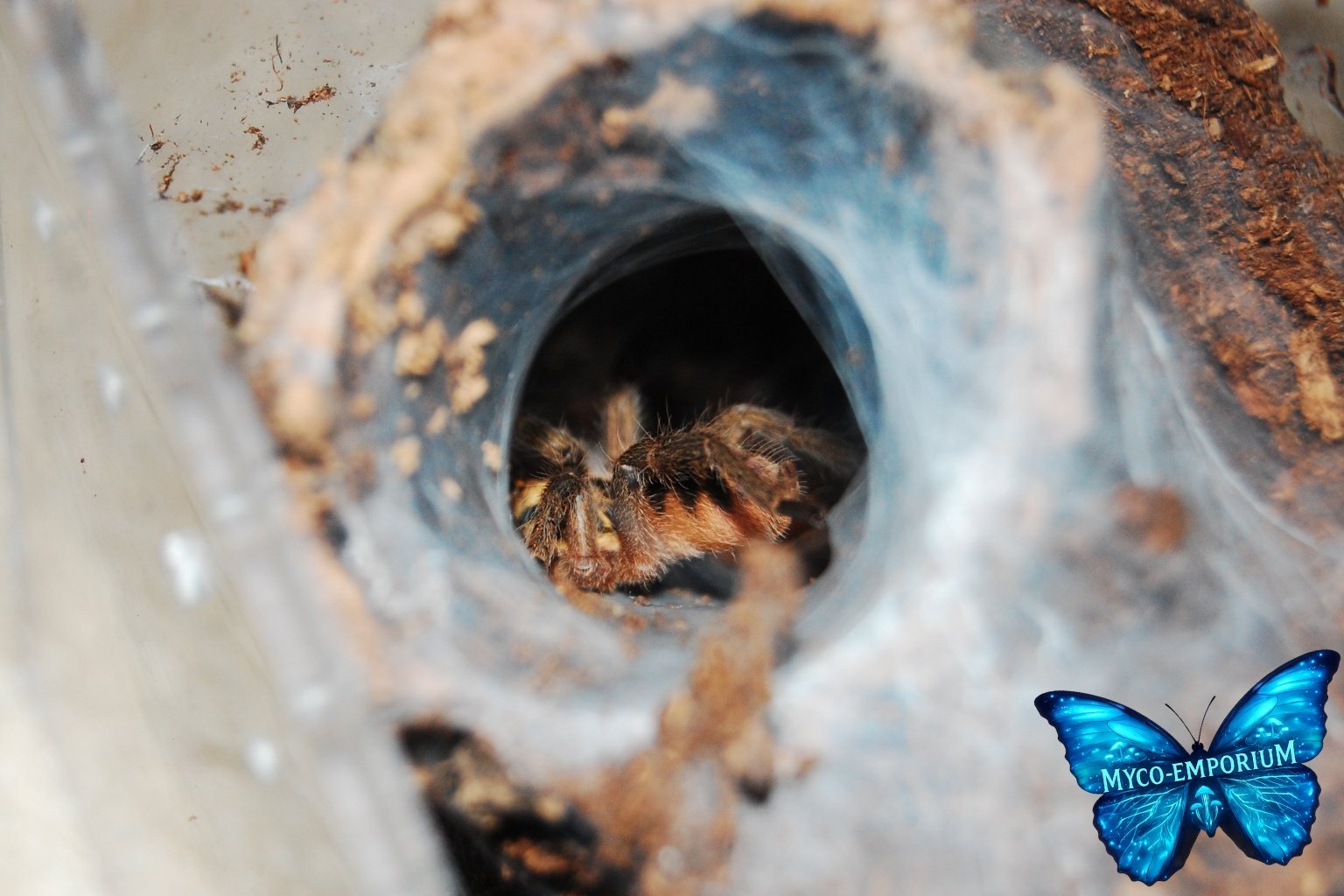
Picture Neoholothele incei like an alien interior designer who only works in “100% silk, 0% consent.” One minute the enclosure looks normal; the next it’s a neon-lit spider subway system—tunnels, trapdoors, and web hammocks strung up like it’s auditioning for a cosmic HGTV pilot. This dwarf tarantula is hardy and gorgeous in a low-key olive way, but it’s also fast, private, and absolutely not here to be handled. Your reward, Myco-Patrons, is pure observation: a tiny predator running a whole stealth economy under the cover of night.
Appearance
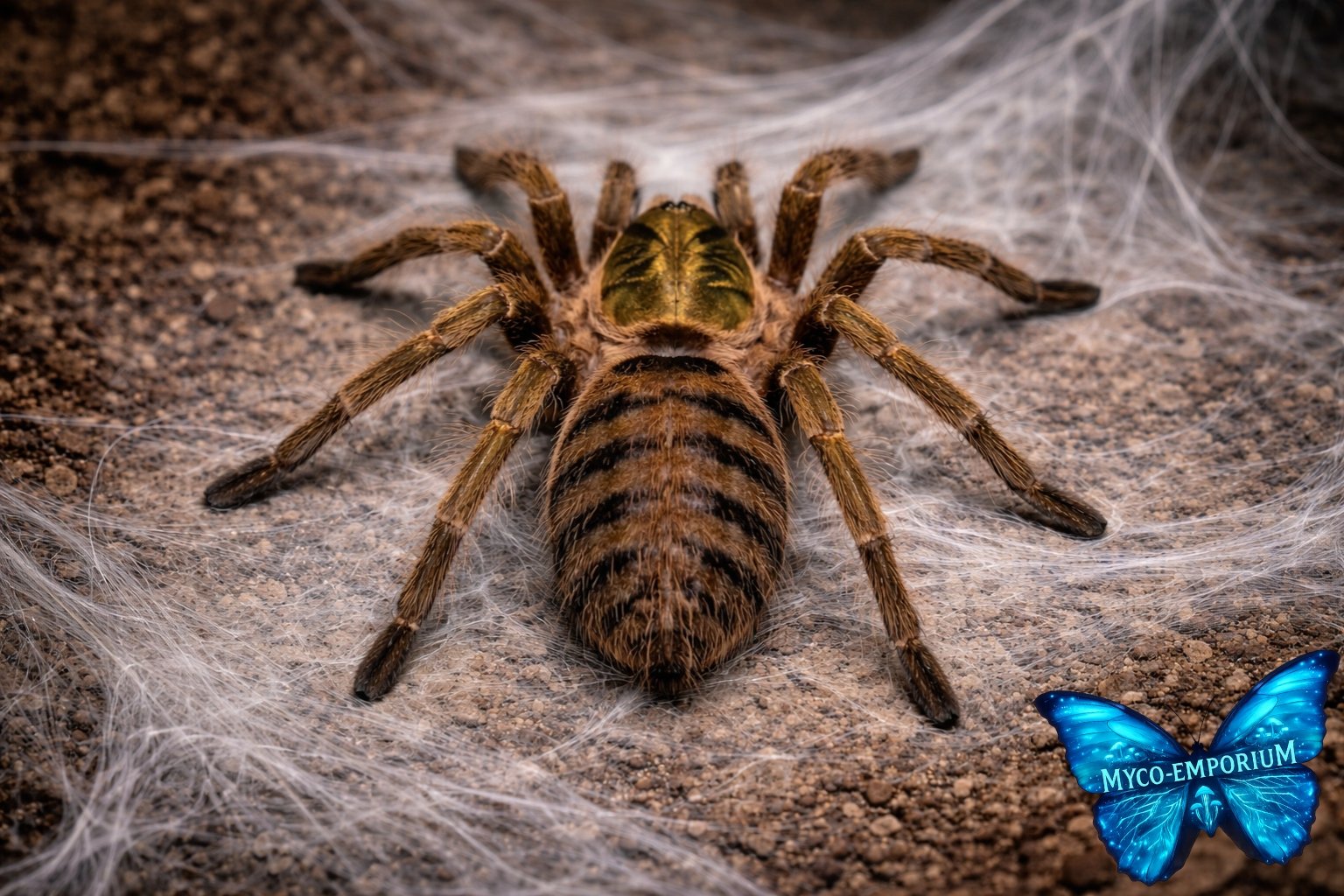
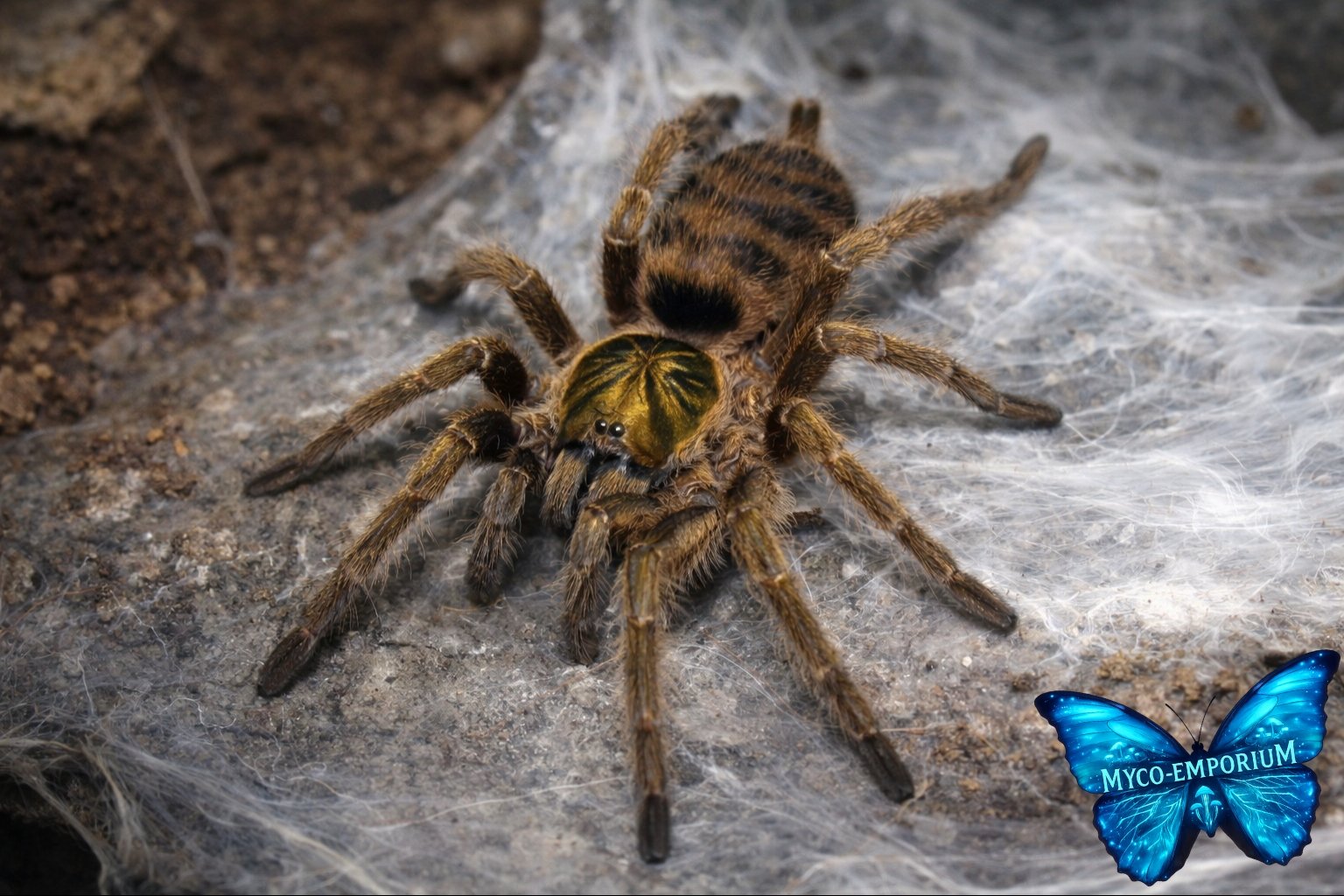
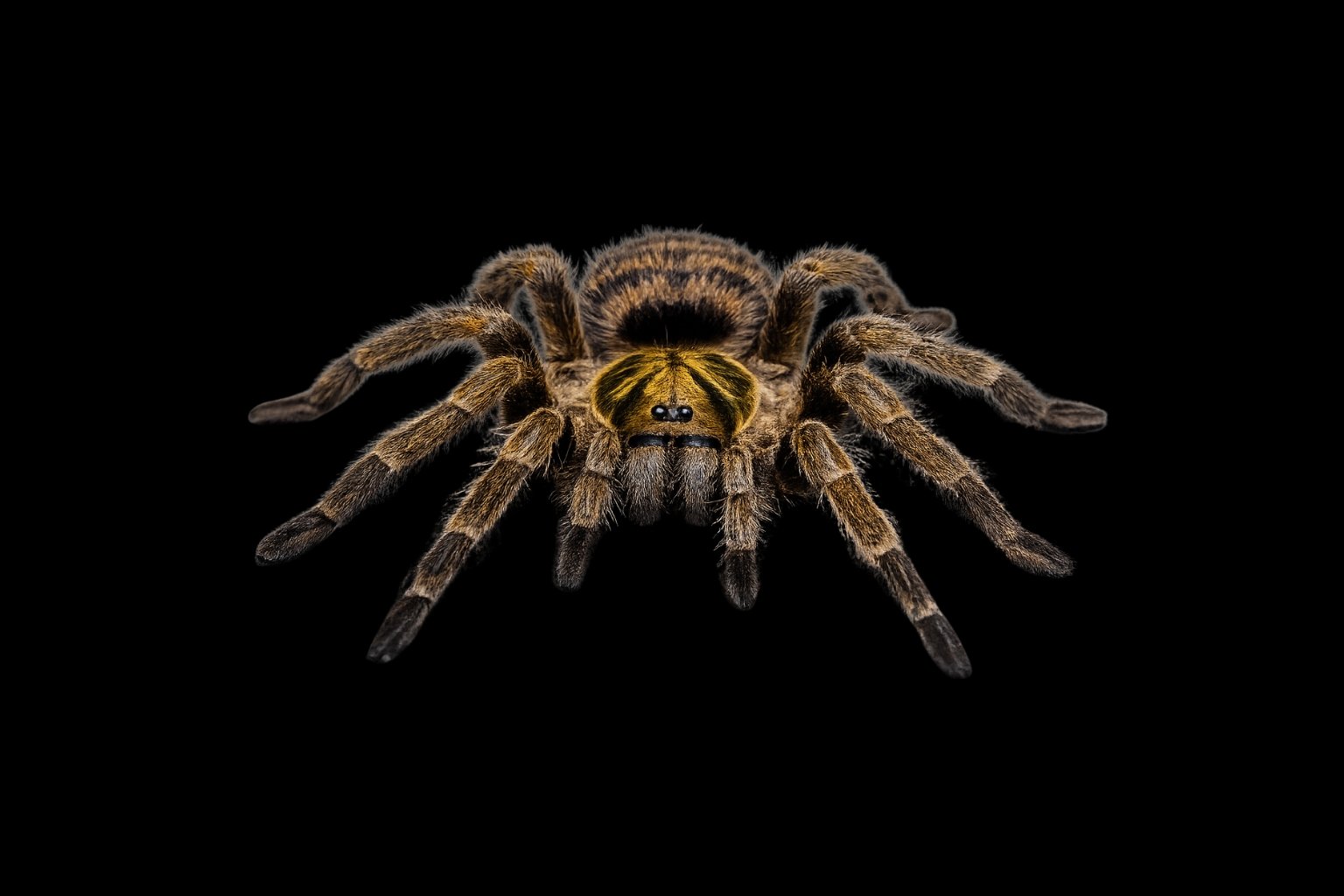
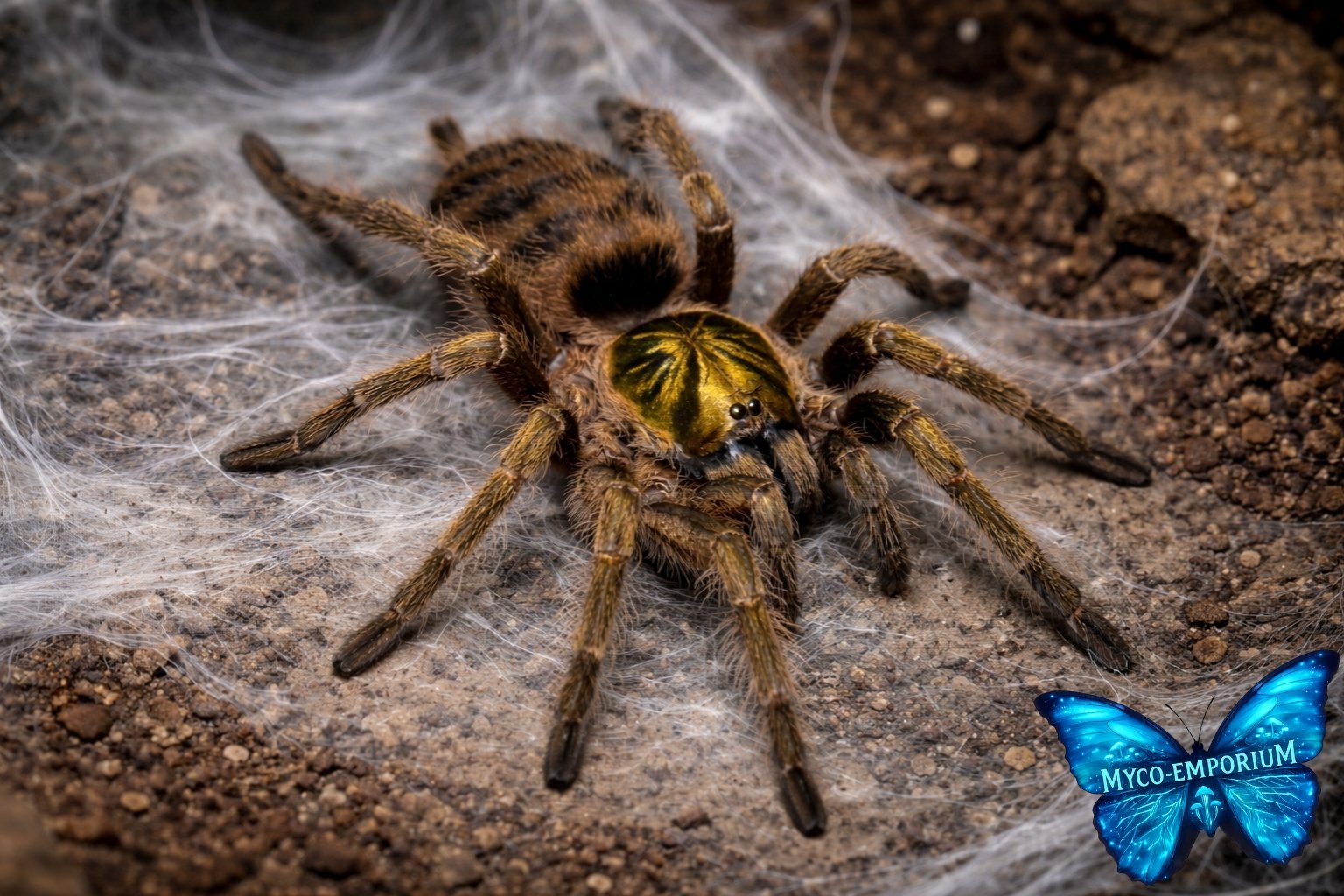
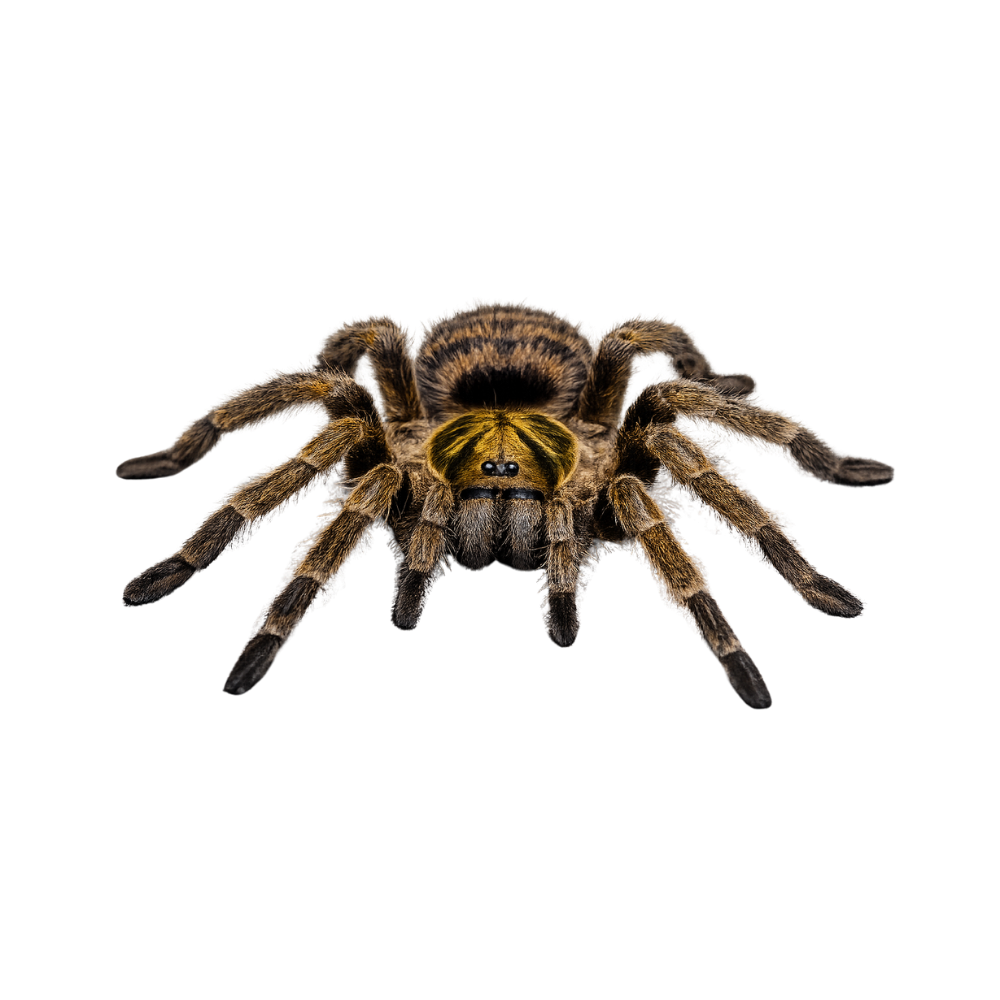
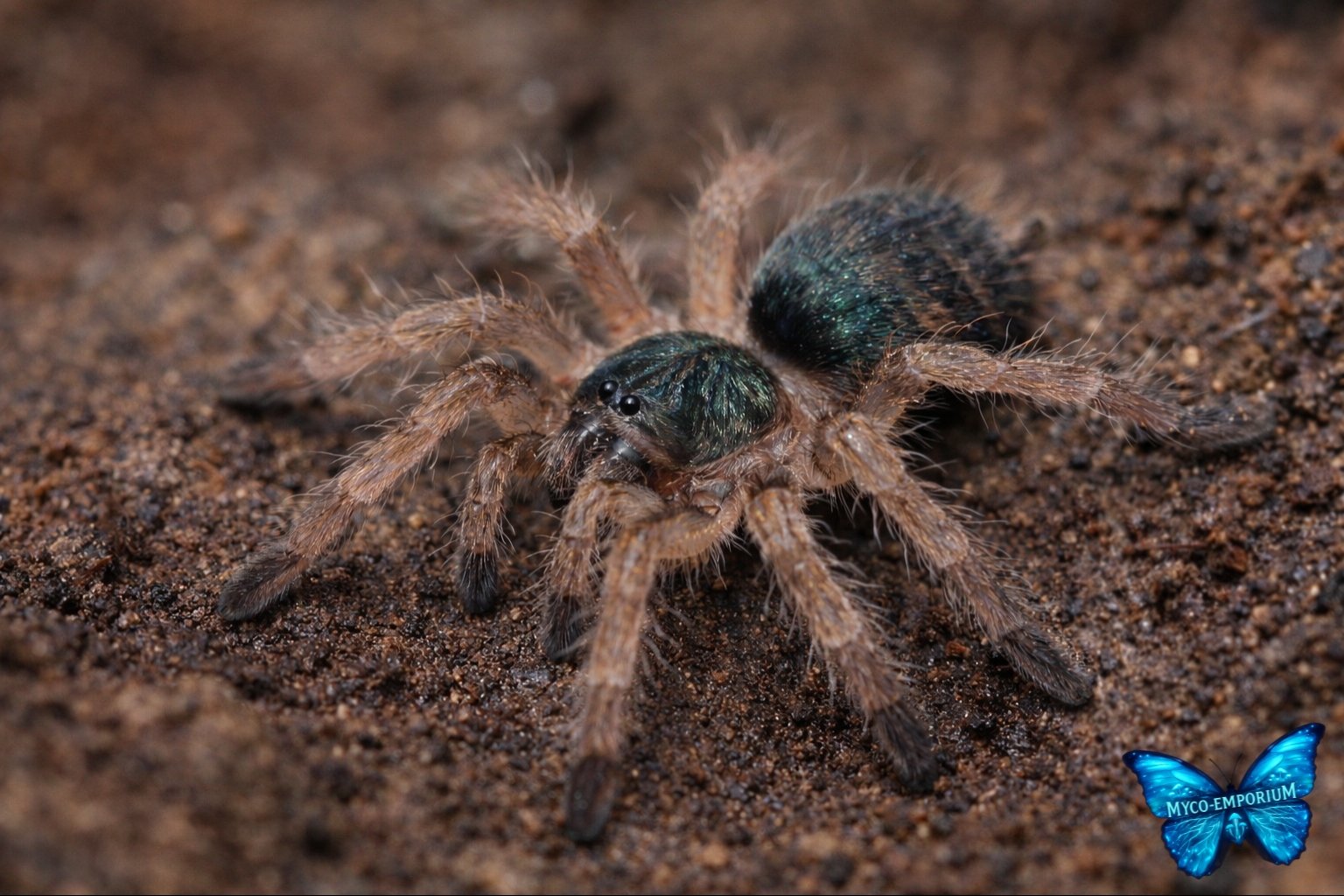
Coloration / Pattern: Olive-brown to earthy tan tones with subtle contrast; overall “forest-floor stealth mode,” with
females often appearing stockier and more robust than mature males.
Build / Form: Compact dwarf tarantula with proportionate legs and a sturdy abdomen; built for quick retreats and
silk-based ambush living rather than open-area posing.
Light Response: No true UV glow—its flex is architectural: dense webbing that catches light and reveals the hidden
tunnel map like a conspiracy board made of silk.
Temperament
Baseline: Skittish to defensive. Tends to hide and “web-vanish” during daylight, with most activity at night.
Response to Disturbance: Usually bolts into web tunnels or freezes; if cornered, may threat-posture and may bite—keep
hands out of the blast radius.
Feeding Style: Ambush predator and opportunist; snaps up prey that touches the web network, most responsive at dusk/night.
Social Housing
Has some communal potential in captivity when given space, heavy feeding, and many retreats, but cannibalism and resource competition are always on the table. Default recommendation: House singly for maximum safety and stress reduction.
Quick Traits
Keeper Notes
- Stress Signs: Refusal to feed, frantic pacing, constant exposure with no retreat, repeated threat postures when the enclosure is opened.
- Confidence Builders: Tight cork hide, deep substrate, lots of web anchors, low vibration/traffic area, consistent feeding cadence.
- Display Tips: Keep cluttered “web-friendly” décor; use dim ambient lighting and observe at night with low-glare light (no harsh spotlighting).
Care Requirements
Core setup and environmental targets to keep Neoholothele incei thriving. Replace the bracketed fields with species-accurate values.
Enclosure Setup
Type: Terrestrial/Burrowing (fossorial web-builder).
Minimum Size: ~8″×8″×8″ (or similar) for adults; larger is fine if security/clutter is maintained.
Safety: Secure lid/locking front; cross-ventilation; cable-managed heat sources.
- Size: 8″×8″×8″ to 12″×12″×12″ (small but secure beats huge and exposed)
- Lid: Secure, escape-proof (this species is fast and will take openings personally)
- Hides: Cork half-round/flat cork slab starter burrow; leaf litter cover
- Enrichment: Web anchors: cork, twigs, faux plants, bark, cluttered corners
Substrate
Blend: Coconut fiber + organic topsoil (optionally a little moss/leaf litter for structure).
Depth: 3–5 in (7–13 cm) to support retreats and web-tunnel foundations.
Purpose: Retreat-building, humidity buffering, and stable footing for rapid “nope” maneuvers.
Habitat
- Water: Small shallow dish; overflow/spot-moisten one corner as needed (avoid waterlogged substrate)
- Décor: Cork, leaf litter, anchor sticks, hardy faux/live plants (pothos, etc.), clutter for security
- Behavior Fit: Web-builder + fossorial retreat maker; will lace everything into a silk bunker
Environment Targets Set & forget (monitor)
Lighting
Ambient only with a 12L:12D photoperiod. Night viewing via dim, low-glare light if desired.
Food & Water
- Juveniles: Prey about the size of the abdomen (or smaller) 2–3× weekly
- Adults: Small roaches/crickets/locusts 1× weekly (adjust to body condition)
- Hydration: Keep a water dish available; lightly moisten a corner as needed and refresh water often
- Best Time to Feed: Dusk/Night
Cleaning
- Spot-Clean: Remove uneaten prey, waste, mold after feedings.
- Deep Clean: Replace substrate every 6–12 months; preserve webbed cork/hide pieces if possible to reduce stress.