Guyana Pink Toe Tarantula — Avicularia avicularia — Introduction & Overview
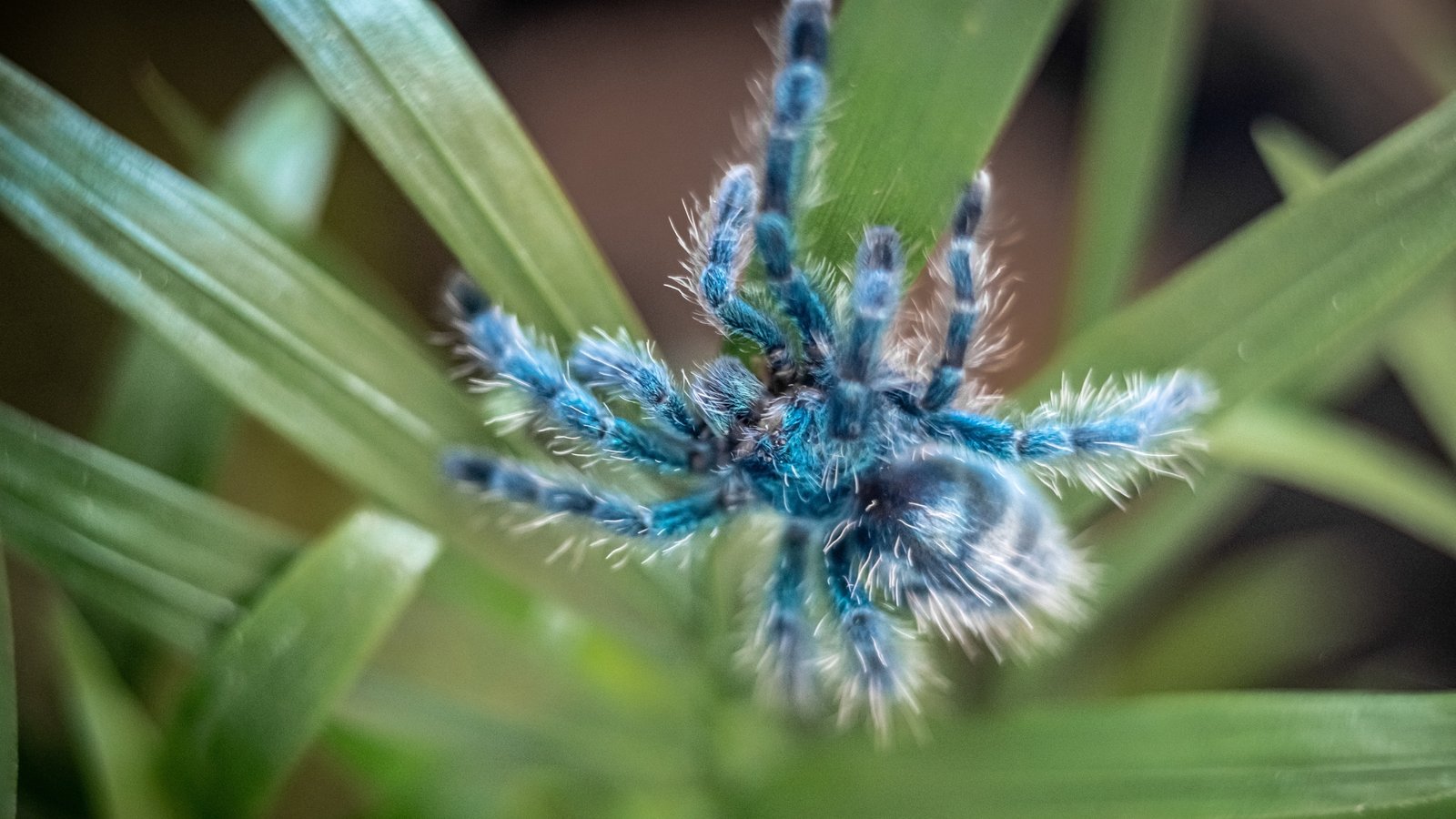
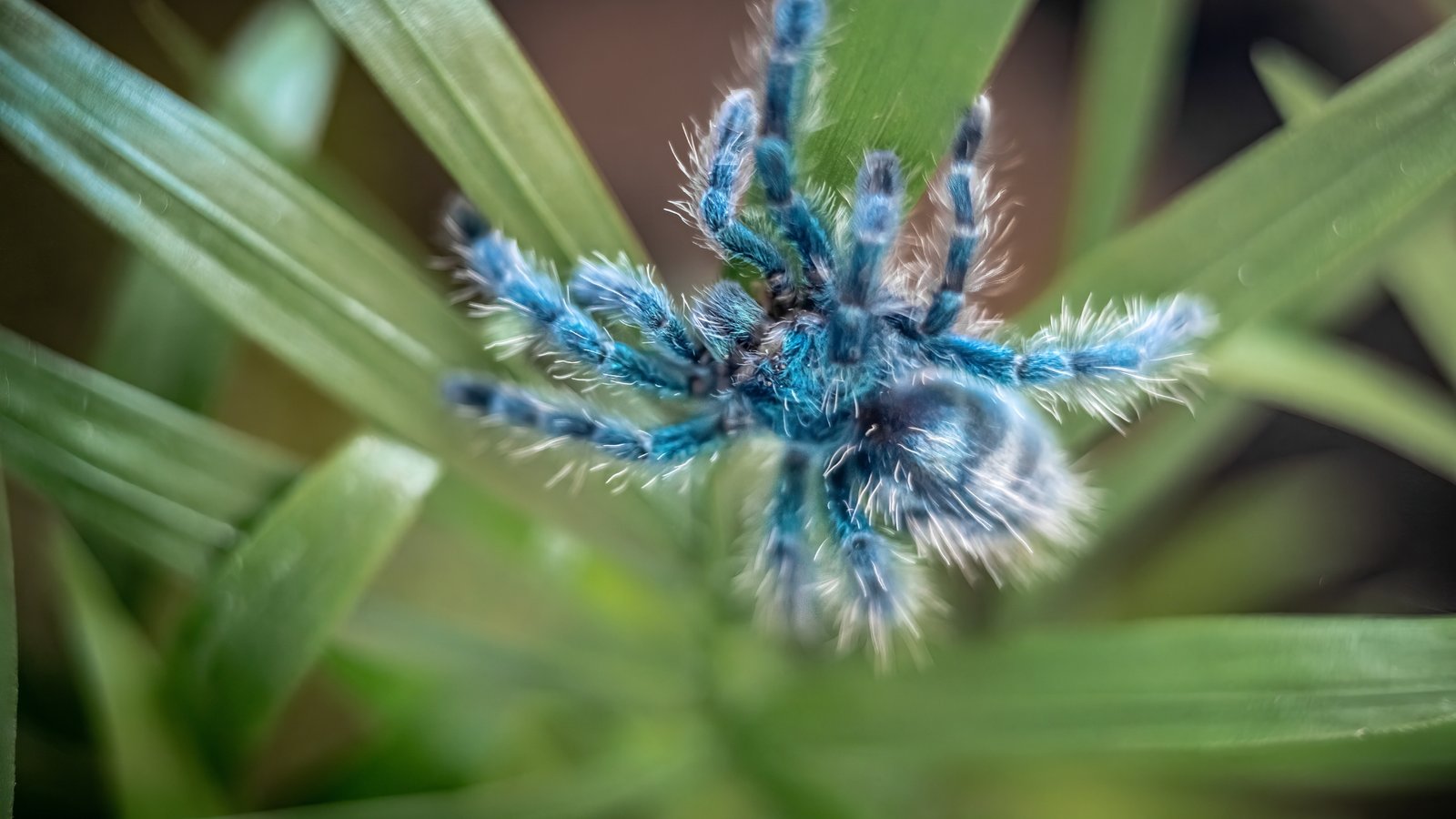
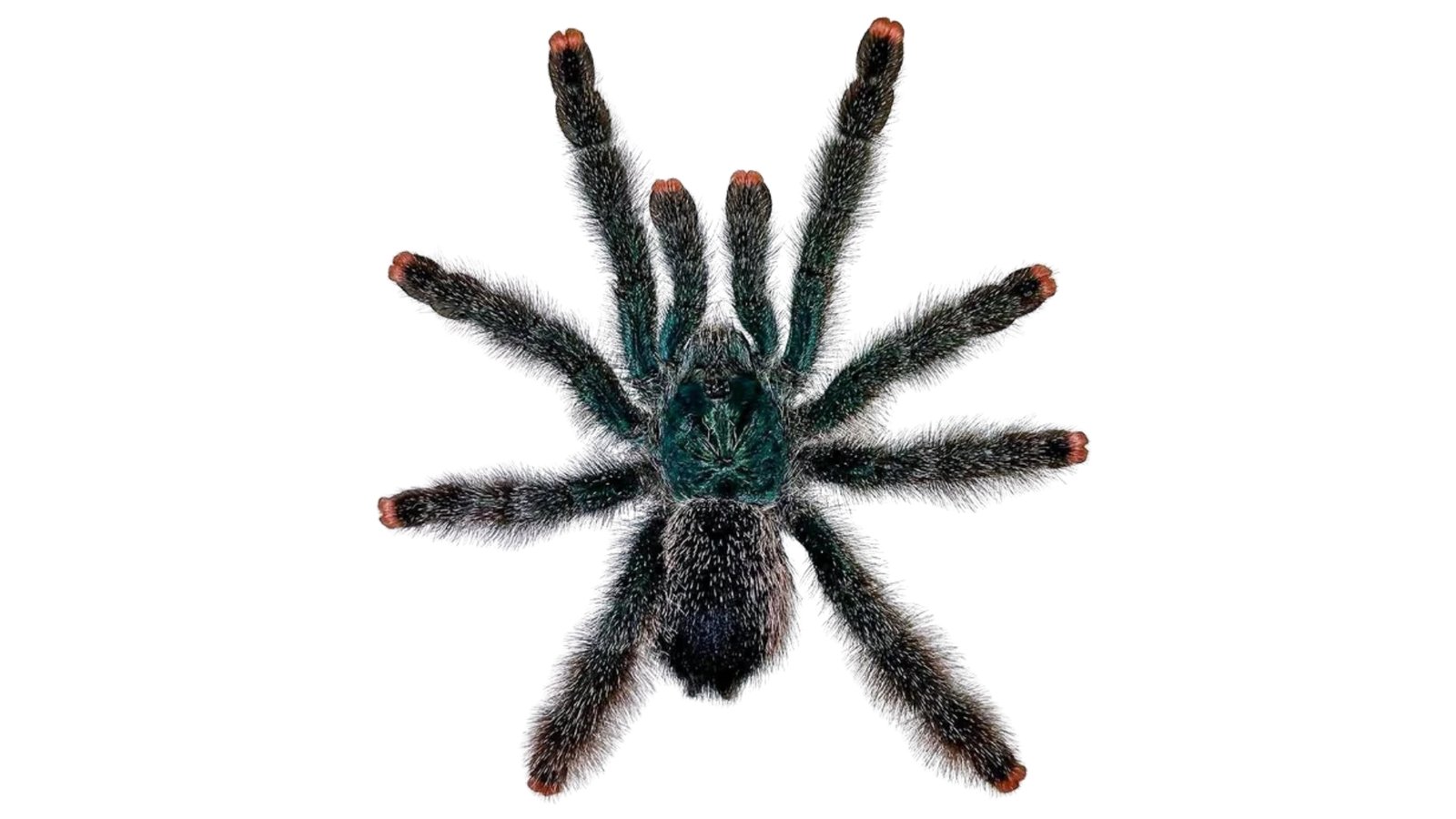
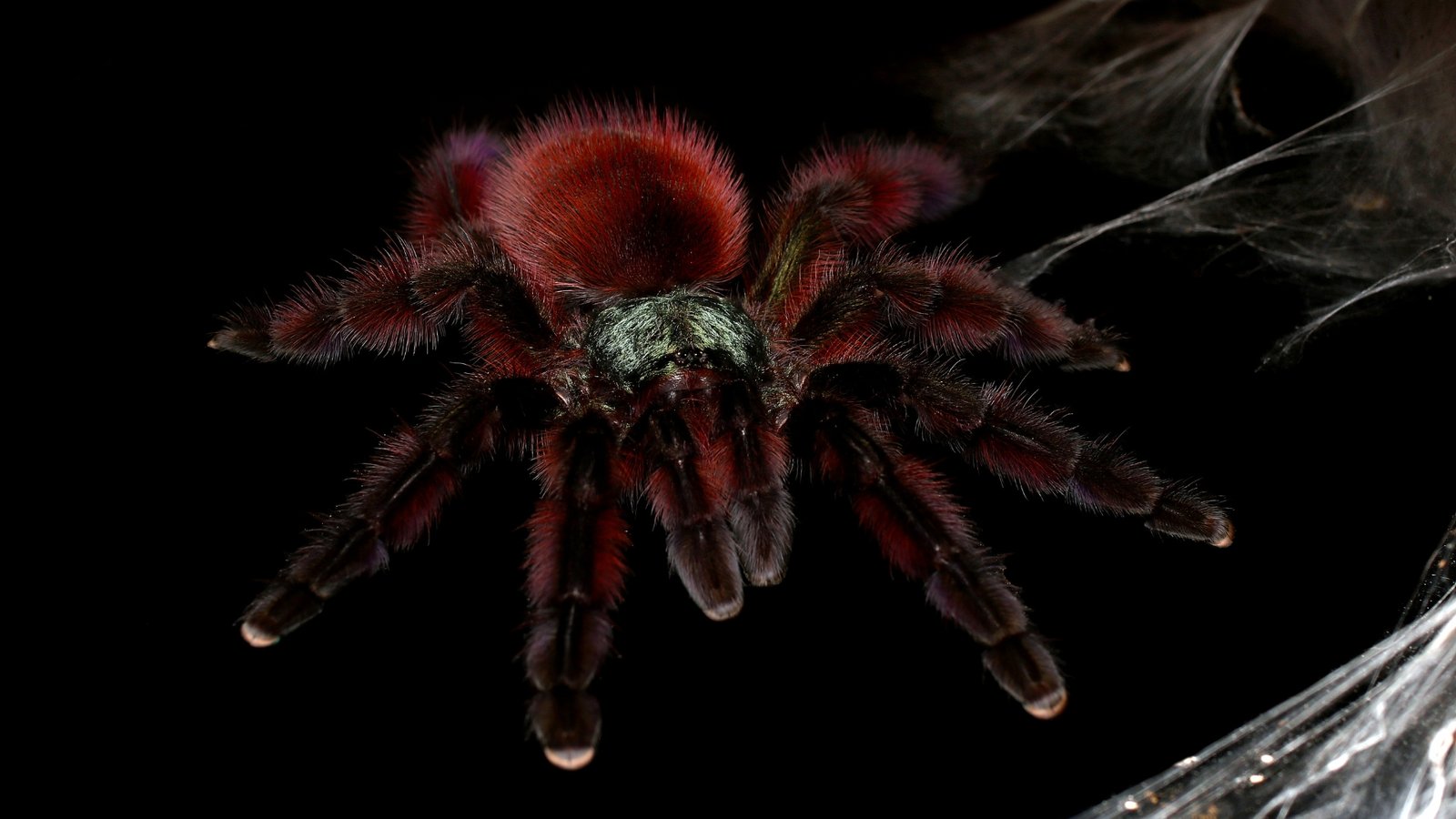
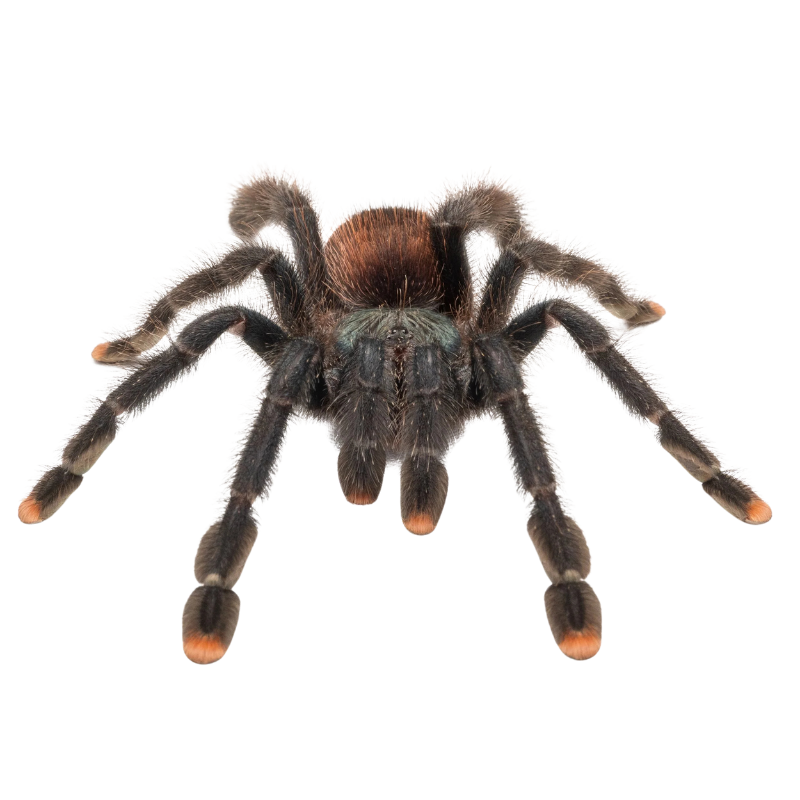
A velvet-bodied arboreal tarantula trimmed in neon-pink toes, the Guyana Pink Toe is an evergreen favorite for display enclosures. By night it weaves airy tube webs among branches; by day it perches like a living ornament. Under brief UV/blacklight it can exhibit a subtle teal-green fluorescence, adding to its “wow” factor—yet this species’ true magic is its calm, watchful presence and captivating tree-top lifestyle.
Why Keep This Species
- Striking contrast: dark carapace with pink toe pads and iridescent sheen.
- Forgiving care when ventilation is prioritized; thrives in vertical, planted builds.
- Fascinating arboreal behaviors: web hammocks, graceful climbing, occasional short jumps.
Keeper Profile
- Handling stance: hands-off / experienced only—quick, delicate, and can leap.
- Climate targets: 72–80 °F (22–27 °C), 65–75% RH with strong cross-ventilation.
- Habitat approach: vertical cork rounds, dense foliage, high airflow; shallow, moisture-buffering substrate.
Keeper’s Summary
House adults in a tall, secure, well-ventilated arboreal enclosure with a vertical cork tube and multiple anchor points for webbing. Keep substrate slightly moist under plants while allowing the overall enclosure to breathe—stale, wet air is the enemy. Offer a clean water dish and light misting to provide droplets on webbing/foliage. Feed appropriately sized roaches or crickets weekly (juveniles more often). Avoid handling; guide with a catch cup when servicing. With airflow + hydration in balance, Avicularia avicularia is a stunning, low-odor display animal that rewards thoughtful setup.
🐾 Guyana Pink Toe — Avicularia avicularia
- Common Name(s): Guyana Pink Toe, Pinktoe Tarantula, Common Pinktoe
- Scientific Name: Avicularia avicularia
- Native To: Northern South America — Guyana, Suriname, French Guiana, Venezuela, Trinidad & Tobago, N. Brazil
- Adult Size: Legspan ~4.5–5.5 in (11–14 cm); females larger/heavier than males
- Life Span: Females 8–12+ years; Males 2–3 years
- Difficulty: Beginner–Intermediate (arboreal; requires high ventilation and balanced humidity)
Characteristics & Temperament
A quick, observation-driven profile of Avicularia avicularia—what you’ll see, and how it tends to behave.
Appearance
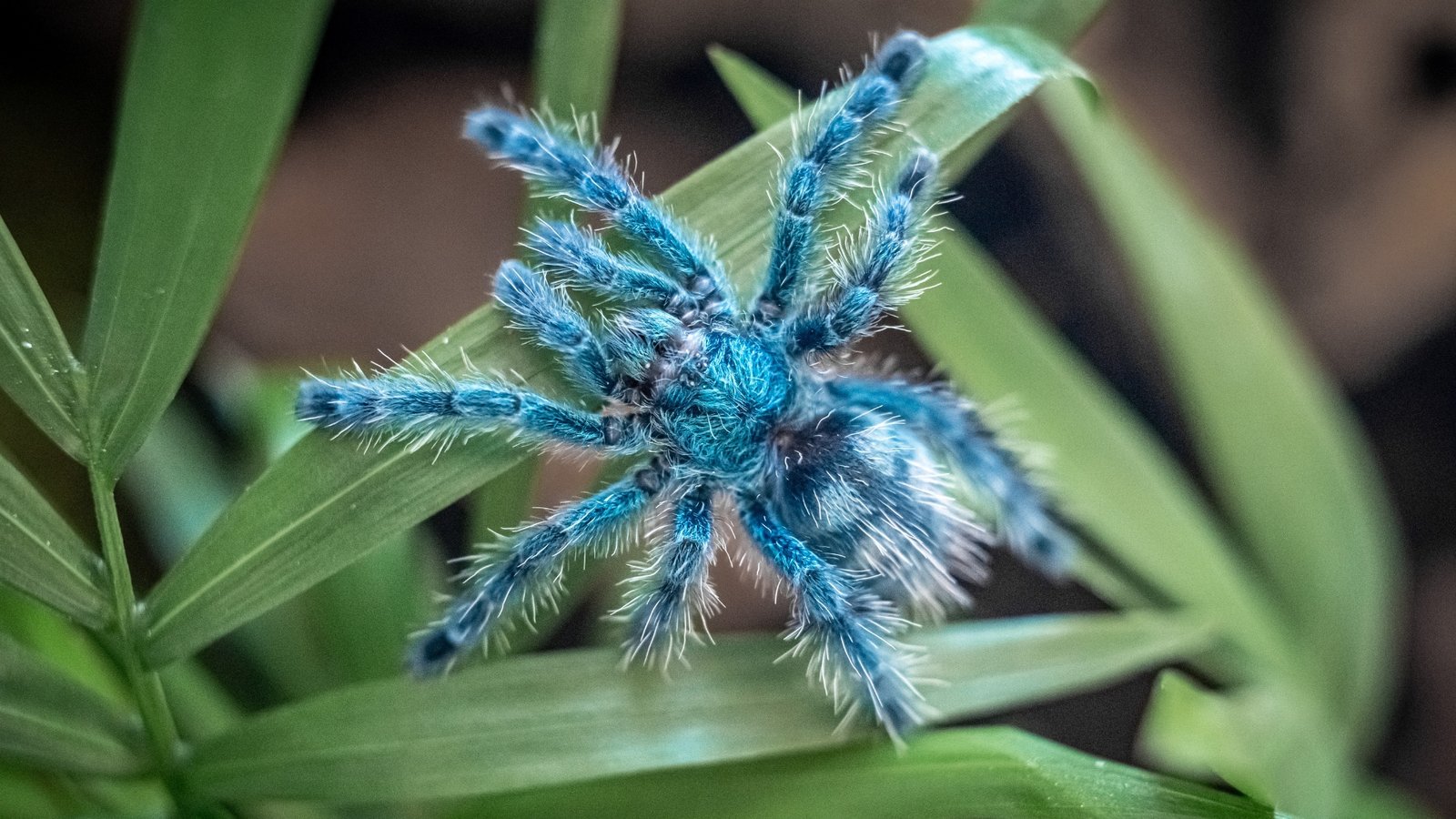
- Coloration / Pattern: Charcoal to brown-black with subtle blue-green iridescence; iconic bubble-gum pink toe tips on each tarsus.
- Build / Form: Light, athletic arboreal frame with longer legs; spinneret area often more prominent due to aerial webbing.
- Light Response: Under brief UV/blacklight, cuticle can fluoresce a soft teal/green; use only for short viewing sessions.
Temperament
- Baseline: Generally calm but skittish; prefers to retreat into web hammocks. Most active crepuscular to nocturnal.
- Response to Disturbance: Often backs away or bolts upward; may “parkour” short jumps between anchors.
- Feeding Style: Opportunistic aerial hunter; best response at dusk/night on webbing or branches.
Social Housing
Solitary. Do not cohabit except for monitored breeding by experienced keepers. Provide generous anchor points to reduce stress.
Quick Traits
Keeper Notes
- Stress Signs: Persistent roaming, refusal to feed, spending time low on substrate, or hugging high-traffic glass.
- Confidence Builders: Tall cork tube, dense foliage, cross-ventilation, consistent dusk feeding routine.
- Display Tips: Low-glare lighting; observe at night with red/UV-safe light for a few minutes max.
Care Requirements
Core setup and environmental targets to keep Avicularia avicularia thriving.
Enclosure Setup
- Type: Arboreal display with strong cross-ventilation.
- Minimum Size (adult): ~12″×12″×18″ tall (30×30×45 cm). Larger bioactive builds (e.g., 18″×18″×24″) enhance display.
- Safety: Secure lid/doors, cable-managed heat; prevent tall falls onto hard décor.
- Size: 18–24 in tall preferred for adults
- Lid: Fine mesh or front-opening with vent panels
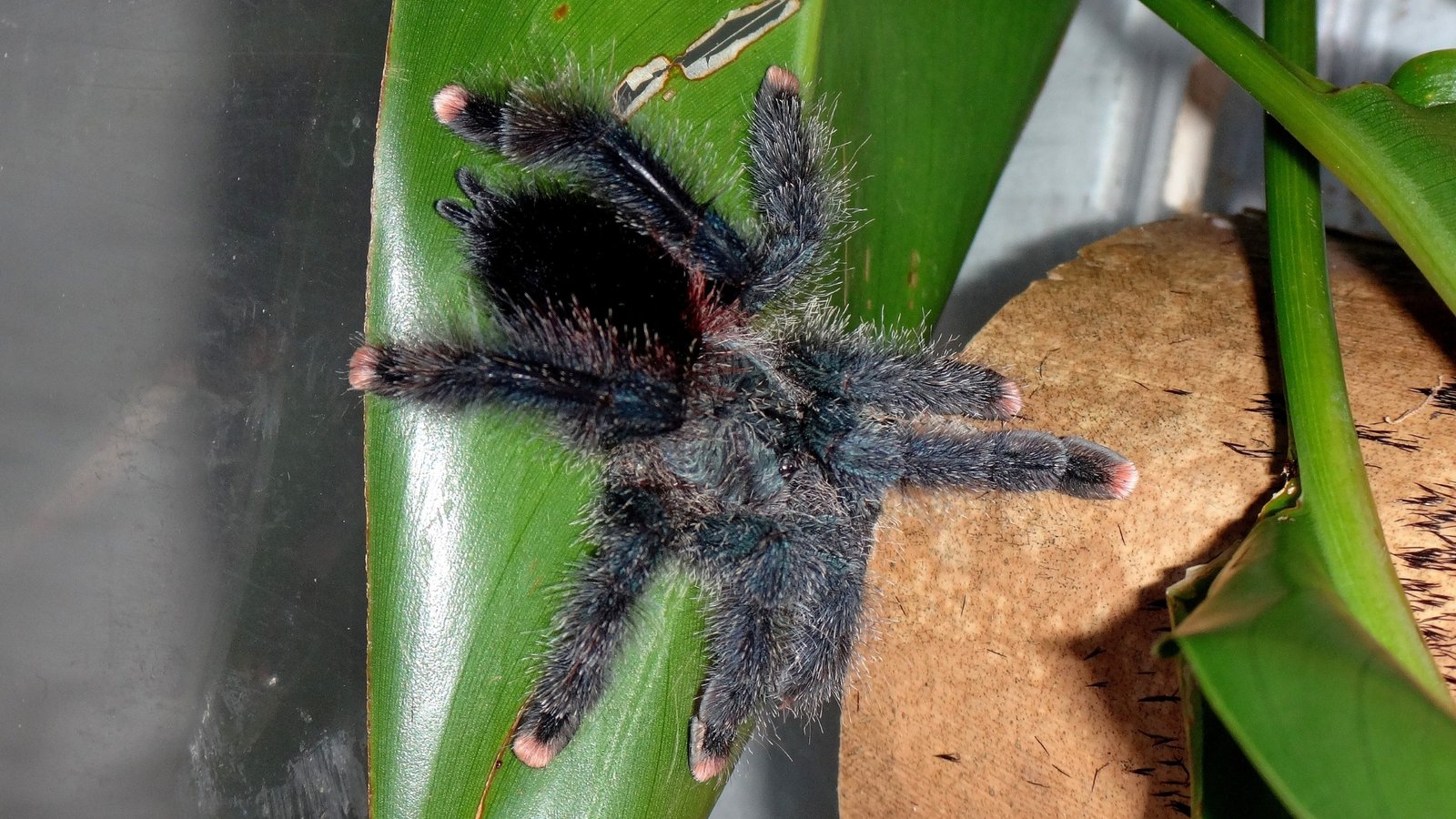
- Hides: Vertical cork tube/rounds; dense faux/live foliage to anchor web hammocks
- Enrichment: Branches, bark flats, vine anchors, varied perch diameters
Substrate
- Blend: Coco fiber + topsoil with sphagnum pockets and leaf litter.
- Depth: 1–2″ (2.5–5 cm) for moisture buffering (not a burrower).
- Purpose: Supports plants/microfauna; stabilizes humidity without stagnation.
Habitat
- Water: Always provide a small water dish; lightly mist foliage/webs 2–3× weekly for droplets.
- Décor: Cork tubes, branches, bromeliads/epiphyte-style mounts, hardy vines.
- Behavior Fit: Climber/web-builder; spends most time elevated in web hammocks.
Environment Targets Set & monitor
Lighting
Room/ambient light only; no UVB required. Provide a 12L:12D photoperiod. Night viewing via red/UV-safe light in brief sessions.
Food & Water
- Juveniles: Pinheads/small crickets or small dubia 2–3× weekly; prey ≲ abdomen length.
- Adults: 1–2 appropriately sized insects every 7–10 days (roaches, crickets, occasional locusts). Remove uneaten prey within 24 h.
- Hydration: Fresh water dish; light misting to create droplets on webbing/foliage.
- Best Time to Feed: Dusk/night for strongest strike response.
Cleaning
- Spot-Clean: After feedings; remove boluses, dead prey, mold.
- Deep Clean: Refresh substrate every 6–12 months; rinse décor with hot water only (no chemicals/soaps).