Pacman Frog (Ceratophrys cranwelli) — Introduction & Overview
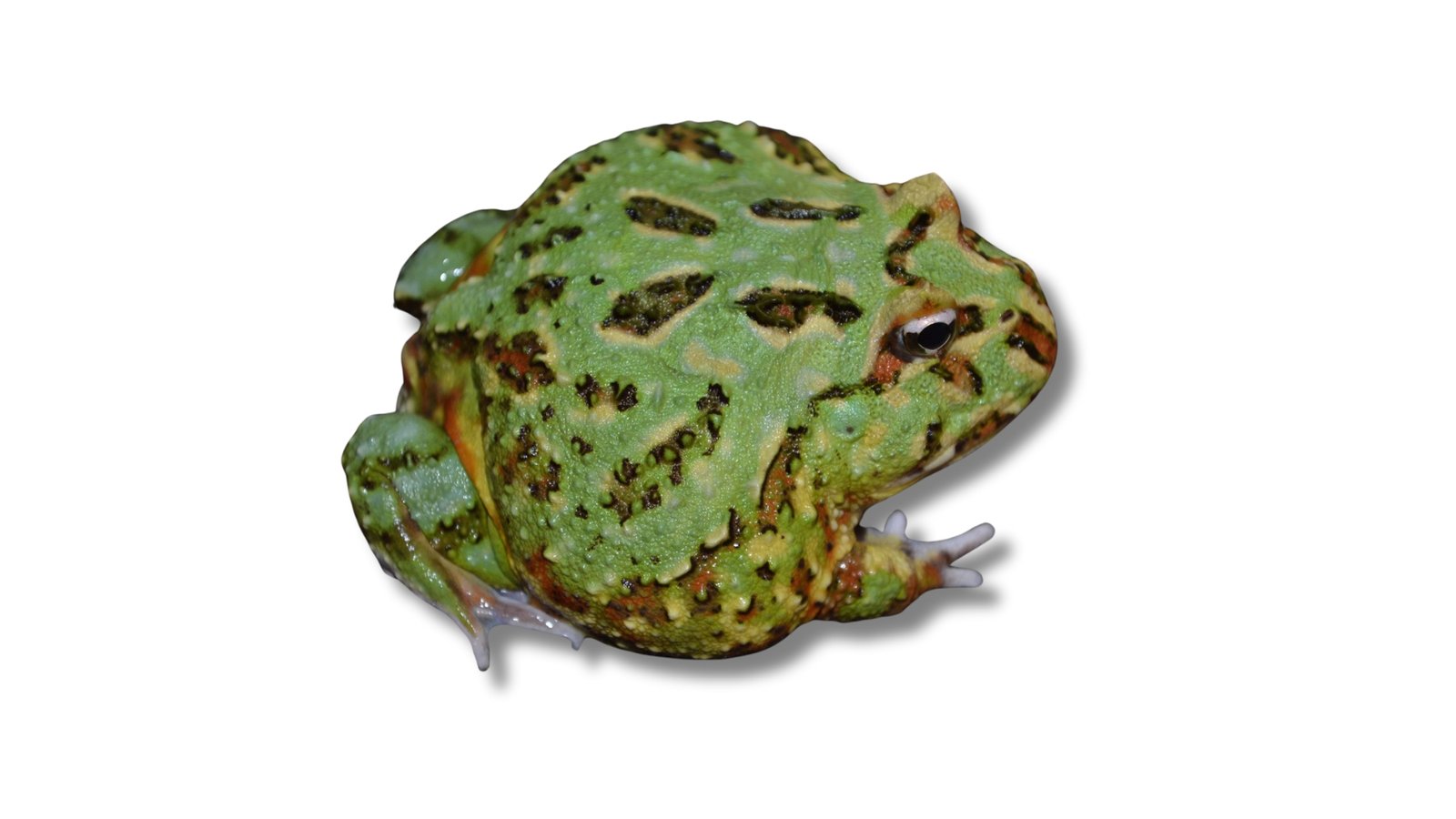
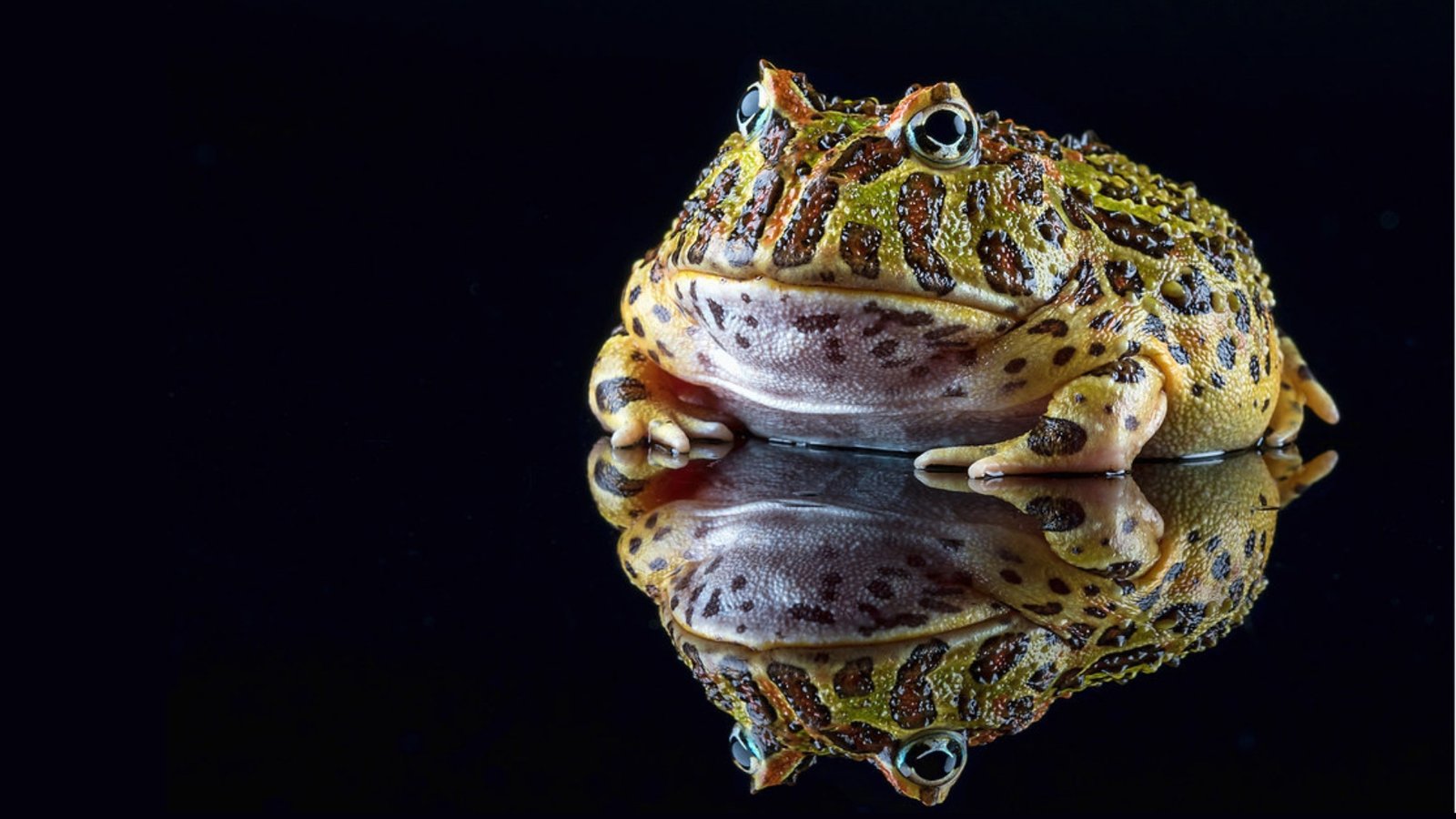
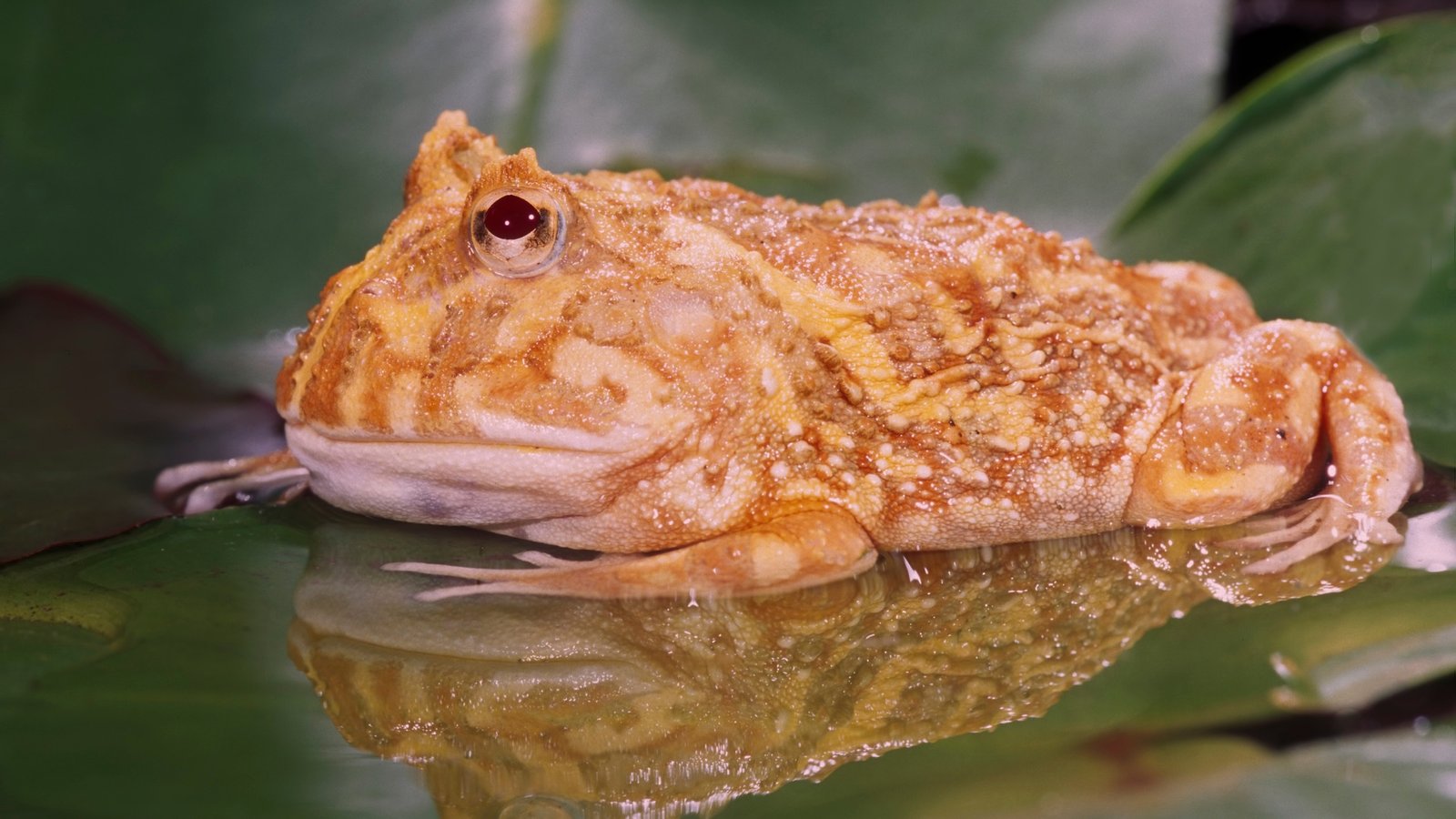
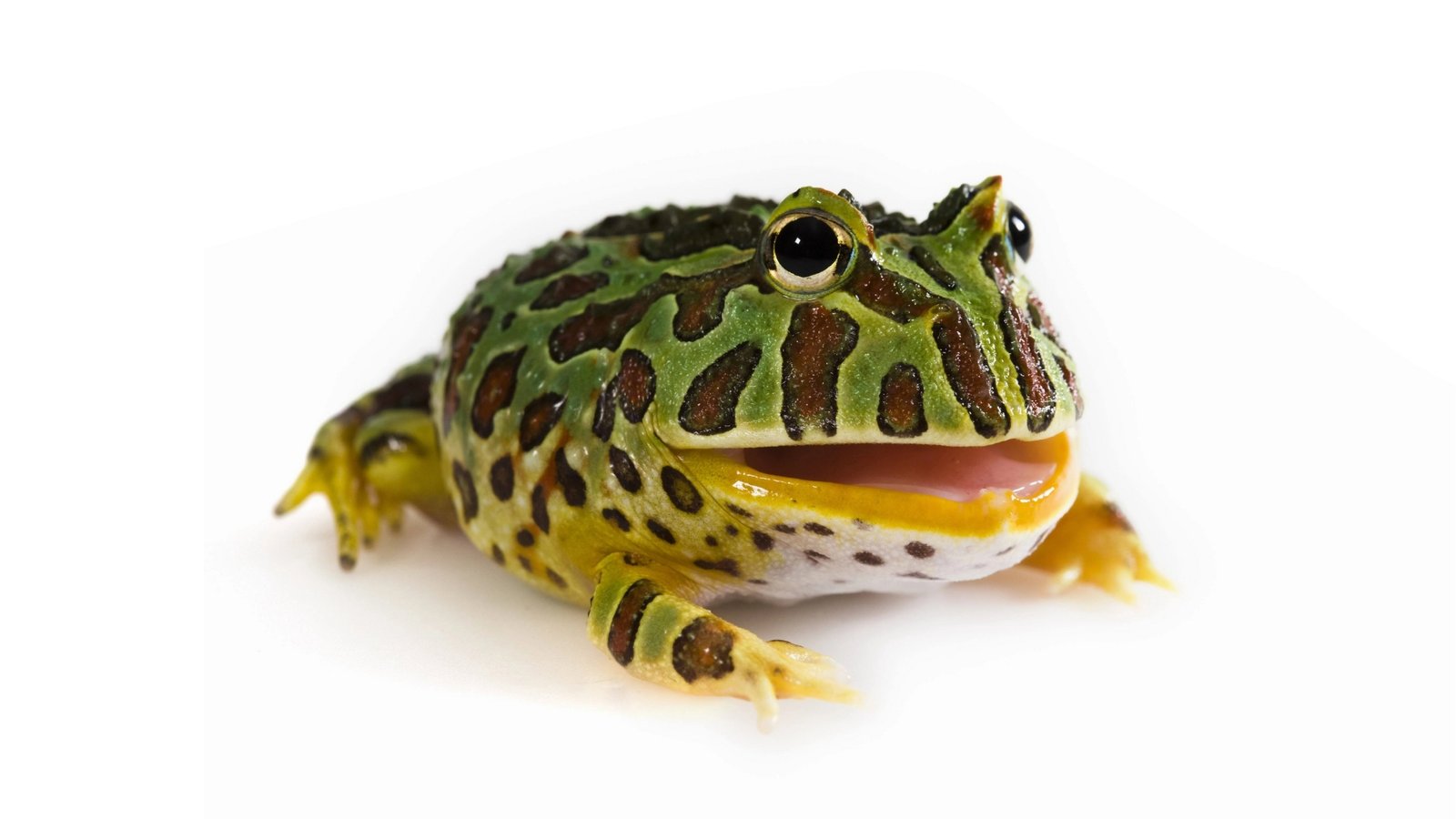
The Pacman Frog is a living landmine—an ambush predator with a comically wide mouth and a serious appetite. Beyond the classic green, this species appears in many color morphs (e.g., Lime Green, Albino, Strawberry Albino, Apricot/Sunburst, Coffee/Chocolate, Patternless, Ornate/High Red). All morphs share the same core husbandry: warm, humid, diggable, and low-handling. Native to the warm, seasonally humid Chaco of South America, Ceratophrys cranwelli spends most days burrowed, eyes and brow “horns” peeking from the substrate, springing to life at dusk. For Patrons who love bold looks, simple setups, and display pets with big personalities, this frog is a crowd-pleaser—no matter the morph.
Why Keep This Species
- Iconic look across morphs (Green/Lime/Albino/Strawberry, etc.) with striking patterns and contrasts.
- Hardy and forgiving when warmth, moisture, and clean water are consistent.
- Educational feeding behavior: classic sit-and-wait ambush strikes.
Keeper Profile
- Handling: strictly hands-off; sensitive skin and strong bite.
- Climate: ~75–82 °F (24–28 °C), humidity 60–80% RH with good airflow.
- Habitat: deep, moist, diggable substrate; shallow water dish; simple décor.
Keeper’s Summary
House a single frog in a terrestrial, front-opening enclosure with 3–5″ (7.5–13 cm) of moist coco-fiber/topsoil for burrowing, leaf litter, and a shallow, stable dish of dechlorinated water. Maintain warm ambient temperatures with a thermostat-controlled side/back heat source (never under-tank heat for amphibians). Keep humidity high but not stagnant via regular misting and ventilation. Feed tong-offered, appropriately sized insects (roaches, crickets, nightcrawlers) at dusk; dust with calcium and vitamins on schedule. Morph note: Albino/Strawberry individuals may be more light-sensitive—favor softer ambient light. Avoid handling; use cups/tongs for maintenance to protect permeable skin.
🐾 Pacman Frog — Ceratophrys cranwelli
- Common Name(s): Pacman Frog, Cranwell’s Horned Frog, Chacoan Horned Frog
- Scientific Name: Ceratophrys cranwelli
- Native To: Gran Chaco region of Argentina, Paraguay, Bolivia
- Adult Size: Males ~2.5–4″ (6–10 cm); females ~4–6″ (10–15 cm)
- Life Span: Typically 6–10 years; up to ~12–15 with excellent care
- Difficulty: Beginner–Intermediate (low handling; consistent warmth/humidity)
- Common Captive Morphs: Green, Lime Green, Albino, Strawberry Albino, Apricot/Sunburst, Coffee/Chocolate, Patternless, Ornate/High Red
- Morph Care Note: Color/pattern genetics do not change core husbandry; albino lines may prefer softer light.
-
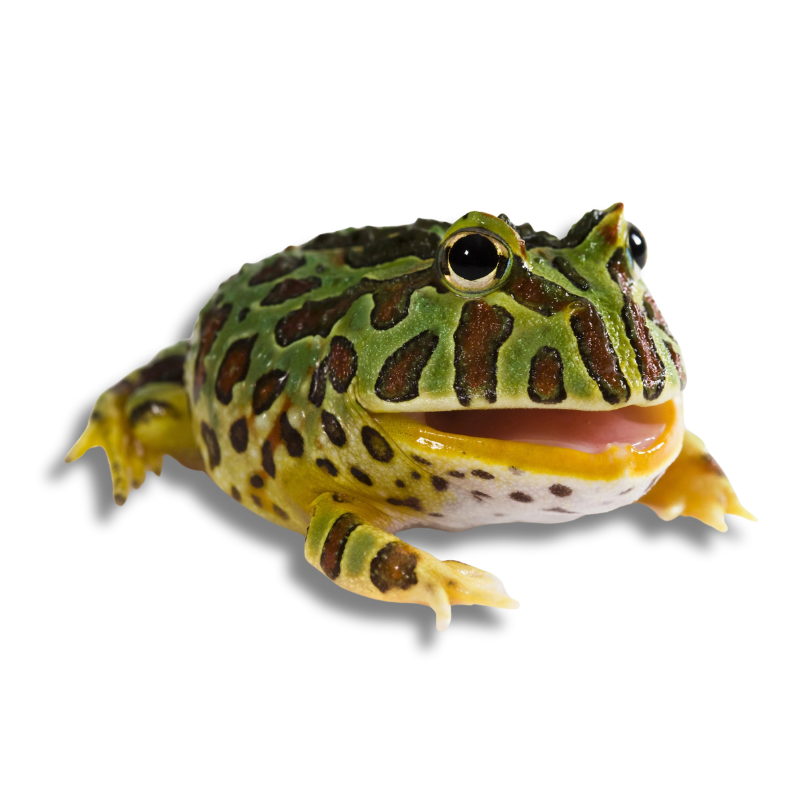
 Rated 0 out of 5$11.99 – $27.99Price range: $11.99 through $27.99Select options This product has multiple variants. The options may be chosen on the product page
Characteristics & Temperament
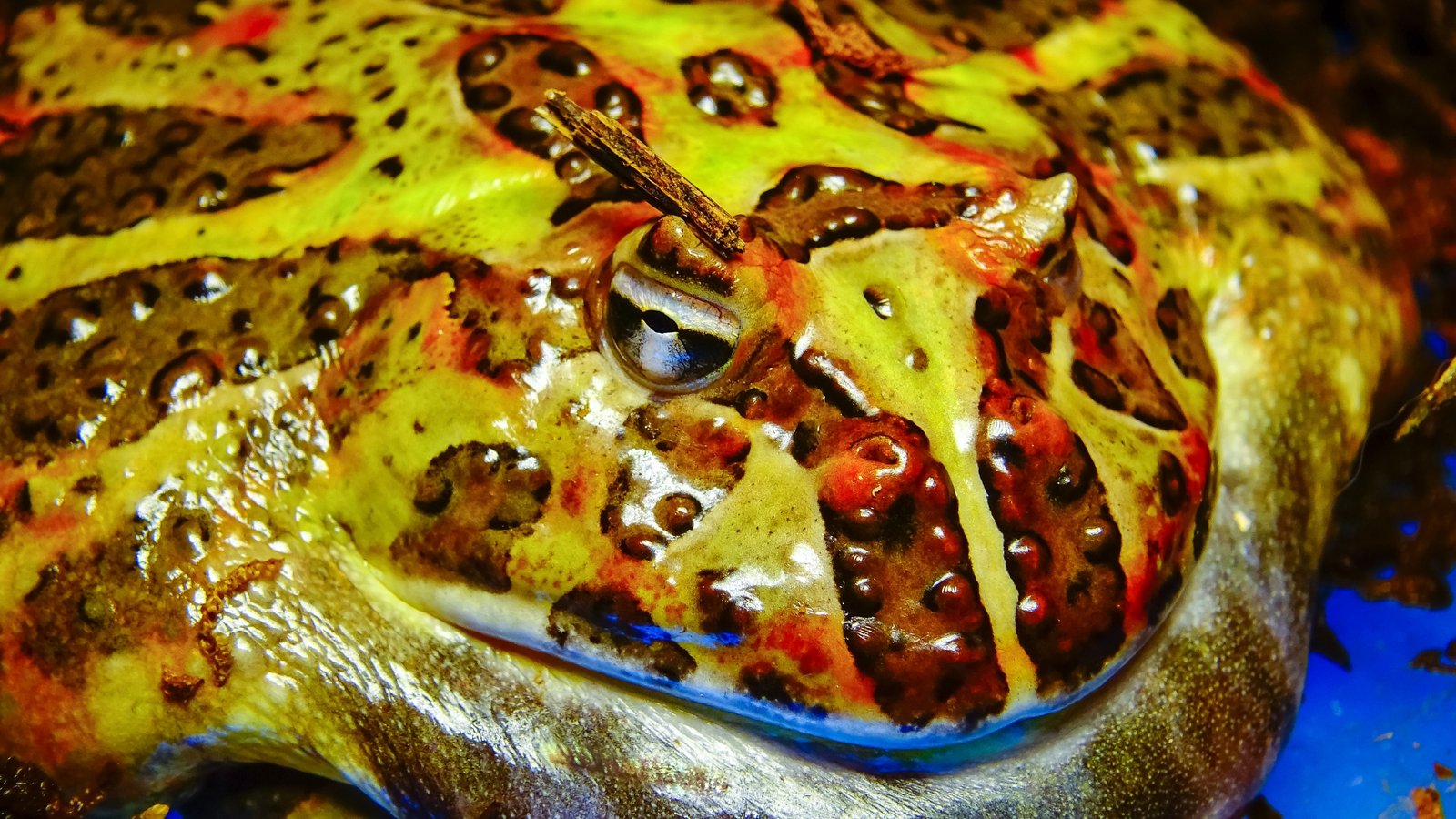
Across morphs, Pacman Frogs share the same look and vibe: a stout, sedentary ambush hunter with surprising feeding enthusiasm—best admired, not handled. Color and pattern vary widely by morph but do not change behavior.
Appearance
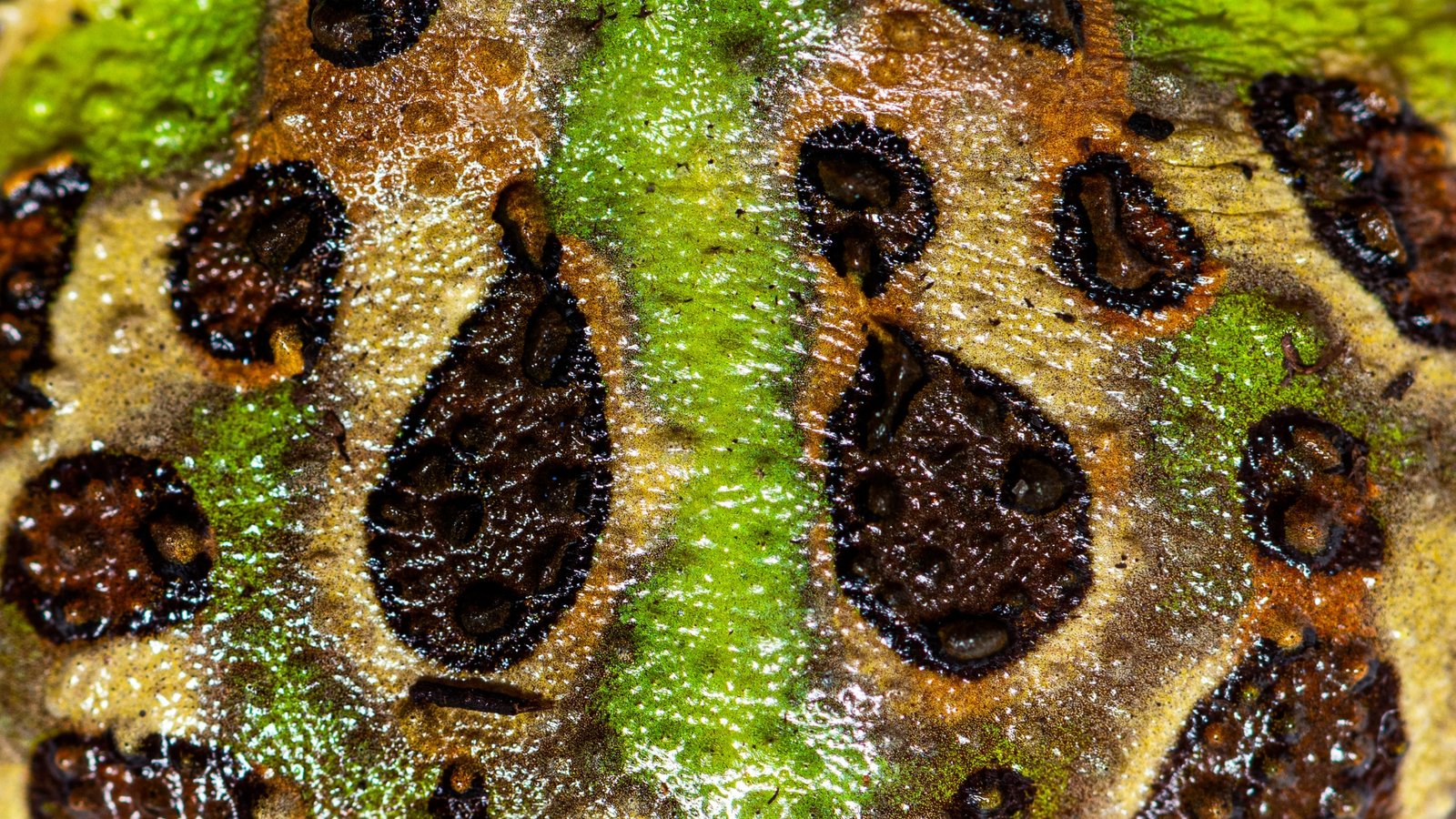
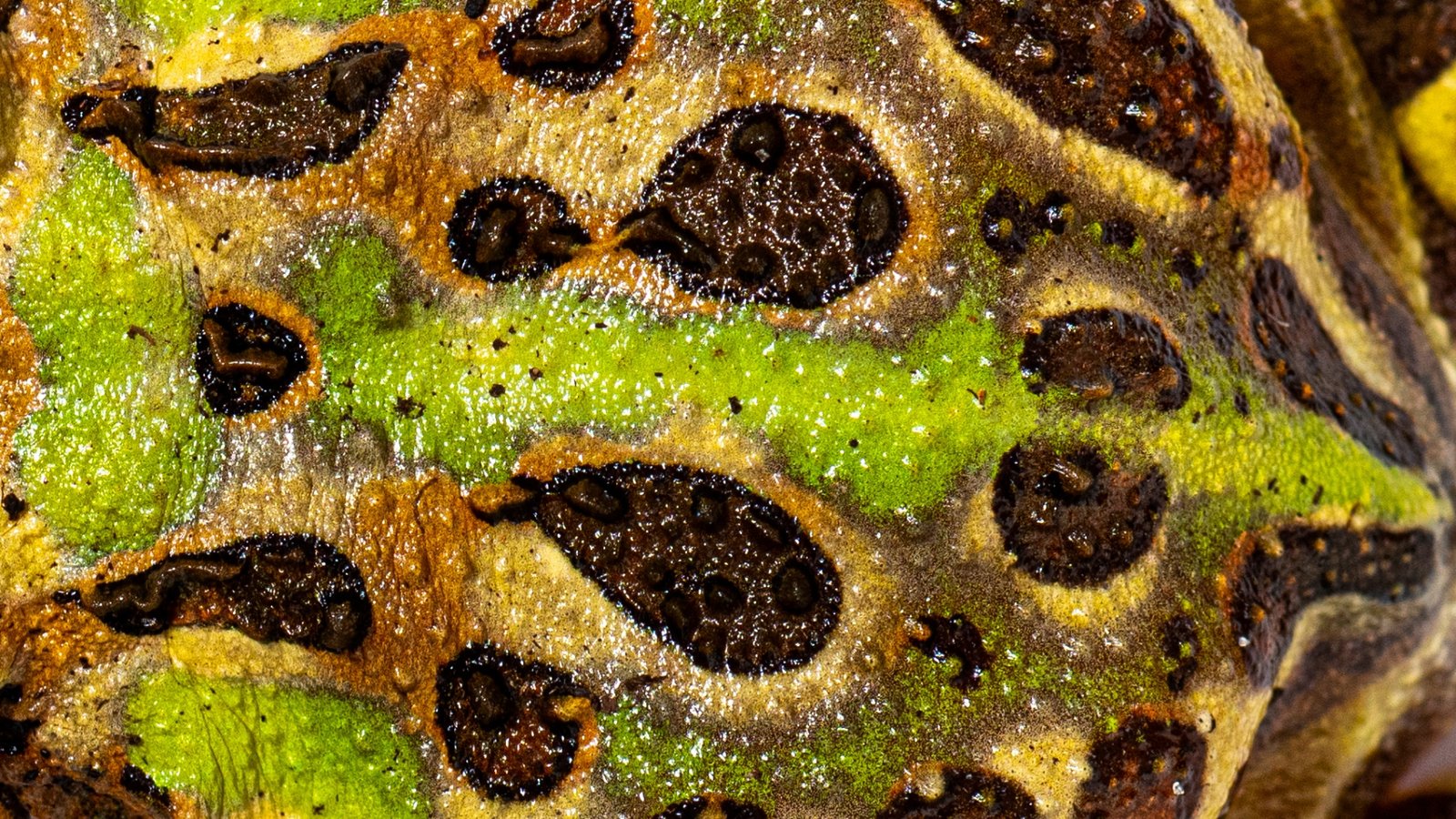
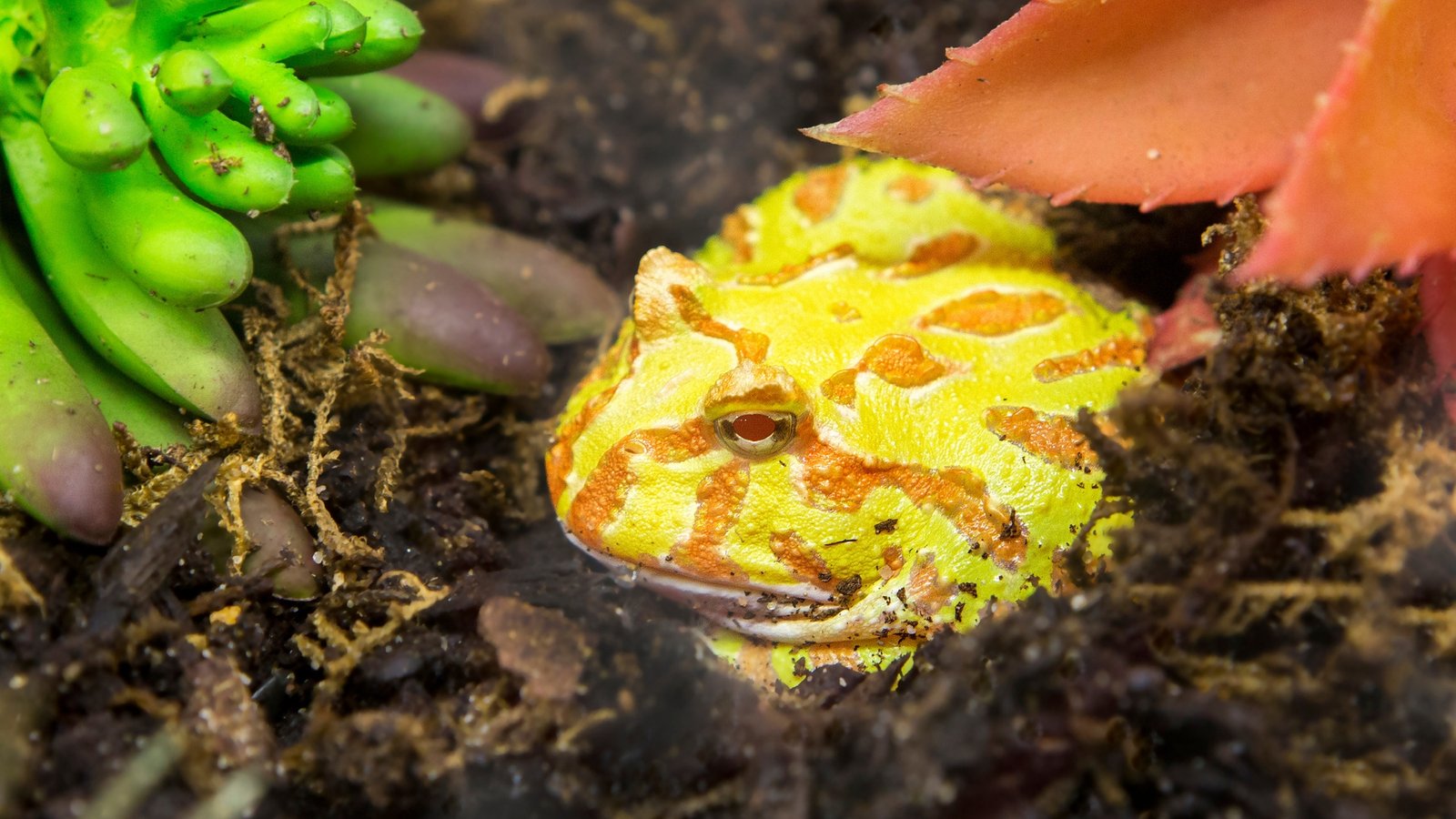
- Coloration / Pattern: Ranges from mottled greens (Green/Lime) to pale yellows and oranges (Albino, Strawberry, Apricot/Sunburst) and deep browns (Coffee/Chocolate); Patternless and Ornate/High-Red lines show reduced or enhanced markings. Albinos have red/pink eyes.
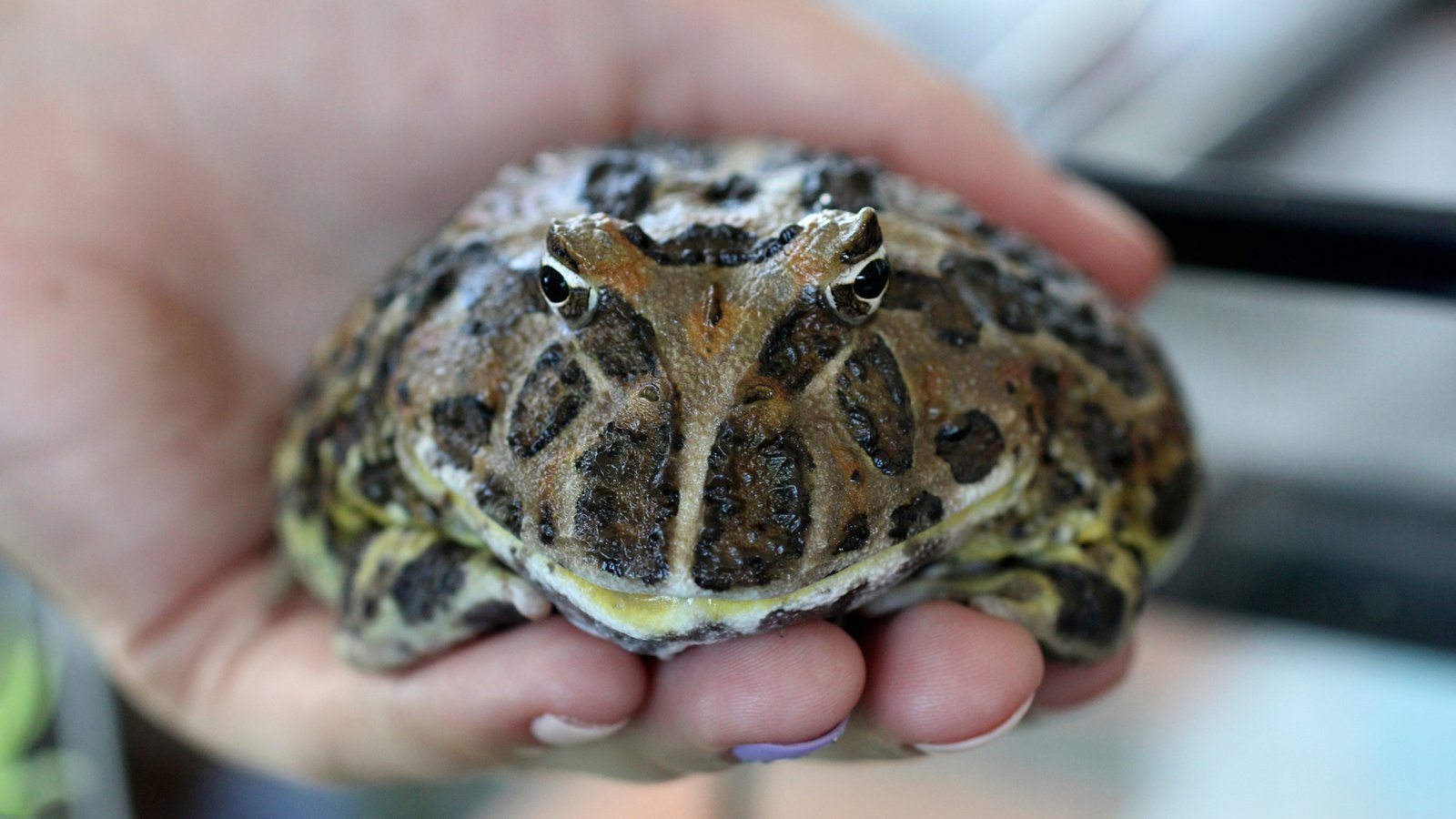
- Build / Form: Stout, round body with oversized mouth, short limbs, and subtle supra-orbital “horns.”
- Light Response: No UV fluorescence; naturalistic daylight enhances color. Albino/Strawberry may be more light-sensitive—favor softer ambient light.
Temperament
- Baseline: Calm, sedentary, and secretive; often partially buried by day.
- Response to Disturbance: Freezes/buries; may gape and lunge if cornered. Strong bite—do not provoke.
- Feeding Style: Ambush predator; most responsive at dusk/night to motion-cued prey.
Social Housing
- Solitary only. Co-housing risks stress, injury, or cannibalism. One frog per enclosure.
Quick Traits
Keeper Notes
- Stress Signs: Refusal to feed, staying fully buried for days, overly dry or waterlogged skin, persistent roaming.
- Confidence Builders: Deep, uniformly moist substrate; minimal traffic; dusk feeding routine; dechlorinated water.
- Display Tips: Leaf litter and low-glare ambient light; observe at dusk with gentle room lighting. For albino lines, avoid harsh lighting.
Care Requirements
Core setup and environmental targets to keep Ceratophrys cranwelli thriving across all color morphs (Green, Lime, Albino, Strawberry, Apricot/Sunburst, Coffee/Chocolate, Patternless, Ornate/High Red).
Enclosure Setup
Type: Terrestrial/burrowing amphibian.
Minimum Size: ~18″×18″×12″ (45×45×30 cm) for one adult; larger is welcome.
Safety: Escape-resistant lid/front; cross-ventilation; thermostat-controlled side/back heat if needed—no under-tank heaters for amphibians.
Furnishing Guide
- Lid: Fine mesh/locking front that retains humidity but allows airflow.
- Hides: Not essential—species prefers to burrow; leaf litter and cork flats provide cover.
- Enrichment: Leaf litter, broad-leaf plants, soft-edged décor; avoid sharp items.
Substrate
- Blend: 70% coco-fiber + 30% organic topsoil (no fertilizers); optional 5–10% sphagnum in the upper layer.
- Depth: 3–5″ (7.5–13 cm); evenly moist—clumps when squeezed, no dripping.
- Purpose: Safe burrowing and humidity buffering.
Habitat
- Water: Wide, shallow dish of dechlorinated water; refresh daily to 3× weekly.
- Décor: Cork flats, leaf litter, smooth stones; hardy live plants optional.
- Behavior Fit: Ambush predator that sits partially buried; appreciates cluttered, dim retreats.
- Morph Note: Albino/Strawberry morphs often prefer softer light and shaded viewing zones.
Environment Targets Set & monitor
Lighting
Ambient room light is sufficient; UVB not required. Optional low-output UVB (2–5%) for a naturalistic photoperiod. Maintain ~12L:12D. Favor diffuse lighting for albino lines.
Food & Water
- Juveniles: Small crickets/roaches 3× weekly (prey ≤⅓ body length).
- Adults: Large crickets, dubia, or occasional nightcrawlers 1× weekly; offer 1–3 items; remove uneaten prey by morning.
- Supplements: Dust with plain calcium weekly; multivitamin 2–4× monthly (amphibian-safe).
- Hydration: Dechlorinated water dish always; occasional light misting to maintain microclimate.
- Morph Nutrition: No special diets by morph—care is identical across color lines.
Cleaning
- Spot-Clean: Remove feces/uneaten prey after feedings; change water frequently.
- Deep Clean: Refresh substrate every 4–6 months; rinse décor with hot water only (no chemicals).