Egyptian Sandfish — Scincus scincus — Introduction & Overview
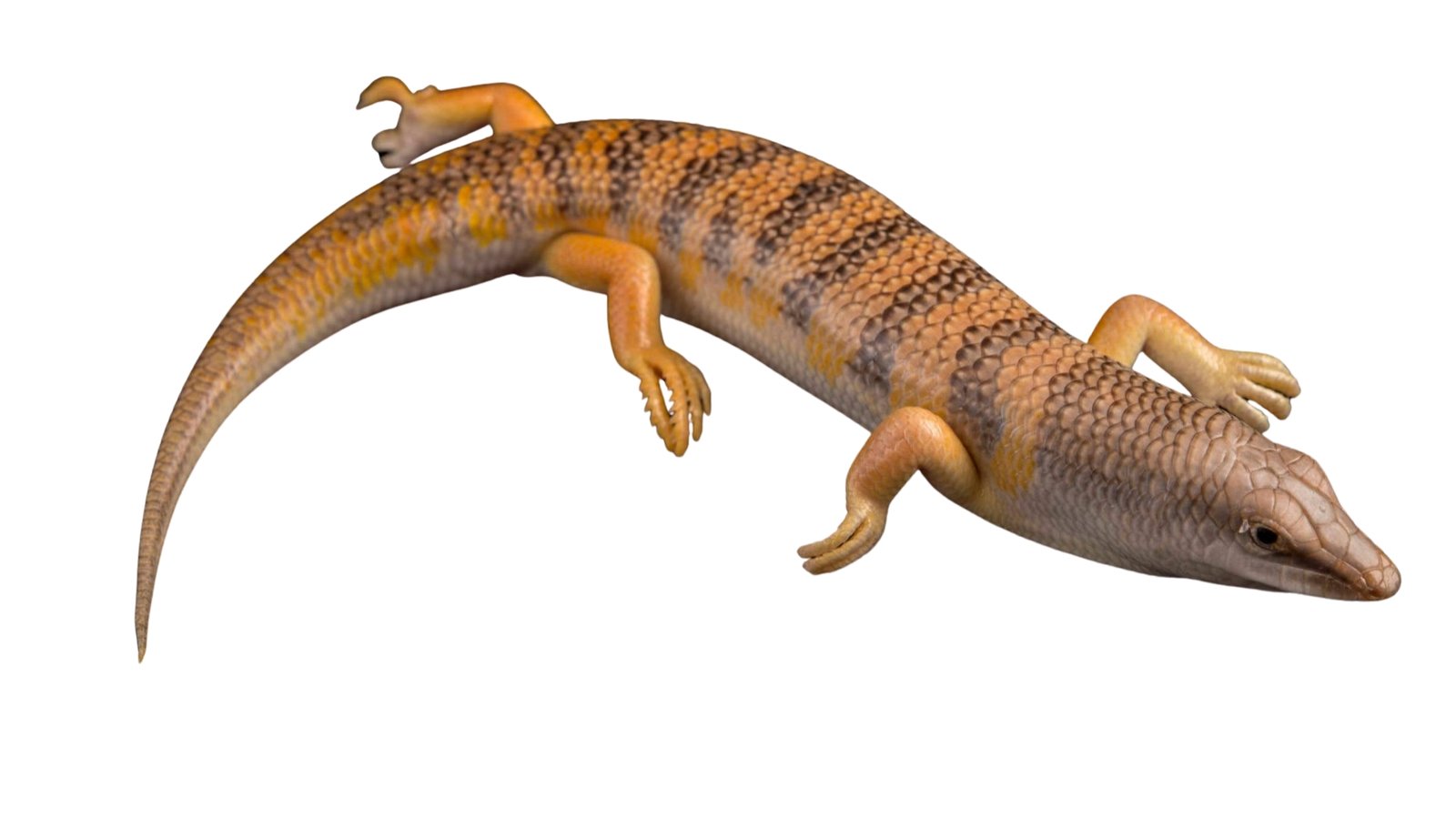
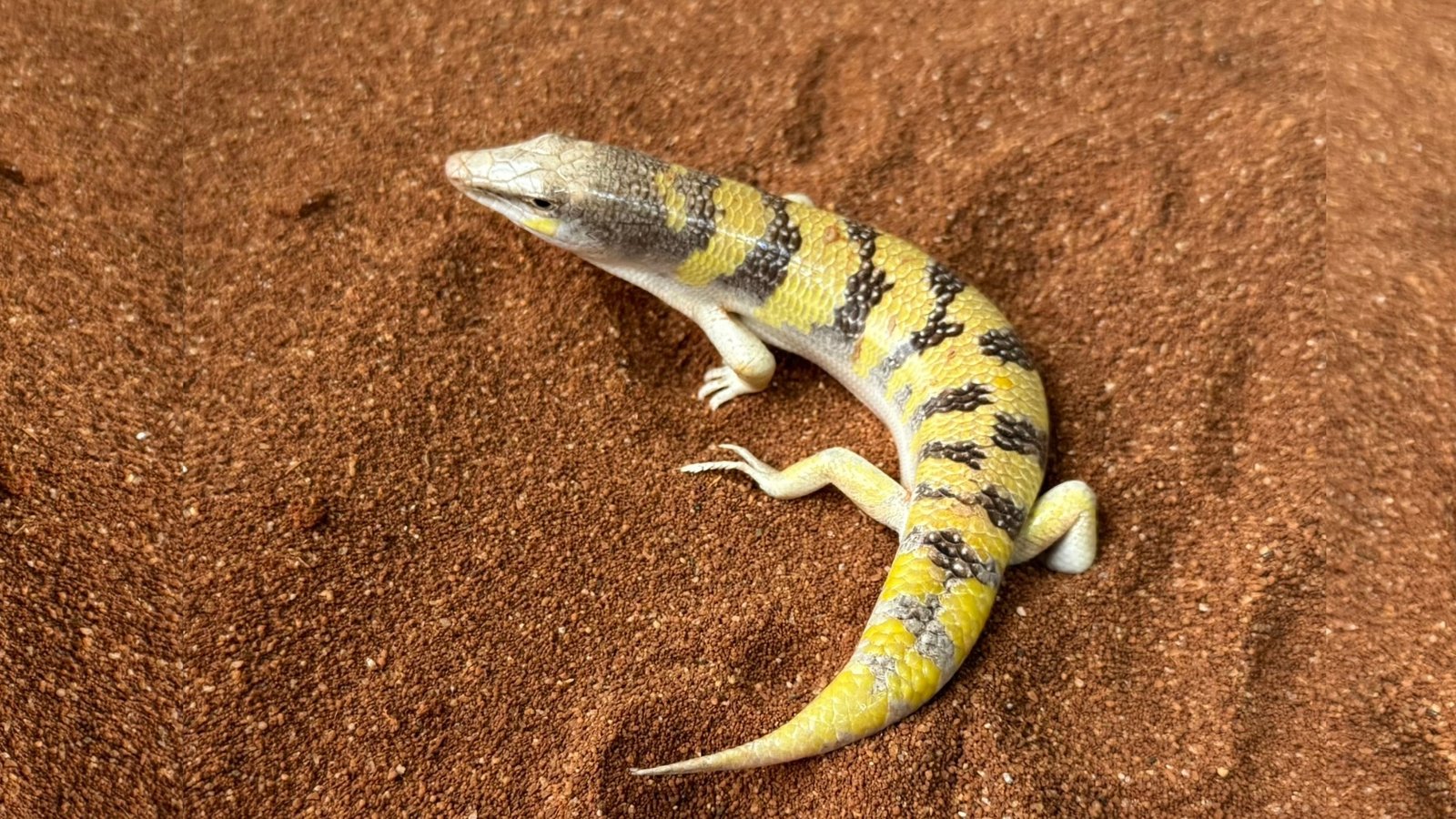
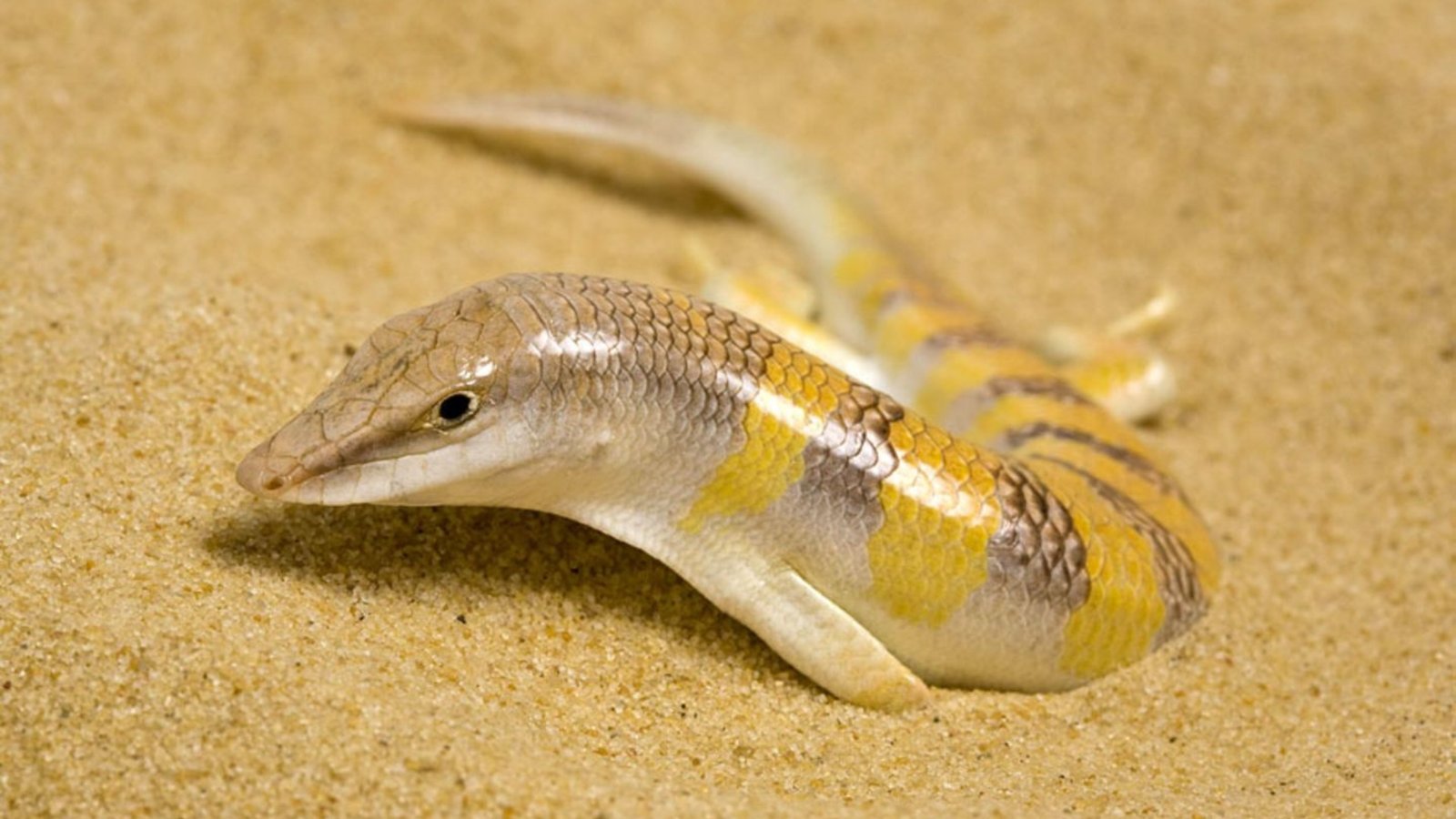
Part lizard, part magic trick, the Egyptian Sandfish “swims” through desert dunes like water. A wedge snout, smooth armor-scales, and fringed toes let it dive beneath the surface in a flash—then reappear at the basking slate like a mirage. Kept correctly, this species is a mesmerizing, low-odor display animal whose specialized sand bed and bright desert lighting bring out natural foraging and burrowing behaviors all day.
Why Keep This Species
- Unique “sand-swimming” behavior and fast, dolphin-like dives under fine substrate.
- Hardy when heat, UVB, and deep diggable sand are provided; low enclosure odor.
- Educational: demonstrates desert adaptation (counter-shaded body, shovel snout, toe fringes).
Keeper Profile
- Handling stance: hands-off / experienced only—quick, delicate, stress-prone to restraint.
- Climate targets: Ambient 78–86 °F (25–30 °C), basking surface 102–110 °F (39–43 °C), 20–35% RH.
- Habitat approach: wide, terrestrial tank with 6–10″ of fine sand, bright light, strong surface ventilation.
Keeper’s Summary
Use a long, low enclosure (e.g., 36″×18″ footprint) with a deep, sifted fine-sand mix. Pack the lower layer slightly moist so it holds shape, then cap with dry, loose sand for diving. Provide a hot basking slate (102–110 °F) under bright white light and a quality UVB tube along the warm side; keep the cool end in the high-70s/low-80s. Offer a shallow water dish and feed small roaches, crickets, and larvae 2–3× weekly (juveniles more often), dusted with calcium and vitamins. Avoid routine handling; service with tools and let the sandfish do what it does best—disappear.
🐾 Egyptian Sandfish — Scincus scincus
- Common Name(s): Egyptian Sandfish, Sand Skink
- Scientific Name: Scincus scincus
- Native To: Sahara & Arabian deserts — N. Africa (e.g., Egypt, Libya, Algeria, Morocco) and the Arabian Peninsula
- Adult Size: ~6–8 in (15–20 cm) total length
- Life Span: ~8–12+ years in managed care
- Difficulty: Intermediate (deep fine-sand bed, hot basking surface, strong light/UVB)
Characteristics & Temperament
A field-style profile of Scincus scincus—what you’ll observe and how it behaves in a proper desert build.
Appearance
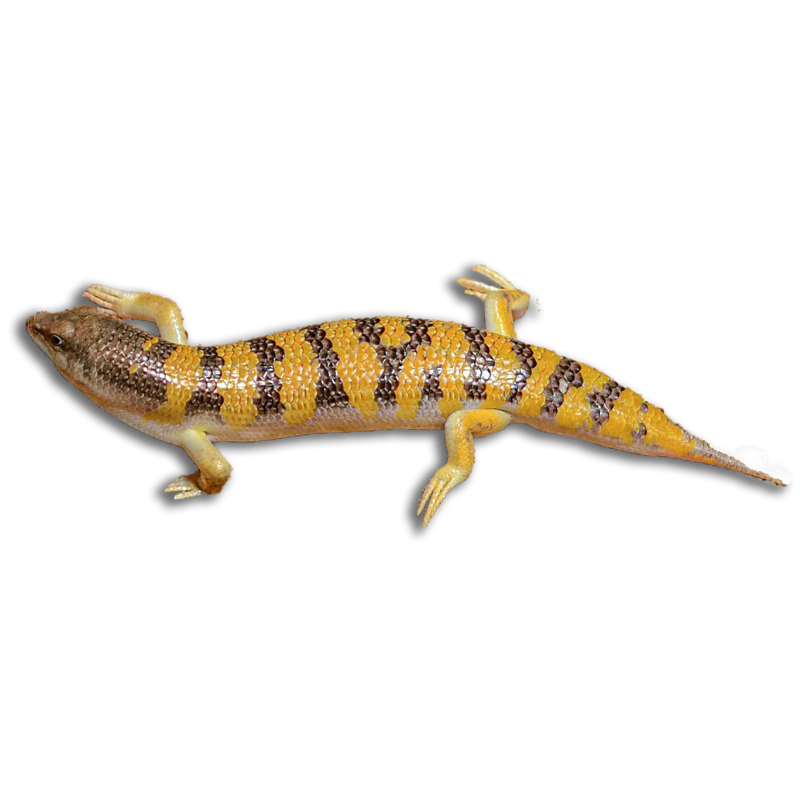
- Coloration / Pattern: Golden-tan to sandy yellow dorsum with pale underside (counter-shaded); fine sheen from smooth, overlapping scales.
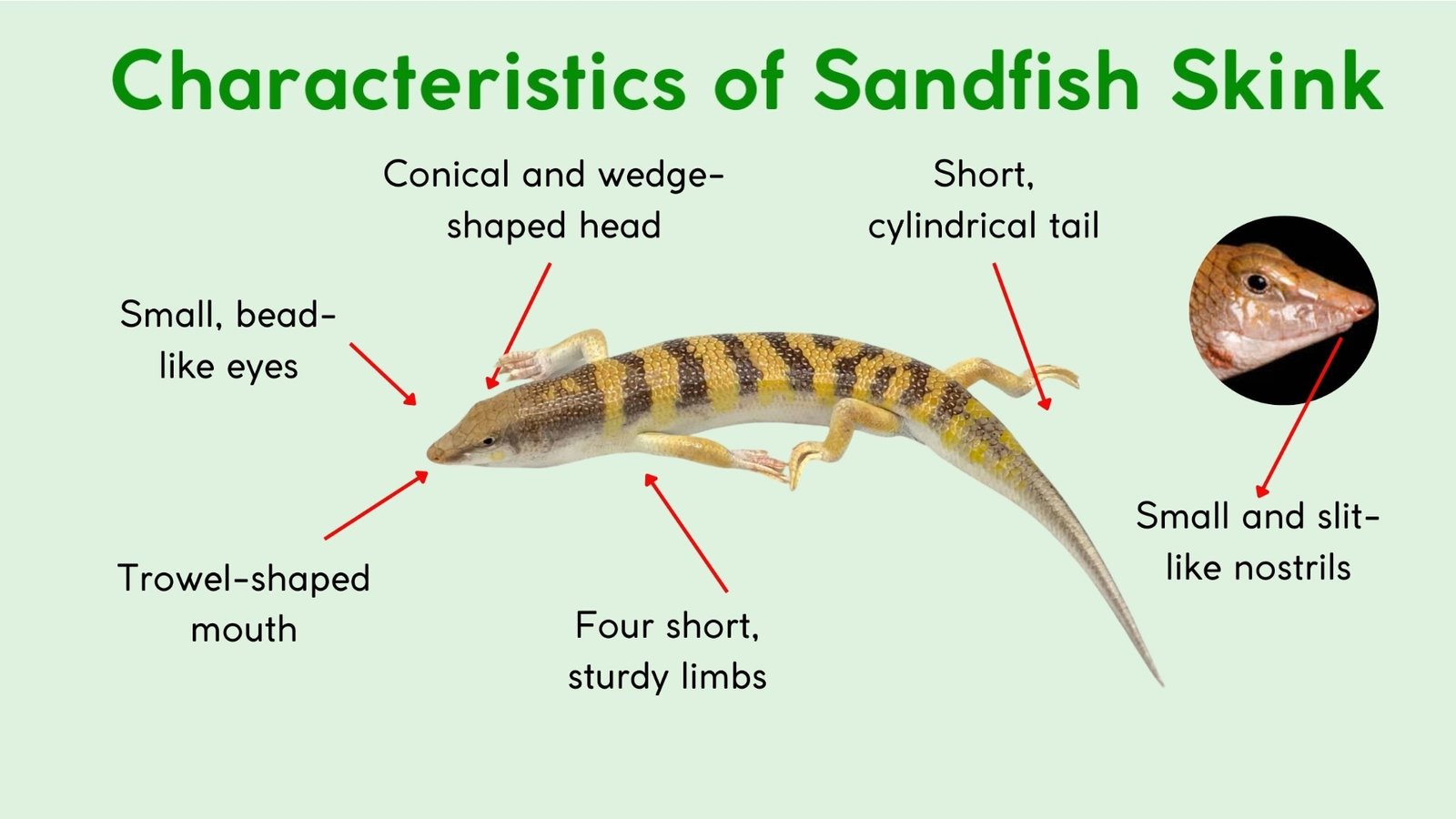
- Build / Form: Streamlined, torpedo-like body; wedge snout, small eyes with clear spectacles; fringed toes that paddle through sand.
- Light Response: Not fluorescent; prefers bright desert light and warm basking surfaces for brief surface activity.
Temperament
- Baseline: Shy to calm; surfaces to bask/forage then quickly dives (“sand-swims”) when startled.
- Response to Disturbance: Retreats below sand; rarely bites; struggling restraint can injure delicate skin.
- Feeding Style: Active insect hunter—will take moving prey on/just under the surface, best at late morning and dusk.
Social Housing
Best housed singly. Pairs or groups can result in resource guarding and breeding stress; only advanced keepers should attempt.
Quick Traits
Keeper Notes
- Stress Signs: Constant surface pacing, refusal to burrow, weight loss, lingering in corners or under the water dish.
- Confidence Builders: Deep, fine sand gradient; toasty basking slate; bright light; minimal handling; consistent feeding window.
- Display Tips: Use a front window with low glare; a dark backdrop enhances contrast when the sandfish surfaces.
Care Requirements
Core setup and environmental targets to keep Scincus scincus thriving in a bright, arid desert build.
Enclosure Setup
- Type: Terrestrial burrowing desert enclosure.
- Minimum Size (adult): 36″×18″×18″ (40-breeder footprint) for a single; larger footprints improve thermogradient.
- Safety: Secure lid, top-down heat sources, cable-managed fixtures; avoid sharp décor that can cause fall impacts when diving.
- Size: Wider than tall; ample floor area.
- Lid: Fine steel mesh or front-opening with generous vent panels.
- Hides: Optional surface hides; primary refuge is under the sand.
- Enrichment: Basking slate/rock, low branches for visual barriers, shallow burrow entrances.
Substrate
- Blend: Sifted fine play sand (≈70%) + screened loam/topsoil (≈20%) + clay (e.g., bentonite/“sand-clay” ≈10%).
- Depth: 6–10″ (15–25 cm). Lightly moisten and pack the lower 1/3 so it holds shape; cap with dry sand.
- Purpose: Enables true sand-swimming, stable tunnels, and humidity buffering below a dry surface.
Habitat
- Water: Shallow dish refreshed daily; keep on the cool side to reduce local humidity spikes.
- Décor: Flat basking stone under the heat lamp; scattered stones and sparse desert-safe plants (live or artificial).
- Behavior Fit: Burrower/surface forager; expect brief surface activity, then dives at speed when startled.
Environment Targets Set & monitor
Lighting
UVB recommended. Use a high-quality T5 HO UVB tube (≈6% range) spanning 1/2–2/3 of the enclosure width along the warm side. Pair with bright 6500K+ daylight for visual brightness. Photoperiod 12–14 h (seasonal variation optional).
Food & Water
- Juveniles: Small crickets/dubia, soldier fly larvae 4–5× weekly; prey about eye-width.
- Adults: Roaches, crickets, occasional mealworms/superworms (moderation) 2–3× weekly.
- Supplements: Dust Ca w/ D3 1–2× weekly (more if no UVB), plain Ca once weekly, multivitamin 1× weekly.
- Hydration: Fresh shallow dish always; do not mist broadly—keep moisture deep in the sublayer.
- Best Time to Feed: Mid-morning or late afternoon when surface active.
Cleaning
- Spot-Clean: Remove uneaten insects and waste promptly; wipe glass dry of condensation.
- Deep Clean: Refresh part of the sand quarterly; fully replace 6–12 months or as needed (bake or discard soiled sand).