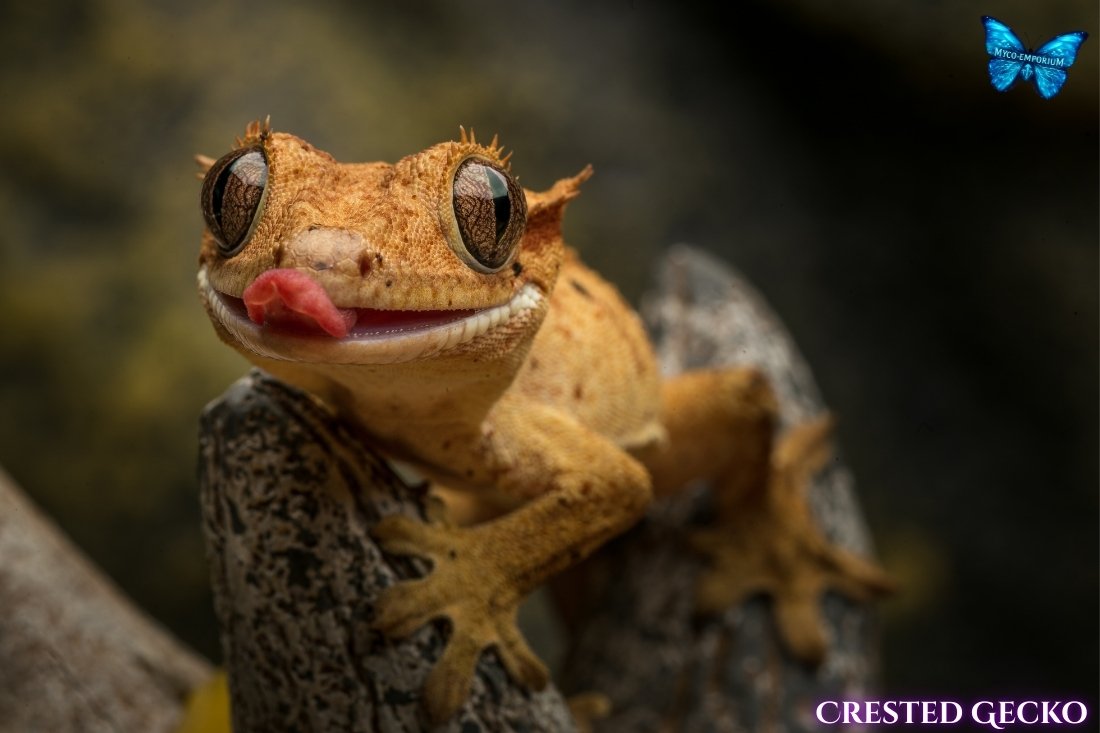
Crested Geckos (Correlophus ciliatus) — Introduction & Overview
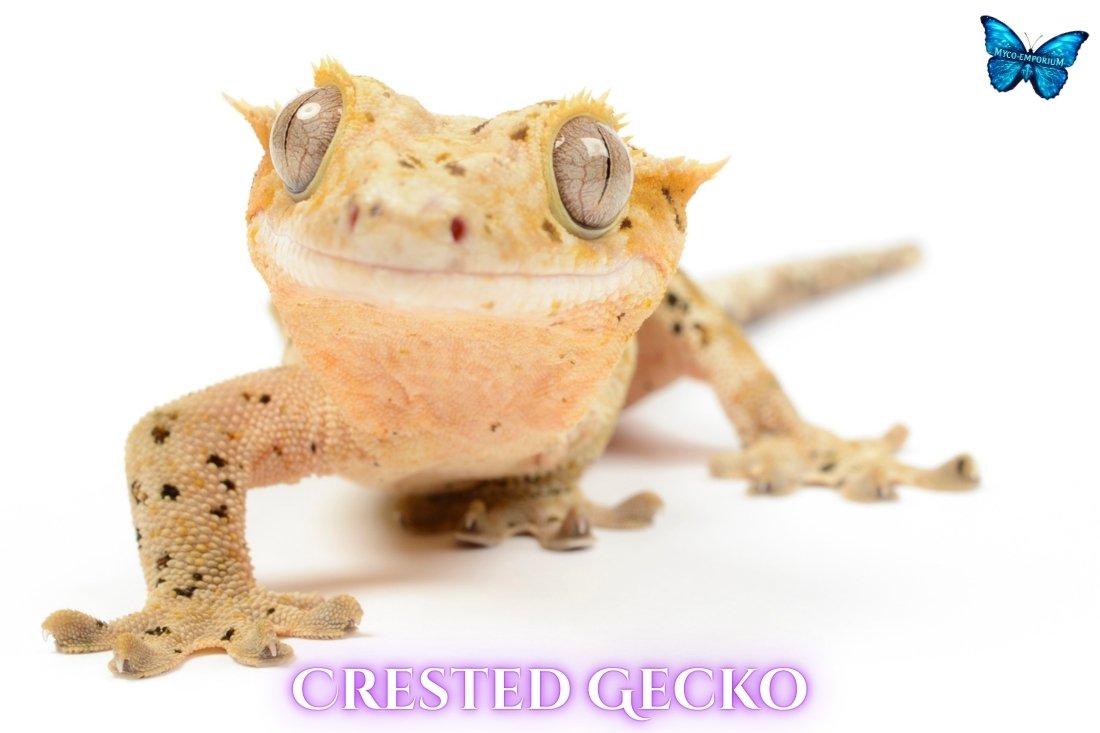
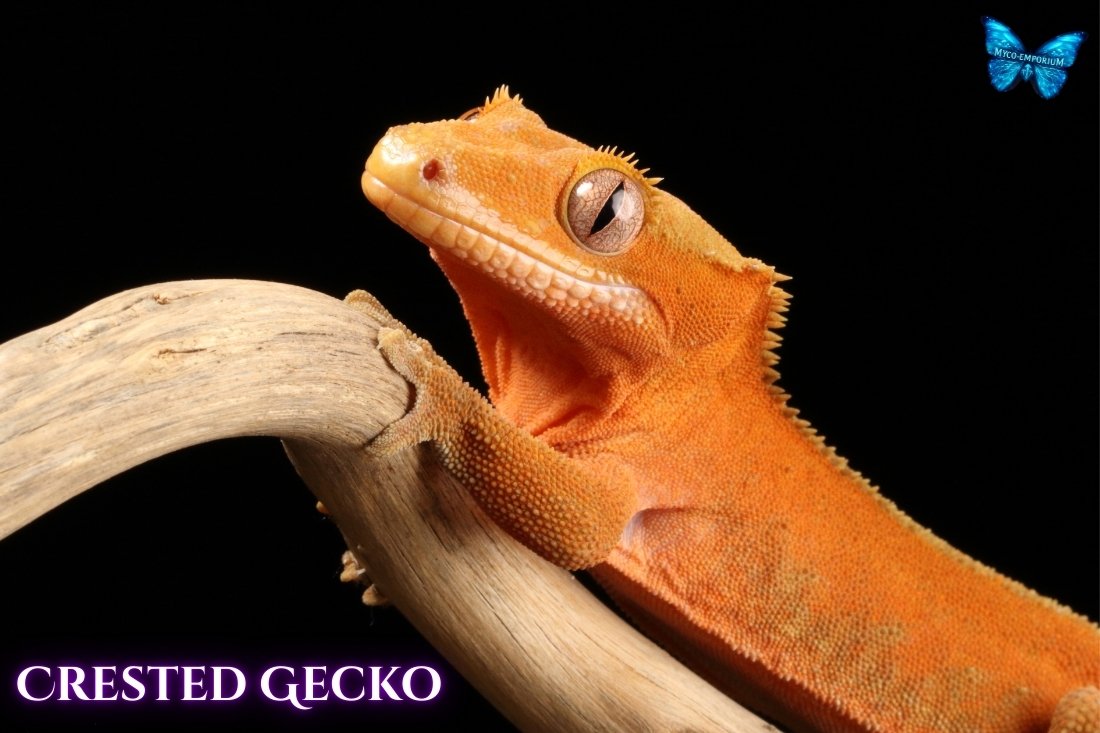
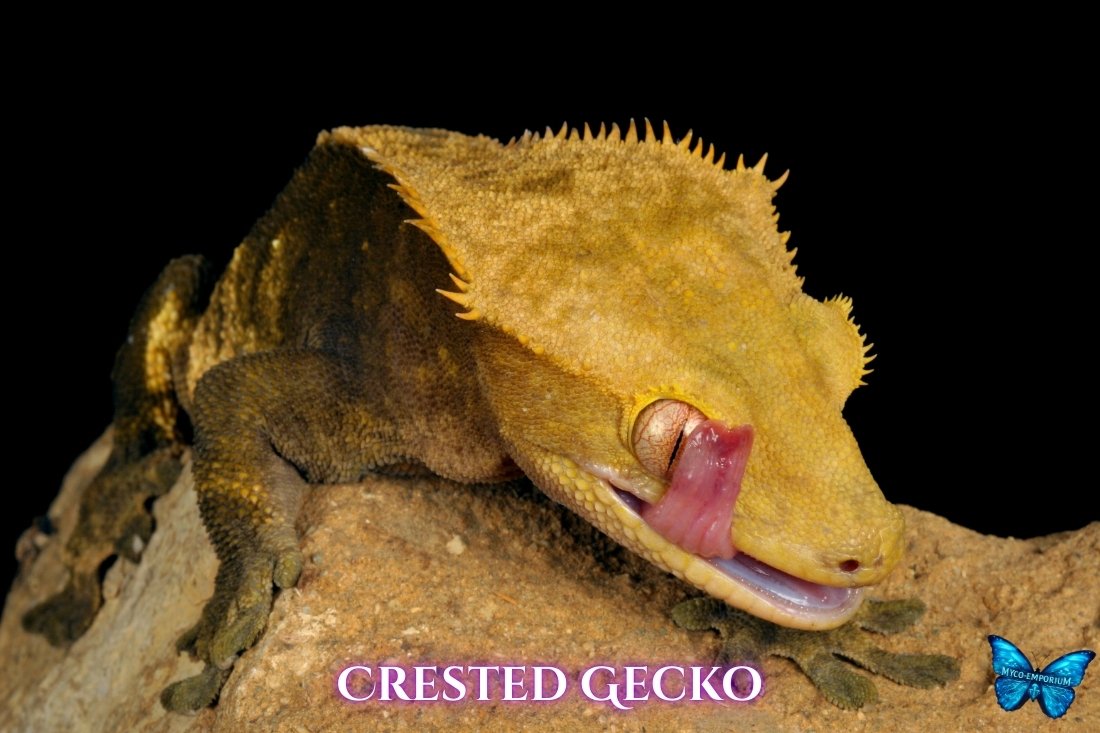
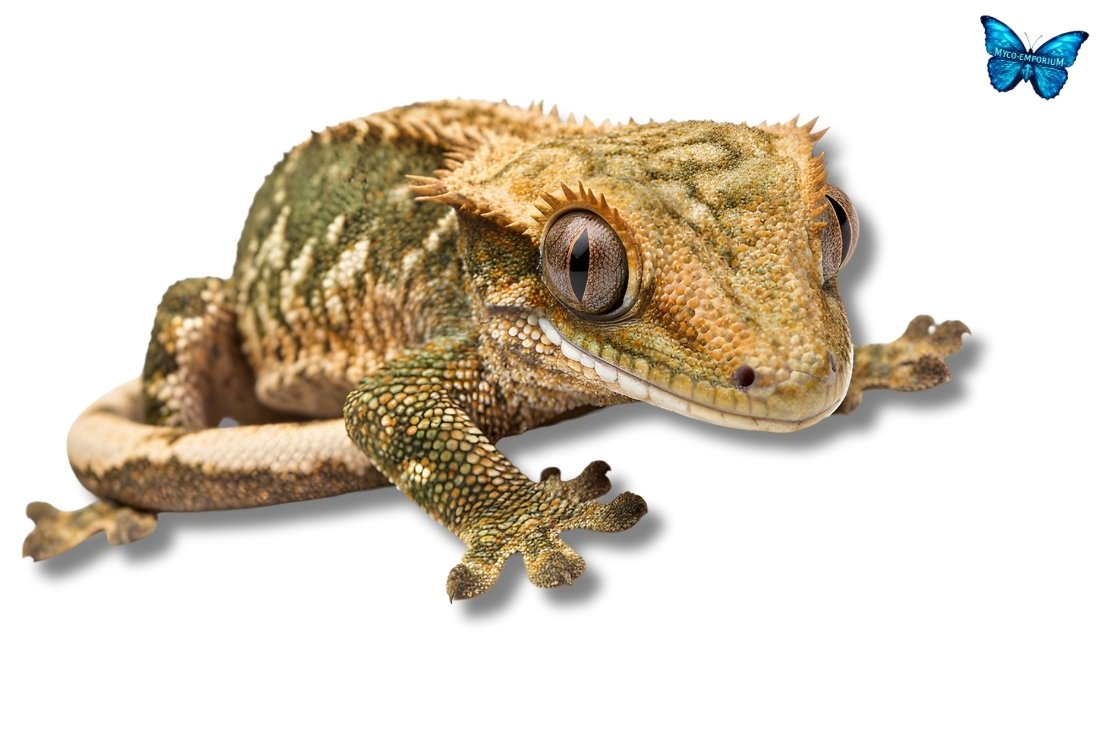
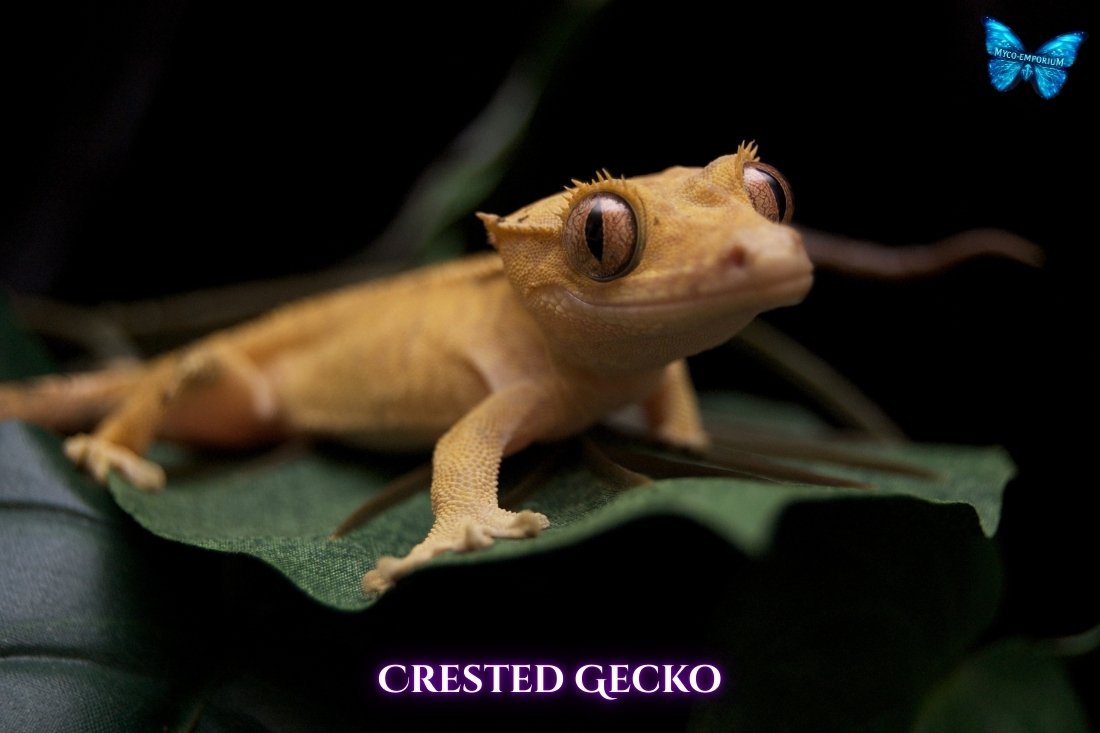
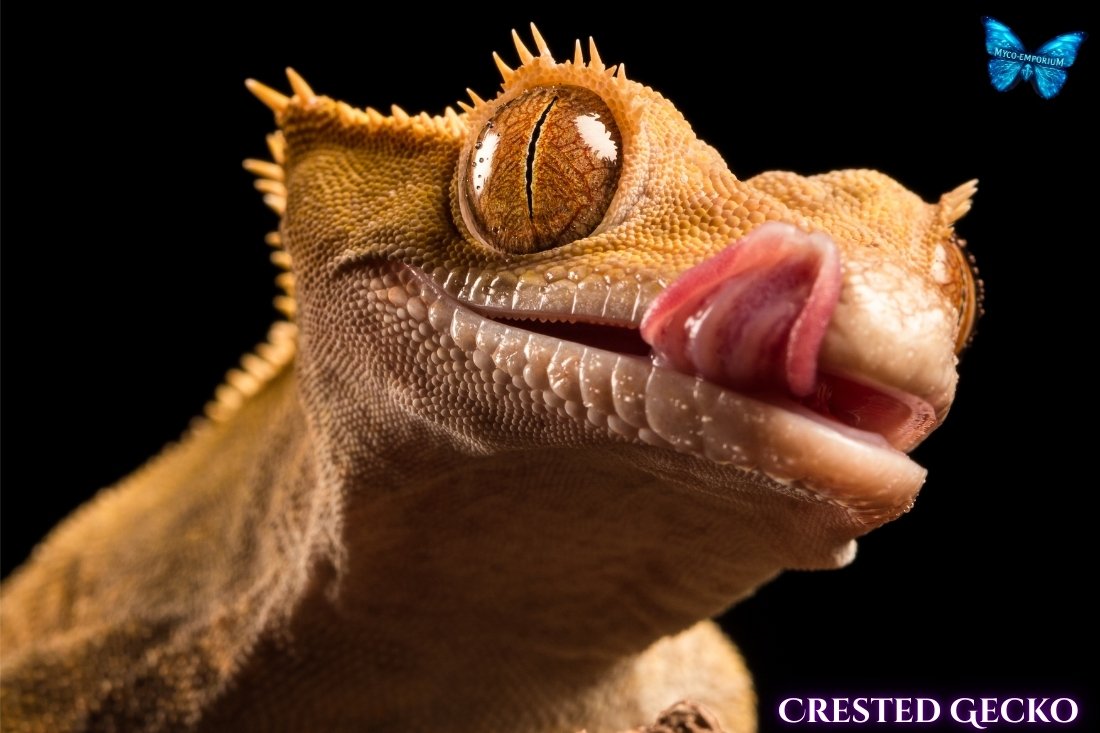
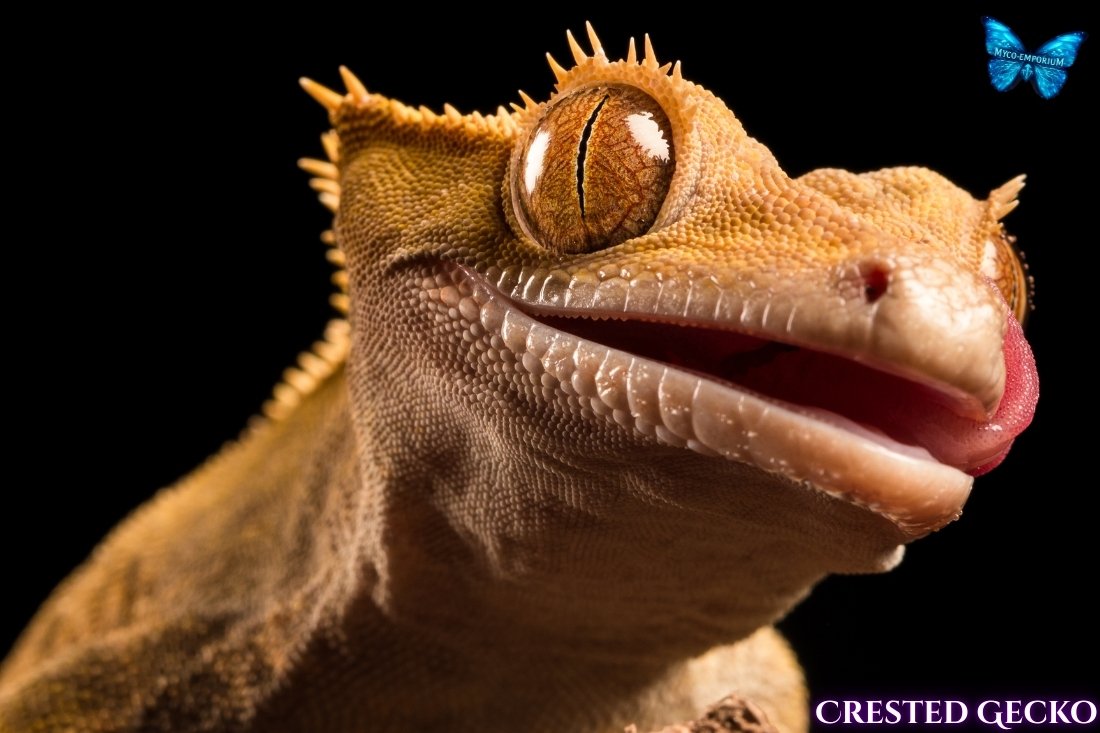
Meet the Crested Gecko, Correlophus ciliatus—a soft-spined, big-eyed, gravity-defying LIVE SPECIMEN that looks like a tiny dragon and moves like a caffeinated tree frog. Those “eyelashes” along the crest, the velvet skin, the toe pads that let them walk up glass, and the prehensile tail all work together to turn an ordinary terrarium into a vertical jungle playground. Under glow-in-the-dark, neon-lit Myco-Emporium vibes, their patterns and textures pop like a low-key forest rave, even if they don’t fully blacklight-blast. Myco-Patrons fall in love because these geckos are expressive, relatively forgiving, and endlessly entertaining to watch as they leap, lick, and lounge their way through the night.
Why Keep This Species
- Expressive “eyelashed” face and slow-motion dragon poses that make EMPROIUMS stop mid-stride to stare.
- Hardy, room-temperature friendly arboreal gecko that thrives without intense heat lamps when humidity is managed well.
- Perfect for curious MYCO-EMPORIUMS: teaches real rainforest ecology, nocturnal behavior, and responsible long-term reptile care.
Keeper Profile
- Ideal for Beginner to Intermediate Myco-EMPers who are ready to learn humidity and enclosure design basics.
- Handling expectations: occasional, calm handling is fine; this is a watch-and-gently-interact LIVE SPECIMEN, not a pocket toy.
- Microclimate vibe: mild temps around 72–78 °F with humidity cycling between roughly 50–70% and nightly mist spikes.
Keeper’s Summary
A single adult Crested Gecko (Correlophus ciliatus) does best in a tall, well-ventilated arboreal enclosure (roughly 18" × 18" × 24" or larger) packed with branches, vines, and broad leaves for climbing and hiding. Keep their world mild—not hot—with temps around the low-to-mid 70s °F, daily misting to create humid spikes, and time for the enclosure to dry back to about 50–60% humidity. Offer a quality commercial crested gecko diet as the staple, with small, properly sized insects as enrichment meals. Handle them gently and infrequently, always letting the gecko move from hand to hand rather than being grabbed. Pro tip: set the enclosure up higher than eye level with lots of background cover—your LIVE SPECIMEN will feel secure, display more naturally, and your Myco-Emper brain gets a front-row seat to the nocturnal tree-ninja show.
🐾 Crested Gecko — Correlophus ciliatus
- Common Name(s): Crested Gecko, Eyelash Gecko
- Scientific Name: Correlophus ciliatus
- Native To: Humid rainforest habitats of New Caledonia (including Grande Terre and nearby islands)
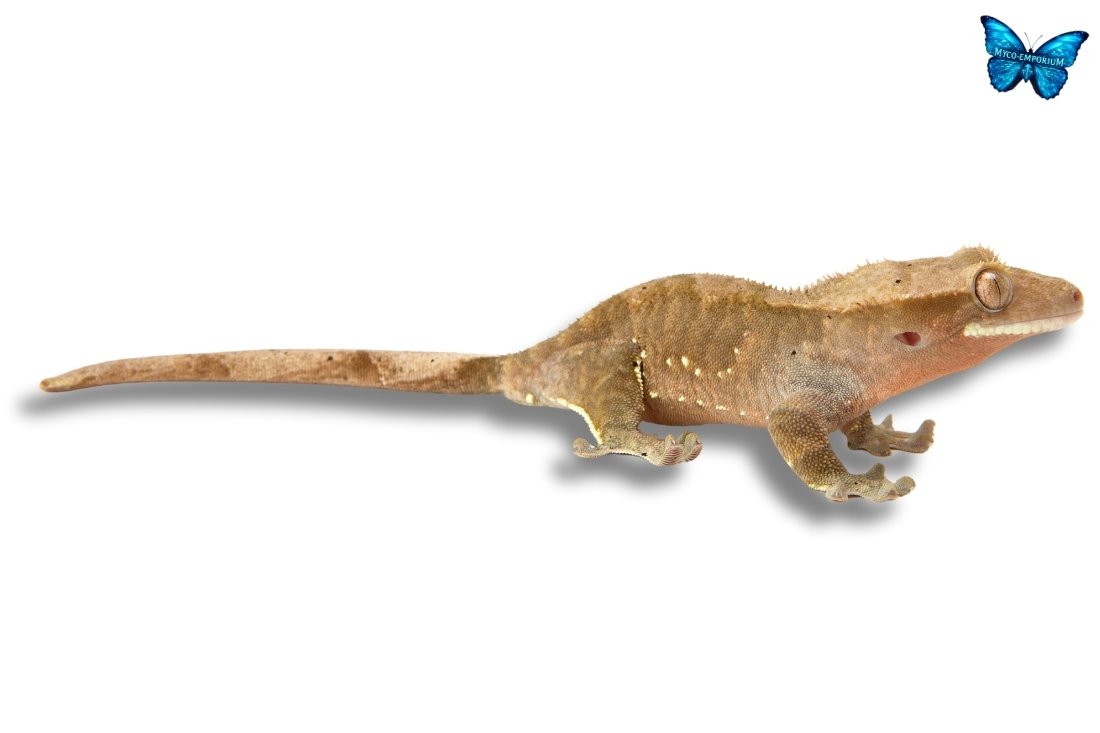
- Adult Size: ~7–9" (18–23 cm) total length including tail; ~35–50 g average adult
- Life Span: Commonly 15–20+ years in captivity with proper care
- Difficulty: Beginner-friendly, but requires respect for humidity cycles and avoidance of high heat
Characteristics & Temperament
In the Myco-Labs sitcom lineup, Correlophus ciliatus is the mildly dramatic tree goblin who naps all day, then parkours across the glass as soon as the lights dim. As a LIVE SPECIMEN, a Crested Gecko communicates a lot with body posture and color: relaxed, loosely draped gecko with bright, even tones says “vibe good,” while pressed-flat, dark, jittery gecko says “environmental update required, Myco-Emper.” When an EMPROIUM walks by at night you’ll often see a curious head tilt, a careful repositioning on a vine, and—on feeding night—a sudden launch toward the next snack like someone just hit fast-forward on the forest.
Appearance
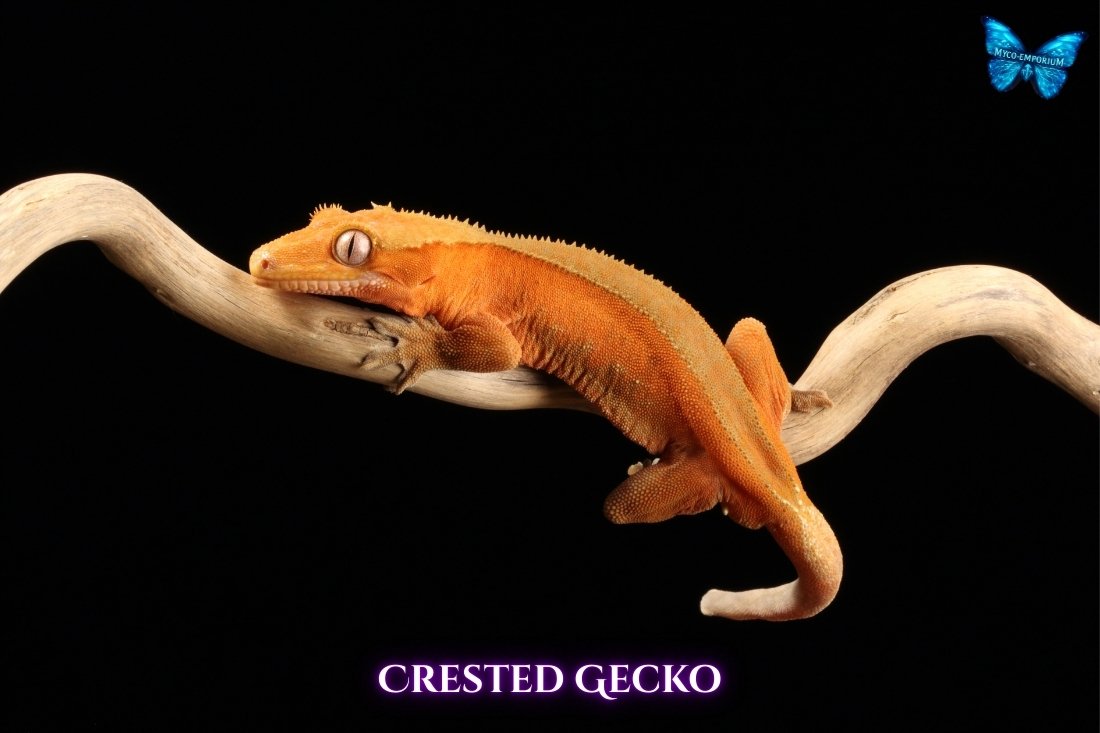
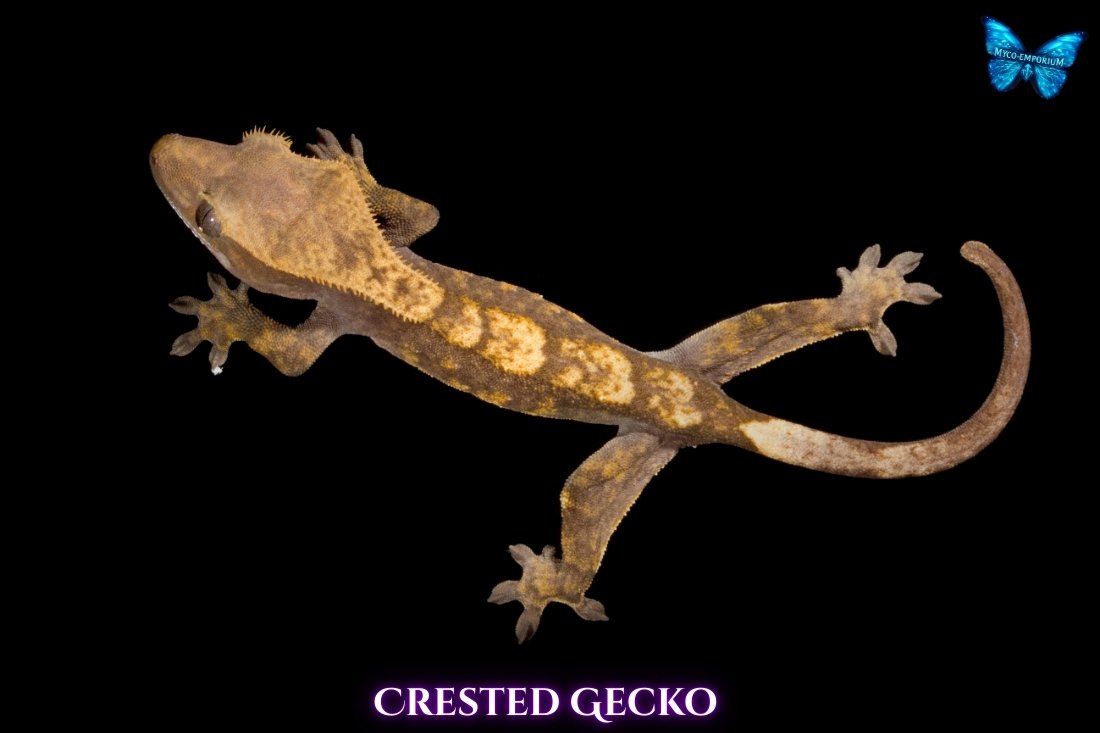
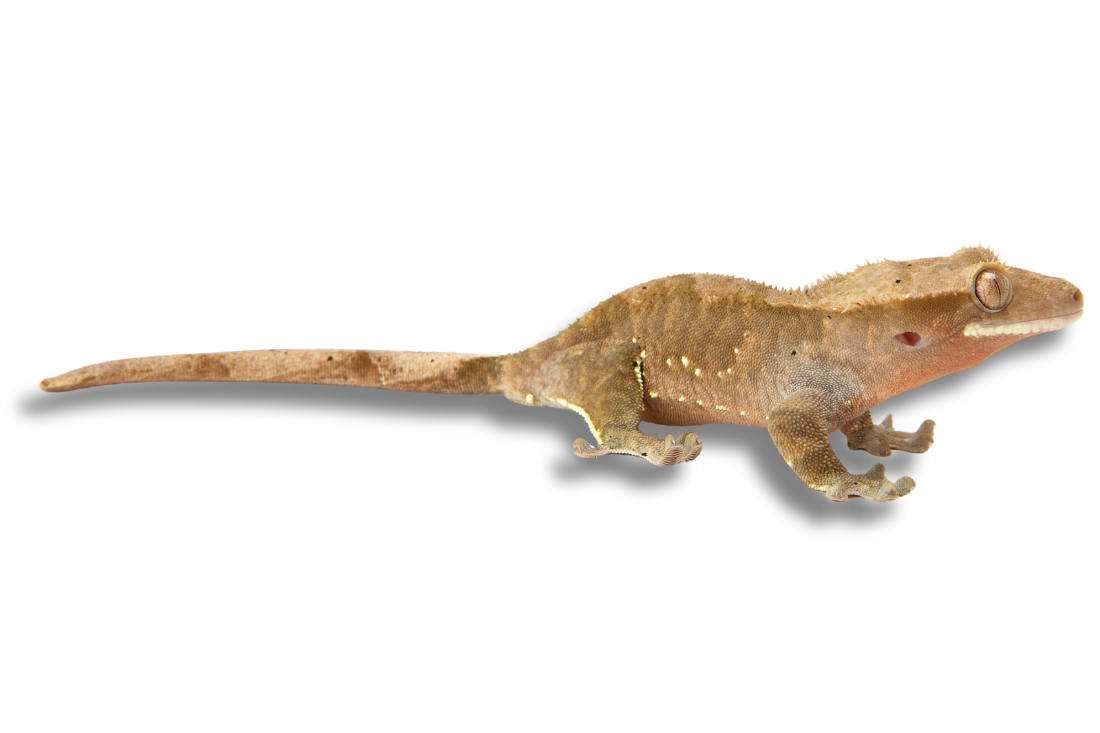
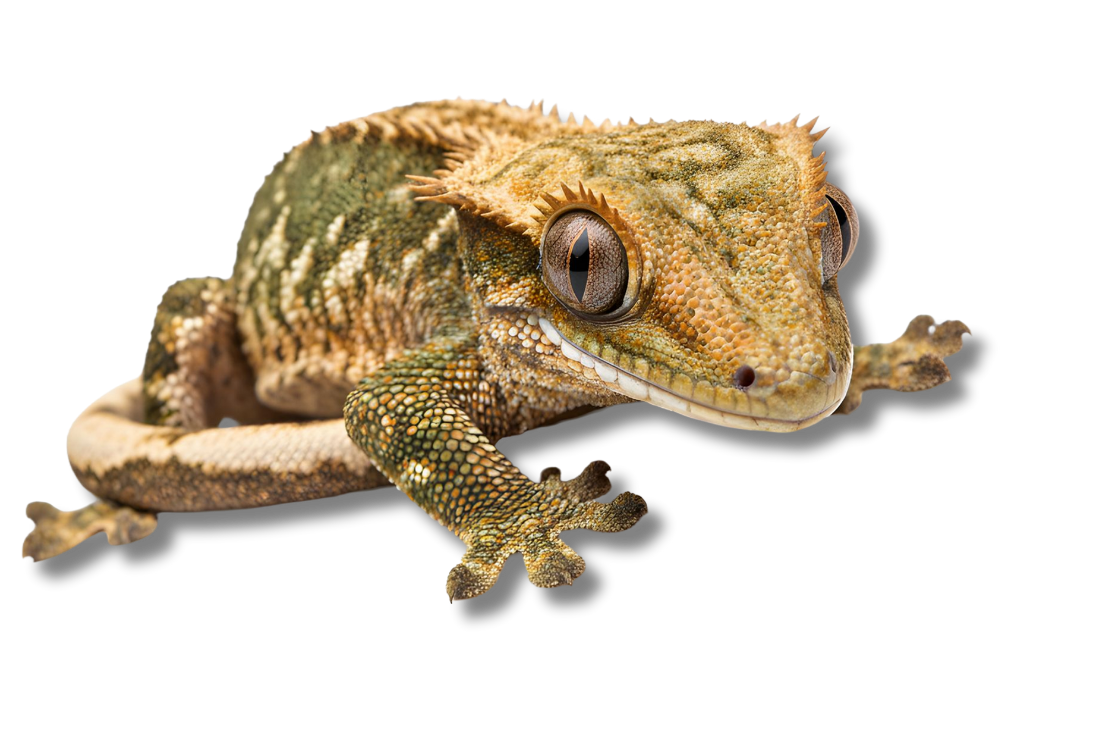
Coloration: Crested Geckos come in creams, yellows, oranges, reds, olives, and browns with patterns
like harlequin, flame, tiger, and dalmatian spotting. Many morphs show high contrast along the dorsal crest and sides,
giving that “tiny dragon in neon jungle” aesthetic that Myco-Patrons love.
Body Form: Semi-stocky arboreal gecko with a large triangular head, soft fringed crests above eyes
and along the back, wide toe pads for climbing, and a prehensile tail used for balance (until dropped—no regrowth!).
UV Reaction: Most individuals don’t truly “glow,” but patterns and lighter pigments can pop subtly
under a quality 365 nm blacklight. Think “soft forest rave texture highlight,” not full-blown glow stick.
Temperament
Personality: Generally calm but jump-inclined. Many Crested Geckos tolerate gentle handling
and will peek around like curious tree sprites. Sudden movement, bright light, or grabby hands can flip them
into “leap first, question later” mode.
Activity: Primarily crepuscular to nocturnal. Expect the main show in the evening and early night,
when an EMPROIUM will see climbing, exploring, and feeding behavior.
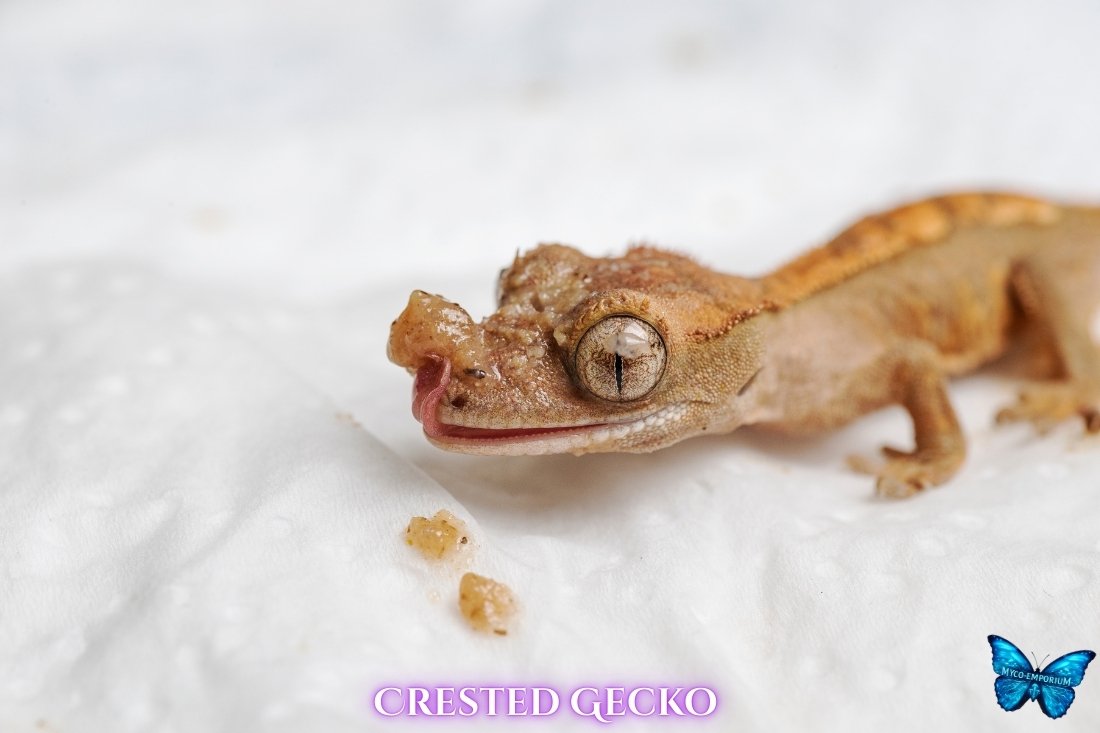
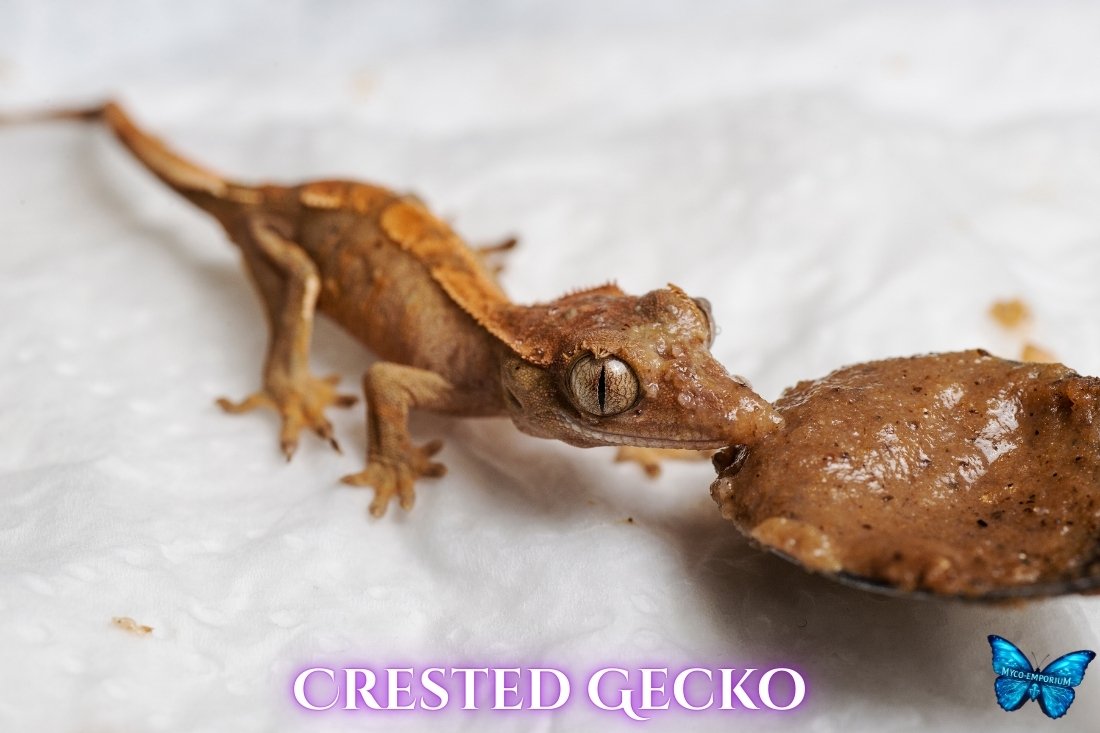
Feeding: Opportunistic. They lap up fruit-based diets from dishes and will enthusiastically pounce
on moving insects. Feeding nights often look like slow, careful stalking followed by a surprising little launch.
Social Housing
Best practice for most Myco-EMPers: house Crested Geckos singly. Experienced keepers may maintain carefully monitored breeding groups (one male with one or more females), but this is advanced and not recommended for casual Myco-Patrons. Never house adult males together. Ignoring this advice can lead to chronic stress, injuries, tail loss, weight loss, and “surprise permanent roommate removal” via fighting.
Quick Traits
UV Responsive: No (patterns may pop slightly, but no strong fluorescence) Activity: Medium–High at night; best viewed after lights out Social: Solitary; breeding groups only for advanced keepers Handling: Occasional, gentle handling; watch for jump launchesKeeper Notes
- Stress signs: staying very dark for long periods, hiding constantly, refusing food, rapid breathing, frantic glass-surfing, or repeated jump attempts when approached.
- Confidence tips: add more vertical cover, plants, and cork; reduce direct traffic and sudden noise; provide stable temps and humidity cycles; avoid handling during initial acclimation weeks.
- Display advice: place the enclosure higher than eye level, back and sides partially covered, with vines and branches crossing the front. This lets EMPROIUMS see natural behavior without making the LIVE SPECIMEN feel like it’s on a brightly lit stage.
Care Requirements
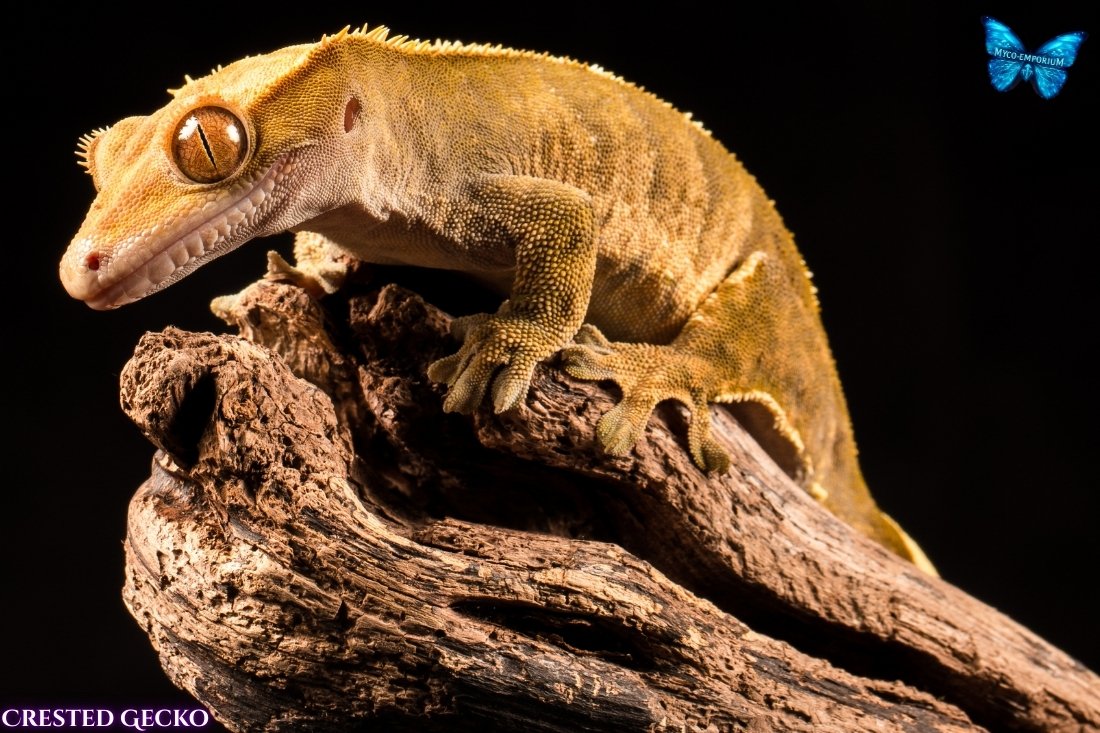
To keep Correlophus ciliatus thriving like a true New Caledonian night explorer, a Myco-EMPer must provide height, humidity cycles, climbing structure, and stable forest-floor temperatures. This is the official Myco-Lab protocol for a Crested Gecko that is enriched, calm, and living its best arboreal life.
Enclosure Setup
Type: Arboreal tropical vivarium with height-first design and dense foliage.
Minimum Size: Adult: 18″×18″×24″ or bigger; juveniles okay in 12″×12″×18″ until upgraded.
Ventilation: Cross-ventilated but humidity-stable; avoid setups that dry instantly.
Substrate
Use coco fiber + fine orchid bark + leaf litter + clean topsoil (no fertilizers). Bioactive systems with isopods/springtails work extremely well.
Habitat
- Décor: Cork rounds, flats, vines, driftwood, broad leaves, live or artificial plants.
- Microhabitats: Humid lower/back zones; drier exposed perches near top.
- Water: Fresh dish available; mist 1–2× daily for drinking droplets.
Environment Targets Forest Rhythm
Lighting
Provide a 12L:12D cycle. Optional low UVB (2–5%) recommended with shaded retreats. Avoid harsh overhead beams with no coverage.
Feeding
- Juveniles: CGD 4–5× weekly; insects 2–3× weekly.
- Adults: CGD 3× weekly; insects 1–2× weekly for enrichment.
- Schedule: Sun/Tue/Thu = CGD. Mon/Fri = insects. Remove uneaten prey.