Bumblebee Millipedes (Anadenobolus monilicornis) — Introduction & Overview
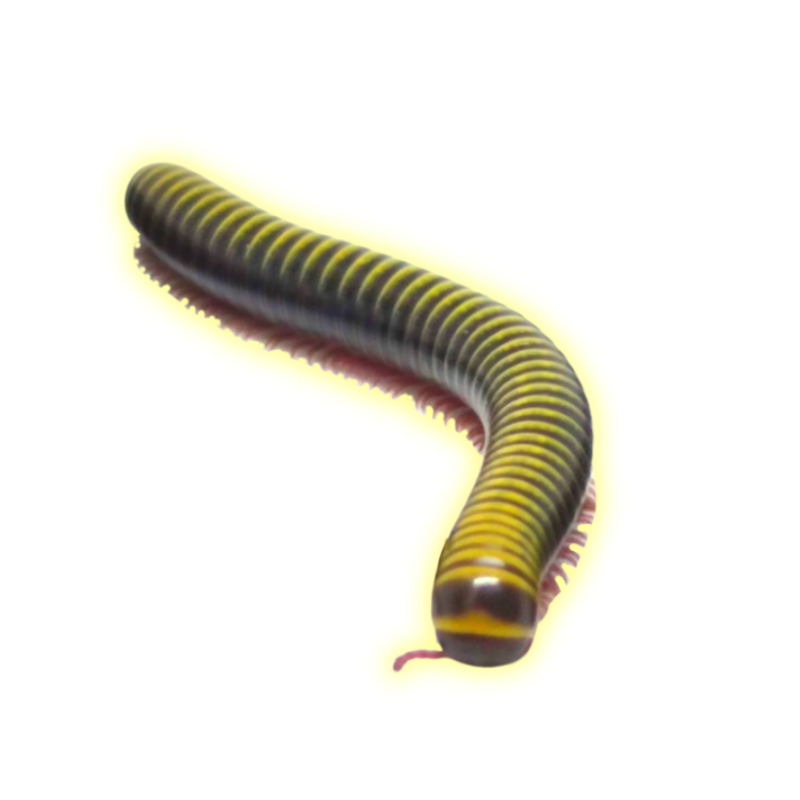
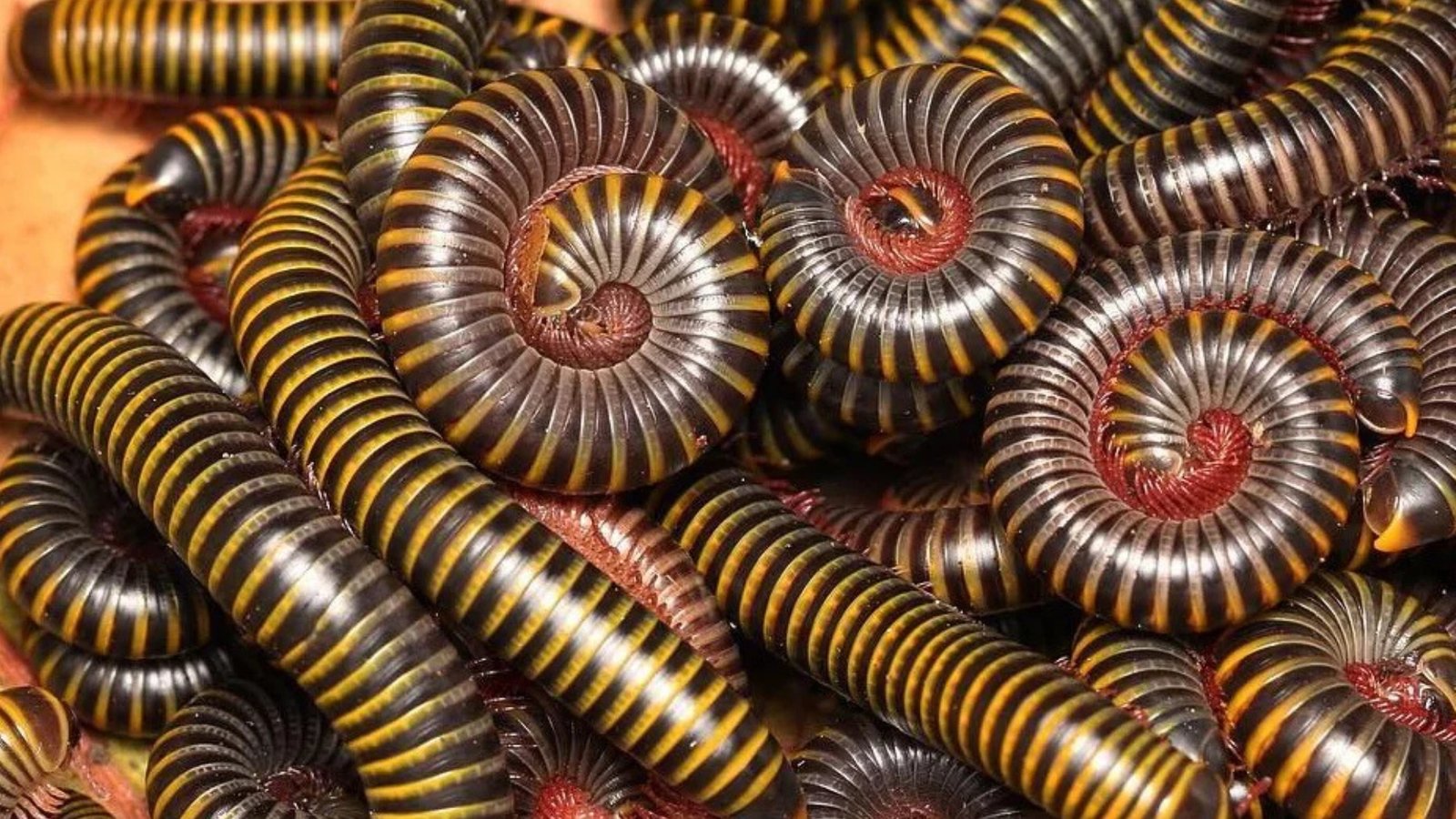
Bumblebee Millipedes (Anadenobolus monilicornis) glow with bold black-and-yellow bands that pop in planted terraria. Gentle, tidy, and endlessly busy, they aerate soil and recycle leaf litter—perfect for bioactive builds or as a calm focal species. Under safe blacklight, their pale bands can show a faint, tasteful fluorescence, giving Patrons a museum-after-hours viewing experience without stressing the animals.
Why Keep This Species
- Striking “bumblebee” banding that reads beautifully against green plants and dark soils.
- Hardy detritivores that thrive with stable moisture and steady leaf/wood supply.
- Educational decomposers—fantastic for teaching nutrient cycling and bioactive stewardship.
Keeper Profile
- Handling: primarily hands-off; brief, gentle handling only.
- Climate: ~72–78 °F (22–26 °C), 70–85% RH with airflow.
- Habitat: deep, nutritious substrate; abundant leaf litter & decayed hardwood; cross-ventilation.
Keeper’s Summary
Set a terrestrial bioactive enclosure (5–10 gal for a small group; larger thrives even better) with 3–4″ (7.5–10 cm) of rich substrate, thick leaf litter, and chunks of soft, decaying hardwood—their primary food. Maintain 72–78 °F and 70–85% RH with good airflow; keep portions of the substrate lightly moist while allowing a drier edge. Offer supplemental veg slices and a calcium source (e.g., cuttlebone). Replace produce within 12–24 hrs to prevent mold. Avoid frequent handling and always wash hands; like many millipedes, they can secrete mild defensive benzoquinones that may irritate sensitive skin.
🐾 Bumblebee Millipede — Anadenobolus monilicornis
- Common Name(s): Bumblebee Millipede, Yellow-Banded Millipede
- Scientific Name: Anadenobolus monilicornis
- Native To: Caribbean (e.g., Puerto Rico, Hispaniola, Jamaica) & introduced in Florida
- Adult Size: ~2–3″ (5–7.5 cm)
- Life Span: ~2–5+ years with steady nutrition and moisture
- Difficulty: Easy (excellent for beginners and bioactive displays)
Characteristics & Temperament
A calm, communal detritivore, Anadenobolus monilicornis spends daylight tucked beneath leaf litter, emerging at dusk to graze steadily on decaying plant matter and wood. Their vivid banding and gentle movements make them ideal for display and education.
Appearance
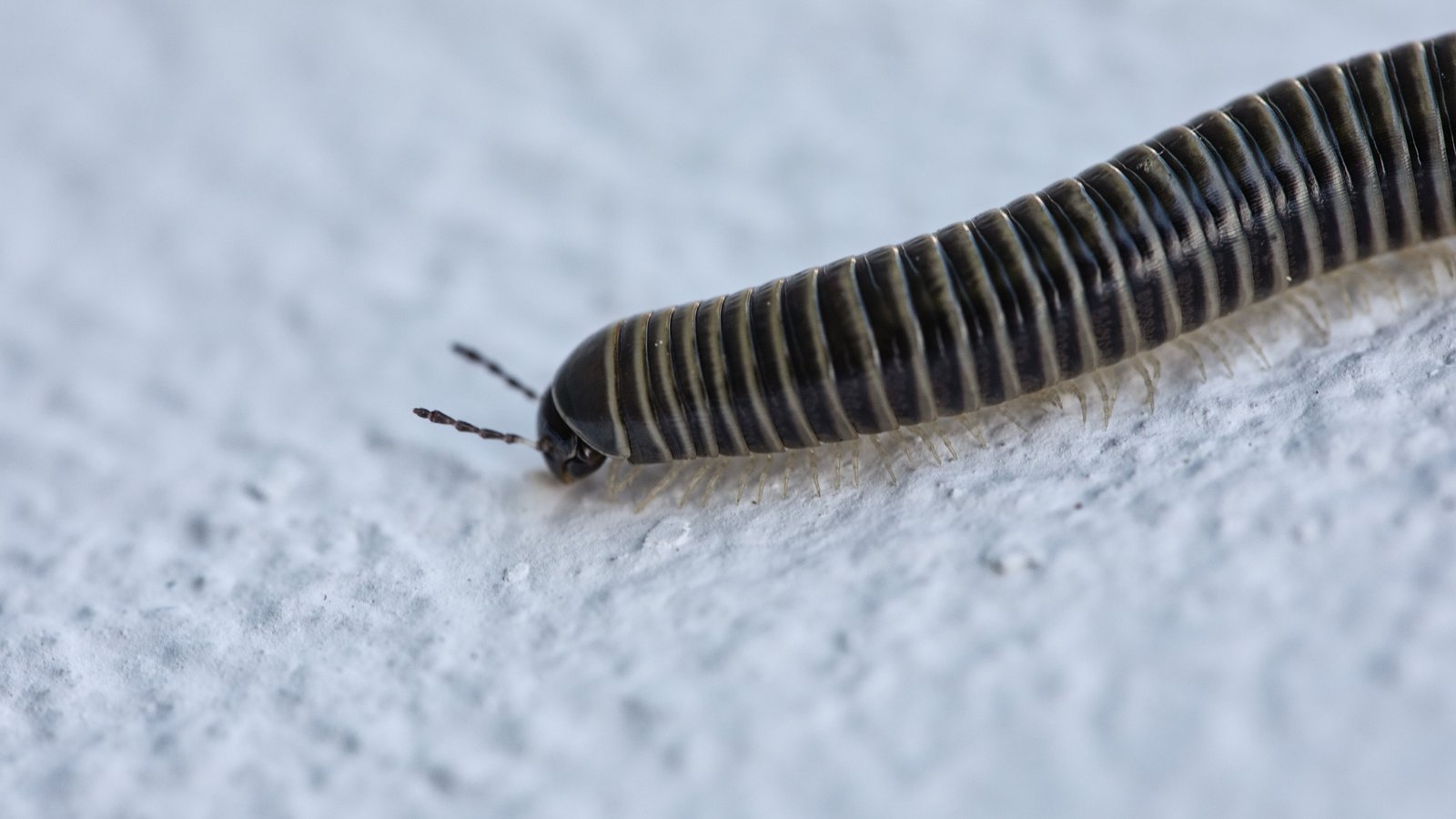
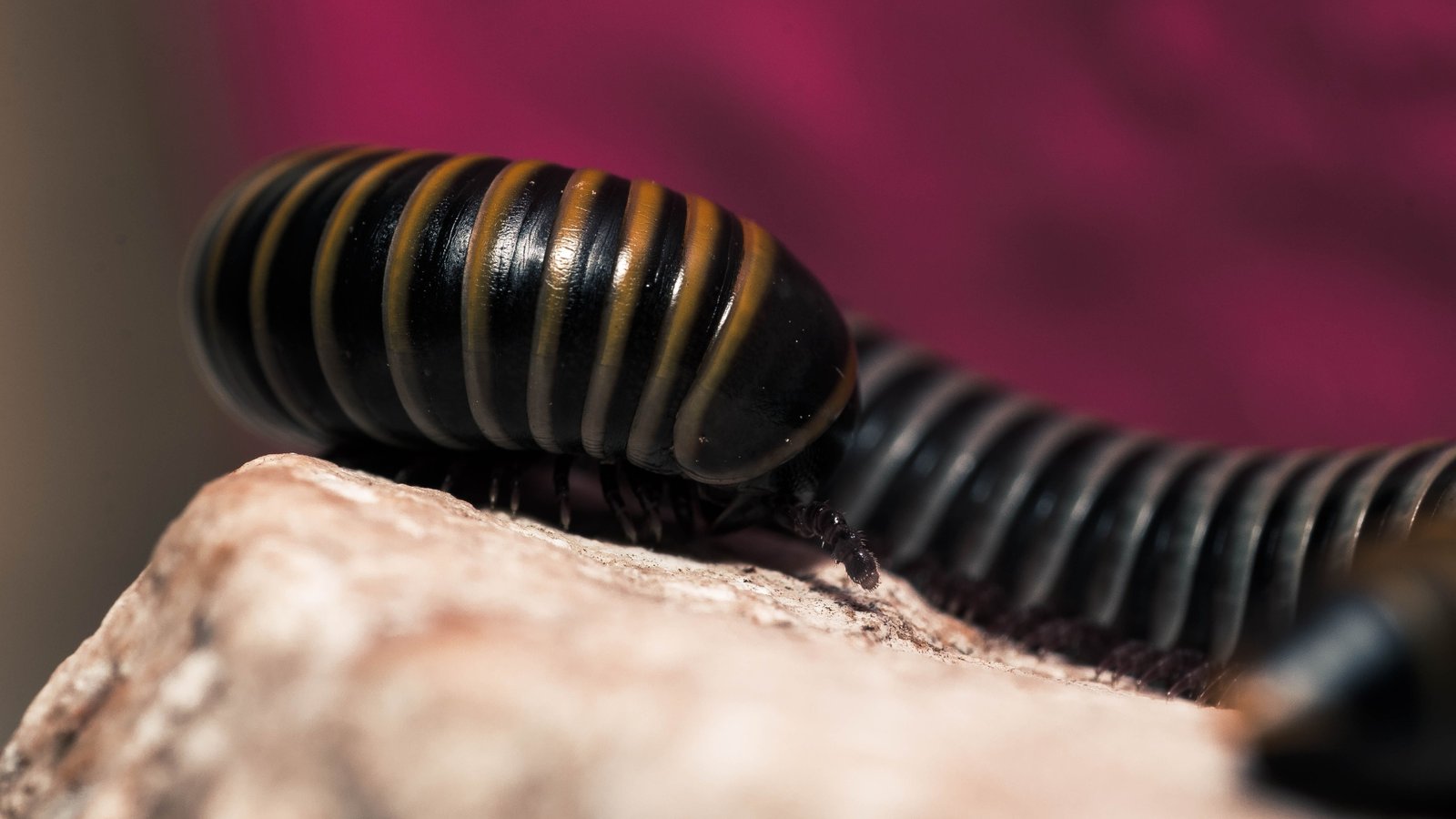
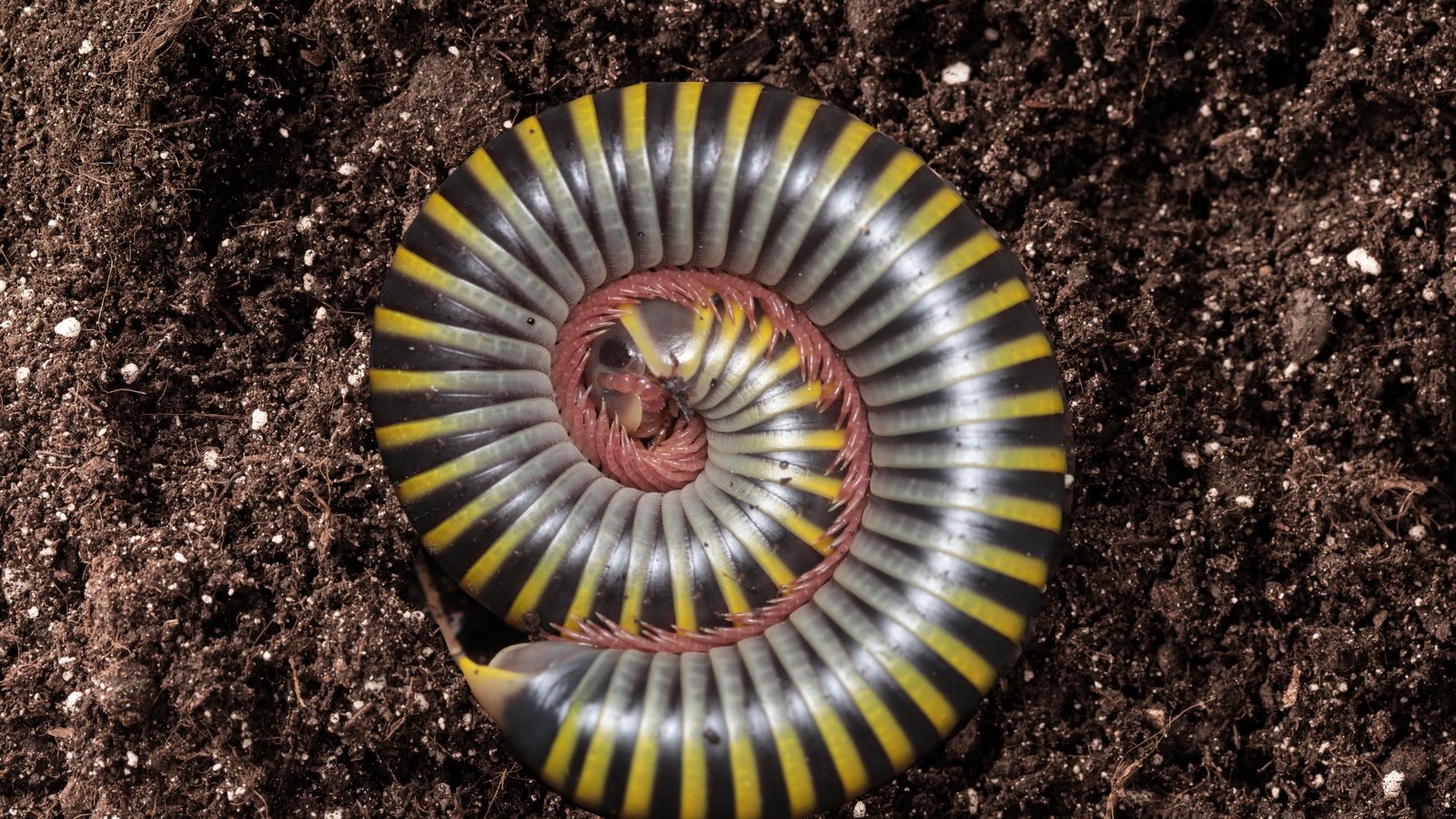
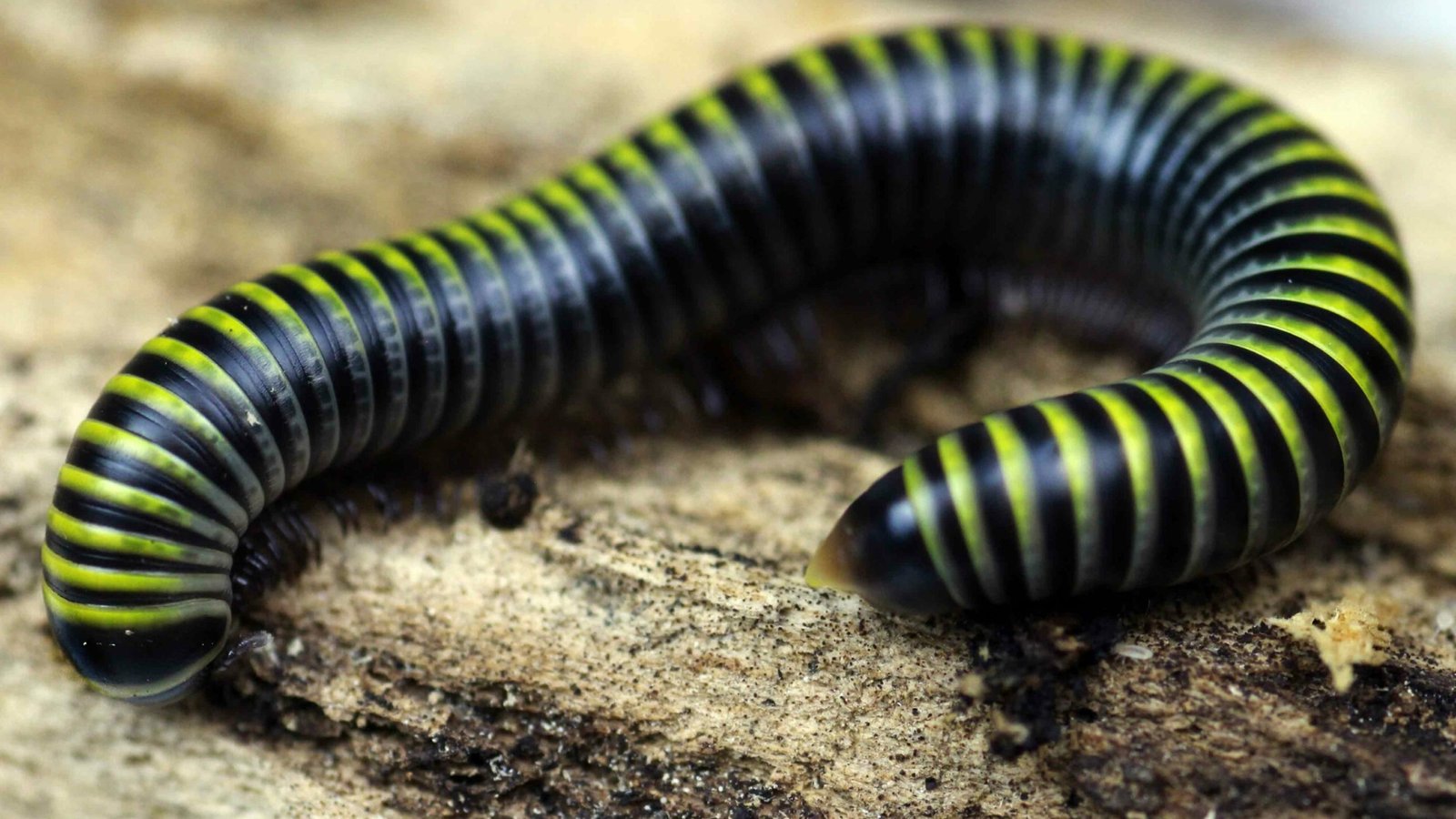
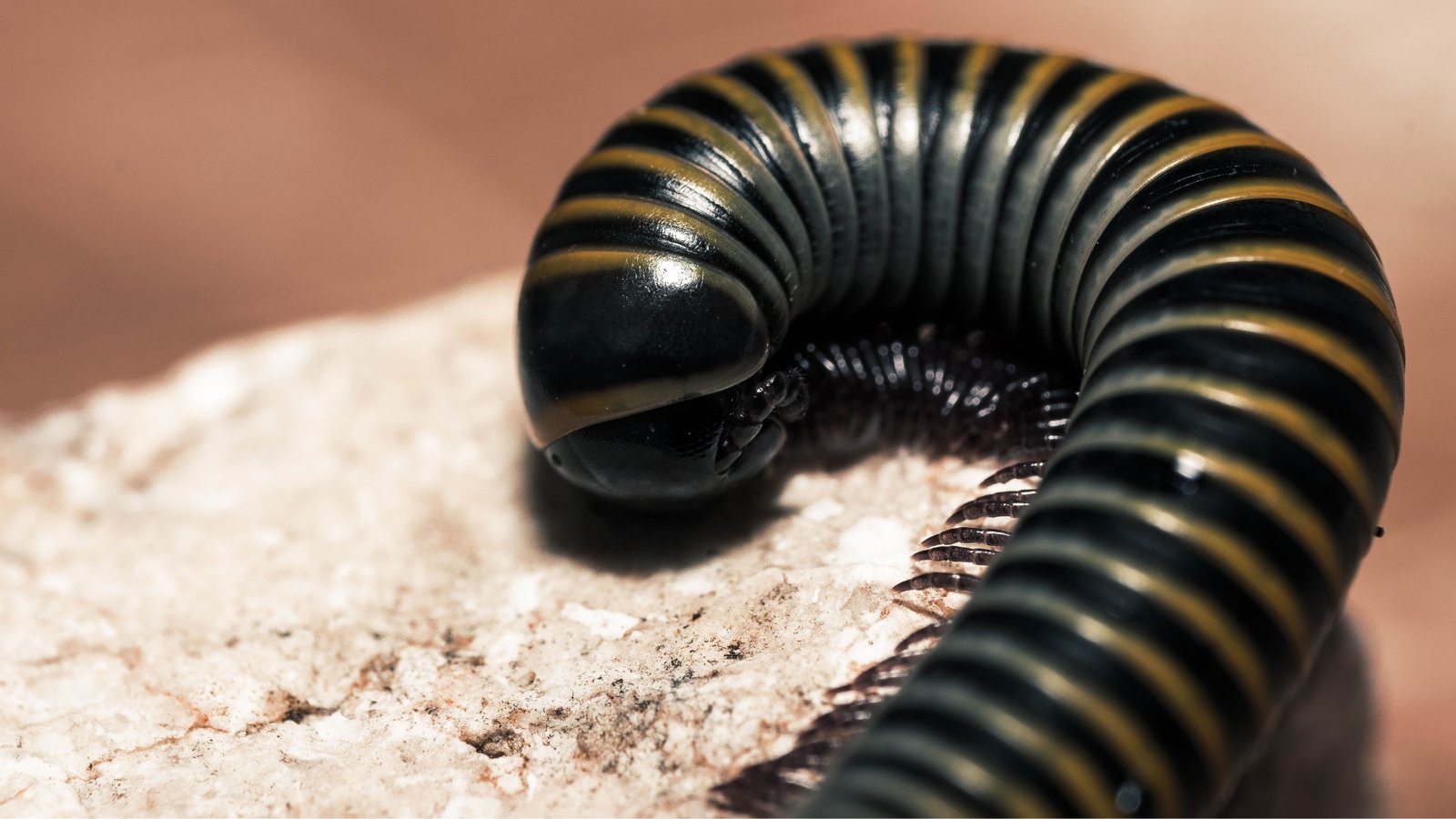
- Coloration / Pattern: Glossy black rings with bright yellow annular bands; subtle individual variation in band width and tone.
- Build / Form: Slender, cylindrical body; many short legs; coils smoothly when startled.
- Light Response: Pale bands may show faint fluorescence under UV; limit exposure to brief viewing only.
Temperament
- Baseline: Calm & shy; prefers cover by day, forages at night.
- Response to Disturbance: Curls and may release mild defensive secretions; rarely bolts.
- Feeding Style: Slow grazer; most active at dusk/night on leaf litter and soft wood.
Social Housing
- Communal potential is good. Keep groups with ample hides, deep substrate, and abundant food.
- Provide multiple cover zones to prevent resource guarding; avoid overcrowding.
- Quarantine new arrivals before mixing.
Quick Traits
Keeper Notes
- Stress Signs: Prolonged tight curl, refusal to emerge, restless surface roaming.
- Confidence Builders: Deep, nutritious substrate; thick leaf litter; steady moisture gradient; low foot traffic.
- Display Tips: Indirect, low-glare lighting; observe with red light at night; brief UV peeks only.
Care Requirements
Core setup and environmental targets to keep Anadenobolus monilicornis thriving.
Enclosure Setup
- Type: Terrestrial, burrowing bioactive.
- Minimum Size: 5–10 gal for a small group (6–10). Larger volumes stabilize humidity and food cycles.
- Safety: Secure lid or locking front; cross-ventilation; route any heat cables safely (no hot spots).
Layout
- Size: e.g., 10 gal / 20L footprint or larger.
- Lid: Tight mesh or ventilated front; aim for gentle airflow.
- Hides: Cork rounds, bark slabs, leaf piles, moss pockets.
- Enrichment: Decayed hardwood chunks, thick leaf litter, low-light plants (pothos, ferns).
Substrate
- Blend: Organic topsoil + coco fiber + leaf litter + pulverized decayed hardwood (approx. 3:2:2:2 by volume); add crushed cuttlebone for calcium.
- Depth: 3–4″ (7.5–10 cm) for shallow burrowing and moisture buffering.
- Purpose: Primary food reservoir (leaves/wood), humidity retention, secure footing.
Habitat
- Water: Maintain moist micro-zones (moss corners/caps). Shallow water caps optional; avoid drowning risk.
- Décor: Logs, cork, leaf litter, smooth stones; add a calcium source (cuttlebone, eggshell powder).
- Behavior Fit: Surface forager and shallow burrower; appreciates cluttered cover.
Environment Targets Set & monitor
Lighting
Ambient room light is sufficient; UVB not required. Provide a stable 12L:12D photoperiod. Night viewing via dim red light; brief UV looks only.
Food & Water
- Staples: Leaf litter and decaying hardwood—replenish routinely.
- Supplement: Thin slices of squash, cucumber, carrot, sweet potato; small fruit amounts; remove leftovers within 12–24 hrs.
- Protein: Very small amounts of fish flakes or invertebrate chow 1× weekly.
- Hydration: Keep part of the substrate evenly moist; provide moist moss zones; refresh any water sources frequently.
- Best Time to Feed: Evening.
Cleaning
- Spot-Clean: Remove uneaten produce promptly; prune moldy patches.
- Deep Clean: Refresh substrate layers every 4–6 months; rinse décor with hot water only (no chemicals).