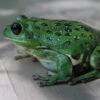
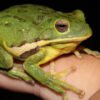
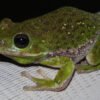
Barking Treefrog — Introduction & Overview
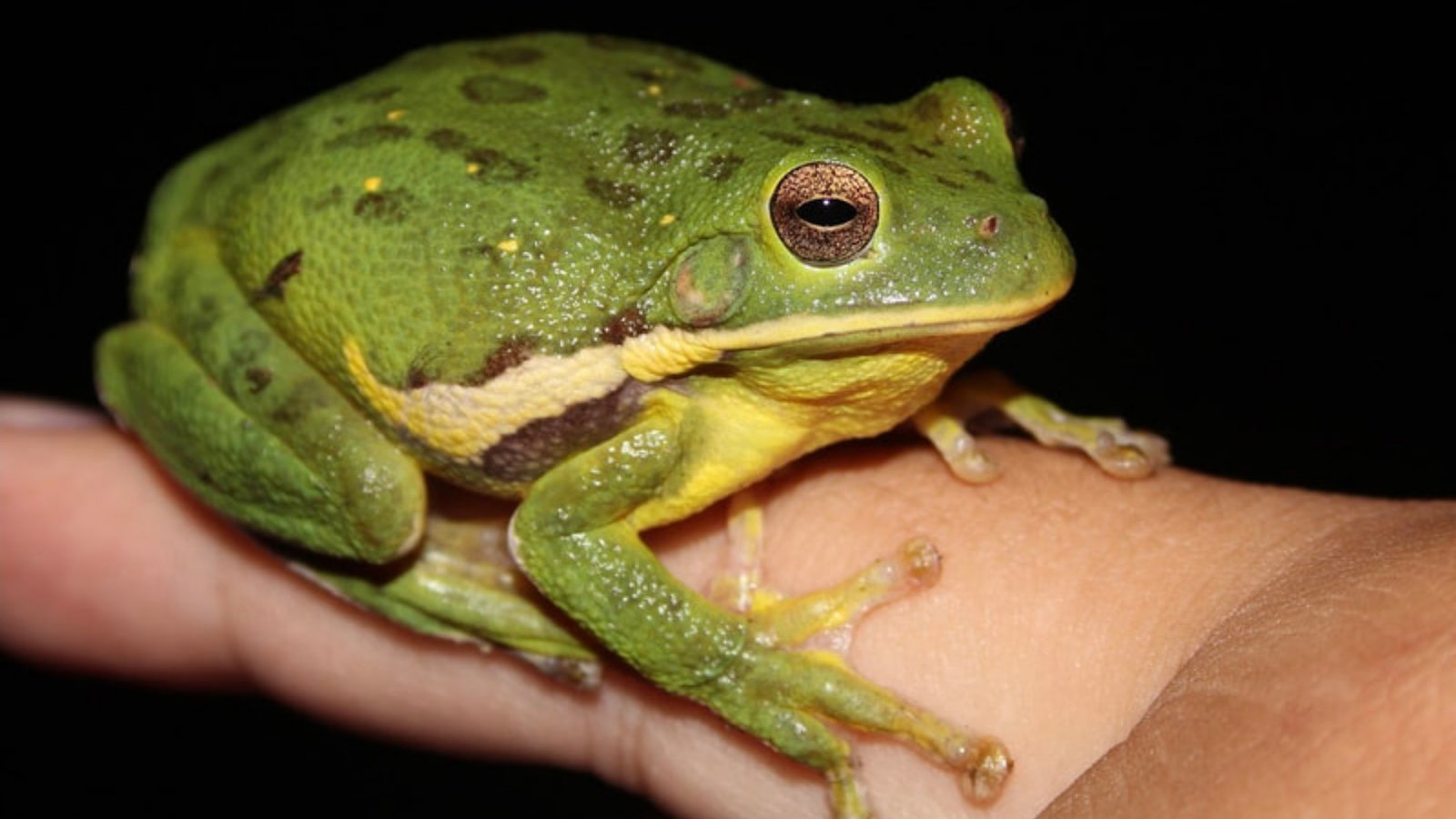
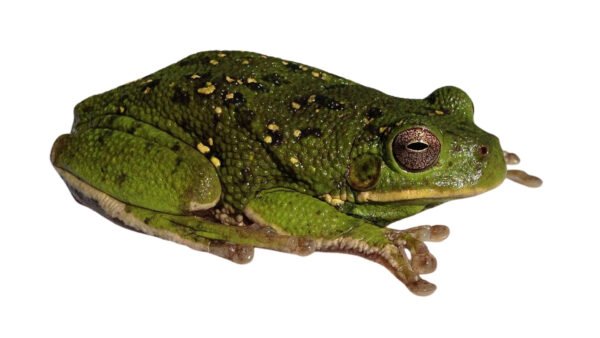
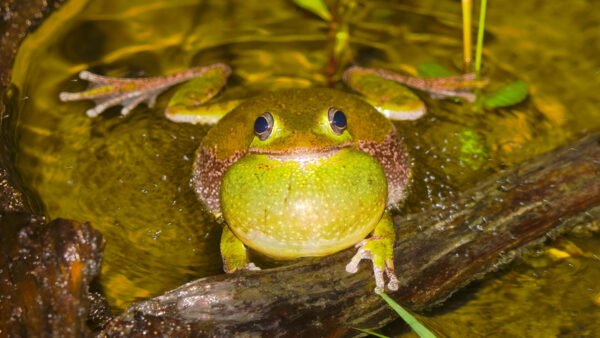
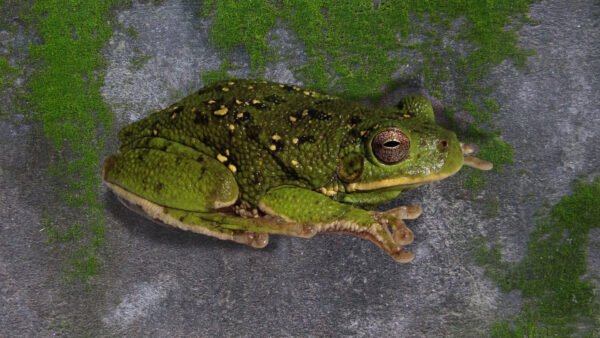
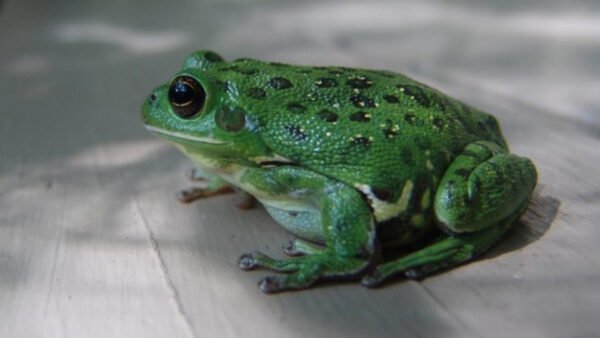
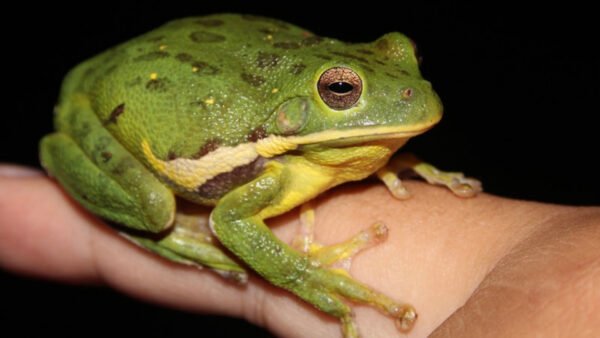
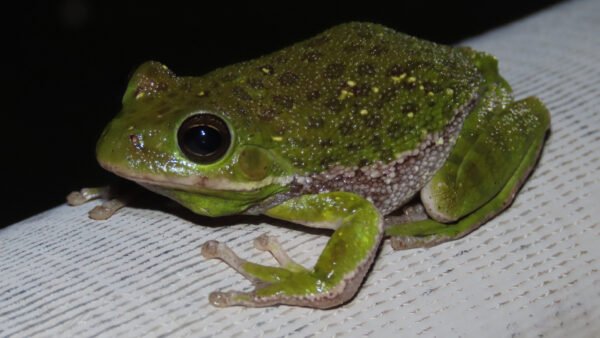
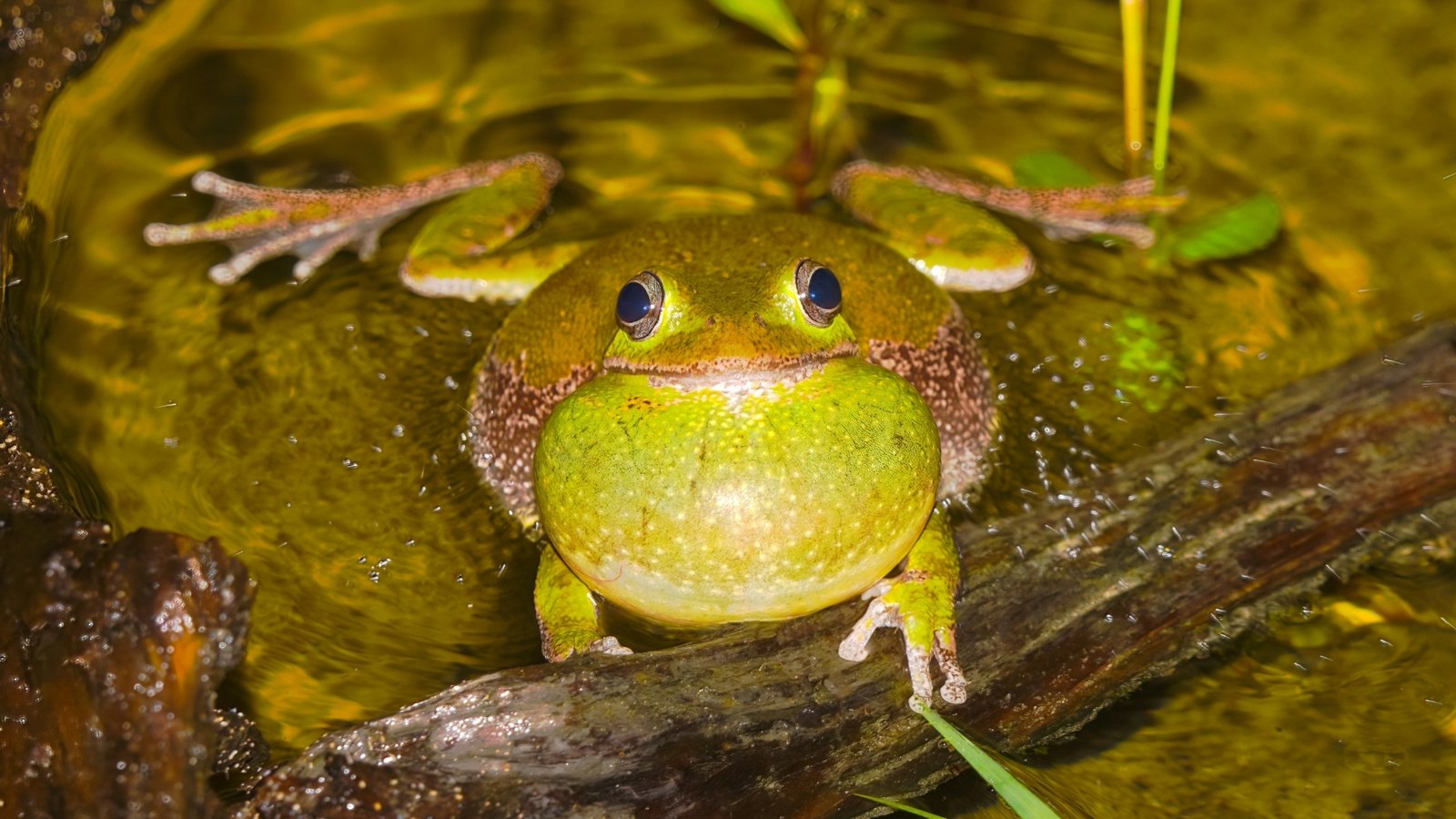
MYCO-EMPORIUMS, behold the amphibian equivalent of a neon gumball that yells at thunderstorms. The Barking Treefrog radiates smooth lime-to-emerald tones, inflates like a squishy balloon of cosmic sass when calling, and somehow manages to look both adorable and mildly judgmental at all times. They’re hardy, charismatic, humidity-loving climbers who perform nightly shenanigans worthy of a Futurama side character. Expect personality, occasional croaks that sound like a tiny alien klaxon, and unmatched display value when perched like a gelatinous jewel on a branch.
Why Keep This Species
- Brilliant green coloration with mood-shifting hues
- Hardy, humidity-tolerant, beginner-viable care
- Iconic “barking” vocalizations and fun climbing antics
Keeper Profile
- Hands-off: oils from human skin can stress amphibians
- 77–85°F warm zone with 60–80% humidity
- Arboreal habitat with vertical climbing, foliage, and excellent ventilation
Keeper’s Summary
Provide a vertical, plant-rich enclosure with consistent humidity, abundant perches, and a shallow clean water source. Mist lightly, cycle day/night temps, and feed small invertebrates several times per week. As with all amphibians, no direct handling—use tools for maintenance, keep conditions clean, and watch for hydration cues to keep your Barking Treefrog thriving like the cosmic crooner it was born to be.
Fast Facts — Barking Treefrog
Characteristics & Temperament
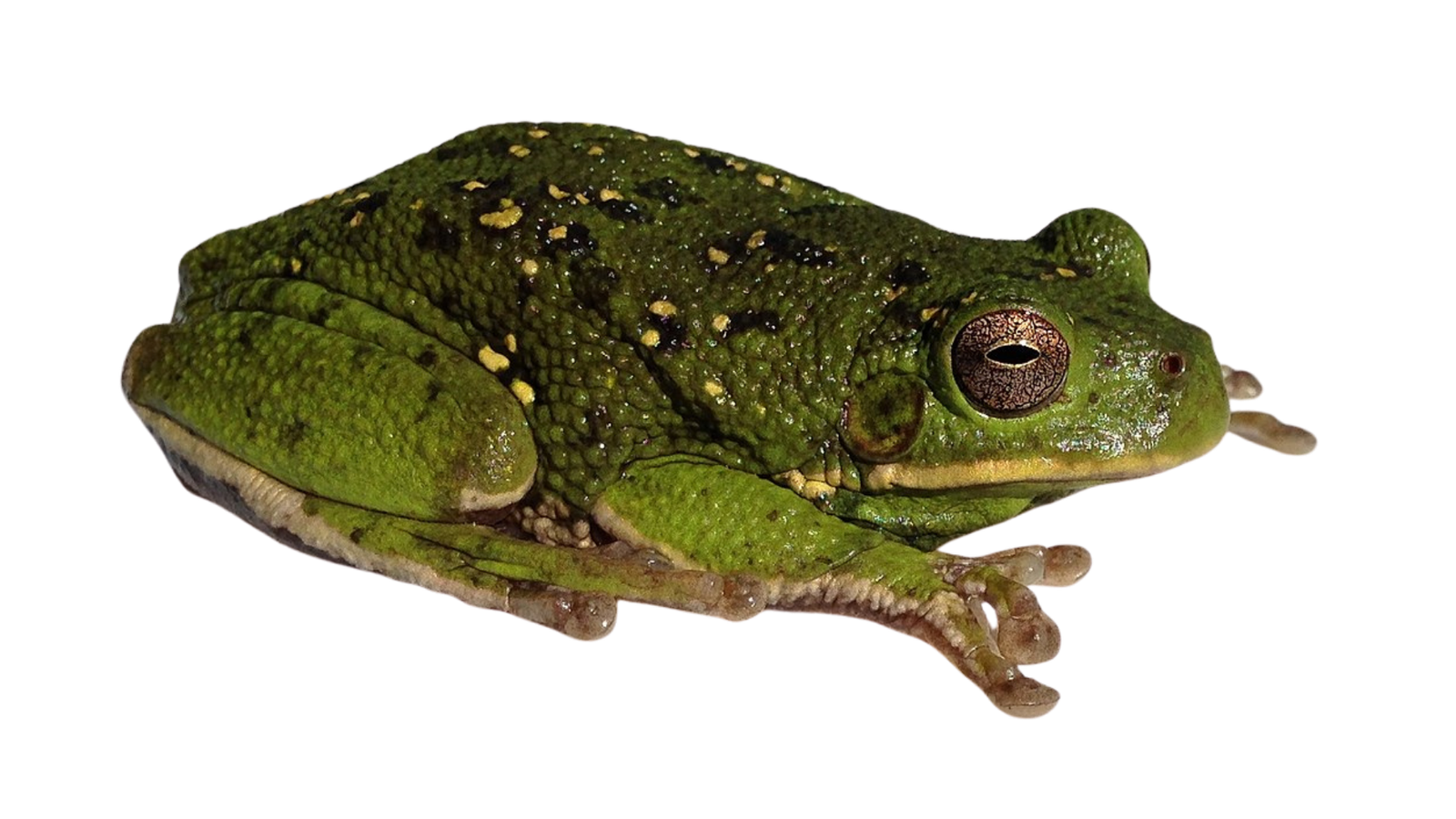
Picture Dryophytes gratiosus as that one cosmic jazz singer who warms up backstage by blowing air into their cheeks until they look like a lime-green balloon. Barking Treefrogs are smooth, expressive, humidity-loving aerial acrobats—equal parts adorable and theatrical. They shift shades like mood-ring sprites, bellow like tiny swamp deities on misty nights, and carry themselves with the calm confidence of an amphibian who knows it can stick to any vertical surface at will.
Appearance
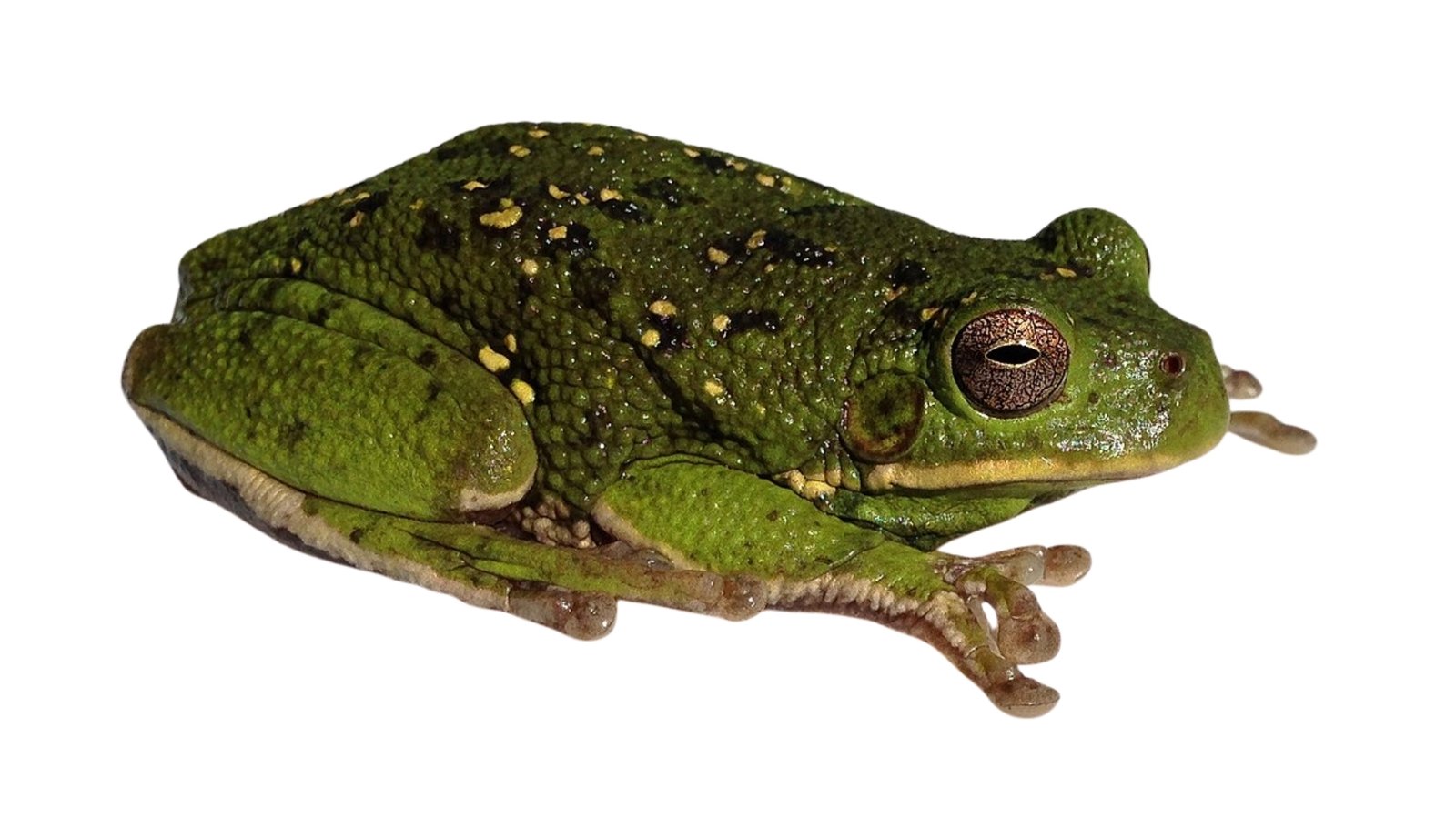
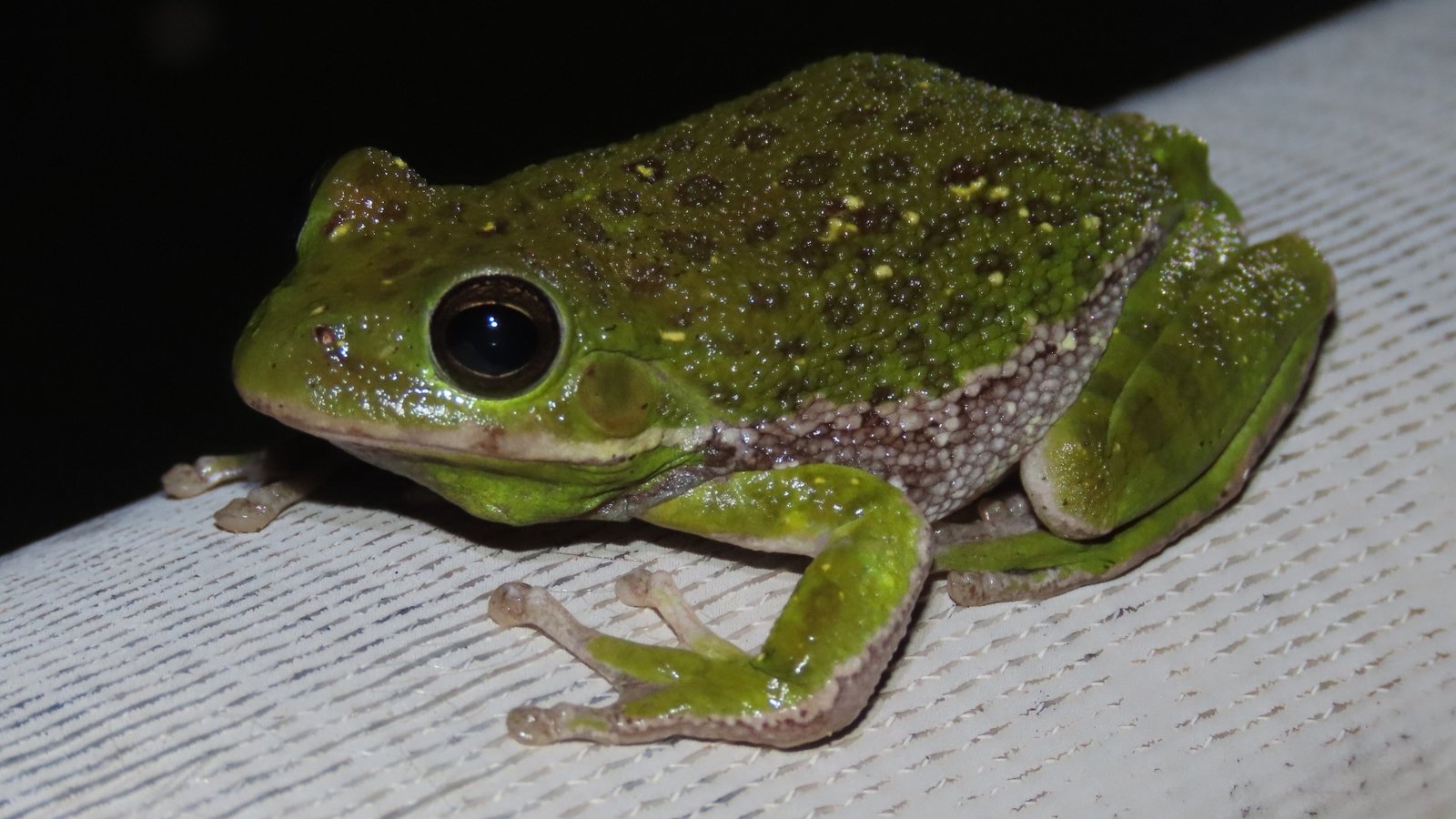
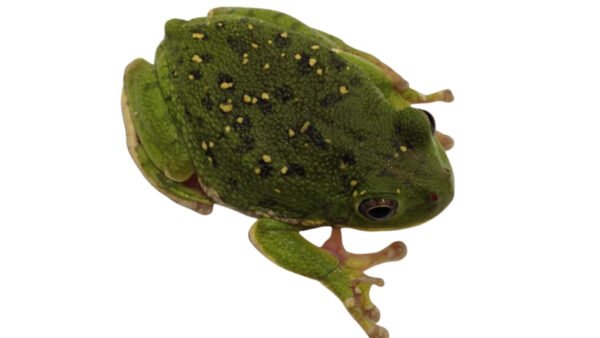
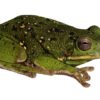
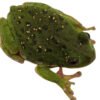
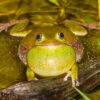
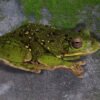
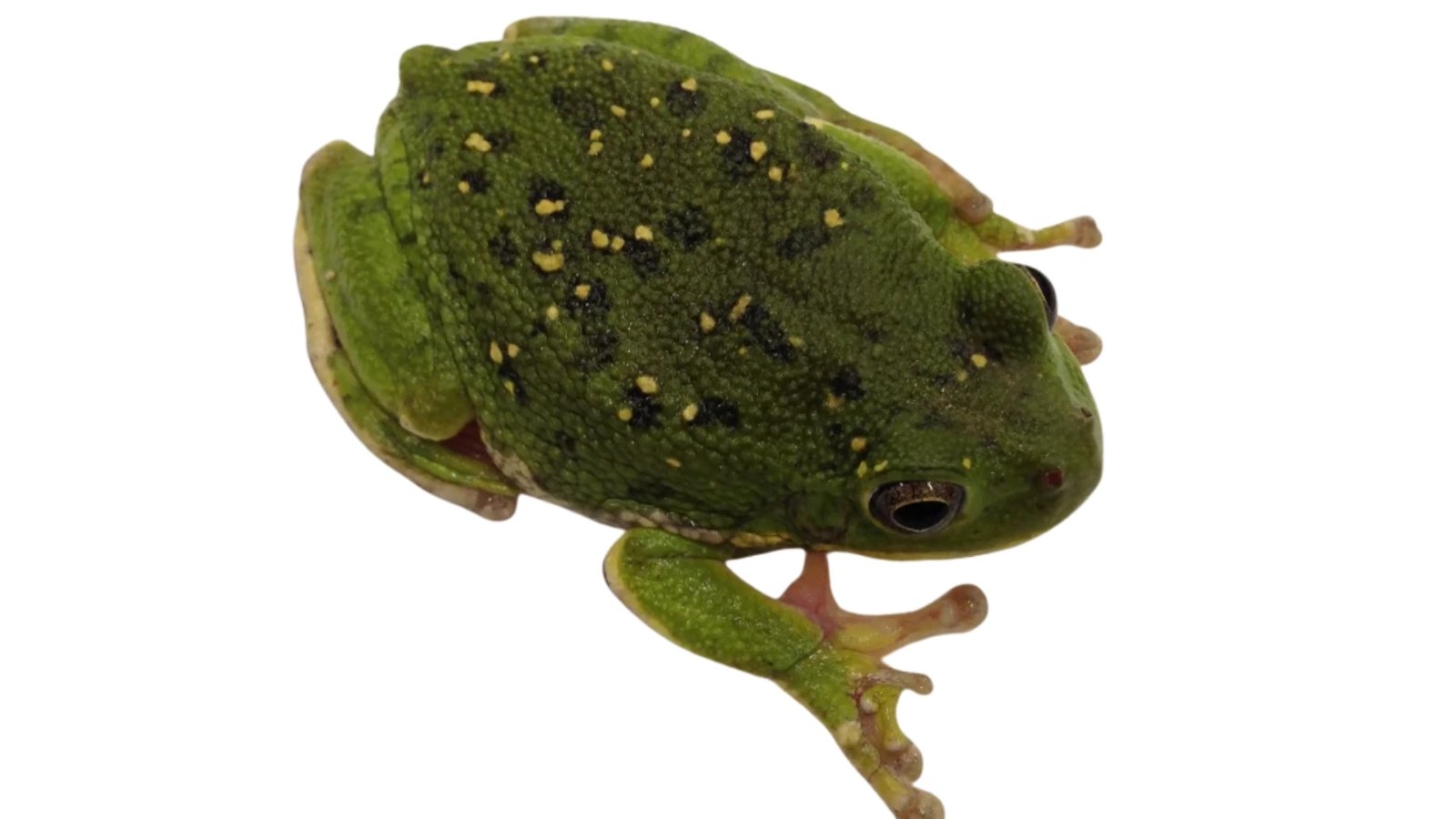
Coloration / Pattern: Usually bright leaf-green, but able to shift to darker green or bronze; faint spots may appear depending on mood and humidity.
Build / Form: Plump-bodied with wide toe pads, strong legs, and slightly granular skin texture.
Light Response: Mild reflective sheen under UV; skin appears brighter but not fluorescent.
Temperament
Baseline: Calm but cautious; prefers to perch quietly during the day and roam at night.
Response to Disturbance: Typically jumps away or climbs higher rather than confronts.
Feeding Style: Active insect hunter; most responsive after dusk.
Social Housing
Best housed singly or in carefully monitored small groups. Provide multiple perches and feeding stations to prevent resource competition. Default recommendation: House singly to avoid stress.
Quick Traits
Keeper Notes
- Stress Signs: Color darkening, refusal to feed, frantic climbing.
- Confidence Builders: Dense plant cover, stable humidity, quiet nighttime environment.
- Display Tips: Use dim, low-glare lighting; observe with red-safe night lights.
Care Requirements
Core setup and environmental targets to keep Dryophytes gratiosus thriving. Replace the bracketed fields with species-accurate values.
Enclosure Setup
Type: Arboreal.
Minimum Size: 18″×18″×24″ for one adult.
Safety: Secure top and front ventilation; avoid strong heat sources.
- Size: 18″×18″×24″
- Lid: Secure mesh or locked front panel
- Hides: Dense foliage, cork tubes, vertical cover
- Enrichment: Branches, vines, live plants, high perches
Substrate
Blend: Soil–coco fiber–sphagnum moss mix.
Depth: 2–3 in.
Purpose: Humidity buffering and plant support.
Habitat
- Water: Shallow dish; daily cleaning; moderate misting
- Décor: Vines, cork, live plants, bark rounds
- Behavior Fit: Climber and canopy percher
Environment Targets Set & forget (monitor)
Lighting
Ambient-only or low-level UVB optional, with a 12L:12D cycle. Night viewing via red-safe light.
Food & Water
- Juveniles: Small crickets/fruit flies 3–4× weekly
- Adults: Crickets, roaches, worms 2–3× weekly
- Hydration: Clean water dish + light misting
- Best Time to Feed: Dusk and early night
Cleaning
- Spot-Clean: Remove waste and uneaten insects daily.
- Deep Clean: Replace substrate every 2–3 months.