
American Green Treefrog — Introduction & Overview
The American Green Treefrog (Dryophytes cinereus) is the Myco-Emporium equivalent of a tiny neon boombox that only plays “rainforest jazz.” Bright, vibrant, sticky-toed, and always ready for a vertical adventure, this arboreal gem charms keepers with expressive eyes and on-cue squeaks that sound like it’s trying to text the universe through Morse code. MYCO-EMPERS adore them for their electric-green display value, comical hopping miscalculations, and their habit of clinging to glass like they’re filing an appeal against gravity itself. A lively, humidity-loving ambassador perfect for night displays.
Why Keep This Species
- Brilliant green coloration with high display appeal
- Hardy arboreal frog tolerant of a wide humidity range
- Fun vocalizations and excellent educational value
Keeper Profile
- Handling stance: hands-off; amphibian skin is extremely sensitive
- Climate targets: 72–82°F, 60–80% humidity, nightly misting
- Habitat approach: vertical space, foliage cover, moderate ventilation
Keeper’s Summary
Provide a vertically oriented enclosure with dense foliage, branches, and a stable humidity gradient. Maintain warm temperatures with a day/night cycle, and mist nightly for hydration. Offer small, appropriately sized insects 3–4× weekly. Avoid handling except when absolutely necessary, and keep water clean and dechlorinated. Stable humidity and visual cover are the keys to a confident, thriving frog.
🐾 American Green Treefrog — Dryophytes cinereus
- Common Name(s): American Green Treefrog, Green Tree Frog
- Scientific Name: Dryophytes cinereus
- Native To: Southeastern United States — swamps, marshes, wetlands, and vegetated ponds
- Adult Size: 1.25–2.5 in (3–6.5 cm); slender-bodied with adhesive toe pads
- Life Span: 2–6 years in captivity; occasionally longer with excellent care
- Difficulty: Beginner to Intermediate — humidity-sensitive but hardy once established
Characteristics & Temperament
Imagine Dryophytes cinereus as a neon-green satellite dish tuned to the frequency of humidity. When the lights dim and the moisture rises, this tiny frog transforms into a cartoonishly enthusiastic vocalist—belting out nasal “queenk-queenk” calls like it’s auditioning for the intergalactic choir. MYCO-PATRONS adore watching it cling to leaves with Marvel-level toe-pad powers, launching into surprisingly athletic hops that often overshoot the mark like a cosmic frog learning basic physics. A whimsical, curious, but easily stressed amphibian who thrives when admired from a respectful distance.
Appearance
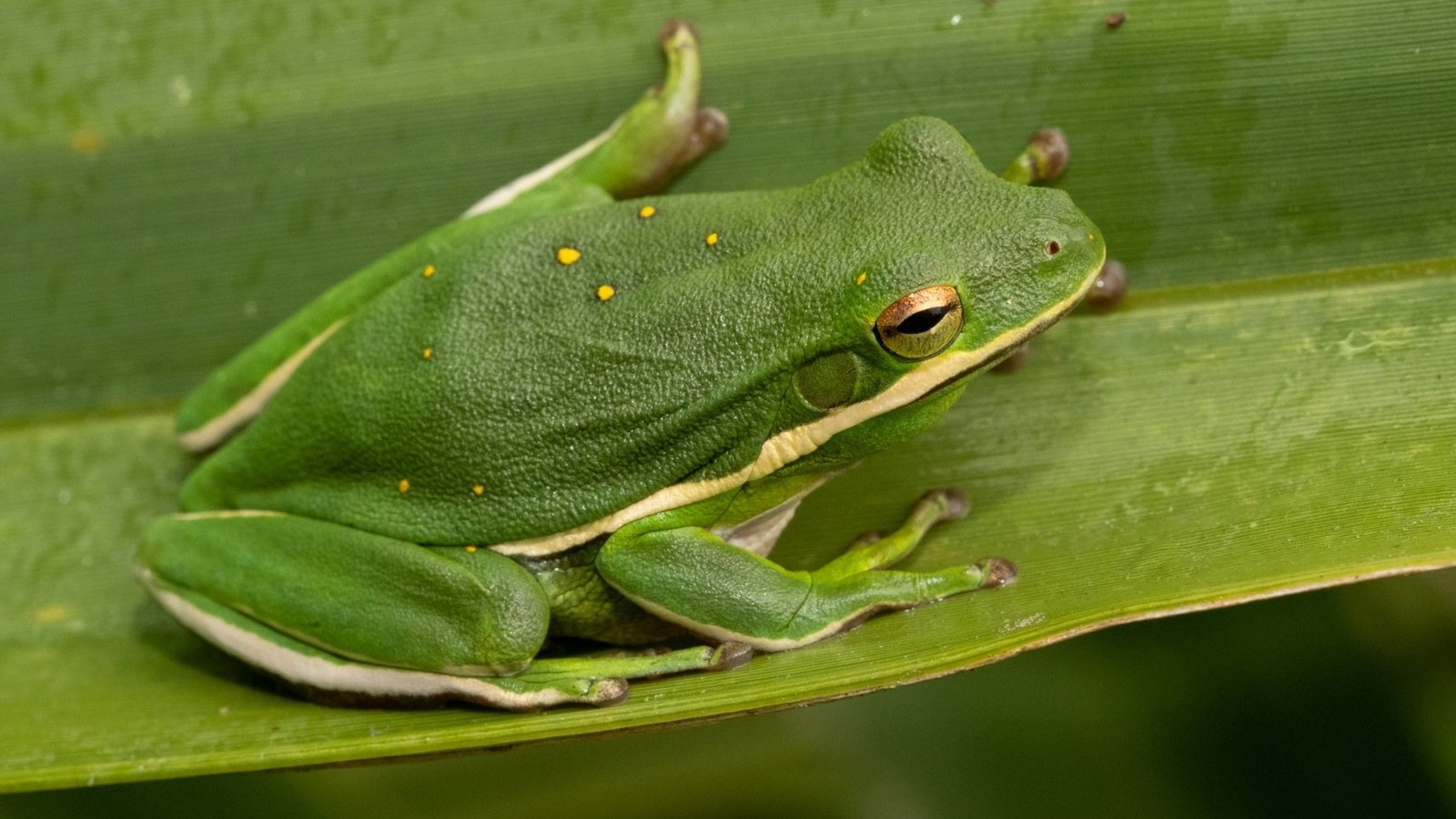
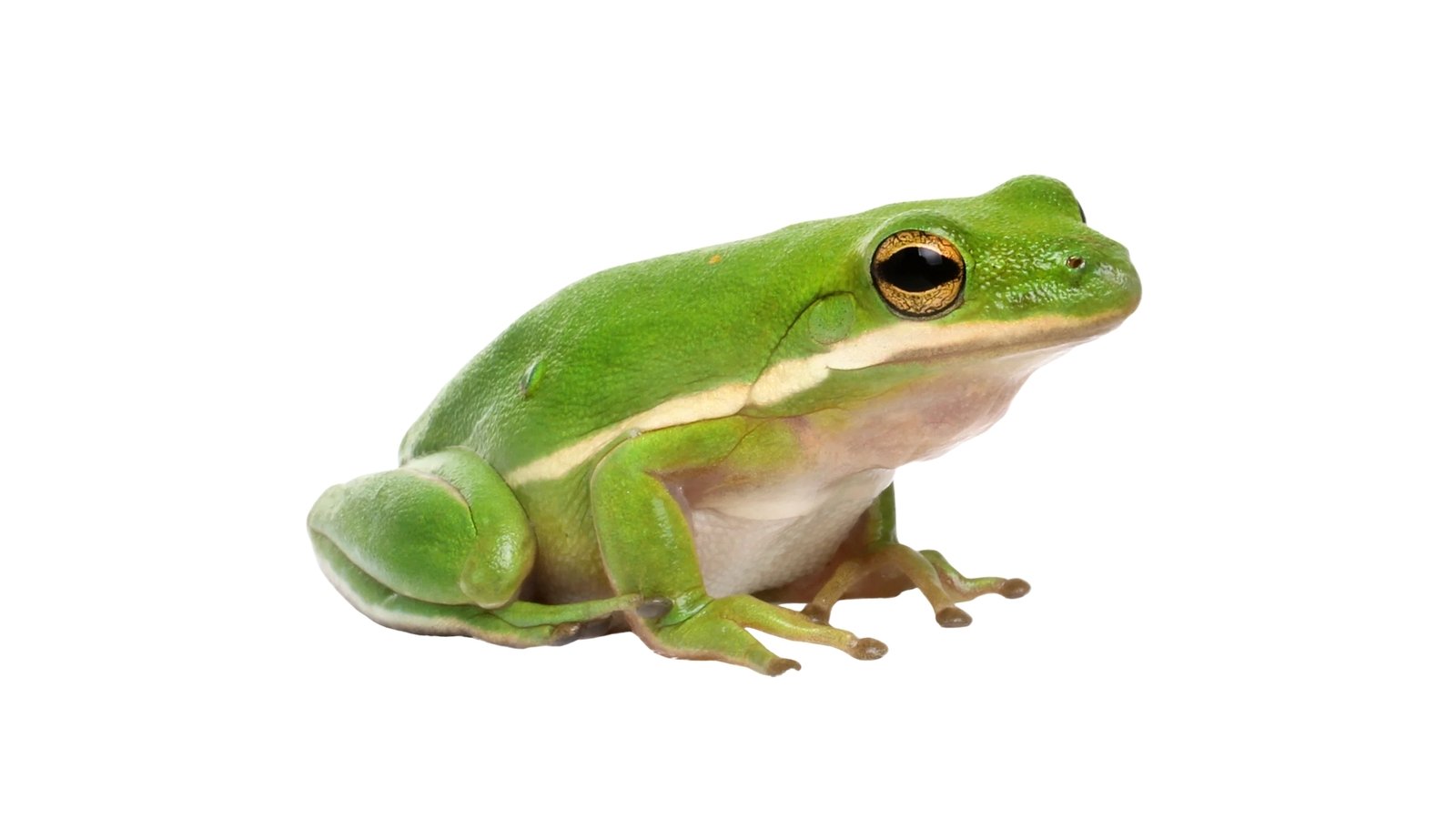
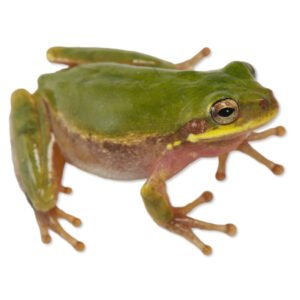
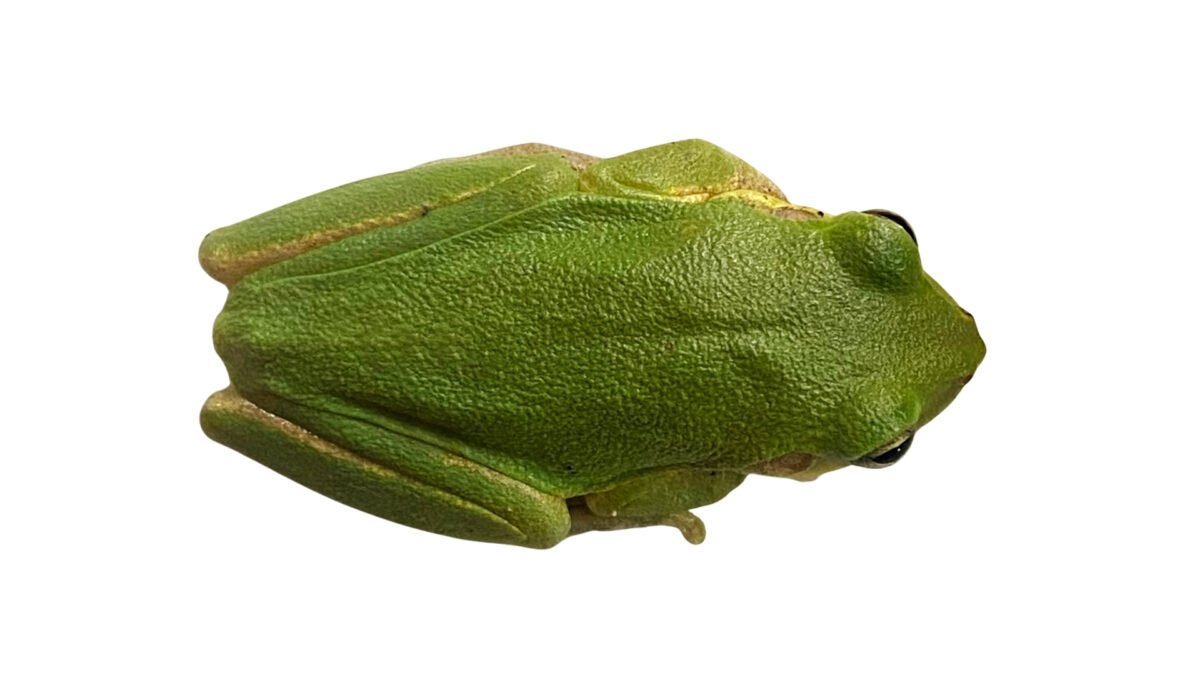
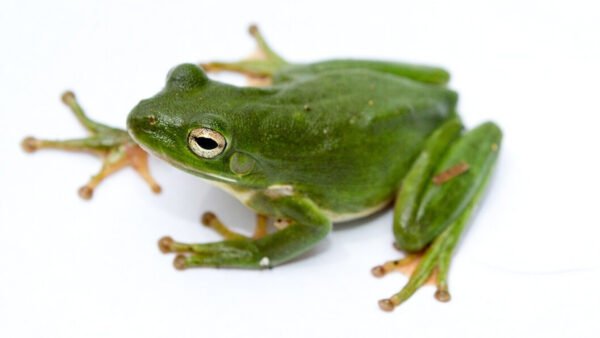
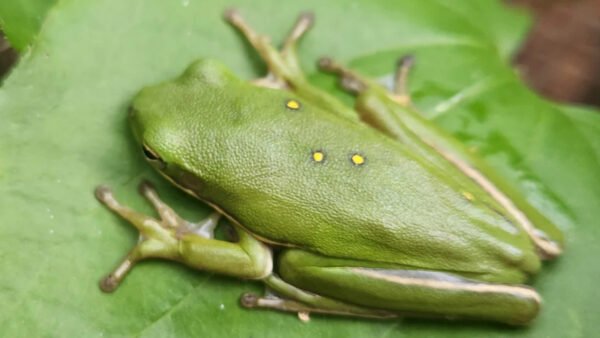
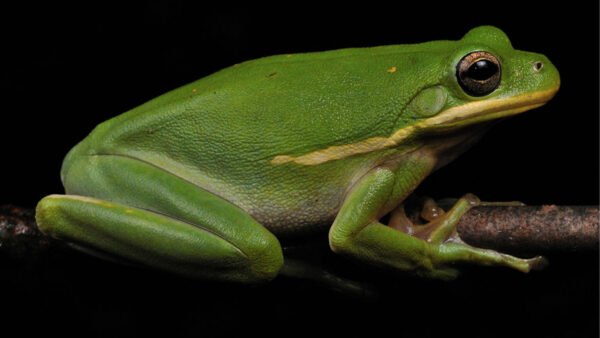
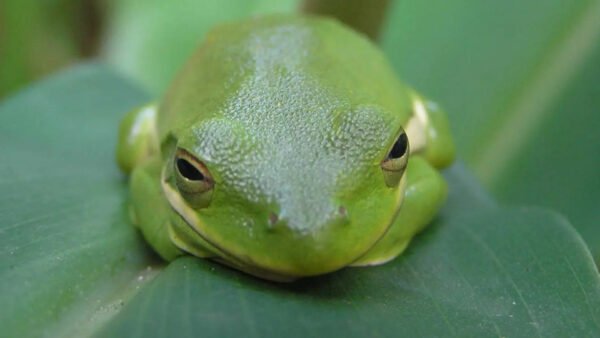
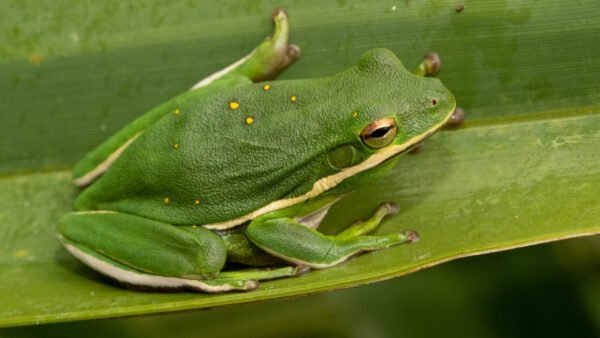
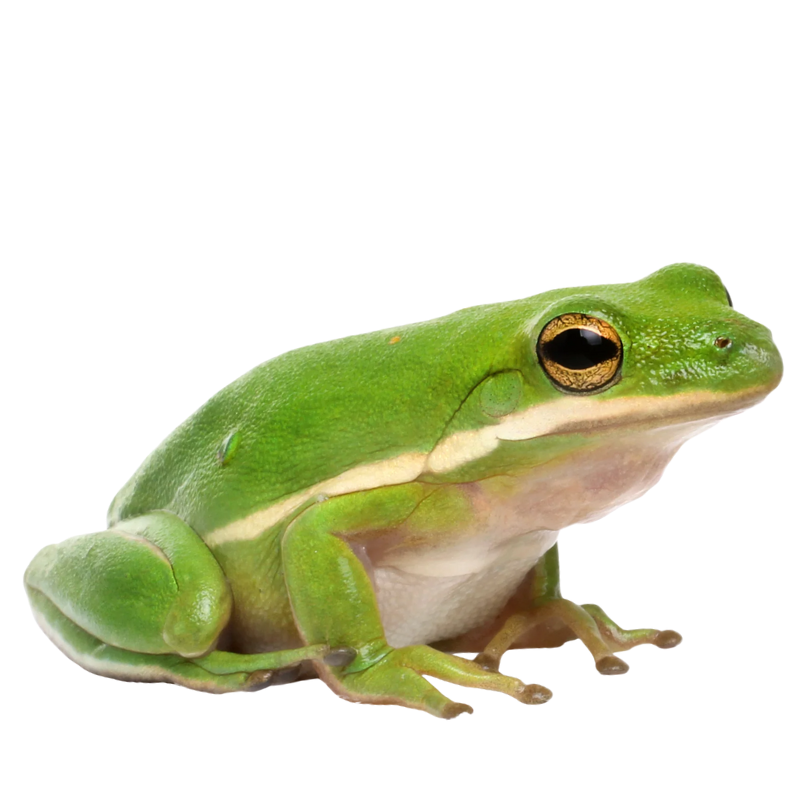
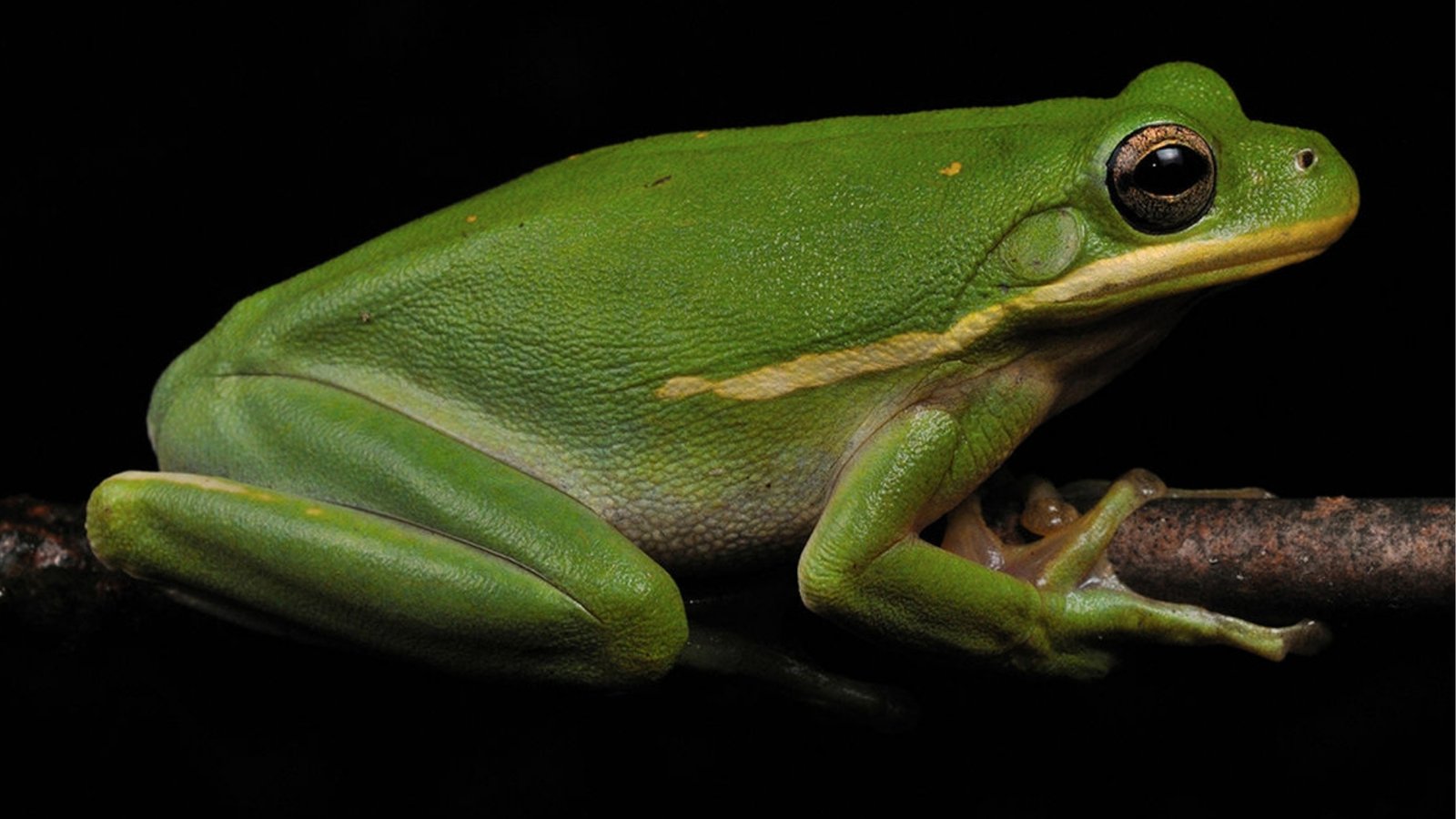
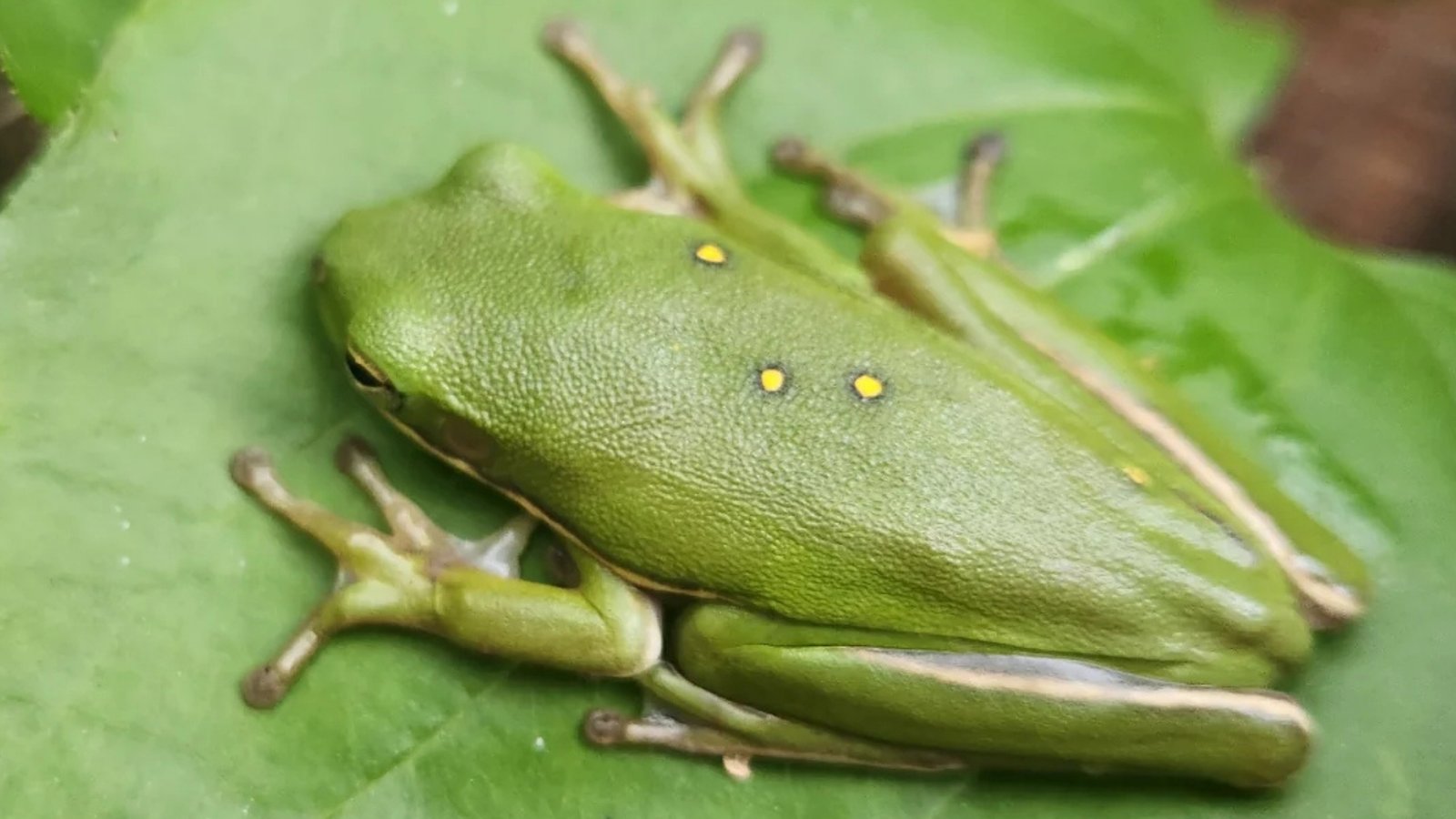
Coloration / Pattern: Glossy bright green body with occasional yellow or cream side stripes; may shift shades with mood or humidity.
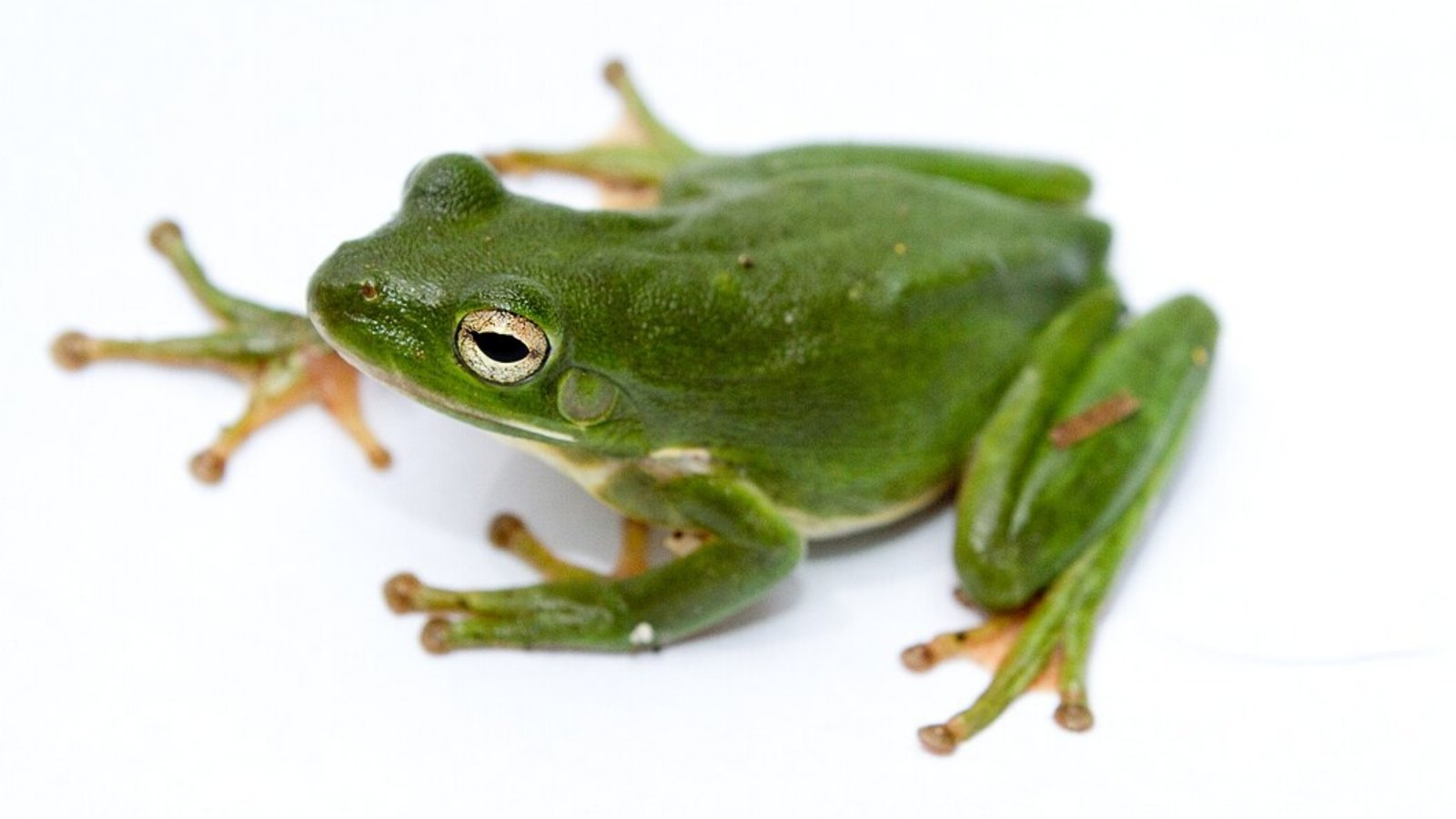
Build / Form: Slender, smooth-skinned frog with large golden eyes and wide adhesive toe pads for climbing.
Light Response: Reflective sheen under bright light; mild fluorescence under some UV-safe wavelengths.
Temperament
Baseline: Shy but alert; hides during the day, active and vocal at night.
Response to Disturbance: Leaps away quickly; may attempt escape if overexposed.
Feeding Style: Active insect chaser; highly responsive at dusk.
Social Housing
Best kept in small groups, as they coexist well with ample space and foliage. Provide many vertical hides and visual barriers to reduce stress. Default recommendation: Group housing acceptable with proper monitoring.
Quick Traits
Keeper Notes
- Stress Signs: color darkening, refusal to feed, frantic climbing, prolonged hiding.
- Confidence Builders: dense foliage, high humidity, consistent dusk feedings.
- Display Tips: low glare lighting and nighttime red light viewing.
Care Requirements
Core setup and environmental targets to keep Dryophytes cinereus thriving.
Enclosure Setup
Type: Arboreal.
Minimum Size: 18″×18″×24″ for a pair or trio.
Safety: Secure lid, gentle airflow, no sharp décor.
- Size: 18×18×24 or larger
- Lid: Mesh/locking top
- Hides: Dense plants, cork flats, foliage clusters
- Enrichment: Branches, vines, vertical structure
Substrate
Blend: Moist soil/coco fiber mix with drainage layer.
Depth: 2–3 in.
Purpose: Humidity retention and safe landings.
Habitat
- Water: Shallow dish with dechlorinated water; daily refresh.
- Décor: Live plants, vines, cork rounds.
- Behavior Fit: Arboreal climber, night-active feeder.
Environment Targets Set & forget (monitor)
Lighting
Ambient light / low UVB optional. Use a 12L:12D cycle.
Food & Water
- Juveniles: Small crickets, fruit flies 4× weekly
- Adults: Small insects 3–4× weekly
- Hydration: Misting + clean water source
- Best Time to Feed: Dusk
Cleaning
- Spot-Clean: Remove waste and old food daily.
- Deep Clean: Replace substrate every 1–2 months.