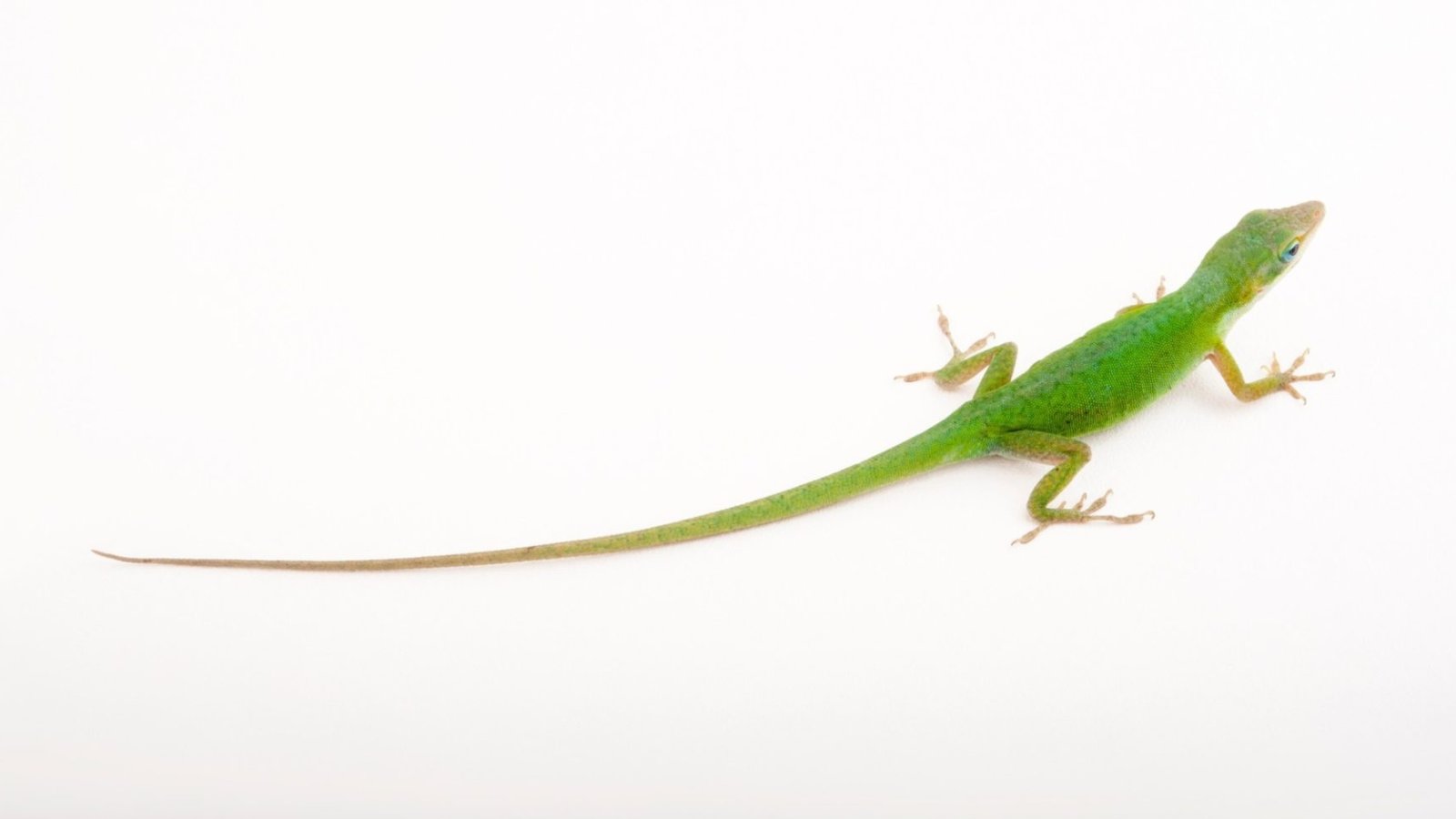
Green Anole — Anolis carolinensis
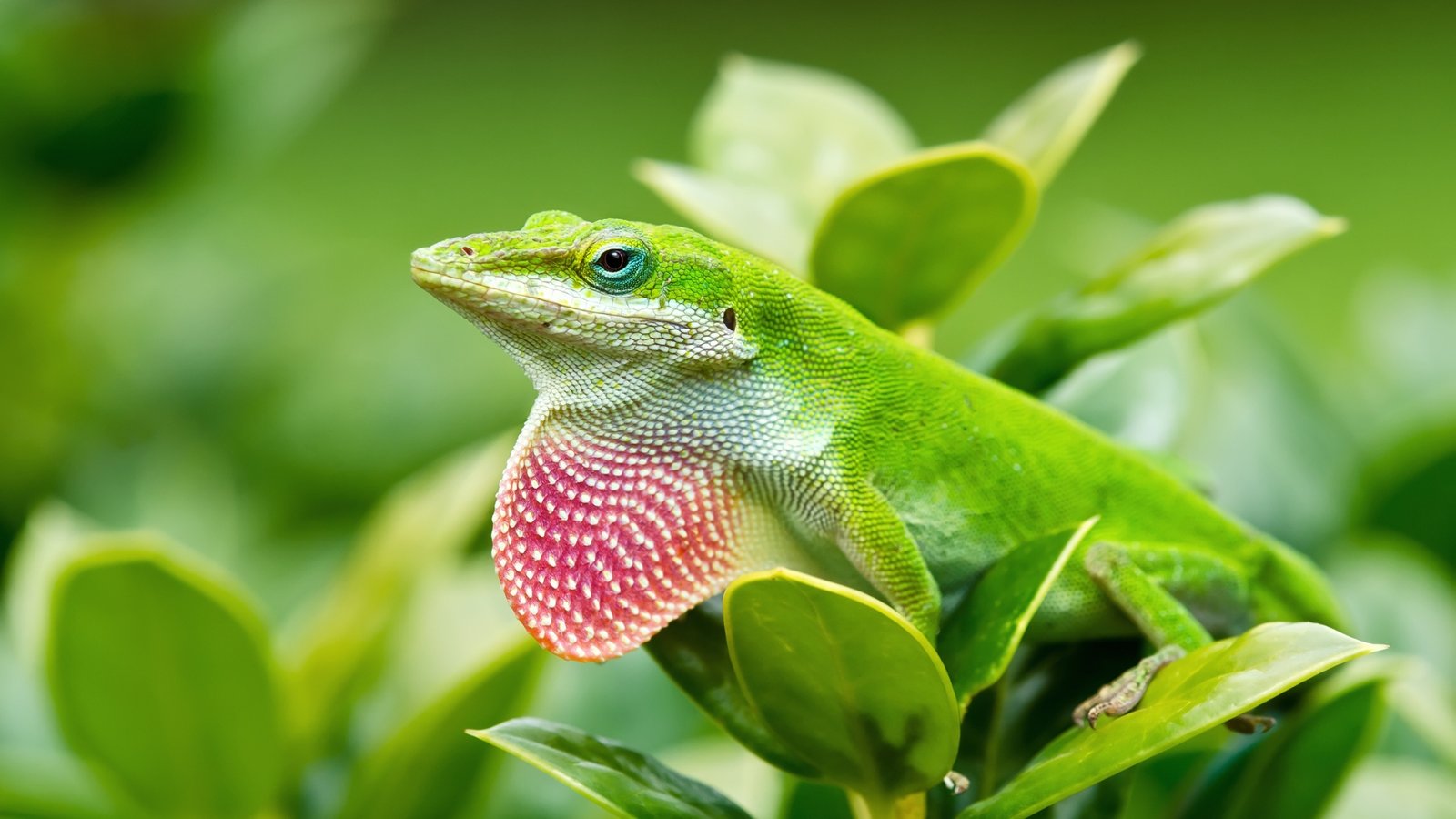
America’s “little chameleon” is a fast, diurnal, arboreal display lizard that dazzles under proper UVB. Green Anoles shift from vivid emerald to earthy brown, males flash a neon-pink dewlap, and their alert, curious perching makes them a constant showpiece. They’re hardy with modern care, but their speed and jumpiness make them best as look-don’t-touch pets.
Why Keep This Species
- Color-change display with striking pink dewlap and active perching behavior.
- Resilient, affordable, and readily available; thrives with correct UVB and hydration.
- Excellent educational species for planted, bioactive, vertical habitats.
Keeper Profile
- Handling: primarily hands-off; use cups/tongs for enclosure work.
- Climate: day 75–85 °F (24–29 °C) with 90–95 °F (32–35 °C) bask; night 68–75 °F (20–24 °C); humidity 60–80% with good airflow.
- Habitat: vertical enclosure with dense foliage, climbing vines, multiple bask/UV gradients, and cross-ventilation.
Keeper’s Summary
House a single Green Anole in a vertical, planted terrarium (minimum 12″×12″×18″; larger is better). Provide a T5-HO 5–6% UVB across the top with shaded retreats and a 90–95 °F basking perch. Maintain 75–85 °F ambient days with a gentle night drop and 60–80% humidity via daily misting and/or a dripper—these lizards lick droplets from leaves. Feed varied, well-gut-loaded insects (appropriately sized crickets, dubia, BSFL, houseflies) 4–6×/week for juveniles and 3–4×/week for adults; dust most meals with calcium (no D3), add D3 1–2×/week and a multivitamin weekly. Avoid handling; manage stress with dense cover, visual barriers, and consistent routines.
🐾 Green Anole — Anolis carolinensis
- Common Name(s): Green Anole, Carolina Anole
- Scientific Name: Anolis carolinensis
- Native To: Southeastern USA (Carolinas, Georgia, Florida, Gulf Coast to east Texas); introduced in parts of the Caribbean
- Adult Size: 5–8 in (12–20 cm) total length; slender, arboreal build
- Life Span: ~4–8 years in modern captive care (often 4–6)
- Difficulty: Beginner-friendly display lizard (requires correct UVB, hydration, and ventilation)
Characteristics & Temperament
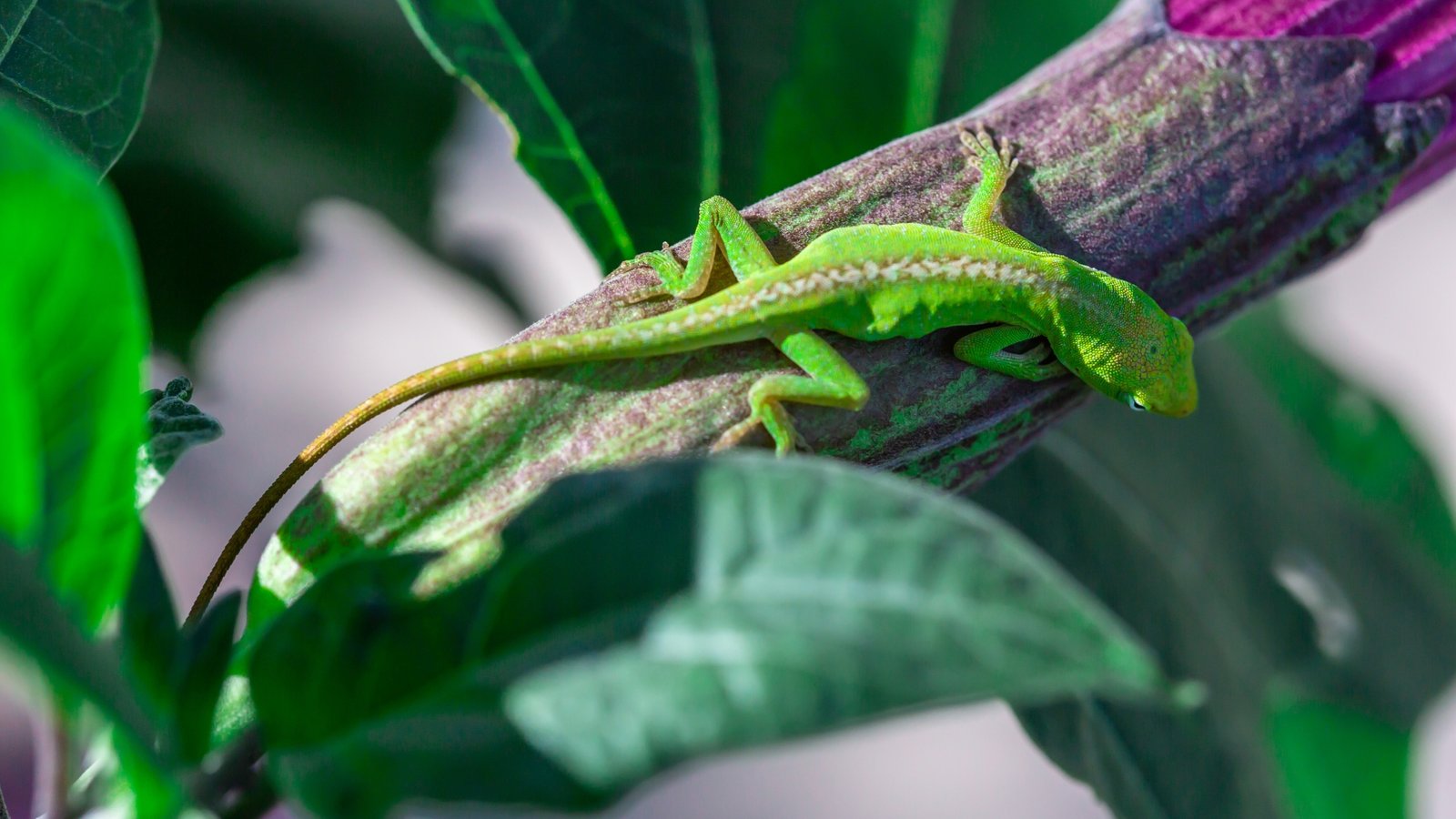
What to expect from the Green Anole (Anolis carolinensis) day-to-day: a lightweight, quick climber that spends its time scanning from elevated perches, thermoregulating under bright light, and foraging among leaves. A showy dewlap and color change make this species a living mood-ring of your habitat.
Appearance
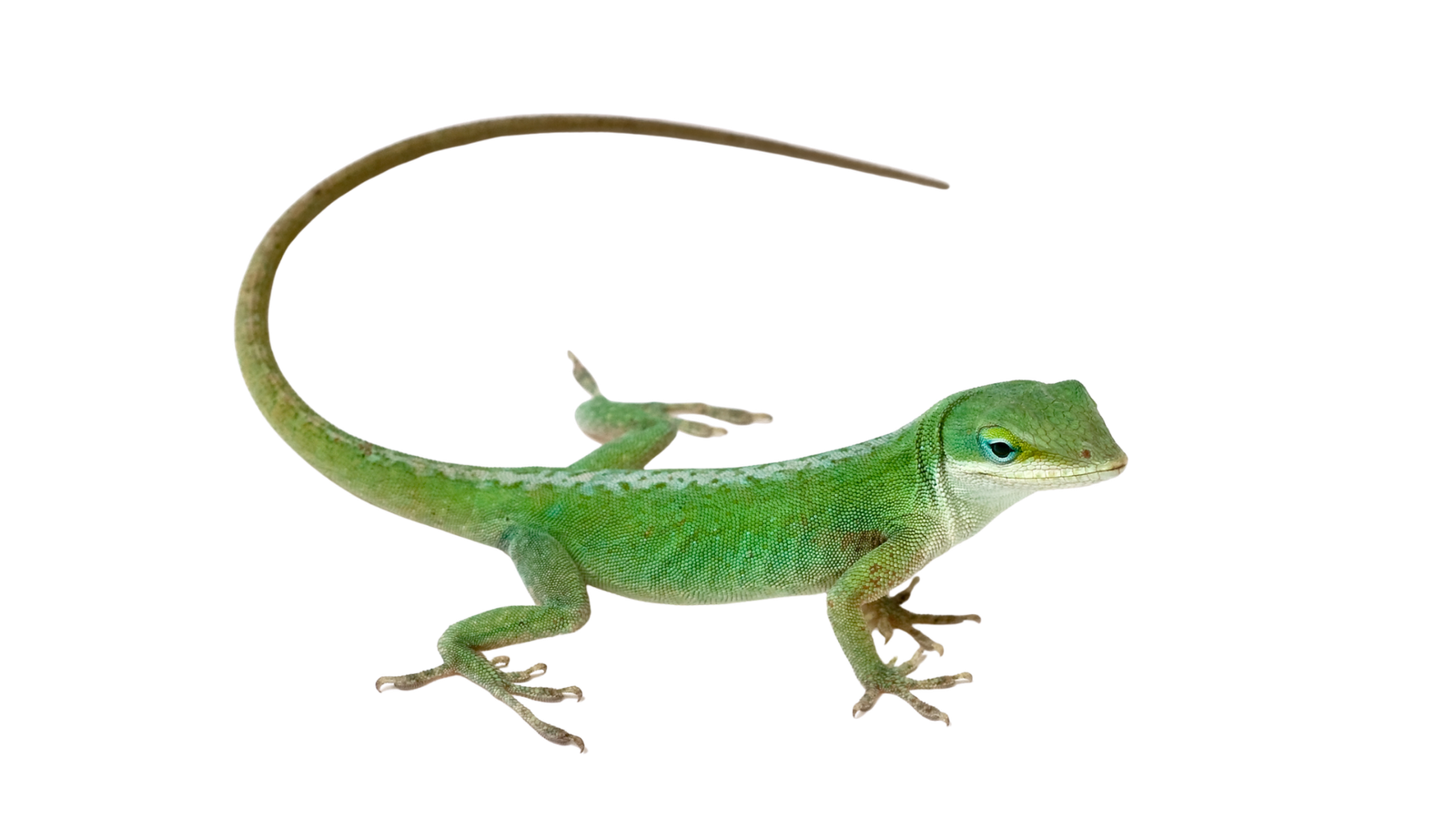
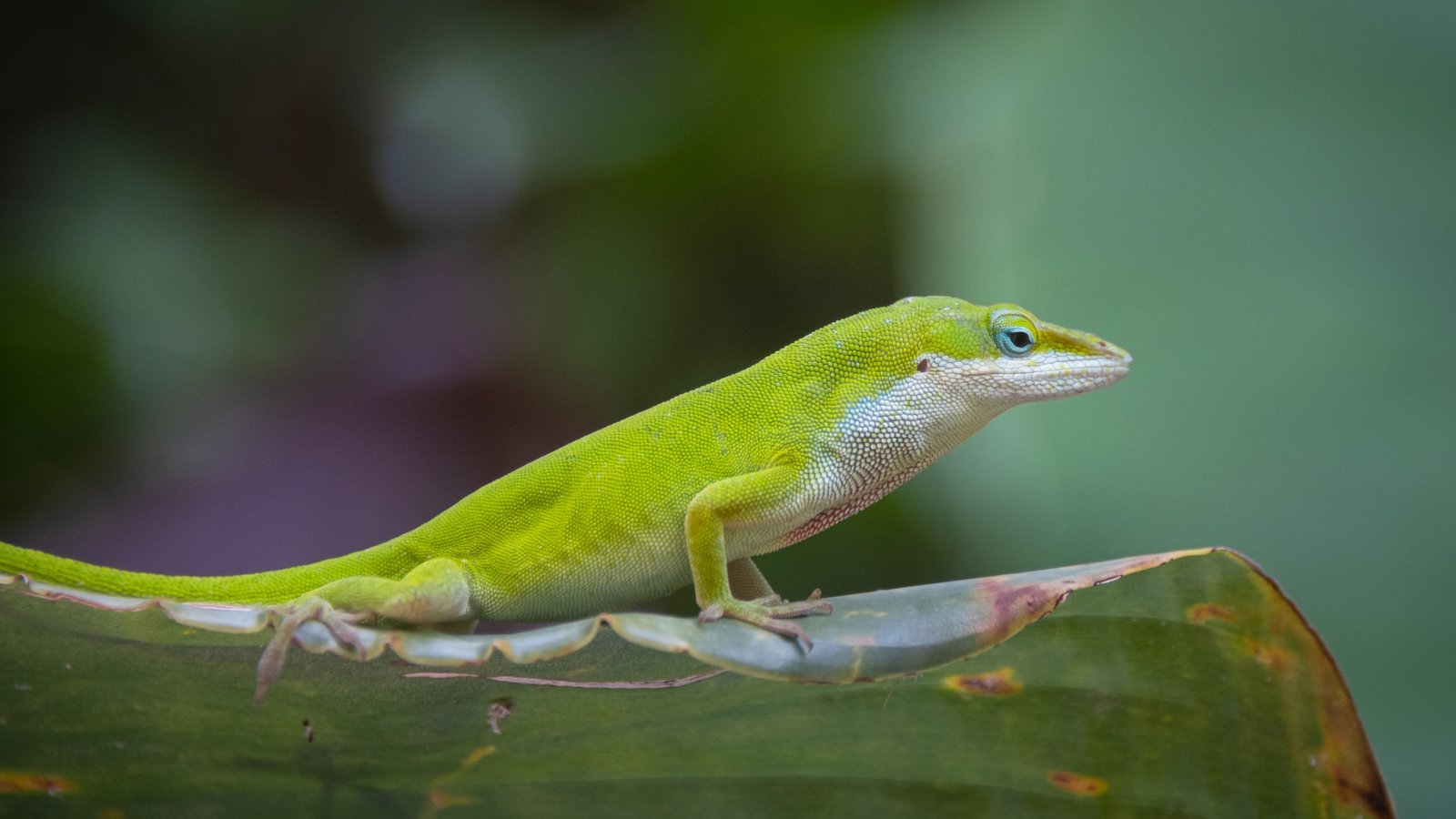
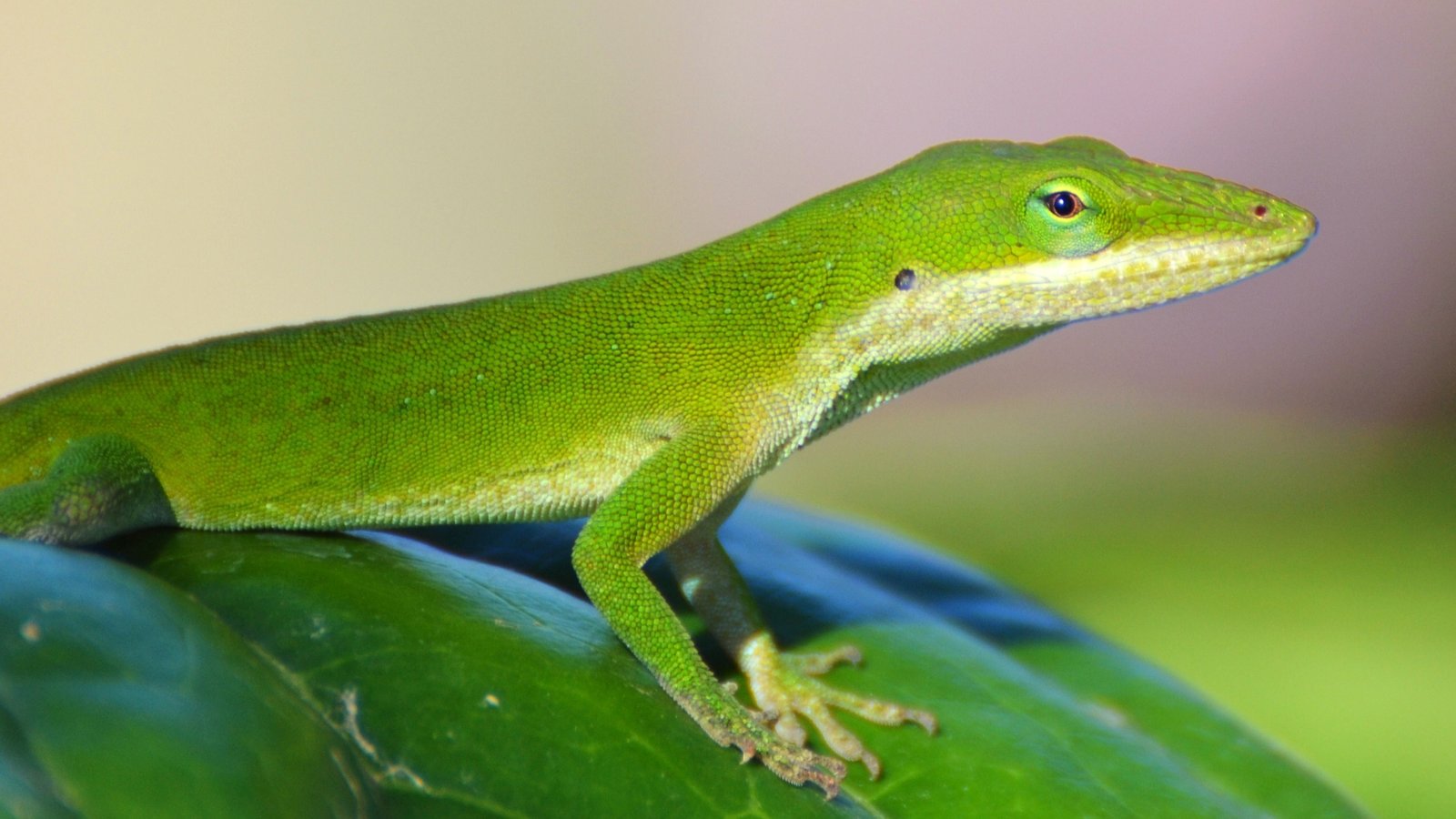
- Coloration / Pattern: Bright emerald to chestnut brown; males display a vivid pink dewlap; subtle dorsal stripe when cool or stressed.
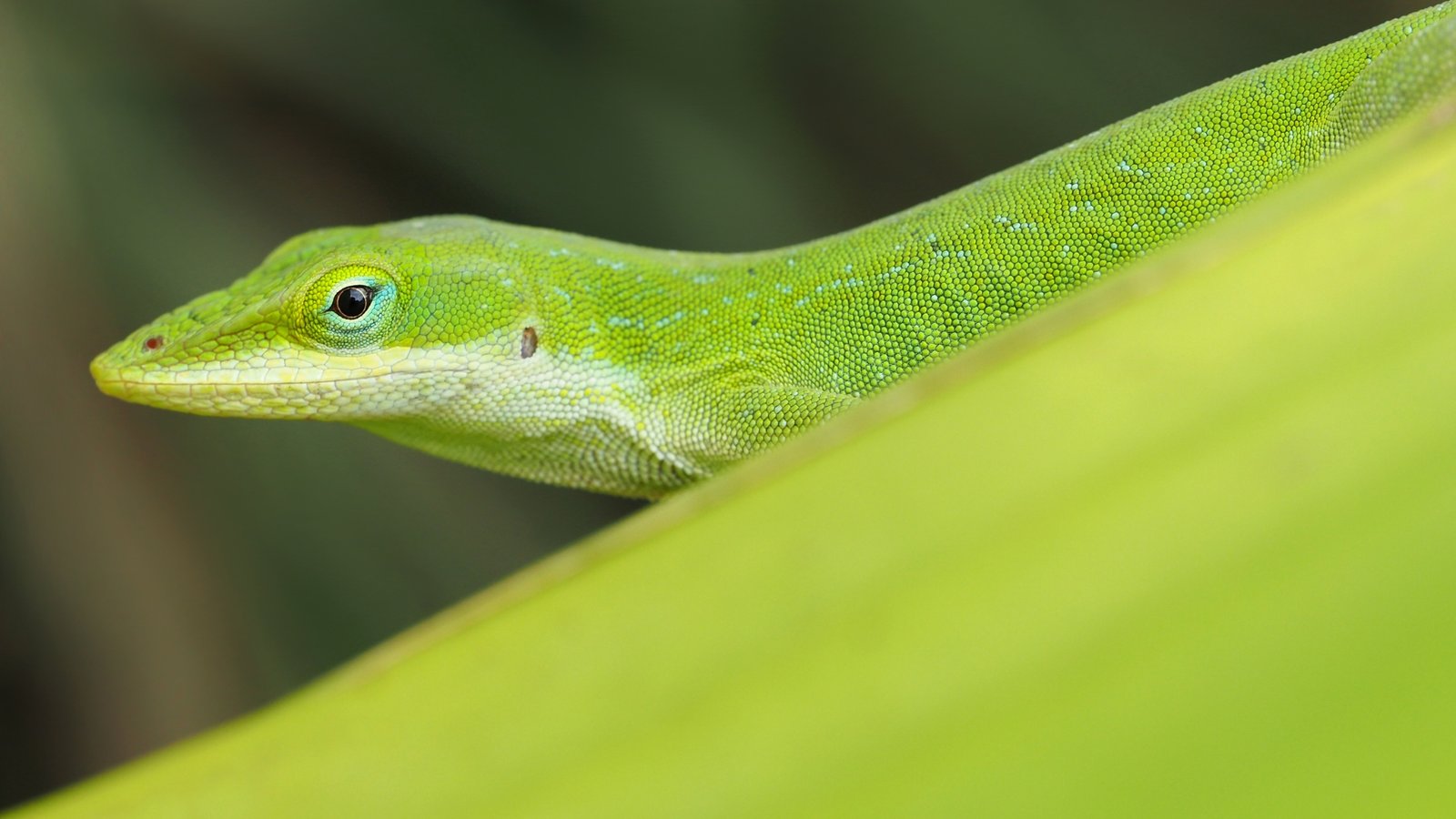
- Build / Form: Slender, arboreal body; long tail; adhesive toe pads for vertical climbing; large, alert eyes.
- Light Response: UVB highlights emerald tones; gloss on scales; dewlap fluoresces under certain UV wavelengths.
Temperament
- Baseline: Alert and skittish; primarily diurnal; spends time basking and patrolling foliage.
- Response to Disturbance: Freezes or bolts to cover; may brown up when stressed; dewlap display in territorial males.
- Feeding Style: Active insectivore; strikes quickly at moving prey; most responsive mid-day to late afternoon.
Social Housing
Males are territorial. Best practice is single housing. Advanced keepers may keep one male with 1–2 females in a spacious, densely planted enclosure with multiple bask/UV and feeding stations. Monitor closely for stress, guarding, or chasing.
Quick Traits
Keeper Notes
- Stress Signs: Persistent brown coloration, hiding at the bottom, refusal to feed, frantic pacing.
- Confidence Builders: Dense live plants, visual barriers, multiple elevated hides, consistent photoperiod and feeding time.
- Display Tips: Bright but diffused lighting, low-glare front, observe with room light or red night-viewing light (no heat).
Care Requirements
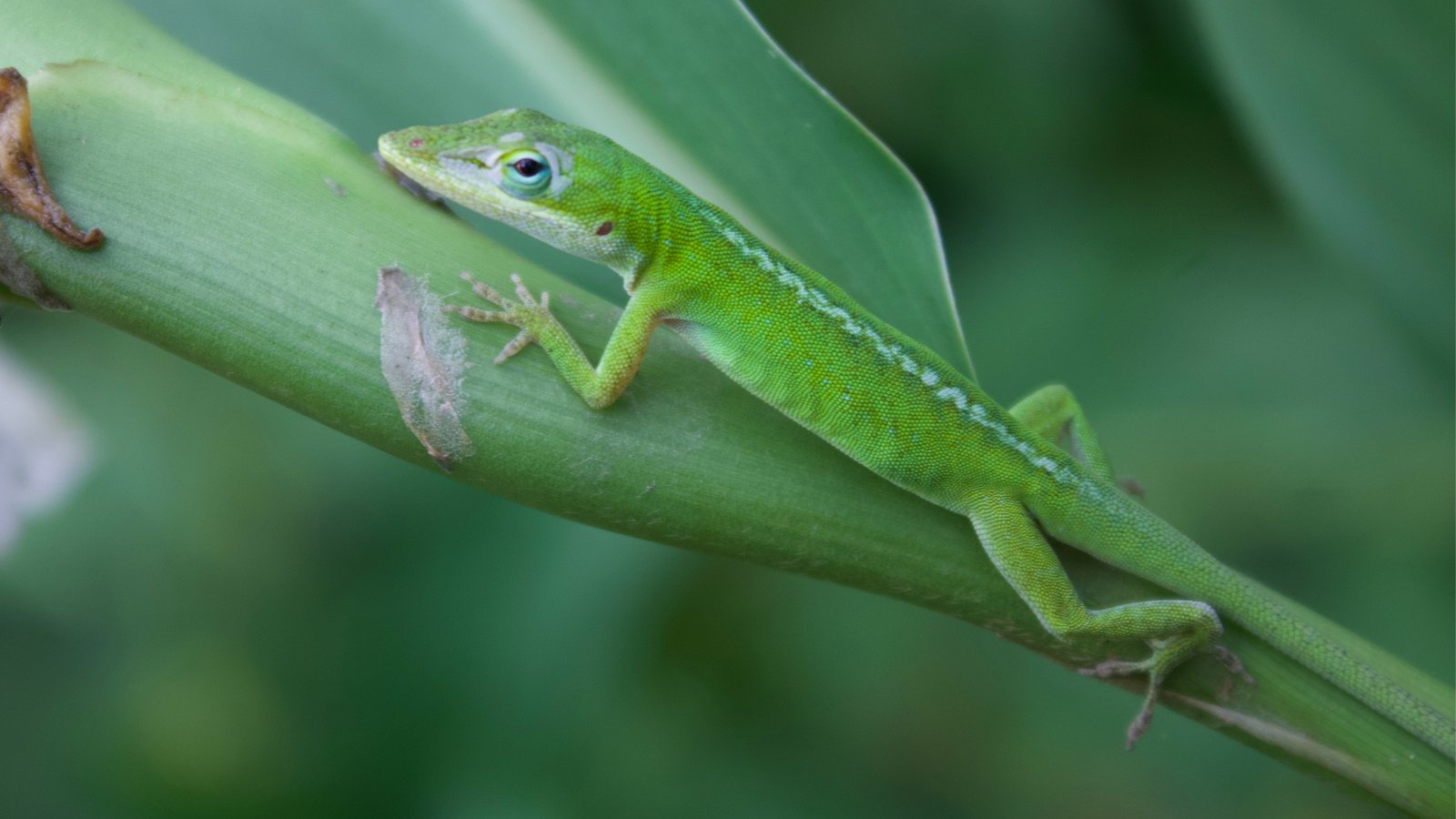
Core setup and environmental targets to keep Anolis carolinensis thriving.
Enclosure Setup
Type: Arboreal | Minimum Size: 12″×12″×18″ (30×30×45 cm) for one; 18″×18″×24″ (45×45×60 cm) strongly recommended.
- Safety: Secure mesh lid or locking front; cross-ventilation; cable-managed heat sources.
- Size: Bigger is better; vertical height and foliage density are key.
- Lid: Fine metal mesh for light/UV and airflow.
- Hides: Cork tubes, dense pothos, bromeliads, and elevated leaf cover.
- Enrichment: Branches, bendable vines, varied perch diameters, multiple sightline breaks.
Substrate
- Blend: Bioactive-friendly mix (topsoil/coco fiber + orchid bark + sphagnum + leaf litter).
- Depth: 2–4″ (5–10 cm) to buffer humidity and anchor live plants.
- Purpose: Humidity retention, microfauna support, safe footing.
Habitat
- Water: Daily misting and/or a continuous dripper so droplets collect on leaves; shallow dish optional.
- Décor: Live plants (pothos, schefflera, ficus), cork, vines, horizontal and diagonal perches.
- Behavior Fit: Climber/perch hunter that uses canopy cover and sun patches.
Environment Targets Set & Monitor
Lighting
High-quality UVB is recommended: T5-HO linear 5–6% (e.g., “5.0/6%”) spanning 50–70% of the lid, 8–12″ to the primary bask. Provide bright visible light and a 12L:12D photoperiod. Create shaded, plant-dense retreats to self-regulate exposure.
Food & Water
- Juveniles: Small, gut-loaded crickets/flies/BSFL 4–6×/week (as much as they’ll eat in 10–15 min).
- Adults: Varied insects (appropriately sized crickets, dubia nymphs, BSFL, houseflies) 3–4×/week.
- Supplements: Calcium without D3 most feedings; Calcium with D3 1–2×/week; multivitamin 1×/week.
- Hydration: Daily mist or dripper; replace water and clean dripper lines regularly.
- Best Time to Feed: Late morning to afternoon when warm and active.
Cleaning
- Spot-Clean: After feedings; remove uneaten insects, feces, and shed skin.
- Deep Clean: Refresh substrate 3–6 months (bioactive: top-up and prune); rinse décor with hot water only.