Antlion (Doodlebug) [The Cosmic Predator] — Myrmeleontidae spp.
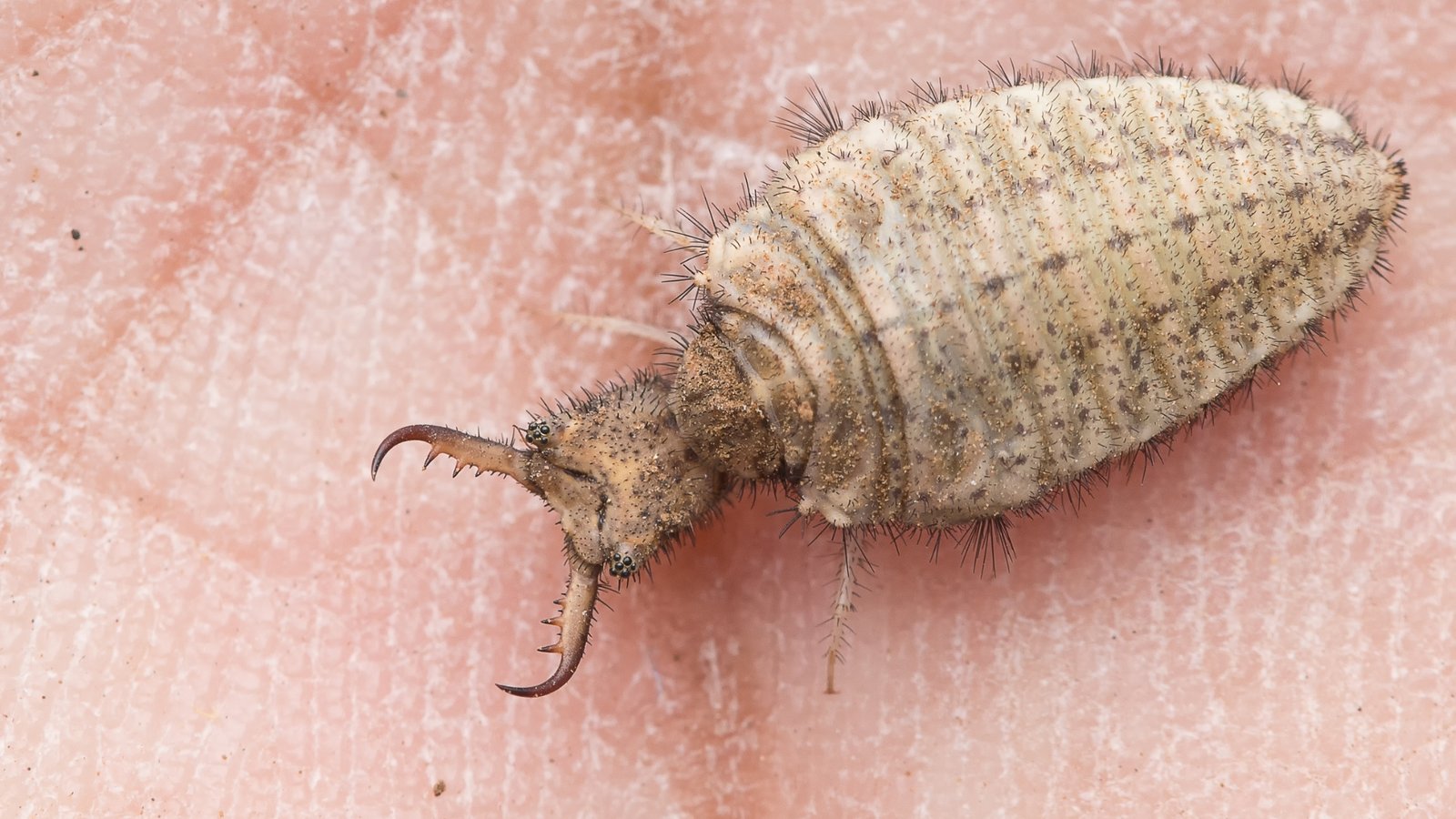
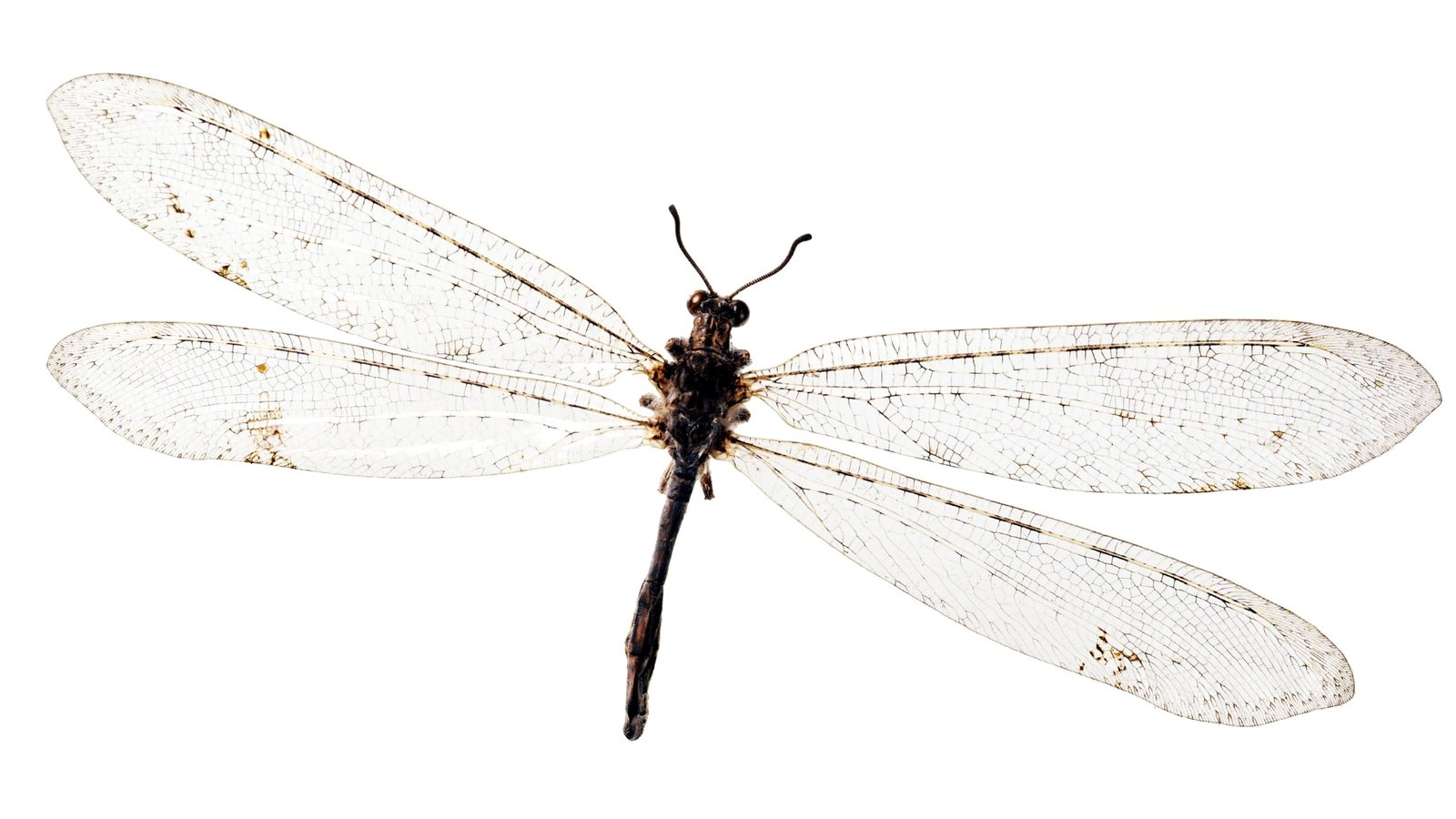
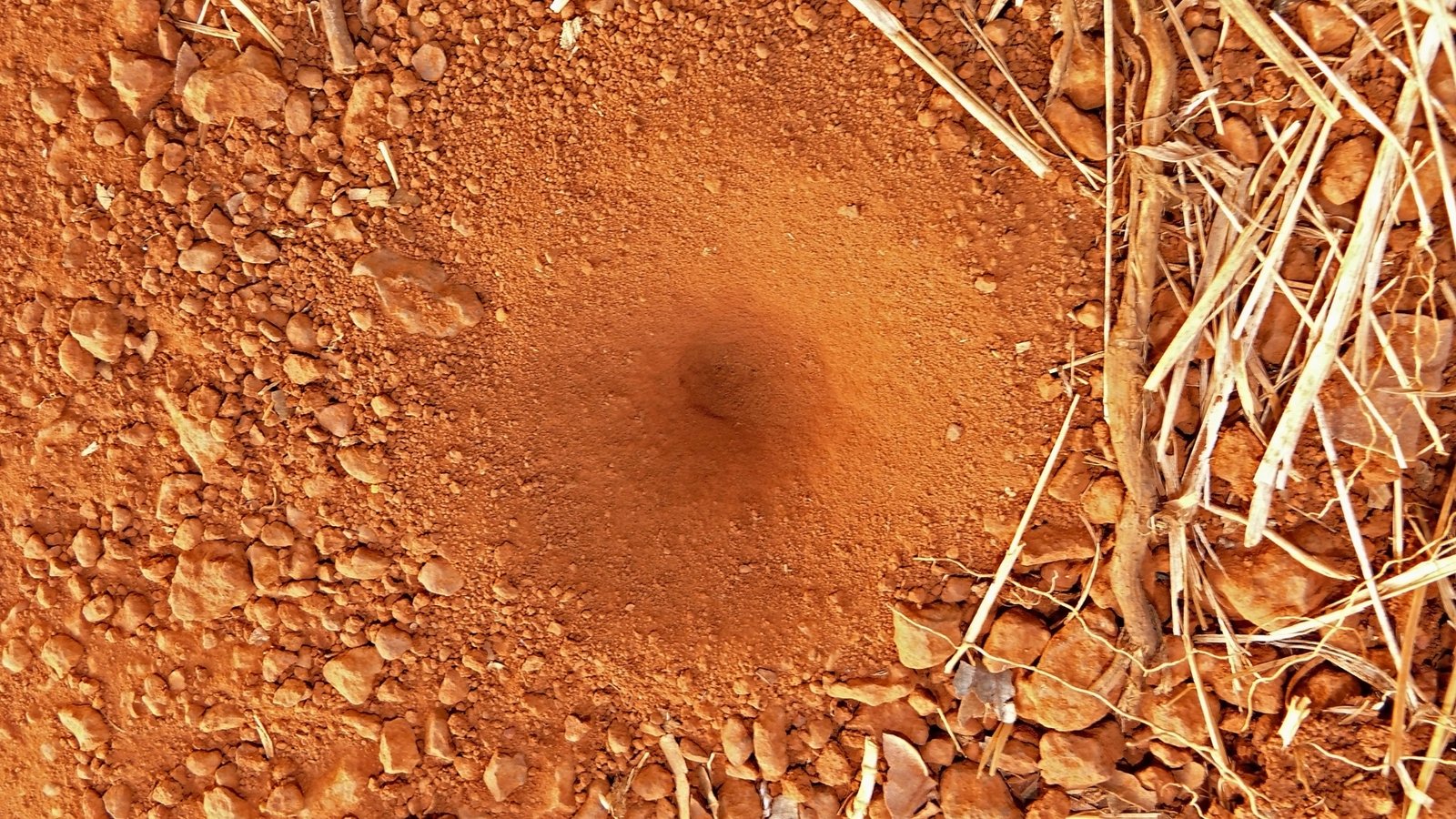
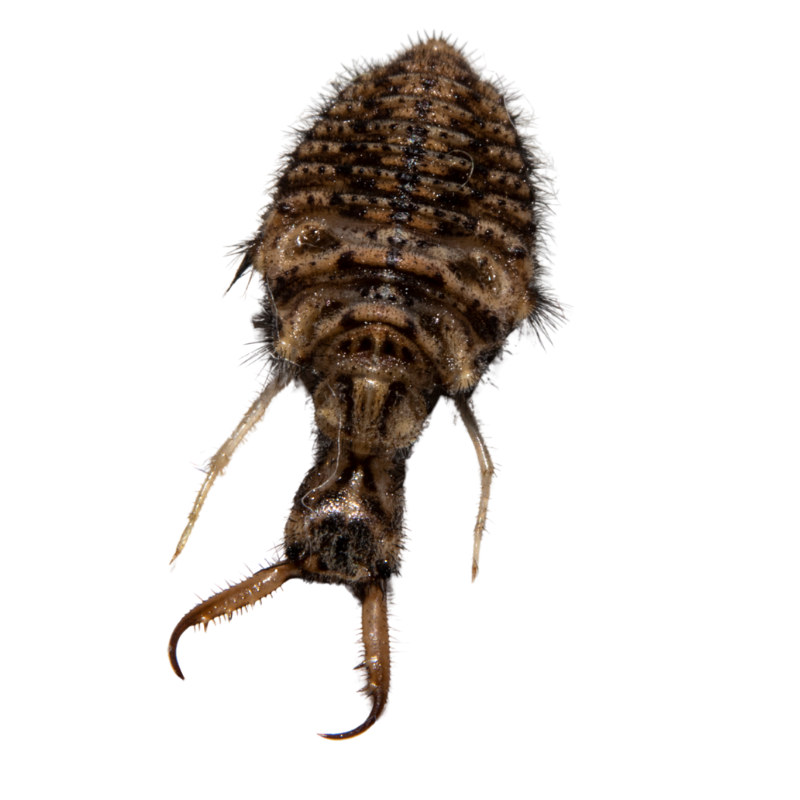
Meet the “sandworm-in-miniature.” Antlion larvae are precision ambushers that sculpt gravitational funnels, then lurk at the event horizon with serrated jaws. Imagine a Tremors-style graboid scaled to a teacup, or a desert monster from a galaxy far, far away—only this one lives quietly on your shelf. Adults resemble delicate, night-flying lacewings, but the larval “Cosmic Predator” stage is the star: silent, cunning, and mesmerizing to watch.
Why Keep This Species
- Signature “gravity well” sandtrap and lightning ambush strikes—cinematic to observe.
- Low-maintenance, dry-desert setup with near-zero odor and minimal gear.
- Perfect for teaching physics of slopes, predator–prey dynamics, and metamorphosis.
Keeper Profile
- Handling: Hands-off. Transfer with cups/tongs—larvae and adults are delicate.
- Climate: ~70–82 °F (21–28 °C); low humidity; steady airflow.
- Habitat: Fine, dry sand 5–10 cm; wide floor space; minimal disturbance.
Keeper’s Summary
Run a “micro-desert”: a wide container with 5–10 cm of sifted, dry, fine sand and cross-ventilation. Keep the surface bone-dry so the pit walls stand; hydrate indirectly with a tiny cotton-wicked droplet on one side 1–2× weekly. Feed small live prey (ants, pinhead crickets, or tiny beetle larvae) at dusk 1–3× weekly and remove remains. House singly—Cosmic Predators will cannibalize. Adults are short-lived, fragile fliers best for observation rather than handling.
🐾 [Common Name] — [Scientific Name]
- Common Name(s): Antlion, Doodlebug (larva), Antlion Lacewing (adult)
- Scientific Name: Family Myrmeleontidae (e.g., Myrmeleon, Glenurus)
- Native To: Warm, sandy habitats worldwide (scrub, dunes, sandy banks, dry overhangs)
- Adult Size: Larva body ~10–15 mm; pit 3–6 cm Ø; adult wingspan ~45–75 mm
- Life Span: Larva months–2+ years; pupa ~3–5 weeks; adult a few weeks
- Difficulty: Easy (larvae) / Moderate (adults delicate, short-lived)
Characteristics & Temperament — Myrmeleontidae spp.
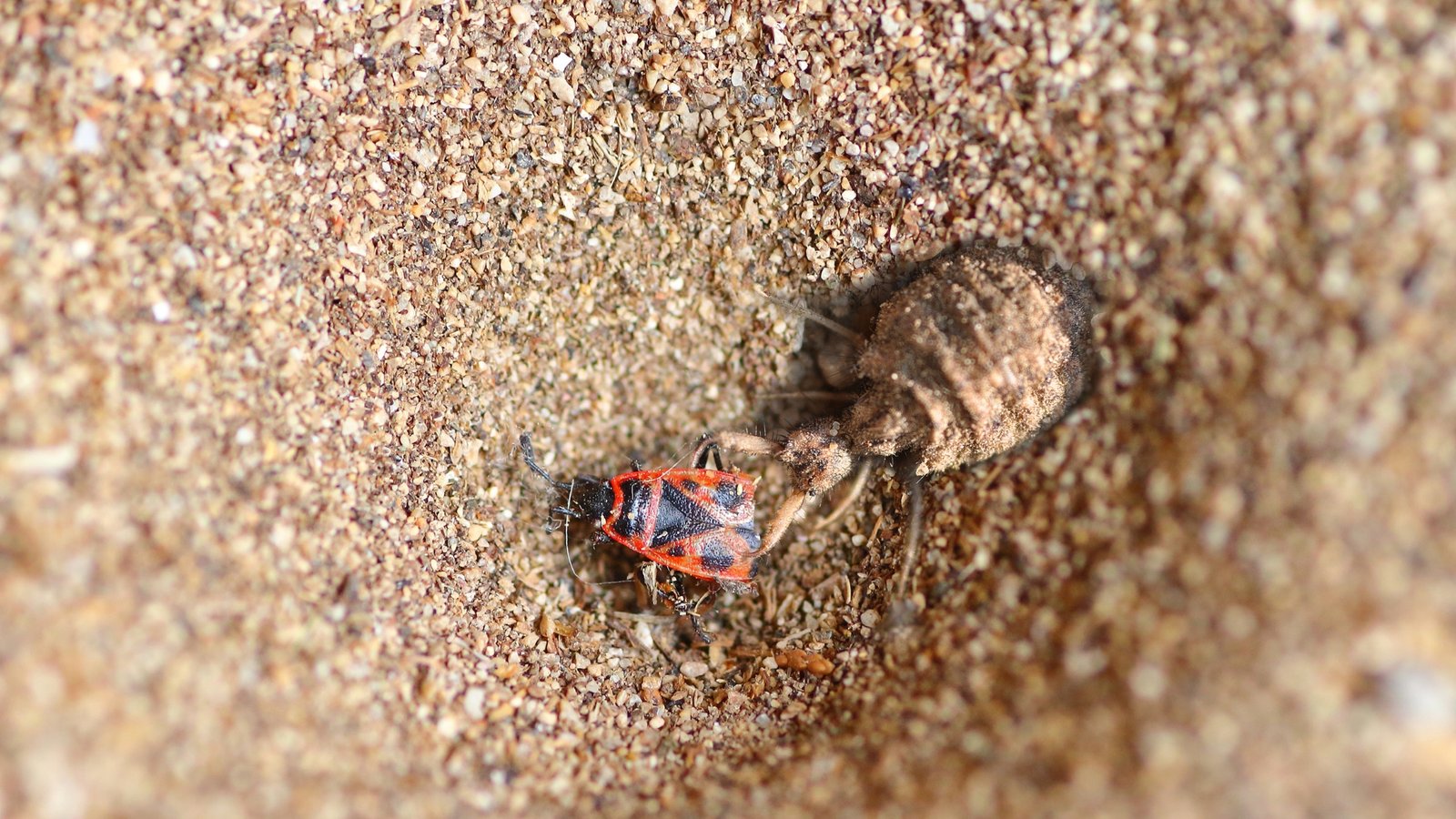
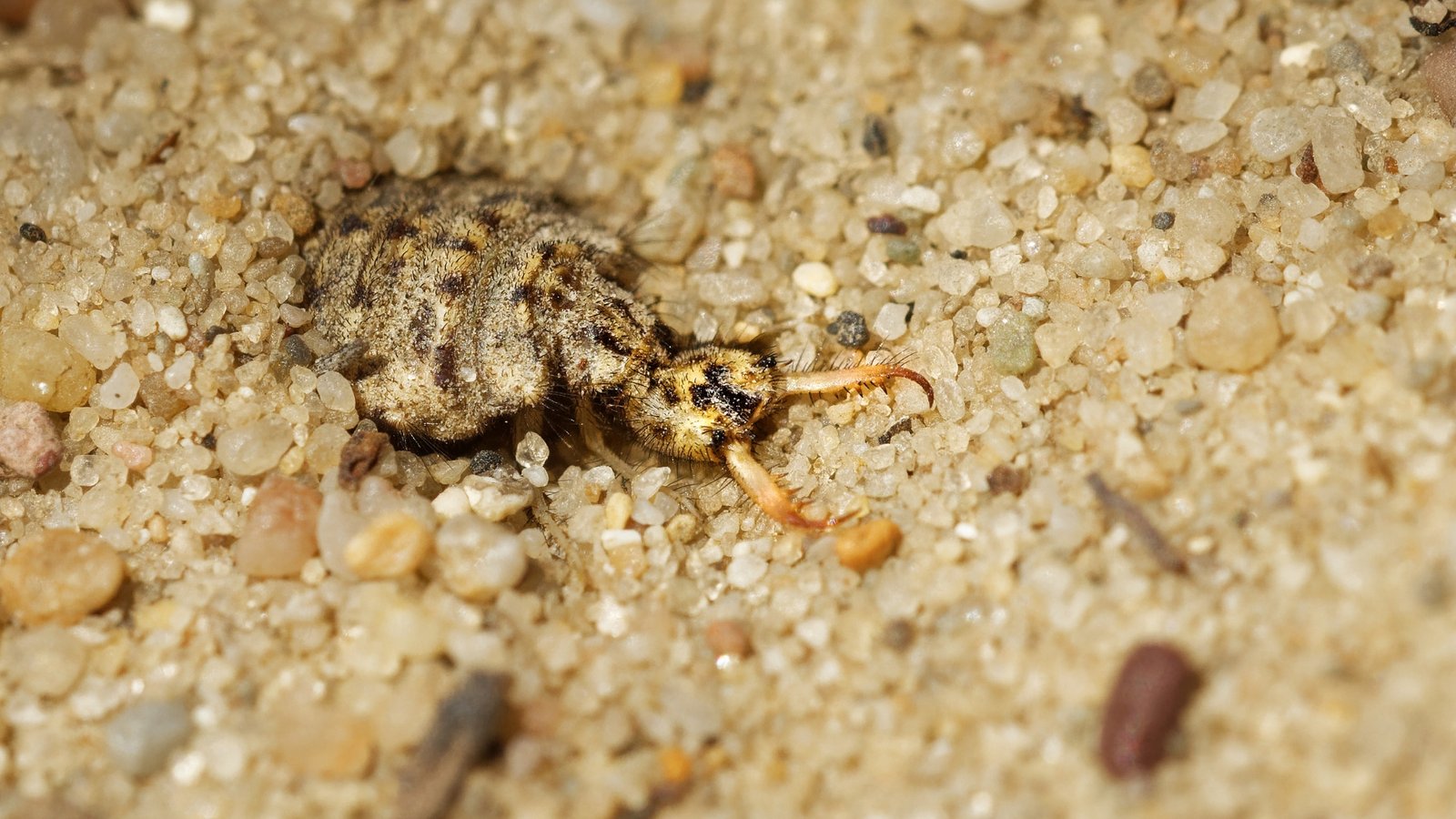
Think “desert singularity.” The larva buries at the center of a perfect cone, where a single misplaced footstep spirals prey into its jaws.
Appearance
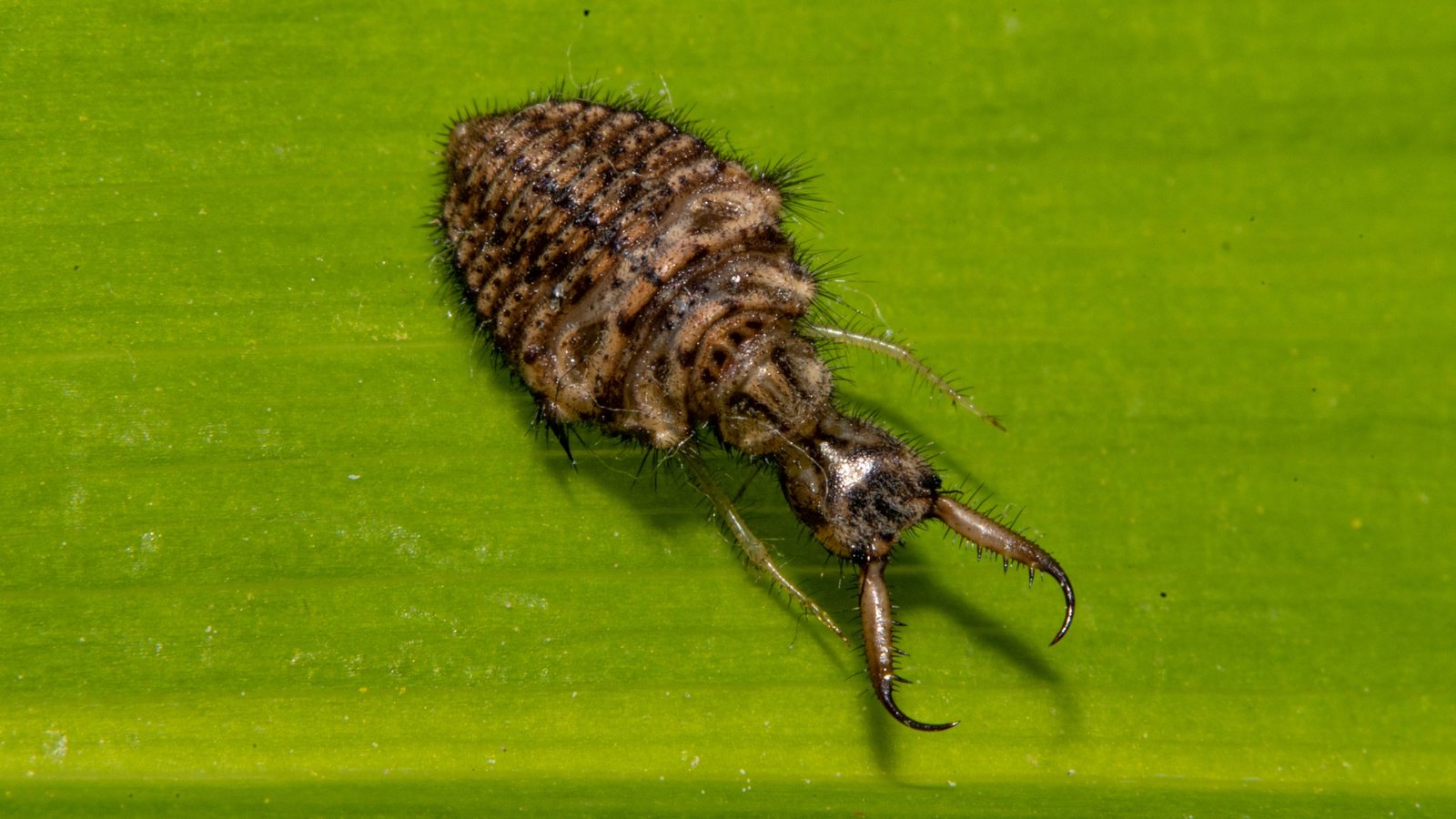
- Coloration / Pattern: Mottled tan-gray sand-mimic with granular texture; imposing sickle jaws. Adults dusky with glassy wings and clubbed antennae.
- Build / Form: Compact, low-profile digger with bristles for traction; adults are long-bodied, lacewing-like fliers.
- Light Response: No reliable UV fluorescence; best viewed under soft white or red night light.
Temperament
- Baseline: Shy, still, patient; nocturnal/crepuscular strike behavior.
- Response to Disturbance: Buries deeper or freezes; adults may flutter and abrade wings—minimize startle.
- Feeding Style: Ambush; destabilizes victims by tossing sand, then clamps with jaws—most responsive at dusk.
Social Housing
Strictly solitary. Cannibalism is common if co-housed, especially across size classes. Showcase multiple pits only with dividers.
Quick Traits
Keeper Notes
- Stress Signs: Abandoned or collapsing pits, surface pacing, missed strikes, refusing prey.
- Confidence Builders: Ultra-fine dry sand, a gentle slope, low vibration, dusk feeding cadence.
- Display Tips: Use wide/clear containers; top-side lighting sharpens “crater” shadows for that sci-fi look.
Care Requirements — Myrmeleontidae spp.
Build a micro-dune and let the Cosmic Predator do the rest. Dry, fine sand + dusk feedings = dependable funnels and cinematic strikes.
Enclosure Setup
Type: Terrestrial pit-builder (ambush).
Minimum Size: Single larva: 16–32 oz deli cup (10–12 cm Ø). Showcase: 2–5 gal wide bin (still one occupant per cell/divider).
Safety: Tight lid, fine mesh vents, low vibration. Avoid drops and jolts that collapse pits.
Layout
- Size: Prioritize floor area; allow 3–6× expected pit diameter.
- Lid: Secure mesh/perforated top for airflow without drafts.
- Hides: The pit is the hide; keep strike zone uncluttered.
- Enrichment: Create a gentle sand slope/bank; add a few pebbles to seed micro-eddies.
Substrate
Blend: Sifted fine silica play sand or cleaned dune sand; optional 10–20% fine loam for cohesion.
Depth: 5–10 cm (2–4″); deeper for large displays.
Purpose: Fast digging, stable funnel walls, low humidity buffer.
Habitat
Water: No dishes. Offer a tiny cotton-wicked droplet on one side 1–2× weekly or a very light side-wall mist. Keep surface bone-dry.
Décor: Sparse hardscape; avoid items that shed dust or collapse pits.
Behavior Fit: Specialist burrower & sand-caster; thrives in quiet areas.
Environment Targets Set & monitor
Lighting
Ambient room light; no UVB required. Maintain a 12L:12D photoperiod. Use red/UV-safe light for nocturnal observation.
Food & Water
- Juveniles: Small ants, pinhead crickets, springtails, tiny beetle larvae 2–3× weekly.
- Adults: May feed sparingly on small soft-bodied insects 1–2× weekly; many adults rarely accept food.
- Hydration: Cotton-wicked droplet 1–2× weekly or minimal side-wall mist—never wet the funnel.
- Best Time to Feed: Dusk/early night for strongest strike response.
Cleaning
- Spot-Clean: Remove prey parts post-feeding; surface-sift if needed.
- Deep Clean: Refresh/sift sand every 6–8 weeks or if clumping/mites appear; rinse décor with hot water only.